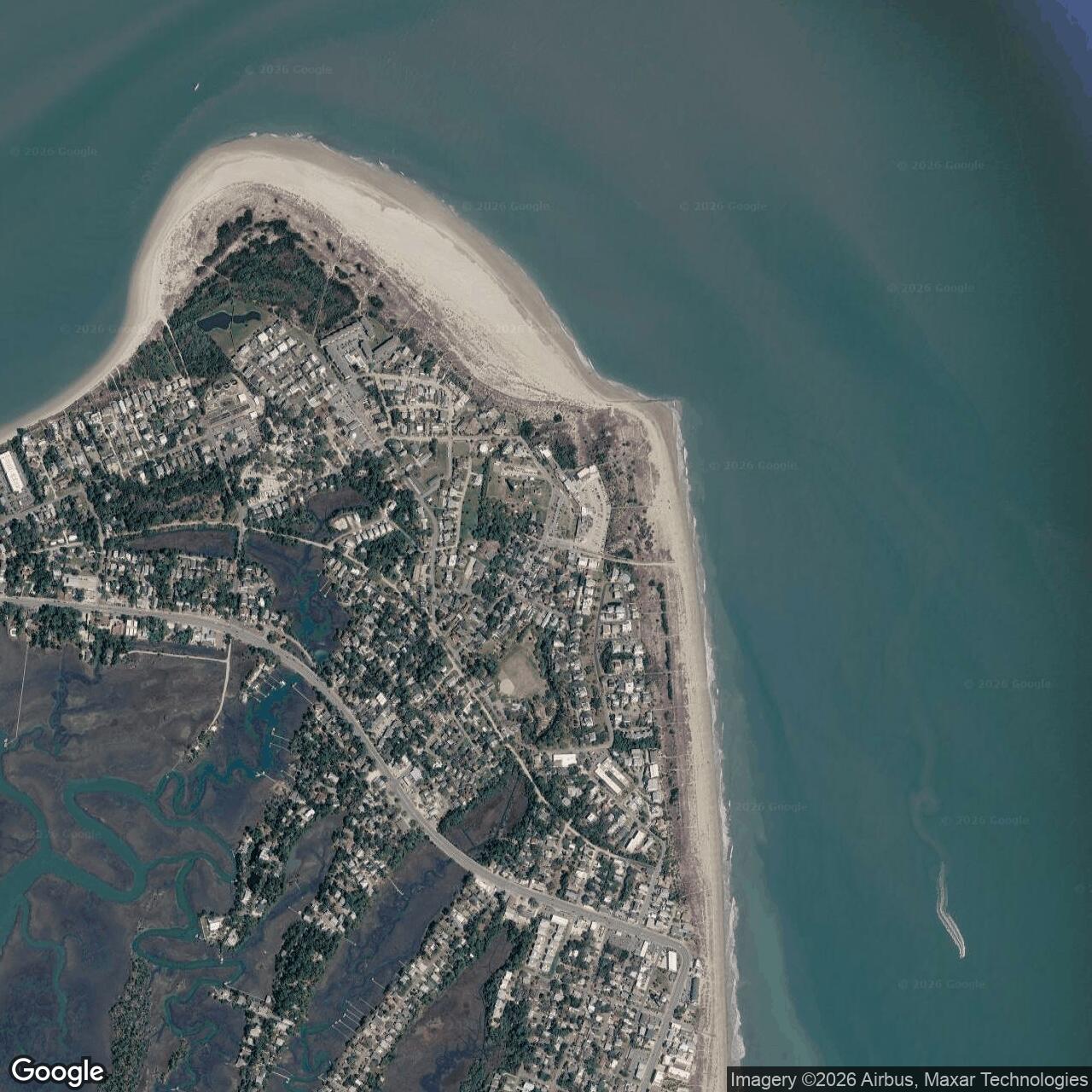
Fort Screven Army Base, Savannah Georgia
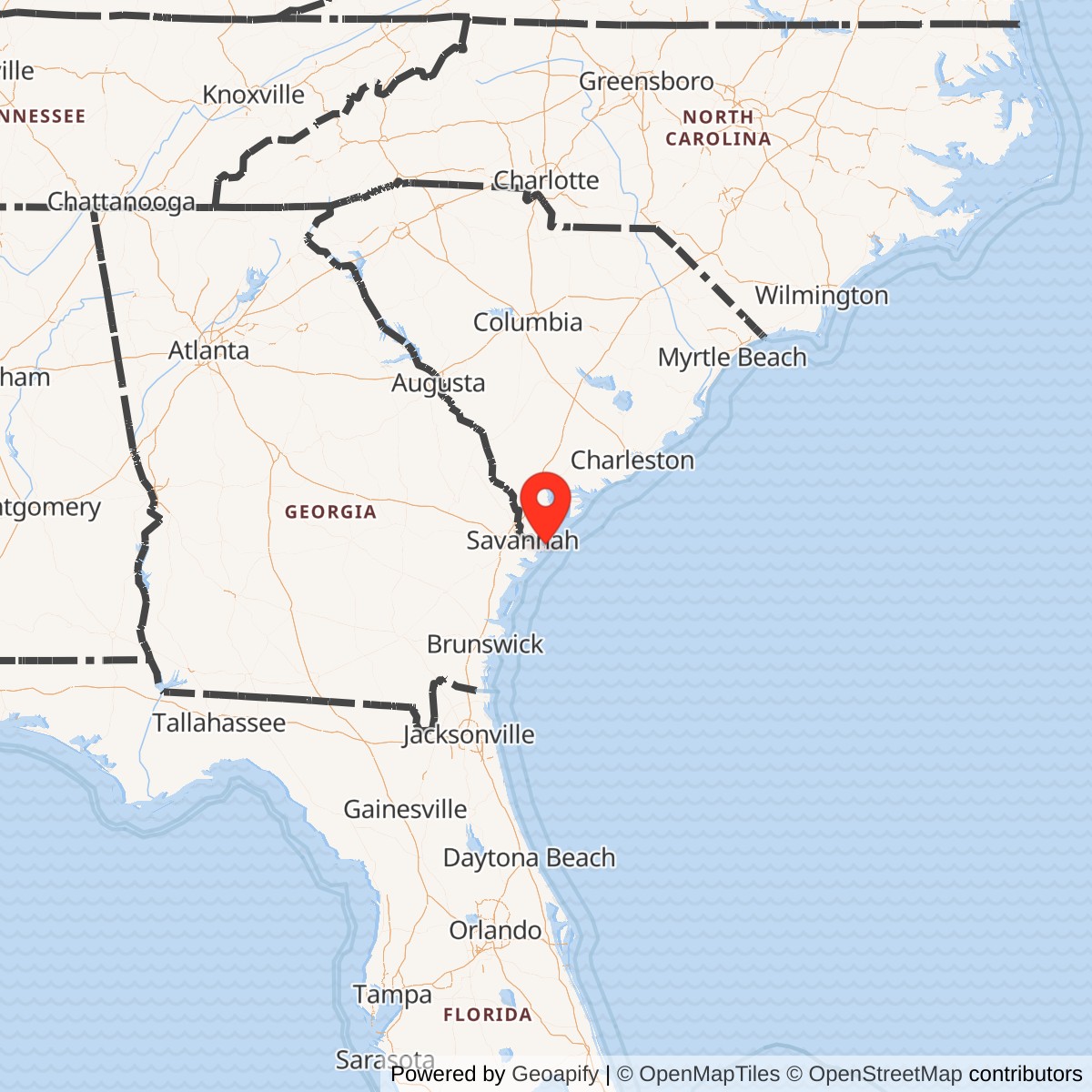
Longitude: -80.8448326
Official Base Website: https://www.nps.gov/fopu/learn/historyculture/tybee-island.htm
Current Role: Fort Screven Historic District; Tybee Island Light Station and Museum; Battery Garland / Tybee Island Museum; Tybee Post Theater; municipal, residential, private, visitor, and beach-area reuse.
Fort Screven was the Army's modern answer to a lesson Georgia had learned the hard way. Fort Pulaski, the great masonry work guarding Savannah, had been battered into submission by rifled cannon fired from Tybee Island in 1862. A generation later, when the United States rebuilt its seacoast defenses for steel breech-loading guns, concrete batteries, electrical mines, and fire-control systems, the Army returned to the same strategic geography. The new post rose not on Cockspur Island but on the north end of Tybee, directly overlooking the Atlantic entrance to the Savannah River and the anchorage historically known as Tybee Roads.
The installation belonged to the Endicott-era and early twentieth-century coastal-defense system. It was planned by the Army Corps of Engineers in 1897 on a federal reservation of about 205 acres, including the Tybee Light area, and the Georgia Historical Society marker identifies the Army post as established in 1898. The fort's purpose was to defend Savannah's ocean approach with low-profile reinforced-concrete batteries, mine-defense support, garrison buildings, roads, rail connections, communications, and support facilities. It was not a frontier fort and not a large maneuver post. It was a coastal artillery station built around a harbor-defense problem: keep enemy warships from entering or bombarding the port of Savannah.
The name carried a much older local ambition. In 1786, Georgia's legislature authorized a fort on Cockspur or Tybee Island to be named for Revolutionary War officer General James Screven, but that state fort was never built. Federal jurisdiction over the Tybee reservation came in 1808, title was acquired in 1875, and the modern post was ultimately established at the end of the nineteenth century. During its early life the installation was known informally as Fort Tybee and later as Camp Graham before a presidential proclamation in 1899 gave it the name Fort Screven. That naming history matters because the name appears in different forms in older records, markers, and local histories.
Fort Screven was active through the Spanish-American War, World War I, the interwar years, and World War II. It began as a Coast Artillery fort, later took on infantry, training, and support roles, and by the end of its career also served specialized functions such as deep-sea diving training. It was declared surplus by the War Department in 1945, closed in the postwar demobilization period, and was sold or transferred into municipal and civilian reuse by 1947. Today the Army post no longer exists as an active installation, but much of its physical landscape survives as the Fort Screven Historic District, including concrete batteries, Officers Row, the Tybee Post Theater, former service buildings, and the Tybee Island Museum in Battery Garland.
Mission Evolution
Fort Screven's first mission was seacoast defense. The Army ordered the new fort in the mid-1890s as part of the national shift away from exposed masonry forts toward dispersed concrete batteries armed with modern rifled artillery. Savannah's older defense line had moved seaward over time as weapons changed. Earlier works protected the river closer to the city or from Cockspur Island. By the 1890s, the Army needed a post that could dominate the ocean entrance itself, integrate with mines and searchlights, and cover the shipping channel before hostile vessels could pass into the Savannah River.
The Spanish-American War gave the new works immediate urgency. The fortification program was still young when war with Spain broke out in 1898, and Battery Brumby was the first major Tybee battery to be completed. Even though Savannah was not attacked, Fort Screven's construction reflected the wider fear that modern naval war could reach American harbors. The post was part of the same national preparedness wave that created or modernized coastal defenses at major ports across the Atlantic, Gulf, Pacific, and Caribbean approaches.
By 1904, Fort Screven had developed into a multi-battery coastal artillery post. Its gun line included large-caliber batteries for direct fire against heavy ships, mortar batteries for high-angle plunging fire, and smaller rapid-fire batteries intended to protect the minefield and defeat smaller vessels or minesweepers. This layered design reflected Endicott-era doctrine: heavy guns, mortars, controlled mines, searchlights, communications, and observation systems were supposed to work as one harbor-defense machine. The garrison's job was not simply to fire cannon; it was to maintain the entire defensive system, train gun crews, handle ammunition, protect the reservation, operate communications, and coordinate with the broader defense of Savannah.
World War I changed the fort's mission. Fort Screven remained a coast artillery fort and part of the national coastal-defense system, but the war also stripped some older batteries of guns for overseas use. Georgia Historical Society notes that in 1917 the disarming of batteries began when four 8-inch guns were removed from Battery Brumby for service in France and Germany. Sea patrols also operated from Fort Screven to defend against the German submarine threat. The war therefore made Fort Screven both a guarded harbor station and a resource pool for artillery, personnel, patrol work, and wartime mobilization.
After World War I, the post entered a more uncertain interwar period. The Army downsized, and Fort Screven was deactivated in 1921 before being reactivated the following year. It then took on a broader infantry and training role. Georgia Historical Society describes the reactivated post as becoming headquarters of the 8th Infantry Regiment, while the National Register nomination identifies the 1920s headquarters function as tied to the Eighth Infantry Division. The same nomination also states that Fort Screven hosted the Citizens' Military Training Program from the 1920 National Defense Act period until 1941. This shifted the post from purely coastal artillery readiness toward a wider peacetime training and mobilization mission.
The arrival of Lieutenant Colonel George C. Marshall in 1932 was one of the fort's most consequential interwar episodes. Marshall's Fort Screven command came between his influential work at Fort Benning and his later rise to Army Chief of Staff during World War II. At Tybee, he managed a small, vulnerable, repeatedly threatened post and used the Civilian Conservation Corps and Citizens' Military Training Camps to keep the installation useful. The National Register nomination emphasizes his concern with training, housekeeping, morale, landscape improvements, and post administration. Fort Screven did not make Marshall famous, but it gave him a real command during a period when much of the Army was small, underfunded, and searching for ways to stay relevant.
During World War II, Fort Screven's coastal artillery role was fading as modern aircraft, submarines, radar, and longer-range weapons changed harbor defense. The post nevertheless remained active through the war. Its remaining batteries, garrison buildings, training grounds, and coastal location supported wartime training and specialized military use. The National Register nomination notes that the post was used as a special training facility for the Corps of Engineers. The historical marker also records that Fort Screven eventually became a school for deep-sea diving. By the end of the war, the old harbor-defense post had been overtaken by changing military technology and demobilization policy.
Site Design and Facilities
Fort Screven's physical layout was unusually complete for a turn-of-the-century coastal defense installation. The National Register nomination describes the historic district as including six massive concrete gun emplacements or batteries, Officers Row and headquarters buildings, a fort village with noncommissioned officers' housing and enlisted barracks, post service buildings, a quartermaster area, part of the base hospital, a theater, three Citizens' Military Training Camps, a regimental parade ground, landscaped grounds, railroad tracks, streets, and pedestrian paths. That collection matters because Fort Screven was not only a line of buried batteries. It was a complete Army post with living, administrative, medical, recreational, transportation, and ceremonial spaces.
The fort's location was dictated by geography. Tybee Island sits where the Savannah River meets the Atlantic Ocean, and the navigational area between Tybee and Cockspur Island was historically known as Tybee Roads. The Army placed Fort Screven on the island's northern head because that position watched the main ocean approach and allowed the batteries to cover vessels entering or leaving Savannah. The same geography connected Fort Screven to Fort Pulaski: the old masonry fort showed the earlier generation of harbor defense, while the Tybee batteries represented the post-rifled-artillery and reinforced-concrete response.
The battery area wrapped around the northern end of Tybee Island. The principal Tybee batteries included Battery Brumby, Battery Garland, Battery Fenwick, Battery Backus, Battery Gantt, and Battery Habersham. Battery Brumby was the largest and mounted four 8-inch rifles on disappearing carriages. Battery Garland, now the Tybee Island Museum, was built for a 12-inch long-range gun position, with ammunition handling spaces that once stored very heavy projectiles and powder charges. Battery Fenwick was another heavy-gun position. Battery Habersham provided mortar fire, while Batteries Backus and Gantt represented the smaller rapid-fire mine-defense element of the system.
The design followed the logic of the Endicott system. Large-caliber guns were intended to engage capital ships at long range. Mortars could drop heavy shells onto decks. Smaller rapid-fire guns protected the minefield and resisted small craft, torpedo boats, or minesweepers. The controlled minefield itself added a hidden underwater layer to the defense of the channel. Instead of one old-style fort with walls and embrasures, Fort Screven was a dispersed technological system: guns, magazines, plotting rooms, communications, observation, mines, transportation, and trained personnel had to function together.
The post's domestic and administrative side was equally important. Officers Row occupied prominent ground and became the most visible surviving residential element of the post. The former guardhouse, built in 1906, later became a municipal and community facility. The Tybee Post Theater, built in 1930, served soldiers and families during the interwar Army period and later became one of the most important public reuse structures in the district. The Fort Screven Bakery, built in 1925, served the military reservation and later survived in private reuse. These buildings show that Fort Screven functioned as a permanent Army community, not just as a beachside gun platform.
The layout also reflected careful planning. The National Register nomination stresses Fort Screven's discrete military, service, support, and living areas; its transportation system of railroad, streets, and pedestrian paths; and its landscape architecture. This planning created a distinct military environment on north Tybee, different from the surrounding resort subdivisions. The post's federal land-use pattern, open spaces, parade ground, officer housing, and monumental batteries still shape the appearance of the north end of the island even though the Army left decades ago.
Military Operations and Units
Fort Screven's operational life centered on the Coast Artillery. Gun crews had to maintain artillery, handle ammunition, practice fire-control procedures, operate search and observation systems, secure the mine-defense system, and stand ready for wartime harbor defense. Much of this work was repetitive and technical rather than dramatic. The point of a coastal fort was deterrence: a successful installation might never fire at an enemy because its existence made an attack too costly or impractical.
The Spanish-American War period showed the installation's original purpose. Fort Screven was part of the rapid modernization of American coastal defenses at the moment the United States was emerging as an overseas power. Although Savannah did not become a battlefront, the fort's creation expressed the same strategic anxiety that produced the wider Endicott network. The Army wanted modern defenses for ports whose commercial, naval, and logistical value could be threatened in a war between industrial powers.
During World War I, Fort Screven remained in the coastal-defense system while also participating in wider wartime mobilization. GHS notes that the fort's sea patrols defended against German U-boats, and that parts of the artillery system were disarmed for overseas service. The removal of Battery Brumby's 8-inch guns illustrates a recurring problem in American seacoast defense: the Army had built large fixed batteries for harbor protection, but wartime needs sometimes pulled those weapons and trained personnel into other theaters.
After World War I, Fort Screven's unit and training role broadened. Its 1921 deactivation and 1922 reactivation show the instability of many small posts during the interwar drawdown. The headquarters role for the 8th Infantry Regiment or Eighth Infantry Division, the Citizens' Military Training Camps, and Marshall's later command all made Fort Screven a peacetime Army training and administrative station as well as a coastal-defense reservation. The garrison had to maintain facilities, support annual training, host civilians in military training programs, and keep the post relevant despite repeated budget pressure.
The association with George C. Marshall is one of the fort's strongest unit-history links. Marshall commanded the post as a lieutenant colonel in the early 1930s. His work there included training management, administration, grounds improvement, morale, and support to CCC and CMTC activity. The National Register nomination states that an inspector general's report commended Marshall for efficient and economical administration and high morale. This episode is historically valuable because it shows Marshall not as a wartime chief of staff, but as an interwar field commander keeping a small installation effective.
World War II brought Fort Screven back into national mobilization, but not as a major modern harbor-defense centerpiece. The old batteries were increasingly obsolete, and the original artillery was eventually removed for scrap. The post still supported training and specialized activity, including Corps of Engineers use and a deep-sea diving school function. That final phase fits a common pattern for older Army posts: when the original weapons system became obsolete, the land, buildings, utilities, and controlled environment could still support training, administration, or specialized schools for a time.
Role in the Wider Military Network
Fort Screven was one node in the national harbor-defense network created after the Endicott Board era. This network replaced the old masonry fortress model with dispersed batteries, minefields, fire-control stations, searchlights, communications, rail or road service systems, and permanent garrisons. Fort Screven's job was local, defend Savannah, but its design and doctrine were national. Similar concrete batteries guarded New York, Boston, Charleston, Pensacola, San Francisco, Puget Sound, Manila Bay, and many other strategic approaches.
Within Georgia's coastal defense story, Fort Screven represented the final major seaward step. Earlier defenses included Savannah-area works closer to the city, Fort Jackson, Fort Pulaski on Cockspur Island, and temporary Civil War batteries. Fort Pulaski had been built for the age of masonry and smoothbore artillery, then defeated by rifled cannon. Fort Screven was built for the next age: concrete, disappearing carriages, modern mortars, controlled mines, and technical gunnery. The succession from Fort Pulaski to Fort Screven makes the Savannah defenses unusually useful for explaining how military technology forced coastal-defense geography outward.
Fort Screven also interacted with regional defense. The Georgia Historical Society marker notes that Fort Fremont in South Carolina was at one time under Fort Screven's jurisdiction. That administrative connection placed the Tybee post within a larger Lowcountry and South Atlantic coastal-defense system. In wartime, harbor defenses were not only isolated posts; they were command systems that included subordinate batteries, minefields, patrols, communications, and overlapping geographic responsibilities.
The fort's interwar training role connected it to another national system: the Citizens' Military Training Camps. CMTC was designed to give civilian men military exposure and create a broader preparedness pool without relying solely on permanent Regular Army expansion. Fort Screven's use for CMTC until 1941 made the installation part of the Army's interwar effort to preserve training capacity in a period of small budgets and limited manpower.
Fort Screven's World War II ending also fits the national pattern. Many Endicott and Taft-era batteries were obsolete by the 1940s. Some were bypassed, some were replaced by 16-inch or anti-motor-torpedo-boat batteries, and many were demilitarized. After the war, hundreds of acres of coastal-defense property were declared surplus. Fort Screven's sale and conversion to municipal and private reuse was therefore not an isolated local decision. It was part of the broader dismantling of the old harbor-defense system after World War II.
Closure and Postwar Reuse
Fort Screven did not transition from Army post to historic site all at once. The War Department declared it surplus in 1945, and NPS and local accounts identify 1947 as the closure and sale period. The receiving municipality was then known as Savannah Beach, later Tybee Island. Once the Army left, the large coastal-defense reservation became a mix of public, private, residential, museum, theater, and municipal uses.
Battery Garland became the most visible public reuse. In 1961, the former gun battery and magazine for a 12-inch long-range gun became the Tybee Island Museum. Spaces built to hold heavy projectiles and powder bags were converted into exhibit rooms telling the longer history of Tybee Island. That reuse is symbolically powerful: a structure built to defend a harbor with industrial artillery now interprets maritime, military, community, and island history for visitors.
Other post buildings followed different paths. Officers Row became one of Tybee's most distinctive residential areas. The post theater survived and was restored for public cultural use. The bakery became a private property. The guardhouse passed through municipal use and became part of the community landscape. Some fort walls and batteries became private residences or semi-public landmarks, while others remain visible but not fully accessible. The result is not a preserved Army base in the strict museum sense, but a historic district in which military structures are woven into a living beach community.
The Fort Screven Historic District was listed in the National Register of Historic Places in 1982. The nomination emphasized the district's significance in military history, engineering, architecture, community planning, landscape architecture, communications, transportation, exploration and settlement, and archaeology. That breadth reflects the post's unusual survival. The fort retained enough batteries, buildings, roads, paths, landscape features, and spatial relationships to show how a complete coastal artillery post functioned.
Current Status
Fort Screven is closed as an Army installation. Its historic core survives on the north end of Tybee Island as the Fort Screven Historic District. The area includes the Tybee Island Light Station and Museum, Battery Garland / Tybee Island Museum, visible batteries and fortification remnants, Officers Row, the Tybee Post Theater, former service buildings, residential conversions, public beach access, and municipal or community reuse.
The current public experience is fragmented but legible. Visitors can understand the old Army post by moving through the district rather than by entering a single fenced museum. Battery Garland provides the most direct Fort Screven museum experience. The lighthouse complex sits within the former fort area and helps explain why the north end of Tybee has long been strategically important. The theater, guardhouse, bakery, officer housing, and battery remnants show the post's daily life and built environment beyond the guns.
The property is also an active preservation issue. Because many resources are privately owned or adapted for new uses, Fort Screven's long-term survival depends on local historic-district management, private stewardship, museum interpretation, and public awareness. Unlike Fort Pulaski, which is protected as a National Park Service unit, Fort Screven is a mixed-use historic district. Its military story remains visible, but it is embedded in neighborhood streets, houses, tourist facilities, and community institutions.
Chronology
- 1786 The Georgia legislature authorized a fort on Cockspur or Tybee Island to be named for Revolutionary War hero General James Screven, but the state fort was never built.
- 1808 The federal government obtained jurisdiction over the Tybee Island property later associated with the Fort Screven Reservation.
- 1875 Federal title to the Tybee reservation was acquired.
- 1895 Fort Screven was ordered built on the north end of Tybee Island as part of a modern seacoast-defense system for Savannah.
- 1897 The Army Corps of Engineers planned Fort Screven as a coastal-defense complex on a federal reservation of about 205 acres.
- 1898 The Army post was established as war with Spain approached; early names included Fort Tybee and Camp Graham.
- 1898-1899 Battery Brumby was erected and became the first major battery completed for the post.
- 1899 A presidential proclamation changed the name to Fort Screven.
- 1899 Battery Garland was completed as one of the principal heavy-gun positions; it later became the Tybee Island Museum.
- 1900-1904 Fort Screven's principal battery system and post infrastructure matured into a multi-battery coastal artillery installation.
- 1904 Georgia Historical Society notes that Fort Screven had seven batteries by this year.
- 1906 The Fort Screven Guardhouse was constructed.
- 1910 Enlisted barracks and other permanent post buildings were part of the growing fort village by the early twentieth century.
- 1917 Disarming of some batteries began when four 8-inch guns from Battery Brumby were removed for overseas service during World War I.
- 1917-1918 Fort Screven served as a coast artillery post and supported coastal patrol activity during World War I.
- 1921 Fort Screven was deactivated during the postwar Army drawdown.
- 1922 The post was reactivated and took on an infantry headquarters and training role.
- 1920s-1941 Fort Screven hosted Citizens' Military Training Camps, linking the post to interwar preparedness and civilian military training.
- 1925 The Fort Screven Bakery was built to serve the military reservation.
- 1930 The Fort Screven / Tybee Post Theater was constructed for soldiers and their families.
- 1932 Lieutenant Colonel George C. Marshall took command at Fort Screven.
- 1933 An inspector general's report commended Marshall's administration and the morale of his command.
- 1941 CMTC activity ended as the Army moved into full World War II mobilization.
- 1941-1945 Fort Screven remained active during World War II and supported specialized training, including Corps of Engineers use.
- 1945 The War Department declared Fort Screven surplus; the post's bakery served the military reservation until this year.
- 1947 Fort Screven closed as an Army installation and was sold or transferred into municipal/civilian reuse.
- 1950 Local history accounts identify this as the opening year of the Tybee Island Museum.
- 1958 The Georgia Historical Society historical marker for Fort Screven was erected.
- 1961 Battery Garland became the Tybee Island Museum in the former gun battery and magazine.
- 1982 The Fort Screven Historic District was listed in the National Register of Historic Places.
- 2001 Local accounts note that the Tybee Post Theater preservation effort began after years of vacancy.
- 2015 The restored Tybee Post Theater reopened for public cultural use.
- Present Fort Screven remains closed as an Army installation, while the Fort Screven Historic District survives in museum, residential, municipal, theater, visitor, and private reuse on north Tybee Island.