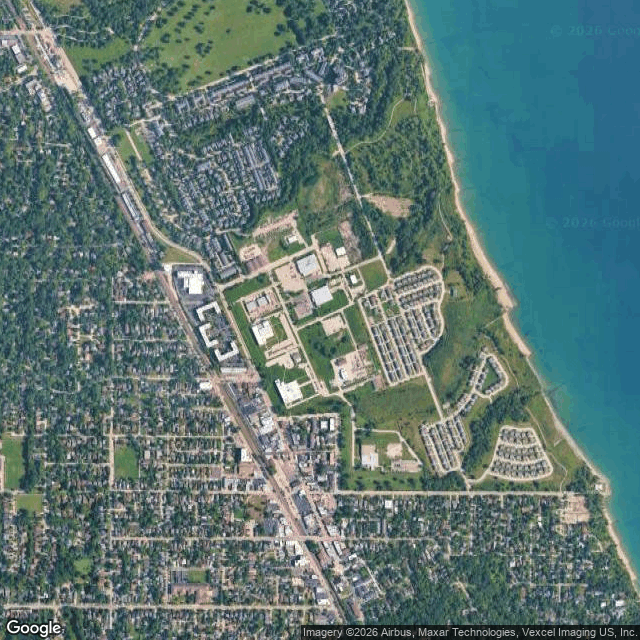
Fort Sheridan, Illinois
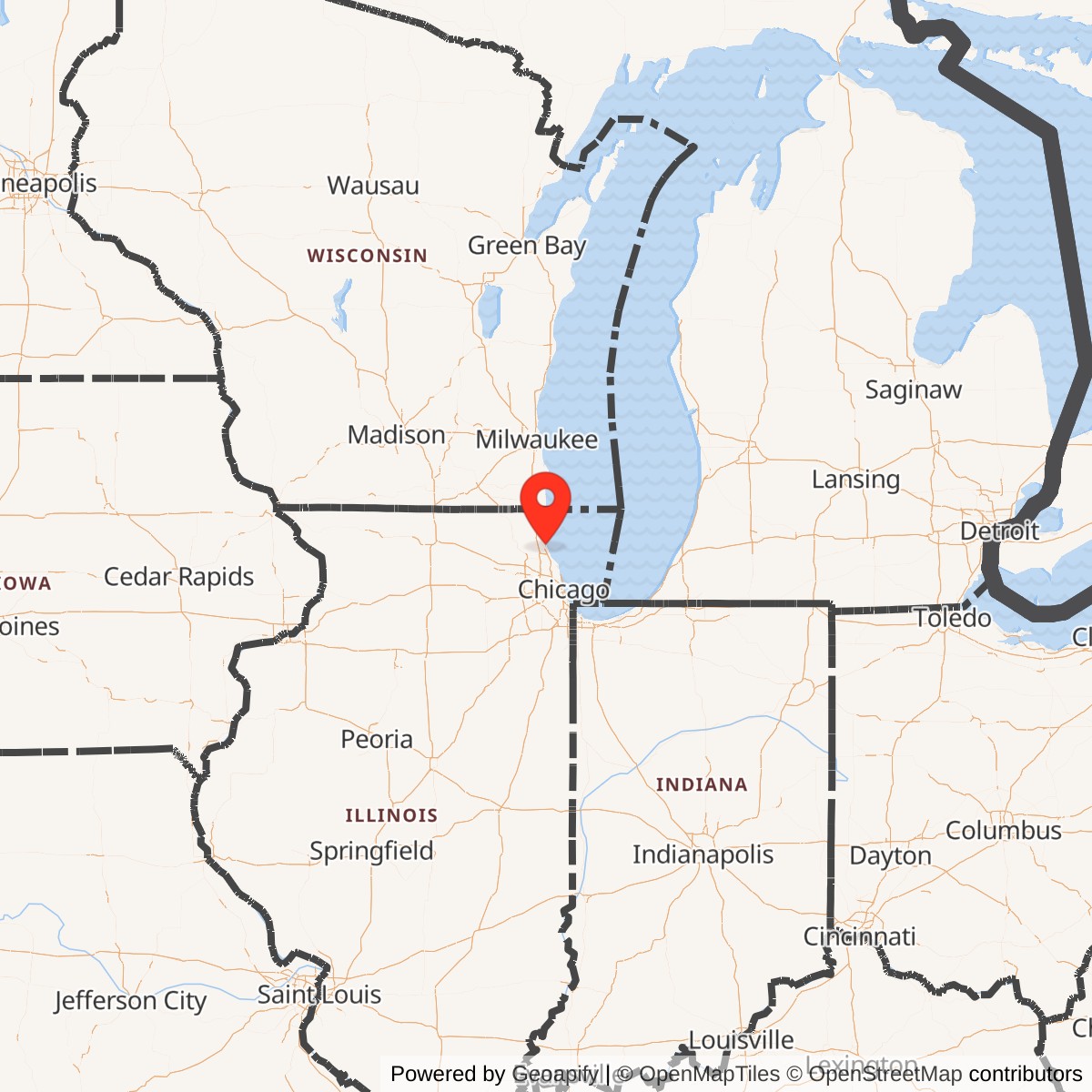
Longitude: -87.809
Approximate Base Size: 712 Acres
Current Role: Residential/park/historic district
The story of Fort Sheridan begins with the turbulent labor history of Chicago. General Philip H. Sheridan, the great Union Civil War military leader, was assigned to command an army division from Missouri at the site. On October 8, 1871, the Great Chicago Fire destroyed 18,000 buildings and left thousands of Chicagoans homeless. General Sheridan was called upon and placed in charge by Chicago Mayor Roswell B. Mason, who had declared martial law in the aftermath of chaos from looters and pillagers following the fire.
Labor unrest continued to simmer. In 1887, the Commercial Club of Chicago purchased over 600 acres along Lake Michigan in Highwood, Illinois, and donated the land to the federal government, hoping the Army would use it to create a military post near the city. Since the significant labor strikes of 1877, members of the Commercial Club had supported the use of the Army as a national police force to protect property and suppress unrest. After the Haymarket Riot of 1886, Commercial Club members were more determined than ever to bring a U.S. Army post to the city, so troops would be available immediately if needed.
Fort Sheridan, Illinois, was a U.S. Army post established in 1887 in Lake County. First called Camp Highwood, it was soon renamed for Civil War hero General Philip H. Sheridan, who died in 1888.
In 1898, Fort Sheridan became a mobilization, training, and administrative center during the Spanish-American War and continued to house these functions through World War II.
During World War I, Fort Sheridan served as an induction and training center for the Midwest, and the post was expanded with the addition of numerous temporary buildings. The post also housed an officer training camp. After the war, the post was used as a rehabilitation hospital for returning soldiers and as an isolation hospital during the 1918 Flu Pandemic. Between 1918 and 1920, some 60,000 patients were treated at the hospital.
The post housed Camp Leonard Wood, a Civilian Military Training Camp from 1926 to 1939, which provided civilians with military officer training for future conflicts. This camp was essentially a tent camp with temporary support buildings.
During World War II, over 500,000 men and women were processed through military service at Fort Sheridan. Many Army officers who later became famous lived there, including George Patton and Jonathan Wainwright. The fort also served as the administrative headquarters for prisoner of war camps located in Illinois, Wisconsin, and Michigan during the war. Fort Sheridan processed nearly 20,000 returning wounded soldiers and helped them return to civilian life through physical and occupational training.
From 1953 to the 1970s, Fort Sheridan fought the Cold War by servicing and supplying all Nike antimissile systems in the upper Midwest. After 1973, the post again housed administrative and logistical support services.
In 1974, the post transitioned into a Reserve and National Guard unit. In 1984, parts of Fort Sheridan were designated a National Historic Landmark District. The historic district includes 230 acres and 94 buildings along the shore of Lake Michigan, including officers' quarters, barracks, stables, a drill hall, a water tower, and institutional buildings. The 54-acre parade ground was preserved as open space.
The main fort was ordered closed as a result of the first round of closures initiated by the Base Realignment and Closure Commission in 1988, and was officially closed by the Department of Defense on May 3, 1993.
The majority of the property was relinquished to the Fort Sheridan Joint Planning Committee as the redevelopment authority, which then sold large segments of the land and housing to commercial land developers. Most of the original housing structures were then refurbished and resold as a residential community. Other buildings were given to cultural organizations like the Midwest Young Artists Conservatory, the largest youth music program in the Midwest.
Approximately 90 acres of the southern end of the original post were retained by the Army, where the Army now operates the Sheridan Reserve Center complex.