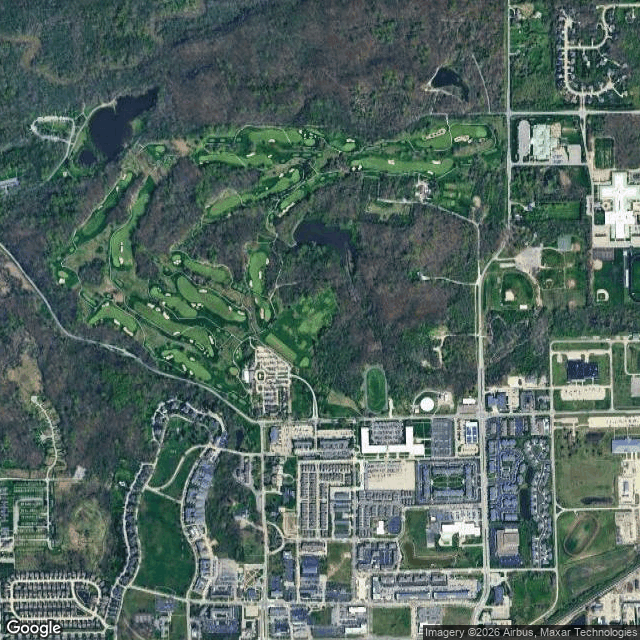
Fort Benjamin Harrison, Indiana
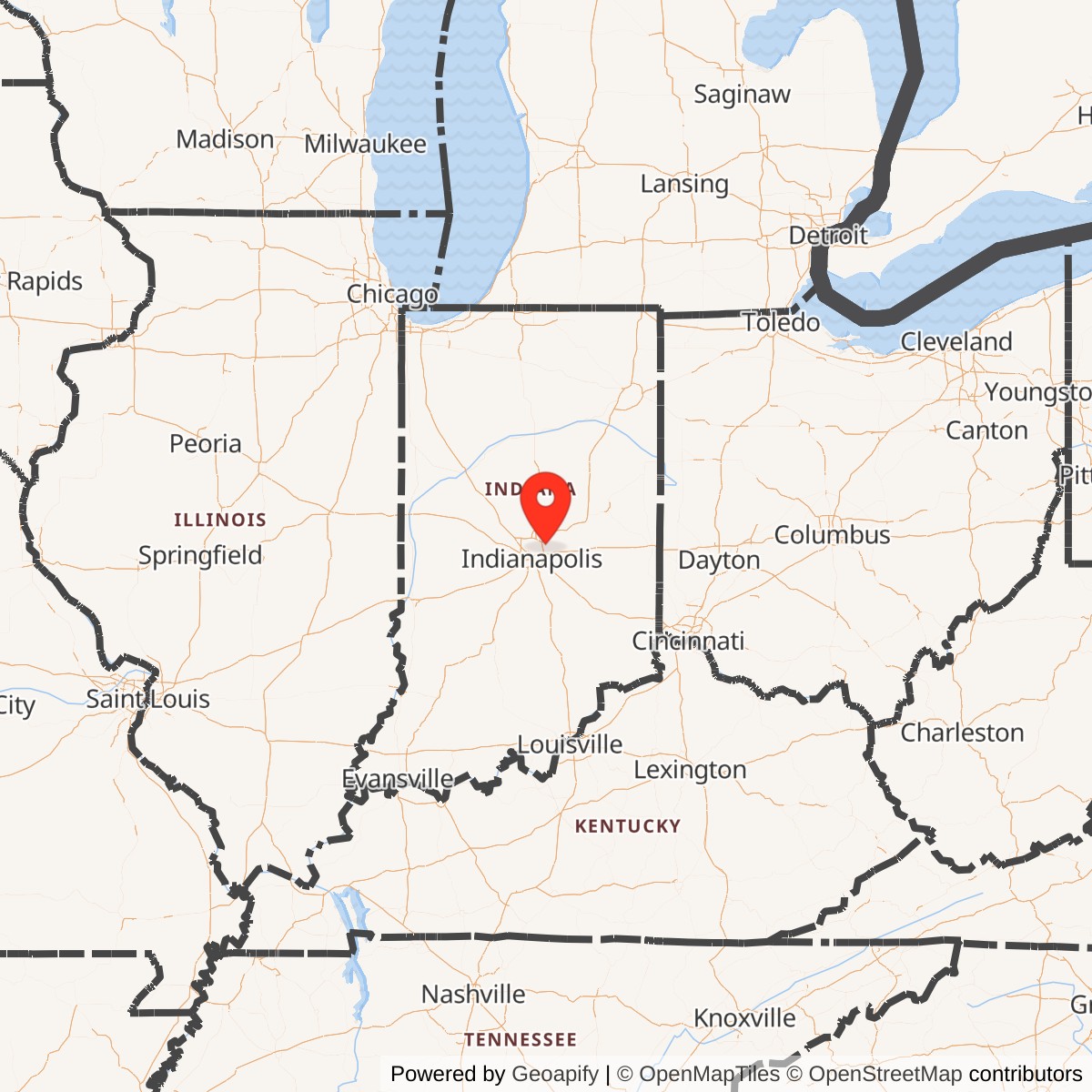
Longitude: -86.008
Approximate Base Size: 2500 Acres
Current Role: State park/residential/offices
The federal government purchased land for a new site consisting of 1,994 acres for $279,238.01 from local farmers. At the request of President Theodore Roosevelt and Lt. Col. Russell B. Harrison, Secretary of War Elihu Root named the post after Benjamin Harrison, resident of Indianapolis and 23rd president of the United States. The base was dedicated by President Theodore Roosevelt in 1906. Fort Harrison was constructed to garrison one regiment of infantry, but during World Wars I and II it became one of the nation's largest training and mobilization sites. Due to its location near major highways and railroads, it was easily accessible for troop units and individuals called to duty from the Midwest.
During World War I, the post hosted three large officer training camps and became the training ground for hundreds of medical and engineering specialists. Encyclopedia of Indianapolis The war also brought an unexpected crisis: during the end of World War I, a strain of influenza then referred to as "Spanish Flu" crept its way towards America and eventually to Indiana via Fort Benjamin Harrison.
In the interwar years, Fort Harrison served as an organizing and training ground for civilian groups like the Civilian Conservation Corps (CCC) and the Civilian Military Training Camp. From 1933-1938, CCC units posted at Fort Harrison worked on reforestation and infrastructure projects on the grounds of the base. Officials at Fort Harrison also built a 100-acre airfield on March 26, 1922, dedicated to World War I pilot Earl J. Schoen of Indianapolis.
The Fort Benjamin Harrison Reception Center opened in 1941 and was the largest reception center in the United States by 1943. Within Fort Harrison was Camp Glenn, named in honor of Major General Edwin Forbes Glenn. Camp Glenn was a Citizens Military Training Camp that was also used to house Civilian Conservation Corps workers. When the United States reestablished the Military Police Corps in 1941, an MP school was established at Camp Glenn and was in operation by early 1942. The area was also used to detain Italian and German prisoners of war in 1944 and 1945.
Fort Harrison was too small to resume its prewar infantry training mission, so the War Department decided in July 1947 to close the post. Secretary of War Kenneth C. Royall rescinded that decision and turned the Army base over to the Air Force. The 10th Air Force briefly occupied the installation before it was returned to the Army in January 1950.
It became the home of the United States Army Adjutant General School in March 1951. In 1957, the school moved into the new Gates-Lord Hall along with the United States Army Finance School. At the time, this 300,000-square-foot building was the third largest owned by the Department of Defense. For residents of Indianapolis and Marion County, the U.S. Army Finance Center became the most recognizable landmark at Fort Benjamin Harrison, colloquially known as Fort Ben. Completed in October 1953, the huge complex consolidated all of the Army's related pay and disbursing activities that had been scattered across the country since the end of World War II.
Beginning in 1965, Fort Harrison was also the home of the Defense Information School (DINFOS), staffed by enlisted personnel and officers from all branches of the U.S. military along with allied military personnel. DINFOS trained service members and Department of Defense employees to become journalists in print, radio, television, and photography, as well as training them in advanced supervisory and public affairs roles.
The Adjutant General School remained at Fort Benjamin Harrison until Base Realignment resulted in its move to Fort Jackson, South Carolina, starting in 1991. By 1995, the Adjutant General School had completely vacated. The Finance School also moved to Fort Jackson in 1995. In 1995, DINFOS moved to Fort Meade, Maryland. Fort Benjamin Harrison was officially closed under the 1991 Base Realignment and Closure Commission.
The United States Department of the Interior chose in 1995 to give 1,700 acres of Fort Harrison's 2,500 acres to the Indiana Department of Natural Resources for use as a state park. The former fort boasts a thriving tech campus, dining opportunities in a former blacksmith shop, mule barn, and Army barracks, and cultural and recreational amenities such as a golf course designed by Pete Dye, a historical military theater, and a YMCA.