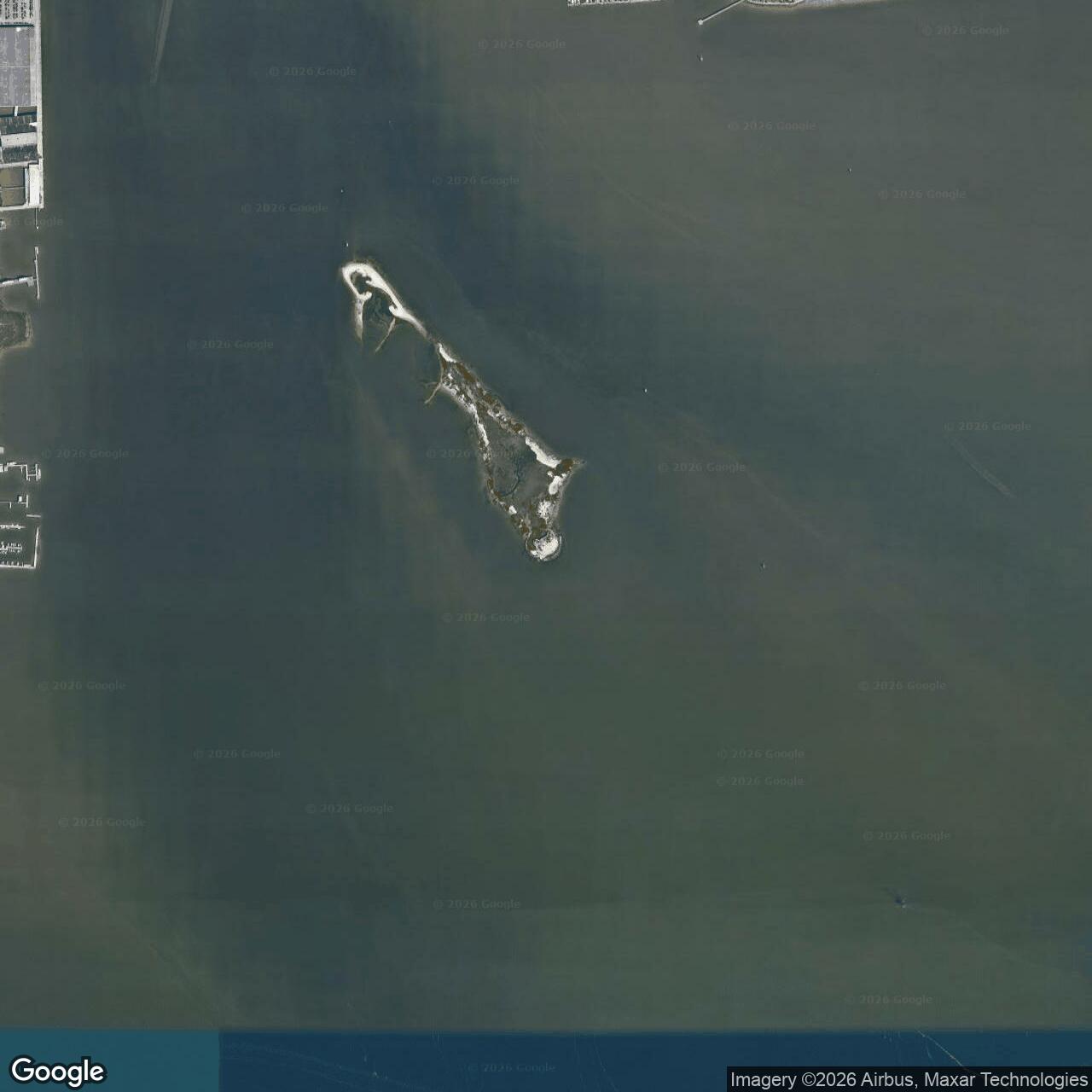
Castle Pinckney Army Base, Charleston South Carolina
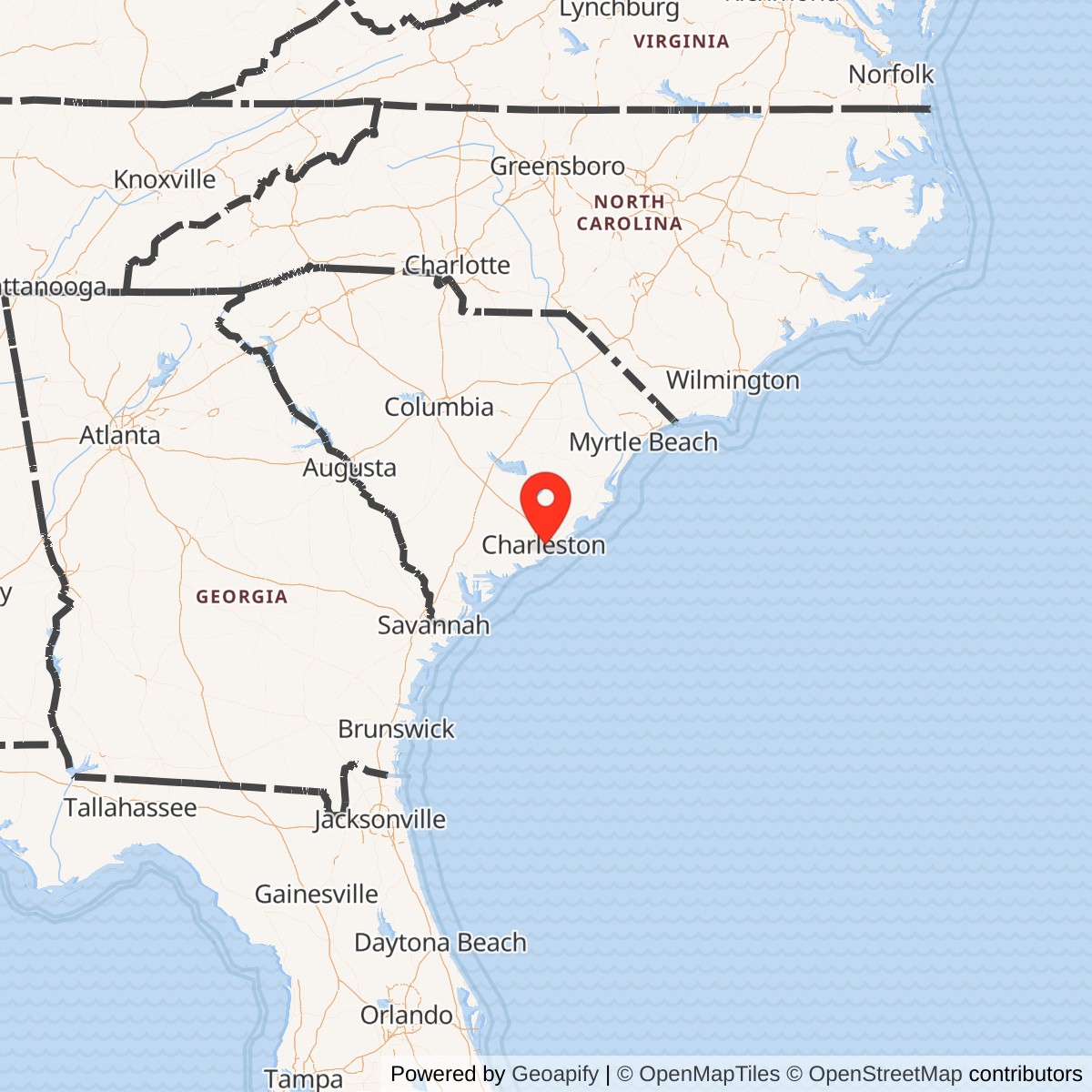
Longitude: -79.910930
Official Base Website: https://castle-pinckney.org/history-archaeology-3/
Current Role: Privately owned abandoned historic fort ruin on Shute's Folly Island; not open to the public; preservation interest and stewardship associated with the Castle Pinckney Historical Preservation Society.
Castle Pinckney sits so close to Charleston that it can be mistaken at a glance for a harbor landmark rather than a military installation. That is exactly why it mattered. The small brick fort on Shute's Folly Island was built to command the inner harbor approaches, the Cooper River waterfront, and the wharves of one of the most important Atlantic ports in the early United States. Fort Sumter became the famous symbol of Charleston Harbor, but Castle Pinckney was older, closer to the city, and in December 1860 it became one of the first places where secession turned from politics into armed seizure of federal property.
The fort treated here is the United States masonry Castle Pinckney begun in 1809 and ready for armament by 1811, built on the site of an earlier harbor work. A timber battery had existed on or near Shute's Folly in the colonial period, and a federal work called Fort Pinckney was begun in 1797 during the Quasi-War crisis with France. That earlier fortification was badly damaged by the 1804 hurricane. The replacement masonry work was a Second System seacoast fortification, designed in a distinctive half-moon or horseshoe form and named for Charles Cotesworth Pinckney of South Carolina. Its design is attributed to Jonathan Williams, the first superintendent of the United States Military Academy and one of the early republic's most important military engineers.
Castle Pinckney was never a large post in the way Fort Moultrie, Fort Sumter, or later Endicott-era reservations were. Its value came from position, not size. It was a small, compact, brick masonry harbor fort with quarters, magazine space, casemated guns, and barbette positions intended to make the inner harbor dangerous to an enemy that had already passed the outer defenses. Across its life it served as an inner-harbor defense, an ordnance and property storehouse, a Nullification Crisis garrison point, a seized federal installation, a Confederate prison for Union prisoners, a Confederate artillery post, a postwar federal property, and then a lighthouse depot, national monument, abandoned ruin, and private preservation challenge.
Mission Evolution
The site's first federal military mission began in the 1790s. President George Washington's administration moved to fortify important seaports in response to European war and the threat of French naval activity. A work on Shute's Folly was planned in the 1790s, and Fort Pinckney was built beginning in 1797. That first work was a log, earth, or sand-based fortification rather than the surviving masonry castle. It protected the same strategic problem that would shape all later use: Charleston's inner harbor needed a defensive position close enough to protect the city's waterfront if enemy ships penetrated beyond the harbor mouth.
The surviving Castle Pinckney belonged to the next stage of federal harbor defense. After the 1804 hurricane damaged the older work beyond practical repair, the War Department moved toward a stronger brick masonry fort. HABS documentation states that construction began in 1809 and that by 1811 the fort was ready for the installation of armaments. The HABS description gives the fort exterior walls at about fifteen feet high and seven feet six inches thick at the base, with a half-moon plan about 165 feet in diameter. Eight casemates faced the harbor, while additional artillery could be mounted en barbette on the terreplein. The north side contained the sally port, flanking bastions, and internal barracks and officers' quarters.
The War of 1812 gave Castle Pinckney its first major strategic context, although it did not see combat. Charleston was an important coastal city, and the fort was part of the emergency system that protected it from naval attack. Like many Second System works, it was more an expression of strategic readiness than a battlefield site. It stood garrisoned and armed during a war in which British forces threatened coastal cities, but Charleston did not become a Fort McHenry-style battlefront.
After the War of 1812, Castle Pinckney declined in importance. Improvements in artillery, the emergence of Fort Sumter, and the greater depth of Charleston Harbor's outer defenses pushed the small inner-harbor fort into a secondary role. It still mattered during crises, but increasingly as a storehouse and federal holding point rather than as the main line of defense. NPS notes that during the Nullification Crisis of 1832-1834, Castle Pinckney was garrisoned to serve as a storehouse for federal property if South Carolina attempted to secede or defy federal tariff enforcement. That episode foreshadowed the fort's later Civil War importance: its physical military power was modest, but its symbolic value as federal ground inside Charleston Harbor was enormous.
By 1860 Castle Pinckney was overshadowed by Fort Sumter and Fort Moultrie, but it was not irrelevant. HABS data states that its armament at the close of 1860 included fourteen 24-pounders, four 42-pounders, four 8-inch seacoast howitzers, one 10-inch mortar, one 8-inch mortar, and four light pieces for flank defense. NPS records that when South Carolina seceded on December 20, 1860, the fort had only thirty-six people present, and only a lieutenant and an ordnance sergeant were actually U.S. Army personnel available for defense. On December 27, 1860, South Carolina secessionists overwhelmed the tiny federal presence and took the fort. NPS calls Castle Pinckney the first federal installation seized by a seceded state.
The Civil War changed the fort again. After the First Battle of Manassas in July 1861, Confederate authorities converted Castle Pinckney into a prison by bricking in gun embrasures to form cells. On September 18, 1861, 156 Union prisoners arrived, including men from the 79th New York, 69th New York, 11th New York Fire Zouaves, and 8th Michigan. NPS notes that prisoners could move around during the day but were confined at night, and that crowding soon forced their transfer to the Charleston City Jail on October 31, 1861. The prison mission lasted only a short time, but it gave Castle Pinckney a direct human connection to the Civil War prisoner system.
In 1863 Confederate authorities refitted the fort as an artillery post. They understood that masonry forts were vulnerable to rifled artillery, especially after the lessons of Fort Pulaski and the long bombardment of Fort Sumter. Castle Pinckney's exterior walls were reinforced with heavy earthen berms, the casemate embrasures were closed, and the old inner-harbor fort became a barbette battery mounting a small number of heavier guns. The fort was still not the heart of Charleston's defense, but it became part of the layered Confederate harbor system that tried to keep Union naval power from reaching the city.
Castle Pinckney returned to United States control on February 18, 1865, after Confederate forces evacuated Charleston. Its active military-post life continued for only a limited period after the war. Friends of Charleston National Parks states that Castle Pinckney remained an active military post until 1869, and that in 1876 the War Department transferred custody of the 3.5-acre property to the Treasury Department. The Lighthouse Service then used the old fort and island as a supply depot for the regional lighthouse system. That transfer ended Castle Pinckney's primary Army story, but it did not end federal use of the island.
Operational Role
Castle Pinckney's operational role was always shaped by scale. It was too small to dominate the whole harbor, but it was close enough to the city to matter in moments of danger. As a Second System fort, it was built to control a specific inner-harbor sector. Its guns looked toward the mouth of Charleston Harbor, while its position on Shute's Folly allowed it to influence approaches toward Charleston's East Bay wharves and the Cooper River waterfront. In practical terms, it was a last inner defensive check, not the first barrier an enemy fleet would encounter.
During the early nineteenth century, the fort's daily military role would have involved garrison duty, ordnance storage, maintenance of brickwork and armament, harbor observation, and readiness for coastal emergency. The HABS description of a good magazine and quarters for two hundred men and officers shows that Castle Pinckney was designed to function as a complete compact fortification, even if its actual peacetime garrison was usually much smaller than its theoretical capacity. Its enclosed plan made sense for a small island work where troops, ammunition, guns, and quarters had to be concentrated inside a limited footprint.
The Nullification Crisis revealed the fort's internal-security function. President Andrew Jackson's administration prepared to enforce federal law in South Carolina if necessary, and Castle Pinckney was useful as a place to secure federal property and maintain a visible military foothold in Charleston Harbor. The fort's value in that period was political as much as tactical. A small garrisoned fort on an island could not suppress a state, but it could preserve a federal presence inside a port whose politics were turning openly hostile to federal authority.
The seizure of December 27, 1860 made Castle Pinckney operationally important in a different way. Its tiny U.S. Army garrison could not defend the fort, and South Carolina militia took possession with little difficulty. Yet the act mattered because it transferred federal ground to secessionist control before the firing on Fort Sumter. Castle Pinckney's capture demonstrated that state forces were willing to seize U.S. military property, and it helped create the immediate military crisis in Charleston Harbor. Three days later, the Charleston Arsenal also fell to state forces, while Major Robert Anderson's command concentrated at Fort Sumter.
The prison phase after First Manassas was brief but consequential. Confederate authorities needed places to hold Union prisoners, and Castle Pinckney's enclosed masonry form made it tempting for that purpose. Bricking in embrasures and using casemates or enclosed spaces as cells converted a seacoast fort into a detention facility. The arrival of prisoners from prominent New York and Michigan units made the fort part of the war's propaganda and morale landscape. The fact that prisoners were moved to the Charleston City Jail after only six weeks shows the limitations of the site: a compact harbor fort could confine men, but it could not comfortably or sustainably hold a large prison population.
As a Confederate artillery post, Castle Pinckney's mission was to strengthen the inner harbor after Union pressure increased. By 1863, Fort Sumter had been battered and the Confederacy expected that Charleston's defenses might have to absorb direct attack deeper inside the harbor. Reinforcing Castle Pinckney with earth was a practical adaptation to rifled artillery. The conversion from casemate-heavy masonry defense to earthen barbette battery followed lessons seen elsewhere in the war. The fort's original brick walls had been designed for an earlier artillery age. Earth cover gave it a chance to remain useful in the new one.
Postwar, the fort's military function faded. It was not transformed into a modern Endicott-era battery, and it did not become a major Coast Artillery reservation. Its location and structure remained useful to the federal government, but more for lighthouse service logistics than for Army defense. The 1876 transfer to Treasury and later Lighthouse Service use show the common afterlife of many obsolete coastal works: the same harbor location that had made Castle Pinckney militarily useful also made it useful to navigation, supply, and maritime administration.
Site Design and Facilities
Castle Pinckney is one of the most distinctive surviving American harbor forts because of its plan. HABS describes it as a brick masonry half-moon or horseshoe-shaped work, about 165 feet in diameter, with exterior walls approximately fifteen feet high and seven and a half feet thick at the base. The rounded south face looked toward the mouth of Charleston Harbor and contained eight casemates for cannon. Guns could also be mounted on the terreplein above. The north side, facing away from the main water approach, contained the sally port, flanking bastions, and interior quarters.
That design reflected Jonathan Williams's interest in circular and castle-type fortifications. The plan was related to the same military-engineering tradition that produced Castle Clinton in New York Harbor. The purpose was compact all-around defense within a limited island footprint. Unlike sprawling Third System works with elaborate bastions, outworks, and large parade grounds, Castle Pinckney concentrated its military function in a small masonry shell. The walls, casemates, magazine, quarters, and gun platforms had to fit inside the artificial order of a small island fort.
The island mattered as much as the walls. Shute's Folly is a marshy harbor island rather than a mainland bluff or barrier-island point. Castle Pinckney's foundations, seawall, and surrounding stone deposits were necessary because water, tide, and storm damage threatened the site almost from the beginning. HABS notes that after the 1804 hurricane damaged the earlier work, the fort could not effectively be repaired without taking it down to the foundation and cutting off damaged pile remnants. Later protection of the foundations and construction of a seawall were part of the fort's survival.
The 1863 Confederate refit altered the fort's physical meaning. Earthen berms against the exterior and interior walls closed the old casemate embrasures and changed Castle Pinckney into a more earth-protected barbette battery. HABS records that the Confederates converted the sea front by embanking earth against the scarp, closing the casemate embrasures, and creating emplacements for four guns: three 10-inch columbiads and one Brooke rifle on a center-pintle carriage. This wartime adaptation is historically important because it shows the transformation of an early nineteenth-century masonry fort under Civil War artillery pressure.
After the Army period, the Lighthouse Service changed the island again. Warehouse buildings, a wharf, and supply-depot facilities were added to support lighthouse tenders serving a large region from North Carolina to Florida. Some portions of the fort were removed or modified for lighthouse-related use, and later abandonment, fire, vegetation, storms, and lack of funding left the structure in deteriorated condition. The surviving ruin still shows the wall line, sally port, casemate traces, and overall horseshoe plan, but it is no longer a complete functioning fortification.
Role in the Wider Military Network
Castle Pinckney belonged first to the early federal coastal fortification network. It was part of the United States effort to defend seaports after independence, when the young republic lacked a large navy and relied heavily on harbor forts, artillery, militia, and small regular garrisons. Charleston was one of the most important ports in the South, and Shute's Folly gave federal engineers a way to place a fort in the harbor close to the city itself. In that sense, Castle Pinckney was one piece of a national Second System defense program that also included works such as Castle Clinton in New York Harbor.
Within Charleston Harbor, Castle Pinckney was never alone. It operated in relation to Fort Moultrie, later Fort Sumter, the Charleston Arsenal, batteries around the city, and eventually the wider Harbor Defenses of Charleston. As Fort Sumter rose in strategic importance, Castle Pinckney became a secondary inner-harbor position, but that secondary status did not make it meaningless. In crisis, secondary positions often mattered because they held ammunition, property, prisoners, or symbolic ground. Castle Pinckney's role in 1832 and 1860 illustrates that point clearly.
In the Civil War network, Castle Pinckney's importance came from its position inside Confederate Charleston. It was not the fort whose bombardment opened the war, but it was one of the federal properties seized before the war began. It was not the main Confederate battery against the Union fleet, but it helped strengthen the inner harbor after the outer forts were threatened. It was not the largest prison in the Confederacy, but for a short time it held captured Union soldiers after First Manassas. The fort was a small node in a much larger Charleston military system whose pieces changed function as the war evolved.
After the Army period, Castle Pinckney entered a different federal network: the Lighthouse Service and navigation-support system. From 1876 to 1917, the old fort and island supported the supply of lighthouses along a broad stretch of the southeastern coast. That afterlife matters because it shows how military geography could be repurposed for maritime administration. A site chosen to defend Charleston Harbor became useful for maintaining the aids to navigation that made the same coast safer for commerce.
Current Status
Castle Pinckney is closed as a military installation and is not open to ordinary public visitation. The fort stands as an abandoned and deteriorated historic ruin on Shute's Folly Island in Charleston Harbor. The site is listed in the National Register of Historic Places and has been documented by the Historic American Buildings Survey with photographs, measured drawings, and written data. SCDAH describes it as possibly the only restorable horseshoe fort left in America. The HABS record lists the coordinates as 32.773616, -79.910930.
Ownership and stewardship have shifted repeatedly. After War Department use, Treasury and the Lighthouse Service used the site. Castle Pinckney was designated a National Monument in 1924, transferred among federal agencies, and eventually removed from National Monument status in 1956. It was sold to the South Carolina Ports Authority in 1958. Since 2011, Friends of Charleston National Parks states that the Sons of Confederate Veterans Fort Sumter Camp 1269 has owned Castle Pinckney, with day-to-day stewardship by the nonprofit Castle Pinckney Historical Preservation Society. The site remains inaccessible to the public and difficult to maintain because of its island location, deterioration, vegetation, tides, and preservation costs.
Chronology
- 1742 A timber horseshoe battery was built on Shute's Folly Island as part of Charleston's colonial-era harbor defense.
- 1794 The site was selected for federal fortification as part of the early United States program to defend Charleston Harbor.
- 1797 Construction began on the earlier Fort Pinckney, a predecessor work named for Charles Cotesworth Pinckney.
- 1804 A hurricane badly damaged the earlier fortification on Shute's Folly.
- 1806 Federal reports concluded that the damaged earlier work could not be effectively repaired without major reconstruction.
- 1809 Construction began on the surviving brick masonry Castle Pinckney.
- 1811 Castle Pinckney was ready for armament, with casemated and barbette gun positions and quarters for a compact garrison.
- 1812-1815 The fort was garrisoned during the War of 1812 but saw no combat.
- 1829-1832 Repairs and a seawall helped protect the fort's foundations.
- 1832-1834 During the Nullification Crisis, Castle Pinckney was garrisoned and used as a storehouse for federal property.
- 1860 The fort's armament included 24-pounders, 42-pounders, 8-inch seacoast howitzers, mortars, and light flank-defense pieces.
- 1860-12-20 South Carolina adopted its Ordinance of Secession.
- 1860-12-27 South Carolina militia seized Castle Pinckney from its tiny federal presence, making it the first federal installation seized by a seceded state.
- 1861-07-21 The First Battle of Manassas created a new need for Confederate prisoner facilities.
- 1861-09-18 Union prisoners from several regiments arrived at Castle Pinckney after the fort was refitted for detention use.
- 1861-10-31 The prisoners were transferred to the Charleston City Jail because the fort was overcrowded.
- 1863 Confederate authorities strengthened Castle Pinckney as an artillery post, adding earthen protection and mounting heavier guns.
- 1865-02-18 Castle Pinckney returned to United States command after the Confederate evacuation of Charleston.
- 1869 Castle Pinckney's active military-post use ended.
- 1876 The War Department transferred the 3.5-acre Castle Pinckney property to the Treasury Department.
- 1878 The Lighthouse Service took over the old fort and surrounding land for lighthouse supply-depot functions.
- 1916-1917 Lighthouse depot activity ended or was relocated, closing the major navigation-support phase of the island.
- 1924 President Calvin Coolidge designated Castle Pinckney a National Monument.
- 1933 Castle Pinckney was transferred to the Interior Department as part of the reorganization of federal historic properties.
- 1951 Congress transferred Castle Pinckney back to the Secretary of the Army as the National Park Service and Army negotiated the future of Charleston Harbor historic sites.
- 1954 Castle Pinckney was transferred again to National Park Service custody.
- 1956 Castle Pinckney National Monument status was abolished, allowing disposal of the property.
- 1958 The 3.5-acre property was sold to the South Carolina Ports Authority.
- 1970-07-16 Castle Pinckney was listed in the National Register of Historic Places.
- 2011 The Sons of Confederate Veterans Fort Sumter Camp 1269 acquired Castle Pinckney from the South Carolina Ports Authority.
- Present Castle Pinckney remains a privately owned, inaccessible historic ruin on Shute's Folly Island, with preservation interest centered on stabilization, documentation, and interpretation.