Camp Hanford Army Base, Washington
Longitude: -119.26925
Official Base Website: https://www.hanford.gov/
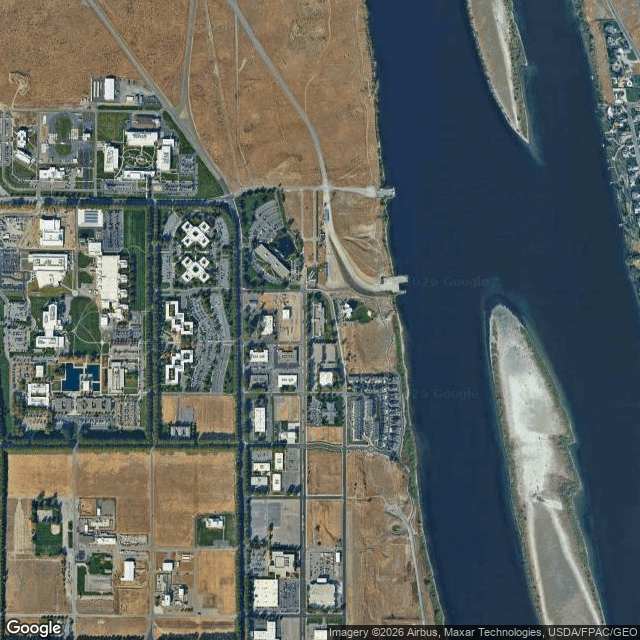
Current Role: Former North Richland/Camp Hanford headquarters area largely redeveloped for Port of Benton, PNNL, WSU Tri-Cities, research, business, and other modern uses; dispersed AAA/Nike features survive mainly as altered former sites, archaeological/cultural-resource features, or Hanford landscape traces
Closed Cold War U.S. Army air-defense camp and dispersed AAA/Nike defense network protecting the Atomic Energy Commission Hanford nuclear-production complex. Army troops arrived from Fort Lewis in 1950 with 120-mm antiaircraft guns; the North Richland headquarters compound was officially designated Camp Hanford in 1951. DOE/Hanford sources describe a network of sixteen AAA sites, base camps, and field headquarters operated by Sixth U.S. Army's 5th Artillery Air Defense Group with four attached AAA battalions, about 5,000 service men and women. Beginning in 1955, three AAA battery sites were retrofitted with Nike missiles and a fourth Nike site was built near Rattlesnake Mountain. The missile mission became obsolete as ICBMs changed the strategic threat; Camp Hanford was deactivated in 1960 and officially closed 1961-03-31. The former headquarters area was dismantled 1962-1965; cultural-resource work has recorded AAA gun sites, Base Camp 210 features, refuse pits, and other Army occupation evidence.
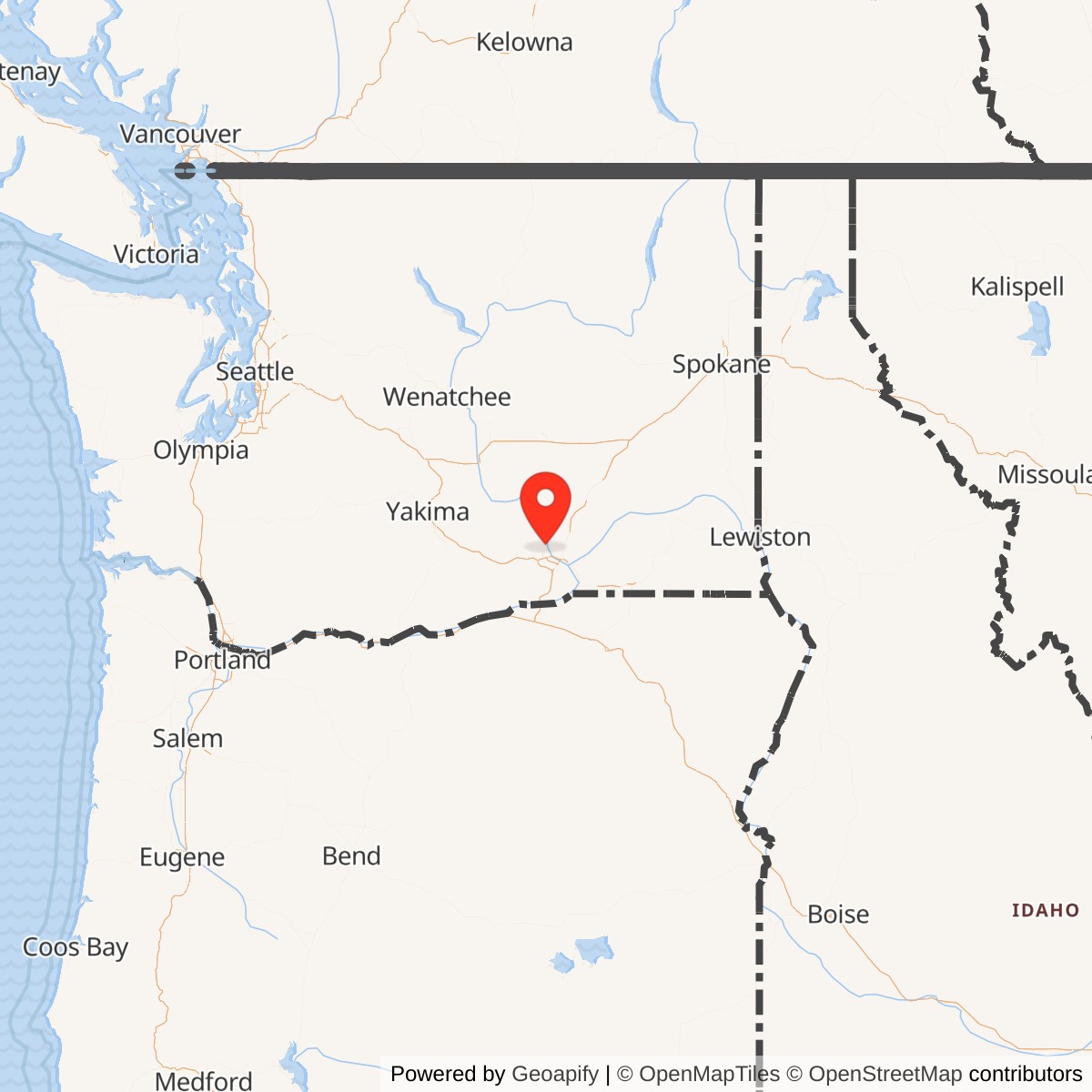
Location: North Richland and the Hanford Site, Benton County, Washington. The headquarters and main barracks area occupied part of the former North Richland Construction Camp north of Richland, while antiaircraft artillery batteries, base camps, field headquarters, communications facilities, and later Nike missile installations were dispersed across and around the Hanford nuclear reservation.
Camp Hanford was a Cold War U.S. Army air-defense camp created to protect the Atomic Energy Commission's Hanford nuclear-production complex. It was not a maneuver camp, infantry cantonment, or World War II training post in the ordinary sense. It was a garrison, command, and dispersed weapons network whose reason for existence was the defense of reactors, chemical-separation plants, laboratories, fuel-fabrication facilities, administration areas, and related Hanford infrastructure against Soviet bomber attack.
The installation should be understood in two linked parts. The first part was the headquarters and support camp at North Richland, where Army personnel lived, worked, administered the defense system, and interacted with the Tri-Cities community. That compound occupied part of the former North Richland Construction Camp, a temporary Cold War worker town built after 1947 to house the labor force for Hanford's postwar expansion. The second part was the larger air-defense network distributed over the Hanford reservation: 120-mm antiaircraft artillery gun positions, base camps, field headquarters, communications and maintenance areas, radar and fire-control positions, and later Nike missile sites. The Army referred to that network as Camp Hanford.
Camp Hanford is inactive and closed. Army troops arrived in 1950, the North Richland headquarters compound was officially designated Camp Hanford in 1951, the site was deactivated in October 1960, and it officially closed on March 31, 1961. Most of the former headquarters structures were removed or demolished between 1962 and 1965. The former North Richland area has since been redeveloped into a mixed federal, educational, technology, port, research, and local-use landscape that includes Port of Benton facilities, Pacific Northwest National Laboratory activity, Washington State University Tri-Cities, business-campus uses, transportation corridors, and other modern development. Some of the dispersed Army defensive features on the broader Hanford landscape survive only as archaeological remains, recorded military features, altered former missile sites, or traces within a much larger federal nuclear and environmental-management landscape.
Mission Evolution
Camp Hanford's mission grew directly out of the Cold War value and vulnerability of the Hanford Site. During World War II, the Manhattan Engineer District built Hanford to produce plutonium for atomic weapons. The wartime site was deliberately remote, positioned along the Columbia River in south-central Washington where water, electricity, isolation, and large federal land control made industrial-scale nuclear production possible. After the war, the newly formed Atomic Energy Commission took control of the site in 1947. At the same time, the United States moved from wartime demobilization into an escalating nuclear arms race. Hanford did not shrink into a historical relic after 1945; it expanded as a production center for the early Cold War nuclear arsenal.That expansion created a defense problem. The Army and the Atomic Energy Commission understood that a large share of American plutonium production was concentrated at a single inland site. The reactors along the Columbia River, the chemical-separation plants in the central plateau, the laboratories and fuel-fabrication areas, and the administrative infrastructure near Richland were not ordinary industrial targets. They were part of the national nuclear-weapons system. If Soviet long-range bombers could reach the Pacific Northwest, Hanford was a strategic target. Camp Hanford was the Army's answer to that vulnerability.
The first Army air-defense phase was built around heavy antiaircraft artillery. In 1950, Army troops moved from Fort Lewis to North Richland with 120-mm antiaircraft guns. It was one of the largest convoys in Washington State history, the guns were intended to protect the reactors and chemical-separation plants from airplane attack. In 1951 the headquarters compound at North Richland was officially designated Camp Hanford. Department of Energy historical material describes the 1951 defensive network as sixteen AAA sites placed to defend the key Atomic Energy Commission operating areas. The Army's Camp Hanford therefore began as a gun-based air-defense system, with heavy weapons positioned around the reservation and a headquarters and barracks population at North Richland.
The second phase was the transition from gun defense to missile defense. Even as 120-mm guns were being emplaced, Army air defense was shifting toward guided missiles. The Nike Ajax missile was the first operational U.S. surface-to-air missile system, and the Nike system became the Army's most visible continental air-defense weapon during the 1950s. At Hanford, three of the sixteen AAA battery sites were retrofitted with Nike missiles beginning in 1955, and a fourth Nike site was constructed at the base of Rattlesnake Mountain. The missile phase linked Camp Hanford to the broader national Nike network that defended cities, ports, industrial centers, Strategic Air Command bases, and atomic-production facilities.
The third phase was rapid obsolescence and closure. Camp Hanford's defensive system was built to counter manned bombers and, to a lesser extent, the air-breathing threat environment of the early Cold War. By the late 1950s, the rise of intercontinental ballistic missiles changed the logic of air defense. A fixed Nike battery could threaten aircraft, but it could not stop ballistic missiles arriving from space at extreme speed. Department of Energy material notes that intercontinental ballistic missiles made the Nike missiles obsolete soon after their establishment at Hanford. The camp deactivated in October 1960 and officially closed on March 31, 1961.
Camp Hanford's mission therefore evolved in a compressed arc: Army arrival and gun defense in 1950, formal camp designation and AAA network in 1951, Nike conversion beginning in 1955, administrative decline by the late 1950s, deactivation in 1960, and closure in 1961. Its active life was short, but its mission was nationally significant because it tied the Army directly to the defense of the American nuclear-production complex.
Operational Role
The operational role of Camp Hanford was continuous watchfulness. Unlike an infantry training camp, where the output was trained units leaving for combat theaters, Camp Hanford's output was protection in place. The soldiers stationed there maintained an air-defense posture around the Hanford reservation. That required gun crews, missile crews, radar and fire-control personnel, communications personnel, maintenance teams, administrative staff, transportation support, medical and supply systems, and command headquarters capable of coordinating dispersed positions across a huge, restricted landscape.During the AAA phase, the essential weapon was the 120-mm antiaircraft gun. These weapons were large, heavy, and crew-intensive. DOE presentation material shows soldiers around a 120-mm gun in a circular sandbagged revetment and states that Hanford's first AAA batteries were dug by hand. That detail is important because it reveals the physical labor behind the defense system. Camp Hanford was not simply a neat diagram of blue dots around a nuclear reservation. Soldiers dug revetments, filled and stacked sandbags, established base camps, maintained roads and communications, operated in dust and wind, and lived in an austere desert environment.
The AAA network had to defend several kinds of Hanford targets. Reactor areas along the Columbia River required protection because they produced plutonium-bearing material. Fuel-processing and chemical-separation facilities required protection because they converted irradiated material into usable nuclear-weapons material. Laboratory, fuel-fabrication, and administration areas required protection because they sustained the wider production mission. The Army placed the AAA sites to cover those target clusters. In operational terms, Camp Hanford was a protective ring, not a single post.
The Nike phase changed the technology but not the purpose. Nike Ajax batteries used acquisition radar, tracking radar, fire-control computers, launcher areas, missile magazines, and trained crews to engage hostile aircraft at greater speed and range than conventional guns. At Hanford, the Army adapted several existing AAA positions and constructed an additional missile site at Rattlesnake Mountain. The shift to Nike meant that the defense system became more technical, more electronically dependent, and more deeply connected to national air-defense command-and-control arrangements. It also meant that Camp Hanford became part of the same technological transition occurring at Seattle, Spokane, Fairchild Air Force Base, and other Cold War air-defense areas.
The daily operational environment was dispersed and repetitive. Soldiers did not all live at a single central post and commute casually to nearby batteries. DOE archaeological material refers to base camps and field headquarters, and specifically identifies Base Camp 210 in the 100 Area near the later N Reactor. Base camps housed or supported administrative, communications, and maintenance personnel near the defensive positions. Every few months, according to oral-history material summarized in the DOE presentation, battalions rotated to the main Army barracks in North Richland. This rotation pattern suggests a cycle between isolated field-site duty and the more social, better-supported North Richland camp environment.
Camp Hanford also had a readiness and community-display role. Cold War defense installations had to show the public that strategic sites were being defended. The Army participated in local events, and in 1954 Camp Hanford displayed a Nike guided missile in a regional fair parade as the missile transition became visible to civilians. Such displays were not merely civic entertainment. They reassured the public, explained defense modernization, and made the Army presence part of Tri-Cities identity during a period when Hanford's nuclear mission was both central and partially hidden by security restrictions.
Units, Organizations, and Systems
The central Army organization at Camp Hanford was the 5th Artillery Air Defense Group under Sixth U.S. Army. Department of Energy historical material states that Camp Hanford was operated by the Sixth U.S. Army's 5th Artillery Air Defense Group and four attached AAA battalions, with an estimated 5,000 service men and women in the overall defensive system. That command relationship is the core unit identity of Camp Hanford.The 5th group's role was command and coordination. A group headquarters had to supervise multiple battalions and dispersed batteries, integrate the defenses around the reservation, connect the gun and missile sites to higher air-defense command arrangements, and coordinate with the Atomic Energy Commission and Hanford operating contractors. This was not ordinary garrison administration. It was the operation of a strategic defense net around a nuclear-production reservation.
The attached antiaircraft artillery battalions formed the manpower and weapons backbone of the early defense. DOE material does not name all four battalions in the cited summary, but it confirms their number and aggregate strength. Secondary unit-history sources identify several air-defense battalions at Hanford during the transition from guns to Nike missiles. AUSA unit-lineage material records that Headquarters and Headquarters Battery, 5th Antiaircraft Artillery Group was redesignated as the 5th Artillery Group in March 1958 and inactivated at Camp Hanford in August 1960. That lineage point fits the broader closure timeline and shows that Camp Hanford was not only a place-name; it was the terminal station for an Army air-defense headquarters.
Support organizations also mattered. The 6017th Army Service Unit appears in local accounts of Camp Hanford ceremonial life, and the 72nd Army Band was part of the camp's civic and morale presence. These units did not fire the guns or launch missiles, but they helped make Camp Hanford function as a post. A cold, sandy, isolated defense assignment required administration, personnel services, maintenance, ceremonies, recreation, music, and community contact.
The weapons systems belonged to two generations. The first was heavy gun defense: 120-mm antiaircraft guns, machine-gun protection, fire-control equipment, radar support, and field-built revetments. The second was Nike missile defense: Nike Ajax at first and, in some Hanford-associated batteries, later Nike Hercules conversion. The broader Army Air Defense Command system existed to control these weapons and integrate them with radar warning, Air Force interceptor defense, and national command arrangements. Camp Hanford was therefore a local installation inside a national continental air-defense system.
Site Design, Facilities, and Physical Layout
Camp Hanford's physical layout was unusual because it was not one bounded rectangular cantonment. It was a headquarters camp plus a defensive network. The North Richland compound contained barracks, administrative buildings, headquarters, bachelor officers' quarters, service facilities, recreation facilities, and support spaces. The headquarters compound was established at North Richland and officially designated Camp Hanford in 1951. Local accounts describe a new post headquarters completed in March 1952, bachelor officers' quarters, an officers' club, and an enlisted men's service club opened later that year. Those buildings made the headquarters compound a recognizable Army post inside the declining North Richland worker-camp landscape.North Richland itself had a separate history before the Army took over parts of it. The camp was authorized in 1947 to house a large construction workforce for Hanford's postwar expansion. It included prefabricated housing, barracks, trailer sites, and community buildings laid out on a grid on former farmland north of Richland. As Hanford construction employment declined, the Army occupied large parts of the site. This reuse matters because Camp Hanford did not begin with the Army purchasing and grading an empty reservation from scratch. It inherited, adapted, and militarized a temporary construction-camp landscape that already had roads, utilities, barracks, and community facilities.
The dispersed AAA and Nike sites were different. They were placed around Hanford's strategic production areas, not around a parade ground. DOE presentation material shows sixteen AAA sites distributed around reactors, fuel-processing areas, laboratories, fuel-fabrication areas, and administration areas. Gun sites required revetments, access roads, ammunition handling, radar/fire-control support, communications links, and nearby base-camp or maintenance support. Later Nike sites required separate launch and control functions, missile-handling spaces, radars, magazines, and security. The Hanford defensive network therefore had a spatial logic defined by target coverage and air-defense geometry.
Base Camp 210 illustrates the field side of Camp Hanford. DOE archaeological material identifies it from a 1954 U.S. Army map and aerial photograph as a base camp in the 100 Area near the present-day N Reactor. Archaeological and ordnance surveys in the 1990s recorded several military features, including five AAA gun sites and other remains. Later cleanup and archaeological work around garbage pits southwest of Base Camp 210 recovered military artifacts such as mess-hall cups, U.S.-marked flatware, and a Signal Corps barometric-pressure and weather-altitude chart. These remains show how even temporary Army field sites left material traces: food containers, games, personal items, tools, weather instruments, communications-related objects, and burned dumping layers.
The disposal practices at Camp Hanford are also part of the site design story. DOE material notes that base-camp layouts did not always show designated garbage dumps and that some veterans recalled non-perishable waste being dumped at unauthorized desert locations. In the case of the Base Camp 210 dump area, soil sampling found elevated heavy metals that required excavation of two of three pits. The Army's Cold War occupation was therefore not just a weapons story. It left an archaeological and environmental footprint within the broader Hanford cleanup landscape.
Soldiers and Community Life
Camp Hanford was built for defense, but thousands of soldiers experienced it as daily life in a remote desert assignment. The DOE paper's title, "In No-Man's Land," comes from a veteran's description of the barren site and homesickness. The phrase captures the social reality of the posting. Soldiers were stationed amid sagebrush, dust, wind, restricted areas, and secret industrial facilities. Their work was important, but the environment could feel isolated.The North Richland barracks and service facilities helped offset that isolation. Soldiers rotated from field sites back to the main Army barracks in North Richland every two to three months. The main camp offered recreation, organized sports, clubs, community events, and access to the Tri-Cities. Camp Hanford's softball and baseball teams competed regionally; the camp's softball team placed first in several championship tournaments, and the baseball team placed second in the Northwest Division of the Sixth Army baseball championship tournament. These details are small but meaningful. They show how a strategic defense post became a social institution in local life.
The 72nd Army Band strengthened the camp's community presence. Local historical accounts describe the band promoting a Camp Hanford candidate during Richland's Atomic Frontier Days and participating in public celebrations. In 1954, a Nike missile, marching troops, and the 72nd Army Band appeared in a regional parade. This made the air-defense mission visible in a community whose identity was already tied to atomic production. The soldiers were both guards of a secretive nuclear complex and participants in the public culture of Richland, Pasco, Kennewick, and Benton County.
Camp Hanford life also produced material culture. DOE archaeological work recovered game pieces, a deteriorating softball, shoe fragments, aftershave bottles, drink bottles, food bottles, mess items, and other personal or recreational objects from Army-associated refuse pits. These artifacts matter because they restore the ordinary human layer of the installation. The men assigned to Camp Hanford stood watch over reactors and chemical-separation plants, but they also drank soda, played checkers, used aftershave, wrote letters, took passes, maintained barracks routines, and tried to make life bearable in a rough Cold War landscape.
Closure, Reuse, and Current Status
Camp Hanford closed because the mission that created it changed faster than the installation could remain useful. The post had been built for bomber defense. Nike missiles extended the reach and speed of that defense, but they remained part of an aircraft-centered system. By the late 1950s, intercontinental ballistic missiles had become the central strategic threat. Hanford still mattered as a nuclear-production site, but a fixed belt of guns and early surface-to-air missiles no longer represented the decisive answer to nuclear attack.The Army began winding down the mission before formal closure. DOE historical material states that by 1958 all of the Army battalions had been deactivated, and the Army officially closed Camp Hanford in 1961. AUSA lineage material places the inactivation of the 5th Artillery Group at Camp Hanford in August 1960. The former camp site was dismantled between 1962 and 1965, and parts reverted to farmland or were absorbed into new uses.
Chronology
- 1943 The Manhattan Engineer District selected and developed the Hanford area as a secret plutonium-production site for the Manhattan Project.
- 1945 Hanford's wartime production role transitioned into a postwar nuclear-weapons production and maintenance role.
- 1947 The newly created Atomic Energy Commission took control of Hanford from the wartime Manhattan Engineer District.
- 1947-08-15 Work was authorized on the North Richland Construction Camp, a temporary worker town north of Richland built to support Hanford's Cold War expansion.
- 1948 North Richland reached its peak construction-camp population, providing the infrastructure that later helped support the Army's Camp Hanford headquarters compound.
- 1950 U.S. Army troops traveled from Fort Lewis to North Richland with 120-mm antiaircraft guns to protect Hanford's reactors and chemical-separation plants from air attack.
- 1951 The headquarters compound at North Richland was officially designated Camp Hanford.
- 1951 The Army placed sixteen AAA sites around Hanford to defend key Atomic Energy Commission operating areas.
- 1951-1961 Department of Energy historical material identifies this decade as the period of U.S. Army defense of Hanford's nuclear-production facilities.
- 1952-03-21 A new post headquarters was completed at Camp Hanford according to local historical accounts.
- 1952-08 Camp Hanford opened an enlisted men's service club and continued to develop as a functioning Army post community.
- 1953 DOE presentation material shows soldiers operating around 120-mm antiaircraft guns in sandbagged revetments during the gun-defense period.
- 1954 A U.S. Army map and aerial photograph documented Base Camp 210 in the 100 Area near the later N Reactor.
- 1954 Camp Hanford publicly displayed the new Nike guided missile in a regional parade, demonstrating the transition from guns to guided missile defense.
- 1955 The Army began replacing Hanford's AAA gun defenses with Nike surface-to-air missile technology.
- 1955 Three of the sixteen AAA battery sites were retrofitted with Nike missiles beginning this year; a fourth Nike site was constructed at the base of Rattlesnake Mountain.
- 1956 Nike Ajax became operational in Washington state defense areas, including the broader Cold War defense network protecting Hanford, Seattle, Spokane, and Fairchild Air Force Base.
- 1958 DOE historical material states that by this year all of the Army battalions at Hanford had been deactivated.
- 1958-03 Headquarters and Headquarters Battery, 5th Antiaircraft Artillery Group was redesignated as the 5th Artillery Group.
- 1960-08 The 5th Artillery Group was inactivated at Camp Hanford.
- 1960-10 Camp Hanford was deactivated.
- 1961-03-31 Camp Hanford officially closed.
- 1962-1965 The former Camp Hanford headquarters area was dismantled, with most structures removed or demolished and portions of the land returning to other uses.
- 1990s Archaeological and ordnance surveys recorded five AAA gun sites and other Camp Hanford military features.
- 2011 Soil sampling and cultural-resource work around Base Camp 210 garbage pits helped document Army occupation, artifact patterns, and contamination issues.
- 2013-2014 Oral histories with Camp Hanford veterans were gathered in connection with cultural-resource mitigation and cleanup documentation.
- 2015 Excavation of Base Camp 210-associated pits recovered approximately 100 diagnostic artifacts linked to Army occupation.
- Present Camp Hanford remains closed; the former North Richland headquarters area is redeveloped, while dispersed Army air-defense remains survive primarily as archaeological, historical, and cultural-resource features within the broader Hanford landscape.