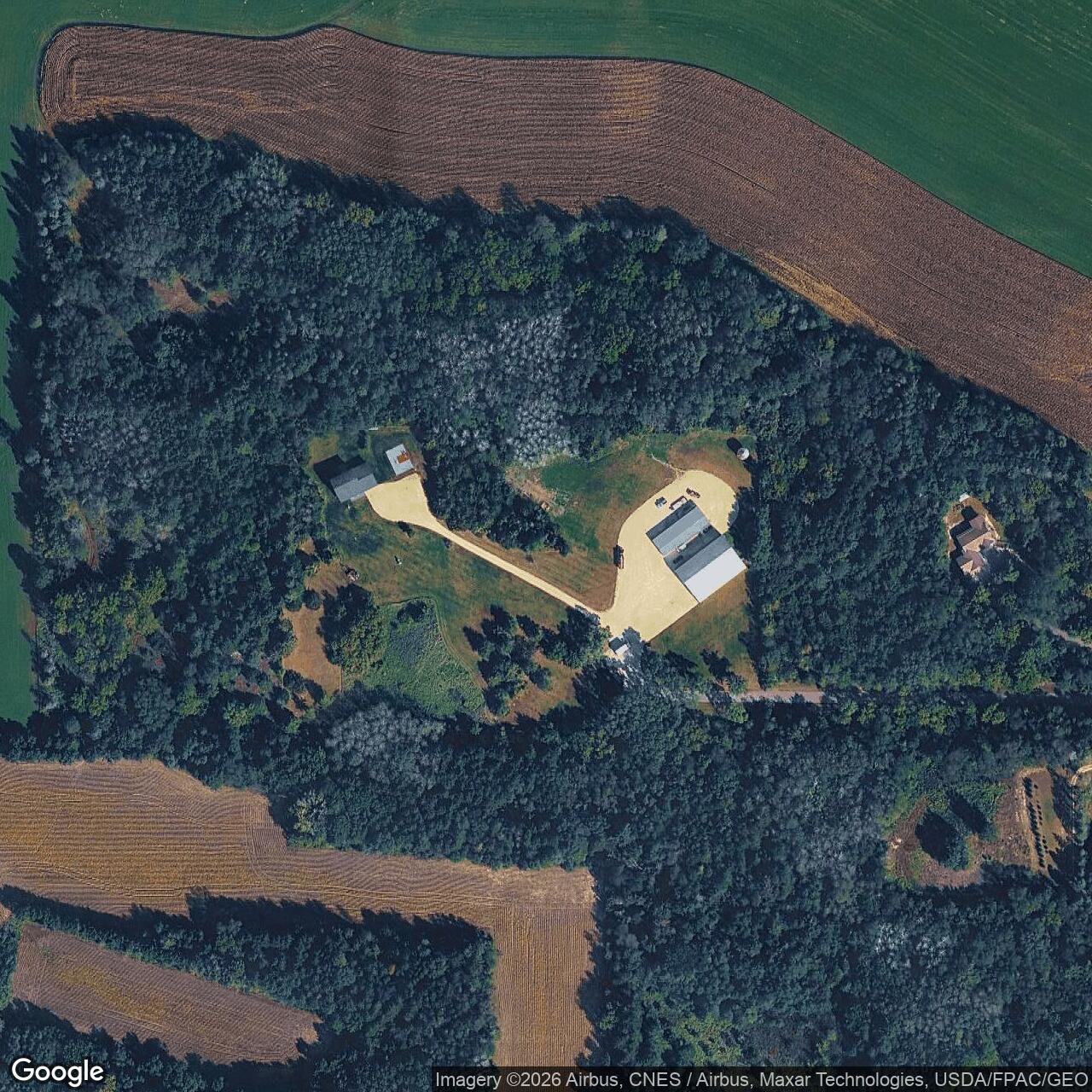
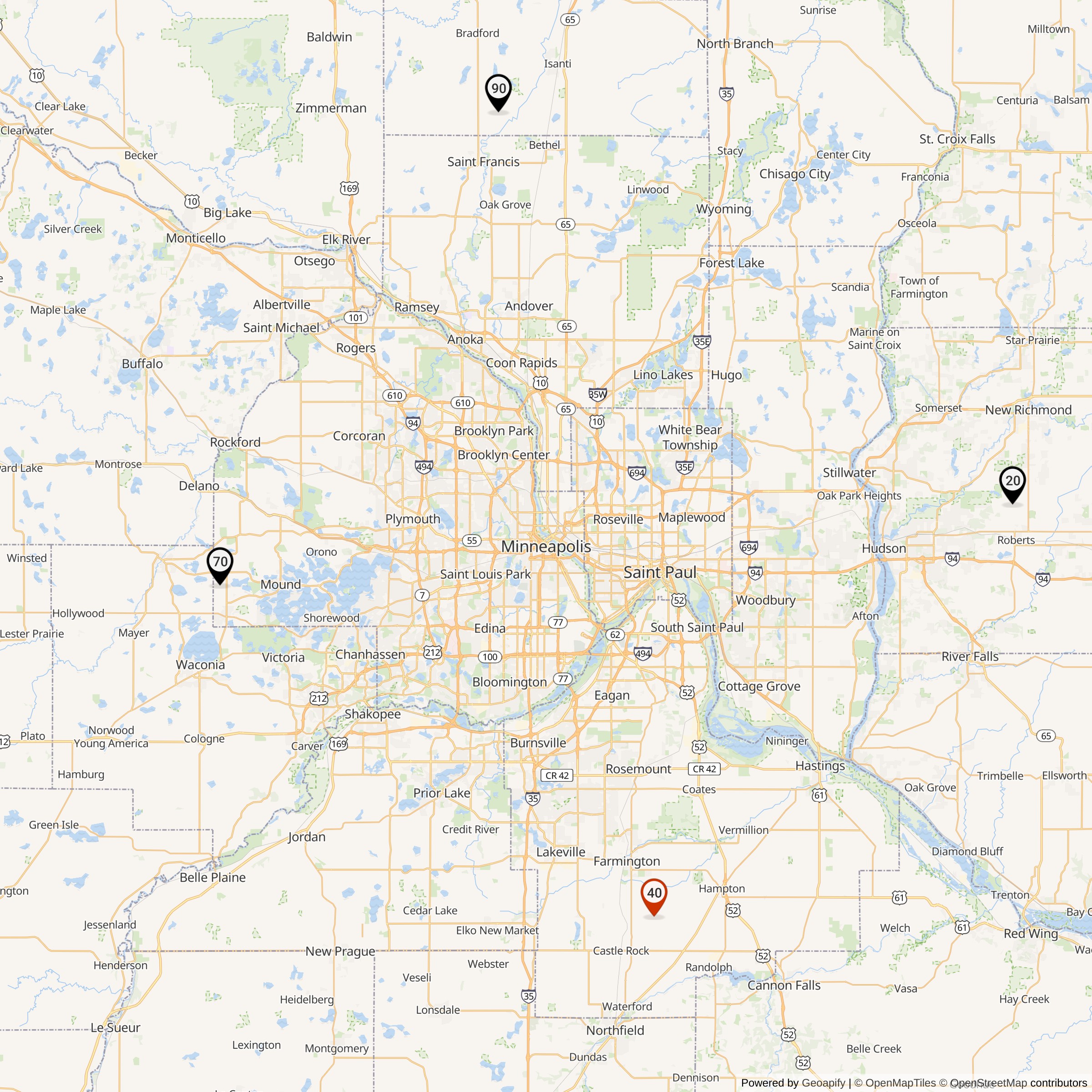
Nike Missile Site MS-40 IFC, Castle Rock Minnesota
Longitude: -93.1015952157821
This location was part of the Twin Cities Defense Area
Site ID: MS-40
This site controlled the missiles at the Launch Area located here.
Site Role: IFC
A typical Nike air defense site consisted of two separate parcels of land. One area was known as the Integrated Fire Control (IFC) Area. This site contained the Nike system's ground-based radar and computer systems designed to detect and track hostile aircraft, and to guide the missiles to their targets.
The second parcel of land was known as the Launcher Area. At the launcher area, Nike missiles were stored horizontally within heavily constructed underground missile magazines. A large, missile elevator brought the Nikes to the surface of the site where they would be pushed across twin steel rails to one of four satellite launchers.
Elaboration on how Nike worked here.
Missile Type: Ajax/Hercules
The Nike Ajax was the first in the Army's family of guided missiles, and the world's first operational, guided, surface-to-air missile system. Nike Ajax had a burnout speed of Mach 2.3, a range of 25-30 miles, and a ceiling of 65,000 feet.
Designed to carry either nuclear and/or high-explosive warheads, the Nike Hercules missile could attack supersonic aircraft operating at altitudes in excess of 150,000 feet and at a range of more than 87 miles.
Battery Type: single
Date Site Converted to Hercules Missile: October, 1959
Nike Hercules were more powerful and nuclear capable missiles. Many locations originally built for the Ajax were later modified and upgraded to the newer Hercules.
Current site status: demolished
Nike Battery MS-40 in Farmington, Minnesota is the best-preserved Nike installation in Minnesota. After decommissioning, missiles, fueling and guiding systems were removed but the remaining buildings provide a rich level of material. The site typifies the Nike system in its technical, operational, and architectural elements and is a physical manifestation of American military history and Cold War involvement.
The IFC area of the site has been in private ownership for many years. Ownership of the launcher site passed from the military to the former United States Bureau of Mines in 1973, which used the base as a water-jet, rock-cutting research center until 1995. After the Bureau of Mines was disbanded in 1995, management was handled by the Twin Cities Research Center Closure Team, with the Federal Government planning to transfer ownership to a different government agency or private party.
List of all Nike Installations in the Twin Cities Defense AreaList of all Nike Installations in Minnesota