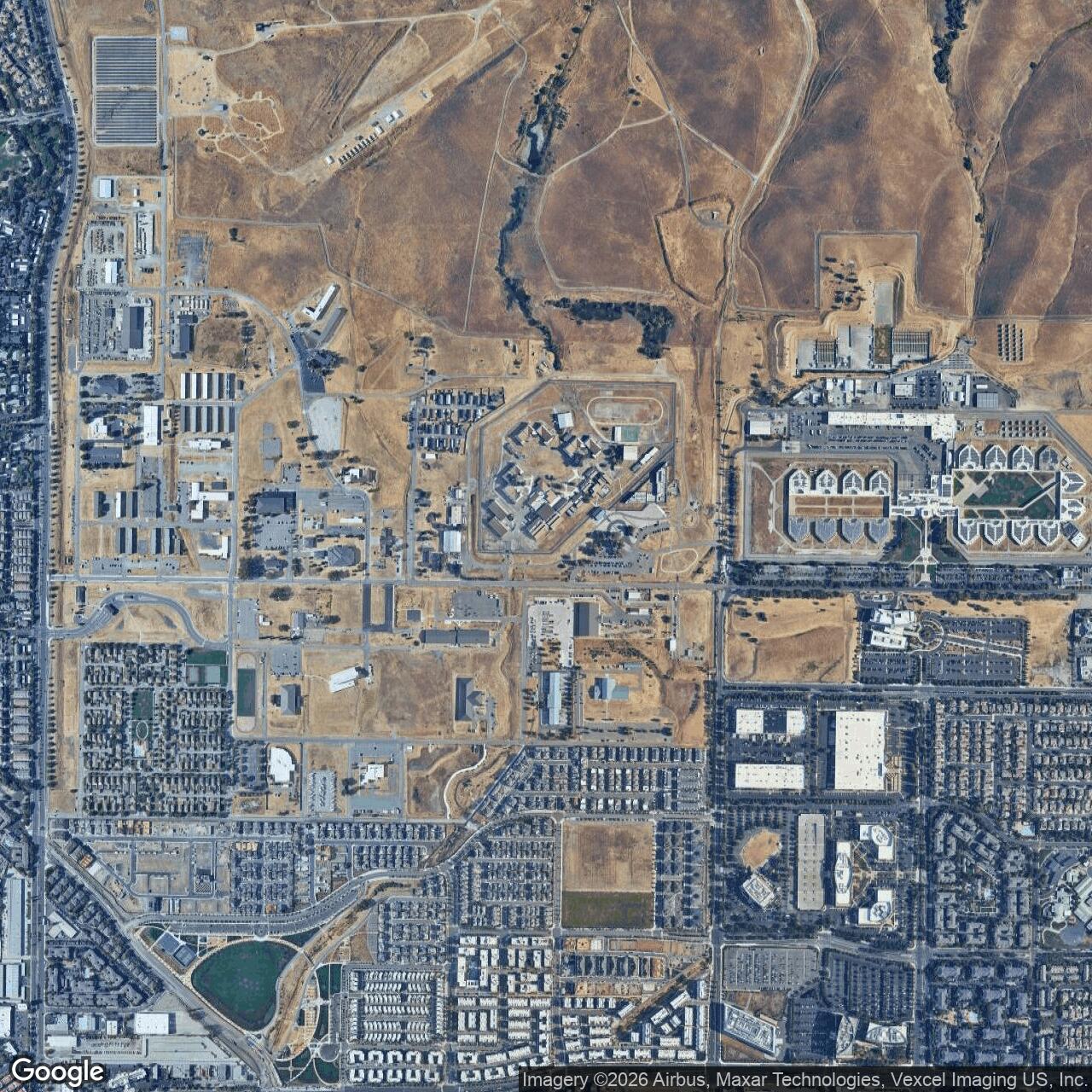
Camp Parks / Naval Construction Battalion Replacement Depot Parks, Dublin California
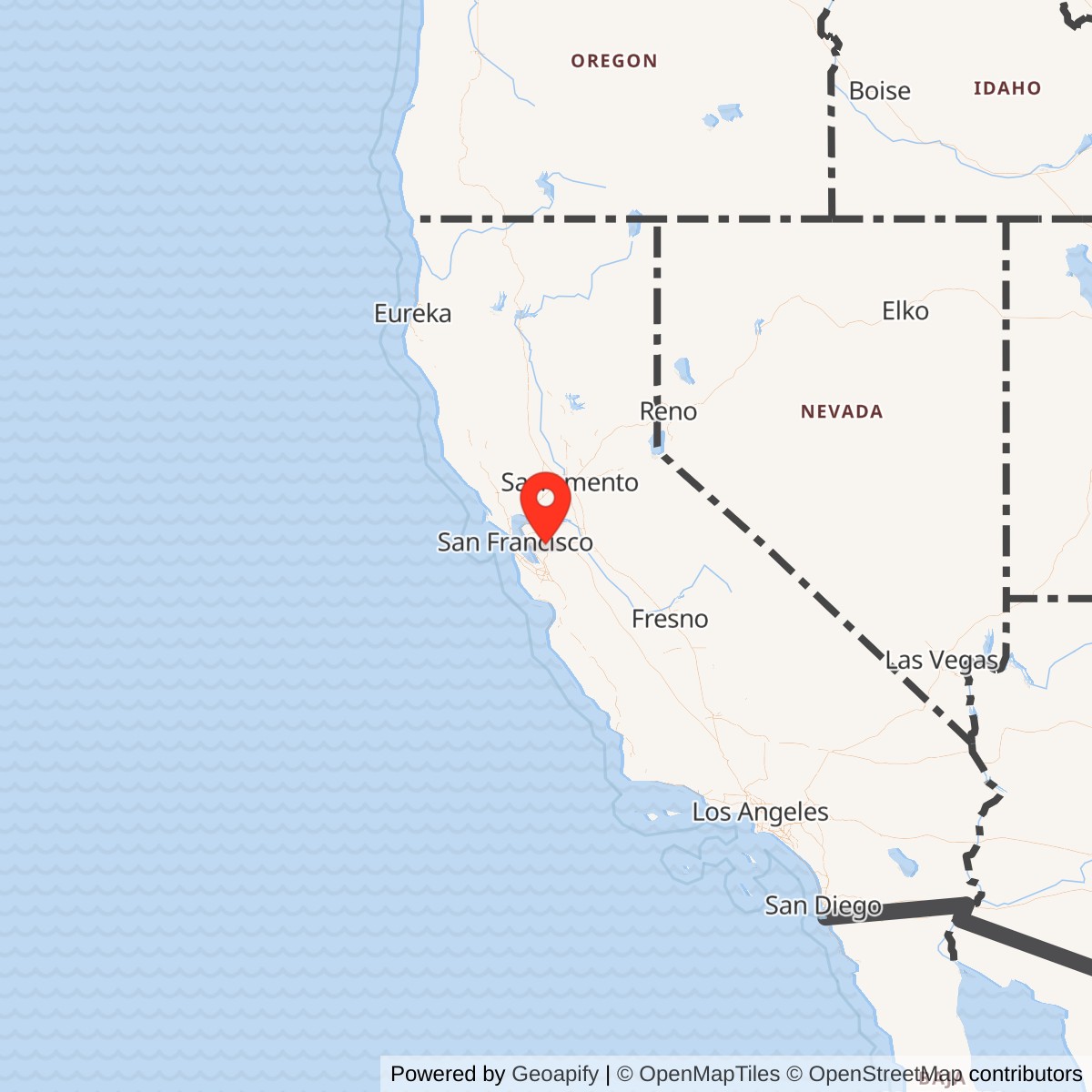
Longitude: -121.897511
Current Role: Active U.S. Army Reserve garrison and training area with the Dublin Camp Parks Military History Center and restored historic Camp Parks gate/sign.
Camp Parks is an active U.S. Army Reserve installation in Dublin, California, whose military identity is layered across three services. It began in World War II as a U.S. Navy Seabee replacement, training, recuperation, and redeployment base; became Parks Air Force Base during the Korean War mobilization; and later returned to Army control as a reserve-component mobilization and training installation. Its current official name is Parks Reserve Forces Training Area, usually shortened to PRFTA, though the historic name Camp Parks remains common in Army, city, and public usage.
The installation occupies a strategic Bay Area position east of Oakland and south of the Carquinez and Suisun approaches, close to rail, port, highway, and population centers but with enough remaining open ground for ranges, training lanes, cantonment functions, and reserve-unit support. Today it is surrounded by dense residential and commercial development in Dublin and the wider Tri-Valley. That urban setting makes Camp Parks unusual: it is both a compact Army training base and one of the last military training footprints serving Reserve and National Guard formations in the San Francisco Bay Area.
Camp Parks should not be treated as a World War II Army camp in the narrow sense. Its original mission belonged to the Navy, and its wartime community was part of the "Fleet City" complex that included Camp Parks, Camp Shoemaker, and the U.S. Naval Hospital Shoemaker. Its Army significance comes from the post-1959 Army transfer, the 1980 designation as Parks Reserve Forces Training Area, and its continuing role as an active Army Reserve training, mobilization, mission-command, intelligence, medical, cyber, and installation-support site.
Mission Evolution
Camp Parks was created during the wartime expansion of the U.S. Navy's Construction Battalions. The Navy needed a West Coast center that could receive Seabees returning from the Pacific, reorganize battalions, provide medical and administrative processing, retrain personnel, and prepare units either for another overseas tour or for separation. The installation was commissioned in January 1943 and named for Rear Admiral Charles W. Parks, Civil Engineer Corps, U.S. Navy. In World War II it functioned as a Naval Construction Battalion Replacement Depot and a major Seabee recuperation and redeployment center.The larger Fleet City arrangement made the site more important than a single camp. Camp Parks handled Seabee replacement, reorganization, and training. Camp Shoemaker, immediately adjacent, became a Navy personnel distribution and separation center. U.S. Naval Hospital Shoemaker treated the sick and wounded, including returning Seabees. Together, the three installations created a wartime naval personnel and support city on the east side of the Bay Area. Local history and Army sources describe the complex as having been disestablished after the war, with the former military land then partially leased to Alameda County for rehabilitation and jail-related uses while temporary wartime buildings were removed.
The Korean War brought the next major mission change. In 1951 the Air Force took over the unused camp, renamed it Parks Air Force Base, and made it a basic military training center. The Air Force rebuilt much of the post and used it as part of the Air Training Command basic-training surge. The 3275th Air Indoctrination Wing / Military Training Wing operated there during this period, and Parks became one of the few Air Force bases whose central mission was personnel training rather than flight operations. That Air Force phase faded by the late 1950s as basic training consolidated elsewhere.
The installation transferred to the Army in July 1959. For a time it operated in standby status under Sixth Army and the Presidio of San Francisco, while parts of the former base were declared excess or transferred to local and private ownership. The Army's enduring reason for retaining the site was reserve-component readiness. In 1973 the Army determined that the post was needed as a mobilization and training center for reserve forces in war or natural disaster. On 11 December 1980, the Army designated the post a semi-active installation and renamed it Parks Reserve Forces Training Area. That decision created the modern Army identity of Camp Parks.
The current mission is focused on reserve readiness rather than deployment staging on the World War II scale. Camp Parks provides base operations, installation services, training support, ranges, classrooms, mission-training facilities, medical and intelligence training, cyber and military-intelligence tenant support, and mobilization-related capability for Army Reserve, National Guard, active-component, joint, and community users. Its present mission statement emphasizes base operations, installation services, and training support for the U.S. Army Reserve, Department of Defense service branches, and surrounding community, while its vision centers on refining Soldier skills for large-scale, multidomain operations.
World War II: Seabee Camp and Fleet City
Camp Parks' World War II story is inseparable from the Seabees. The Navy created the Construction Battalions to build bases, airfields, roads, piers, warehouses, fuel systems, hospitals, and other infrastructure in forward theaters. By 1943-1945 thousands of Seabees had spent long, difficult periods in the Pacific. When battalions returned to the United States, the Navy needed a place where men could rest, receive medical treatment, reorganize, retrain, replace losses, and either prepare for another deployment or move toward discharge. Camp Parks filled that role on the West Coast.The wartime camp developed rapidly from muddy, open land into a large naval training and replacement center. Local histories emphasize the scale: by 1945 the paved parade ground could assemble more than 20,000 men and hundreds of officers, and the camp could house multiple Seabee battalions at once. The base was not merely a barracks area. It included administration buildings, training spaces, parade fields, mess halls, recreation facilities, chapels, shops, housing, medical-processing relationships with nearby Shoemaker Naval Hospital, and transportation links to the Bay Area port and rail system.
The installation also had an architectural legacy. In 1944, Seabee architect Bruce Alonzo Goff designed the Camp Parks entrance sign and attached guard shack. The City of Dublin and the Army later treated that sign as a historically important remnant of the wartime base; the Army evaluated it as National Register eligible in 1998, and the State Historic Preservation Officer concurred in 1999. The sign became a rare physical survivor of the Navy era, especially because most World War II temporary buildings were removed, demolished, or replaced after the war. In 2025-2026 the sign was relocated and rededicated at the modern main-gate area, with the City of Dublin and the Army emphasizing the sign's Navy, Air Force, and Army layers.
Camp Parks' wartime importance lies in the fact that it supported the maintenance of combat engineering power in the Pacific. The Seabees' forward construction work depended on a pipeline of trained, reorganized, and healthy units. Camp Parks helped keep that pipeline functioning. It was not a battlefield, but it mattered directly to the Navy's ability to build and sustain forward bases across the Pacific war.
Parks Air Force Base and Cold War Reuse
After World War II, the Navy disestablished Camp Parks, Camp Shoemaker, and Shoemaker Naval Hospital. From 1946 to 1951, the land was leased for Alameda County use, and wartime buildings were gradually dismantled. The site's military value returned during the Korean War. The Air Force needed expanded basic training capacity and in 1951 converted the former Camp Parks into Parks Air Force Base.The Air Force phase gave the post a new physical and administrative identity. Much of the old wartime base had to be rebuilt. The 3275th Air Indoctrination Wing was established, and mass basic training began in 1952. The base later housed the 3275th Military Training Wing and associated medical and support functions. Parks was unusual because its mission was not based on aircraft operations from a runway; it was a personnel-training and processing installation. This made it a Korean War and early Cold War manpower base rather than a conventional flying field.
By the late 1950s, Air Force needs changed. Basic training and air-base defense training moved or consolidated elsewhere, and Parks Air Force Base lost its primary mission. The installation transferred to the Army in July 1959. In the years that followed, the Army kept portions of the site in standby or retained use while other parcels moved into local, county, and private hands. USACE's Formerly Used Defense Sites documentation later treated parts of the former Parks AFB / Fleet City landscape as eligible for environmental investigation, reflecting the complicated history of Navy, Air Force, and Army control.
Army Reserve Era
The modern Army era began with the decision to preserve Camp Parks as a reserve-component training and mobilization site. In 1973 the Army determined that the post was needed for reserve mobilization and training in war or natural disaster. On 11 December 1980, it was formally designated Parks Reserve Forces Training Area. That change made the base's mission both narrower and more durable: rather than training huge wartime masses of Seabees or Air Force recruits, Camp Parks became a permanent Army Reserve and joint-use training support installation.The installation's command relationships changed over time. Army history notes that PRFTA became a sub-installation of Fort Lewis in 1992, then shifted command-and-control relationships in 1993 as Army Reserve Command took over responsibility and the installation became associated with Fort McCoy. In 2005, PRFTA became a sub-installation of U.S. Army Garrison Fort Hunter Liggett. That current relationship matters because Camp Parks is geographically separate but administratively tied to a larger Army Reserve installation structure in California.
Current Camp Parks supports a dense mix of tenant units and training functions. Official Army pages identify tenants including the 84th Training Command's Camp Parks Mission Training Complex, the 80th Training Command TASS Training Center, 1-363rd and 2-360th Training Support Battalions under the 120th Infantry Brigade, the 368th Military Intelligence Battalion, the Western Cyber Protection Center, the 9th Battalion / 104th Regiment health-services training mission, the 902nd Military Intelligence Field Office, and the 191st Army Band. These organizations show how far the mission has shifted from the Seabee replacement depot of 1943. The post now supports mission command, intelligence, cyber, medical, training-support, administrative, and reserve-readiness functions.
Parks also serves as a regional training resource. The 2016 Military Asset List described it as the only training facility for U.S. Army Reserve units in the San Francisco Bay Area, home to more than 30 reserve units, and capable of training up to 15,000 Reservists and Guardsmen per year. Available assets have included ranges, a Battle Projection Center, Regional Training Site-Medical, Regional Training Site-Intelligence, a Mission Training Complex, classrooms, billeting, and support infrastructure. The same document listed the installation land area as 2,468 acres, while an Army operational-range assessment described a similar 2,484.70-acre footprint with a large operational range area and a smaller cantonment/non-operational area. The difference reflects source and survey conventions, not a different installation.
Facilities and Physical Layout
Camp Parks' layout reflects its layered history. The World War II Navy base began as a large temporary complex of Seabee barracks, administration buildings, parade and training areas, medical support relationships, shops, roads, utility systems, and connections to adjacent Camp Shoemaker and Shoemaker Naval Hospital. Many Navy-era temporary structures disappeared after 1946. The Air Force then rebuilt much of the installation for Korean War basic training, giving the post a new street pattern, building stock, and personnel-processing function.The present installation consists of a cantonment and a training/range footprint embedded in an urbanizing setting. The 2016 Military Asset List described Camp Parks as 2,468 acres in the heart of Dublin, surrounded by dense civilian housing and commercial lots. The Army operational range assessment described 2,484.70 acres, including approximately 1,992.34 acres of operational range footprint and 492.36 acres of non-operational area, including the cantonment area and the U.S. Air Force Communication Annex. That split explains the current mission: the built-up area supports administration, tenants, classrooms, lodging, and base services, while the larger range area preserves training functions that are difficult to replace in the Bay Area.
The most visible historic physical survivor is the Camp Parks sign and guard shack designed by Bruce Goff. The sign's survival is important because most temporary World War II facilities were removed, and because the sign visually connects the Navy, Air Force, and Army phases of the base. Its restoration and relocation to the modern main gate created a public-facing historic marker that now links the active installation to the Dublin Camp Parks Military History Center.
Units, Organizations, and Systems
Camp Parks is best understood through systems rather than a single famous combat unit. During World War II it belonged to the Navy's Seabee replacement, recuperation, and redeployment system. It supported Construction Battalions returning from the Pacific and formed part of the Fleet City network with Camp Shoemaker and Shoemaker Naval Hospital.During the Korean War and early Cold War it became part of the Air Training Command basic-training system as Parks Air Force Base. The 3275th Air Indoctrination Wing and later 3275th Military Training Wing were central to that phase. The base processed and trained airmen rather than launching aircraft, making it an important nonflying Air Force training installation.
In the modern Army period, Camp Parks belongs to the Army Reserve training and installation-support system. Its current tenant organizations link the installation to mission-command training, military intelligence, cyber defense, medical training, training support to Reserve and National Guard units, music/community-relations support, counterintelligence, garrison services, and emergency support. The installation is also a sub-installation of U.S. Army Garrison Fort Hunter Liggett, connecting it administratively to the larger California Army Reserve training complex.
Current Status
Camp Parks remains active as Parks Reserve Forces Training Area. It is a U.S. Army installation in Dublin, California, and a sub-installation of U.S. Army Garrison Fort Hunter Liggett. Its mission is to provide base operations, installation services, and training support for the Army Reserve, other DoD service branches, and the surrounding community. Official Army descriptions call it a premier academic institution, military intelligence facility, and Mission Training Complex supporting readiness for the Army Reserve and the joint force.The post's current value is heightened by geography. The Bay Area has lost many major military installations since the end of the Cold War, including nearby naval stations, depots, and air bases. Camp Parks survives as one of the region's few active military training footprints. That makes it important not only to the Army Reserve but also to the broader joint and community emergency-support ecosystem in Northern California.
Environmental and land-use issues remain part of the site's current history. USACE identifies Former Parks AFB areas as a FUDS project because portions of the former Navy, Army, and Air Force property were transferred to local or private ownership before 1986. Investigations have focused on former areas of concern such as the Camp Shoemaker Burn Pit and Hickman Road Sanitary Fill Area, reflecting the environmental legacy of mid-twentieth-century military operations on lands no longer fully inside today's active installation.
Camp Parks Cruise book from 1940s
Chronology
- 1942 The Camp Parks / Fleet City area began developing as part of the Navy's World War II expansion in the Dublin-Shoemaker area.
- 1943-01-19 Camp Parks was commissioned as a Navy base and home for the Seabees / Naval Construction Battalion Replacement Depot.
- 1943 Camp Shoemaker and U.S. Naval Hospital Shoemaker operated alongside Camp Parks as part of the Fleet City complex.
- 1944 Seabee architect Bruce Alonzo Goff designed the Camp Parks entrance sign and attached guard shack.
- 1945 Camp Parks had grown into a major Seabee training, replacement, recuperation, and redeployment center; local history describes its parade ground as capable of mustering more than 20,000 men and hundreds of officers.
- 1946 The Secretary of the Navy disestablished Camp Parks, Camp Shoemaker, and Shoemaker Naval Hospital.
- 1946-1951 The Navy leased land to Alameda County for rehabilitation and related county uses; many wartime buildings were dismantled.
- 1951 The U.S. Air Force established Parks Air Force Base during the Korean War mobilization.
- 1952-03 Mass Air Force basic training began at Parks under the 3275th Air Indoctrination Wing.
- 1956 Air Training Command discontinued basic military and air-base defense schools at Parks, beginning the end of the Air Force basic-training mission.
- 1959-07 The installation transferred to the U.S. Army.
- 1959-1973 The Army operated the post in standby status under Sixth Army / Presidio of San Francisco while parts of the former base were transferred or declared excess.
- 1965 Army history records that the installation was declared excess except for acreage retained for National Guard and Navy use.
- 1973 The Army determined that Camp Parks was needed as a mobilization and training center for Reserve Components in war or natural disaster.
- 1980-12-11 The Army designated the post a semi-active installation and renamed it Parks Reserve Forces Training Area.
- 1992 PRFTA became a sub-installation of Fort Lewis.
- 1993 Command and control shifted from FORSCOM to Army Reserve Command, and PRFTA became associated with Fort McCoy.
- 1998 The Army evaluated the historic Camp Parks sign and guard shack as eligible for the National Register of Historic Places.
- 1999 The California State Historic Preservation Officer concurred with the historic-sign eligibility assessment.
- 2005 PRFTA became a sub-installation of U.S. Army Garrison Fort Hunter Liggett.
- 2016 The Military Asset List described PRFTA as a 2,468-acre Army Reserve training center in Dublin and the only training facility for U.S. Army Reserve units in the San Francisco Bay Area.
- 2025-2026 The historic Camp Parks sign was relocated, restored, and rededicated at the modern main-gate area in partnership between the Army and the City of Dublin.
- Present Camp Parks remains active as Parks Reserve Forces Training Area, supporting Army Reserve, National Guard, joint, tenant, mission-command, intelligence, cyber, medical, and community-support missions.