
Shoemaker Naval Hospital, Dublin California
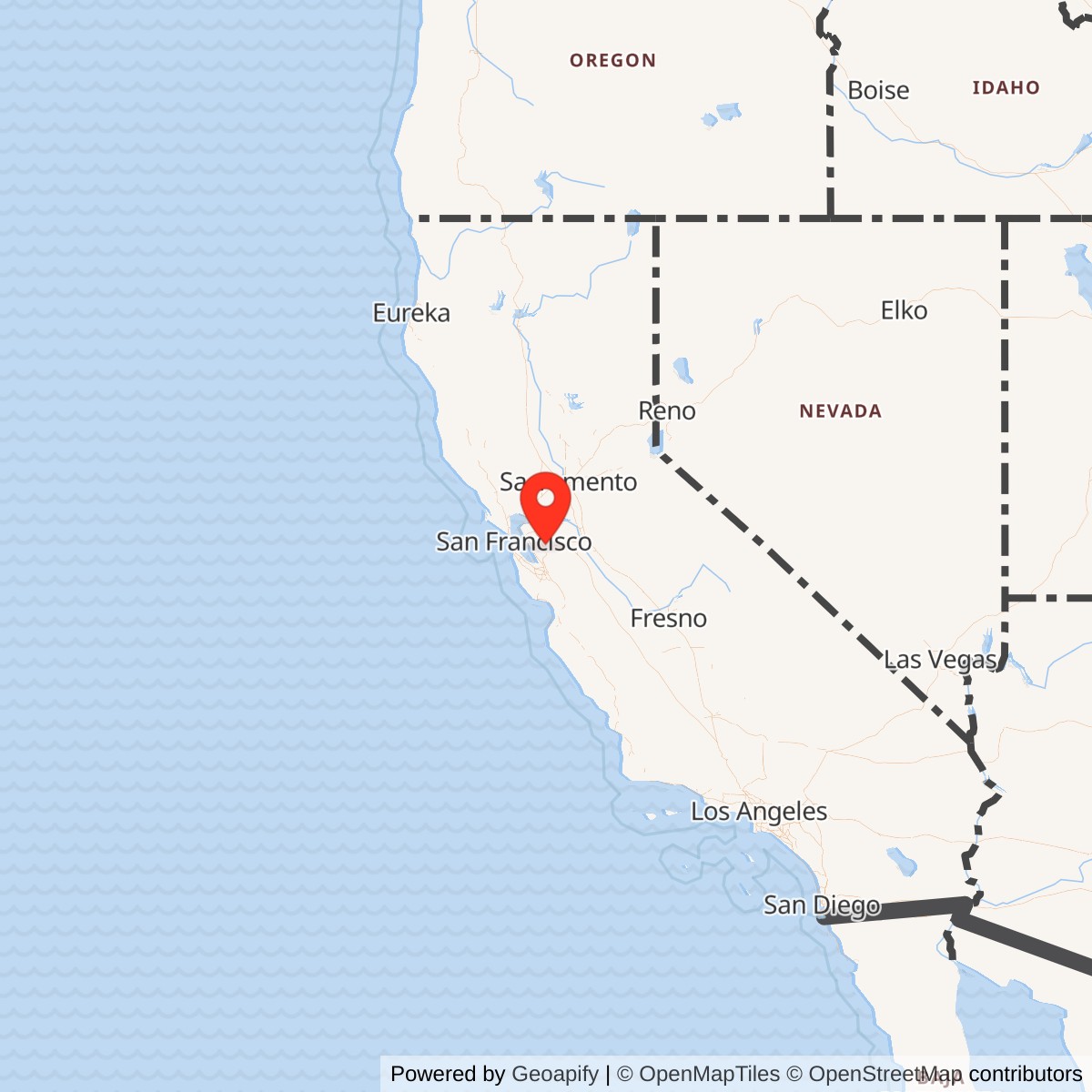
Longitude: -121.875556
Current Role: Former naval hospital site in the East Dublin / Dublin-Pleasanton Fleet City reuse landscape; wartime hospital buildings were dismantled or redeveloped and no active Navy medical function remains.
Shoemaker Naval Hospital was the medical heart of Fleet City, the Navy's short-lived but enormous World War II installation complex in the Dublin and Pleasanton area of Alameda County. It was not a shipyard, air station, or harbor-defense base. It was a wartime hospital built to receive, treat, stabilize, rehabilitate, and process Navy and Marine Corps personnel moving through the Pacific War personnel pipeline. In a landscape of barracks, parade grounds, receiving stations, Seabee training areas, separation counters, and disbursing offices, the hospital was the place where the human cost of that pipeline became visible.
The hospital belonged to the three-base Fleet City system. Camp Parks lay to the west along Dougherty Road and served the Naval Construction Battalions, the Seabees, as a replacement and recuperation center. Camp Shoemaker lay between Parks and the hospital and operated as a Navy personnel distribution, receiving, training, separation, and administrative center. Shoemaker Naval Hospital stood to the east along the Tassajara Road side of the same broad reservation and treated the sick and wounded sailors, Marines, Seabees, and transient personnel who passed through that inland Navy city.
The distinction matters because the name Shoemaker can be confusing. Camp Shoemaker, the U.S. Naval Training and Distribution Center at Shoemaker, and Shoemaker Naval Hospital were closely linked, and in 1944 they were administratively grouped under the training and distribution center command. They were not identical facilities. Camp Shoemaker moved people through the Navy. Camp Parks rebuilt Seabee battalions for further service or demobilization. Shoemaker Naval Hospital treated the men, and in many cases helped determine whether they could return to duty, transfer onward, recover from war service, or leave the Navy.
The Navy built the hospital at speed in 1943 as part of a major West Coast hospital expansion. The official Navy construction history identifies Shoemaker as the second of the new West Coast naval hospitals. It was commissioned on 1943-10-01 and designed to serve the Construction Battalion Replacement and Recuperation Center at adjacent Camp Parks, about twenty miles southeast of Oakland. Its original hospital plant was a 1,000-bed temporary frame complex with thirty-one ward buildings arranged in radial groups and connected by passageways. By the end of the war, local Dublin historical material describes Shoemaker Naval Hospital as a 3,000-bed facility that cared for almost 46,000 patients during World War II. The two figures are best read as different moments in the hospital's evolution: the 1,000-bed commissioned wartime hospital described by the Bureau of Yards and Docks, and the larger end-of-war hospital remembered by the local museum and city sources.
Mission Evolution
Shoemaker Naval Hospital grew out of the Navy's need to sustain a war that was being fought across the Pacific. Ships and advance bases could not be kept in motion by new sailors alone. The system also needed hospitals, receiving stations, convalescent channels, replacement depots, discharge processes, and medical boards. By 1943, the San Francisco Bay Area was one of the Navy's great West Coast hubs, with major installations at Treasure Island, Alameda, Mare Island, Oakland, Port Chicago, and other points around the bay. The inland Amador Valley gave the Navy room to build a large temporary personnel complex close enough to those ports and rail connections, yet outside the congestion of the waterfront.The first mission of Shoemaker Naval Hospital was to support the Seabee replacement and recuperation mission at Camp Parks. Camp Parks received Naval Construction Battalion personnel returning from the Pacific after long tours in difficult conditions. Some men needed leave and reorganization. Some needed further training before redeployment. Others needed surgery, medical care, dental work, psychiatric care, physical rehabilitation, or discharge because they were no longer fit for duty. The hospital provided the medical side of that process.
The mission broadened as Fleet City matured. The Navy's own 1945 training and distribution center material states that on 1944-04-13 the Construction and Replacement Depot at Camp Parks, the U.S. Naval Hospital, the U.S. Naval Disciplinary Barracks, and the Receiving Station were organized under a single administrative command, the U.S. Naval Training and Distribution Center, Shoemaker, California. That change did not erase the hospital's separate medical mission, but it placed the hospital inside a larger personnel-processing command. From then on, the medical installation served not only Seabees from Camp Parks, but the broader flow of personnel through Shoemaker's receiving, reclassification, transient, and separation systems.
The war's last year placed a different burden on the hospital. By 1945, the Navy was simultaneously sending personnel toward the Pacific and preparing for a massive postwar return of men and women from overseas duty. Camp Shoemaker was processing enormous numbers of transient personnel. Camp Parks was preparing and then demobilizing Seabee battalions. The hospital had to care for battle casualties, exhausted construction troops, sick transient sailors, men recovering from overseas disease and injury, and personnel whose medical condition affected their next orders. Medical work was therefore inseparable from the Navy's administrative work. A diagnosis could return a man to duty, hold him for treatment, move him to convalescence, send him toward separation, or change the Navy's accounting of available manpower.
By 1946 the mission ended almost as abruptly as it had begun. The Secretary of the Navy disestablished the three Fleet City facilities after World War II. The hospital closed with the rest of the wartime Navy complex. Unlike older permanent naval hospitals at major ports, Shoemaker had been designed as a temporary wartime facility. Its buildings, wards, passageways, and support structures were not preserved as a lasting medical campus. They were folded into the postwar disposal, lease, demolition, and redevelopment history of the broader former Fleet City reservation.
Operational Role
The hospital's operational role was care at the scale of a personnel depot. Shoemaker Naval Hospital did not simply treat local base workers. It served the movement of the Pacific Fleet's people. Patients could be Seabees returning from island bases, sailors moving through Camp Shoemaker, Marines and naval personnel requiring transfer or convalescence, or service members whose physical condition had to be documented before separation. In that setting, hospital care was part medical treatment, part manpower management, and part moral obligation to the people who had sustained the fleet.The first operational layer was ordinary wartime hospital work. Patients needed triage, ward assignment, surgery, nursing, laboratory work, X-rays, dental care, medication, nutrition, sanitation, and records. The hospital's thirty-one ward buildings, radial ward groups, connecting passageways, and temporary frame construction existed to make that volume manageable. Covered or connected circulation mattered in a hospital where patients, nurses, corpsmen, doctors, orderlies, and supplies had to move between wards, treatment spaces, kitchens, administrative offices, and support buildings in all weather.
The second layer was rehabilitation and return to duty. Fleet City existed because the Navy wanted to conserve trained manpower. An experienced Seabee equipment operator, electrician, steelworker, carpenter, or mechanic was not easily replaced. A sick or wounded sailor who could be made fit for duty again represented usable naval strength. Hospital care at Shoemaker therefore had an operational value beyond compassion. It helped determine how many men could return to Camp Parks for retraining, how many could be sent onward by Camp Shoemaker, and how many should be separated from service.
The third layer was medical screening in the distribution system. Camp Shoemaker's 1945 yearbook describes a medical processing center where men checking into the distribution center had their physical condition recorded, blood pressure taken, ears, throat, heart, and lungs examined, and medical data compiled. That medical-processing function was distinct from full hospital inpatient care, but it shows how closely medical work was woven into the wider Shoemaker system. The hospital was not an isolated infirmary. It was part of a network in which physical examination, inpatient care, medical records, disbursing records, orders, and transportation all had to align.
The fourth layer was wartime nursing and women's service. The City of Dublin's historical summary identifies Shoemaker Naval Hospital as one of several Navy installations around the country where women were accepted as enlisted and officer personnel. Later Dublin museum programming specifically highlighted Navy nurses and Red Cross workers who served at Camp Parks and neighboring Shoemaker Hospital. Their work included caring for wounded and sick personnel, comforting men in transition, and helping patients move through a dynamic postwar medical and separation environment. The hospital's history is therefore not only a story of buildings and beds. It is also a story of Navy nurses, WAVES, Red Cross workers, hospital corpsmen, doctors, clerks, and support personnel who made the wartime medical machine function.
The fifth layer was demobilization. At the end of the war, personnel returning from the Pacific needed physical examinations, treatment, records review, separation decisions, and sometimes continuing care. Camp Shoemaker became a major discharge and separation center. Shoemaker Naval Hospital supported that process by documenting who was fit, who required further treatment, who could be released, and who needed a different medical pathway. In 1945 and 1946, the hospital's mission shifted from keeping men in the war to helping unwind the human machinery of wartime service.
Site Design and Facilities
Shoemaker Naval Hospital was a purpose-built wartime hospital campus. The official Navy construction history describes it as a 1,000-bed hospital housed in thirty-one ward buildings arranged in four radial groups, with all buildings connected by passageways. It was commissioned on 1943-10-01. The buildings were temporary frame construction, similar to Camp Parks, and they were diagonally end-braced to resist seismic disturbance. That detail is important. The Navy did not expect a permanent monument, but it did recognize that even temporary wartime buildings in the Bay Area needed earthquake-aware bracing.The hospital's location inside Fleet City explains its layout and function. The public Fleet City marker places Camp Parks along Dougherty Road, the U.S. Naval Hospital along Tassajara Road, and Camp Shoemaker between them. That east-to-west arrangement created a logical functional sequence. Camp Parks handled the Seabee replacement and recuperation mission. Camp Shoemaker handled receiving, distribution, training, separation, and disciplinary functions. The hospital stood on the eastern side, close enough to serve both and large enough to act as the medical anchor of the entire complex.
The initial ward plan suggests a hospital designed for rapid construction, efficient circulation, and large patient loads. Radial ward groups could be constructed quickly, supervised efficiently, and tied into common treatment, service, and administrative spaces. Connecting passageways let patients and staff move between buildings without treating every ward as an isolated hut. The design was not luxurious, but it was suited to wartime speed, patient volume, and temporary-use assumptions.
By the end of the war, Dublin historical material describes Shoemaker Naval Hospital as a 3,000-bed facility. The growth from the Navy construction history's initial 1,000 beds to the local end-of-war 3,000-bed memory reflects how wartime medical stations often expanded as patient loads increased. The facility also developed the personnel and support functions that went with that larger scale: nurses' work, Red Cross support, equipment, therapy items, patient recreation, administration, medical records, and the routines required to handle tens of thousands of patients in only a few years.
Very little of the hospital's built environment appears to survive as a recognizable Navy medical campus. The temporary character of the buildings, postwar disestablishment, later county use, Air Force and Army phases on nearby former Fleet City land, and East Dublin redevelopment erased most of the visible hospital landscape. The hospital is now best located through historical maps, markers, Dublin museum interpretation, the Fleet City site memory, and the known east-side Tassajara Road relationship rather than through preserved wards or an intact medical district.
Units, Organizations, and People
The central unit was U.S. Naval Hospital Shoemaker. It was part of the Navy's wartime medical system and, after 1944, part of the administrative landscape of the U.S. Naval Training and Distribution Center, Shoemaker, California. Its medical mission placed it under the broader Navy medical system, while its local command relationships tied it to Camp Parks, Camp Shoemaker, and the Twelfth Naval District's personnel network.The hospital's patients were its defining population. Seabees from Camp Parks were especially important because the hospital was designed to serve the Construction Battalion Replacement and Recuperation Center. These men returned from the Pacific after long tours building bases, roads, piers, airstrips, warehouses, utilities, and other infrastructure under tropical disease, bombardment, exhaustion, and difficult environmental conditions. Some were hospitalized. Some recovered and went back to battalions. Others were found no longer fit for duty and moved toward discharge.
Camp Shoemaker's transient sailors formed another major patient population. The receiving station's 1945 material describes a station through which men passed for a few hours, days, weeks, months, or years, either heading overseas or returning stateside. In that stream, illness, injury, medical screening, and physical reclassification were constant concerns. The hospital gave the distribution center a place to send patients who needed more than a brief processing-center examination.
The hospital staff included naval doctors, nurses, hospital corpsmen, enlisted support personnel, administrative clerks, Red Cross workers, and other wartime medical and support personnel. The exact staff roster has not been fully reconstructed here, but the City of Dublin's later exhibit material makes clear that Navy nurses and Red Cross workers were central to the hospital's memory. The hospital also belonged to the wider story of women's wartime service because women served at Shoemaker in officer, enlisted, nursing, and support roles.
The hospital's local command environment included the U.S. Naval Training and Distribution Center at Shoemaker. The 1945 TADCEN yearbook identifies Commodore Otto M. Forster as commander of the training and distribution center and states that the hospital was one of the activities organized under that umbrella command on 1944-04-13. This makes Shoemaker Naval Hospital part of a larger command system rather than a free-standing hospital with no relationship to the distribution center next door.
Role in the Wider Military Network
Shoemaker Naval Hospital only makes sense when placed in the Navy's West Coast wartime network. In 1943, the Navy was rapidly expanding hospitals in California and elsewhere because the Pacific War was producing a massive demand for beds, surgery, rehabilitation, convalescence, and medical administration. The official construction history notes that new hospitals at Camp Pendleton, Shoemaker, and San Leandro, plus additions at Long Beach, Oakland, and Corona, increased California naval-hospital capacity by more than 6,000 beds. Shoemaker was one piece of that expansion.Its immediate network was Fleet City. Camp Parks sent the hospital Seabees who needed treatment or recovery. Camp Shoemaker sent it transient personnel whose medical condition affected orders, classification, or separation. The hospital sent men back to duty, held them for care, or helped move them out of the Navy. The three installations were therefore mutually dependent. A receiving station without hospital capacity would bottleneck. A Seabee recuperation depot without a hospital would lose many of the men it was supposed to restore. A hospital without nearby personnel and replacement centers would have been poorly placed. Fleet City worked because medical, personnel, training, distribution, and recovery functions sat side by side.
The wider network stretched to the Pacific. Patients at Shoemaker represented the effects of work and combat thousands of miles away. A Seabee sickened or injured on an island base, a sailor returning from overseas duty, a Marine needing convalescence, or a transient patient awaiting reassignment all linked East Dublin to the war's forward edge. The hospital's wards were not at the battlefront, but they were part of the same system that kept the fleet, advance bases, and amphibious operations supplied with trained and medically ready personnel.
Shoemaker Naval Hospital also fits into the Navy's demobilization network. After V-J Day, the problem changed from creating manpower to releasing it responsibly. Personnel could not simply be sent home without medical review, records, pay, orders, and travel. The hospital helped determine which men were medically ready to separate, which required additional treatment, and which had disabilities or continuing needs that had to be documented. This made the hospital part of the transition from wartime mobilization to postwar veteran life.
Women in Service
Shoemaker Naval Hospital's memory is strongly tied to women in wartime military service. The City of Dublin identifies Shoemaker Naval Hospital as one of the Navy installations where women were accepted as enlisted and officer personnel. Dublin's 2018 Women in Service exhibit emphasized Navy nurses and Red Cross workers at Camp Parks and Shoemaker Hospital, describing the hospital as a 3,000-bed facility that cared for almost 46,000 patients during the war. The exhibit language is important because it preserves the hospital not only as a patient-care facility, but as a workplace where women directly supported wartime Navy medicine.Navy nurses carried the most visible medical role. They worked in wards, supported surgery and recovery, monitored patients, administered medications, managed daily patient routines, and helped stabilize men who were sick, wounded, frightened, exhausted, or facing separation from service. In a temporary hospital filled with returning Pacific War personnel, nursing meant more than technical care. It meant restoring order to lives disrupted by deployment, injury, disease, and demobilization.
Red Cross workers occupied another vital space. They helped with morale, comfort, communications, recreation, and patient welfare. In a hospital tied to a massive transient personnel system, Red Cross support could help bridge the emotional gap between war service and home. Men at Shoemaker might be waiting for surgery, a medical board, discharge, reassignment, or news from family. Welfare work was not peripheral. It was part of the wartime hospital's ability to keep patients connected and stable.
WAVES and enlisted women also belonged to the broader Fleet City administrative and support environment. The hospital and nearby distribution center required clerical work, records, communications, food service, supply, recreation, and specialized support. Their presence adds an important layer to the installation's story. Shoemaker Naval Hospital was a place where women helped transform wartime military medicine from a small professional world into a mass-service institution capable of handling tens of thousands of patients.
Closure and Postwar Reuse
The hospital closed in 1946 when the Navy disestablished Fleet City. The same sources that identify Camp Parks, Camp Shoemaker, and Shoemaker Naval Hospital as adjacent wartime Navy facilities also state that the three were disestablished after the war. The closure followed the logic of the installation's creation. Shoemaker Naval Hospital had been built quickly for a temporary wartime need. Once the personnel pipeline collapsed after demobilization, the Navy no longer needed a 3,000-bed inland hospital in East Dublin.The postwar reuse story is tangled because the hospital site was part of a broader federal landscape. From 1946 to 1951 the Navy leased much of the former Fleet City land to Alameda County for use as a rehabilitation center, and Santa Rita County Jail began operating on part of the former military landscape in 1947. In 1951 the Air Force took over portions of the former Fleet City property as Parks Air Force Base. In 1959 the property transferred to Army jurisdiction. In 1980 the Army designated the remaining military installation as Parks Reserve Forces Training Area. The hospital itself did not continue as a Navy medical installation through these phases, but its land became part of the broader reuse and redevelopment story.
Modern East Dublin has absorbed much of the former hospital landscape. Local sources place Shoemaker Naval Hospital in what is now East Dublin and associate it roughly with the area east of Camp Shoemaker and along the Tassajara Road side of the old Fleet City complex. Unlike Camp Parks, which retains an active military identity as Parks Reserve Forces Training Area, Shoemaker Naval Hospital survives mainly in historical memory, local museum interpretation, markers, photographs, and site references.
Current Status
Shoemaker Naval Hospital is no longer an active Navy installation. The wartime hospital closed in 1946, and the temporary medical campus has been dismantled, erased, or redeveloped. The former site lies within the heavily changed East Dublin and Dublin-Pleasanton reuse landscape of the old Fleet City reservation. No active Navy hospital function remains there.The nearby Camp Parks name does continue through Parks Reserve Forces Training Area, an active Army Reserve installation, but that should not be confused with a continuing Naval Hospital Shoemaker mission. The hospital's status is former. Its current identity is best described as a redeveloped former Navy hospital site within East Dublin's larger Fleet City historical landscape.
The most visible public memory comes from Dublin and regional interpretation. The Fleet City marker recalls the three adjacent Navy bases and states that the U.S. Naval Hospital admitted nearly 46,000 patients during its short existence. The City of Dublin's Camp Parks history material identifies Shoemaker Naval Hospital as part of Fleet City and highlights its role in women's wartime service. These markers and museum programs are now the clearest public links to a hospital that once handled an enormous wartime medical workload, then vanished from the physical landscape.
Chronology
- 1942-11 The Navy began building the broad Camp Parks and Shoemaker wartime complex in the Dublin-Pleasanton area, soon remembered locally as Fleet City.
- 1943-01-19 Camp Parks was commissioned as the Navy Seabee replacement and recuperation center west of the future Shoemaker hospital area.
- 1943-02 The supplemental agreement authorizing Shoemaker's thirty-one hospital ward buildings was signed near the end of the month, according to the Navy's construction history.
- 1943-04 The Navy's West Coast hospital expansion was underway, including new hospitals at Camp Pendleton, Shoemaker, and San Leandro and additions at Long Beach, Oakland, and Corona.
- 1943-05-15 The activity that later became the Receiving Barracks component of the U.S. Naval Training and Distribution Center was commissioned as the U.S. Navy Personnel Distribution Center, Pleasanton, California.
- 1943-10-01 Shoemaker Naval Hospital was commissioned as a temporary West Coast naval hospital designed to serve the adjacent Camp Parks Construction Battalion Replacement and Recuperation Center.
- 1944-04-13 The Construction and Replacement Depot at Camp Parks, U.S. Naval Hospital, U.S. Naval Disciplinary Barracks, and Receiving Station were organized under the U.S. Naval Training and Distribution Center, Shoemaker, California.
- 1945 Fleet City operated at peak wartime intensity, with Camp Parks, Camp Shoemaker, and Shoemaker Naval Hospital supporting Seabee recuperation, transient personnel processing, hospital care, and demobilization preparation.
- 1945 Local and marker histories later remembered Shoemaker Naval Hospital as a 3,000-bed facility that cared for almost 46,000 patients during the war.
- 1946 The Secretary of the Navy disestablished the three Fleet City facilities, including Shoemaker Naval Hospital.
- 1946-1951 The Navy leased much of the former Fleet City land to Alameda County for local institutional use after the wartime Navy mission ended.
- 1947 Santa Rita County Jail began operating on part of the former military landscape, marking one major postwar reuse of Fleet City land.
- 1951 The Air Force established Parks Air Force Base on portions of the former Fleet City property during the Korean War period, but Shoemaker Naval Hospital did not reopen as a Navy medical installation.
- 1959 The former Parks Air Force Base property transferred to Army jurisdiction.
- 1980-12-11 The Army officially designated Camp Parks as Parks Reserve Forces Training Area, preserving the broader Camp Parks name but not reviving the former Shoemaker Naval Hospital.
- 1997-04-05 The Fleet City marker was dedicated, preserving public memory of Camp Parks, Camp Shoemaker, and the U.S. Naval Hospital and recording the hospital's nearly 46,000 wartime patients.
- 2018 Dublin Camp Parks Military History Center programming highlighted Women in Service at Camp Parks and Shoemaker Hospital, emphasizing Navy nurses, Red Cross workers, and the hospital's 3,000-bed wartime scale.
- Present Shoemaker Naval Hospital remains a former Navy hospital site within the redeveloped East Dublin and Dublin-Pleasanton Fleet City landscape. No active Navy medical function remains.

Sources & References
- WEB City of Dublin Historic Camp Parks Entrance Sign and Guard Shack
- WEB MilitaryINSTALLATIONS Camp Parks In-Depth Overview
- WEB U.S. Army Corps of Engineers, Sacramento District Former Parks Air Force Base FUDS
- WEB HyperWar / Bureau of Yards and Docks, Building the Navy's Bases in World War II Chapter 14, Naval Hospitals
- WEB Naval History and Heritage Command, Building the Navy's Bases in World War II Volume I, Part II
- WEB Read the Plaque Fleet City
- WEB Historical Marker Database 1943 Fleet City 1946
- WEB E Clampus Vitus Joaquin Murrieta Chapter No. 13 Fleet City marker text
- WEB City of Dublin Calendar Women in Service Exhibit and Celebrating Women in Service Event, 2018
- WEB California Military History, Fleet City and World War II Camp Parks, Camp Shoemaker and Naval Hospital Shoemaker, Steve Minniear reprint
- WEB GG Archives, Naval Receiving Station U.S. Naval Training and Distribution Center Yearbook 1945
- WEB GG Archives, Life at TADCEN U.S. Naval Training and Distribution Center, Shoemaker, California, 1945
- WEB TracesOfWar, Fleet City Camp Parks / Shoemaker
- WEB Together We Served Naval Hospital Camp Shoemaker, Dublin, CA