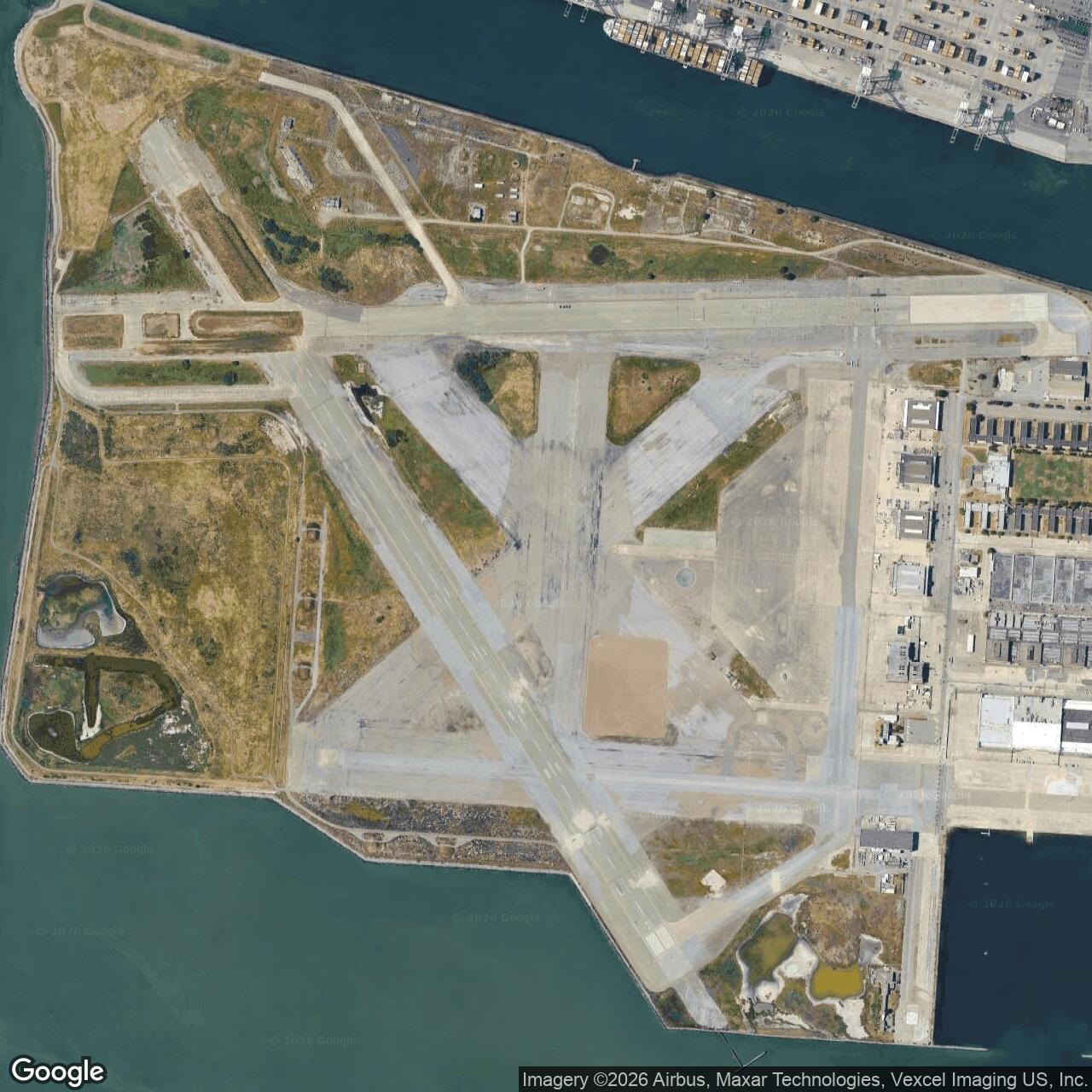
Naval Air Station Alameda, California
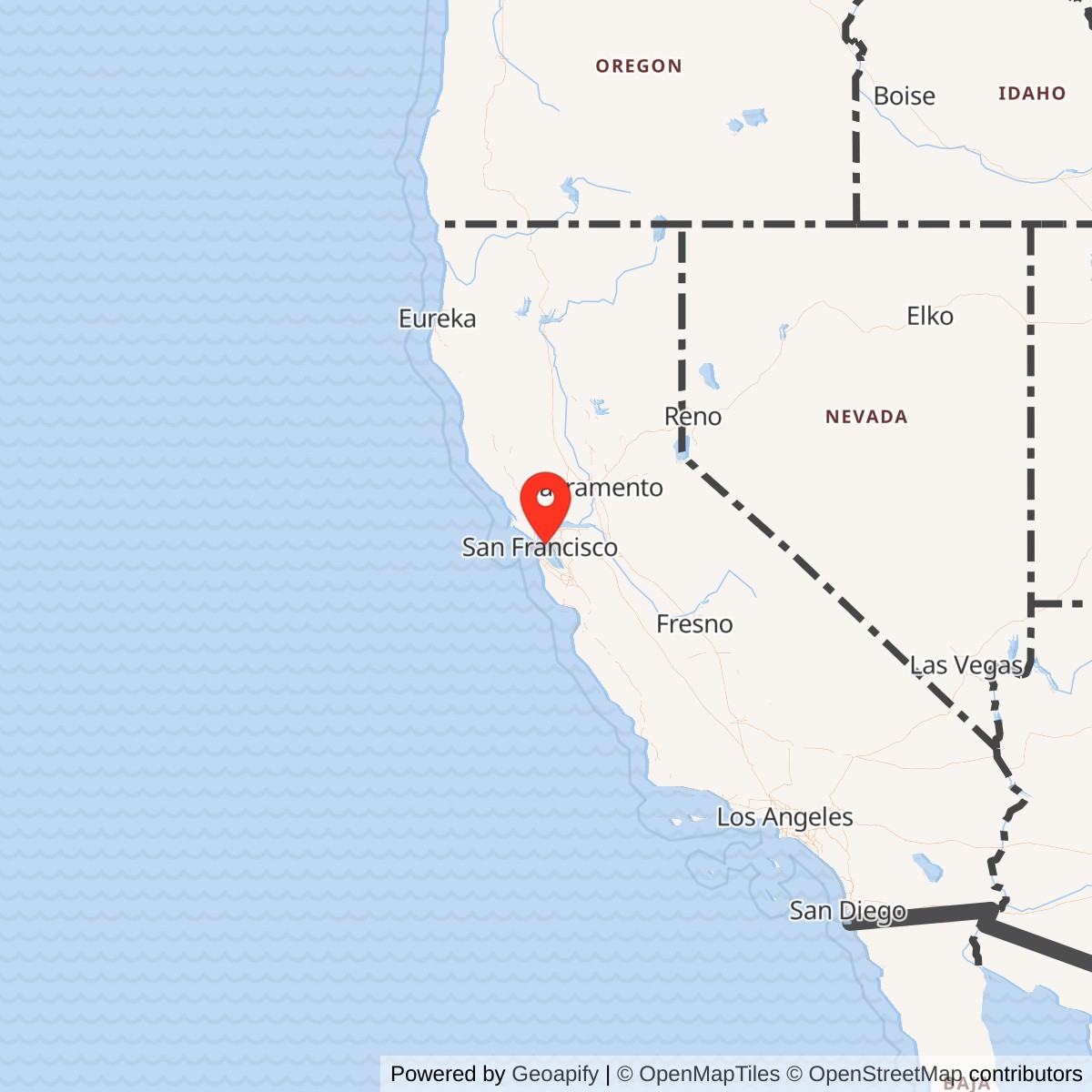
Longitude: -122.318611
Current Role: Alameda Point mixed-use redevelopment, USS Hornet Sea, Air & Space Museum at former Pier 3, VA outpatient clinic/national cemetery reuse on former runway-area property, parks/open space, maritime/commercial reuse, historic-district preservation, and continuing Navy environmental cleanup/property-transfer actions.
The western end of Alameda Island is one of the few places where the geography of San Francisco Bay looks almost engineered for a war story. Long before the runways closed and the hangars became redevelopment landmarks, this was a Navy machine aimed west: carrier piers at the edge of the Bay, giant hangars and shops beside the runways, aircraft moving from repair lines to flight lines, and ships preparing to steam under the Golden Gate toward the Pacific. Naval Air Station Alameda was not simply another wartime airfield. It was one of the Navy's great Pacific logistics-and-aviation platforms, a base built to keep carrier aviation moving at the exact moment when the United States needed to project power across the world's largest ocean.
NAS Alameda occupied Alameda Point, the filled and reshaped western tip of Alameda Island immediately southwest of Oakland's central business district. The site faced the Oakland Inner Harbor on the north and San Francisco Bay on the west and south. The former installation ultimately covered about 2,806 acres, including submerged acreage, and combined runways, seaplane facilities, aircraft maintenance shops, ship berthing, carrier-support piers, housing, administration, supply, medical, and industrial functions. The Navy's own BRAC history describes the wartime mission in plain terms: keep aircraft and carriers operating, move men and materiel across the Pacific, and sustain a tempo that rose from hundreds of thousands of monthly labor hours just after Pearl Harbor to more than two million man-hours in July 1945.
The station's identity was layered from the beginning. Before it was a Navy air station, the area included Alameda Airport, Army Air Corps use as Benton Field, industrial waterfront parcels, rail and ferry-era infrastructure, and Pan American Airways' China Clipper seaplane associations. Congress approved establishment of a naval air station at Alameda in June 1936, authorizing acquisition of approximately 929 acres from the City of Alameda. Construction in the late 1930s and the early World War II period transformed the western end of the island into a major naval aviation station. When naval operations began on 1940-11-01, Alameda entered the Navy's Pacific system just before the war made that system indispensable.
Mission Evolution
NAS Alameda began as a fleet aviation and carrier-support base created to serve the Pacific. The Navy wanted a Bay Area air station that could support carrier air groups, seaplanes, utility aircraft, aircraft repair, training, and fleet logistics while remaining close to West Coast shipyards, supply centers, rail corridors, and the deep-water harbor system of San Francisco Bay. The site's first strategic value was therefore its combination of airfield and waterfront. Aircraft could use the runways, seaplanes could operate from the water, carriers could berth nearby, and repaired aircraft could be moved efficiently back into service.World War II turned that potential into full-scale operations. After Japan attacked Pearl Harbor, Alameda became a wartime production, repair, staging, and ferrying base. The base supported Fleet Air Wing operations, aircraft overhaul, training, logistics, and carrier readiness. It also became headquarters for a wider system of auxiliary and outlying fields across northern and central California and the interior West. These auxiliary fields extended Alameda's reach, allowing the Navy to distribute flight training, carrier-qualification support, patrol activity, and specialized aviation functions beyond the crowded Bay Area core.
The station's most famous wartime episode came in the spring of 1942, when USS Hornet (CV-8) loaded the Army Air Forces B-25 bombers that would become the Doolittle Raid. Hornet took aboard sixteen modified B-25s at Alameda from 1942-03-31 to 1942-04-01 and departed San Francisco Bay on 1942-04-02. The raid itself launched from the carrier on 1942-04-18. Alameda was not where the bombers struck Japan, but it was where the Navy-carrier portion of the operation became physically real: the aircraft were loaded, the crews embarked, and the carrier left the Bay under secrecy. That association permanently ties NAS Alameda to one of the war's most dramatic morale operations.
After World War II, Alameda did not revert to a small peacetime field. It adapted to Cold War naval aviation. The station remained a major fleet-support base through the Korean War, the Vietnam War, and the later Cold War. Its aircraft repair mission grew into Naval Air Rework Facility Alameda and later Naval Aviation Depot Alameda, an industrial aviation-maintenance complex that employed thousands of civilian and military personnel. Its piers and airfield supported aircraft carriers and carrier air wings. Its runways and shops adapted to jet aircraft. In 1967 the airfield was renamed Nimitz Field in honor of Fleet Admiral Chester W. Nimitz.
Alameda also became a key Naval Air Reserve center for northern California. Reserve squadrons, carrier air wing reserve activity, logistics support aircraft, patrol and helicopter units, and support organizations made the base more than a fleet homeport. It was also a training and readiness center for the reserve aviation community. Through these roles, Alameda connected active carrier aviation, reserve aviation, aircraft maintenance, logistics, and Bay Area naval infrastructure in one compact waterfront installation.
By the 1990s, however, the Navy's basing system was shrinking. NAS Alameda was recommended for closure in the 1993 Base Realignment and Closure process. The operational closure occurred on 1997-04-30. The closure ended more than fifty-six years of Navy control, but it did not erase the installation's physical or historical presence. Alameda Point retained the runways, hangars, piers, industrial buildings, housing areas, contaminated sites, and historic district that had accumulated during the base's career.
World War II Mission and Activity
NAS Alameda's World War II importance was not defined by one squadron or one aircraft type. It was defined by tempo. The Navy needed a place where damaged, worn, or newly delivered aircraft could be repaired, serviced, moved, assigned, and sent back to carriers and forward areas. Alameda filled that role while also supporting patrol missions, training activity, seaplane operations, carrier berthing, and a network of auxiliary airfields.The base's primary wartime slogan-level mission can be summarized as keeping naval aircraft and carriers in service. That meant maintenance shops, spare parts, fueling systems, hangars, runways, skilled labor, transportation, communications, supply records, ordnance handling, and around-the-clock coordination with fleet demands. In December 1941, station records documented 230,000 man-hours. At the peak in July 1945, the BRAC history states that the figure exceeded 2,000,000 man-hours. These numbers capture the installation's real wartime role: NAS Alameda converted labor, space, and industrial capacity into combat readiness.
Alameda's location made that effort especially valuable. The station sat beside major Bay Area shipyards, supply depots, rail lines, repair facilities, and deep-water berthing. Aircraft carriers could be present at the station's piers while air groups, aircraft maintenance crews, and logistics organizations operated from the airfield and shops. San Francisco Bay's geography allowed the Navy to combine sea and air preparation in one protected harbor environment before ships passed under the Golden Gate.
The Doolittle Raid episode showed that integrated air-sea function dramatically. The sixteen Army B-25 bombers were not carrier aircraft. They were medium bombers modified for an extraordinary one-way strike. Hornet's own aircraft had to be stowed below, and the bombers were tied down on the flight deck in launch order. Alameda's piers and air-station support enabled that unusual loading operation. When Hornet sailed from the Bay on 1942-04-02, Alameda had helped stage a joint Navy-Army operation whose psychological effect outweighed its physical damage.
The base also supported a larger wartime training and auxiliary-field system. As the Navy expanded, Alameda became associated with numerous outlying fields, including Crows Landing, Hollister, King City, Livermore, Monterey, Paso Robles, Santa Rosa, Vernalis, Watsonville, and others. These fields allowed training and flight operations that could not all fit at the main air station. Alameda therefore functioned as the hub of a regional naval aviation network as well as a major base in its own right.
Facilities and Physical Layout
NAS Alameda's physical design followed the logic of a combined airfield and waterfront base. The airfield core contained two major runways, taxiways, aircraft parking areas, hangars, control facilities, and maintenance buildings. The runways later associated with KNGZ / Nimitz Field were large enough to support postwar jet-era use. The airfield's broad paved surfaces, long safety zones, and open views over the Bay later became some of the most recognizable surviving features of Alameda Point.The waterfront was just as important. The carrier piers and related berthing areas gave Alameda a function that ordinary inland airfields could never provide. Aircraft carriers, cruisers, support ships, and other naval vessels could tie up at the station while aircraft, crews, equipment, and maintenance services moved between ship and shore. This airfield-pier combination made Alameda a true naval air station rather than simply a military airport.
The industrial core included aircraft overhaul and rework facilities, later known as NARF and NADEP Alameda. These shops formed the base's heavy-maintenance heart. Their mission required machine shops, hangars, testing areas, storage, engineering offices, and a large civilian labor force. During World War II and the Cold War, the depot function made Alameda a place where naval aviation was sustained materially, not only launched or parked.
The station also included housing, administrative buildings, medical facilities, training buildings, recreation facilities, schools, warehouses, roads, utilities, and support infrastructure. The base was therefore a city-scale installation, not just a flight line. The 2013 National Register listing of the Alameda Naval Air Station Historic District recognized that the base's significance lay not only in individual structures but also in its planned military landscape: hangars, administrative buildings, designed open spaces, streets, piers, and the spatial relationship between aviation and waterfront functions.
Operational Role in the Cold War
In the Cold War, NAS Alameda became one of the Navy's principal Bay Area aviation and carrier-support bases. It supported the Korean War, Vietnam War, and later Pacific Fleet operations while also serving as a homeport for major ships. The official BRAC history notes that by Christmas 1994, USS Carl Vinson (CVN-70), USS Abraham Lincoln (CVN-72), and USS Arkansas (CGN-41) were homeported together at the station's piers, the last time that combination of two aircraft carriers and a cruiser was present there together.The carrier connection mattered because it tied Alameda directly to the operational Navy. Carriers did not merely visit as symbols. They brought air wings, maintenance demands, logistics requirements, personnel movements, and repair work. The base's piers and aviation depot supported the daily mechanics of deploying and sustaining carrier power. For many sailors and civilian workers, Alameda's history was not abstract strategy; it was shift work, overhaul schedules, ship movements, supply runs, watchstanding, and the rhythms of Pacific Fleet readiness.
The air station also hosted aircraft and missions that illustrate the changing character of naval aviation. Large transports, jet aircraft, patrol aircraft, helicopters, reserve aircraft, and carrier-based aircraft all appeared in the base's postwar story. The Lockheed R6V Constitution, among the largest aircraft ever associated with the Navy, was based there in the early Cold War period. Reserve carrier-air-wing activity later gave the station a major reserve-readiness mission. The combination of active fleet support, reserve training, aircraft maintenance, and ship homeporting made Alameda one of the Navy's most complex West Coast installations.
The Vietnam era reinforced Alameda's importance as a carrier and aviation-support base. The station's piers, shops, supply systems, and airfield supported the Pacific Fleet during a period when carrier deployments were central to U.S. operations in Southeast Asia. Alameda's workforce and infrastructure were part of the home-front machinery behind those deployments. The base did not have to be in Vietnam to affect the war; it sustained ships, aircraft, and crews that operated there.
Closure and BRAC Transition
The end of the Cold War changed the Navy's basing requirements. NAS Alameda was selected for closure in the 1993 BRAC round, and operational closure occurred on 1997-04-30. The closure ended the station's active Navy career, but the transition was not simple. Alameda Point contained thousands of acres, historic structures, major utility systems, submerged lands, contaminated sites, wildlife habitat, former runways, piers, housing, and industrial buildings. Reuse therefore required environmental cleanup, property-transfer agreements, infrastructure planning, historic preservation, and local redevelopment policy.The Alameda Reuse and Redevelopment Authority originally served as the Local Redevelopment Authority. In 2000, the Department of the Navy and ARRA executed a no-cost Economic Development Conveyance memorandum of agreement and a lease in furtherance of conveyance, allowing local control and maintenance before deed transfer. ARRA was dissolved in 2012, and the City of Alameda became the officially recognized Local Reuse Authority.
The Navy has transferred much of the former base in phases. The 2013 Phase 1 no-cost conveyance transferred 509 acres of upland and 870 acres of submerged land to the City of Alameda. Other transfers included housing, public-benefit parcels, park areas, Coast Guard-related property, school-related property, and the 2014 transfer of a large runway-area parcel to the Department of Veterans Affairs for an outpatient clinic and national cemetery use, with management obligations related to the California least tern colony. Remaining property has continued to depend on environmental remediation, land-use controls, and conveyance actions.
Environmental Cleanup and Current Status
NAS Alameda became a major federal cleanup site after closure. EPA identifies the 2,806-acre former Naval Air Station Alameda, now known as Alameda Point, as a closed Navy installation on the western tip of Alameda Island. EPA placed the site on the Superfund National Priorities List in 1999. The site's contamination history reflects decades of naval industrial use: landfills, industrial wastewater, solvents, fuels, metals, PCBs, pesticides, and other contaminants associated with aircraft maintenance, fuel systems, shops, and base operations.The Navy, EPA, California Department of Toxic Substances Control, and the San Francisco Bay Regional Water Quality Control Board have overseen investigation and cleanup work across numerous Installation Restoration sites and petroleum sites. Some sites have been closed or transferred, while other areas require land-use restrictions, institutional controls, groundwater monitoring, landfill management, or additional cleanup work. The environmental story is inseparable from the redevelopment story because some parcels cannot be transferred or fully reused until remedies are complete or protective controls are in place.
Today the former base is Alameda Point. The City of Alameda describes Alameda Point as one of the East Bay's major redevelopment opportunities, with more than 100 businesses and more than 1,000 workers already located there. The city's long-term planning emphasizes employment, commercial space, housing, open space, recreation, waterfront access, historic preservation, and new infrastructure. Former military buildings now support a mixture of maritime uses, makers, beverage producers, public agencies, cultural uses, storage, offices, and redevelopment parcels.
The USS Hornet Sea, Air & Space Museum is one of the most visible historic reuses. The Essex-class USS Hornet (CV-12) is moored at the former air station and preserves a different but related naval story: World War II carrier warfare, Vietnam-era service, and Apollo recovery operations. Its presence at Alameda Point gives the former air station a living public-history anchor that connects visitors to the carrier world that NAS Alameda supported for decades.
The Alameda Naval Air Station Historic District was listed in the National Register of Historic Places in 2013. The district recognizes the base's architecture, military planning, landscape design, and role in twentieth-century naval aviation. The surviving hangars, piers, roads, open spaces, and industrial buildings make Alameda Point one of the most legible former naval aviation landscapes in California.
Chronology
- 1927 Alameda Airport was developed on filled land at the west end of Alameda Island, creating an aviation landscape that later became part of the naval air station story.
- 1930 U.S. Army Air Corps use of the area was associated with Benton Field.
- 1935-11-22 Pan American Airways began China Clipper trans-Pacific flying-boat service from Alameda, making the site internationally known before Navy occupation.
- 1936-06 Congress approved establishment of a naval air station at Alameda; Public Resolution No. 19 authorized federal purchase of approximately 929 acres from the City of Alameda.
- 1936 The City of Alameda ceded the airport area to the U.S. government for naval air-station development.
- 1938 Major naval air station construction moved forward, reshaping the western end of Alameda Island for military use.
- 1940-11-01 Naval Air Station Alameda opened and naval operations began.
- 1941-12-07 Japan attacked Pearl Harbor, pushing NAS Alameda into full wartime operating tempo.
- 1941-12 Station records documented approximately 230,000 man-hours at NAS Alameda during the first month of wartime emergency activity.
- 1942-03-31 to 1942-04-01 USS Hornet loaded sixteen Army Air Forces B-25 bombers at Alameda for the Doolittle Raid.
- 1942-04-02 USS Hornet departed San Francisco Bay with the Doolittle Raiders aboard.
- 1942-04-18 The Doolittle Raid launched from USS Hornet against targets in Japan.
- 1944 Future President Richard Nixon served at NAS Alameda with Fleet Air Wing 8 during part of the year.
- 1945-07 NAS Alameda reached peak wartime production tempo, exceeding 2,000,000 man-hours in around-the-clock operations.
- 1949-1953 Alameda was associated with the Navy's Lockheed R6V Constitution transport aircraft program.
- 1961 Northern California Naval Air Reserve activity became an important part of the station's postwar mission.
- 1967 The airfield was renamed Nimitz Field after Fleet Admiral Chester W. Nimitz.
- 1993 The Defense Base Closure and Realignment Commission recommended closure of NAS Alameda.
- 1994-12 The Navy later identified Christmas 1994 as the last time USS Carl Vinson, USS Abraham Lincoln, and USS Arkansas were homeported together at the station's piers.
- 1997-04-25 The station's disestablishment period culminated in final ceremonies and closure activities.
- 1997-04-30 Operational closure of NAS Alameda occurred under BRAC.
- 1998 USS Hornet opened to the public as a museum ship at Alameda Point.
- 1999-07-22 EPA placed the former NAS Alameda on the Superfund National Priorities List.
- 2000 The Navy and Alameda Reuse and Redevelopment Authority executed the no-cost Economic Development Conveyance framework and lease-in-furtherance-of-conveyance arrangements.
- 2012 ARRA was dissolved, and the City of Alameda became the officially recognized Local Reuse Authority.
- 2013-01 The Alameda Naval Air Station Historic District was placed on the National Register of Historic Places.
- 2013 The Navy transferred Phase 1 no-cost conveyance property to the City of Alameda, including 509 upland acres and 870 submerged acres.
- 2014 The former runway-area parcel was transferred to the Department of Veterans Affairs for outpatient clinic and national cemetery planning, with wildlife-management obligations.
- 2016-2017 Additional conveyance phases transferred former NAS Alameda property for city, school, and redevelopment uses.
- Present Alameda Point remains a former Navy installation undergoing mixed redevelopment, historic preservation, environmental cleanup, wildlife management, public reuse, and phased property transfer.