
Humboldt Bay Navy Section Base / Eureka Section Patrol Base, Samoa California
Longitude: -124.216667
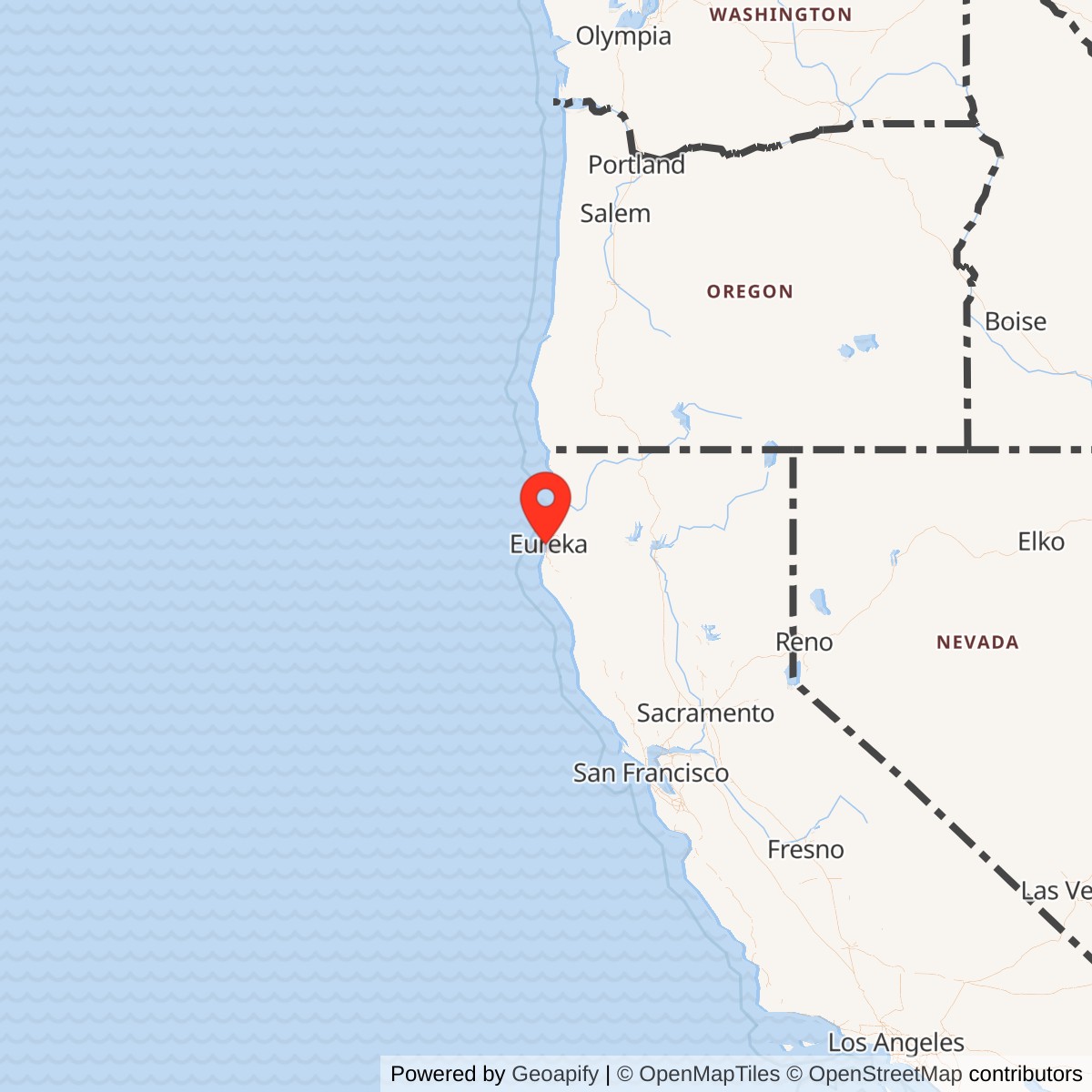
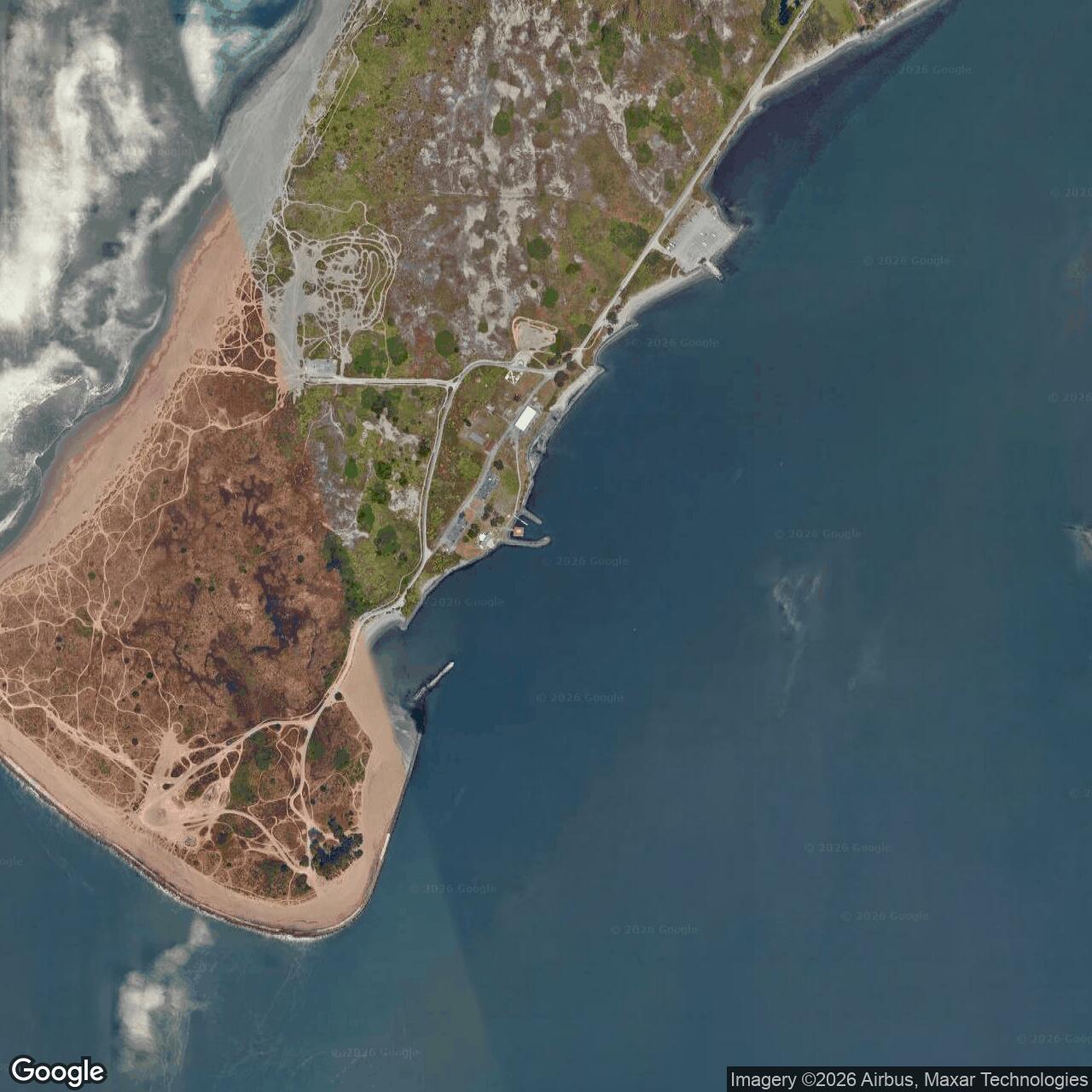
The former Humboldt Bay Navy Section Base occupied waterfront property on the Samoa Peninsula, or North Spit, near the entrance to Humboldt Bay in Humboldt County, California. Local historical evidence places the installation between the present Samoa boat-launching ramp and Coast Guard Station Humboldt Bay, with the wartime seaplane facility at the Samoa Boat Basin.
The section base must be separated from three nearby aviation properties. Naval Auxiliary Air Facility Eureka, the lighter-than-air installation completed on the Samoa Peninsula, stood farther north around the present Samoa Field Airport and drag-strip area. Naval Auxiliary Air Station Arcata occupied the present California Redwood Coast-Humboldt County Airport at McKinleyville. Murray Field at Eureka was a civilian airport used by the Army Air Forces for antisubmarine patrols, not a Navy section base or commissioned Navy air station.
The formal Navy identity was Section Base, Eureka, California, also described locally as the Humboldt Bay Navy Section Base and Eureka Section Patrol Base. The Navy Filing Manual assigned it filing symbol NB35, confirming that it was an established shore activity rather than an informal nickname for the Coast Guard station or the later lighter-than-air field. The surviving records also distinguish the section base from the Captain of the Port, the LTA air facility, the Arcata auxiliary air station, and separate Navy construction and industrial activities around Humboldt Bay.
A section base was a shore unit supporting local naval defense forces, small patrol craft, harbor security, communications, personnel, and limited repair or logistical activity. At Humboldt Bay, the installation served a lightly developed but strategically exposed northern California harbor. It coordinated maritime defense and patrol activity at a time when the Navy could not assume that the Pacific coast was beyond the reach of Japanese submarines, raiders, aircraft, or sabotage.
The wartime Navy activity list for California identifies an Eureka Section of the Naval Local Defense Forces in the Twelfth Naval District, a Section Base, a Captain of the Port, and an auxiliary air station. The same compilation places the commander of the Eureka Section, Naval Local Defense Forces, at Naval Auxiliary Air Station Arcata. This suggests a distributed command arrangement in which the Samoa waterfront base, Arcata air station, the Eureka air facilities, harbor-control functions, and coastal patrol forces operated as parts of one regional defense system rather than as a single compact reservation.
The section base was not Naval Auxiliary Air Facility Eureka. The LTA field had its own airfield, mooring areas, seaplane support, and airship mission, and it was commissioned later in the war. The section base existed before that commissioning and had already exercised local command authority on 1941-12-08, when it ordered Humboldt County's first wartime blackout.
Strategic Context and Establishment
Humboldt Bay was the only major protected harbor on a long stretch of the northern California coast. Its entrance was difficult, its bar was dangerous, and its timber and shipping economy connected the isolated north coast to the wider Pacific maritime system. Those same characteristics made it a useful patrol and refuge harbor while also creating a vulnerability. A hostile submarine operating off Cape Mendocino could threaten merchant traffic, coastal industry, and ships approaching the bay.The Navy's Twelfth Naval District was responsible for northern California and became a major West Coast logistics and local-defense command during World War II. Eureka lay near the district's northern limit and far from the larger bases around San Francisco Bay. A local section base gave the district a permanent command point for patrol craft, communications, harbor control, naval intelligence, liaison with civilian authorities, and coordination with the Coast Guard, Army, and naval aviation.
The exact establishment order has not been located. The 1941 Navy Filing Manual already listed Eureka as a section base, and the installation was functioning as a command authority by 1941-12-08. An earlier planning or activation date may survive in Twelfth Naval District correspondence or Bureau of Yards and Docks records.
The attack on Pearl Harbor immediately transformed the meaning of the base. Civil-defense organizations in Humboldt County activated warning posts, imposed blackout controls, and prepared for invasion or air attack. On 1941-12-08 the section base ordered the first local blackout after reports that enemy aircraft might be moving north along the coast. The reports proved false, but the order demonstrated that the base already exercised operational authority in the regional defense network.
Only twelve days later, Japanese submarine I-17 attacked the tanker Emidio off Cape Mendocino. Five merchant mariners died, and the damaged tanker eventually grounded near Crescent City. The attack confirmed that the threat underlying the base's mission was not imaginary. Humboldt Bay became one of the few continental United States regions where a naval-defense installation could point to enemy action within its immediate operating area.
Mission and Command Relationships
The section base's primary mission was to support the Eureka Section of the Naval Local Defense Forces, Twelfth Naval District. Local defense forces protected harbors and coastal approaches with patrol craft, aircraft coordination, observation, communications, and control of shipping. They were not a fleet striking force. Their value came from persistent presence, local knowledge, and the ability to respond quickly to submarines, suspicious vessels, disabled ships, air incidents, and security alarms.The Captain of the Port function was a related but distinguishable responsibility. Navy wartime activity lists identify a Captain of the Port for Eureka, indicating formal control over vessel movement, harbor security, dangerous cargoes, blackout compliance, and liaison with commercial maritime interests. The exact administrative relationship between the Captain of the Port and the section-base commanding officer has not been located, but both belonged to the same Twelfth Naval District defense structure.
A postwar maritime publication described a former officer as commanding officer of the U.S. Naval Section Base, Humboldt Bay, and Section Commander of the Northern California Sector, Eureka and Monterey. That description supports a broader regional role extending beyond the immediate harbor. It should not be read as proof that every Monterey installation was subordinate to Samoa, but it indicates that the Eureka command participated in a coastal sector system linking northern California ports and patrol areas.
Naval aviation was integral to the mission even though the section base was not itself a naval air station. The Samoa Boat Basin seaplane facility provided a waterfront operating point, while heavier-than-air aircraft used Arcata and Navy airships used the Eureka LTA field. A Navy pilot responded during the Emidio attack, and later crash boats stood ready for aircraft emergencies. The section base helped connect surface patrol, harbor control, seaplanes, airships, landplanes, and shore observers.
The Coast Guard was also part of the wartime command relationship. During World War II the Coast Guard operated as part of the Navy, while retaining its rescue expertise, boat stations, and personnel system. Coast Guard Station Humboldt Bay remained a distinct installation near the section base, but its boats, surfmen, beach patrols, and communications worked within the naval defense effort. This relationship was cooperative and sometimes tense, as the Emidio rescue demonstrated.
Waterfront and Seaplane Facilities
The best-supported physical feature is the seaplane base at the Samoa Boat Basin. A local World War II memorial page identifies the seaplane facility at that basin, while later testimony places the section base between the present boat ramp and Coast Guard lifeboat station. This waterfront setting gave the Navy sheltered water for small craft and seaplanes, direct access to Humboldt Bay, and proximity to the harbor entrance and Coast Guard rescue station.The exact wartime parcel boundary has not been recovered. The base likely incorporated the boat basin, docks or floats, administrative and communications spaces, berthing or staging areas, and access roads, but no complete public facility schedule was found. It would be unsafe to assign the LTA field's airfield acreage, mooring circles, or runway to the section base, even though the federal Formerly Used Defense Sites inventory later grouped the section, seaplane, and lighter-than-air properties under one Eureka umbrella record.
Temporary quarters were available at the section base when an eighty-man Coast Guard beach-patrol unit arrived in 1942. Local historical research states that the men first stayed at the Navy base before moving two weeks later into former Hammond Lumber Company barracks near the Samoa Cookhouse. This evidence confirms that the base could receive transient or attached personnel, but it does not establish the total Navy barracks capacity or the permanent section-base complement.
Communications were essential to the installation's function. The blackout order, patrol coordination, vessel reporting, aircraft response, and rescue decisions all required telephone, radio, signal, and messenger connections. A Seabee cruisebook search result references work on a switchboard at the Naval Section Base and general rebuilding at Humboldt Bay.
The waterfront base existed within a larger industrial and military landscape. Chicago Bridge & Iron Company built floating dry docks at Humboldt Bay under Navy contracts, while the LTA facility, Arcata air station, Coast Guard station, civil-defense posts, and a target range at Big Lagoon supported other parts of the defense system. These activities should not be collapsed into the section base's property, but they explain why the Navy needed a local command and harbor-support node.
Local Defense Operations and the Emidio Attack
The Emidio incident provides the clearest surviving operational episode involving the section-base commander. At 2035 on 1941-12-20, the commander received word that the tanker had been attacked by a Japanese submarine near the Eel River, southwest of Humboldt Bay. A Navy pilot located the area, attempted to bomb the suspected submarine position, and established radio contact with the tanker's lifeboats. The bombs failed to detonate, and the merchant crew remained in grave danger.The cutter Shawnee was ordered to prepare to get underway, but the entrance bar was extremely dangerous. Rain squalls, heavy surf, poor visibility, and the blackout of navigation aids made departure hazardous. Chief Boatswain's Mate Gardner J. Churchill of Coast Guard Station Humboldt Bay advised the section-base commander that the cutter could not safely cross the bar and offered instead to take out the station's thirty-six-foot motor lifeboat.
The section-base commander refused permission for the smaller boat to cross the bar. Churchill nevertheless departed at 0105 on 1941-12-21 with five Coast Guardsmen because he believed the men in distress required immediate help. The episode illustrates the commander's operational authority and the difficult judgment involved. It also shows that local rescue expertise could conflict with a higher commander's effort to protect crews and craft from unacceptable risk.
Churchill's crew reported encounters with a suspicious vessel and later a periscope while searching near the damaged tanker. They found no survivors because Emidio's lifeboats had reached the Blunts Reef Lightship. The motor lifeboat returned after roughly eleven hours. Whether the suspicious contacts were Japanese submarines could not be proven, but the incident became an important Coast Guard account of wartime rescue under enemy threat.
The Emidio attack did not produce a confirmed Navy submarine kill, and no later site-specific combat engagement was found for the section base. Its operational importance instead lay in watchfulness, coordination, rapid response, and control of a vulnerable harbor. Most days were defined by patrol reports, false alarms, blackout enforcement, boat movements, communications, and readiness rather than by direct combat.
Coast Guard Beach Patrol and Joint Defense
In 1942 the Coast Guard formed Company C, Twelfth Regiment, for mounted and foot patrols along the Humboldt County coast. An eighty-man group trained at Alameda and traveled north to Eureka. The men initially occupied temporary quarters at the Naval Section Base on Samoa, then moved into larger former lumber-company barracks. The base therefore served as a reception and staging point for a dispersed shore-patrol mission.The patrolmen watched beaches from Clam Beach south toward the Mattole region, reporting suspicious lights, landings, vessels, aircraft, or sabotage. Early patrols lacked portable radios, adequate vehicles, and heavy-weather clothing. The section base, Coast Guard station, civilian warning network, and scattered patrol posts formed a layered system whose effectiveness depended on passing observations to the correct command quickly.
The Coast Guard patrol was not a resident Navy unit and should not be counted as the section base garrison. Its temporary use of Navy quarters demonstrates functional integration, not organizational merger. Likewise, Coast Guard Station Humboldt Bay remained a distinct boat and rescue installation, even though its personnel operated under Navy wartime control and responded to section-base direction.
The joint system also included the Army's aircraft-warning organization, state and local civil defense, the State Guard, commercial pilots, harbor interests, and naval aviation. The section base sat at the intersection of these communities. Its contribution was command continuity, naval communications, local maritime authority, and the ability to coordinate specialized resources that belonged to different services and civilian organizations.
Personnel, Facilities, and Daily Activity
No complete roster of assigned Navy officers, enlisted personnel, civilian employees, or tenant units was located. The section base had a commanding officer and supported local defense and Captain of the Port functions, but the public record does not identify a numbered section-base unit comparable to an aviation squadron. Personnel likely included operations, communications, administration, supply, boat, medical, security, and maintenance specialties, but those categories remain an informed description of section-base needs rather than a verified manning table.Daily work would have centered on maintaining readiness rather than conducting large-scale training. Watchstanders received reports, tracked vessels and aircraft, passed warnings, maintained communications, and coordinated patrol craft and rescue responses. Boat crews required fuel, maintenance, berthing, stores, and weather information. Administrative staff handled personnel, orders, security, mail, property, and liaison with the Twelfth Naval District and surrounding installations.
The dangerous Humboldt Bay bar influenced every waterfront operation. The section base could not treat the harbor entrance as a routine channel. Weather, fog, tides, surf, and darkness affected patrol departures, seaplane activity, rescue decisions, and commercial shipping controls. This environmental reality explains the importance of the nearby Coast Guard station and why local experience mattered in command decisions.
Disestablishment, Disposal, and Current Status
The exact effective closure date remains unresolved. A surviving index of Twelfth Naval District correspondence includes multiple files titled "Section Base, Eureka, California - Disestablishment of" and "Recommendation for Disestablishment of." One related entry is dated 1944-11-10. These records show that the Navy was actively reviewing and processing disestablishment by late 1944, but an index entry is not the same as a final order with an effective date.The timing is consistent with the declining submarine threat off the continental West Coast and the Navy's concentration on offensive operations farther across the Pacific. By late 1944, the need for a separate local-defense section base at Eureka was less urgent than it had been after Pearl Harbor. Nevertheless, related aviation and Coast Guard functions continued, and the exact sequence by which responsibilities were transferred or reduced requires the underlying correspondence.
Postwar federal records grouped the Eureka section base, seaplane activity, and lighter-than-air base under Formerly Used Defense Sites project J09CA7268. The inventory lists one military-munitions-response project and one hazardous, toxic, and radioactive-waste project. Later public summaries describe the response as complete. Because the FUDS entry combines multiple nearby properties, it cannot by itself identify which environmental issue belonged to the section-base parcel.
The present waterfront contains Coast Guard, harbor, boat-ramp, campground, industrial, transportation, and public uses. Local history places the former Navy base between the Samoa boat ramp and Coast Guard Station Humboldt Bay, and states that the boat-ramp area was then part of the Navy installation. A complete cadastral comparison has not been located, so the history does not claim that the entire current Coast Guard station or every boat-basin parcel lies inside the former section-base boundary.
No intact Navy section-base headquarters has been verified. The current landscape has been altered by postwar Coast Guard construction, harbor improvements, roads, recreation facilities, industrial change, erosion, and redevelopment. The Samoa Boat Basin and the Coast Guard station preserve the functional maritime character of the place, but surviving World War II features require field survey and comparison with National Archives base maps.
The National Archives cartographic topical index identifies Eureka Naval Section Base maps among Bureau of Yards and Docks records. Those maps are the most promising source for resolving acreage, property lines, building numbers, docks, seaplane ramps, utilities, and the relationship with the current boat ramp and Coast Guard station.
Chronology
- 1939-1941 The Navy expands local-defense planning and section-base organization as war intensifies overseas.
- 1941 The Navy Filing Manual lists Eureka, California, as section base NB35.
- 1941-12-07 Japan attacks Pearl Harbor, placing the Pacific Coast on immediate wartime alert.
- 1941-12-08 The Humboldt Bay Navy Section Base orders the first wartime blackout in the Eureka region.
- 1941-12-20 Japanese submarine I-17 attacks the tanker Emidio off Cape Mendocino.
- 1941-12-20 The section patrol base commander receives the Emidio distress report and coordinates Navy and Coast Guard response preparations.
- 1941-12-21 Coast Guard motor lifeboat CG-364468 crosses the Humboldt Bay bar to search for Emidio survivors despite the section-base commander's refusal to approve the departure.
- 1941-12-21 The Coast Guard lifeboat returns to Humboldt Bay after an approximately eleven-hour mission.
- 1942 Humboldt County civil-defense, Army warning, Navy patrol, Coast Guard, and aviation systems expand into a layered coastal-defense network.
- 1942 Company C, Twelfth Coast Guard Regiment, sends an eighty-man beach-patrol unit to Humboldt County.
- 1942 The Coast Guard beach-patrol unit temporarily quarters at the Naval Section Base on Samoa before moving to former lumber-company barracks.
- 1942 The Navy develops or expands seaplane facilities at the Samoa Boat Basin as part of the waterfront defense complex.
- 1942-1943 The section base supports harbor patrol, Captain of the Port functions, communications, seaplane activity, rescue coordination, and local defense.
- 1943-07-07 Naval Auxiliary Air Station Arcata is commissioned at McKinleyville, adding heavier-than-air capability to the regional network.
- 1943-08-06 Naval Auxiliary Air Facility Eureka is commissioned on the Samoa Peninsula for lighter-than-air operations.
- 1943-1944 Navy airships, landplanes, seaplanes, patrol craft, Coast Guard units, and shore observers operate within the wider Eureka defense system.
- 1944-11-10 A dated Navy correspondence index entry concerns Section Base, Eureka, California, amid a group of disestablishment and disestablishment-recommendation files.
- Late 1944 Twelfth Naval District records document formal review of the section base's continued requirement and proposed disestablishment.
- 1945-09-02 Japan's formal surrender ends World War II and the remaining continental coastal-defense emergency.
- Post-1945 Navy section-base functions are reduced or transferred, but the exact final effective disestablishment date remains unverified.
- 1946 Congressional legislative-history material refers collectively to the Eureka naval section base and lighter-than-air and seaplane base.
- Postwar The former section-base and related Eureka defense properties pass into mixed Coast Guard, harbor, municipal, industrial, recreation, and transportation uses.
- 2016 The USACE California FUDS inventory lists Eureka's Section, Seaplane, Lighter Than Air Base as project J09CA7268 with MMRP and HTRW project categories.
- 2026 Local historical research locates the former section base between the present Samoa boat ramp and Coast Guard Station Humboldt Bay.
- Present The former section-base waterfront is represented by the Samoa Boat Basin, public boat-launch area, Coast Guard station vicinity, and surrounding mixed harbor uses.
Sources & References
- WEB Navy Filing Manual, 1941 Source for the formal NB35 designation of Eureka, California, as a Navy section base.
- WEB U.S. Naval Activities, World War Two, By State: California Source for Eureka Section Naval Local Defense Forces, Section Base, Captain of the Port, auxiliary aviation, and Arcata command relationships.
- WEB National Archives, U.S. Naval Districts and Regional Records Source for Twelfth Naval District geography, headquarters, and World War II logistics responsibilities.
- WEB Twelfth Naval District Letters Index, entries 151-162 Source for the surviving sequence of Eureka Section Base disestablishment and related correspondence, including a 1944-11-10 entry.
- WEB Clarke Historical Museum, Civil Defense in Humboldt County during World War II Source for the 1941-12-08 blackout order issued by the Humboldt Bay Navy Section Base.
- WEB Humboldt County World War II Memorial, Naval Section Base Source for the seaplane base at the Samoa Boat Basin.
- WEB Humboldt County World War II Memorial, War Comes to Humboldt Source for the countywide defense buildup, Arcata station, Samoa LTA field, drydock industry, and Japanese submarine threat.
- WEB U.S. Naval Institute, You Have To Go Out Source for the Emidio attack response, section patrol base command decisions, Coast Guard lifeboat mission, and reported submarine contacts.
- WEB Lost Coast Outpost, Coasties on Horseback Source for Company C beach patrol, temporary quarters at the section base, base location between the boat ramp and Coast Guard station, and patrol conditions.
- PDF U.S. Army Corps of Engineers, California FUDS Inventory Source for FUDS project J09CA7268, Section, Seaplane, Lighter Than Air Base, and its MMRP and HTRW project categories.
- WEB ProPublica, Bombs in Your Backyard: California Source for the public summary identifying the combined Eureka section, seaplane, and lighter-than-air FUDS property as response complete.
- WEB National Archives, Fort and Base Cartographic Topical Index Source identifying Eureka Naval Section Base maps among Bureau of Yards and Docks cartographic records.
- WEB Coast Guard Station Humboldt Bay Source for the continuing active surf-station mission and the character of the Humboldt Bay entrance.
- WEB Coast Guard Historian, Chronology of Coast Guard History Source for the longer Coast Guard presence at Humboldt Bay and regional rescue history.
- PDF Public Law 663 legislative-history collection (22.5 MB) Source confirming postwar federal reference to the Eureka naval section base and lighter-than-air and seaplane base.
- WEB Pacific Marine Review archive text Source for the later description of a section-base commanding officer as Section Commander of the Northern California Sector, Eureka and Monterey.