
Ekalugad Fjord FOX-C DEW Line Station, Canada
A small Doppler watch post on a high Baffin Island ridge, reached by a switchback road and supported by helicopter from Dewar Lakes.
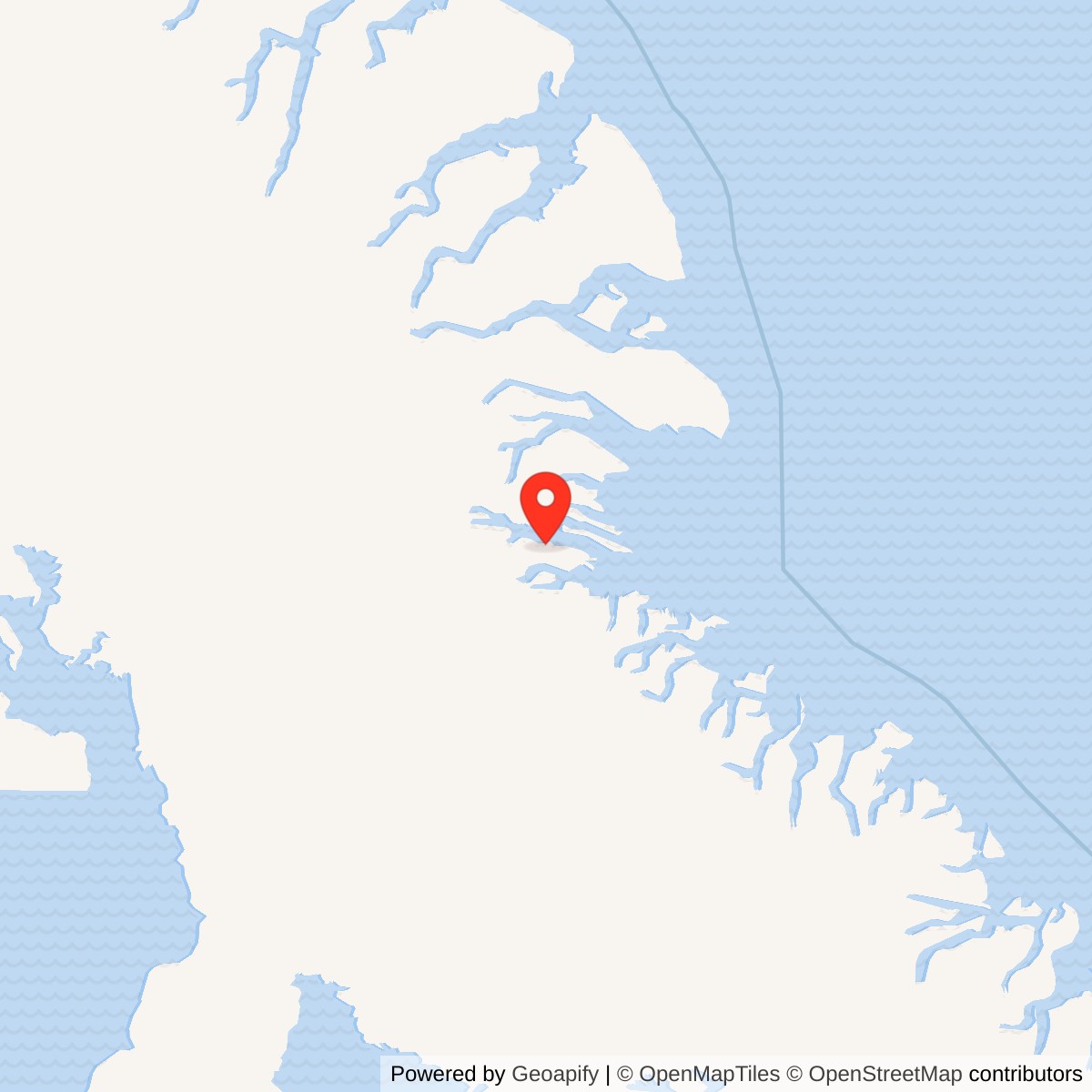
Longitude: -68.5875
Site Number: FOX-C
Current Role: Former station structures removed during cleanup completed in 2008.
Ekalugad Fjord FOX-C was a small intermediate station in the Distant Early Warning Line on eastern Baffin Island, in present-day Nunavut. Its AN/FPS-23 Doppler radar added low-altitude warning between Dewar Lakes FOX-3 and Cape Hooper FOX-4. Unlike the larger auxiliary stations, FOX-C did not need a rotating long-range search radar; its task was to watch a fixed part of the gap between neighboring radar sites and pass an alarm into the wider warning system. [1] [2] [6]
- DEW Line code
- FOX-C
- Role
- Intermediate Doppler station
- Radar
- AN/FPS-23
- Manual operation
- August 1957 to July 21, 1963
- Location
- Ekalugad Fjord, eastern Baffin Island, Nunavut
A Ridge Above Ekalugad Fjord
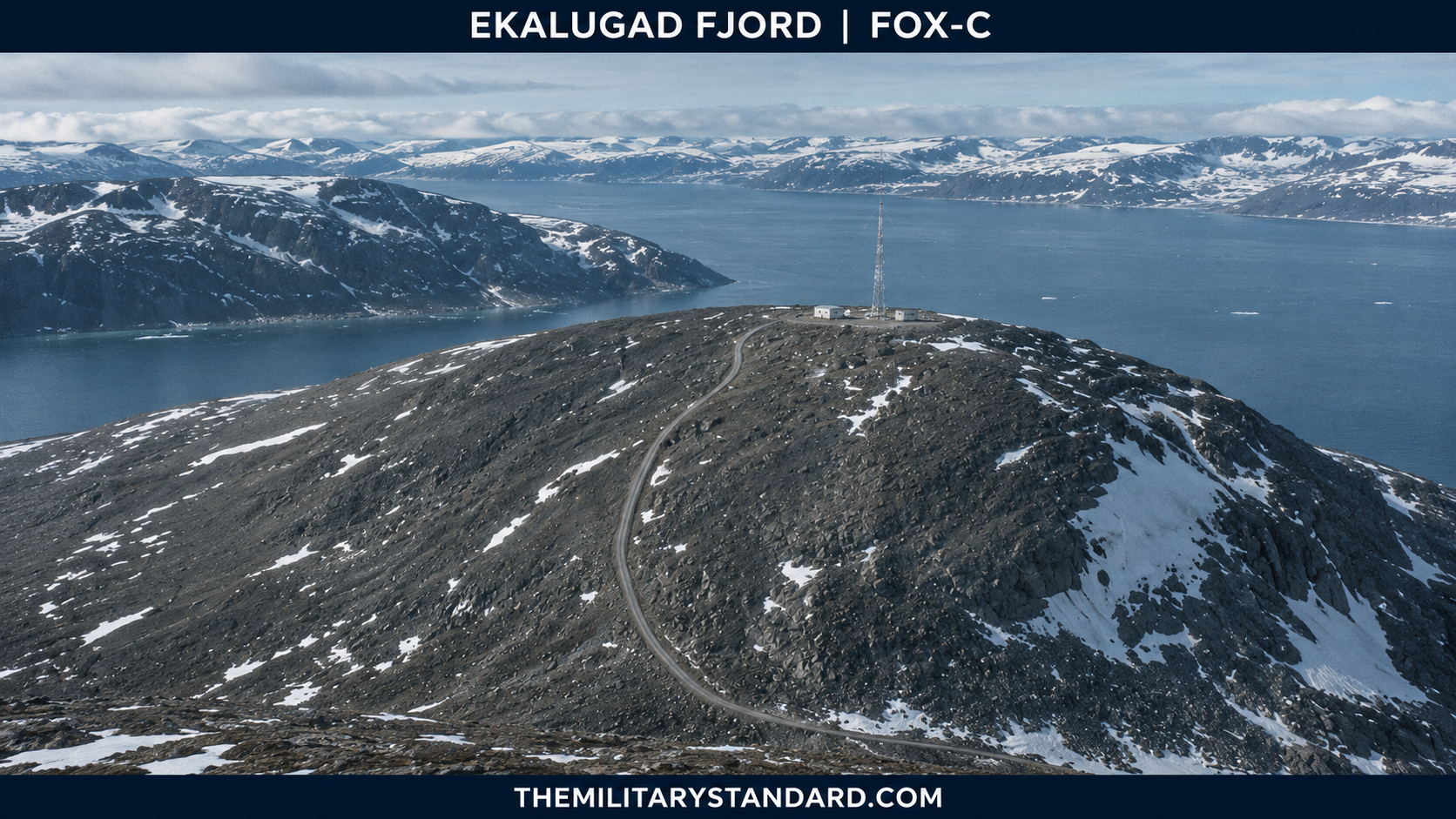
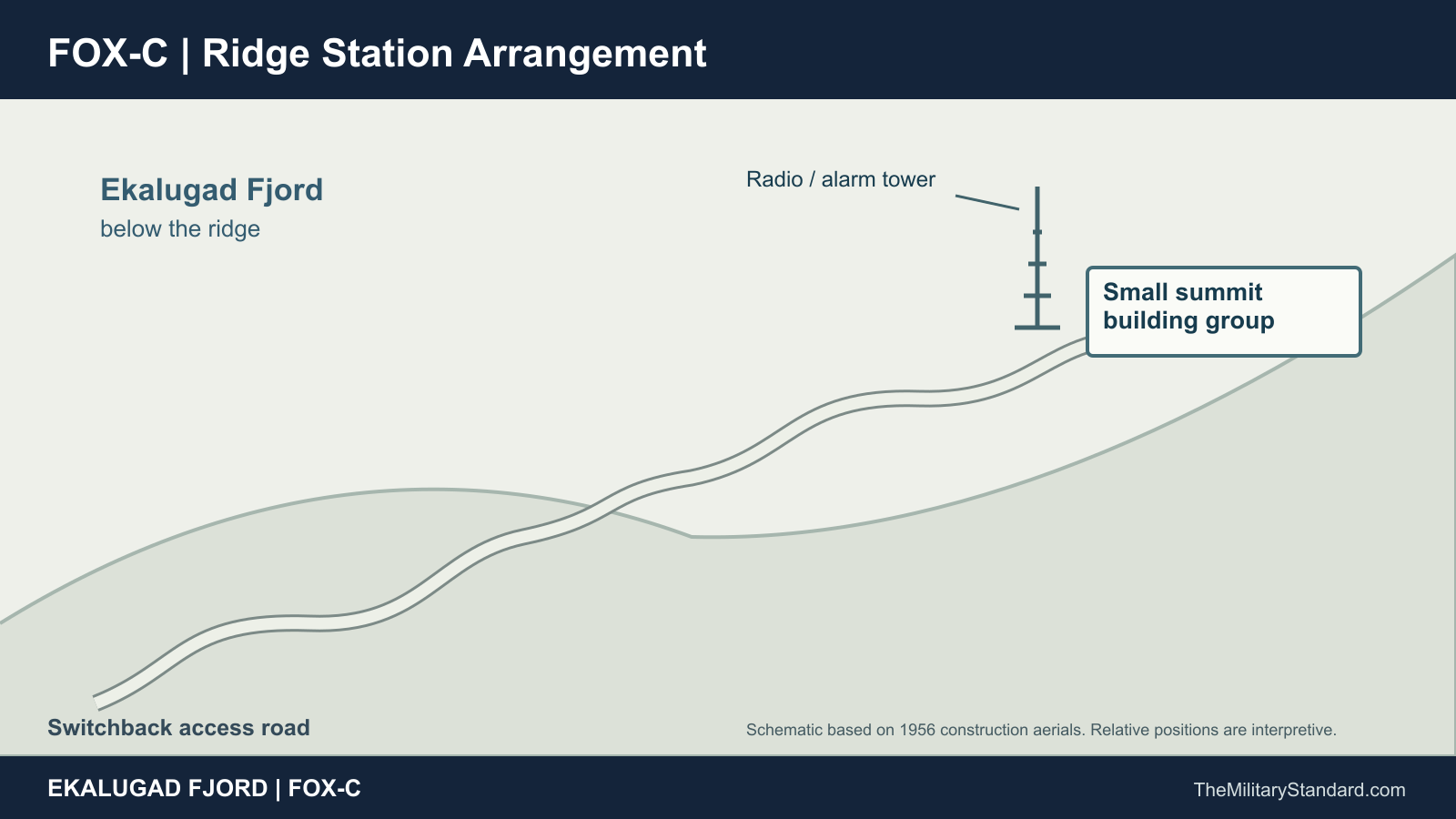
The station stood on a barren ridge about 2,700 feet above Ekalugad Fjord. Construction aerial photographs show the small compound close to the summit and a steep, winding road climbing from the fjord-side terrain. That high, exposed position gave the Doppler path and communications equipment a useful line of sight while making access and upkeep difficult. [3] [4]
Building FOX-C
The DEW Line construction campaign reached FOX-C in the mid-1950s. One 1956 aerial records the long graded road through the mountains; another, dated September 17, shows the summit station nearing completion. The latter view shows a compact rectangular building group, a slender lattice tower and a few small service structures against the fjord. The station was much smaller than the radome and runway compounds at the neighboring auxiliary sites. [2] [3]
Construction required bringing prefabricated structures, machinery, fuel and technical equipment into a difficult coastal mountain setting. The road made the hilltop reachable from lower staging ground. Once the station was operating, helicopters from Dewar Lakes FOX-3 provided an important supply and service connection. There was no permanent aircraft runway at the ridge compound. [3] [4] [6]
Aerospace Defense Command recorded the beginning of manual operation in August 1957. The line itself had entered service that summer; FOX-C then became one of its eastern Arctic gap-filler posts. [1] [2]
Radar and Communications Watch
The station's AN/FPS-23 was a fixed-path Doppler system, often called a flutter or fluttar radar. Transmitter and receiver equipment watched for changes in a radio path caused by an aircraft crossing it. Intermediate stations supplied coverage beneath and between the broad search-radar patterns of the main and auxiliary stations. Operators had to recognize an alarm, check the equipment and communicate the result so the warning network could evaluate it. [1] [2] [6]
FOX-C's radar and communications gear depended on the neighboring stations and on a reliable local power supply. The lattice tower visible in the construction photograph belonged to the station's radio and warning infrastructure. Technical work at a post of this size included maintaining the Doppler apparatus, radios, power plant and cabling, as well as keeping the alarm path available in poor weather. [2] [3]
The original FOX-C compound had no large search-radar radome. Decades after FOX-C closed, the North Warning System established the separate Kangok Fjord FOX-CA short-range radar site in September 1992. [1] [3] [7]
A Small Remote Station
The summit building brought the operating rooms and living space close together. Diesel generation supplied electricity for radar, radio, heating, lighting and domestic services. Fuel storage and small support buildings were necessary because the post could not depend on frequent deliveries. The station's exposed ridge brought wind, snow, icing and limited visibility directly into the daily work of keeping the equipment running. [2] [3] [6]
The resident crew lived and worked far from a town and relied on a helicopter link to FOX-3. The helicopter connection carried personnel and supplies when weather permitted. During bad flying conditions, the station had to operate from its own supplies and the crew had to manage both the warning watch and the practical work of maintaining heat, power and communications. [2] [3] [6]
Inactivation and the Former Site
Aerospace Defense Command recorded FOX-C as inactivated on July 21, 1963. This ended the station's original DEW Line mission after nearly six years of manual operation. The larger FOX-3 and FOX-4 stations remained part of the Arctic warning system beyond FOX-C's closure. [1] [2]
The abandoned structures remained on the ridge for decades. Canadian federal records describe a later cleanup that removed the former station structures and contaminated material, completed in 2008. The mountain setting and road still mark the location of this brief but demanding Cold War watch post. [3] [4] [5]
Chronology
- Mid-1950s Construction begins at the FOX-C intermediate station.
- August 1956 An aerial photograph records the switchback access road to the ridge.
- September 17, 1956 A construction aerial shows the compact summit compound and tower.
- August 1957 Manual AN/FPS-23 operation begins.
- July 21, 1963 FOX-C is inactivated.
- 2008 The Canadian government completes cleanup of the former site.
Related Sites
Information sources (7)
- PDF[1] Aerospace Defense Command, Historical Data, 1946-1973, DEW Line station table
Identifies FOX-C, its AN/FPS-23 equipment, August 1957 manual operation and July 21, 1963 inactivation.
- PDF[2] U.S. Air Defense Command, A History of the DEW Line, 1946-1964
Official account of the line's construction, intermediate Doppler stations, operating organization and warning mission.
- WEB[3] The DEWLine, FOX-C construction and site photograph gallery
Construction photographs show the ridge road, compact summit compound and slender tower; the gallery also describes helicopter support from FOX-3.
- PDF[4] Aboriginal Affairs and Northern Development Canada, The Big Picture: Contaminated Sites in Nunavut, FOX-C profile
Federal profile of the station's location, 1957 construction, 1963 abandonment and 2008 cleanup completion.
- PDF[5] Indian and Northern Affairs Canada, Northern Contaminated Sites Program Performance Report 2008-2009
Identifies FOX-C as a former intermediate DEW Line site and summarizes the later cleanup project.
- WEB[6] The DEWLine, A Brief Introduction
Explains the original distinction between main, auxiliary and intermediate stations and the smaller intermediate station design.
- PDF[7] Defence Research and Development Canada, North Warning System site list
Identifies Kangok Fjord FOX-CA as a separate short-range radar site established in September 1992.