
Nudluardjuk Lake FOX-B DEW Line Station, Canada
A diesel-powered Doppler watch post on western Baffin Island, connected to the Arctic warning line by aircraft, radio and a small resident crew.
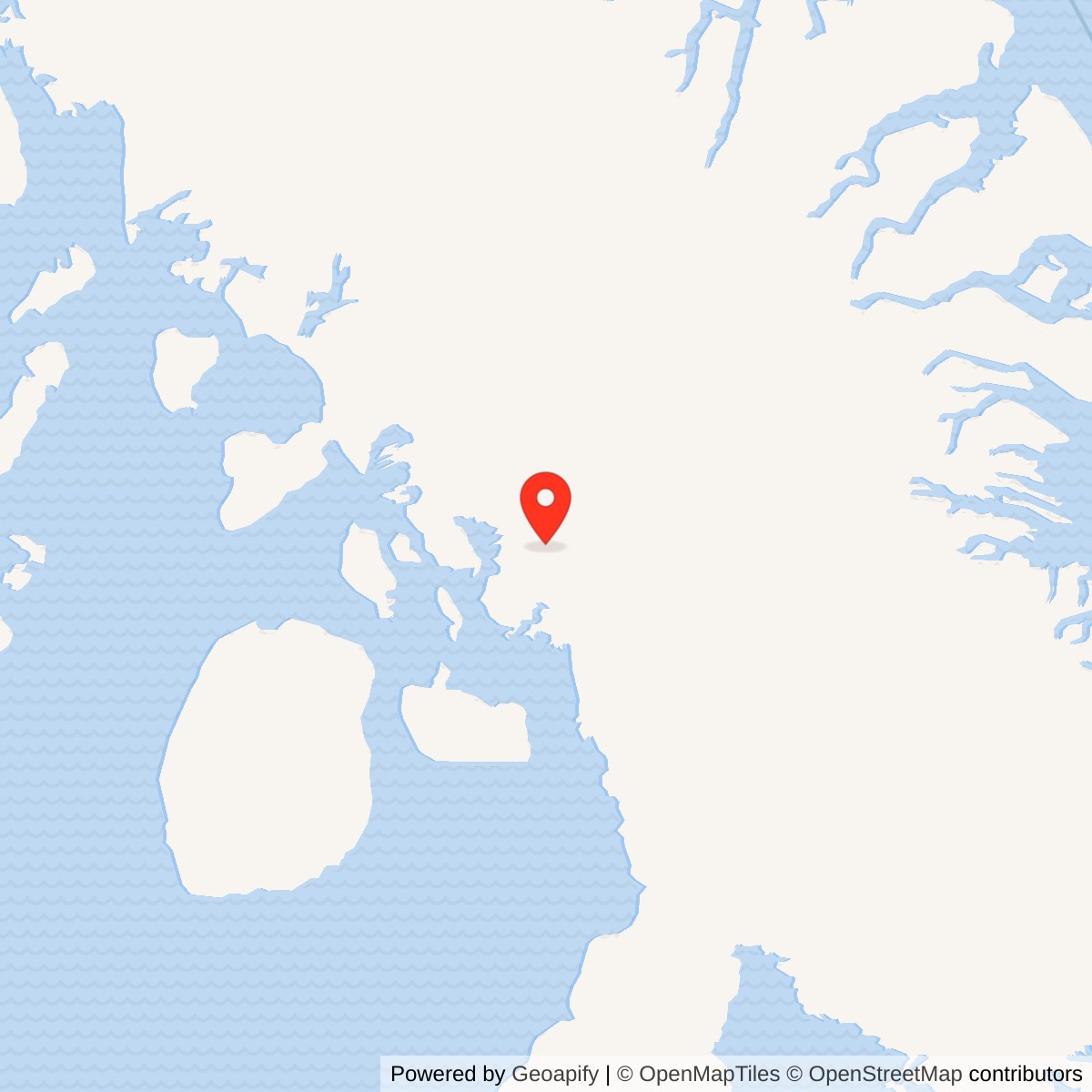
Longitude: -73.213352
Site Number: FOX-B
Current Role: A North Warning System short-range radar was constructed nearby in 1991; current status not verified.
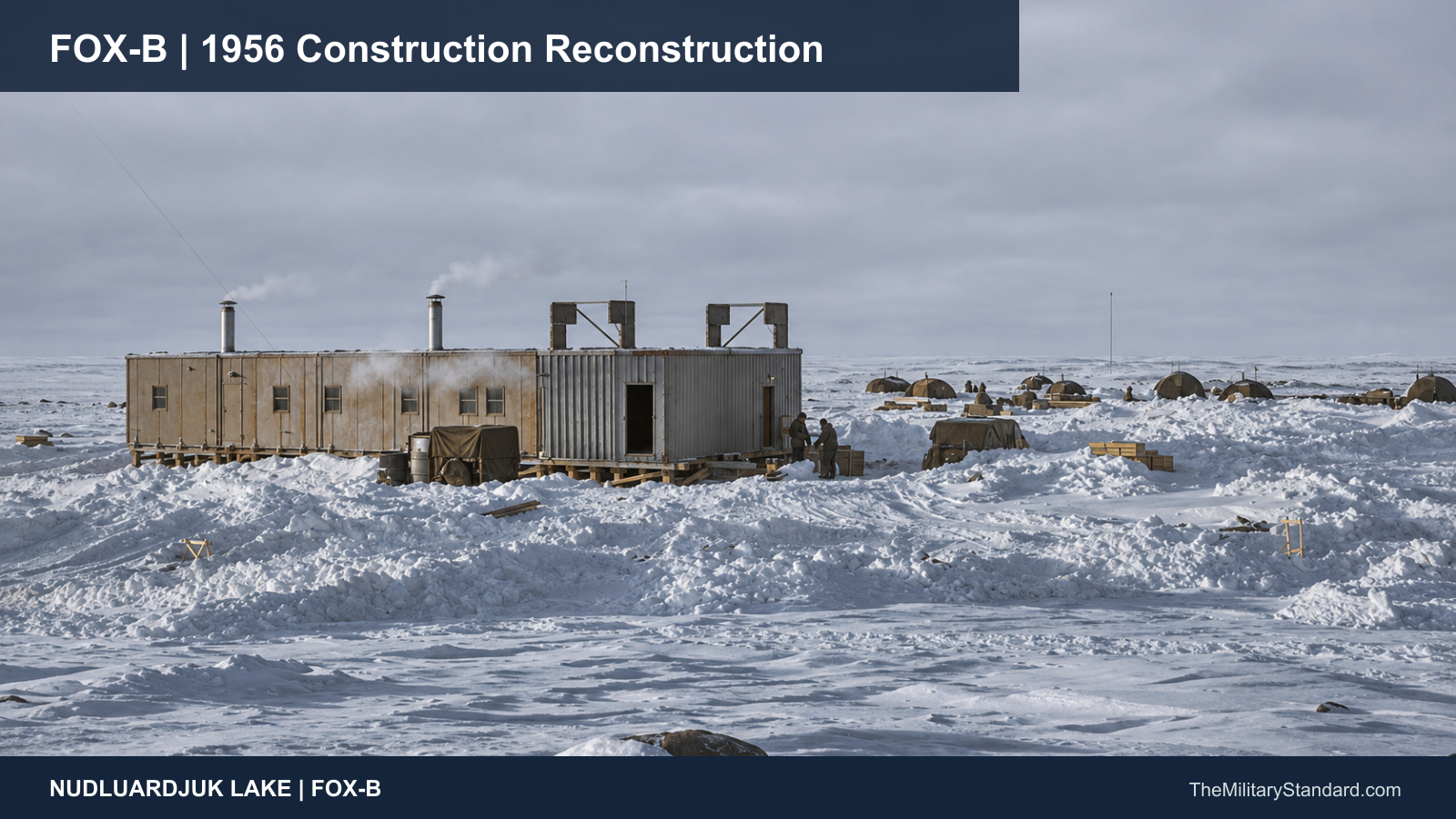
Nudluardjuk Lake FOX-B was an intermediate Distant Early Warning Line station on western Baffin Island, in present-day Nunavut. Its small crew and fixed-path AN/FPS-23 Doppler radar watched for low-flying aircraft between the larger Longstaff Bluff FOX-2 and Dewar Lakes FOX-3 stations. The station formed part of the Canadian Arctic warning belt constructed in the 1950s to provide warning of aircraft approaching North America from the north. [1] [3] [5]
- DEW Line code
- FOX-B
- Role
- Intermediate Doppler station
- Radar
- AN/FPS-23
- Manual operation
- August 1957 to July 21, 1963
- Location
- Western Baffin Island, Nunavut
A Watch Post West of Nudluardjuk Lake
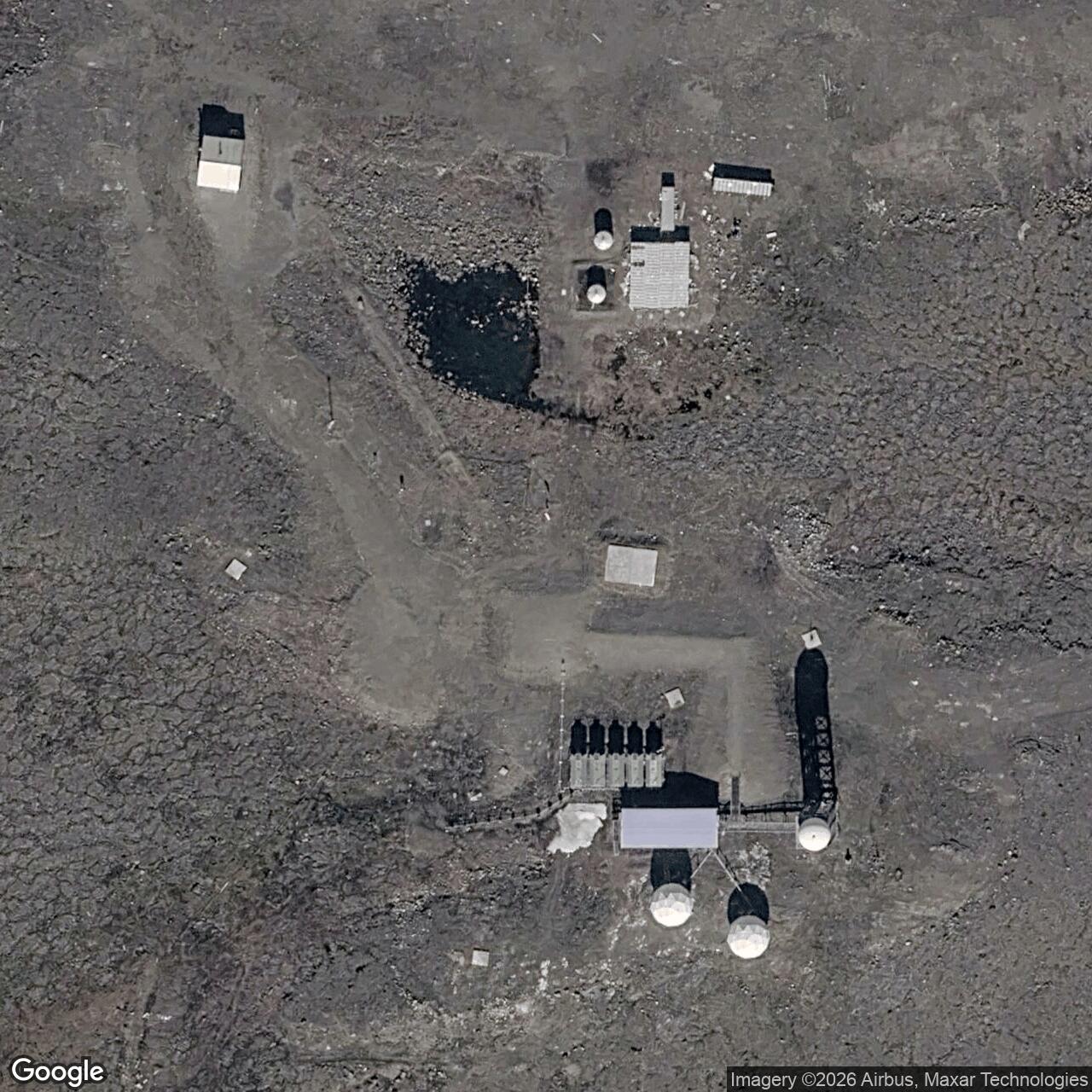
The original station occupied a rocky hill about 1.2 kilometres west of Nudluardjuk Lake, roughly 32 kilometres inland from the island's western coast and about 75 kilometres west of Dewar Lakes. Its main compound, fuel storage and garage stood near the crest. The airstrip and water source were separate from the building cluster. The 1980 government survey gives a station-area position of 68°36'48"N, 73°11'54"W. [2] [3]
Construction and Arctic Supply
The site was prepared during the mid-1950s DEW Line building campaign. Construction photographs show an ice landing strip, tracked earthmoving equipment, temporary structures and the joined modules going into place by March 1956. Aircraft could deliver men, machinery and supplies to the frozen surface while construction crews prepared the permanent station. [4] [5]
FOX-B began manual radar operation in August 1957. By then, the site had a raised building train, a separate garage and warehouse, diesel storage, communications equipment and a tall automatic alarm tower. [1] [2] [3]
The Building Train and Support Facilities
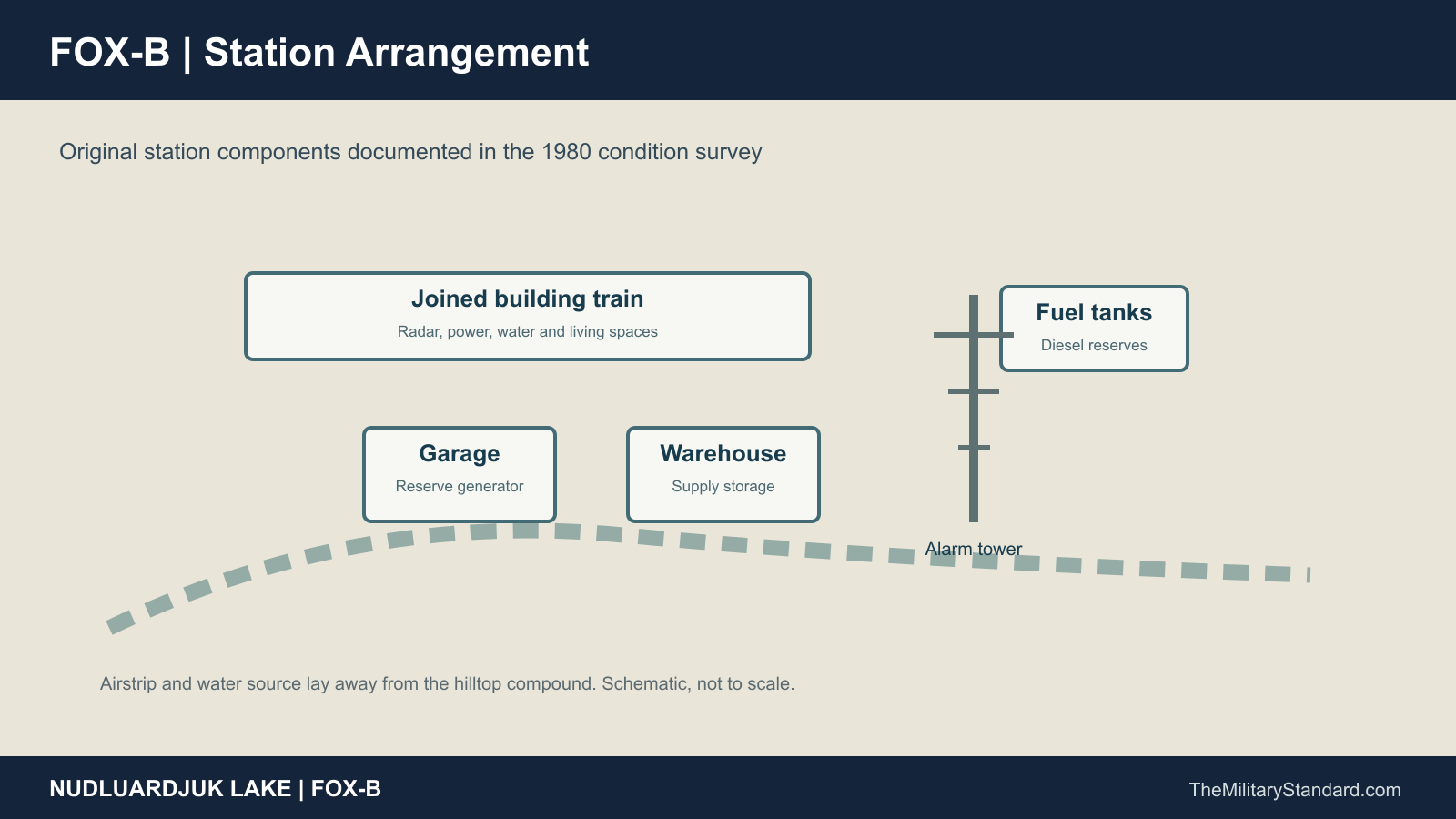
The station's core was a row of joined prefabricated modules. Their corrugated aluminum exterior and enclosed connections protected crews moving between work and living spaces. Heavy timber posts and sills raised the structure above the ground. The building train contained technical equipment, diesel power, water and sewage equipment, kitchen and washing facilities. Its compact form reduced travel outside during severe weather. [2]
The government survey recorded a water room with two 2,500-gallon storage tanks, a 2,500-gallon snowmelt tank, pumps, a chlorinator and a boiler. It also identified sewage tanks and service machinery. These systems made the station capable of sustaining its crew despite limited local water and a long, weather-dependent supply line. [2]
Two 20,000-gallon diesel tanks supplied the compound. The separate garage had two vehicle bays, a maintenance room, heat and a reserve generator. A warehouse provided protected storage. [2]
Doppler Radar, Communications and Power
Aerospace Defense Command identifies FOX-B's original radar as the AN/FPS-23. This Doppler gap-filler system used fixed transmitter and receiver paths to detect disturbances caused by aircraft crossing them, adding low-altitude warning between the larger stations. FOX-B's equipment room held transmitters, receivers, alarms and control cabinets. [1] [2] [5]
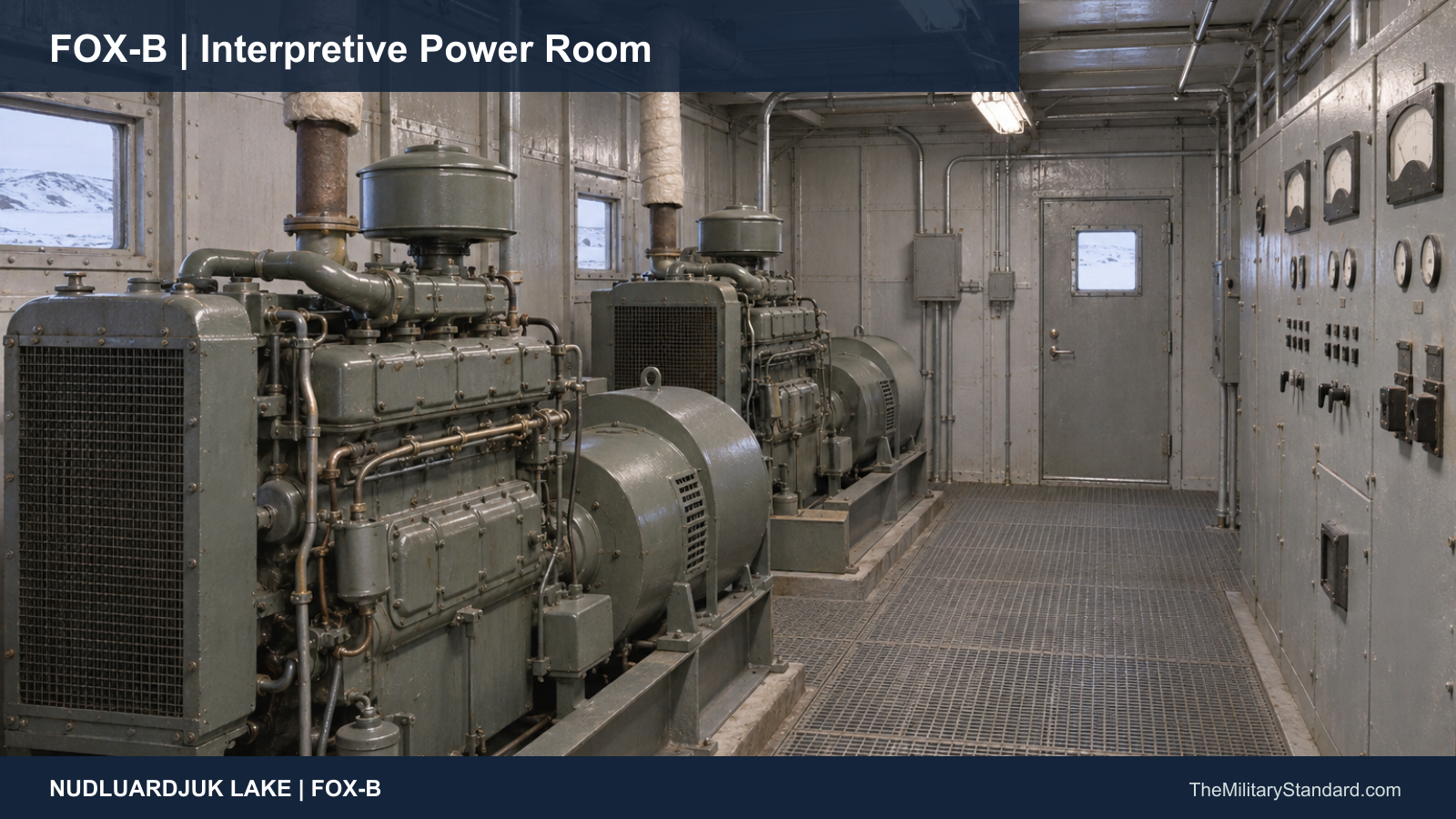
Reliable power was central to the watch. The 1980 survey found two General Motors diesel generator sets rated at 50 kilowatts in the power room, with switchboard equipment, and a 50-kilowatt Hercules diesel set in the garage. Diesel power supported the radar and radios as well as heat, lighting, pumps and domestic services. [2]
The site also had an automatic alarm tower approximately 300 feet high. It had fallen before the 1980 inspection. The tower was a separate part of the station's warning and communications plant, and it appears in the construction-era imagery alongside the low module buildings. [2] [4]
Personnel and Daily Life
FOX-B was a small, isolated post. Its operators and maintainers had to watch the radar and communications equipment while also keeping diesel generators, heating, water handling and vehicles working. The enclosed module train brought technical rooms and daily living space together, while the garage and warehouse required outside trips in Arctic weather. [2] [5]
Aircraft access depended on the nearby strip and seasonal conditions. Construction photographs show the use of an ice runway and heavy tracked vehicles. During service, fuel reserves, spare parts, food and working generators mattered because a storm or poor visibility could delay the next flight. The site's water and snowmelt tanks also show the daily effort needed to maintain a remote station through the winter. [2] [4] [5]
Inactivation and Later Use
Aerospace Defense Command recorded FOX-B as inactivated on July 21, 1963. The original intermediate station ceased its DEW Line mission after only a few years of manual operation. Federal inspectors documented the abandoned buildings and equipment in 1980. [1] [2]
The area returned to the warning network in a different form. A North Warning System short-range radar was built near the former FOX-B site in 1991. That automated radar belongs to a later generation and occupies a distinct mapped position. The surviving original garage was still noted in a Canadian government account published in 2012. [3] [6]
Chronology
- Mid-1950s Construction begins on the FOX-B intermediate station and its ice-strip supply route.
- March 1956 Construction photographs show the module train and camp.
- August 1957 Aerospace Defense Command records the start of manual AN/FPS-23 operation.
- July 21, 1963 The original FOX-B station is inactivated.
- 1980 Federal inspectors survey the former building train, garage, power plant and fuel storage.
- 1991 A later North Warning System short-range radar is built nearby.
Related Sites
Information sources (6)
- PDF[1] Aerospace Defense Command, Historical Data, 1946-1973, DEW Line station table
Identifies FOX-B, the AN/FPS-23, August 1957 manual operation and July 21, 1963 inactivation.
- PDF[2] D. E. Rodger, FOX-B (Mid-Baffin) DEW Line Station Condition Report, September 1980
Primary survey of the original site location, building train, power room, garage, fuel tanks, water and sewage systems and former tower. Later condition is distinguished from military-era use.
- PDF[3] Aboriginal Affairs and Northern Development Canada, The Big Picture: Contaminated Sites in Nunavut, FOX-B profile
Locates the former station west of Nudluardjuk Lake, summarizes its 1956 construction and 1963 closure, and records the later radar built in 1991.
- WEB[4] The DEWLine, FOX-B construction photograph gallery
Documents the ice-strip supply operation and March 1956 construction of the module train. Privately credited photographs used for research only.
- PDF[5] U.S. Air Defense Command, A History of the DEW Line, 1946-1964
Official context for intermediate Doppler stations, construction, staffing and warning operations.
- PDF[6] Defence Research and Development Canada, North Warning System site list
Documents the separate later FOX-B short-range radar coordinate and October 1991 date.