
Longstaff Bluff DEW Line Station, Canada
FOX-2 watched the Baffin Island coast from a rocky ridge, sustained by an airstrip, a shore landing and crews who kept its radar and radio circuits working.
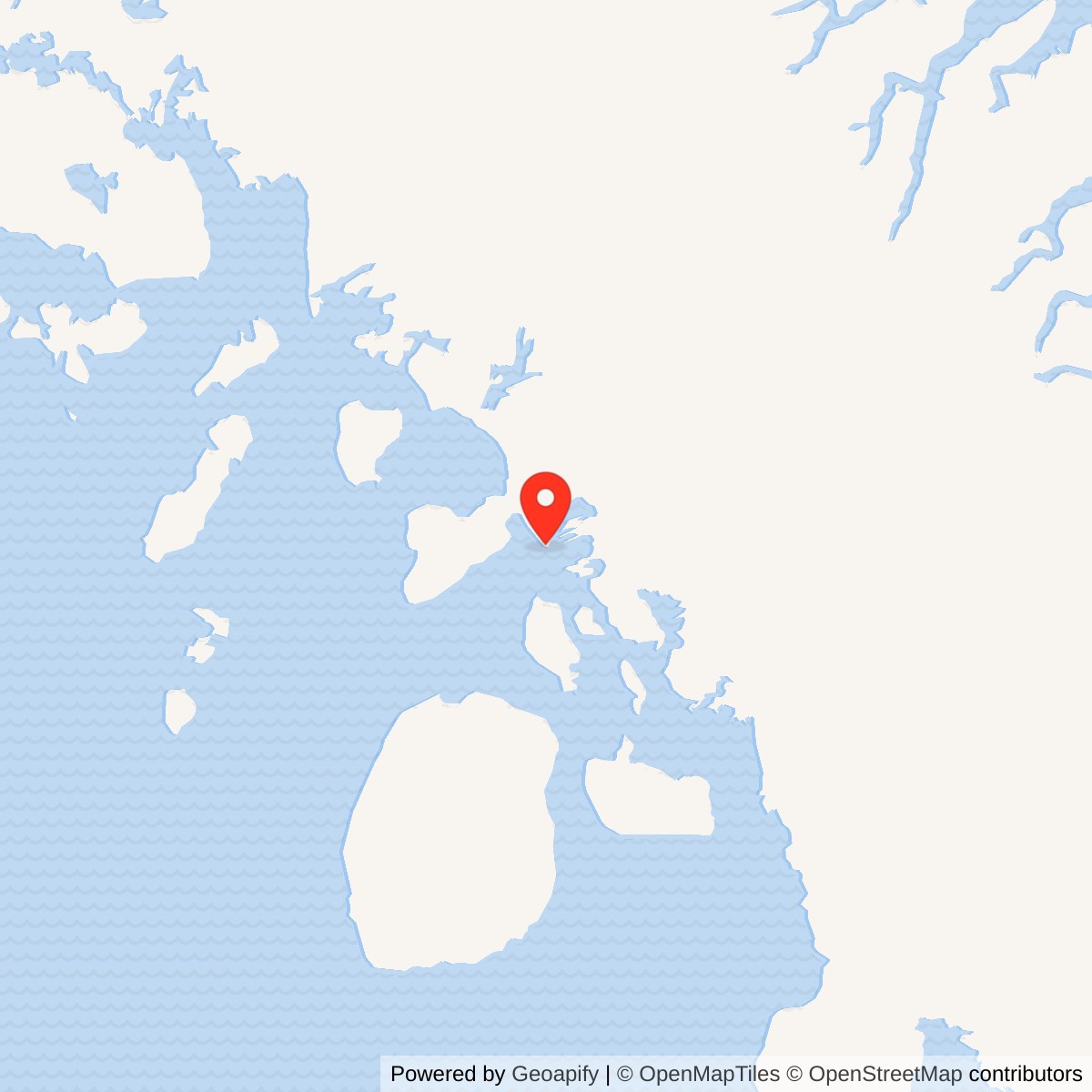
Longitude: -75.142960
Site Number: FOX-2
Current Role: North Warning System short-range radar located near the former DEW station; current operational status should be checked before publication.
Longstaff Bluff, code FOX-2 and also known as Site 33, stood on the southwest coast of Baffin Island near Nauja Bay. It was an auxiliary station of the Distant Early Warning Line, built to watch the Arctic approaches to North America and pass aircraft reports into the FOX sector network. FOX-2 lay east of Rowley Island FOX-1 and west of Dewar Lakes FOX-3, connecting the radar watch across an otherwise thinly monitored stretch of Baffin Island. [5] [6] [7]
- DEW Line code
- FOX-2
- Station role
- Auxiliary radar station
- Radar equipment
- AN/FPS-19 and AN/FPS-23
- Original mission
- Arctic aircraft warning
- Later site
- North Warning System short-range radar
- Location
- Longstaff Bluff, Baffin Island, Nunavut
A Radar Watch on Baffin Island
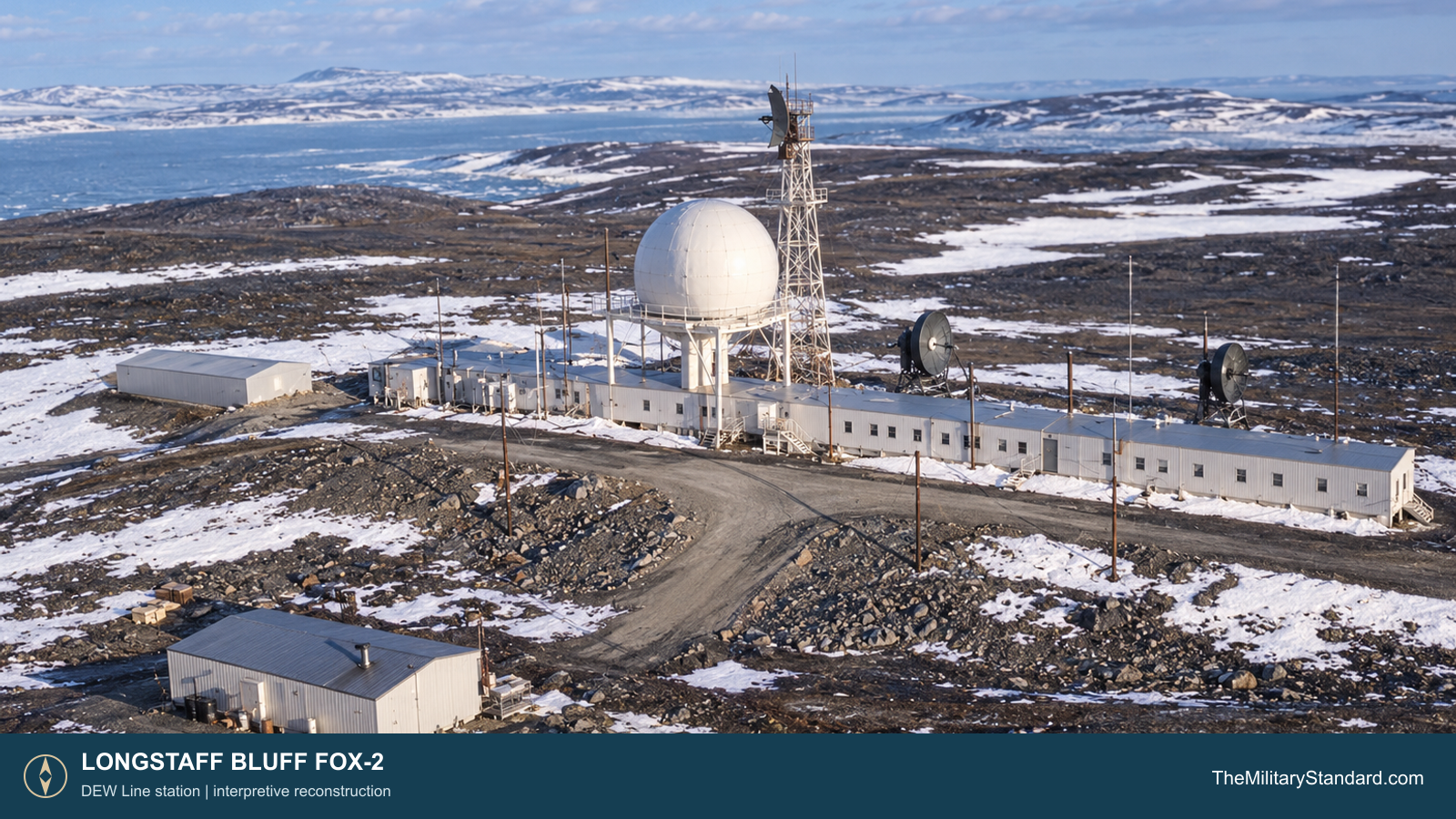
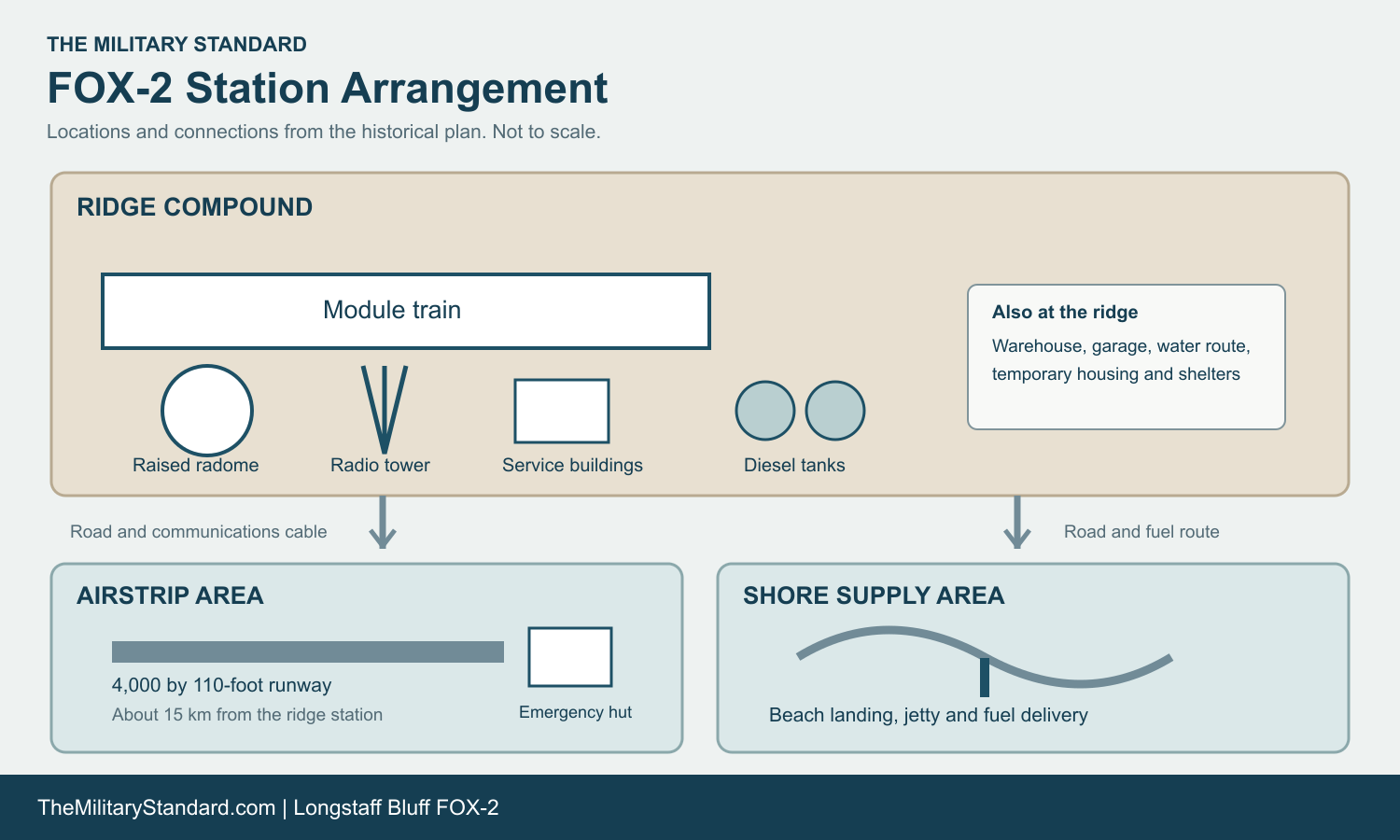
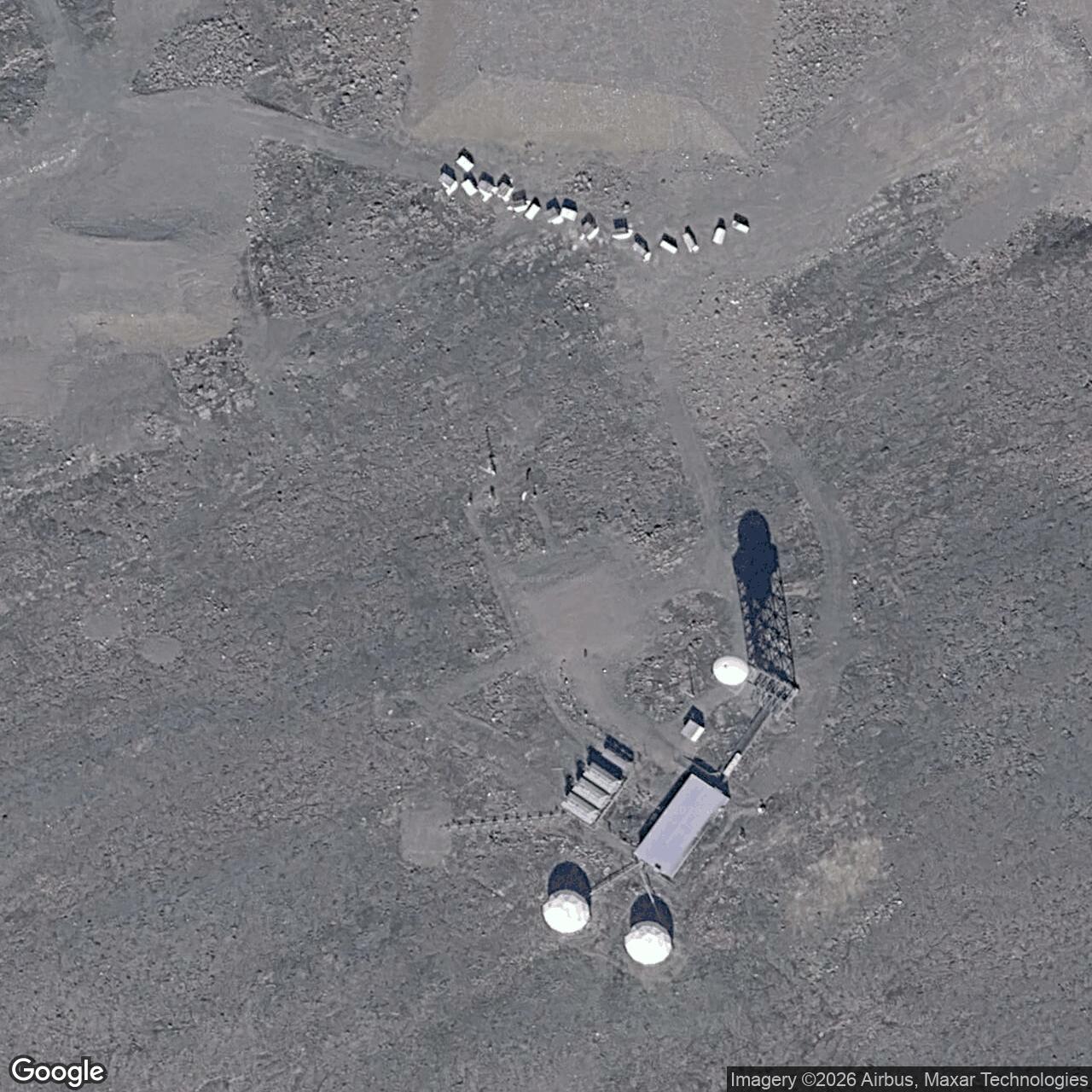
The main compound occupied a ridge about 500 feet above sea level. The bluff, bays, low parallel ridges and long distance between the hilltop station and its landing strip shaped the installation. Aircraft could use the runway, while fuel and heavy cargo came ashore through a separate beach landing and traveled overland to the occupied ridge. [2] [3] [7]
Choosing and Building the Station
In April 1955, Western Electric recommended Longstaff Bluff over Anderson Bluff as the radar location, and Canadian officials accepted the choice. Construction depended on seasonal shipping, aircraft, tracked vehicles and a narrow period when ground work could be done before winter. A tracked Caterpillar D-4 was parachuted to the area in March 1955, showing how early access preceded a completed runway. [1] [2]
Crews erected temporary shelters and an erection tent, set supports for the prefabricated modules, and built the radar tower and radome platform through 1955 and 1956. April 1956 photographs show the long module train on the ridge before the radome was installed. A south-facing view from August 1956 shows the still-developing compound, construction quarters and the radar platform. The completed site photographs show the white radome elevated above the low buildings, with a tall lattice communications tower and smaller directional antennas. [2]
The station plan records a building train, warehouse, garage, fuel storage, vehicle storage, temporary housing and emergency shelters at the ridge compound. Two 65,000-gallon diesel tanks, a gasoline storage area, a POL line, and a water route supported generators, heating and transport. The plan also identifies a 4,000 by 110-foot runway, an emergency hut, an avgas pad, a beaching area and a jetty. The airstrip lay roughly 15 kilometers from the station, so arrivals and freight still required a substantial inland haul. [3] [7]
Search Radar and Communications
An Air Defense Command equipment table lists an AN/FPS-19 search radar and AN/FPS-23 gap-filler radar at FOX-2, with manual operations beginning in August 1957. The raised radome protected the search radar from Arctic weather. As an auxiliary DEW Line station, FOX-2 added surveillance between larger sector centers and sent reports of significant aircraft tracks into the warning network. The sector communications system moved those reports toward command posts that could evaluate the threat and direct the wider defense response. [5] [9] [10]
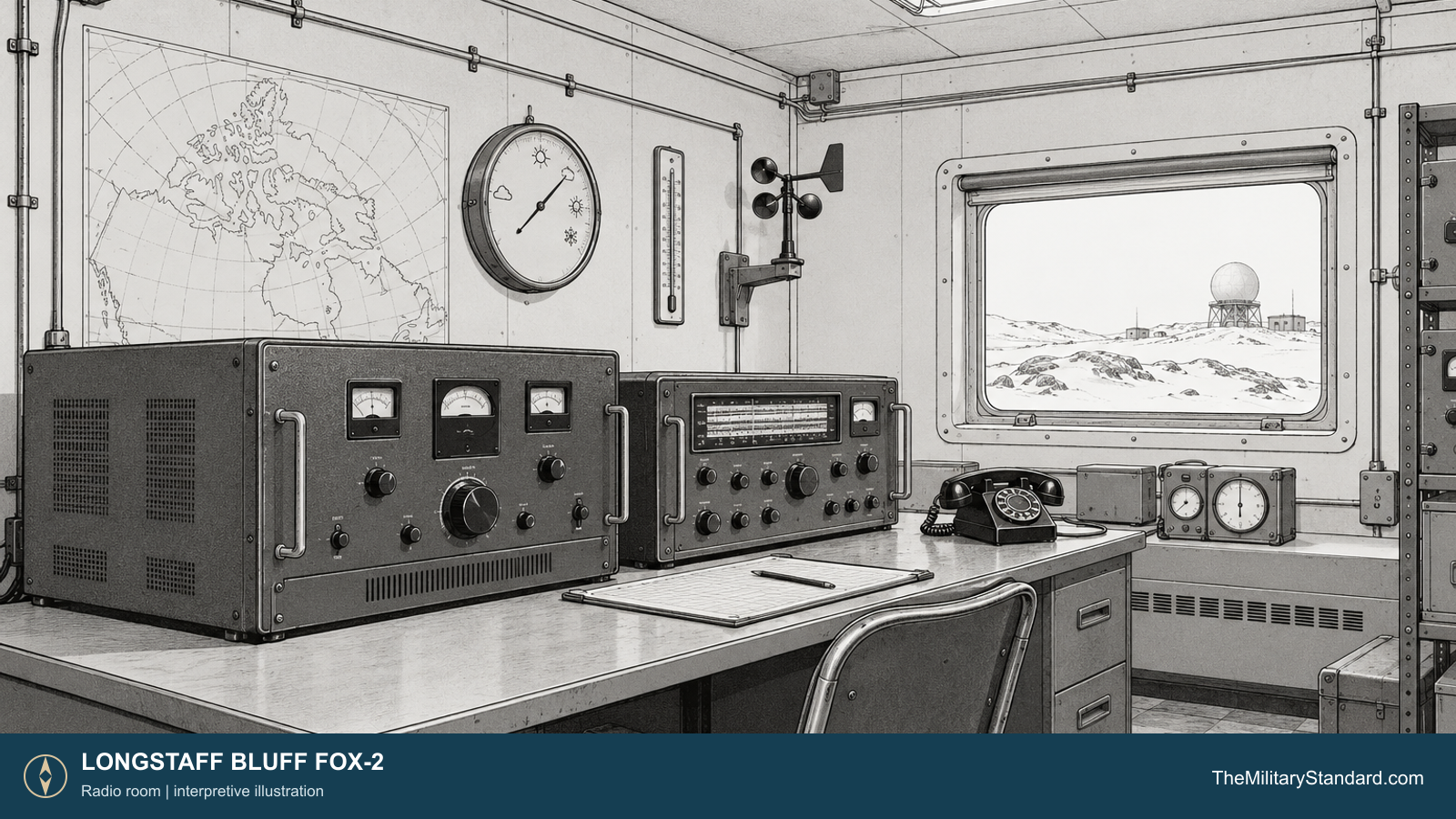
The completed-station photographs show the radome, several dish antennas and a lattice tower. These served distinct radar and communications functions across the ridge compound. Radio work was essential to the mission: the station had to pass reports to adjacent sites and coordinate aircraft approaching its remote runway, even when the airstrip itself was out of sight from the radio room. [2] [4] [5]
A radio operator assigned during 1956 and 1957 described working 12-hour shifts and monitoring aircraft by radio while receiving weather reports from the field. His account identifies a Collins 431-B high-frequency transmitter, Collins 51J4 receiver, and weather instruments in the communications room. Auroral conditions could interrupt high-frequency circuits. Maintaining a dependable warning network therefore required skilled radio staff as well as radar operators and repair crews. [4]
People, Supplies and Daily Life
The station included two distinct working areas. The airstrip and shore camp handled arrivals and cargo, while the occupied modules and radar equipment stood on the inland plateau. In the construction period, radio and maintenance workers moved between these areas as aircraft, weather and the condition of the road permitted. Once staffed for the warning mission, the module train placed operations and living spaces close together in a compact heated compound. [3] [4]
Fresh water required a roughly three-mile round trip in both summer and winter. Diesel supplied heat and power for the radar, radios, lights and occupied modules. Crews also had to keep vehicles, tanks, road, communications gear and the runway usable in severe cold. The isolated station depended on periodic flights and seasonal sea deliveries; the operator recalled that mail from Montreal could take about two weeks. [2] [3] [4]
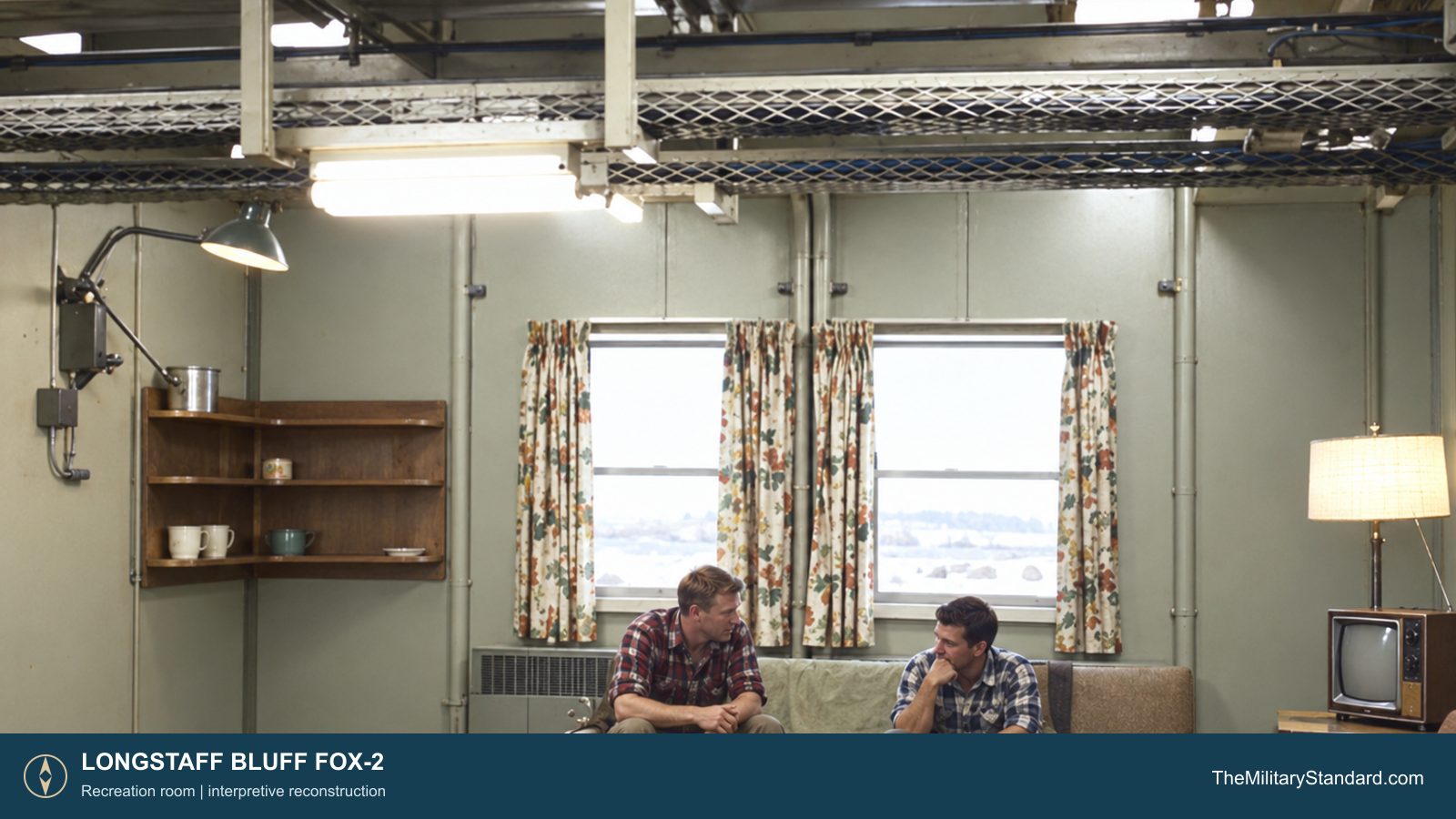
Winter storms could halt travel and make a routine shift or repair difficult. A 1957 account describes extreme cold, fierce winds, and the contrast between the completed modules and temporary quarters still occupied by some contractor workers. Movies provided a diversion, and a station photograph shows a small recreation room where personnel could gather. By late March 1957 the construction-era teams were giving way to Federal Electric Corporation personnel who would maintain the operational station for the U.S. Air Force. [2] [4]
From the DEW Line to the North Warning System
FOX-2 served as a staffed auxiliary radar station through the Cold War. The original DEW Line operation ceased in 1991 as the North Warning System took over Arctic coverage. A status table dates establishment of the FOX-2 short-range radar site to November 1990, during that transition. [6] [8]
The later short-range radar occupied a nearby position southeast of the older station. The modern system preserved a radar watch in the area while changing the equipment and staffing model. Cleanup of the former DEW compound followed. [6] [7]
Chronology
- April 1955 Western Electric recommends Longstaff Bluff as the station location.
- 1955 Advance equipment arrives and construction begins.
- April 1956 Photographs show the building train on the ridge before the radome is in place.
- August 1956 Photographs show the compound and radar platform still under construction.
- Late March 1957 Federal Electric Corporation maintenance personnel replace construction-era teams.
- August 1957 FOX-2 begins manual radar operations in the DEW Line warning network.
- November 1990 The North Warning System short-range site is established.
- 1991 The original DEW Line operation ends.
Related Sites
Information sources (10)
- PDF[1] Canada-U.S. DEW Line Coordinating Committee, 1955 meeting record
Selection of Longstaff Bluff instead of Anderson Bluff and early construction planning.
- WEB[2] The DEWLine, FOX-2 Longstaff Bluff historical description and photograph gallery
Topography, weather, water haul, and dated construction and completed-station photographs. Privately credited images used only as research references.
- WEB[3] The DEWLine, FOX-2 station plan
Historical arrangement of the module train, fuel tanks, water source, runway, warehouse, garage, shore landing and support routes.
- WEB[4] J. K. Leslie, Site 33 and Other War Stories
First-person account of FOX-2 radio operations and living conditions during construction and transition to maintenance in 1956 and 1957.
- PDF[5] U.S. Air Defense Command, A History of the DEW Line, 1946-1964
Original warning mission, auxiliary-station operation, construction and communications network.
- PDF[6] Defence Research and Development Canada, DEW Line site status table
FOX-2 designation as a DEW auxiliary and later North Warning System short-range site, with 1990 and 1991 transition dates.
- PDF[7] Defence Construction Canada, FOX-2 Longstaff Bluff 2021 monitoring report
Station setting, approximate original-site position, 1991 decommissioning and later short-range radar position.
- WEB[8] The DEWLine, North Warning System station table
FOX-2 Site 33 identity and successor short-range radar station.
- PDF[9] U.S. Army Center of Military History, The DEW Line and the North Warning System
System-wide explanation of search radar, low-altitude gap coverage and station reporting.
- PDF[10] Aerospace Defense Command, Historical Data, 1946-1973, DEW Line station table, p. 153
FOX-2 manual operations beginning August 1957 and its AN/FPS-19 and AN/FPS-23 equipment.