
Camp San Luis Obispo Army Base, San Luis Obispo California
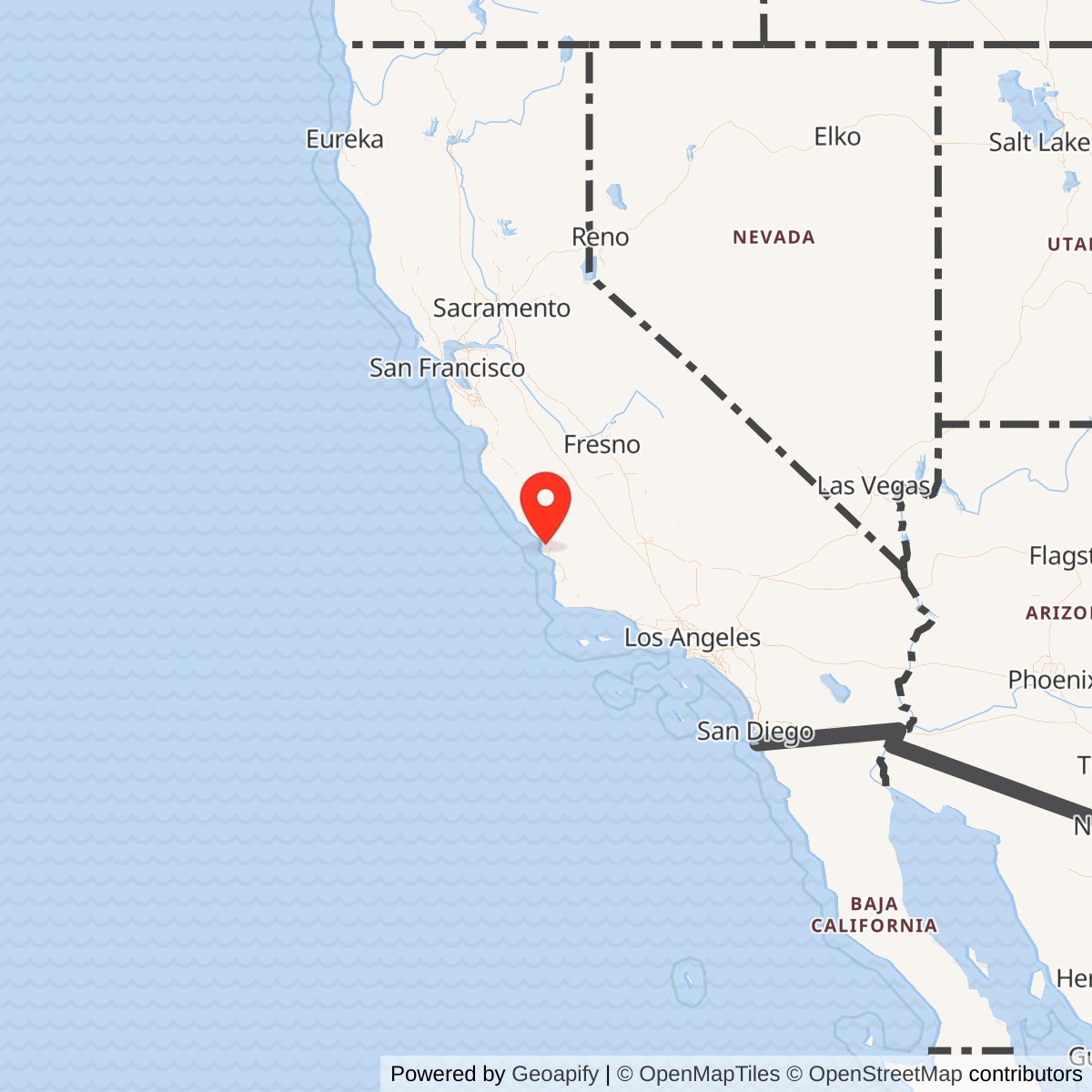
Longitude: -120.7368408
Current Role: Active California National Guard training installation; California Military Academy / 223rd Regiment RTI training site; range, billeting, logistics, security, military education, and youth-challenge functions; former WWII and Korean War federal Army training camp.
Camp San Luis Obispo is an active California Army National Guard training installation with a much longer Army history than its present footprint alone suggests. It began in 1928 as a California National Guard camp on 5,800 acres and was originally known as Camp Merriam. During World War II the U.S. Army took over and expanded the site into a major infantry division camp and cantonment area. At its wartime peak the installation covered 14,959.16 acres, with additional off-post training use tied to nearby Baywood Park and other Central Coast lands. Today the California National Guard retains the original 5,800-acre core while the wartime-expanded lands outside the retained camp have passed into educational, private, public, and other reuse.
The camp's geography explains much of its military value. The site lies in the coastal hills northwest of San Luis Obispo, close enough to road and rail connections to support mobilization and training, but far enough from dense urban development to support ranges, bivouacs, vehicle movement, and maneuver training. State Route 1 crosses the broader camp area, tying the post to San Luis Obispo, Morro Bay, the coast, and the inland Central Coast transportation network. The landscape offered the California National Guard a permanent training ground when interwar Guard units otherwise depended on scattered public or leased training sites. In wartime, that same terrain allowed the Army to house, train, and process large formations on the West Coast.
Camp San Luis Obispo is not a closed World War II relic. It is still a State of California military installation, and the current post supports California Army National Guard training, range scheduling, billeting, logistics, security, military education, and tenant programs. The California Military Council identifies the camp as home to the California Military Academy and describes it as a leadership-training center for California National Guard NCOs and officer candidates, with professional development, armor and infantry MOS qualification training, and a wider combat-arms headquarters role for the western states. The official Camp San Luis Obispo site also shows the practical mechanics of a working installation: units check in with Post Operations and Range Control at Building 738, use the Range Facility Management Support System to schedule training facilities, and draw support from on-post billeting, dining, logistics, chapels, security, and MWR facilities.
The installation therefore has a dual identity. Historically, it was a federalized Army training camp of national importance during World War II and again during the Korean War. Presently, it is a California National Guard training, education, and support installation. The continuity between those roles is what makes Camp San Luis Obispo significant: the same ground used to train large wartime divisions remains a military training landscape, even though much of the wartime expansion has been relinquished and reused.
Mission Evolution
Camp San Luis Obispo's first mission was to provide the California National Guard with a permanent training camp. The Guard established the camp in 1928 on 5,800 acres and called it Camp Merriam. This was an important interwar step because it gave California's Guard a recurring training home rather than a temporary encampment. In that phase, the site was primarily a state military camp for annual training, field exercises, weapons work, and unit assembly. The presence of the 40th Division/40th Infantry Division in California, Nevada, and Utah made such a training ground especially valuable. Camp San Luis Obispo became one of the places where the Guard's interwar structure could become an operational field force.
The federal mission began as the United States prepared for war. The U.S. Army acquired use of the camp in 1940, renamed the area Camp San Luis Obispo, and expanded the post. Army construction and range development transformed the old Guard camp into an infantry division camp and cantonment area. By World War II, the camp had become a major training installation with infantry, small-arms, artillery, mortar, rocket, and grenade training. U.S. Army Corps of Engineers records identify 27 ranges and 13 training areas used between 1943 and 1946. This was not just a barracks reservation; it was a live training system designed to harden units before deployment.
The World War II mission was centered on division-level ground-force training. Camp San Luis Obispo housed and trained large formations and specialized units before they moved to later training sites, staging areas, or combat theaters. The 40th Infantry Division, rooted in the California National Guard, is the division most closely associated with the camp's identity, but the wartime post supported a broader stream of infantry and support organizations. The camp also became part of the larger Central Coast training ecosystem that included Camp Roberts, Fort Ord, Hunter Liggett, coastal maneuver areas, and temporary ranges. Its role was to turn mobilized soldiers into deployable infantry, signal, artillery, and support personnel.
Camp San Luis Obispo also served a distinctive ethnic and wartime mobilization role through the 1st Filipino Battalion. NPS and Howard University source material document that the 1st Filipino Battalion was organized in March 1942 and activated at Camp San Luis Obispo. Under Lt. Col. Robert H. Offley, Filipino American volunteers and other Filipino soldiers trained there after the Japanese attack on the Philippines and before the unit grew into the 1st Filipino Infantry Regiment. This gives the camp a direct connection to the Filipino American military response to World War II and to the campaign to liberate the Philippines.
A related but separate landscape was the Baywood Park Training Area near Los Osos and Morro Bay. The Army acquired 8,810 acres in July 1943 to establish that training area, using it from 1943 to 1946 for bivouacs and maneuver by troops, vehicles, and equipment from Camp San Luis Obispo and the National Guard. The later FUDS fact sheet describes the Baywood Park Training Area as a 9,145-acre site, reflecting a slightly broader project accounting. This area should not be confused with the camp's retained garrison core, but it belongs in the operational history because it shows how Camp San Luis Obispo's training mission spilled outward into a larger Central Coast maneuver landscape.
The camp's wartime buildout also required water infrastructure. Salinas Dam, forming Santa Margarita Lake, was built during World War II under War Department direction to supply water to Camp San Luis Obispo. The dam and reservoir were later retained by the U.S. Army Corps of Engineers and used as a regional water-supply and recreation facility under local outgrants. This dam is a useful reminder that a training camp was more than barracks and ranges. It required water, utilities, roads, tunnels, pipelines, and support systems capable of sustaining a large wartime population.
After World War II, the federal Army did not immediately erase the camp's military value. As the government prepared to relinquish surplus land, the Korean War revived the need for training capacity. The camp was reactivated from 1951 to 1953 for Signal Corps training. During that period, Army training again included weapons use, pistols, rifles, grenades, and rockets, alongside communications-related instruction. That Korean War mission gave the camp a second federal training life after its World War II peak.
Following the Korean War, the federal Army gradually backed out. USACE records state that after the Korean War the camp became inactive until 1965, when the Army relinquished it. The California National Guard retained the original 5,800 acres; other parts of the former wartime property were transferred or reused by private entities, California Polytechnic State University, Cuesta College, and other public or educational users. That post-1965 settlement created the present dual landscape: an active Guard core surrounded by former Army lands that still carry munitions-response, educational, park, and reuse histories.
World War II Training Role
Camp San Luis Obispo's central World War II function was the large-scale preparation of ground forces. The camp operated as an infantry division camp and cantonment area. A cantonment of this kind had to house soldiers, feed them, maintain their vehicles and weapons, treat injuries and disease, administer units, and give commanders enough range and maneuver space to make training realistic. It was a military town built for war.
The training was not limited to drill and classroom work. USACE records document infantry, small arms, artillery, mortar, rocket, and grenade training on 27 ranges and 13 training areas from 1943 to 1946. Those weapons categories reveal the breadth of the mission. Small-arms ranges trained riflemen and automatic weapons crews. Mortar and artillery ranges trained indirect-fire skills. Grenade courts and rocket ranges taught high-risk close-combat and antitank skills. Infantry units needed all of these before moving to later field training or deployment. The presence of so many ranges also explains the camp's long-term munitions legacy.
Camp San Luis Obispo's troop population was supported by temporary wartime construction. The camp had to serve officers, enlisted soldiers, support staff, instructors, range personnel, medical personnel, and service troops. A World War II camp of nearly 15,000 acres functioned as an integrated system: training ranges on one side, cantonment and service functions on another, and road networks connecting everything. The camp's chapel, still described by Cal Guard as a World War II-era building, is one surviving indication of the wartime built environment. Other wartime structures, roads, utility corridors, and training features were removed, reused, or absorbed into postwar civilian and Guard landscapes.
The 40th Infantry Division gives the camp much of its emotional and institutional meaning. Camp San Luis Obispo was tied to the California National Guard before the war and then to the federalized 40th Division as the United States mobilized. The division later served in the Pacific in World War II and Korea, and its continuing California National Guard lineage gives the camp a living connection to the wartime division story. In 2020, the 40th Infantry Division again used Camp San Luis Obispo as a command-post site during Defender Pacific 20, demonstrating that the camp still supports large headquarters and command-and-control training tied to Pacific operations.
The 1st Filipino Battalion story adds another dimension. Filipino Americans and Filipino soldiers entered the Army under extraordinary circumstances after the fall of the Philippines. The battalion's activation and training at Camp San Luis Obispo made the camp part of a trans-Pacific wartime history of diaspora, loyalty, citizenship, family separation, and liberation. NPS notes that by the end of May 1942 more than 2,000 men had enlisted before the unit moved to Salinas and became the 1st Filipino Infantry Regiment. Howard University's Campbell C. Johnson Collection preserves a photograph description identifying the 1st Filipino Battalion at Camp San Luis Obispo under Lt. Col. Robert H. Offley, undergoing rigid training. That is a more specific and human unit history than a simple list of unnamed troops.
Camp San Luis Obispo also relied on the larger Central Coast training network. The Baywood Park Training Area, Morro Bay training activity, Camp Roberts, and other nearby sites allowed different parts of the Army training system to use terrain suited to particular missions. Baywood Park's bivouac and vehicle-maneuver use from 1943 to 1946 shows that the main camp's soldier population trained beyond the garrison boundary. In practical terms, soldiers could live and process through Camp San Luis Obispo while maneuvering elsewhere across the region.
Korean War and Cold War Transition
The Korean War gave Camp San Luis Obispo a second major federal role. The Army reactivated the camp from 1951 to 1953 for Signal Corps training. This mission differed from the World War II infantry-division mission. Signal training focused on communications systems, field wire, radio, teletype, switchboards, and related technical specialties, though USACE records also note weapons training with pistols, rifles, grenades, and rockets during the reactivation. The camp's open land, existing buildings, roads, and ranges made it useful even though the Army's immediate requirement had shifted from division infantry training to technical-soldier production.
The Korean War reactivation also delayed disposal. USACE notes that the federal government was preparing to relinquish the remaining land after World War II when the Korean conflict began. This is an important sequence because it shows that the installation's survival after 1946 was not automatic. The Army kept using it because Cold War requirements again made reserve and training infrastructure valuable. When the Korean War ended, the camp became inactive from the federal Army standpoint, but the California National Guard's connection to the original core remained.
The Army finally relinquished the federalized camp in 1965. The retained Guard acreage preserved a military installation, while the lands outside the active core moved into a more complicated reuse pattern. Cuesta College, California Polytechnic State University, private landowners, public agencies, and other users became part of the former Camp San Luis Obispo landscape. El Chorro Regional Park and related public lands reflect part of that postwar transformation. Yet the landscape was never simply "cleaned up" by transfer. Former ranges and training areas kept a munitions-response legacy that still required federal attention.
Current Mission and Units / Organizations
Camp San Luis Obispo today is an active California National Guard installation. Its current mission is training support, military education, logistics, range management, billeting, and support to military and civilian agencies. The post is not a major Regular Army maneuver fort, but it remains an active training and education node. Units and organizations use the camp for scheduled ranges, classrooms, lodging, dining, field support, and command-post operations.
The California Military Academy is the camp's most important current institutional tenant. The California Military Council describes the camp as home to the Academy, which provides leadership training for California National Guard NCOs and officer candidates, professional development, armor and infantry MOS qualification training, and a combat-arms headquarters role for the western 14 states. The 223rd Regiment Regional Training Institute also appears in recent California Army National Guard reporting, including 2025 Warrant Officer Candidate School activity at Camp San Luis Obispo. That continued officer, warrant officer, NCO, and MOS training function is a modern echo of the camp's original purpose: turning civilians and part-time soldiers into military leaders and trained specialists.
The camp also supports field training and range scheduling. The official Camp San Luis Obispo page directs units to check in through Post Operations and Range Control at Building 738 before drawing facilities or occupying ranges and training areas, and it specifies use of RFMSS to schedule training facilities. This is not incidental administrative language; it shows that the installation remains a managed range-and-training site, with controlled access, scheduling, safety, and support systems.
Camp San Luis Obispo also supports billeting and sustainment. Cal Guard's current page identifies Camp San Luis Obispo as a State of California military installation, provides access-control requirements, and notes barracks capacity for 636 personnel in two types of facilities, expandable to 732 in emergency situations. The post has a dining facility, billeting office, security force, logistics support, chapel, historic officer's club, and MWR functions. These are the practical features that allow a National Guard camp to host units for annual training, courses, exercises, and emergency-support missions.
The 40th Infantry Division continues to be a major modern user and symbol of the camp. In 2020, during Defender Pacific 20, California Army National Guard soldiers from the 40th Infantry Division constructed a command post at Camp San Luis Obispo to support U.S. Army Pacific operations across the U.S. Indo-Pacific Command theater. National Guard reporting connected that exercise with the division's command-and-control role, Pacific orientation, wildland firefighting support, COVID-19 response, and civil-disturbance support. That modern use shows that Camp San Luis Obispo's military relevance did not end with the last World War II trainee.
The Grizzly Youth Academy is another current tenant with a different but Guard-connected mission. It is a partnership between the California National Guard and the Grizzly Challenge Charter School, serving 16- to 18-year-old youth who have dropped out or are at risk of dropping out. The program describes itself as part of the National Guard Youth Challenge model, combining structure, education, leadership, and mentorship. This is not an Army combat-training mission, but it is part of the modern National Guard installation ecosystem and uses the camp's controlled, residential, disciplined setting for public service.
Facilities and Physical Layout
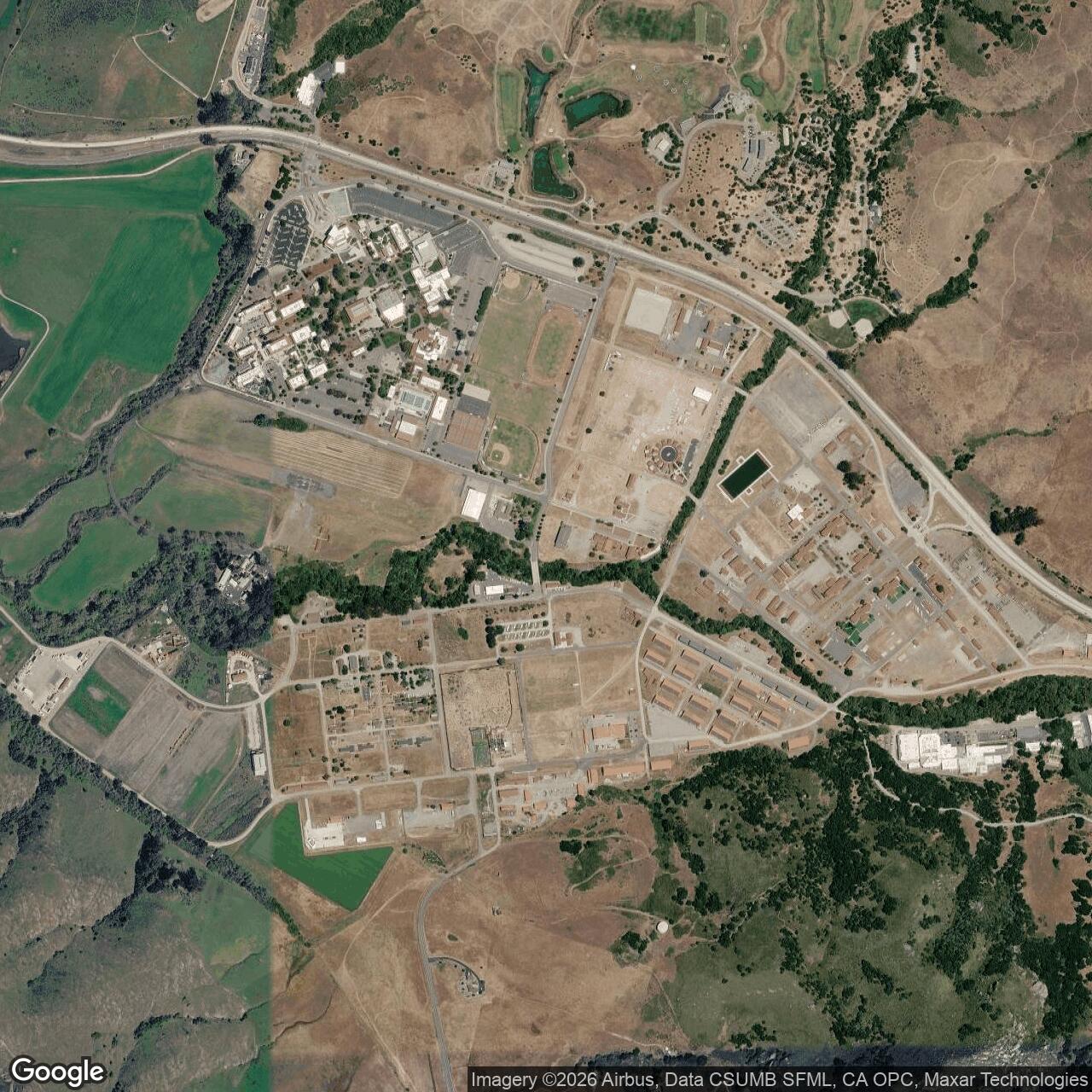
Camp San Luis Obispo's physical layout reflects three eras: the original 1928 Guard camp, the large World War II federal expansion, and the present retained Guard installation surrounded by former military lands. The retained active core is about 5,800 acres. The World War II expanded camp reached 14,959.16 acres. Associated training at Baywood Park added another large off-post maneuver landscape. These overlapping footprints are why coordinates and acreage must be handled carefully.
The representative coordinates noted above identifies the active Camp San Luis Obispo locale/garrison area, not the full historic training boundary. The camp's official contact address places Post Operations at Building 738, 10 Sonoma Avenue, San Luis Obispo. Unit check-in, range control, billeting, security, dining, and post support are all organized around the active camp, not around the full wartime expansion. The current active installation therefore should be mapped to the garrison core, while the historic size was much larger World War II and FUDS landscape.
The World War II range system was broad. The former camp included 27 ranges and 13 training areas, with small-arms, artillery, mortar, rocket, grenade, and infantry training. USACE now divides the Former Camp San Luis Obispo FUDS property into nine project areas for investigation. This project-area organization is the modern administrative shadow of the wartime range layout. It exists because individual parts of the former training landscape present different munitions-response questions.
The Baywood Park Training Area was a related but off-post training landscape. The Army acquired 8,810 acres in July 1943, while later FUDS documents describe a 9,145-acre site in Los Osos and Morro Bay. Troops from Camp San Luis Obispo used it for bivouacs and maneuver by troops, vehicles, and equipment. It included publicly and privately owned successor lands, and USACE later carried out investigation, removal, institutional controls, public education, and five-year review work to manage possible munitions hazards.
The camp's infrastructure also includes historic and continuing support buildings. The official camp page describes the Officer's Club as a 1928 building and identifies the chapel as a World War II-era structure. Parker Hall / the NCO Club has roots in 1967-1971 Guard social and family-support activity. These buildings are useful interpretive anchors because they connect the present training installation to the interwar Guard camp, the World War II camp, and the post-1965 Guard era.
Environmental and FUDS Legacy
Camp San Luis Obispo's most important current historical-management issue is munitions response. The training that made the camp militarily valuable also left unexploded ordnance and munitions-related hazards in parts of the former property. USACE began investigating the former camp in 1986 through the Formerly Used Defense Sites program. Since then, two Time-Critical Removal Actions have been performed within portions of the former camp to identify and remove munitions and reduce immediate threats posed by munitions and explosives of concern.
The munitions issue is tied directly to documented wartime use. Infantry, artillery, mortar, rocket, grenade, and small-arms training on 27 ranges and 13 training areas from 1943 to 1946 created a landscape where items could remain after closure or transfer. USACE safety materials emphasize the 3Rs of explosives safety: recognize when a munition may be present, retreat without disturbing it, and report it to authorities. This is the public-facing safety inheritance of the camp's wartime mission.
The former camp is not one single cleanup site. USACE divides it into nine project areas for investigation. FUDS project materials separately identify range-specific concerns such as the Rifle Grenade Range, grenade courts, and multi-use range areas. That project structure should be preserved in interpretation because it prevents a misleading impression that all of Camp San Luis Obispo has the same risk profile. The active Guard installation, former Army lands, college lands, park lands, private lands, and open-space areas have different use histories and different levels of investigation.
Baywood Park has a parallel FUDS history. USACE began investigating that site in 1989, carried out investigations and removal actions, and used institutional controls and public safety education as part of the remedial approach. Because Baywood Park was an off-post maneuver and bivouac area for Camp San Luis Obispo troops, its munitions history is connected to the camp but legally and geographically distinct. It is best interpreted as a related training-area legacy rather than as the active camp itself.
Current Status
Camp San Luis Obispo remains active under California National Guard control. Its present active core preserves the original Guard training-camp identity, even though the wartime expansion lands have been reduced or transferred. Current functions include range and training-facility scheduling, military education through the California Military Academy and 223rd Regiment RTI, billeting, dining, chapel and club facilities, logistics, security, and support to Guard and other military/civil organizations.
The post's current significance lies less in troop numbers than in continuity. It is the original home of the California National Guard, a former World War II Army division-training camp, a Korean War Signal Corps training site, a munitions-response landscape, and a modern Guard training and education installation. It also supports current headquarters and command-post training, as shown by the 40th Infantry Division's Defender Pacific 20 work from Camp San Luis Obispo. That layered continuity gives the camp a deeper military meaning than a simple "active National Guard training site" label can convey.
Camp San Luis Obispo should be interpreted with two acreage figures. The active retained Guard core is about 5,800 acres. The documented World War II expanded camp reached 14,959.16 acres, and related off-post training at Baywood Park added a separate 8,810-acre / 9,145-acre training area depending on the source accounting.
Chronology
- 1928 The California National Guard established Camp San Luis Obispo on 5,800 acres; the camp was originally named Camp Merriam.
- 1940 The U.S. Army acquired use of the camp and renamed the area Camp San Luis Obispo as federal mobilization expanded.
- 1941 Salinas Dam was built under War Department direction to supply water to Camp San Luis Obispo.
- 1942-03-04 The 1st Filipino Battalion was organized.
- 1942-04-01 The 1st Filipino Battalion was activated at Camp San Luis Obispo under Lt. Col. Robert H. Offley.
- 1942-05 More than 2,000 Filipino volunteers had enlisted before the unit moved toward Salinas and the 1st Filipino Infantry Regiment identity.
- 1943-07 The Army acquired 8,810 acres for the Baywood Park Training Area to support bivouac and maneuver training by troops associated with Camp San Luis Obispo.
- 1943-1946 Camp San Luis Obispo supported infantry division training, small-arms, artillery, mortar, rocket, and grenade training across 27 ranges and 13 training areas.
- 1946 The primary World War II training use ended; portions of former training land began moving toward relinquishment, return, or reuse.
- 1951-1953 The camp was reactivated for Korean War-era Signal Corps training and related weapons training.
- 1955 USACE identifies the Salinas Dam and reservoir as transferred to Corps custody after their wartime Camp San Luis Obispo support purpose.
- 1965 The Army relinquished Camp San Luis Obispo after the Korean War reactivation period and later inactivity. The California National Guard retained the original 5,800 acres.
- 1971 The NCO Club / Parker Hall lineage began with earlier Battery C, 144th Field Artillery club activity developing into a continuing post social facility.
- 1972 More than 700 acres of former camp land became associated with El Chorro Regional Park reuse.
- 1986 The U.S. Army Corps of Engineers began investigating the Former Camp San Luis Obispo through the FUDS program.
- 1989 USACE began investigating the related Baywood Park Training Area FUDS.
- 1995 The Conservation Corps State Museum opened in former barracks buildings at Camp San Luis Obispo.
- 2001-2004 USACE implemented institutional controls and public safety education as part of Baywood Park Training Area munitions-response management.
- 2010 A 60mm high-explosive mortar and other munitions-related items were documented in USACE Camp San Luis Obispo public materials, illustrating the continuing FUDS safety issue.
- 2011 Camp San Luis Obispo became associated with expanded state public-safety and cadet/youth training functions.
- 2020-08 Soldiers of the California Army National Guard's 40th Infantry Division built a command post at Camp San Luis Obispo to support U.S. Army Pacific operations during Defender Pacific 20.
- 2025-07-12 The 223rd Regiment Regional Training Institute held a Warrant Officer Candidate School graduation ceremony at Camp San Luis Obispo, illustrating the camp's continuing military-education role.
- Present Camp San Luis Obispo remains an active California Army National Guard training installation, home to the California Military Academy and other training/support functions, while former World War II range lands remain subject to FUDS investigation and public-safety management.
Information sources (17)
- WEBCalifornia Military Department / Cal Guard
Camp San Luis Obispo
- WEBCalifornia Military Council
California Military Bases
- WEBU.S. Army Corps of Engineers Los Angeles District
"Camp San Luis Obispo" Formerly Used Defense Site
- PDFU.S. Army Corps of Engineers Los Angeles District
"Camp San Luis Obispo" FUDS Fact Sheet PDF
- PDFU.S. Army Corps of Engineers Los Angeles District
"Rifle Grenade Range" Camp San Luis Obispo FUDS poster PDF
- WEBU.S. Army Corps of Engineers Los Angeles District
Baywood Park Training Area
- PDFU.S. Army Corps of Engineers Los Angeles District
"Baywood Park Training Area" FUDS Fact Sheet PDF
- WEBNational Park Service, Golden Gate National Recreation Area
A History of the 1st and 2nd Filipino Regiment
- WEBHoward University Digital Howard, Campbell C. Johnson Collection
1st Filipino Infantry Battalion
- WEBNational Guard
40th ID conducts joint ops in Pacific from San Luis Obispo
- WEBGrizzly Youth Academy
Grizzly Youth Academy
- WEBGrizzly Magazine / California Army National Guard Public Affairs
New Breed of Leaders
- WEBCity of San Luis Obispo
Salinas Reservoir
- WEBCounty of San Luis Obispo
Salinas Dam Disposition Study & Feasibility Study
- WEBU.S. Army Corps of Engineers
Salinas Dam Disposition Study
- WEBTopoZone / USGS locale data
Camp San Luis Obispo
- WEBCalifornia State Military Museum
Major Army Installations During World War II