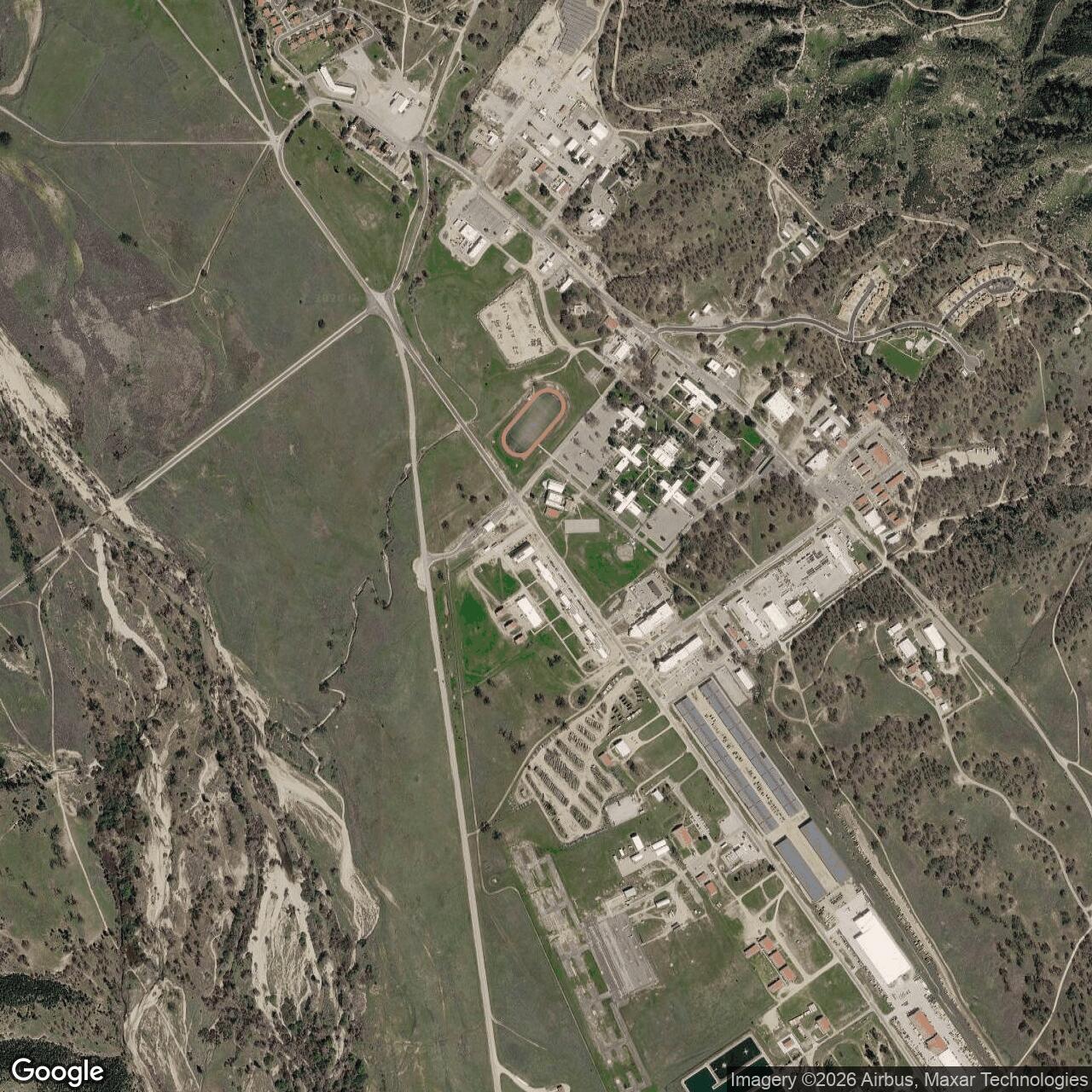
Fort Hunter Liggett Army Base, Jolon California
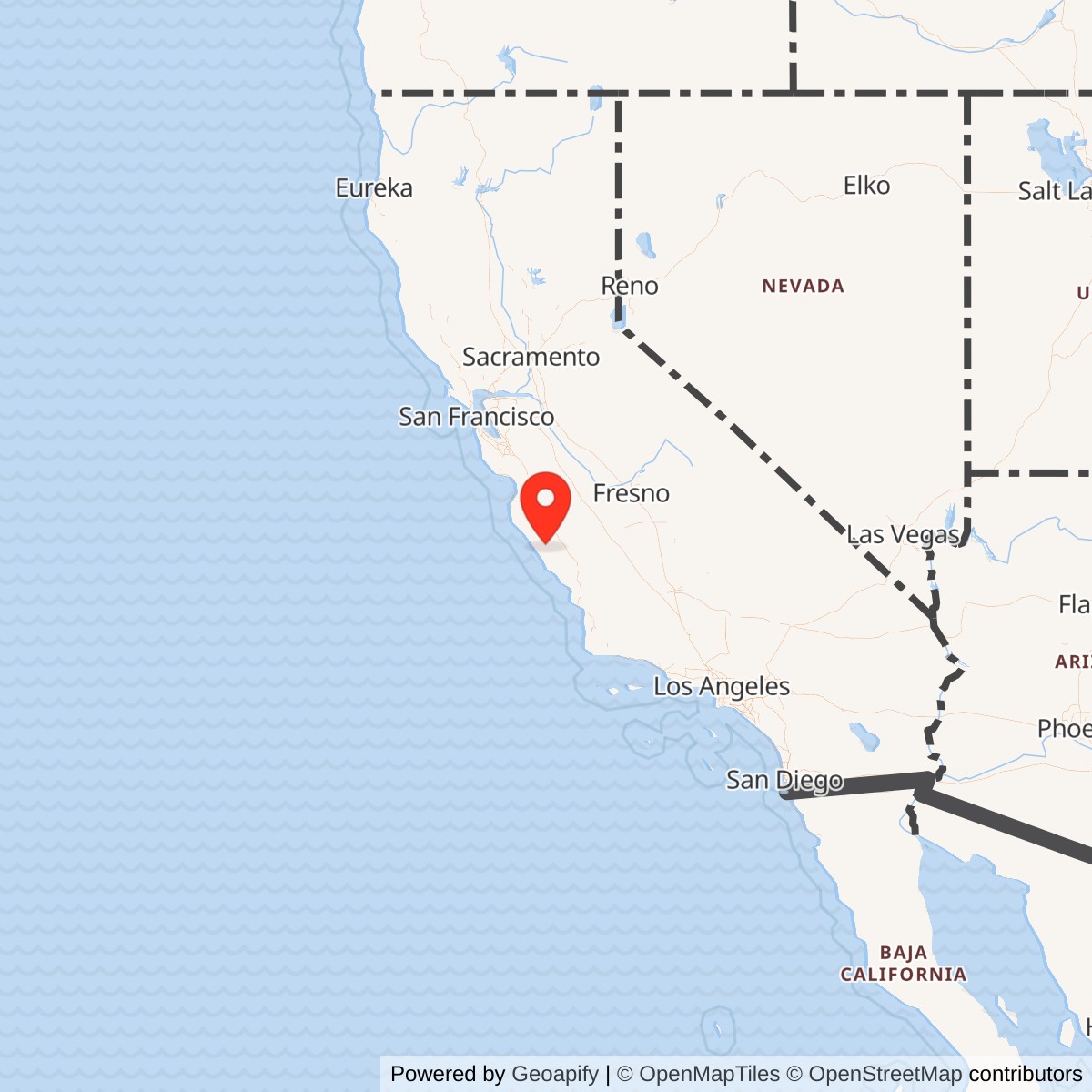
Longitude: -121.238199
Current Role: Active U.S. Army Reserve training installation and Total Force Training Center
Fort Hunter Liggett is an active U.S. Army Reserve training installation in southern Monterey County, California. It occupies a vast interior landscape of valleys, oak woodlands, chaparral, river corridors, steep ridges, ranch country, and mountain approaches between the Salinas Valley and the Santa Lucia Range. The post is centered near Jolon and Mission San Antonio de Padua, far enough from the dense coastal cities to support large field exercises, live-fire training, convoy movement, aviation activity, and austere operations, but close enough to California's central transportation network to remain usable by Army Reserve, active component, National Guard, Navy, Marine Corps, Air Force, interagency, and allied forces. The installation's own public history places it about 25 miles southwest of King City and roughly 86 miles south of old Fort Ord.
The installation is active, not closed or transferred. Its present official identity is U.S. Army Garrison Fort Hunter Liggett, with Parks Reserve Forces Training Area in Dublin, California, as a sub-installation. Fort Hunter Liggett is recognized by the Army as the U.S. Army Reserve's largest training installation. Army public pages describe it as approximately 165,000 acres, while current mission material describes more than 160,000 acres of year-round training environment. The correct modern status is therefore an active Army-controlled reservation whose main function is training, range support, field maneuver, live fire, testing support, institutional training, and installation services for the total force.
Fort Hunter Liggett should also be understood as a layered landscape. Before the Army arrived, the area was part of the homeland of Native peoples, including Salinan communities, and later became part of the Spanish mission and Mexican-era landholding world of central California. Mission San Antonio de Padua was established nearby in 1771. In the late nineteenth and early twentieth centuries the area was ranch country, and by the early twentieth century much of the Milpitas tract was associated with William Randolph Hearst's holdings. Hearst's Julia Morgan-designed Hacienda, completed in 1930, still stands on the installation and functions as an Army-operated historic lodging facility. When the War Department purchased the property in 1940, it did not acquire an empty military blank slate. It acquired a large cultural landscape with mission, ranch, architectural, Native, ecological, and transportation histories already embedded in it.
The military identity began with emergency mobilization. In anticipation of World War II, the War Department purchased more than 200,000 acres of local ranch land in 1940 from William Randolph Hearst and neighboring landowners. A 2016 Army anniversary account gives a figure of 266,950 acres for the wartime acquisition, while the installation's current public history uses the broader description "over 200,000 acres." In 1941 the post was designated Hunter Liggett Military Reservation, named for Lieutenant General Hunter Liggett, a senior World War I commander who had led the 41st National Guard Division, commanded I Corps in the American Expeditionary Forces, served as Chief of Staff to General John J. Pershing, and commanded First Army. The name joined a modern field-training reservation to an Army leader remembered for careful preparation, soldier welfare, operational learning, and command at scale.
The post was not created as a cantonment-centered fort like many World War II temporary camps. It was created as a training reservation. Its importance lay in land, terrain, airspace, ranges, roads, and the ability to simulate realistic field conditions. Soldiers could maneuver across valleys, climb ridges, cross dry and seasonal waterways, practice convoy movement, occupy bivouac areas, fire weapons, and train away from civilian encroachment. That remains the core logic of the post today. The names, commands, and training technology have changed, but the reason Fort Hunter Liggett exists is the same reason the Army bought the land in 1940: it provides room to train in difficult country.
Mission Evolution
Fort Hunter Liggett's mission began as World War II field preparation. The War Department saw the central California interior as a place where soldiers could train for combat in terrain resembling parts of the European theater. The reservation offered open valleys, rugged hills, arid conditions, steep approaches, and enough isolation to handle large formations. The Army did not need a ceremonial post. It needed a large-scale outdoor training environment where units could move, bivouac, fire, coordinate logistics, test leadership, and learn to operate as field formations.
The first designation, Hunter Liggett Military Reservation, captured that function. A reservation was not simply a fort with barracks. It was land held for military use, and in this case the land mattered more than the built-up cantonment. During the World War II period the installation supported troops preparing for overseas service and became linked to the larger central California training network that included Fort Ord, Camp Roberts, Camp San Luis Obispo, and other wartime Army facilities. Fort Hunter Liggett's later history as a Fort Ord sub-installation reinforces the point: it served as the field and maneuver complement to posts that had larger cantonments and permanent troop populations.
Administration changed as the Army's postwar organization shifted. Until 1952 Fort Hunter Liggett was under Camp Roberts' authority; the installation history notes that Camp Roberts lay about 17 miles away by tank trail. After 1952, Fort Hunter Liggett became a sub-installation of Fort Ord. This relationship lasted until November 1993, when the post came under United States Army Reserve Command. That administrative sequence tells the story of its evolving purpose. First it supported wartime field training. Then it became part of the Fort Ord system, especially useful for larger maneuvers that the Monterey Bay cantonment could not contain by itself. Then, as Fort Ord moved toward closure under Base Realignment and Closure, Fort Hunter Liggett survived because the Army Reserve and the broader force still needed its land.
In 1975 the reservation was redesignated Fort Hunter Liggett Military Installation. The change came during a period when the post was particularly important to the 7th Infantry Division, the Combat Development and Experimentation Center, and Reserve Component training. During the 1960s and 1970s, active and reserve units used the post to prepare for the Vietnam War era, and later Cold War training took advantage of the reservation's isolation and size. The terrain could support field problems, convoy operations, experimental scenarios, and testing that required space and limited civilian interference.
The Combat Development and Experimentation Center period gave Fort Hunter Liggett one of its most distinctive Cold War missions. The post became a place where the Army and Marine Corps could test concepts, weapons, equipment, and simulated opposing-force operations in realistic terrain. Army public history notes that CDEC work at Fort Hunter Liggett included testing or experimentation involving the CH-47 Chinook helicopter, the M16A1 rifle, the Cobra attack helicopter, the HELLFIRE air-to-ground missile system, and the Bradley Infantry Fighting Vehicle. This did not make Fort Hunter Liggett a weapons laboratory in the Fort Detrick sense or an arsenal in the Pine Bluff sense. It made it a field experimentation ground: a place where systems, tactics, formations, and assumptions could be stressed outside the classroom.
The 1993 transfer from the active Army to the U.S. Army Reserve was another major mission shift. It came as Fort Ord closed and the Army reduced or reorganized its Cold War footprint. Fort Hunter Liggett did not vanish with Fort Ord because its land retained high training value. In 2005 the garrison was established under the Army's Installation Management Command, with Army Reserve funding supporting year-round total force training. This created the modern mission framework: Fort Hunter Liggett as a readiness enabler for the Army Reserve, active Army, National Guard, joint forces, allied forces, and interagency partners.
Today the official mission is to provide installation services and sustain facilities to enable total force readiness. Practically, that means maintaining and allocating training areas, ranges, airspace, facilities, and logistical support for field maneuvers, live-fire exercises, testing, institutional training, and quality-of-life needs. The installation supports major exercises such as Combat Support Training Exercise, Warrior Exercise, Combat Support Training Exercise rotations, Global Medic, Realistic Urban Training, and other large-scale training events. Fort Hunter Liggett's modern mission is not one unit and one war. It is a training platform built to serve many components, many kinds of units, and many types of readiness demands.
World War II Training Mission
Fort Hunter Liggett's World War II story begins with urgency. In 1940 the United States was not yet at war, but the Army was expanding rapidly in response to the war in Europe and the growing likelihood that American forces might have to fight overseas. The Regular Army was small, the National Guard was being federalized, the draft was beginning, and the country needed places to train soldiers under field conditions. Coastal California already had Fort Ord, but Fort Ord's cantonment and coastal maneuver areas were not enough for all the training demands that a modern Army would impose. The War Department therefore acquired the much larger interior tract that became Hunter Liggett Military Reservation.
The land itself was the training instrument. The reservation's valleys, ridges, river corridors, dry summer conditions, and rugged mountain approaches offered a range of tactical problems. Soldiers could practice movement in heat, dust, limited water conditions, and broken terrain. Units could disperse, navigate, communicate, establish field positions, move supplies, coordinate artillery and vehicle movement, and experience the friction of operating far from fixed barracks. This made the post especially valuable for training soldiers expected to fight in difficult overseas environments.
World War II use tied Fort Hunter Liggett to the broader California training system. Fort Ord, Camp Roberts, and Camp San Luis Obispo all played major roles in the state's wartime mobilization. Fort Hunter Liggett's special contribution was its scale and remoteness. It supplied field space, not a dense urban cantonment. Troops could move from other posts into the reservation for maneuvers and exercises, then return to permanent or semi-permanent cantonments elsewhere. This relationship explains why the installation later came under Camp Roberts authority and then Fort Ord authority. Its identity was always relational: it was the big field-training ground supporting a larger network of posts.
The reservation also entered national military memory through a 1941 photograph preserved in Army public material showing then-Colonel Dwight D. Eisenhower, IX Corps Chief of Staff, discussing operations with Lieutenant Colonel James Bradley, Fourth Army Chief of Staff, at Hunter Liggett Military Reservation on June 10, 1941. The image is not important because Eisenhower was yet the famous Supreme Allied Commander; in mid-1941 he was a rising staff officer in a rapidly expanding Army. The importance is that Hunter Liggett already mattered enough to be part of high-level field operations before Pearl Harbor. It was one of the places where the Army practiced the large-unit coordination that would later prove essential in global war.
The training environment was also connected to the Army's evolving understanding of mechanized and combined-arms warfare. Large spaces were increasingly necessary because motorized units, artillery, support elements, and logistics trains required more room than older infantry drill. Fort Hunter Liggett's road net, open maneuver space, and distance from urban areas allowed the Army to train on a physical scale closer to operational reality. The reservation was not a battlefield, but it was part of the Army's effort to make soldiers and staffs think in battlefield dimensions.
After Pearl Harbor, the post's significance increased as the West Coast became both a training zone and a defensive frontier. California posts were involved in coastal defense, unit mobilization, amphibious training, and movement toward Pacific operations. Fort Hunter Liggett did not have the iconic harbor-defense batteries of the Golden Gate posts, nor the embarkation identity of Fort Mason, nor the main cantonment role of Fort Ord. Its World War II contribution was quieter but fundamental: it offered land where units could be hardened before they left for war.
Cold War and Fort Ord Era
After World War II, many temporary camps closed, but Fort Hunter Liggett remained useful. The installation's land value survived demobilization. Unlike a temporary wooden cantonment, the reservation did not become obsolete simply because wartime barracks were no longer needed. Training land remained difficult to replace, and the central California landscape gave the Army something it could not easily recreate near cities: a large, varied, relatively unencroached field environment.
The administrative link to Camp Roberts until 1952 reflected the postwar consolidation of California training lands. Camp Roberts had been a major World War II training center and remained a nearby Army presence. Fort Hunter Liggett's connection to Camp Roberts meant that the two installations could function as complementary field-training resources. The 17-mile tank trail relationship noted in the installation history captures how the Army thought about the area: the posts were not isolated points, but parts of a maneuver geography.
After 1952 Fort Hunter Liggett became a sub-installation of Fort Ord. This was one of the most important relationships in its history. Fort Ord was a major Army training post on Monterey Bay, home to infantry training and later strongly associated with the 7th Infantry Division. Fort Hunter Liggett gave Fort Ord a much larger maneuver and live-training environment than the coastal post alone could provide. Soldiers based or organized through Fort Ord could train in the more remote Hunter Liggett terrain, giving the Fort Ord system depth.
The 7th Infantry Division period added a direct operational connection to a major active-duty formation. Fort Hunter Liggett became a training ground for the 7th Infantry Division, particularly in the late Cold War years when Fort Ord was the division's home station. The post's size allowed division and brigade-level field activity, tactical movement, and field problems that would have been difficult around the Monterey Bay cantonment. The relationship between Fort Ord and Fort Hunter Liggett mirrored a broader Army pattern: garrison posts required outlying maneuver reservations to maintain readiness.
The Cold War also made Fort Hunter Liggett a test and experimentation site. The Combat Development and Experimentation Center used the post to evaluate tactics, concepts, and equipment under field conditions. The value of the site was not merely acreage; it was varied terrain plus controlled access. Testing a helicopter, weapon, armored vehicle, or tactical concept required space, repeatability, instrumentation, safety buffers, and a realistic environment. Fort Hunter Liggett supplied those conditions.
This period gave the installation an unusually important role in the Army's adaptation to modern combined-arms warfare. Equipment such as the CH-47, Cobra, HELLFIRE system, and Bradley Fighting Vehicle belongs to the era when mobility, air-ground integration, anti-armor systems, and mechanized infantry were reshaping doctrine. Fort Hunter Liggett's experimental role placed it inside the Army's process of learning how new technology should actually be used. That is a different kind of historical significance from hosting a famous unit, but it is just as important. The post helped the Army test how it might fight.
During the Vietnam War era and after, Reserve Component and Regular Army soldiers used the reservation for training. Its heat, hills, rough roads, and austere conditions could simulate the physical difficulty of deployment environments. The installation did not deploy as a unit, but it shaped soldiers and units that did. This distinction is important for interpreting Fort Hunter Liggett's post-World War II history. Its battlefield effect was indirect: readiness, testing, unit preparation, and institutional learning.
Army Reserve Transition and Modern Readiness Role
The 1993 transfer to U.S. Army Reserve Command marked Fort Hunter Liggett's transition into its modern identity. Fort Ord's closure could have made the reservation vulnerable, but the Army Reserve needed a major western training installation. Fort Hunter Liggett's scale, terrain, and established infrastructure made it a logical survivor. It became a Reserve-centered but total-force training post, preserving a large active training landscape in a region where development pressures made replacement nearly impossible.
Since 2005 Fort Hunter Liggett has been managed through the Army's Installation Management Command and funded by the Army Reserve to support year-round training. That management structure matters. It means the post is not simply a legacy reservation with occasional use. It is an active garrison with a mission to provide services, range support, training support, maintenance support, housing, barracks, logistical services, communications, emergency services, and environmental stewardship for large numbers of rotating training customers.
Modern Fort Hunter Liggett supports Army Reserve exercises on a large scale. The 91st Training Division (Operations), one of the key tenant organizations, conducts Combat Support Training Exercise rotations and other collective-task training so assigned units are prepared for deployment. The division can provide training to joint, combined, and active forces as directed. That role makes Fort Hunter Liggett a training engine rather than a simple host site. The installation's resident training organizations design, support, and evaluate training events that affect readiness across the Reserve and the wider Army.
The 80th Training Command presence adds institutional training. The Fort Hunter Liggett training center supports Army Program for Individual Training requirements and military occupational specialty reclassification, advanced leader, and senior leader courses in specialties such as horizontal construction engineer, motor transport operator, and military police. This gives the post a schoolhouse dimension. Soldiers come not only for field exercises, but also to gain or change skills. In a force that must rapidly adjust personnel qualifications, that mission is important.
The 3-356th Logistics Support Battalion, associated with the 189th Combined Arms Training Brigade, provides logistical and maintenance support that enables Reserve Component training assistance, support, and evaluation. The Logistics Readiness Center supplies transportation, maintenance, supply, and services support. The Equipment Concentration Site provides training equipment. The Network Enterprise Center provides command, control, communications, computers, information management, and installation information services. These organizations are less visible than maneuver units, but they make the training mission possible. A large exercise cannot happen without vehicles, radios, fuel, range control, maintenance, billeting, food, data networks, and staff support.
Fort Hunter Liggett also hosts or supports Navy Seabee activity through the 31st Seabee Readiness Group, a reminder that the post is not exclusively an Army training space. Army public pages describe it as supporting joint, multi-component, interagency, and allied training. The post's modern identity is therefore "Total Force" in a practical sense. It is not reserved for one component, branch, or warfighting function. It is a platform that different forces can use for field work, construction training, medical exercises, logistics training, convoy operations, aviation, and joint experimentation.
Schoonover Army Airfield is a key modern capability. Fort Hunter Liggett's homepage highlights a C-17-capable dirt assault landing strip, and DVIDS material documents C-17 and C-130 operations at Schoonover. In 2019 C-17 Globemaster III aircraft practiced landings and takeoffs from the dirt runway, with DVIDS noting that Schoonover is one of only a few dirt airfields that allow Air Force and Marine pilots to maintain certification for landing and taking off from a dirt strip. This capability matters because austere airfield operations are central to modern expeditionary logistics. Fort Hunter Liggett is therefore not only a ground maneuver post; it is also an air-ground training environment.
The post's current exercises reflect contemporary operational needs. Combat Support Training Exercises and Warrior Exercises test sustainment, medical, logistics, communications, command, and movement under field conditions. Global Medic and related exercises support medical readiness. Realistic Urban Training and other special-purpose exercises use the reservation's isolation to support complex scenarios. The post's terrain and remoteness make it useful for large-scale combat operations preparation, but also for disaster response, interagency coordination, and support to civil authorities training.
Facilities and Physical Layout
Fort Hunter Liggett's layout is best understood as a large reservation with a smaller cantonment and support core. The installation is bounded generally by the Salinas Valley to the north, the foothills of the Santa Lucia Mountains to the east, the Monterey/San Luis Obispo county line to the south, and roughly 55 miles of Los Padres National Forest to the west. Within that broad area are valleys, ridges, river corridors, roads, airfields, ranges, bivouac areas, maintenance facilities, housing, barracks, training support facilities, historic structures, and environmental protection zones.
The terrain is itself a facility. The installation's official history emphasizes that level valleys, gentle hills, and steep rugged mountains provide opportunities for realistic training and defense technology testing. Junipero Serra Peak, formerly known as Santa Lucia, rises to 5,862 feet and is visible to the north. Cone Peak, at 5,155 feet, lies in the broader scenic mountain context westward toward Highway 1. The San Antonio and Nacimiento river systems and associated drainages shape movement, habitat, fire management, and training use. The landscape gives the post multiple training "rooms" within one installation.
The cantonment provides the installation services needed to keep rotating forces alive and functioning. Modern Army mission pages mention housing, barracks, a commissary, an Exchange, a bowling alley, recreation center, sports facility, and other support services for personnel working and living on post. These facilities are not the reason the post exists, but they are the support base that makes repeated training use sustainable. Soldiers can arrive for exercises, draw equipment, occupy billets or field sites, train, recover, and redeploy without the reservation becoming merely an unmanaged field.
Training areas and ranges are the post's core physical system. The mission requires allocation of training areas, ranges, airspace, and facilities for field maneuvers, live-fire exercises, testing, and institutional training. Different parts of the reservation serve different functions: live-fire work, convoy lanes, field bivouac, air assault or air landing operations, tactical assembly areas, construction projects, engineer training, land navigation, and logistics exercises. The large acreage allows multiple users to train at once or to sequence complex exercises across the installation.
Schoonover Army Airfield adds an aviation and expeditionary logistics layer. Its dirt strip allows training for aircraft operations in austere conditions. C-17 and C-130 use demonstrates that the airfield is not incidental; it is part of the installation's modern training value. Aircraft can practice landing, takeoff, turnaround, ground inspection, and air-ground coordination under conditions closer to expeditionary landing zones than ordinary paved airports.
The Historic Hacienda is Fort Hunter Liggett's most prominent architectural landmark. Completed in 1930 by William Randolph Hearst and designed by Julia Morgan, the building served as temporary housing for Hearst's employees and guests and as a headquarters for activities on the surrounding ranch land. Also known as the Milpitas Hacienda, Hacienda Guest Lodge, and Milpitas Ranch House, it was placed on the National Register of Historic Places on December 2, 1977. The Army still owns the facility and operates it as a public hotel within the installation, with access subject to post vetting. The Hacienda is therefore both a historic resource and an active Army morale, welfare, lodging, and public-interface facility.
Mission San Antonio de Padua is immediately outside the garrison cantonment area and accessible by Mission Road, a public-access road that does not require installation vetting according to Army mission material. The mission is not an Army-built facility, but its presence inside the broader Fort Hunter Liggett landscape is central to understanding the site. It anchors the pre-Army history of the San Antonio Valley and gives the installation a cultural-resource context much older than 1940.
Units, Tenants, and Systems
Fort Hunter Liggett's present organizational structure reflects its modern readiness mission. U.S. Army Garrison Fort Hunter Liggett provides installation services, range support, facilities support, emergency services, environmental management, communications, and quality-of-life support. Its sub-installation, Parks Reserve Forces Training Area, extends the garrison's footprint into the San Francisco Bay Area. Together the two installations give the Army Reserve geographically dispersed training and support nodes in northern and central California.
The 91st Training Division (Operations) is one of the most important tenant organizations. Its mission is to conduct Combat Support Training Exercise rotations and other collective-task training requirements for assigned units so that they are prepared for deployment. It can also provide training support to joint, combined, and active forces. The 91st gives Fort Hunter Liggett a direct role in evaluation and training management. The post is not merely rented space; it is an operations training hub.
The 80th Training Command presence gives the post a schoolhouse and reclassification role. The Fort Hunter Liggett TASS Training Center supports the 102nd Training Division by providing logistical, administrative, and facilities support for instructors, course managers, and students. Its courses include military occupational specialty reclassification and leader courses for fields such as 12N Horizontal Construction Engineer, 88M Motor Transport Operator, and 31B Military Police. This links the installation to the Army's ability to reshape individual soldier qualifications.
The 3-356th Logistics Support Battalion supports the 189th Combined Arms Training Brigade and subordinate battalions, helping them train, assist, support, and evaluate priority Reserve Component units. The Logistics Readiness Center provides transportation, maintenance, supply, and service support. The Equipment Concentration Site supplies training equipment. These sustainment organizations are historically important because Fort Hunter Liggett's recurring mission is not simply to host units, but to make field training logistically possible.
The 31st Seabee Readiness Group demonstrates the joint character of the post. It supports Naval Construction Force readiness, personnel receiving and processing, training, and family support functions. Seabee troop projects also help improve installation structures while giving naval construction personnel practical training. This relationship is a good example of how Fort Hunter Liggett functions as a multi-service training environment rather than a closed Army-only post.
The Network Enterprise Center gives the post the communications and information-management backbone required by modern training. Range operations, exercise control, student management, emergency response, logistics, and garrison life all require reliable networks. Modern installations are not only land and buildings; they are digital and communications systems. Fort Hunter Liggett's ability to support major exercises depends on that invisible infrastructure.
Historically, the major unit/system relationships were Camp Roberts, Fort Ord, the 7th Infantry Division, the Combat Development and Experimentation Center, and U.S. Army Reserve Command. Each relationship reflects a different era: World War II training network, postwar California Army training system, active-division field training, Cold War testing and doctrine development, and modern Reserve readiness. The installation's significance lies in the continuity across all these systems.
Natural Resources, Fire, and Public Interface
Fort Hunter Liggett's military value is inseparable from its natural setting. The same isolation, varied terrain, and limited development that make it useful for training also create major environmental responsibilities. The installation contains oak woodlands, grasslands, chaparral, riparian corridors, seasonal wetlands, and habitat for sensitive species. Federal environmental sources and Army natural-resource material identify the post as important for species such as arroyo toad and purple amole. The U.S. Fish and Wildlife Service has described one variety of purple amole as known only from lands managed by the Department of the Army at Fort Hunter Liggett. These resources make the post both a training reservation and a conservation landscape.
The Army's natural-resource mission is not separate from readiness. Training can create wildfire risk, soil disturbance, invasive species problems, and habitat impacts. At the same time, active land management can protect both training lands and ecological resources. Prescribed fire is a good example. In 2026 Fort Hunter Liggett partnered with local, state, and federal fire agencies to conduct prescribed burns that reduced hazardous vegetation, lowered wildfire risk, protected training lands before California fire season, and provided practical interagency firefighter training. The operation involved Fort Hunter Liggett firefighters, CAL FIRE, Big Sur Fire, the U.S. Forest Service, and other partners. That kind of work shows how land stewardship, emergency readiness, and military training are interdependent.
Public access is carefully controlled but not absent. The installation supports a hunting and fishing program open to permitted members of the public who meet licensing, iSportsman, access, and background requirements. The Hacienda is a public hotel within the base, but guests must complete vetting for post access. Mission San Antonio de Padua is accessible by a public road outside the cantonment access process. Jolon Road and other routes create a complex public/military geography in which civilians may travel near or through federal jurisdiction while the installation remains an active military post.
That public-interface geography has occasionally produced controversy. In early 2026 local reporting described immigration detentions following traffic stops on or near federal land associated with Fort Hunter Liggett and Jolon Road, and members of Congress sought information from the Army and Department of Homeland Security about reported Army police and ICE interactions. Local coverage also quoted a Fort Hunter Liggett statement saying the post police conduct routine traffic stops for safety and security and that the installation does not conduct ICE operations or have authority to direct where ICE operates. This episode is not central to Fort Hunter Liggett's historical mission, but it belongs in a current-status discussion because it illustrates how an active training reservation with public roads, federal jurisdiction, and local communities can become part of broader civil-military and law-enforcement questions.
The post's 85th anniversary in 2026 highlighted a different kind of public interface. Fort Hunter Liggett hosted an open house at Schoonover Army Airfield with historical displays, current military equipment, community partners, food vendors, live music, and public engagement. Army coverage emphasized displays from World War II through the Vietnam era, partner organizations, Seabees, Army Reserve units, aviation assets, and local heritage groups. Such events help translate a remote training reservation into a visible regional institution. Fort Hunter Liggett is isolated by design, but it is not disconnected from Monterey County, the Central Coast, or the Army Reserve community.
Current Status
Fort Hunter Liggett remains active. It is an Army Reserve installation, an Installation Management Command garrison, and a Total Force Training Center. It encompasses about 165,000 acres and is the largest U.S. Army Reserve training installation. It supports year-round joint, multi-component, interagency, and allied training. Its sub-installation is Parks Reserve Forces Training Area in Dublin, California. The present Army mission is to provide installation services, sustain facilities, and enable total force readiness.
The current post is not a conventional troop garrison in the old permanent-division sense. It is a rotational training and support platform. Units arrive for exercises, school courses, field problems, medical training, logistics training, engineer projects, convoy operations, airfield operations, and other readiness events. Resident organizations such as the 91st Training Division, 80th Training Command elements, 3-356th Logistics Support Battalion, Logistics Readiness Center, 31st Seabee Readiness Group, Equipment Concentration Site, Corps of Engineers, and Network Enterprise Center sustain that rotating mission.
The installation's physical and operational value is high because comparable land is scarce. A 165,000-acre training reservation in coastal California cannot easily be replaced. Surrounding development, environmental constraints, airspace complexity, and land costs make Fort Hunter Liggett a strategic asset even though it does not host a famous combat division today. Its value lies in what it enables: realistic field training, austere operations, logistics exercises, joint training, C-17-capable dirt strip activity, fire management, and readiness-building at scale.
Fort Hunter Liggett's active status also requires careful access, environmental, cultural-resource, and safety management. It contains public-facing historic assets, sensitive species habitat, wildfire risk areas, live training lands, ranges, public roads, and active military facilities. Unlike closed posts now interpreted by the National Park Service, Fort Hunter Liggett's historic resources exist inside a working installation. The Hacienda, Mission San Antonio context, historic military sites, and older ranch landscapes must be understood alongside ongoing training, range control, and garrison operations.
Chronology
- 1771-07-14 Mission San Antonio de Padua was established in the San Antonio Valley, creating the Spanish mission landmark that remains central to the cultural landscape around present Fort Hunter Liggett.
- 1920s An earlier wooden Milpitas Ranch House associated with the Hearst property was destroyed by fire.
- 1930 William Randolph Hearst completed the Julia Morgan-designed Hacienda, later known as the Milpitas Hacienda, Hacienda Guest Lodge, and Milpitas Ranch House.
- 1940 In anticipation of World War II training needs, the War Department purchased more than 200,000 acres of local ranch lands from William Randolph Hearst and neighboring landowners; an Army anniversary account gives the wartime acquisition figure as 266,950 acres.
- 1941 The reservation was designated Hunter Liggett Military Reservation, named for Lieutenant General Hunter Liggett.
- 1941-06-10 Colonel Dwight D. Eisenhower, IX Corps Chief of Staff, was photographed at Hunter Liggett Military Reservation discussing operations with Lieutenant Colonel James Bradley, Fourth Army Chief of Staff.
- 1941-1945 Hunter Liggett Military Reservation served as a major field-training and maneuver landscape within the broader California wartime training network.
- 1952 Administration under Camp Roberts ended, and Fort Hunter Liggett became a sub-installation of Fort Ord.
- 1960s-1970s Reserve Component and Regular Army soldiers used the reservation for Vietnam-era preparation and field training.
- 1975 Hunter Liggett Military Reservation was redesignated Fort Hunter Liggett Military Installation.
- 1970s-early 1990s Fort Hunter Liggett supported the 7th Infantry Division, the Combat Development and Experimentation Center, and Reserve Component training.
- 1977-12-02 The Hacienda was placed on the National Register of Historic Places.
- 1993-11 Fort Hunter Liggett came under United States Army Reserve Command as Fort Ord moved through closure and realignment.
- 2005 U.S. Army Garrison Fort Hunter Liggett was established under Installation Management Command, with Army Reserve funding supporting the modern year-round training mission.
- 2007 Army Reserve training activity expanded as the post became a major Combat Support Training Center environment after BRAC-related changes.
- 2009 The 91st Division moved into its new headquarters building at Fort Hunter Liggett.
- 2010-09-11 The 91st Division headquarters building was dedicated as the Master Sergeant Robb G. Needham Army Reserve Center.
- 2016 Fort Hunter Liggett celebrated 75 years of support to troops and highlighted its World War II origin, CDEC testing history, and modern Army Reserve training role.
- 2019-03 C-17 and C-130 aircraft used Schoonover Army Airfield's dirt strip for austere landing and takeoff training.
- 2021 Fort Hunter Liggett celebrated its 80th anniversary with public events and historic aircraft participation at Schoonover Airstrip.
- 2024 Army reporting highlighted Fort Hunter Liggett's conservation partnership work to improve endangered arroyo toad habitat.
- 2026 Fort Hunter Liggett marked its 85th anniversary with public and internal events highlighting World War II history, modern joint-force readiness, and community partnerships.
- 2026-05 Fort Hunter Liggett hosted an 85th Anniversary Open House at Schoonover Army Airfield with historical displays, current military equipment, partner organizations, and public activities.
- 2026-05-27 Fort Hunter Liggett began joint prescribed fire operations with local, state, and federal agencies to reduce wildfire risk, protect training lands, and support readiness before peak fire season.
- Present Fort Hunter Liggett remains an active U.S. Army Reserve training installation of about 165,000 acres, supporting joint, multi-component, interagency, and allied training.