
Nike Missile Site BR-04 IFC, Ansonia / Woodbridge Connecticut
Longitude: -73.0449497435639
This location was part of the Bridgeport Defense Area
Site ID: BR-04
Missile / battery configuration: Nike 3B/18H,30A/12L-U
This site controlled the missiles at the Launch Area located here.
Site Role: IFC
A typical Nike air defense site consisted of two separate parcels of land. One area was known as the Integrated Fire Control (IFC) Area. This site contained the Nike system's ground-based radar and computer systems designed to detect and track hostile aircraft, and to guide the missiles to their targets.
The second parcel of land was known as the Launcher Area. At the launcher area, Nike missiles were stored horizontally within heavily constructed underground missile magazines. A large, missile elevator brought the Nikes to the surface of the site where they would be pushed across twin steel rails to one of four satellite launchers.
Elaboration on how Nike worked here.
Missile Type: Ajax/Hercules
The Nike Ajax was the first in the Army's family of guided missiles, and the world's first operational, guided, surface-to-air missile system. Nike Ajax had a burnout speed of Mach 2.3, a range of 25-30 miles, and a ceiling of 65,000 feet.
Designed to carry either nuclear and/or high-explosive warheads, the Nike Hercules missile could attack supersonic aircraft operating at altitudes in excess of 150,000 feet and at a range of more than 87 miles.
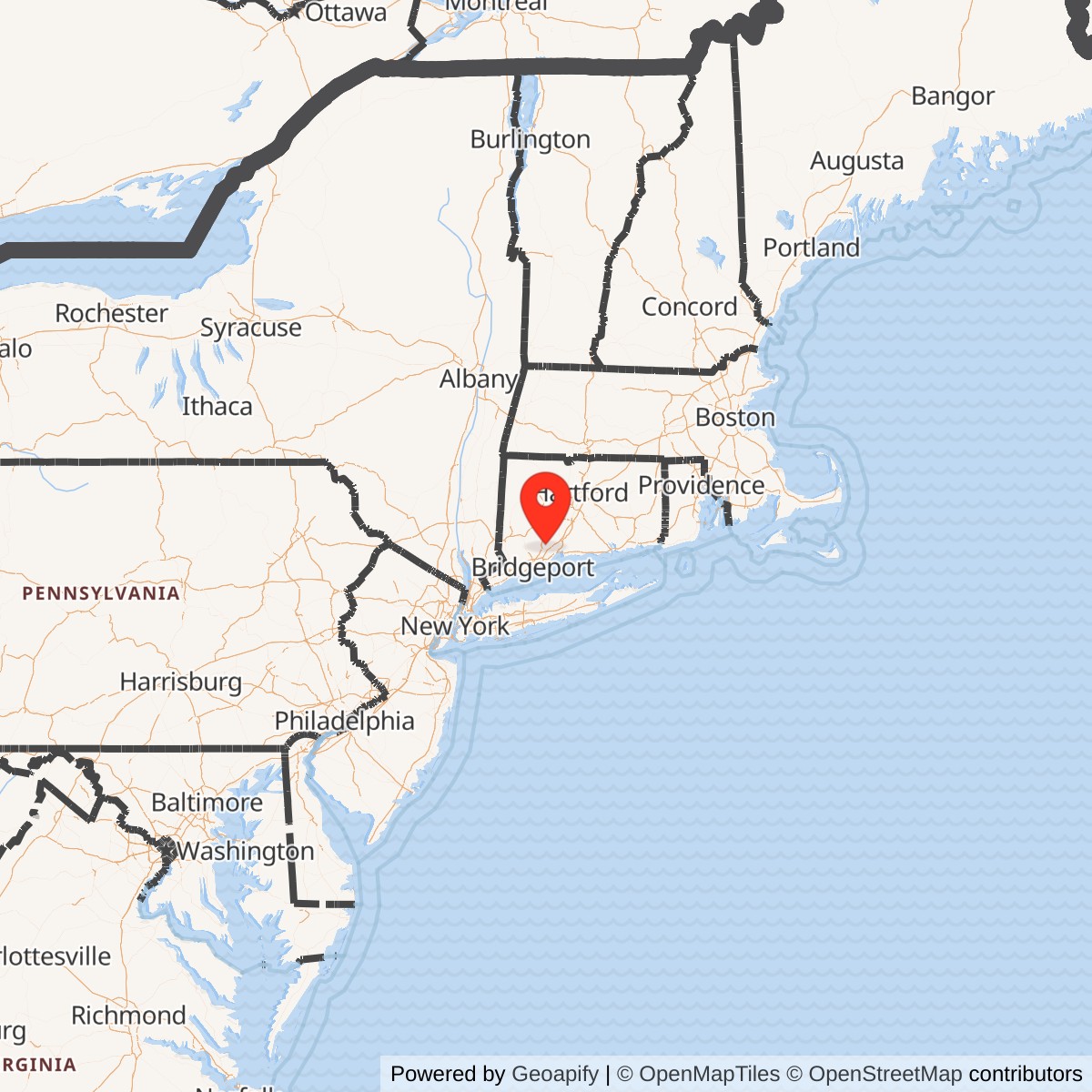
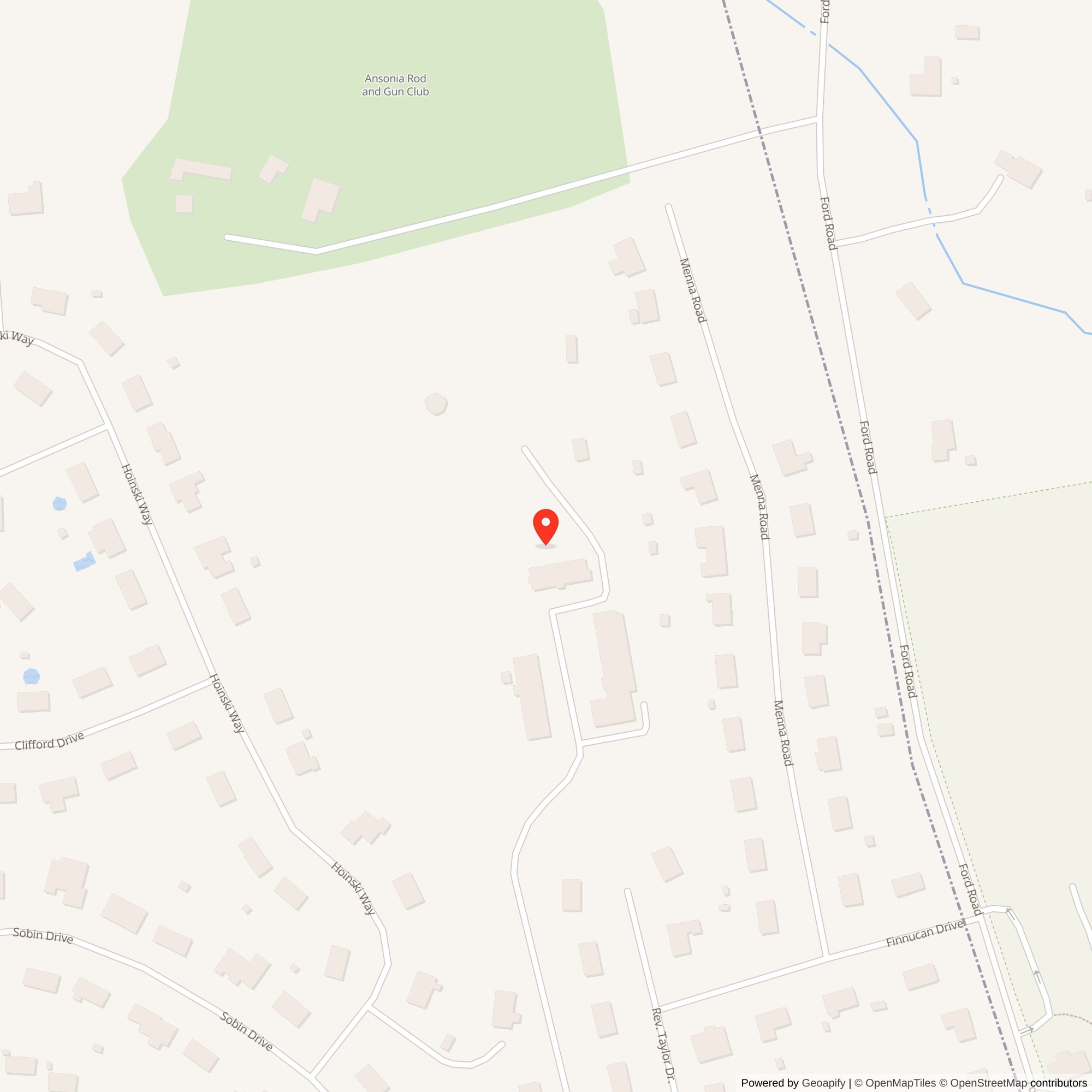
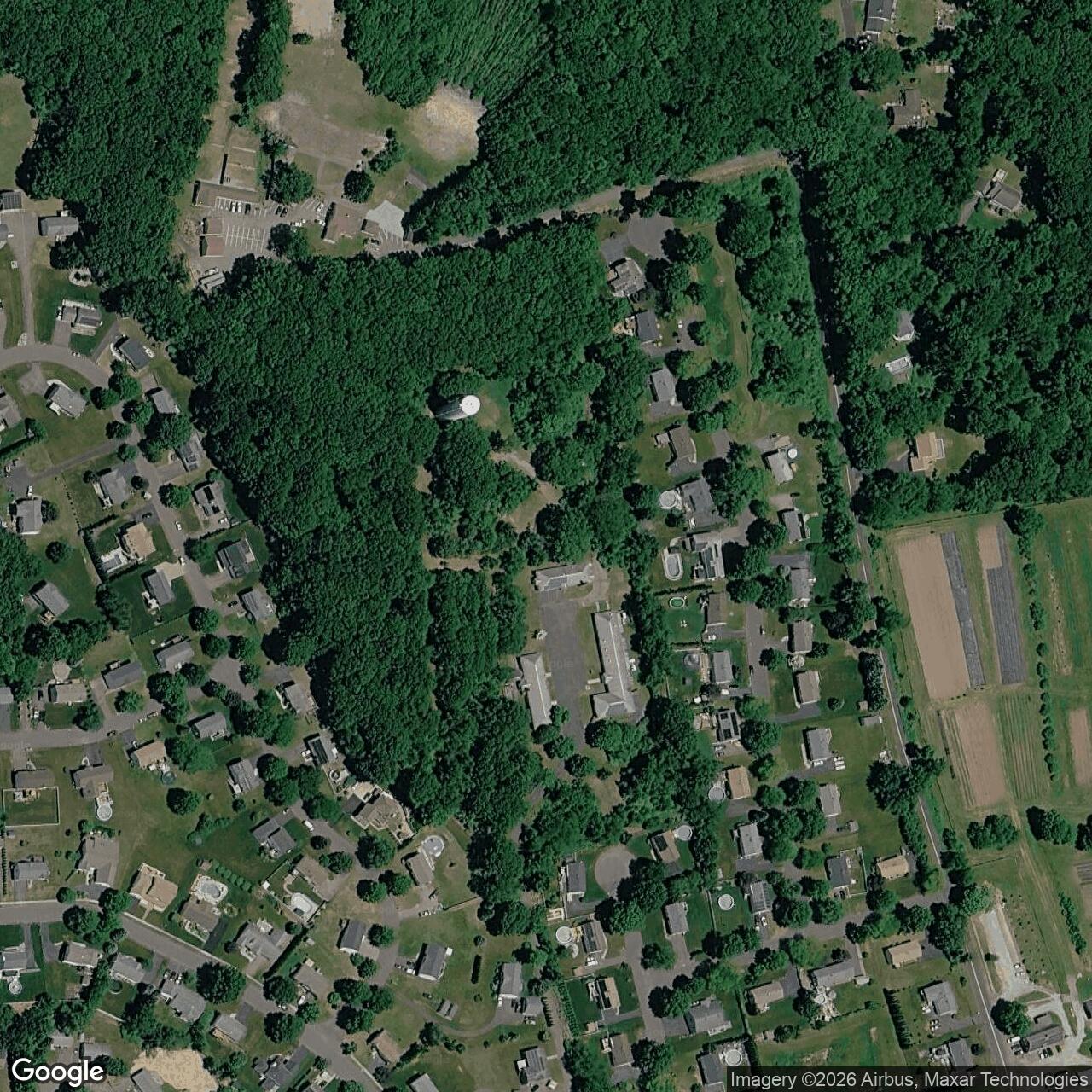
BR-04 changed from defending southern Connecticut against Soviet bombers to helping defend northeastern forests against invasive insects and diseases. The first mission placed acquisition and tracking radars, an analog guidance computer, soldiers, and guard dogs on Ford Street in Ansonia. The later mission adapted part of that fire-control property as a United States Forest Service quarantine research facility. A military landscape designed to identify and destroy an airborne threat became a scientific landscape used to contain and study biological threats.
The contrast is unusually sharp, but it does not erase the Cold War installation. BR-04 was the only one of the six Bridgeport Defense Area batteries converted from Nike Ajax to Nike Hercules. It remained after the other Bridgeport Ajax positions closed and joined the larger New England Defense Area. Its separate launcher near the Ansonia-Woodbridge line contained three horizontal underground magazines and twelve universal launcher positions. After closure, private farm and equestrian use adapted former support buildings, while the magazines were filled or otherwise closed.
BR-04 also has an exceptionally human local record. Drought forced the Ansonia Fire Department to haul hundreds of thousands of gallons of water to the site in 1957. Soldiers helped stop a brush fire at the launcher firebreak. An unarmed Ajax rolled through the 1958 Memorial Day parade. The battery was dedicated to Corporal Joseph V. Hines, an Ansonia serviceman killed in France in 1945. A light airplane crashed into a Capehart family house without killing anyone. During the Cuban missile crisis, the assassination of President John F. Kennedy, and the Northeast blackout, crews returned to battle stations.
Those details require disciplined interpretation. Hercules was nuclear-capable, but the reviewed evidence does not include a site custody record that proves a particular nuclear warhead inventory at BR-04. The official configuration records an allowance of eighteen Hercules missiles or thirty Ajax missiles, not a photographed load on a particular day. The May 1958 date repeated in later local timelines cannot be the operational Hercules date because the Army conversion table dates construction from August 1958 through February 1959 and gives 23 October 1959 as the operational date. No BR-04 accidental missile launch, Nike explosion, missile-related fatality, or nuclear incident was found.
Why Bridgeport needed BR-04
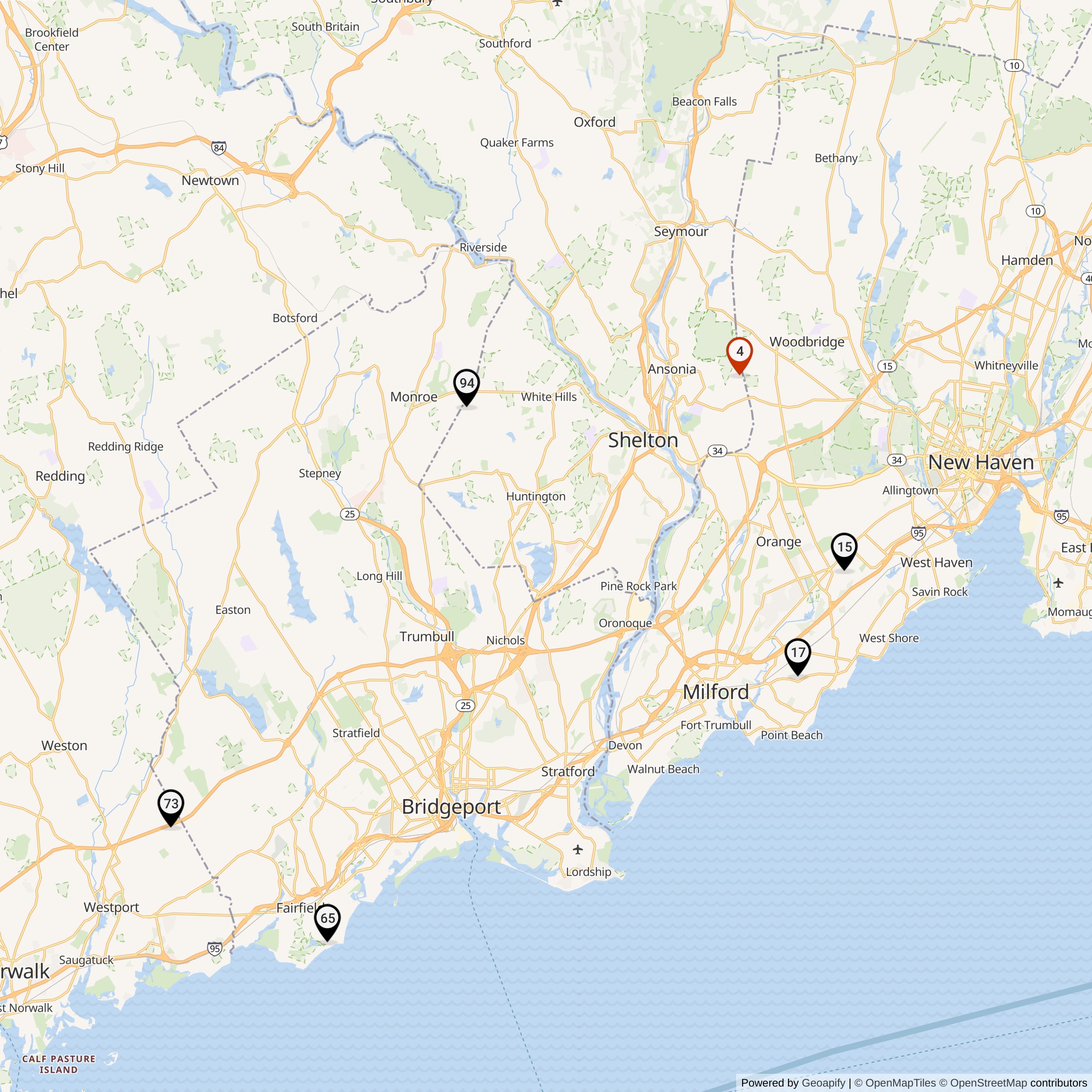
The Army ringed the Bridgeport area with six Nike batteries during 1956 and 1957. BR-04 stood at Ansonia, BR-15 at West Haven, BR-17 at Milford, BR-65 at Fairfield, BR-73 at Westport, and BR-94 at Shelton. Defense headquarters was in Bridgeport. Together, the batteries protected a densely populated coastal industrial corridor and its military production, transportation, communications, and civic infrastructure. They were overlapping parts of one defense, not six isolated shields.
BR-04 occupied the northern side of that ring, inland from Bridgeport and New Haven. A later local account described the Ansonia position as roughly midway between defense factories in those two cities. The location gave the Nike network another radar viewpoint and engagement sector against bombers approaching southern Connecticut. It also spread launch capacity beyond the immediate coast and city centers.
Nike was intended as a last local layer of air defense. Air Force warning and interceptor systems were supposed to detect and engage an attack farther away. If hostile bombers penetrated those layers, Army Nike batteries received warning from higher command, identified and tracked aircraft, and prepared assigned missiles. An engagement required coordination among the defense-area command system, BR-04's Integrated Fire Control area, and its separate launcher. The battery could not fight as a self-contained launcher alone.
The official history records that only BR-04 in the Bridgeport Defense Area received Hercules. The greater range and performance of Hercules allowed the Army to close neighboring Ajax batteries while preserving broader coverage. By 1964, the surviving Hercules batteries from the Boston, Providence, and Bridgeport defenses were grouped into the New England Defense Area. BR-04 therefore outlived the original six-site Bridgeport arrangement and operated within a regional system during its final years.
Selecting and Building the Installation
The Army announced plans to acquire Ansonia land on 8 July 1955. The detailed Nike Historical Society account dates the principal purchase of 81.9 acres in Ansonia and Woodbridge to 10 December 1955. A later local timeline gives 11 December. The one-day discrepancy does not change the acquisition sequence, but the earlier date is used here because it comes from the more detailed site chronology. A local historical summary divides the tract into 57.5 acres in Ansonia and the remainder in Woodbridge.
The installation used three related areas. The Integrated Fire Control, or IFC, component was on Ford Street in Ansonia. The launcher and missile-support component was near Osborne Lane and the Deerfield corridor at the Ansonia-Woodbridge line. A separate 4.5-acre part of the former Ansonia Airport was taken for Capehart family housing on 25 February 1957.
The IFC and launcher were deliberately separated. Army technical history says Nike control and launch areas were normally at least 1,000 yards apart and within visual sight when terrain allowed. At the IFC, acquisition radar searched for aircraft, tracking radars followed the selected target and the outbound missile, and an analog computer calculated the intercept. Cables and communications carried launch orders and guidance-related information between the compounds. At the launcher, crews stored, assembled, checked, raised, and placed the missiles on surface rails.
Construction produced local engineering challenges. Launcher elevators arrived on 11 July 1956, and IFC construction was well advanced by 17 August. Rock ledge slowed work at the launcher. Twelve-foot fencing enclosed the operational areas. The underground magazine design reduced acreage compared with an entirely above-ground battery, but excavation, drainage, power, access, and heavy reinforced construction still made the launcher a major project.
The Army also had to support an around-the-clock workforce. The Capehart development provided sixteen family houses off Ford Street, and military families began moving in on 19 February 1958. Administrative, maintenance, power, storage, security, and living functions were as essential as radar and missiles. BR-04 was a small military post divided across several parcels, not just a collection of launch rails.
Opening with Nike Ajax
The official inventory dates BR-04's active service from 1957. Derby Historical Society's contemporary chronology records that the 967th Army Antiaircraft Missile Battalion took over the Ansonia site on 26 March 1957. Six men were permanently assigned at first, personnel were temporarily detailed from other batteries, and about thirty more were expected. The Nike Historical Society chronology gives 25 March as the beginning of arrivals, so the most defensible interpretation is that the manning process began on 25 March and the formal local takeover was reported the next day.
Battery B of the 967th Antiaircraft Artillery Missile Battalion is the best-supported initial BR-04 operating unit. A later local history also assigns that battery to Ansonia. The Nike Historical Society page records an April 1957 Ansonia welcome for Battery B, 741st Antiaircraft Artillery Battalion, while the official defense-area history identifies the 741st with Bridgeport-wide Nike Day events. The records do not explain whether the welcome reflected a temporary assignment, an administrative relationship, or newspaper confusion. The 967th is therefore used for the site-specific operating attribution, and the 741st is treated as a defense-area organization.
Nike Ajax was a command-guided surface-to-air missile with a solid-propellant booster and liquid-fueled sustainer. The official Army technical history gives it a range of approximately 25 to 30 miles, a ceiling up to 70,000 feet, and three high-explosive fragmentation warheads. The missile carried no nuclear warhead. Its liquid fuel and oxidizer demanded careful handling, while the booster, missile, launch rail, radars, computer, generators, and communications all had to work in sequence.
At the IFC, a low-power acquisition radar searched the sky. Once a target was identified and designated, the target-tracking radar followed it and supplied position data to the computer. The missile-tracking radar locked onto the selected Ajax. After launch, the computer continuously compared target and missile tracks, generated course corrections, and sent commands to the missile. At the predicted intercept, the computer transmitted the burst command for the fragmentation warheads.
At the launcher, missiles were stored horizontally below grade. Elevators raised them to the surface, still horizontal, and crews moved them along rails to launcher positions. The term silo is misleading for this plant. BR-04 had reinforced underground magazines, elevator openings, surface rails, and launchers. The later Army Corps environmental summary uses the shorthand "silo closure," but that phrase should not be read as evidence of vertical missile silos.
what the configuration code means
The official inventory records BR-04 as "Nike 3B/18H,30A/12L-U." The notation describes the scale and intended capacity of the launcher plant:
- 3B: Three B-type underground missile magazines. The letter identifies a magazine design, not a missile model.
- 18H: A recorded allowance of eighteen Nike Hercules missiles after conversion.
- 30A A recorded allowance of thirty Nike Ajax missiles for the original system.
- 12L-U: Twelve universal launcher positions able to support the Ajax and Hercules arrangement.
The two missile counts should not be added together. They describe alternative Ajax and Hercules allowances associated with the site's changing weapon system. They are not proof that forty-eight missiles were present simultaneously. They also do not establish how many missiles were operational, in maintenance, away for training, or fitted with a particular warhead on any given day.
The universal-launcher notation is significant. Hercules was larger and heavier than Ajax. A converted battery needed modifications to racks, rails, elevators, handling equipment, maintenance procedures, and fire-control electronics. The three-magazine and twelve-launcher plant made BR-04 the most persistent and heavily modernized position in the Bridgeport defense.
Conversion to Nike Hercules
Ansonia learned on 13 February 1958 that Ajax would be replaced by the nuclear-capable Hercules. That announcement was not the operational conversion date. The supplied Army-derived Hercules appendix lists BR-04 as priority 47, with three B-type magazines, conversion construction from August 1958 through February 1959, and an operational date of 23 October 1959. The Military Standard independently repeats 23 October 1959.
The Nike Historical Society chronology records a public unveiling on 29 September 1959 by Battery B, 3rd Missile Battalion, 56th Artillery, attended by more than 200 people. This provides a second site-specific unit designation by the end of the conversion period. The sources do not include the formal redesignation order linking Battery B, 967th to Battery B, 3rd Missile Battalion, 56th Artillery, so the exact administrative transition remains a research gap.
Hercules retained command guidance but dramatically expanded the engagement envelope. The Army history gives a range over 75 miles, speed of Mach 3.65, and altitude up to 150,000 feet. It used solid propellant in both booster and sustainer, eliminating Ajax's liquid sustainer fuel and oxidizer. Hercules could carry a high-explosive fragmentation warhead or a nuclear warhead.
The Hercules ground system added or improved radar functions. A target-ranging radar supplied another measurement that helped counter jamming. Improved Hercules installations could receive the large High-Power Acquisition Radar, or HIPAR, for longer-range search. Cold War CT's BR-04 photographic record specifically labels a HIPAR and its radar shack at Ansonia. That site-specific imagery supports the presence of HIPAR, although the records do not establish its installation date or every stage of later radar modernization.
The Nike Historical Society account says the site was fully stocked with Hercules by 20 January 1960. That is useful local evidence, but it is not a declassified custody log. The official 23 October 1959 operational date governs the system history, and the configuration code supplies the recorded eighteen-missile allowance. Neither source proves a day-specific load or the presence and number of nuclear warheads.
Nuclear Capability
Hercules made BR-04 nuclear-capable. The nuclear option was intended to improve effectiveness against formations of hostile aircraft and difficult tactical conditions. That capability affected security, command discipline, training, and public memory. Local veterans later described the gravity of alert duty during crises.
Capability does not by itself prove local nuclear custody. A 2015 newspaper article describes eighteen armed nuclear missiles at Ansonia, but the reviewed sources do not include a unit warhead log, weapons-custody record, inspection report, or declassified deployment list confirming that statement. The number eighteen closely matches the site's configuration allowance and may have been interpreted as a warhead count.
BR-04 operated a Nike Hercules system capable of employing nuclear or high-explosive warheads, and the official inventory records an eighteen-Hercules allowance. It does not claim that eighteen nuclear warheads were stored there. A future custody record could resolve the question, but no such record has been located.
Soldiers, Guardsmen, and continuous readiness
BR-04 required crews at both components. Radar operators, computer personnel, communications specialists, power-generation crews, and electronic-maintenance technicians worked at the IFC. Launcher personnel inspected missiles, operated magazine elevators and surface launch equipment, assembled and serviced missiles, and maintained the launcher plant. Guards, dog handlers, mechanics, cooks, supply staff, medics, and administrators supported the combat mission.
Four guard dogs and their handlers reported to the launcher on 14 January 1960. The dogs patrolled the secure area, a visible feature of Hercules-era security. The site narrative also records a visit by Lieutenant General Robert J. Wood, the United States Army Air Defense Command commander, on 25 August, but it does not print the year. Context places the visit after January 1960.
Connecticut Army National Guard technicians began training on BR-04's Hercules equipment in 1963 under Regular Army personnel. In January 1964, Battery D, 1st Battalion, 192nd Artillery, Connecticut Army National Guard assumed the mission. This transition placed a live, around-the-clock air-defense responsibility in the hands of citizen-soldiers supported by full-time technicians. The official Bridgeport history describes Regular Army operation followed by Guard duty in the defense area's later years.
The Guard battery repeatedly deployed to Fort Bliss and McGregor Range for Short Notice Annual Practice, or SNAP. The site chronology lists exercises on 24 April and 22 October 1965, 13 February 1966, 11 February 1967, 7 April and 23 June 1968, and 13 April 1969. These dates show that proficiency depended on recurring travel, rapid preparation, and live-range evaluation, not just local drills.
Individual records add texture. Staff Sergeant Eric Muth received a commendation dated 8 February 1966 from a former Fort Bliss commander. Captain Edward McPadden, his Guard commander, endorsed it on 28 February. In 2005, Muth received an Army Commendation Medal based on the surviving records. In 1969, Battery D scored 96.9 percent on a Command Maintenance Inspection, and the inspection team chief recommended a Certificate of Proficiency. These details come from a veteran-authored site history and should be read as documented local memory rather than a complete official unit file.
Crisis Duty
BR-04's purpose was deterrence, but crises converted routine alert into immediate readiness. During the Cuban missile crisis in October 1962, the battery went to full battle stations and maintained continuous manning. Veterans later recalled that missiles were prepared and crews rotated through duty and rest. No launch order came.
The site again went on alert after President John F. Kennedy was assassinated on 22 November 1963. Contemporary newspaper material preserved by Cold War CT documents the alert. Later veteran recollection describes roughly forty-eight hours of heightened security and uncertainty. The event shows how air-defense units reacted when national leaders could not immediately exclude a wider attack.
The Northeast blackout on 9 November 1965 brought another full alert. Loss of civilian power over a vast region initially had an unknown cause. BR-04 used its own generators and remained able to operate while much of Ansonia was dark. A veteran-authored page mistakenly gives 24 October, but Cold War CT and the well-established blackout date support 9 November.
These alerts did not involve missile firing. They tested staffing, power independence, communications, recognition procedures, and the ability to move quickly from routine duty to engagement readiness. They also explain why later veterans emphasized the psychological weight of waiting for a code word that never came.
The Battery and its Community
BR-04 was fenced and guarded, but it was not socially invisible. Soldiers and families lived in Ansonia, used local services, joined civic events, and depended on municipal assistance. The strongest example began with water. During the 1957 drought, the Ansonia Fire Department pumped 6,000 gallons to the site on 26 July. By 6 November, the cumulative amount supplied to the Ford Street compound reached 301,700 gallons. The water company extended lines to the launcher.
The battery also entered public ceremonies. Bridgeport Mayor Samuel Tedesco declared 19 April 1958 "Nike Day." A parade and ball honored the 741st Antiaircraft Artillery Missile Battalion, and the Bridgeport-area batteries were associated with local war-dead dedications. In Ansonia, an unarmed Nike Ajax appeared in the Memorial Day parade on 30 May 1958.
The Ansonia installation received the name of Corporal Joseph V. Hines on 4 July 1958 before an audience of about 300. Hines had lived on Platt Street and served with Battery B, 459th Antiaircraft Artillery Battalion. He was killed in France on 21 February 1945. Naming BR-04 for him joined a new guided-missile battery to the city's memory of service in an earlier war.
The original bronze dedication plaque has its own unsettled afterlife. Eric Muth's site account says it was removed when the battery closed, appeared at a 2002 Nike reunion in Niantic, and disappeared again. That story has not been independently documented through an Army property record or police report.
Site-Related Accidents and Emergencies BR-04's local record includes several emergencies, but none was a missile accident. On 13 May 1958, a wind-driven brush fire burned an estimated 50 to 100 acres near Deerfield Lane. It reached the firebreak at the edge of the launcher but did not cross. Nike soldiers and Explorer Post 10 helped local firefighters. One volunteer firefighter suffered a neck burn.
On 21 May 1958, a Luscombe 8-A light airplane crashed through the roof and into the living room of a Capehart house beside the former Ansonia Airport. The occupants were away. The pilot suffered facial cuts but survived, and there were no other injuries. Mayor James P. Doyle, a former Army Air Forces serviceman, climbed onto the roof and shut off the aircraft's ignition and fuel before a fire could start. This was a dramatic accident in the Nike housing area, not a missile, radar, or warhead accident.
On 29 August 1958, fire destroyed an Army-owned house on Ford Street across from the Capehart development. The detailed Derby Historical Society chronology supports 29 August. The Nike Historical Society page prints 29 July, which appears to be a transcription error. No reviewed evidence connects the house fire to missile operations.
From Bridgeport to the New England Defense Area
Hercules changed the geography of defense. The five other Bridgeport sites remained Ajax batteries and closed or transferred as the Army consolidated. BR-04's longer-ranged weapon allowed it to survive. The official history says it was integrated into the New England Defense Area before deactivation.
The regional area combined the remaining Hercules sites from the former Boston, Providence, and Bridgeport defenses by 1964. Higher-level command and control coordinated target assignment so multiple batteries did not waste missiles on the same aircraft while leaving another threat unengaged. BR-04's local radars and computer still controlled its own missile engagement, but it operated inside that larger warning and assignment network.
The change also means that BR-04's final years should not be described as the last isolated remnant of the original Bridgeport ring. It was a local battery with a regional mission. Its Connecticut Army National Guard personnel maintained readiness within a reorganized defense that crossed the boundaries of the original metropolitan areas.
Closure in June 1971
The official Nike inventory gives June 1971 as BR-04's deactivation month. The Nike Historical Society chronology agrees. A veteran quoted in a 2015 newspaper remembered leaving when the site shut down in May. Without a formal deactivation order, that recollection may reflect personnel departure or drawdown before the official closing month.
The reason was national strategic change, not a documented failure at Ansonia. By the early 1970s, intercontinental ballistic missiles had eclipsed manned bombers as the dominant strategic threat. Nike Hercules remained an antiaircraft system and was not a local defense against a mass ICBM attack. The Army also consolidated sites, units, and budgets as warning, fighter defense, and national air-defense priorities changed.
Claims that the Strategic Arms Limitation agreements directly closed BR-04 are too simple. The battery was already deactivated in June 1971, before SALT I was signed in May 1972. No BR-04 closure memorandum was found that allocates responsibility among threat change, system age, force structure, manpower, and cost.
Government equipment was removed, transferred, or disposed. Part of the IFC passed to the Forest Service. The launcher entered private ownership. Deactivation ended the combat mission but began two very different paths of reuse.
TheIFC becomes a Forest Quarantine Facility
The Ford Street IFC retained an institutional mission. The official Forest Service history (link to this PDF is in the Sources & References section at the bottom of this page) says a 14-acre Ansonia facility was added in 1981 to expand quarantine capacity for assessing insects and diseases as biological-control agents against invasive pests. Current Forest Service material identifies the Ansonia laboratory as part of a northeastern forest insect and disease research program.
That work can require controlled handling of organisms not intended for release. Quarantine space allows researchers to study potential biological-control agents, host relationships, and forest pests under containment. Forest Service publications document research at Ansonia involving spongy moth strains and other invasive-species questions. The research mission is a fitting reuse of a secure, separated federal property, although it is scientifically unrelated to Nike operations.
The 2026 Forest Service factsheet (link to this PDF is in the Sources & References section at the bottom of this page) confirms the program's continuing place in more than a century of northeastern forest research. It does not provide a building-by-building preservation inventory. Cold War CT's December 2010 photographs show surviving former IFC buildings within the Forest Service property. The safest present condition is "partially intact; USDA Forest Service Northern Research Station quarantine facility."
The facility is an active federal research site, not a public Nike museum. Historical interest does not imply visitor access. Any detailed survey should be coordinated with the Forest Service and should distinguish Army-period structures, later laboratory buildings, radar foundations, utilities, and security alterations.
The Launcher's farm and equestrian reuse
The launcher near Osborne Lane and the Deerfield corridor passed into private ownership. Cold War CT photographed a private farm at the former launch area and identified an original launch-site building. A 2014 Connecticut newspaper gallery documented Autumn View Equestrian Center using former maintenance buildings as stables. It reported that most buildings then survived, the launch magazines had been filled, the concrete launcher pads were obliterated, and horses occupied the assembly building.
Those observations are valuable because they document adaptive reuse rather than total demolition. Missile assembly and maintenance space could be converted to agricultural or equestrian use, while filling the magazines reduced the hazard presented by abandoned below-grade structures. The reuse also complicates preservation. Alteration preserves some massing and fabric while changing doors, interiors, utilities, circulation, and surfaces.
The 2013-2014 reporting is a dated condition survey, not proof of every feature's status in 2026. No recent professional architectural inspection or public ownership record was found. The present description is therefore qualified as "partially intact; private equestrian and farm reuse documented in 2013-2014, with underground magazines closed."
The launcher is private property. Surviving buildings, filled magazine areas, and former launcher surfaces should not be approached without permission. Historic boundaries also crossed or approached the Ansonia-Woodbridge line, and modern addresses do not necessarily reproduce the Army parcel layout.
Environmental and FUDS Record
The Army Corps of Engineers' January 2023 Connecticut update (link to this PDF is in the Sources & References section at the bottom of this page) reports completed Formerly Used Defense Sites work at the Ansonia Nike Site for tank and transformer removal and "silo closure." The same report says Connecticut had no active FUDS projects at that time. This is the strongest reviewed official summary of the federal cleanup status.
The terminology requires explanation. Nike missiles at BR-04 were stored horizontally in underground magazines and raised by elevators. The Corps phrase "silo closure" is administrative shorthand in a statewide list. It should not override the documented physical configuration or be repeated as evidence of vertical silos.
The statewide summary does not identify project dates, quantities, contaminants, sampling results, or whether every action occurred at the launcher, IFC, housing, or support parcels. It also does not declare that every environmental issue from later private or federal use is absent. A project file, decision documents, closure reports, and parcel-level environmental records would be needed for a full cleanup history.
Memory, Monument, and Preservation
Ansonia renewed public recognition of BR-04 on 28 November 2015. The city and veterans unveiled two plaques attached to a large rock at the former Ford Street command-center entrance. Veterans who served at Connecticut Nike sites attended, including men who remembered the Cuban missile crisis and other alerts. The monument gives the installation a visible civic marker even though the operational compounds remain in federal and private use.
The monument does not interpret every part of the site. A fuller local program could connect the Ford Street marker, the Capehart housing history, the launcher and its farm reuse, the Joseph V. Hines dedication, the National Guard mission, and the Forest Service transformation. It could also correct two common errors: BR-04 used underground magazines rather than vertical silos, and nuclear capability is not the same as a verified local warhead inventory.
BR-04 has strong preservation potential because both components retain legible stories. The IFC preserves the relationship between elevation, security, technical work, and later scientific reuse. The launcher preserves at least some support-building fabric through agricultural adaptation. The Capehart housing and monument connect the military installation to neighborhood development and civic memory.
Chronology
- 8 July 1955 The Army announced plans to acquire land in Ansonia for a Nike missile installation.
- 10 December 1955 The detailed site chronology records the Army's principal purchase of 81.9 acres in Ansonia and Woodbridge.
- 11 July 1956 Launcher-area missile elevators arrived.
- 17 August 1956 Construction at the Ford Street IFC was reported well advanced while rock ledge slowed launcher work.
- 25 February 1957 The government took immediate possession of 4.5 acres from the former Ansonia Airport for Capehart family housing.
- 25 March 1957 Personnel of the 967th Antiaircraft Artillery Missile Battalion began arriving at BR-04.
- 26 March 1957 A contemporary local chronology reported that the 967th took over the Ansonia Nike site.
- 1957 BR-04 entered active service with Nike Ajax.
- 26 July 1957 The Ansonia Fire Department delivered 6,000 gallons of water during the drought.
- 6 November 1957 Cumulative municipal water delivered to the Ford Street site reached 301,700 gallons, and a line was extended toward the launcher.
- 13 February 1958 The Army announced that BR-04 would replace Ajax with nuclear-capable Nike Hercules.
- 19 February 1958 Military families began moving into sixteen new Capehart houses off Ford Street.
- 19 April 1958 Bridgeport observed Nike Day with events honoring the 741st Antiaircraft Artillery Missile Battalion and area missilemen.
- 13 May 1958 A 50-to-100-acre brush fire reached the launcher firebreak but did not cross; Nike soldiers helped fight it.
- 21 May 1958 A Luscombe 8-A crashed into a Capehart house; the pilot was injured, the occupants were away, and no one was killed.
- 30 May 1958 An unarmed BR-04 Nike Ajax appeared in Ansonia's Memorial Day parade.
- 4 July 1958 The installation was dedicated to Corporal Joseph V. Hines before approximately 300 people.
- August 1958 Construction began to convert BR-04's three B-type magazines for Nike Hercules.
- 29 August 1958 Fire destroyed an Army-owned house on Ford Street across from the Capehart development.
- February 1959 The recorded Hercules conversion construction interval ended.
- 29 September 1959 Battery B, 3rd Missile Battalion, 56th Artillery publicly unveiled a Hercules missile at BR-04.
- 23 October 1959 The Army conversion appendix records BR-04 operational with Nike Hercules.
- 11 November 1959 Nike personnel served as honor guards when Ansonia unveiled a granite veterans memorial.
- 14 January 1960 Four guard dogs and their handlers reported to the launcher area.
- 20 January 1960 The local site history reported BR-04 fully stocked with Hercules, a claim not accompanied by a custody log.
- October 1962 BR-04 maintained full battle stations during the Cuban missile crisis.
- 1963 Connecticut Army National Guard technicians trained on BR-04's Hercules equipment under Regular Army personnel.
- 22 November 1963 The battery went on heightened alert after President John F. Kennedy was assassinated.
- January 1964 Battery D, 1st Battalion, 192nd Artillery, Connecticut Army National Guard assumed the BR-04 mission.
- 24 April 1965 The Guard battery deployed for Short Notice Annual Practice at Fort Bliss and McGregor Range.
- 9 November 1965 BR-04 used its generators and maintained battle stations during the Northeast blackout.
- 8 February 1966 Staff Sergeant Eric Muth received a commendation tied to his training performance.
- 1969 Battery D scored 96.9 percent on a Command Maintenance Inspection and was recommended for a Certificate of Proficiency.
- June 1971 The Army deactivated BR-04 after fourteen years of recorded active service.
- 1981 The Forest Service added a 14-acre Ansonia facility for quarantine research on insects and diseases used in biological control.
- 2002 The original BR-04 dedication plaque reportedly appeared at a Nike reunion and then disappeared again.
- October 2013 Newspaper photographs documented former launcher maintenance buildings used as equestrian stables and horses in the assembly building.
- 28 November 2015 Ansonia unveiled two plaques on a boulder at the former Ford Street command-center entrance.
- 31 January 2023 The Army Corps reported completed tank and transformer removal and below-grade closure work at the Ansonia Nike Site, with no active Connecticut FUDS projects.
- May 2026 A Forest Service factsheet confirmed the continuing Ansonia quarantine facility within the northeastern insect and disease research program.
List of all Nike Installations in Connecticut
Information sources (14)
- PDFJohn C. Lonnquest and David F. Winkler, To Defend and Deter: The Legacy of the United States Cold War Missile Program
The official Department of Defense history identifies the Bridgeport ring, BR-04 as its only Hercules conversion, New England integration, configuration, service dates, and historic ownership.
- WEBNike Historical Society, Bridgeport Site BR-04 Ansonia, Connecticut
Eric Muth's detailed site history supplies acquisition, construction, housing, unit, community, readiness, conversion, Guard, closure, and plaque evidence.
- WEBCold War CT, Nike BR-04 Ansonia
The site summary supplies service dates, component locations, crisis alerts, Guard transition, HIPAR photographs, and dated condition imagery.
- WEBDerby Historical Society, 1957 Lower Naugatuck Valley Chronology
The contemporary-event chronology documents the 967th takeover, Capehart land, drought water deliveries, and other local context.
- WEBDerby Historical Society, 1958 Lower Naugatuck Valley Chronology
The contemporary-event chronology documents the Hercules announcement, housing occupancy, brush fire, plane crash, parade missile, Hines dedication, and Army house fire.
- WEBRobert J. Novak Jr., Speaking of History: Nike Missile Sites
The local historical summary supplies the Ansonia-Woodbridge acreage split, Battery B of the 967th attribution, component geography, and Hines dedication.
- WEBU.S. Army Aviation and Missile Command History Office, Nike Ajax
The official technical history explains Ajax performance, conventional fragmentation warheads, liquid sustainer, command guidance, site separation, and underground magazines.
- WEBU.S. Army Aviation and Missile Command History Office, Nike Hercules
The official technical history explains Hercules performance, solid propellant, command guidance, high-explosive or nuclear warheads, radar upgrades, and conversion requirements.
- WEBNational Park Service, Nike Missile Site SF-88
The federal overview places fixed Nike batteries in the layered last-line defense against Soviet bombers and supports preservation terminology.
- PDFU.S. Forest Service, Insect and Disease Research in the Northeast
The May 2026 official factsheet records the 1981 addition of a 14-acre Ansonia quarantine facility and describes the continuing regional research mission.
- WEBU.S. Army Corps of Engineers New England District, Connecticut Update Report
The January 2023 official report lists completed Ansonia tank and transformer removal and below-grade closure work and reports no active Connecticut FUDS projects.
- WEBConnecticut Insider, Where Missile Sites Once Stood in Connecticut
The 2014 article supplies dated evidence of launcher equestrian reuse, surviving support buildings, filled magazines, and obliterated launch pads.
- WEBConnecticut Post, Ansonia Honors Missile Site Servicemen
The 2015 report documents the Ford Street monument, veteran crisis recollections, component geography, and a closure-month conflict.
- WEBCity of Ansonia, News Archive
The official city archive confirms the 28 November 2015 date of the Nike missile site monument dedication.