
Nike Missile Site BR-17 IFC, Milford Connecticut
Longitude: -73.016026303851
This location was part of the Bridgeport Defense Area
Site ID: BR-17
Missile / battery configuration: Nike 1B,2C/30A/12L-A
This site controlled the missiles at the Launch Area located here.
Site Role: IFC
A typical Nike air defense site consisted of two separate parcels of land. One area was known as the Integrated Fire Control (IFC) Area. This site contained the Nike system's ground-based radar and computer systems designed to detect and track hostile aircraft, and to guide the missiles to their targets.
The second parcel of land was known as the Launcher Area. At the launcher area, Nike missiles were stored horizontally within heavily constructed underground missile magazines. A large, missile elevator brought the Nikes to the surface of the site where they would be pushed across twin steel rails to one of four satellite launchers.
Elaboration on how Nike worked here.
Missile Type: Ajax
The Nike Ajax was the first in the Army's family of guided missiles, and the world's first operational, guided, surface-to-air missile system. Nike Ajax had a burnout speed of Mach 2.3, a range of 25-30 miles, and a ceiling of 65,000 feet.
Designed to carry either nuclear and/or high-explosive warheads, the Nike Hercules missile could attack supersonic aircraft operating at altitudes in excess of 150,000 feet and at a range of more than 87 miles.
The Plaque that outlasted the Battery
BR-17 left Milford in pieces. The missiles and fire-control equipment departed in 1963, the launcher property became houses and a ball field, the Eells Hill control compound became school offices and later an amateur-radio site, and the original bronze dedication plaque disappeared into private hands. The plaque ultimately returned, first to Eells Hill in 2013 and then to the west end of Milford Green in 2025, making it the most visible surviving object from a battery whose combat structures are otherwise hidden, altered, or built over.
That journey gives BR-17 a rare documentary thread from opening to public memory. Milford residents dedicated the plaque on 10 November 1957 to local citizens who had served in defense of freedom. A warrant officer removed it when the site closed, veterans passed it between custodians, and former missileman Eric Muth traced it and returned it to the city in 2013. The city placed it with a new plaque on a boulder at Eells Hill, then moved the memorial to Milford Green in 2025 for greater visibility and rededicated it on 13 September.
The memorial also preserves the site's most important operational memory. Its 2013 text identifies the IFC on Eells Hill, the launcher on Rock Lane, Regular Army and Connecticut Army National Guard staffing, and the around-the-clock battle stations of the Cuban Missile Crisis. Those claims align with a detailed veteran-authored chronology, official Army lineage records, period directories, and local reporting. BR-17 therefore has stronger event-level evidence than many short-lived Ajax batteries, even though its complete Army station files and property-disposal records have not been located.
Why Bridgeport needed BR-17
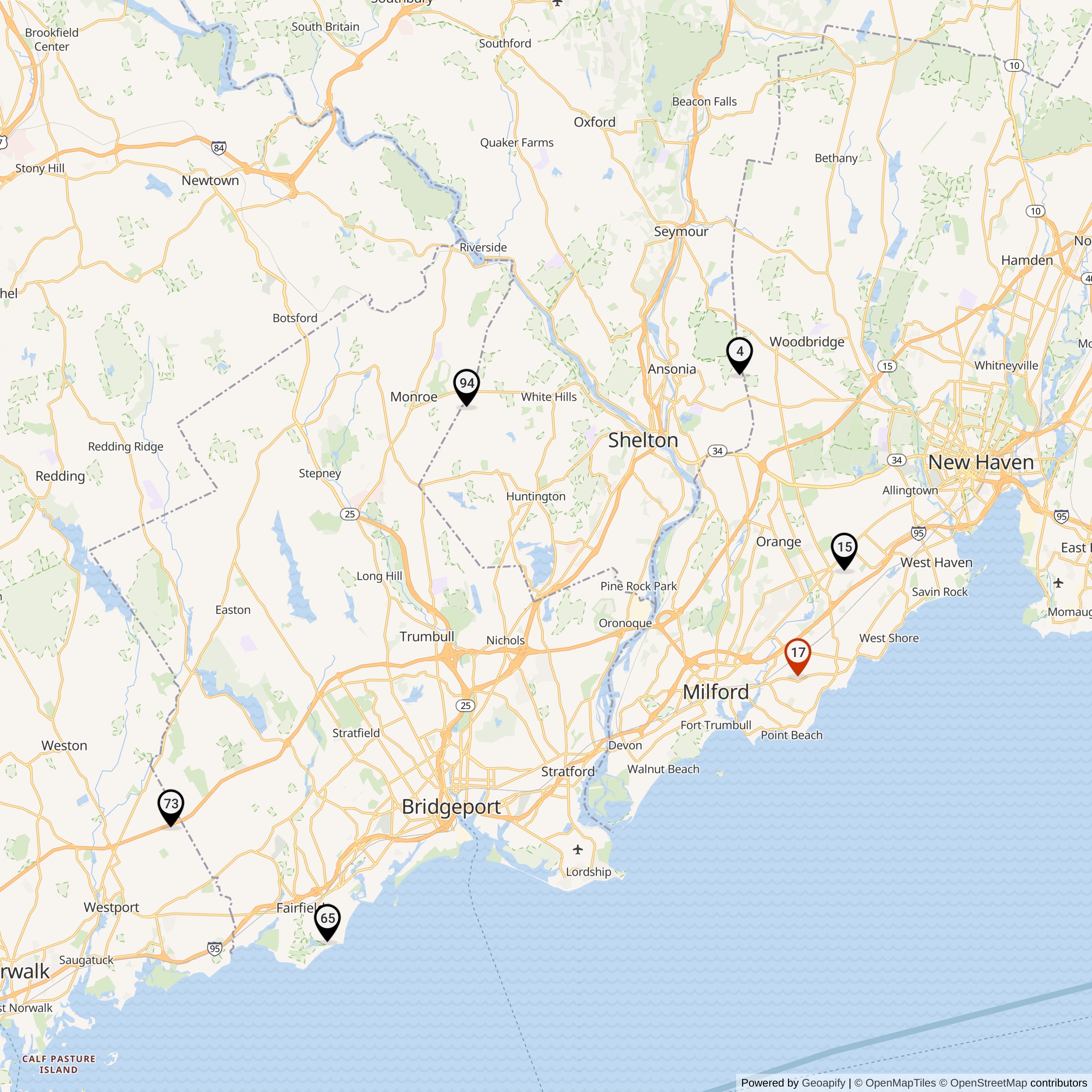
The Army built six Nike batteries around the Bridgeport area during 1956 and 1957. They were BR-04 Ansonia, BR-15 West Haven, BR-17 Milford, BR-65 Fairfield, BR-73 Westport, and BR-94 Shelton, with defense headquarters in Bridgeport. The batteries formed overlapping sectors across southern Connecticut rather than six independent shields, allowing the defense to watch and engage approaches to a densely populated coastal industrial region.
Milford placed BR-17 on the eastern side of that ring, between Bridgeport and New Haven and close to the Long Island Sound transportation and industrial corridor. The official defense history does not publish a battery-specific target list, so individual factories, bridges, ports, airfields, or cities should not be described as formally assigned BR-17 targets. The site's location and the Bridgeport defense-area mission nevertheless show that it was intended to add radar coverage and Ajax engagement capacity to the protection of the broader coastal region against long-range bomber attack.
Nike was the local terminal layer of a continental defense. Air Force warning radars and fighter-interceptors were expected to detect and attack hostile aircraft farther from the coast, while Army command posts coordinated Nike batteries nearer defended areas. If a bomber penetrated those outer layers and BR-17 received an engagement, Milford's acquisition radar had to find it, tracking radars had to follow the target and the outgoing missile, and the computer had to generate guidance commands until the commanded burst.
Selecting and building the Milford installation
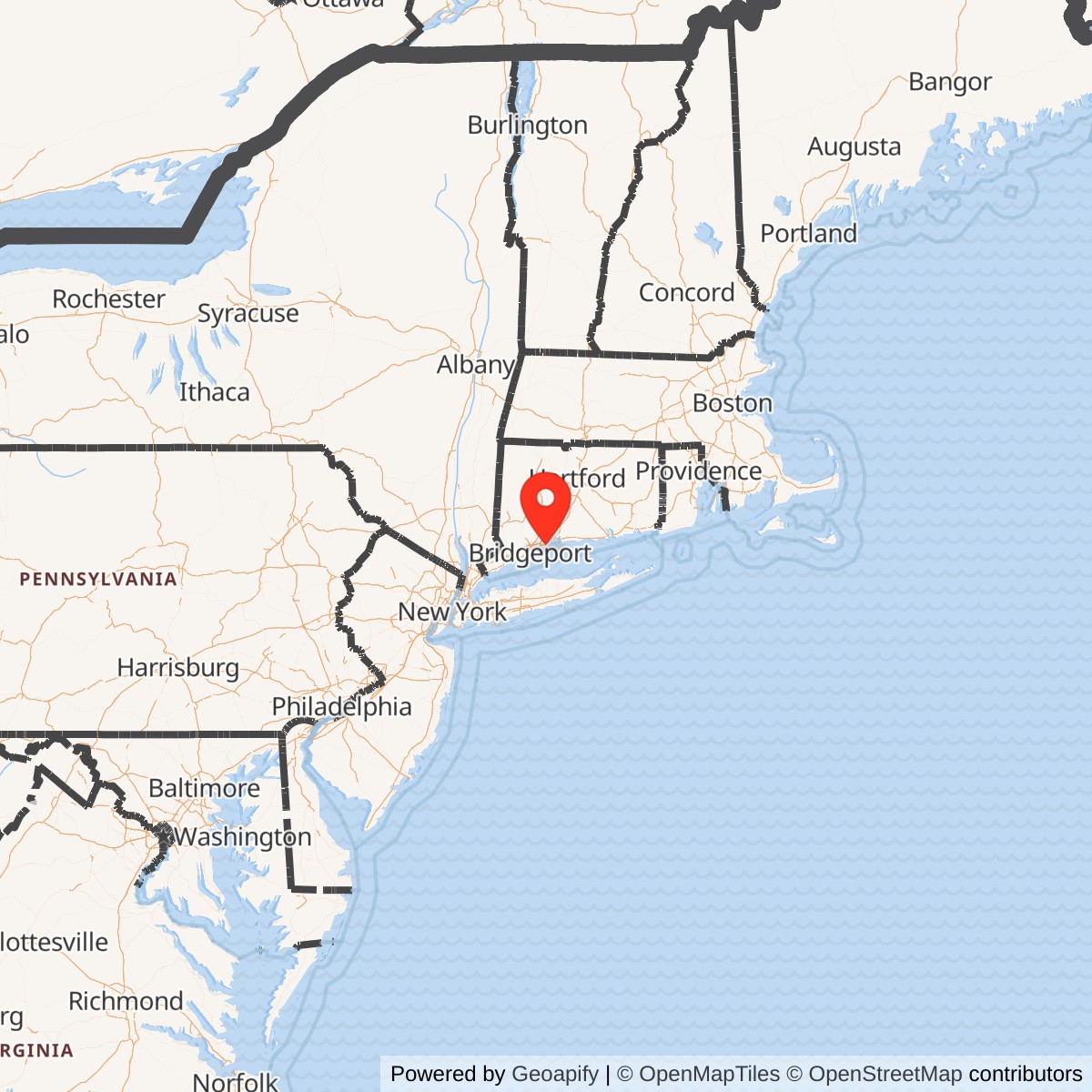
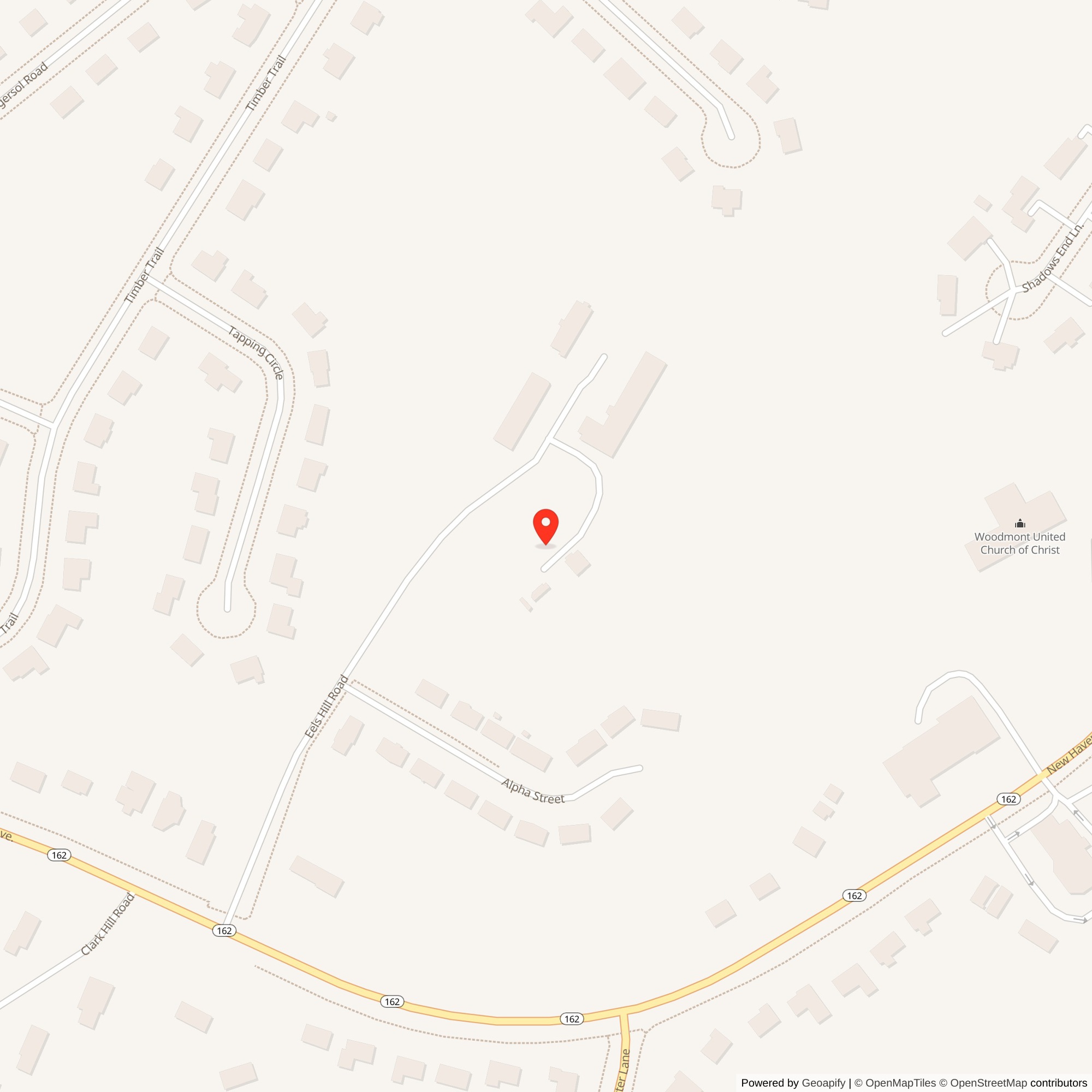
The federal government began acquiring Milford land in 1955. The Integrated Fire Control component occupied Eells Hill north of the coastal road corridor, the launcher stood to the northeast near Rock Lane, and a support facility operated on Seemans Lane. Exact coordinates are intentionally omitted from this public history, and the three places should not be collapsed into one parcel because they served different functions and later followed different ownership histories.
Construction and equipment installation were underway by 1955 and 1956. A veteran who arrived in June 1955 remembered completed buildings but fire-control equipment still arriving, while later local accounts date land purchases to 1955 and major construction and twelve-foot security fencing to 1956. The official inventory begins active service in 1956, while the public designation and dedication occurred in 1957, so the evidence describes a phased opening rather than a single construction-day event.
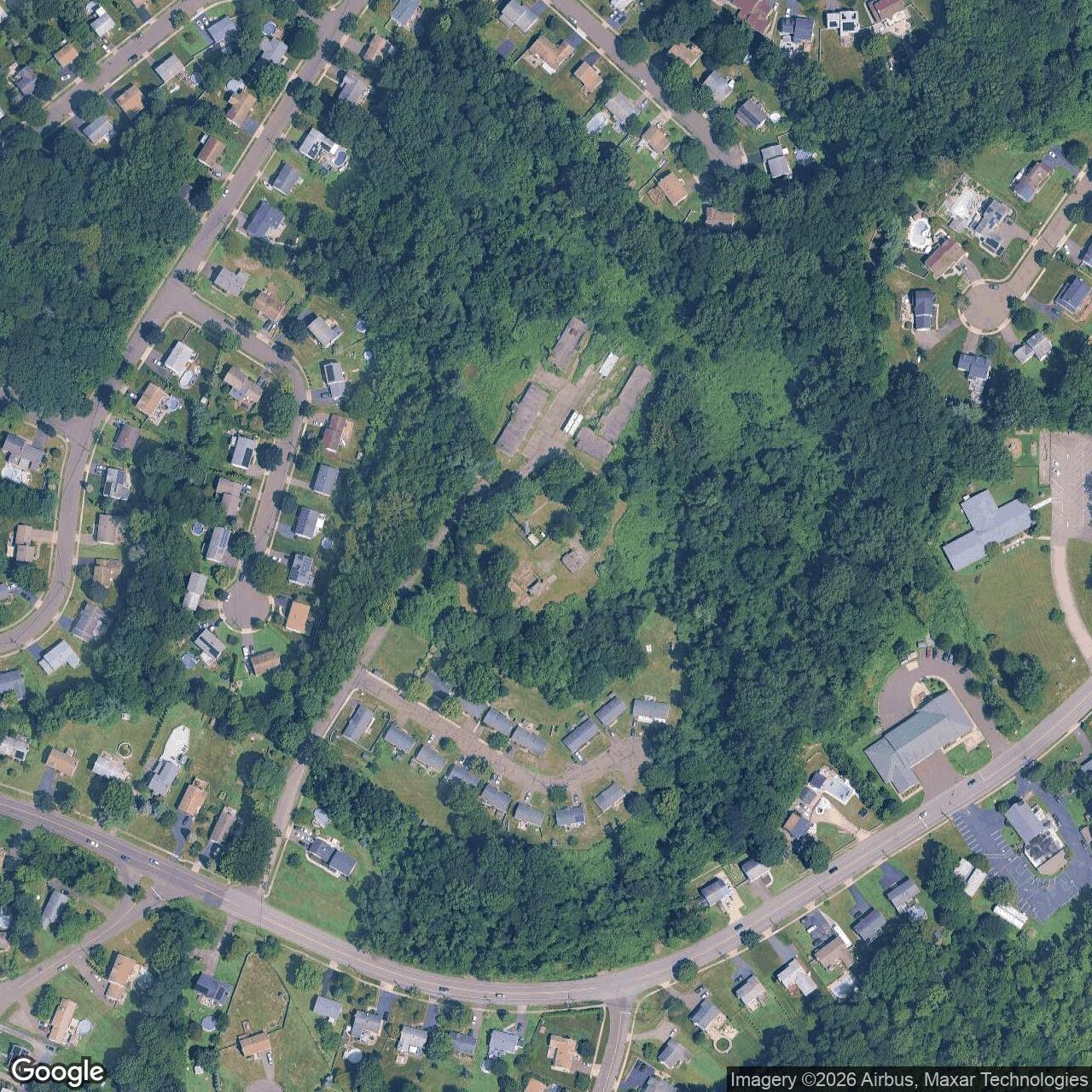
Eells Hill gave the radar component elevation and a clear operating position. The compound included acquisition, target-tracking, and missile-tracking radar equipment, an analog computer, vans and connecting structures, generators, communications, maintenance and supply spaces, administrative offices, a mess hall, barracks, a medical room, a barber shop, a day room, and an enlisted club. Photographic surveys made decades later identify a guard shack, pump house, transformer area, helipad, generator building, administrative building, mess hall, barracks, and the structure that connected the battery-control and tracking vans.
The launcher separated missiles, fueling, maintenance, storage, and firing activity from the control hill. Three reinforced underground magazines stored Ajax missiles horizontally and used elevators to bring rounds to the surface, where crews moved them along rails to launcher positions and erected them for firing. The launcher also had support buildings and a motor pool, while an ordnance equipment and maintenance support shop on Seemans Lane supplied parts and technical assistance that the firing battery could not provide for itself.
Opening, dedication, and regular Army service
The official Department of Defense inventory dates BR-17's active service from 1956 through 1963. The local site chronology says the Milford battery was operational and formally designated BR-17 in 1957. These accounts can be reconciled by treating 1956 as the Army's active-service year and 1957 as the year of full local identity and ceremonial dedication, rather than discarding either source.
Battery A, 967th Antiaircraft Artillery Missile Battalion is the best-supported original site unit. A Summer 1958 national amateur-radio callbook lists a station at Battery A, 967th, in an OCR-rendered Milford entry, while the same directory places the battalion headquarters and other batteries around the Bridgeport ring. The Milford dedication record explicitly names Battery A, 967th Antiaircraft Artillery Missile Battalion, United States Army Air Defense Command.
Milford residents installed the bronze plaque at the battery on 10 November 1957. Its wording honored citizens of Milford who had served the country in defense of freedom and tied the new missile installation to the city's existing military memory. The date also shows that the public dedication followed the earliest construction and operating activity, a common distinction between technical activation and civic ceremony.
The 967th did not remain under that designation for the battery's entire life. The Army's national Nike overview associates the former 967th with the 3rd Missile Battalion, 56th Artillery during the 1957-1961 period, but the reviewed records do not supply BR-17's formal redesignation order or an exact effective date. The safest interpretation is that Battery A of the 967th was the original Milford operator and that its Regular Army lineage continued under the 3rd Missile Battalion, 56th Artillery before the Connecticut Guard assumed the mission.
Nike Ajax Operations
Nike Ajax was the first operational guided surface-to-air missile fielded across a national defense network. The Army's technical history gives it an approximate range of 25 to 30 miles, a speed near Mach 2.3, and an engagement ceiling near 70,000 feet. It used a solid-propellant booster, a liquid-fueled sustainer, and three high-explosive fragmentation warheads intended to damage or destroy a single aircraft when command guidance placed the burst near the predicted intercept.
BR-17 was an Ajax-only battery and had no verified nuclear capability. Nike Hercules could carry either a conventional or nuclear warhead, but the official Bridgeport history says BR-04 Ansonia was the defense area's only Hercules conversion. No Hercules construction program, conversion date, universal-launcher notation, Hercules missile allowance, nuclear custody record, or later Hercules unit has been found for Milford.
An engagement began at Eells Hill. Acquisition radar operators searched for and acquired a target, target-tracking radar operators held that aircraft, missile-tracking radar operators followed the launched Ajax, and the analog computer continually compared both tracks. It calculated steering commands, transmitted corrections through the guidance system, and issued the burst command when the missile reached the computed intercept point.
Launcher crews made that electronic solution physically possible. They inspected and serviced rounds, handled fuel and oxidizer, maintained elevators and launch equipment, selected and raised a missile, moved it on surface rails, erected it on a launcher, and completed firing checks. The control and launcher components had to maintain communications and timing throughout the sequence, so a failure in radar, computer, power, guidance, launcher, or missile equipment could break the engagement.
Alert duty was therefore active work even though BR-17 never fired in combat. Soldiers aligned radars, tested electronics and communications, maintained generators and vehicles, serviced Ajax components, practiced target tracking, guarded the compound, and responded to readiness evaluations. Operational Readiness Evaluation teams sometimes arrived by helicopter and used timed scenarios, including the command "Blazing Skies, Simulate Case 3," to test whether a battery could reach ready-for-action status before another site had to assume its coverage.
What the configuration code means
The official inventory records BR-17 as "Nike 1B,2C/30A/12L-A." The code describes one B-type and two C-type horizontal underground magazines, a recorded allowance of thirty Ajax missiles, and twelve Ajax launcher positions. The B and C letters identify magazine designs, not different missile models, and the A suffix identifies Ajax launch equipment.
Local reporting in 2013 described twelve 34-foot missiles, four per magazine. That account may represent a remembered or displayed load, but it should not replace the official thirty-missile allowance or be treated as a day-specific inventory without ammunition records. Missiles could be in maintenance, training, transit, storage, or temporary issue, while launcher count and missile allowance measured different things.
The buried structures were magazines, not vertical silos. Ajax missiles lay horizontally below grade and rose by elevator to surface rails and launchers. Later references to Milford's filled or buried "silos" may be understandable shorthand, but they misdescribe the original plant and can conceal the need for an engineering survey of magazine slabs, elevator openings, drainage, utilities, and any remaining below-grade voids.
From Regular Army to Connecticut Guard
The Connecticut Army National Guard prepared for Nike duty before it assumed BR-17. Forty-eight full-time technicians were also Guard members working in uniform under the Connecticut Military Department and federal property and fiscal arrangements, while almost as many traditional Guardsmen trained on evenings, weekends, and annual periods. This structure gave the battery a permanent technical workforce and a larger force that could be called to full strength during a national emergency.
The Milford detachment began an intensive transition in 1960. It qualified with individual weapons in June, left Sikorsky Airport on 31 July, reached Fort Bliss in early August, and moved to McGregor Range for three months of Nike Ajax troop-and-package training. The technicians returned to Milford on 31 October for further local instruction and cross-training with the Regular Army equipment and crews.
On 5 January 1961 the Connecticut Guard assumed the Milford mission when the 63rd Artillery Group transferred Nike responsibilities at Milford, Portland, Simsbury, and Westport. The date is more specific and credible than a stray heading on the veteran page that says the Guard took over in 1963, because the same detailed chronology describes the 1960 training pipeline, the 1961 transfer, and Guard operations through 1963. BR-17's Guard operator was Battery A, 1st Missile Battalion, 242d Artillery.
Official Army lineage records explain the Guard designation. The 242d Artillery was created on 1 May 1959 as a Combat Arms Regimental System parent regiment that included a 1st Missile Battalion, and it retained that missile battalion in a 1 July 1961 reorganization. The regiment consolidated with the 192d Artillery on 1 May 1963, after BR-17 had closed, so the 242d designation correctly describes Milford's 1961 to March 1963 Guard alert period.
Guard service did not lower the technical standard. Milford personnel returned to Fort Bliss and McGregor Range for Short Notice Annual Practice in May 1961 and again in June 1962, operating unfamiliar range equipment under time pressure and firing at remote-control aerial targets. Long schools, cross-training, recurring evaluations, and stable full-time technicians made the citizen-soldier battery capable of maintaining an uninterrupted national alert mission.
The Cuban Missile Crisis
BR-17's most consequential alert began on 15 October 1962, according to the Milford chronology. The battery went to battle stations for the first time and manned all stations around the clock until 28 October as the Cuban Missile Crisis brought United States forces to exceptional readiness. Veterans remembered four-hours-on and four-hours-off work cycles and missiles raised and prepared at the launcher.
The battery did not launch a missile. Its job was to remain connected, powered, tracked, armed as authorized, and ready to execute an engagement if national command decisions and an actual air target required one. The crisis compressed every routine maintenance, communications, security, radar, computer, and launcher task into a sustained period when a failure could no longer be treated as an ordinary training deficiency.
Veteran recollection supplies the emotional detail that official tables cannot. Eric Muth later said the crews were connected and ready except for the final protected firing control, while launcher section chief William Finch remembered the missiles up and ready to go. These memories should not be converted into a claim that BR-17 received a launch order, but they demonstrate how close an Ajax battery could move from peacetime routine to combat posture without firing.
The Battery and its community
BR-17 was fenced and guarded, but it was deeply connected to Milford. Soldiers marched in local parades, served as color guards, donated blood, used local businesses, and sponsored Boy Scout Troop and Post 19 beginning in 1961. The Scout organization began with a battery donation, grew to about twenty-five members by 1962, and met under Nike personnel who served as scout leaders.
Local services also reached the hill. During a severe snowstorm, Red Cross volunteers reportedly brought food on snowshoes when the steep road prevented normal support, while the Milford Fire Department helped with problems above the range of ordinary equipment. The battery later sent a technician to the New Haven Fire College, and he returned as the unit fire marshal and taught fire and safety classes.
Public ceremony could produce confusion as well as support. A dummy or unarmed Ajax used for display slipped from a lowboy trailer onto Merwin Avenue near Riverdale Road during the late 1950s, drawing a crowd that could not readily know whether the object was dangerous. The episode was a transport mishap involving a display round, not a launch, explosion, nuclear incident, or evidence that BR-17 possessed nuclear weapons.
The battery also maintained a full off-duty life behind the gate. The Eells Hill compound had a day room, barber shop, medical room, enlisted club, mess facilities, and living space, while daily reveille and retreat required anyone outdoors to stop and salute. These details matter because a Nike battery was not only a set of missile mechanisms; it was a continuous workplace and temporary community organized around alert readiness.
Deactivation and transfer to ANsonia
The Army announced in December 1960 that Milford would be among the Connecticut Ajax sites transferred to the Guard rather than immediately closed. That decision extended BR-17 through the Guard transition and the Cuban Missile Crisis but did not lead to a Hercules conversion. The official inventory's 1963 endpoint and the detailed local record agree that the missile mission ended in March 1963.
After deactivation, Milford personnel moved to BR-04 Ansonia and began training on Nike Hercules equipment. They qualified at McGregor Range in September 1963 and later helped the Connecticut Guard assume the Ansonia mission. The movement preserved trained people and Guard institutional knowledge even though the Milford battery itself ceased to exist.
The closure reflected a national shift from numerous Ajax batteries to fewer, more capable Hercules positions and from a bomber-centered threat toward ballistic missiles. It also reduced the expense of staffing, maintaining, and supplying older liquid-fueled batteries. No located BR-17 closure memorandum ranks those causes for Milford, so the local decision should be understood within the broader force transition rather than attributed to one unsupported municipal or technical problem.
Post-closure use of the IFC and support properties
Milford reused the Eells Hill control compound instead of immediately clearing it. A local history of school facilities says the Board of Education moved its offices to the Eells Hill complex in 1966, giving the former IFC a documented civic reuse three years after missile closure. Newspaper reporting says the school administration left in the mid-1980s, after which much of the hill became boarded, overgrown, and lightly used.
Amateur radio later restored a communications function to part of the control hill. Coastline Amateur Radio Association and Milford Amateur Radio Repeater Association material identifies an Eells Hill clubhouse, repeaters, test sessions, and weekly radio nets, and a page updated in November 2025 still listed the hill location. The equipment and purpose are civilian and should not be described as preserved Nike radar, but the reuse continues the site's association with elevated antennas, radio links, technical training, and emergency communications.
The former family-housing area had a separate afterlife. Sixteen houses built on Alpha Street in 1957 remained federal property and were rented to Coast Guard personnel until 2009. A private developer bought the parcel in 2010 and began renovating fifteen surviving houses for individual sale, showing that Nike-associated property in Milford outlasted the missile mission through another federal service before entering private residential use.
The Seemans Lane ordnance support property is less well documented. The reviewed sources identify its Nike function but do not provide a transfer date, parcel boundary, complete building inventory, environmental history, or reliable present condition. It should be researched as a third BR-17-related property and not silently folded into either the Eells Hill IFC or the Rock Lane launcher.
Redevelopment of the Launcher
The Rock Lane launcher experienced the most extensive physical transformation. A 1971 aerial reproduced by Cold War CT still showed the magazine and support layout, but later development placed residential streets, single-family houses, and Richard Conklin Field across and around the former military property. By 2010 and 2013, field surveys and local reporting described a ball field in a residential neighborhood rather than an intact launch battery.
The current landscape does not establish what remains below grade. Houses, streets, grass, parking, and recreation may cover or cut through magazine slabs, elevator pits, utilities, fueling areas, drainage, and demolition fill, but no current engineering drawing or intrusive survey was found. The launch component should therefore be classified as heavily redeveloped, with the magazine condition unverified, rather than automatically called either intact or completely obliterated.
Ownership has also become more complicated than the official inventory's older phrase "private ownership." Private residential parcels occupy much of the redevelopment, while Richard Conklin Field is a public recreation facility associated with Milford youth baseball. A modern parcel-by-parcel title study is needed before assigning the entire former launcher to one owner or defining the exact surviving federal footprint.
Memorials and public memory
When BR-17 closed, a warrant officer removed the 1957 dedication plaque and retained it. The plaque appeared at a Nike reunion in 2002, passed to another custodian, and remained outside city control until Eric Muth traced it in 2013. Milford then mounted the recovered plaque and a new fiftieth-anniversary plaque on a boulder near the former Eells Hill gate and dedicated them on 15 October 2013.
The 2013 ceremony returned memory to the physical control site. Veterans and city officials could stand at Eells Hill, connect surviving buildings to radar work, and read a plaque that named the launcher and the Cuban Missile Crisis alert. The location was historically powerful but secluded, which limited daily public access and visibility.
In 2025 the city moved the memorial boulder to the west end of Milford Green. Official Veterans, Ceremony and Parade Commission minutes record that it was on display there by 10 July, that flags had been installed by September, and that a rededication was scheduled for 13 September. The move separated the memorial from the IFC property but made BR-17's story part of Milford's central commemorative landscape.
Present condition and preservation
The Eells Hill IFC is partially intact but not preserved as a formal museum. Several Nike-era support and administrative buildings survived into the 2010s, and amateur-radio organizations continue to use part of the property, but local reports describe other buildings as boarded, deteriorated, and surrounded by vegetation. The former radar equipment and towers are not documented as surviving, and access to buildings, antennas, utilities, or overgrown areas requires city or occupant authorization.
The launcher is heavily redeveloped. Residential construction and Richard Conklin Field dominate the former Rock Lane area, while no verified surface launcher equipment remains. The condition of the three underground magazines, elevators, rails, pads, fueling points, and related utilities is unknown because no recent professional survey was located.
Chronology
- 1955 The federal government began land acquisition for the Milford Nike installation.
- June 1955 Veteran Hugh Walker recalled arriving while Eells Hill buildings were standing and equipment installation was still underway.
- 1956 Major construction and security fencing were underway at the Milford components.
- 1956 The official Department of Defense inventory begins BR-17's active Nike Ajax service.
- 10 November 1957 Milford residents dedicated the bronze Milford Battery Site plaque at Battery A, 967th Antiaircraft Artillery Missile Battalion.
- Summer 1958 A national amateur-radio callbook listed Battery A, 967th, at Milford.
- 1 May 1959 Official Army lineage records show creation of the 242d Artillery with a 1st Missile Battalion in the Connecticut Army National Guard.
- June 1960 Milford Guard technicians conducted individual-weapons qualification before Ajax training.
- 31 July 1960 Connecticut Guard technicians departed Sikorsky Airport for Fort Bliss and McGregor Range.
- 3 August 1960 The Milford contingent began troop-and-package Nike Ajax training with a Fort Bliss battery before moving to McGregor Range.
- 31 October 1960 The technicians returned to Milford for local training and cross-training.
- 16 December 1960 The Army announced that the Milford Nike mission would transfer to the Connecticut Army National Guard.
- 5 January 1961 Battery A, 1st Missile Battalion, 242d Artillery assumed BR-17's alert mission from the Regular Army.
- 20 May 1961 Milford personnel departed for Short Notice Annual Practice at Fort Bliss and McGregor Range.
- 1961 The battery sponsored Boy Scout Troop and Post 19 at the site.
- 10 June 1962 Battery A began another Short Notice Annual Practice period at Fort Bliss and McGregor Range.
- 15 October 1962 BR-17 entered full battle stations during the Cuban Missile Crisis.
- 28 October 1962 The two-week Cuban Missile Crisis battle-station period ended.
- January 1963 A Milford technician attended chemical, biological, and radiological warfare training and returned as a battalion instructor.
- March 1963 BR-17 was deactivated and Milford personnel moved to Ansonia for Nike Hercules training.
- September 1963 Former Milford personnel qualified at McGregor Range for the Ansonia Hercules mission.
- 1966 The Milford Board of Education moved its administrative offices to the former Eells Hill IFC complex.
- 1971 Aerial imagery still showed the former Rock Lane launcher layout and support area.
- Mid-1980s The Board of Education left the Eells Hill complex, after which much of the property became lightly used and overgrown.
- 2002 The missing 1957 dedication plaque appeared at a Nike reunion and passed to another private custodian.
- 2009 Federal rental of the former Alpha Street Nike family housing to Coast Guard personnel ended.
- 2010 A private developer purchased the Alpha Street housing parcel for renovation.
- 2013 Eric Muth recovered the 1957 dedication plaque and returned it to the City of Milford.
- 15 October 2013 Milford dedicated the recovered 1957 plaque and a new fiftieth-anniversary plaque on a memorial boulder at Eells Hill.
- 10 July 2025 Official city minutes recorded that the Eells Hill Nike memorial rock was displayed at the west end of Milford Green.
- 13 September 2025 Milford scheduled and conducted a rededication of the relocated Nike memorial on Milford Green.
- 1 November 2025 The Coastline Amateur Radio Association page still identified its clubhouse and repeater activity with Eells Hill.
List of all Nike Installations in Connecticut
Information sources (20)
- PDFJohn C. Lonnquest and David F. Winkler, To Defend and Deter: The Legacy of the United States Cold War Missile Program
The official Department of Defense history identifies the Bridgeport ring, BR-17's 1956-1963 service, Ajax configuration, ownership, and the fact that only BR-04 converted to Hercules.
- WEBB. N. McMaster and others, Historical Overview of the Nike Missile System
The Army-sponsored technical and environmental history supplies Nike design, operation, unit lineage, training, closure, and general environmental context.
- WEBNike Historical Society, Bridgeport Site BR-17 Milford, Connecticut
Eric Muth's detailed chronology supplies land acquisition, dedication, personnel, training, Guard transfer, alerts, community activity, closure, and memorial recovery.
- WEBU.S. Army Center of Military History, Headquarters and Headquarters Detachment, 192d Military Police Battalion Lineage and Honors
The official lineage record documents formation and reorganization of the 242d Artillery, its 1st Missile Battalion, and the May 1963 consolidation with the 192d Artillery.
- WEBSummer 1958 Radio Amateur Callbook, First District
The period directory supplies a contemporary Battery A, 967th entry at Milford and supports the Regular Army site-unit attribution.
- WEBU.S. Army Aviation and Missile Command History Office, Nike Ajax
The official technical history explains Ajax performance, conventional fragmentation warheads, liquid sustainer, command guidance, and final domestic closure.
- WEBConnecticut Guardian, Nike Missiles in Connecticut
The Connecticut National Guard history explains the paired control and launcher functions, Guard participation, and Connecticut's Nike context.
- WEBJill Dion, City Ceremony Notes Closing of Nike Missile Base in Milford 50 Years Ago
The 2013 local history corroborates construction, operation, facilities, Guard staffing, crisis alert, post-closure school use, and recovery of the dedication plaque.
- WEBJohn Burgeson, Nike Site Ceremony to Recall Last Line of Defense
The 2013 feature documents Eells Hill and launcher conditions, veterans' crisis memories, the display-missile mishap, and plans for the plaque ceremony.
- WEBCold War CT, Nike BR-17 Milford
The site survey documents the Ajax configuration, component locations, IFC buildings, launcher aerials, and veteran Hugh Walker's early service recollections.
- WEBCold War CT, Nike Sites of Connecticut
The statewide specialist inventory distinguishes the city and amateur-radio use at Eells Hill from residential and ball-field redevelopment at the launcher.
- WEBConnecticut Insider, Where Missile Sites Once Stood in Connecticut
The 2014 photo essay documents Eric Muth's 1960-1963 Guard service, the surviving Eells Hill setting, and redevelopment of Milford's former launcher area.
- WEBCoastline Amateur Radio Association, CARA Main Page
The page updated in November 2025 identifies the Eells Hill clubhouse, repeater equipment, radio nets, and amateur-radio examination activity.
- WEBRepeaterBook, Milford Connecticut Amateur Radio Repeaters
The current directory corroborates operational amateur-radio repeater service associated with Eells Hill while not establishing ownership or building condition.
- WEBCity of Milford Veterans, Ceremony and Parade Commission, 10 July 2025 Minutes
The official minutes record that the former Eells Hill Nike memorial rock had been moved to the west end of Milford Green.
- WEBCity of Milford Veterans, Ceremony and Parade Commission, 11 September 2025 Minutes
The official minutes record flags at the memorial and the planned 13 September 2025 rededication on Milford Green.
- WEBMilford High All-Class Reunion, Yellow Building History
The local facilities history dates the Board of Education's move from the former high-school building to the Eells Hill complex to 1966.
- WEBBrian McCready, Former Military Houses in Milford Will Get a Face-Lift
The 2011 report documents Alpha Street Nike housing, Coast Guard occupancy through 2009, federal sale in 2010, and the planned private renovation.
- WEBJake Israelite and Jack Beaupre, A Different Type of Nike
The 2022 student history corroborates component functions, Guard staffing, crisis memories, Richard Conklin Field reuse, and the Eells Hill memorial.
- PDFU.S. Army Corps of Engineers, Formerly Used Defense Sites Inventory for Connecticut
The federal inventory provides a statewide environmental-research check but does not supply a named BR-17 investigation in the reviewed listing.