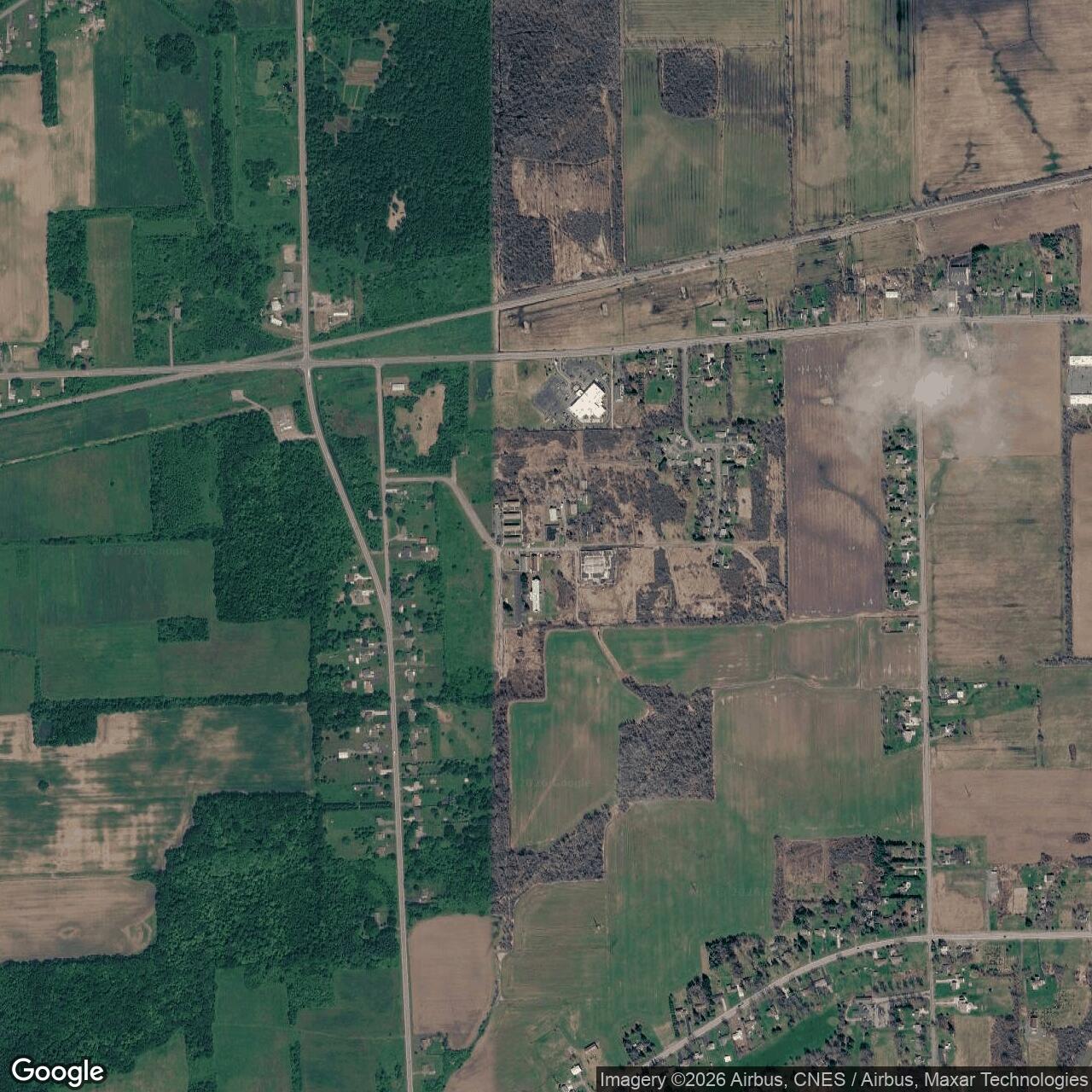
Lockport Air Force Station, New York
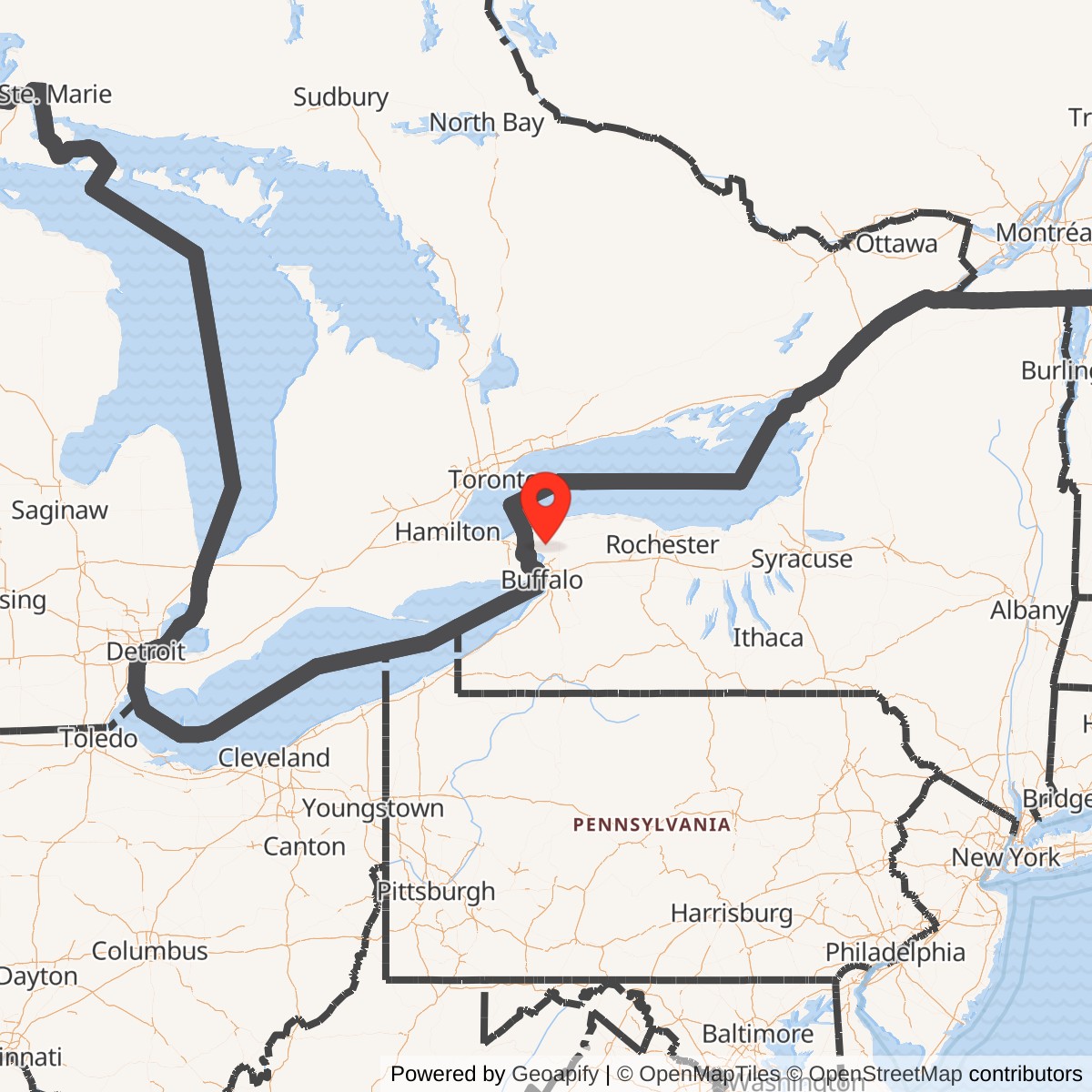
Longitude: -78.834722
Official Base Website: Former Lockport Air Force Station / Unicorn Drive Redevelopment Area
Current Role: Mixed residential and senior/affordable housing, commercial reuse, vacant municipal parcels, and brownfield redevelopment land. The main radar mission and retained GATR/JSS radio function are closed.
Lockport Air Force Station was a permanent Cold War air-defense radar installation that watched the approaches to western New York and southern Ontario from 1951 to 1979. Its radar crews detected and tracked aircraft, helped direct fighter interceptors, supplied data to the Semi-Automatic Ground Environment, and shared the site with the Army command system that controlled the Niagara-Buffalo Nike missile defenses. The station was small compared with a flying base, but its mission was continuous and strategic. It formed part of the electronic screen intended to warn North America of a Soviet bomber attack and coordinate the response before hostile aircraft could reach industrial and population centers.
The installation stood in the Town of Cambria rather than inside the City of Lockport. Early records and later histories call the location the Shawnee Radar Site or simply Shawnee. The Air Force formally adopted the name Lockport Air Force Station on December 1, 1953. Local sources sometimes call it Lockport Air Force Base, but Air Force Station is the historically accurate installation title. It had no runway, was not an airport, and has no ICAO identifier.
Lockport was also not the same installation as Fort Niagara. The 763d Aircraft Control and Warning Squadron first operated a temporary lashup radar at Fort Niagara, designated L-19, in 1950. The unit moved to the purpose-built Shawnee site in September 1951 when enough of the permanent station was ready for occupancy. Fort Niagara was therefore Lockport's operational predecessor, not another name for the Cambria property. The two sites have separate physical identities and separate site records.
The Army presence at Lockport requires another distinction. The Army did not turn the entire station into an Army post. It occupied a tenant command-and-control complex on the Air Force installation, using a Missile Master and later BIRDIE system to direct Nike batteries in the Niagara-Buffalo Defense Area. The Air Force continued to operate the main surveillance and height-finding radars and the 763d remained the station's principal Air Force unit. This joint arrangement made Lockport an unusually clear example of Air Force sensor data and Army missile command operating on the same site.
The former station is closed. An approximately 81-acre area is used in New York State environmental investigations to describe the principal former Air Force property, although the exact federal footprint and later parcel boundaries varied. Portions of the old barracks and housing area became civilian or senior housing. Other parcels are vacant, commercially used, or being marketed for redevelopment. The large radar towers and radomes that defined the military skyline have been removed.
Origins in the Permanent Radar Network
Lockport grew from the rapid rebuilding of continental air defense after World War II. The Soviet Union's acquisition of atomic weapons, the development of long-range bombers, and the opening of the Korean War made warning time a national priority. The Air Defense Command first relied on a patchwork of temporary systems while it constructed a permanent radar network across the United States. The Buffalo-Niagara industrial region, the Great Lakes approaches, and the nearby Canadian border made western New York an important surveillance sector.
The 763d Aircraft Control and Warning Squadron was constituted on November 14, 1950, and activated on November 27. Its first operating location was the temporary L-19 lashup radar at Fort Niagara. Lashup stations were expedient warning positions that filled urgent gaps while permanent sites were being built. At Fort Niagara the squadron used existing military land and a World War II-era radar set to begin the mission quickly. This stage belongs to Fort Niagara's history as a tenant use, but it is also the direct organizational preface to Lockport.
Construction of the permanent site proceeded on rural land near Shawnee in Cambria. By September 1951 the 763d moved from Fort Niagara and began operating at its new station. Two AN/CPS-6B sets provided both search and height information. The equipment combined several radar functions in a large and maintenance-intensive system. Crews worked around the clock because an air-defense station could not simply close at night or on weekends. Operators watched scopes, plotted tracks, classified aircraft, passed warnings, and helped controllers guide interceptors toward unknown targets. Radar maintenance personnel kept transmitters, receivers, antennas, power systems, and communications functioning through western New York winters.
The initial mission was ground-controlled interception and warning. When radar detected an aircraft that could not be identified through flight plans or normal procedures, station personnel developed a track and communicated the information to higher air-defense authorities. Controllers could then vector fighter aircraft toward the contact. The value of Lockport was not that it fought alone. Its value was that it converted a fleeting radar return into usable warning and interception information inside a regional network.
Shawnee became Lockport Air Force Station on December 1, 1953. The new name associated the installation with the better-known nearby city while preserving its actual location in Cambria. Administrative assignments changed repeatedly as Air Defense Command reorganized sectors, divisions, groups, and defense wings. The squadron served under the 540th Aircraft Control and Warning Group, 32d Air Division, 4704th and 4708th Defense Wings, and 30th Air Division during the manual-control era. These changes altered the reporting chain but not the basic need for continuous radar coverage.
SAGE Modernization
The greatest technical change at Lockport was integration into the Semi-Automatic Ground Environment, usually called SAGE. The earlier system depended heavily on telephone reports, plotting boards, local calculations, and manual coordination. SAGE linked long-range radar stations to computerized direction centers that combined tracks from many sensors. The network gave commanders a broader air picture and improved the speed with which information could be evaluated and passed to interceptor forces.
SAGE operations at Lockport began in December 1958. The station carried the SAGE identifier Z-21 and sent radar data to the Syracuse sector direction center. The 763d was redesignated the 763d Radar Squadron (SAGE) in 1959. Its mission remained surveillance and control support, but the information flow was increasingly automated. Operators and technicians still had to identify false returns, maintain equipment, confirm tracks, and keep communications working. SAGE did not eliminate the local station. It made the local station a more tightly connected sensor node.
Lockport's radars changed as the network matured. The original pair of AN/CPS-6B sets was phased out near the end of the 1950s. An AN/FPS-7 search radar entered operation in 1960. The FPS-7 became the principal long-range surveillance set and was later modified to the AN/FPS-107 configuration. Two AN/FPS-6 height-finding radars supported three-dimensional tracking by measuring aircraft altitude. In 1962 an AN/FPS-26 replaced one of the Air Force height finders. The other AN/FPS-6 was retired in 1968. Army-operated AN/FPS-6A height finders were also present during the joint Nike-control period.
The main station received help from two unmanned AN/FPS-14 gap-filler annexes. Brockport, P-21A and later Z-21A, operated from August 1957 to June 1968 east of Lake View Cemetery near Brockport. Charlotte Center, P-21B and later Z-21B, operated over the same period in Chautauqua County. These small sites filled areas where terrain, distance, or the curvature of the earth reduced the main radar's low-altitude coverage. Their buildings and antennas were separate physical installations, although they were subordinate to Lockport rather than independent squadrons. Both therefore warrant their own inventory rows, while their full histories remain separate future work.
A third gap-filler site was planned at Stoney Creek, Ontario, but was not completed as an operational American station. Available radar histories indicate that some construction may have occurred.
Joint Air Force and Army Air Defense
Lockport's most distinctive period began when the Army placed the Niagara-Buffalo Nike command post on the Air Force station. Nike Ajax and later Nike Hercules batteries formed a ring of guided-missile defenses around major cities and industrial areas. A battery could acquire and engage a target locally, but the defense area needed centralized coordination so that multiple batteries did not pursue the same aircraft while leaving another track uncovered.
The Army began constructing a Missile Master command post at Lockport in July 1958. Contemporary Army histories place the cost at about $3.5 million. The hardened or protected command building received radar and track information and distributed engagement assignments to Nike fire units. Missile Master also allowed the Army's defense area to exchange information with SAGE. The facility was dedicated around 1960, and the Army Air Defense Command Post moved from Fort Niagara to Lockport during the summer of 1961.
On August 1, 1961, Headquarters, 2d Antiaircraft Artillery Group moved from Fort Niagara to Lockport. The 31st Artillery Brigade was activated there on December 15, 1961, providing brigade-level supervision for regional air defenses. In June 1963 the brigade headquarters moved to Oakdale, Pennsylvania. Personnel of the 1st Missile Battalion, 4th Artillery remained connected with the local defense staff and command post. Missile Master was replaced by the more compact BIRDIE system in September 1963.
Army command relationships continued to change. The 101st Artillery Group was associated with Lockport by 1966 and supervised Regular Army and New York Army National Guard Nike Hercules batteries in the regional defense. The organization was redesignated the 18th Artillery Group on November 15, 1968. Army Nike reductions then ended the Lockport command-post mission by about 1970. These Army organizations were tenants performing a regional control mission. They did not supersede the Air Force's 763d Radar Squadron or make Lockport an independent Army installation.
The joint arrangement demonstrated the wider logic of continental air defense. Air Force radars searched broad airspace and fed the SAGE picture. Army command systems used shared or correlated tracks to assign Nike batteries. Interceptors and surface-to-air missiles were different weapons, but they depended on a common warning system and disciplined identification procedures. Lockport linked those functions at one physical site.
Role in the Wider Military Network
Lockport Air Force Station was one node in a layered North American warning and interception network. Its local view covered western New York and helped watch approaches across the Great Lakes and the Canadian border. Its reports became part of a regional picture rather than remaining at Cambria. In the manual era, tracks moved through voice and plotting systems. In the SAGE era, digitized radar information flowed to a computerized direction center, where it could be correlated with reports from other stations.
The station's relationship with Fort Niagara illustrates how the network evolved. Fort Niagara's L-19 radar was a temporary predecessor used to start the mission before the permanent site was ready. After the move to Cambria, Fort Niagara continued to support regional Army air-defense organizations for a time. The Army later moved its command post and group headquarters to Lockport because colocation with Air Force surveillance and SAGE communications improved coordination. The two installations were therefore sequentially and operationally linked, but never physically identical.
The Brockport and Charlotte Center gap fillers extended Lockport's low-altitude coverage. Their unmanned AN/FPS-14 radars sent information back to the parent station. The main site, annexes, communications circuits, sector direction center, interceptor forces, and Nike batteries together formed the effective weapon system. No single part could provide full protection by itself.
Lockport also belonged to the long institutional transition from Air Defense Command to Aerospace Defense Command. The name change in 1968 reflected a broader mission that included aerospace warning as missiles and space systems altered the threat. Lockport remained a conventional aircraft-surveillance radar site, but its later years occurred in an organization increasingly focused on ballistic-missile warning, space surveillance, and a reduced network for detecting manned bombers.
Units and Organizations
The 763d Aircraft Control and Warning Squadron, later the 763d Radar Squadron (SAGE) and 763d Radar Squadron, was Lockport's principal Air Force unit. It was constituted on November 14, 1950, activated on November 27, and initially operated from Fort Niagara. The squadron moved to Shawnee in September 1951. It maintained the radars, processed tracks, supported ground-controlled interception, supplied SAGE data, operated communications, and sustained the station's round-the-clock mission. The SAGE designation was dropped in 1974 when the unit became simply the 763d Radar Squadron.
The unit's higher headquarters changed as Air Defense Command reorganized. Its known assignments included the 540th Aircraft Control and Warning Group, 32d Air Division, 4704th Defense Wing, 4708th Defense Wing, 30th Air Division, Syracuse Air Defense Sector, Detroit Air Defense Sector, 34th Air Division, 35th Air Division, and 21st Air Division. The changes reflect a national system adjusting sector boundaries, command centers, and declining force levels, not repeated closures of the station.
Army tenant organizations included the 2d Antiaircraft Artillery Group, the 31st Artillery Brigade, the local defense staff associated with the 1st Missile Battalion, 4th Artillery, the 101st Artillery Group, and the 18th Artillery Group. Their command-post personnel operated Missile Master and BIRDIE functions for the Niagara-Buffalo Nike defense. Nike firing batteries remained at their own launch and control sites. They were connected to Lockport operationally, but they were not physically located inside the main Air Force station as complete batteries.
Conflicts, Alerts, and Operational Events
Lockport never came under hostile attack and did not launch aircraft or missiles. Its operational importance lay in readiness during the Cold War. The station opened during the Korean War, when national leaders feared that war in Asia could widen and that Soviet bombers might approach North America. Its crews maintained surveillance through later crises, including periods of heightened alert surrounding Berlin and the Cuban Missile Crisis. Available public histories do not identify a unique combat engagement originating at Lockport during those events. The historically supportable conclusion is that the station carried out its assigned warning and control mission during national alerts.
The Vietnam War did not give Lockport a direct Southeast Asian combat mission. Personnel who served at the station could have arrived from or later deployed to other assignments, but Lockport itself remained part of continental defense. By the late 1960s and 1970s, strategic priorities were shifting. Intercontinental ballistic missiles reduced the relative importance of defense against manned bombers, Nike sites closed, and the Air Force consolidated radar coverage. Lockport's continued operation until 1979 shows that conventional air surveillance still mattered even as the system became smaller.
Communications and the GATR Site
SAGE required dependable ground-to-air and ground-to-ground communications. A separate Ground Air Transmitter Receiver, or GATR, site kept radio equipment away from electrical interference at the main radar complex and connected controllers with aircraft. Lockport's GATR facility later remained in use as Joint Surveillance System radio site G-56, known as Sanborn-Lockport, after the principal station closed. Radar-site histories report that this communications site also eventually closed and later came into commercial use by a landscaping company.
The GATR facility was a communications component of Lockport, not a separate full Air Force station.
Closure and Date Reconciliation
Lockport closed during the broad reduction of Aerospace Defense Command radar forces in 1979. Two dates appear in widely used records. Radar-station documentation reports that the 763d ceased its Lockport radar mission or was deactivated on April 1, 1979. Air Force lineage summaries and later station histories give June 29, 1979, for the squadron's final inactivation and station closure. These dates can describe different steps in the shutdown process. April 1 is best treated as the end of routine radar operations or the beginning of final deactivation, while June 29 is the safer formal close date for the 763d and the station.
The Federal Aviation Administration received or assumed elements of the surveillance responsibility as the national network transitioned toward the Joint Surveillance System. The surviving GATR site continued for a time, but the main Lockport radars and their towers were eventually removed. The station did not become an active modern military installation, and no current Air Force unit is assigned there.
Environmental History
Cold War radar stations used fuels, transformers, generators, maintenance chemicals, vehicle shops, heating systems, utility lines, and waste-disposal areas. These activities could leave environmental issues after closure even when a site had no runway or weapons launch area. At Lockport, federal, state, and local reviews have examined the former station's operational areas, buildings, disposal features, and later land uses.
New York State Department of Environmental Conservation records identify the Former Lockport Air Force Station as site 932064. A 2019 site-history report used aerial photographs and historical research to reconstruct land use from before military construction through modern redevelopment. Later fieldwork described seven tax parcels totaling approximately 81 acres. This figure is useful for the current environmental-study boundary, but it should not be presented as a guaranteed peak military acreage. Military use, housing, communications property, transferred parcels, and later survey boundaries may not coincide exactly.
Niagara County's brownfields program states that remediation was completed on redevelopment parcels in 2012. State investigations continued after that date, which means the 2012 work should not be interpreted as proof that every former military parcel required no further assessment. The more accurate picture is phased cleanup, investigation, parcel transfer, housing reuse, and redevelopment planning. Current public materials market two city-owned former-base tracts on Unicorn and Eagle Drives totaling 12.57 acres, while the broader former station study area is about 81 acres.
Present Reuse and Current Status
The former Lockport Air Force Station is a mixed civilian landscape. Former barracks and housing areas have been converted to residential use, including senior or affordable housing managed through local housing organizations. Other buildings and parcels have been demolished, left vacant, adapted for commercial purposes, or incorporated into municipal redevelopment plans. Niagara County identifies former-base property on Unicorn Drive as a brownfield redevelopment opportunity with planned-development zoning. A 2024 fact sheet describes two vacant city-owned tracts, one on Unicorn Drive and one on Eagle Drive, totaling 12.57 acres.
The radar operations area no longer performs military surveillance. The defining radomes are gone, and no current Air Force, Space Force, Air National Guard, or Air Force Reserve mission is assigned to the site. The retained GATR/JSS radio function also ended.
Chronology
- 1950-11-14 The Air Force constituted the 763d Aircraft Control and Warning Squadron.
- 1950-11-27 The 763d was activated and began its organizational service during the emergency expansion of continental air defense.
- 1950 The squadron operated the temporary L-19 lashup radar at Fort Niagara while the permanent Shawnee site was being prepared.
- 1951-09 The 763d moved to the permanent radar station near Shawnee in the Town of Cambria and began operating two AN/CPS-6B radars.
- 1953-12-01 The Shawnee installation was renamed Lockport Air Force Station.
- 1957-08 The Brockport P-21A and Charlotte Center P-21B unmanned AN/FPS-14 gap-filler annexes entered operation.
- 1958-07 Construction began on the Army Missile Master command post at Lockport.
- 1958-12 SAGE operations began at Lockport, linking station radar data to the regional computerized air-defense system.
- 1959 The unit became the 763d Radar Squadron (SAGE), and the station used the SAGE identifier Z-21.
- Circa 1960 The Army Missile Master facility entered service, and Lockport began operating an AN/FPS-7 long-range search radar with AN/FPS-6 height finders.
- 1961 summer The Army Air Defense Command Post moved from Fort Niagara to Lockport.
- 1961-08-01 Headquarters, 2d Antiaircraft Artillery Group moved from Fort Niagara to Lockport.
- 1961-12-15 The 31st Artillery Brigade was activated at Lockport.
- 1962 An AN/FPS-26 replaced one Air Force height-finding radar. Army AN/FPS-6A height finders also supported the joint defense mission during this period.
- 1963-06 The 31st Artillery Brigade headquarters moved from Lockport to Oakdale, Pennsylvania, while local Army defense personnel continued the command-post mission.
- 1963-09 The Army replaced Missile Master with the BIRDIE command-and-control system.
- 1966 The 101st Artillery Group was associated with the Lockport command post and the remaining Niagara-Buffalo Nike Hercules defense.
- 1968-06 The Brockport and Charlotte Center gap-filler annexes ended operations.
- 1968 The remaining Air Force AN/FPS-6 height finder was retired, and Air Defense Command became Aerospace Defense Command.
- 1968-11-15 The 101st Artillery Group was redesignated the 18th Artillery Group.
- Circa 1970 The Army's Lockport Nike command-post mission ended as the Niagara-Buffalo missile defense was reduced.
- 1974-02-01 The 763d was redesignated the 763d Radar Squadron, dropping the SAGE parenthetical designation.
- 1979-04-01 Radar-site records mark the end of routine 763d operations or the start of final deactivation at Lockport.
- 1979-06-29 Air Force lineage and station summaries give this as the formal inactivation date of the 763d Radar Squadron and closure of Lockport Air Force Station.
- Post-1979 Portions of the former station were transferred, adapted for housing and commercial use, or left vacant. The GATR site continued temporarily as JSS radio site G-56.
- 2012 Niagara County brownfields material reports remediation of redevelopment property at the former station.
- 2019 NYSDEC completed a detailed site-history and aerial-photograph review for the approximately 81-acre former Lockport AFS study area.
- 2021-2022 Additional field investigation documented seven parcels totaling approximately 81 acres within the former-station study area.
- 2024 Niagara County marketed two city-owned former-base parcels on Unicorn and Eagle Drives totaling 12.57 acres for redevelopment.
- Present The former station remains closed, with mixed residential, commercial, vacant, and redevelopment uses and no current military unit or radar mission.