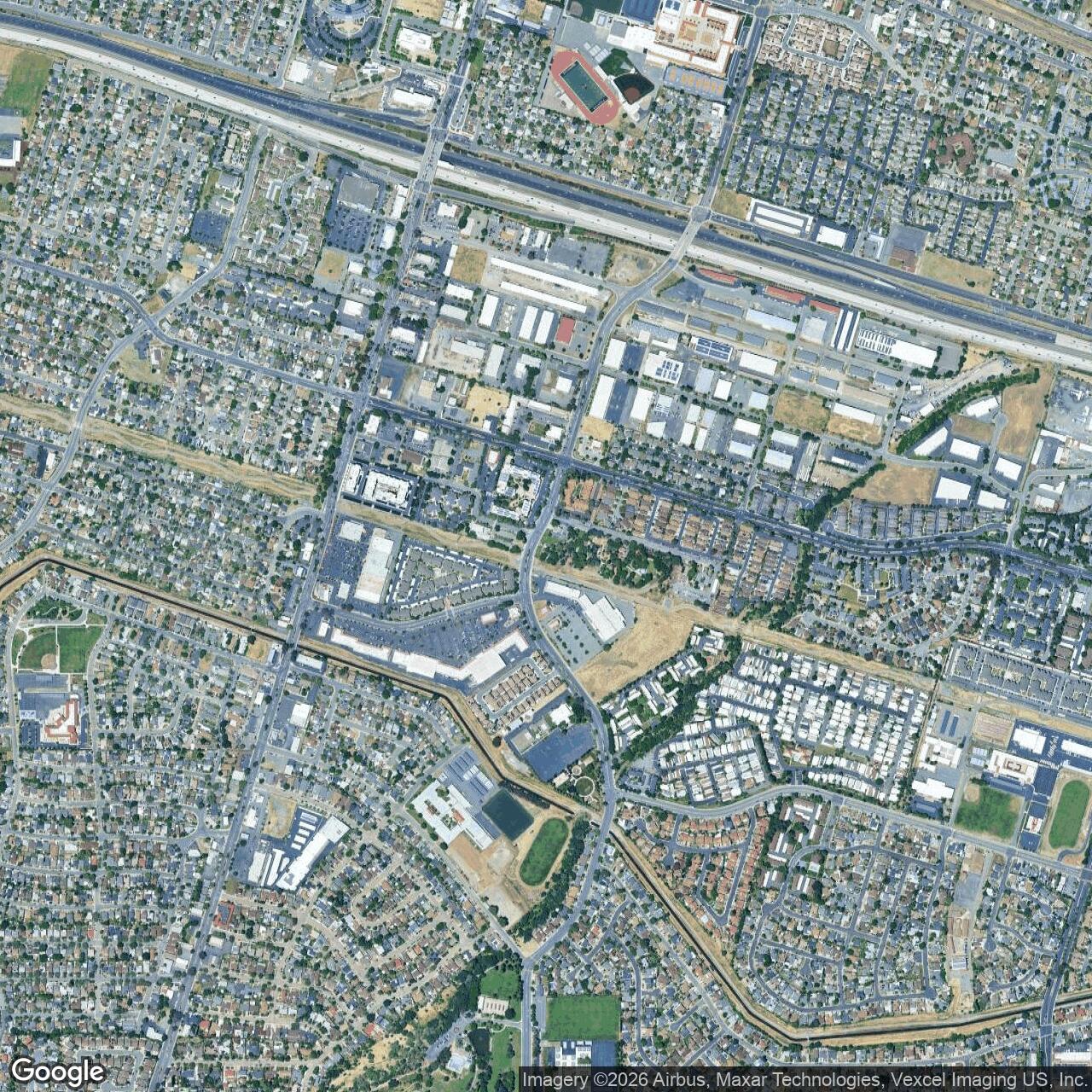
Camp Stoneman Army Base, Pittsburg California
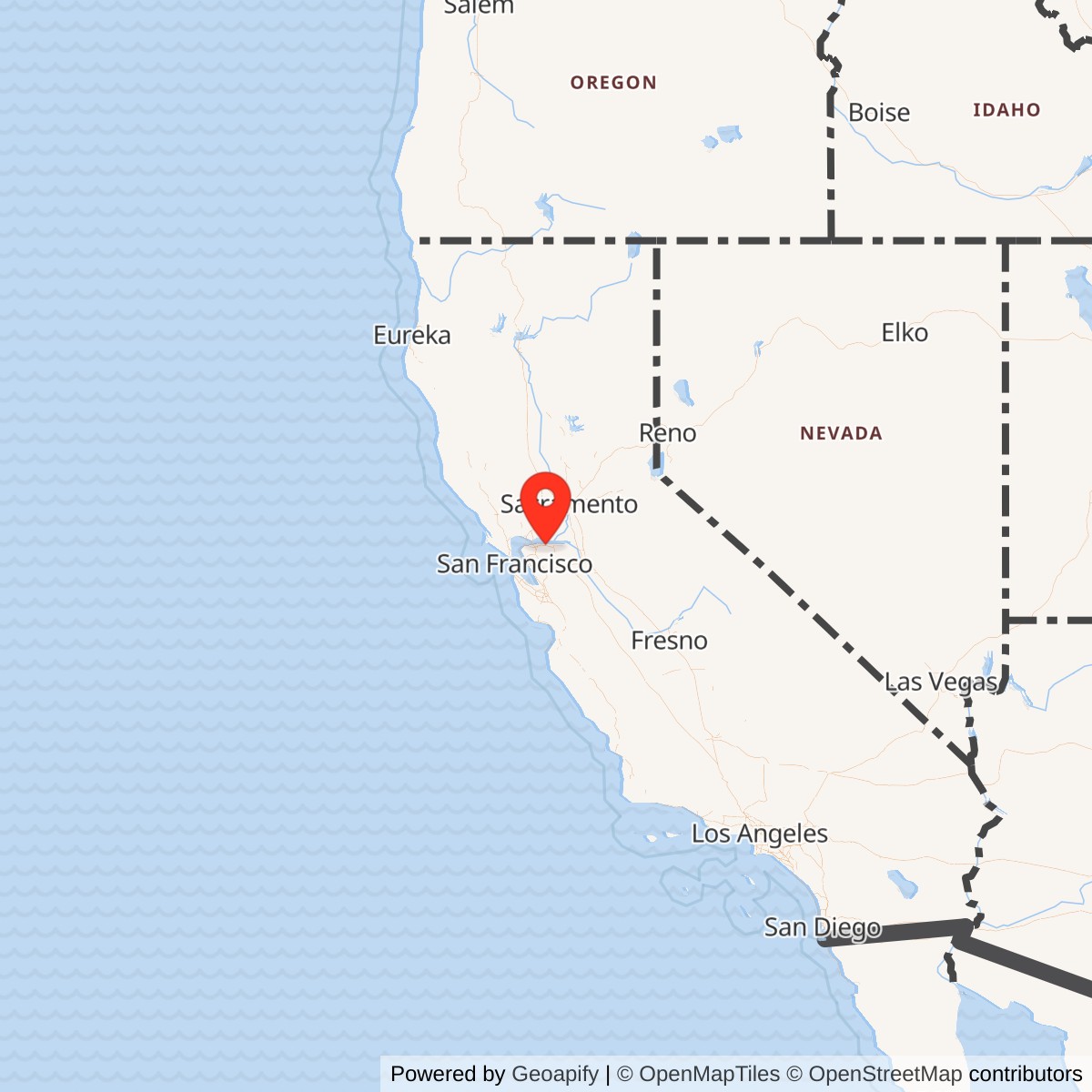
Longitude: -121.886569
Official Base Website: https://www.pittsburgca.gov/our-city/our-history
Current Role: Former Army staging camp is closed and redeveloped for residential neighborhoods, schools, Los Medanos College, commercial and light-industrial use, Stoneman Park, Delta View Golf Course on part of the former rifle-range area, and privately owned waterfront/warehouse reuse; public memory preserved by the Harbor Street Camp Stoneman memorial and Pittsburg Historical Museum interpretation.
Camp Stoneman was the San Francisco Port of Embarkation's great inland troop-staging machine for the Pacific war. It was not a training camp in the same sense as Camp Roberts or Camp Bowie, and it was not a permanent harbor post like Fort Mason. Its purpose was narrower, faster, and more urgent: receive soldiers and units arriving by rail and highway; house them briefly; complete records, medical checks, dental work, inoculations, equipment inspections, shipboard orientation, last-minute weapons and field training, and embarkation paperwork; then move them by ferry and other transport to Army piers around San Francisco for shipment overseas. For many soldiers bound for the Asiatic-Pacific Theater, Camp Stoneman was the last military stop on American soil.
The camp stood in Pittsburg because the Army needed a staging site close to the San Francisco Port of Embarkation but not trapped inside the dense waterfront. Pittsburg had three decisive advantages. First, it had rail access through the Southern Pacific and Santa Fe systems, allowing troop trains to enter the installation area. Second, it sat near the San Joaquin River, with water access into San Francisco Bay and onward to Fort Mason and other Army piers. Third, it had highway access and enough open acreage to build a large cantonment, ranges, training areas, warehouses, messes, infirmaries, theaters, exchanges, telephone facilities, and administrative systems away from the already congested San Francisco waterfront. Camp Stoneman therefore functioned as the Army's pressure valve for the Bay Area port system.
The post was named for Major General George Stoneman, a Civil War cavalry commander and later governor of California. Its official Army life was brief, but intense. Construction was authorized in January 1942, work began in February, the first troops arrived on May 25, and the camp was formally activated on May 28, 1942. It then served through World War II, shifted to separation-center functions when soldiers returned from overseas, revived for the Korean War, and was deactivated at the end of August 1954. The correct historical status is therefore closed: Camp Stoneman is no longer an active Army installation. Its land was disposed of, redeveloped, and reused, though several place names, a memorial, former building sites, and the former wharf landscape keep the name visible in Pittsburg.
The installation was also known by several functional and disposal-era names: Camp Stoneman Military Reservation, Pittsburg Staging Area, Pittsburg Replacement Depot, Pittsburg Replacement and Reclassification Depot, Camp Stoneman Replacement and Reclassification Depot and Rifle Range, Camp Stoneman West Garrison Rifle Range, Camp Stoneman Rifle Range, Camp Stoneman U.S. Army Reserve Center, and West Garrison Rifle Range. Those alternate names are more than clerical clutter. They record how the same ground served as a staging area, replacement and reclassification depot, rifle range, port-support installation, temporary troop city, prisoner-of-war site, separation center, and later surplus military property.
Mission Evolution
Camp Stoneman grew directly out of the Pacific emergency after Pearl Harbor. The San Francisco Port of Embarkation had long been the Army's gateway to the Pacific, but the early 1942 surge of troops, vehicles, aircraft, ammunition, supplies, and poorly synchronized rail traffic strained the Bay Area port system. The Army responded by expanding the port's network across the region. Fort Mason remained the historic headquarters and wharf complex; Oakland Army Base and other Bay Area facilities handled cargo, vehicles, warehousing, and pier operations; Camp Stoneman became the large inland troop-staging area that could keep soldiers fed, housed, processed, and ready until ships, ferries, and convoy schedules could take them onward.
The first mission was simply to get troops out. The camp received units and individual soldiers already destined for overseas deployment. Camp personnel did not have months to train them from scratch. Instead, Stoneman performed the final stage of military preparation: health screening, immunizations, dental work, personal records, wills, allotments, weapons checks, clothing and equipment inspections, security lectures, mail censorship instruction, chemical-warfare orientation, first aid, abandon-ship drills, and brief refresher training. Soldiers were known to the port system by shipment code numbers rather than ordinary unit names once they entered the staging pipeline. That anonymity was part of the larger operational security and logistics machinery of wartime movement.
As the war progressed, the mission became more complex. Camp Stoneman housed a permanent operating cadre and thousands of transient troops. It supported the Pacific Coast Transportation Corps Officer Training School. It held prisoners of war, including German and Italian personnel, and it supported Italian service-unit activity. It included a rifle range and specialized training facilities such as abandon-ship decks, dry-land ship trainers, gas chamber, bayonet course, obstacle courses, hand-grenade and rifle-grenade ranges, rocket-launcher range, infiltration course, known-distance rifle ranges, antiaircraft miniature target range, mock village, bivouac and road-march areas, sanitation display area, and training-film library. In other words, the camp was not only a waiting room. It was a tightly scheduled final-readiness plant for the Army's Pacific deployment system.
At the end of World War II, Camp Stoneman reversed its flow. Returning soldiers landed at the San Francisco port, moved to Camp Stoneman, completed separation or reassignment processing, called home, received orders, and boarded trains or other transportation. The camp's task shifted from getting soldiers to war to getting soldiers home quickly. Its phone center, reportedly capable of handling thousands of long-distance calls a day, became one of the emotional facilities of demobilization. Telegrams and calls announcing arrival in California were part of the camp's post-victory work.
The Korean War gave Camp Stoneman a second life. The Pacific logistics geography that made Pittsburg useful in 1942 still mattered in 1950. Soldiers again moved through the installation for Korea, and the camp again became part of the port-staging system. But the Korean War revival did not save the post. By 1954 the Army was consolidating functions elsewhere. The transfer and reassignment mission moved to Fort Ord in July 1954, and the overseas replacement section moved to Oakland Army Base in August. Local residents and civic leaders tried to save the installation, but the Army closed it anyway.
Operational Role
What happened at Camp Stoneman was the practical conversion of people into deployable shipments. The work began when troop trains arrived on rail spurs from major rail lines. Soldiers were unloaded, assigned to barracks areas, fed, examined, briefed, equipped, and placed into a port schedule. The camp could house and feed more than 20,000 troops at a time. Accounts of the built environment describe hundreds of barracks, administrative buildings, storehouses, messes, infirmaries, exchanges, recreation halls, a chapel, stockade, fire department, bakery, meat-cutting plant, Red Cross station, library, water reservoir, parking lots, thirty-one miles of roads, and a very large telephone operation. Camp Stoneman was a temporary military city built for throughput.
The throughput tempo was enormous. A soldier might be on post only a few days, but those few days were dense. One account says the usual time frame was four to five days; another notes that the average stay for outbound troops could run one to two weeks depending on the shipment cycle. In the fastest periods, the camp had to absorb thousands of soldiers a week, keep them available, prevent them from scattering into the civilian community, correct last-minute deficiencies, and move them on command. The fact that a soldier's defective shoes, missing records, dental problem, weapon malfunction, or missing inoculation could delay movement shows why the camp's mission required so many small services to operate at once.
Medical and dental work were central to the mission. Soldiers received physical examinations and inoculations keyed to Pacific destinations. Dental chairs reportedly operated long hours to correct problems before embarkation. Eye corrections could result in the issue of extra pairs of glasses. Last-minute medical failure at the pier or aboard ship created a logistics problem, so the Army used Stoneman to catch and fix problems before they reached the waterfront. This medical function did not make the camp a hospital installation like Letterman, but it made health screening one of Stoneman's most consequential daily operations.
The movement from Camp Stoneman to ship side was one of the most distinctive parts of the installation. Most troops marched down Harbor Street toward the Pittsburg waterfront. From there Army ferries and harbor boats carried them across the water toward San Francisco piers, including the Fort Mason and Embarcadero areas. Former excursion vessels such as Catalina and Cabrillo, and the ferry Yerba Buena, later renamed Ernie Pyle, became part of the Army's troop-movement fleet. The trip could take several hours, and it gave the camp a geography unlike most inland cantonments: Stoneman was a land camp whose final act was usually a water movement.
Late in the war, the San Francisco Port of Embarkation experimented with embarking troops directly aboard a Liberty ship at Camp Stoneman, but the river and navigation conditions made that impractical for large ocean-going vessels. That failed experiment still reveals the installation's logic. The Army was constantly trying to reduce handling time, avoid bottlenecks, and move soldiers from camp to ship with fewer steps. Even when the direct-embarkation idea did not work, Stoneman remained useful because it removed much of the troop-processing burden from the crowded port itself.
Training at Camp Stoneman was deliberately short and final-stage. Soldiers attended lectures on shipboard conduct, security, censorship, chemical warfare, first aid, and abandon-ship procedures. They used dry-land ship trainers and abandon-ship decks. They hiked, practiced field discipline, and fired weapons at the camp's ranges. Documentation cited in the historical summaries indicates use of pistols, rifles, hand grenades, rifle grenades, and rocket-launcher grenades. The rifle-range and munitions-training elements explain why later records referred to the site as both a staging area and rifle range.
The camp also had a social and morale system, because soldiers waiting for overseas movement were often restricted to post. Camp Stoneman had theaters, recreation halls, exchanges, clubs, gymnasiums, sports facilities, bowling, an indoor pool, and USO shows. Hollywood entertainers such as Groucho Marx, Garry Moore, Red Skelton, and Lucille Ball appear in local and camp histories of the post. These details should not be treated as mere entertainment trivia. The Army knew that thousands of men waiting for war, often anxious and unable to leave the post freely, had to be occupied, disciplined, and kept functional. Morale support was part of throughput management.
Units, Organizations, and Systems
Camp Stoneman's parent system was the San Francisco Port of Embarkation. Fort Mason was the historic headquarters and wharf complex, but the port was not only Fort Mason. During World War II it became a regional logistics system spread around the Bay Area, including Oakland, Emeryville, leased piers and warehouses, ferries, staging areas, and support installations. Camp Stoneman was the port's primary troop-staging area and the largest West Coast staging area for soldiers going to the Pacific.
The installation's permanent and operating population included a cadre of officers, enlisted support troops, civilian workers, administrative personnel, medical and dental personnel, military police, transportation staff, communications operators, mess and maintenance workers, and other support services. One historical account gives the permanent base population as about 125 officers and 2,000 troops, while also noting that the camp could house and mess more than 20,000 transient troops. During peak activity it also employed large numbers of civilians and became a major economic force in Pittsburg and the wider Bay Area.
Known assigned or station-list organizations included Company D, 26th Quartermaster Regiment; the 583rd Ordnance Ammunition Company; and the 3459th and 3460th Ordnance Automotive Maintenance Companies. Historical station-list labels from the period identify some of these as Black or segregated units using the Army's wartime terminology. They should be understood within the segregated Army of the World War II period, in which Black service units often performed essential logistics, transportation, maintenance, ammunition, and support work while facing discrimination in assignments and promotion. At a staging camp like Stoneman, those service organizations were not secondary to the mission. They were part of the machinery that made the Pacific deployment pipeline work.
The Women's Army Corps was also visible at Camp Stoneman. Pittsburg Historical Museum photo captions identify women stationed there as a major administrative force on base. Their work belongs directly in the operational story. A staging camp required constant records work, personnel actions, communications, message handling, files, telephone operations, and administrative coordination. WAC personnel helped perform that work, and their presence illustrates how women in uniform became essential to the Army's large domestic support installations.
Many combat and support units passed through Camp Stoneman rather than being permanently assigned there. Historical summaries associate the camp with the 1st Cavalry Division, 11th Airborne Division, 40th Infantry Division, 33rd Infantry Division, 81st Infantry Division, 93rd Infantry Division, 96th Infantry Division, 2nd Infantry Division, 86th Infantry Division, 31st Infantry Division, 43rd Infantry Division, 4th Engineer Special Brigade, 841st Engineer Aviation Battalion, 805th Engineer Aviation Battalion, 2nd Filipino Infantry Regiment, 13th Troop Carrier Squadron, 345th Bombardment Group, 380th Bombardment Group, and the First Special Service Force. Not every unit had the same relationship to the camp; some staged before overseas movement, some redeployed through it, and some were inactivated there after World War II. The list is important because it shows the camp's role as a shared portal for many branches and commands rather than as the home station of one division.
Camp Stoneman also participated in the wartime prisoner-of-war system. Local and military-history accounts state that German and Italian prisoners were housed there, and the Italian Service Unit / 18th Italian Quartermaster Service Company is associated with the post. The POW and Italian-service-unit functions connected Stoneman to a wider U.S. system that used enemy prisoners and cooperative Italian service units for labor and support work under Army supervision. At Stoneman, that system existed alongside the much larger embarkation mission.
Facilities and Physical Layout
Camp Stoneman's physical layout reflected its role as a processing and movement plant. The Army acquired 2,841.54 acres in 1942, including 1,831.41 fee acres, 5.61 easement acres, 0.33 license acre, 0.03 permit acre, and 1,004.16 leased acres. This acreage included the main camp and related rifle-range and support areas. Some later descriptions round the installation to more than 2,500 or about 2,800 acres.
The site had to connect three transportation modes. Rail was vital because most soldiers arrived by troop train. The camp had rail spurs and loading areas on the northern side. Buildings with loading docks stood near the rail area, and the rail connection allowed the port to handle units at scale without forcing every soldier and piece of baggage through San Francisco first. Roads and internal camp streets connected barracks areas, warehouses, medical facilities, training sites, and the waterfront movement corridor. Water movement connected the camp to the Army port facilities around San Francisco Bay.
The camp's main gate was associated with Railroad Avenue, in the area later remembered near the Atchison apartment development. The Army docks were along East 3rd Street just west of Harbor Street, and troops moved along Harbor Street between the waterfront and the base entrance near California Street. This axis between rail, camp, and river was the core of the installation's physical logic. The public Camp Stoneman memorial along Harbor Street, with its stone and M48 tank, is one of the easiest modern ways to orient a visitor to the former camp landscape, though it represents only a point within a much larger former reservation.
The cantonment contained hundreds of buildings. Accounts list approximately 346 63-man barracks, 86 company administrative and storehouse buildings, eight infirmaries, many administrative structures, nine post exchanges, fourteen recreation halls, thirteen mess halls, a post office, chapel, stockade, fire department, observation tower, water reservoir, bakery, Red Cross station, meat-cutting plant, library, parking lots, and recreational facilities. A later summary states that the camp contained more than 800 cream-and-khaki-colored buildings. The different counts reflect categories and dates, but the conclusion is clear: Stoneman was a major temporary city.
The training landscape included facilities for final combat and shipboard preparation. Abandon-ship training decks and a dry-land ship helped prepare soldiers for troopship emergencies. The gas chamber, bayonet course, obstacle courses, infiltration course, grenade ranges, rocket-launcher range, known-distance rifle ranges, dry range, antiaircraft target range, mock village, bivouac and road-march areas, and sanitation display area addressed a mixture of combat, health, and movement-readiness requirements. The rifle range and weapons-training areas also explain the later munitions and environmental caution attached to some parts of the former site.
Current Status and Reuse
Camp Stoneman is closed and reused. After the Army decided to deactivate the post in 1954, functions were transferred elsewhere and the land-disposal process began. Some parcels were conveyed to the Pittsburg Unified School District, some to GSA, and other parcels were sold or transferred to individuals, city agencies, state agencies, and private users between the late 1950s and early 1960s. The final parcels were not disposed of until 1962. The huge 1960 building auction removed much of the remaining temporary Army plant, including barracks, administrative buildings, mess halls, officers' clubs, and infirmary structures.
The main cantonment area has been heavily redeveloped. Modern uses include residential neighborhoods, schools, Los Medanos College, light industry, offices, commercial development, roads, and civic infrastructure. The southern portion of the former rifle range became an eighteen-hole public golf course, while other former rifle-range areas became Stoneman Park. The former wharf facility remained in use as a privately owned warehouse or waterfront industrial facility. Pittsburg's city history summarizes the post-1954 transformation as school, commercial, and residential development, which is accurate for the broad pattern even though the detailed reuse is more varied.
A small amount of public memory survives in the landscape. The Camp Stoneman memorial on Harbor Street marks the former military presence, and the Pittsburg Historical Museum preserves photographs and local interpretation. The museum's photo page identifies the main gates, Army docks, and Women's Army Corps barracks images. These local visual sources are especially useful because so much of the original temporary camp disappeared after disposal.
The site also has a post-closure environmental and technical-history episode. In 1956, after the Army post had closed, the U.S. Army tested decontamination procedures on land, buildings, and pavement at the former Camp Stoneman. The 2021 City of Pittsburg release on declassified radiology reports states that the isotope used in the test had a short half-life, decayed to a stable compound within seventeen days, and that people monitored during the test were well below current federal limits. The city release quoted a senior environmental program manager stating that there was no test-related radiation concern and that the matter was considered closed. This was not part of the camp's World War II or Korean War operational mission, but it is part of the documented afterlife of the former military property.
Chronology
- 1941-12-07 Japan attacked Pearl Harbor, accelerating the San Francisco Port of Embarkation's need for additional troop-staging capacity.
- 1942-01-03 The War Department authorized construction of Camp Stoneman.
- 1942-01-24 The formal construction-bid process began for the new camp.
- 1942-02-07 McDonald & Kahn, General Contractors of San Francisco, won the rush construction contract.
- 1942-02-11 Construction began at the Camp Stoneman site south of Pittsburg.
- 1942-04-05 The camp was named for Major General George Stoneman.
- 1942-05-25 The first troops arrived at Camp Stoneman for movement toward the Pacific.
- 1942-05-28 Camp Stoneman was formally activated.
- 1942-09-20 Initial construction was completed, giving the San Francisco Port of Embarkation a major inland troop-staging camp.
- 1942 The War Department acquired 2,841.54 acres for the installation through fee purchase, leases, easements, license, and permit arrangements.
- 1942-1945 Camp Stoneman served as the principal West Coast troop-staging area for soldiers and units moving through the San Francisco Port of Embarkation to the Pacific.
- 1943-06-01 Station-list data identified assigned support organizations including Company D, 26th Quartermaster Regiment, the 583rd Ordnance Ammunition Company, and the 3459th and 3460th Ordnance Automotive Maintenance Companies.
- 1945-08-11 The millionth soldier processed through the Stoneman staging area was ceremonially recognized shortly before Japan's surrender.
- 1945-08-14/15 Japan surrendered; Camp Stoneman's mission increasingly shifted toward reception, reassignment, and separation of returning troops.
- 1945-1946 Returning soldiers moved through Camp Stoneman as part of the postwar demobilization and separation process.
- 1946-01 German prisoners of war were present at Camp Stoneman according to later site summaries.
- 1950-1953 The Korean War revived Camp Stoneman's troop-processing role for Pacific movement.
- 1954-07 The transfer and reassignment station functions moved from Camp Stoneman to Fort Ord.
- 1954-08 The overseas replacement section moved from Camp Stoneman to Oakland Army Base.
- 1954-08-30 A small final formation rendered the last salute to the colors as Camp Stoneman moved to inactive status; some sources use this as the decommissioning date.
- 1954-08-31 Camp Stoneman was officially deactivated / decommissioned according to several local and military-history summaries.
- 1954-10-29 Some fee acreage was reported excess to the General Services Administration.
- 1955-01-20 A portion of the former camp land was conveyed to the Pittsburg Unified School District.
- 1956 Decontamination-procedure tests involving a short-lived radioisotope were conducted at the former Camp Stoneman site after the post had closed.
- 1958-05-29 Leased acres had been terminated before this date, according to the USACE-derived disposal history.
- 1959-1962 Remaining fee acres were sold or transferred to individuals and city and state agencies.
- 1960 A major GSA auction sold hundreds of remaining Camp Stoneman buildings for removal.
- 1962 Final parcels associated with the former Army installation were disposed of.
- 1964-05-15 Land used for a reserve center was conveyed to GSA and later quitclaimed to private individuals.
- 2019-08-23 The City of Pittsburg marked the 65th anniversary of Camp Stoneman's decommissioning and emphasized its role as a major Pacific troop departure point.
- 2021-08-04 The City of Pittsburg posted declassified 1956 Camp Stoneman radiology / decontamination reports and stated that the matter was considered closed with no test-related radiation concern.
- Present The former Camp Stoneman reservation is closed and reused for residential, school, college, commercial, park, golf-course, light-industrial, and waterfront functions, with a public memorial and local museum interpretation preserving the name.