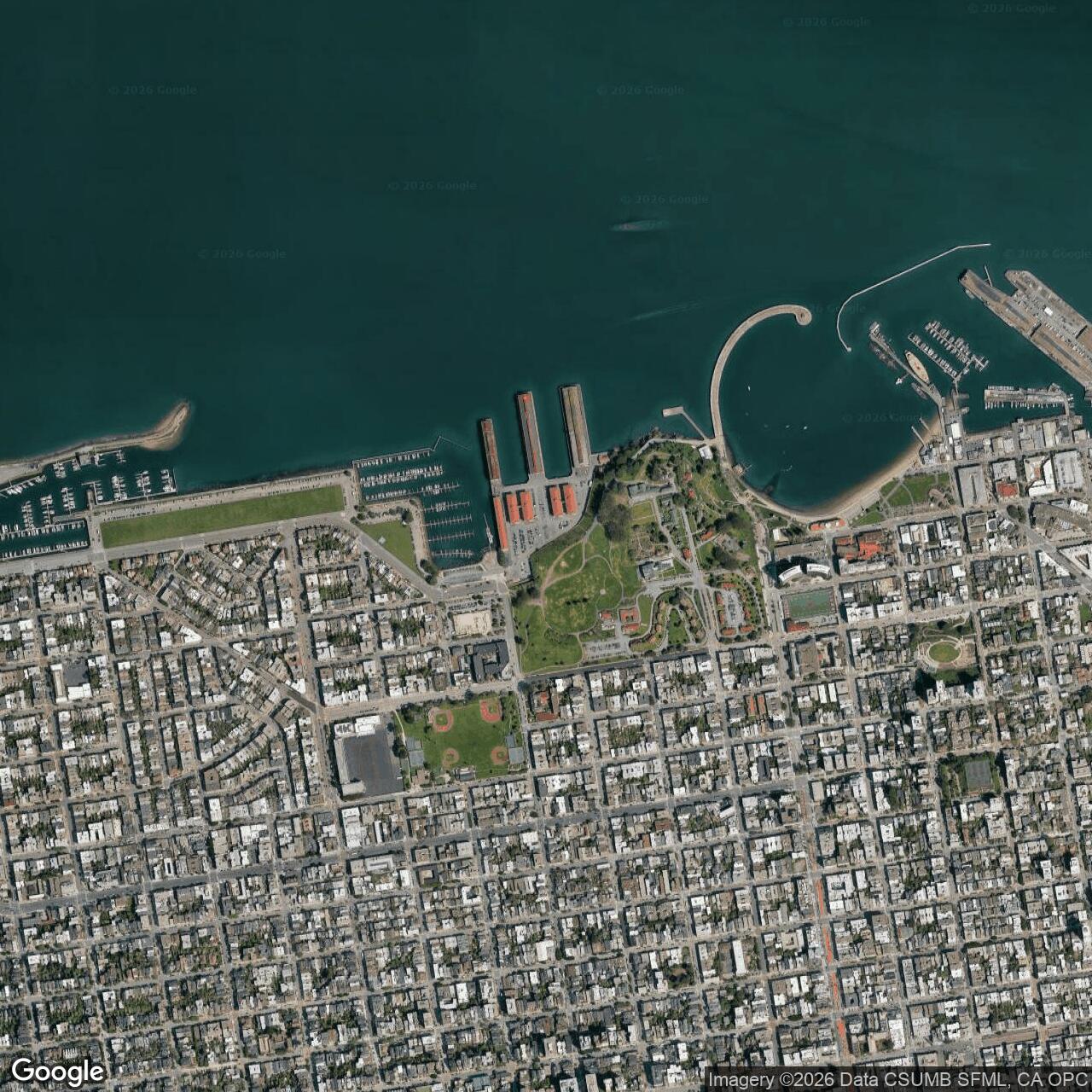
Fort Mason Army Base, San Francisco California
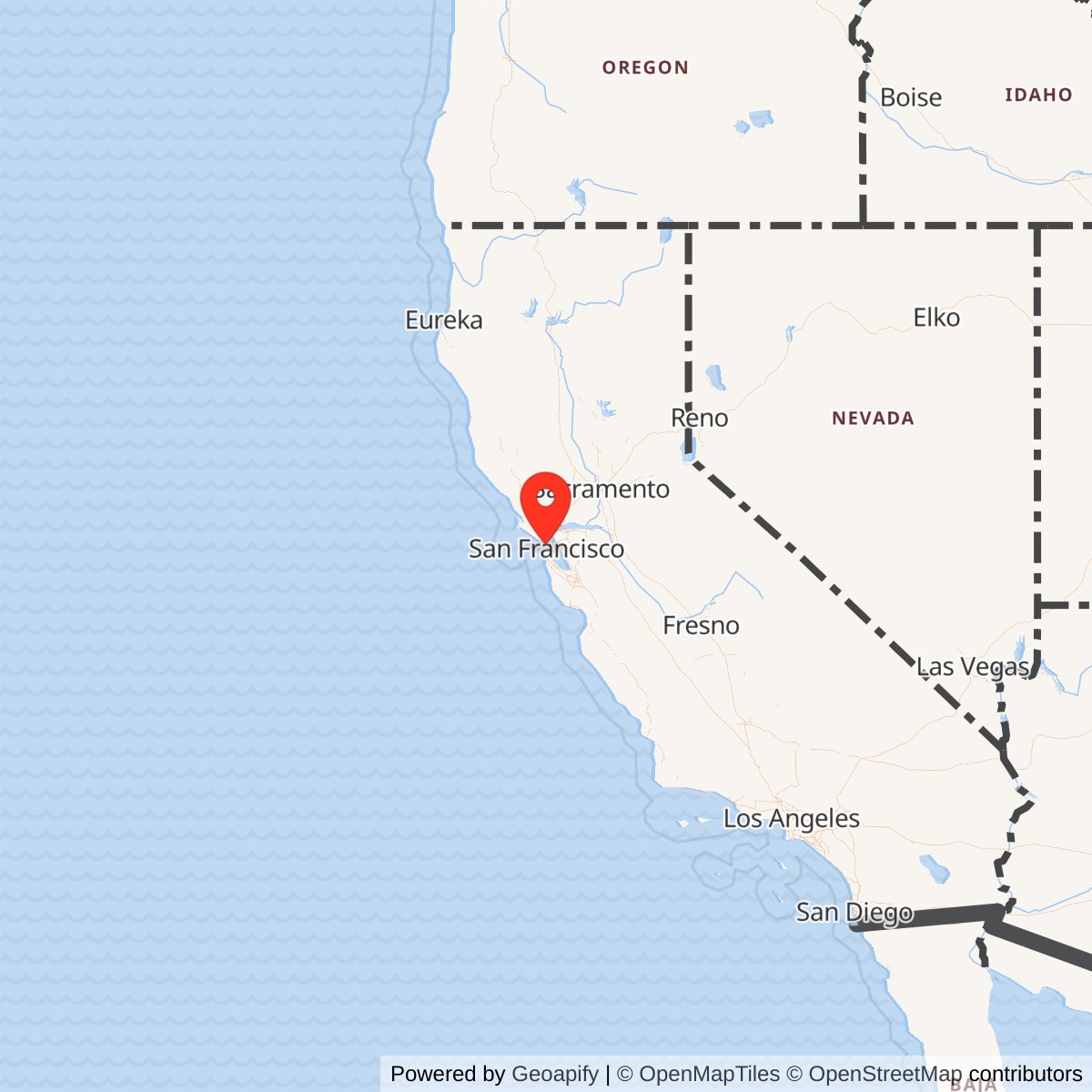
Longitude: -122.431
Official Base Website: https://www.nps.gov/goga/planyourvisit/fort-mason.htm
Current Role: Golden Gate National Recreation Area; NPS headquarters; Fort Mason Center for Arts & Culture; public park, cultural center, historic district, offices, event and nonprofit space
Fort Mason was a U.S. Army harbor-defense, headquarters, transportation, port, and logistics installation on San Francisco Bay. It began as the United States Military Reservation at Point San Jose, a federally reserved bluff chosen to control the water passage between the mainland and Alcatraz and to protect San Francisco after the Gold Rush made the city one of the most valuable ports in the United States. The Army reservation was created in 1851, although the Army did not immediately occupy it with a built garrison. In the 1850s the site was better known locally as Black Point, a civilian enclave on land the War Department had reserved but not yet fully taken back. The Civil War changed that. Federal authorities evicted the civilian residents, reoccupied the bluff, built a small military post around a parade ground, and strengthened the point as part of the harbor-defense system protecting gold shipments, commercial shipping, and the Union hold on California.
The name Fort Mason dates to 1882, when the post was renamed for Colonel Richard Barnes Mason, the second military governor of California. The name, however, covers several layers that have to be separated for an accurate status statement. Upper Fort Mason was the old bluff-top Army post, including the parade ground, officers' quarters, post hospital, headquarters, and surviving Civil War and later Army landscape. Lower Fort Mason was the early twentieth-century waterfront logistics plant created for the Army Transport Service and later the San Francisco Port of Embarkation. The Army port mission made Fort Mason one of the most important logistics sites on the Pacific Coast. Army transport facilities were completed by 1915; the San Francisco Port of Embarkation command was created in 1932; and during World War II the port handled nearly 1.65 million passengers and about 23.6 million measured tons of cargo moving into the Pacific.
Fort Mason is no longer an active Army installation. The port and Army transportation functions ended in stages during the early 1960s, and the Fort Mason landscape was transferred into the Golden Gate National Recreation Area after Congress created that urban national park in 1972. Upper Fort Mason contains Golden Gate NRA headquarters, park partner offices, open space, historic quarters, and the Great Meadow. Lower Fort Mason is Fort Mason Center for Arts & Culture, an adaptive-reuse complex housed in the former Army piers and warehouses.
The site mattered because San Francisco mattered. In the nineteenth century the Army needed to protect the Gold Rush port, the federal revenue and specie moving out of California, and the anchorage inside the Golden Gate. In the twentieth century the Army needed a transportation gateway to the Pacific. Fort Mason's strategic meaning therefore changed from guarding ships to loading them. Its guns never became the great Endicott concrete batteries that defined nearby Fort Winfield Scott, Fort Baker, Fort Barry, Fort Miley, and Fort Funston, but the post became just as important in another way: it was the Army's administrative and physical gateway between the continental United States and Hawaii, Alaska, the Philippines, China, the Southwest Pacific, and later occupied Japan and Korea. Fort Mason's story is the story of San Francisco becoming first a defended Gold Rush harbor and then a military logistics capital of the Pacific.
Mission Evolution
Fort Mason's first military layer preceded the United States Army. Spanish authorities recognized the military value of the bluff in the late eighteenth century. In 1797 the Spanish built Bateria de Yerba Buena, also associated with the Black Point / Point San Jose promontory, mounting five eight-pounder guns to support the defense of the Yerba Buena anchorage. The battery was part of the Spanish and later Mexican recognition that the north-facing waterfront of the San Francisco peninsula could help control traffic inside the bay. This early battery did not create a permanent continuous garrison in the later U.S. Army sense, but it established the site's fundamental military logic: the bluff gave observers and gunners a commanding view of the cove, the Alcatraz passage, and the inner harbor.
The United States acquired California after the Mexican-American War and soon found itself responsible for a city transformed by gold. The Gold Rush changed the strategic calculation almost overnight. Ships carrying gold, passengers, supplies, and federal interests moved through the Golden Gate, and San Francisco's growth created a new need for permanent coastal defense. In 1851 the U.S. Army established the bluff as a military reservation and designated it Point San Jose. At first the reservation remained underdeveloped, which allowed civilian houses to appear on the military land. The Black Point neighborhood became a small enclave of prominent civilians, including Jessie Benton Fremont and John C. Fremont, and it developed an antislavery political reputation before the Civil War.
Civil War emergency brought the Army mission into active form. Federal commanders worried that Confederate raiders, privateers, or sympathizers could threaten California commerce and gold shipments. The Army reasserted control over the reservation, removed civilian occupants, and built Point San Jose as a small Army post. The post was organized around a rectangular parade ground, with headquarters, barracks, hospital, mess, and support buildings forming a compact military town on the bluff. The Black Point homes, rather than disappearing completely, were incorporated into the military landscape as officers' quarters. In 1864 the Army strengthened the harbor-defense works at Point San Jose with additional guns. The mission at this stage was defensive and political: hold federal property, protect the harbor, reassure Union authority in California, and integrate the point into the wider San Francisco Bay defense network that included Fort Point, Alcatraz, Angel Island, and other temporary or permanent works.
After the Civil War, Fort Mason became less a front-line gun position and more a headquarters and administrative post within a growing Bay Area military system. Its location inside San Francisco made it convenient for staff work, inspections, administrative command, and communication with civilian agencies and shipping. The 1882 renaming as Fort Mason gave the post its enduring identity, but by the late nineteenth century the Army's harbor-defense technology was shifting elsewhere. The Endicott and Taft eras produced large concrete batteries at the Presidio, Marin Headlands, Fort Miley, and later Fort Funston. Fort Mason did not become the principal heavy-gun post in that network. Instead, its strongest twentieth-century value came from its waterfront.
The Spanish-American War and Philippine-American War revealed that the United States had become a Pacific power. The Army needed a reliable West Coast transport system to move troops, animals, ammunition, food, medical supplies, clothing, vehicles, communications equipment, and construction materials to Hawaii, the Philippines, Alaska, and other Pacific stations. At first the Army used leased or privately owned docks and warehouses along the San Francisco waterfront. The 1906 earthquake and fire exposed the vulnerability of relying on scattered private waterfront facilities. San Francisco needed relief; the Army needed a more reliable depot. Fort Mason answered both needs because the bluff overlooked a sheltered waterfront cove close to rail and city infrastructure.
The Army's transportation mission transformed the post after 1910. Construction began on a new general depot and transport facility at Lower Fort Mason. The work included seawalls, filled land, three long piers, pier sheds, warehouses, and a railroad tunnel under the bluff that connected the port to the State Belt Railroad. The port facilities were largely completed by 1915 and were designed around speed and controlled flow: rail cars and trucks could move supplies into warehouses and pier sheds, ships could berth alongside the piers, and cargo could be moved directly from storage to vessel. Fort Mason had changed from a harbor-defense post with a small garrison into a logistical machine for Pacific operations.
World War I gave the transport plant its first major global-war test, although the Pacific theater was not the main American battlefield in that conflict. The port still supported Army transport functions, Pacific garrisons, and broader military movement, and the Army continued to refine the Fort Mason shipping system. The interwar period made the transformation permanent. In 1932 the Fort Mason General Depot was renamed the San Francisco Port of Embarkation, reflecting a command structure responsible for moving people and material through the Pacific gateway. Fort Mason became a headquarters and operating plant rather than simply a waterfront depot.
World War II was Fort Mason's peak. After Pearl Harbor, the United States had to supply simultaneous campaigns across a vast ocean. The San Francisco Port of Embarkation became the nerve center of a Bay Area logistics network that included Fort Mason, Oakland Army Base / Oakland Army Terminal, the San Francisco Embarcadero, Alameda piers, Benicia facilities, Richmond, Stockton, Humboldt Bay, staging camps, railheads, warehouses, hospitals, administrative offices, and multiple support installations. Fort Mason itself could not handle the entire wartime requirement, but it controlled and coordinated much of the system. During the 45 months of war, the San Francisco Port of Embarkation moved 1,647,174 passengers and 23,589,472 measured tons of cargo into the Pacific, representing roughly two-thirds of Army troops sent into the Pacific and more than half of Army cargo moved through West Coast ports. Those numbers make Fort Mason one of the essential Army logistics installations of the Pacific War.
After World War II, the mission did not simply end. The port supported occupation forces in Japan, American garrisons in the Pacific, and the Korean War. Troops returning through San Francisco remembered passing under the Golden Gate Bridge and reaching Fort Mason as a powerful symbol of homecoming. In 1955 the San Francisco Port of Embarkation system was reorganized into the U.S. Army Transportation Terminal Command, Pacific. But transportation technology, containerization, changing military port requirements, and the growth of larger facilities across the bay reduced Fort Mason's practical value. By the early 1960s, embarkation operations at Fort Mason had ceased, and headquarters and terminal functions shifted elsewhere, especially toward Oakland. The post entered a surplus and adaptive-reuse period that ended with its inclusion in Golden Gate National Recreation Area.
Operational Role
Fort Mason's operational history has two distinct halves. In the first, it was a small defensive and administrative Army post on a bluff. In the second, it was the Army's Pacific shipping gateway. The first role was geographically obvious. From Upper Fort Mason, soldiers could look across the bay toward Alcatraz and the Golden Gate. The bluff controlled the inner passage and overlooked a small cove, making it a useful observation and artillery location. The Civil War battery at Point San Jose was part of a broader layered defense that sought to prevent an enemy vessel from entering or threatening San Francisco Bay. The post's guns were not fired in battle, but their purpose was deterrence, control, and assurance. In a city whose economy and political loyalty mattered to the Union, a federal post on Black Point was also a visible sign of federal authority.
The daily operations of the nineteenth-century post were those of a small Army community. Soldiers drilled on the parade ground, maintained barracks, guarded federal property, supported artillery positions, kept hospital and administrative functions, and interacted with the larger San Francisco military district. Officers lived in adapted Black Point houses and later Army quarters. The post hospital, headquarters, and barracks formed the core of the self-contained military town. That town was small compared with later Fort Mason, but it established the landscape whose buildings and open space still define Upper Fort Mason.
The 1906 earthquake temporarily changed Fort Mason's operating role from military post to civic command and relief center. On April 18, 1906, the earthquake and fires devastated San Francisco. City government turned to the Army, and Brigadier General Frederick Funston established a command post at the Fort Mason commanding officer's residence. The post served as a temporary city hall, and its grounds housed earthquake refugees. Soldiers provided food, water, shelter, security, and emergency support to displaced civilians. Fort Mason's role in 1906 mattered because it showed how an Army post inside a major city could become a civil-relief command center before modern emergency-management institutions existed.
The transport mission changed the meaning of operations. Lower Fort Mason had to handle the physical movement of cargo and passengers under time pressure. Ships could not wait idly; railcars had to be unloaded; perishable supplies had to move into ship refrigeration; ammunition and other hazardous goods needed safe handling; troops had to be processed, staged, manifested, and boarded; and military families, civilian employees, animals, vehicles, and special equipment required separate procedures. The Army designed the port so that trains and trucks could feed cargo directly into warehouses and pier sheds, while vessels tied up beside the piers and took on loads in sequence. The value of the plant lay in flow. A delay in one part of the system could stall cargo lines, waste food, occupy berths, and disrupt schedules across the Pacific.
During World War II the operational scale became immense. Fort Mason managed a network rather than a single pier complex. Its headquarters directed traffic through multiple Bay Area facilities and, at times, exercised jurisdiction over other West Coast ports such as Los Angeles, Portland, and Seattle. Staging camps such as Camp Stoneman, rail lines, troop movement offices, port battalions, civilian longshore labor, warehouse crews, quartermaster specialists, transportation officers, medical inspectors, military police, clerks, signal personnel, and harbor craft all belonged to the system. Fort Mason's lower piers were only the most visible part of a larger transportation architecture. Its upper headquarters and surrounding temporary buildings housed the command and administrative machinery that made the movement possible.
The port's work supported both of the great Pacific commands. Cargo and troops went to General Douglas MacArthur's Southwest Pacific Area and Admiral Chester Nimitz's Pacific Ocean Areas. Ships loaded through San Francisco sustained island campaigns, the buildup in Australia and New Guinea, operations in the Central Pacific, and later the occupation and demobilization missions. The movement of nearly 1.65 million soldiers and more than 23.5 million measured tons of cargo from the San Francisco Port of Embarkation demonstrates that Fort Mason's operational significance cannot be measured by battles fought on its ground. Its battlefield was the supply line. Every crate, vehicle, weapon, ration, medical package, communications item, and soldier that moved through the port helped determine whether American forces could fight thousands of miles from the continent.
Fort Mason also processed emotion and human experience. Departing soldiers saw San Francisco and the Golden Gate as the last visible edge of home. Returning troops saw the same waterway as arrival, survival, and reunion. Army transport ships, bands on the pier, fog lifting from the Golden Gate, families waiting, and soldiers on deck all became part of the human geography of Fort Mason. That experience gave the port a meaning beyond tonnage. It was a threshold between home front and combat theater.
Units, Organizations, and Systems
Fort Mason's organization changed with its mission. In the Civil War and late nineteenth century, the post belonged to the Army's San Francisco harbor-defense and departmental system. It was not usually the most heavily armed post, but it was a component of the defensive ring that included Alcatraz, Fort Point, the Presidio, Angel Island, and later Endicott-era defenses on both sides of the Golden Gate. The post's small garrison, artillery detachments, hospital staff, headquarters personnel, and support workers made it a working Army station rather than just a battery site.
The Army Transport Service was the institution that changed Fort Mason's trajectory. After the Spanish-American War, the Army needed regular transport to overseas possessions and garrisons. Fort Mason's lower waterfront became a general depot and transport facility for that service. Supplies for soldiers stationed in the Pacific included food, uniforms, medical materials, office supplies, ammunition, vehicles, communications equipment, and animals. This made Fort Mason part of the Quartermaster and transportation system that connected continental production to overseas garrisons.
The San Francisco Port of Embarkation, formally named in 1932, was the major command associated with Fort Mason. Its headquarters at Fort Mason gave the post responsibility for a complex movement system. The port's wartime network included subordinate and associated terminals, warehouses, staging areas, piers, rail connections, and support installations around San Francisco Bay and beyond. Oakland Army Base became the largest and most important expansion site during World War II, but Fort Mason remained the historic headquarters and symbolic center of the port organization. Port staff managed ships, cargo priorities, unit movements, storage, berthing, labor, documentation, and coordination with higher headquarters and Pacific theater requirements.
During the Korean War and early Cold War, the port organization evolved but retained the transportation mission. The 1955 renaming to U.S. Army Transportation Terminal Command, Pacific, reflected the broader postwar Transportation Corps system. The command supported garrisons, occupation forces, and war requirements in the Pacific. Fort Mason remained tied to troop and cargo movement until those functions shifted to larger or more modern facilities.
The National Park Service and Fort Mason Foundation / Fort Mason Center represent the site's post-Army institutional system. Golden Gate National Recreation Area was created in 1972, and Fort Mason became part of a new kind of urban national park made up largely of former military lands and waterfront landscapes. In 1976 the Fort Mason Foundation was created to guide the adaptive reuse of Lower Fort Mason's warehouses and piers as a cultural center. This was not a continuation of Army mission, but it preserved the Army-built industrial waterfront by giving it a civilian public use rather than demolishing it.
Facilities and Physical Layout
Fort Mason is best understood as two connected landscapes. Upper Fort Mason occupies the bluff at Black Point / Point San Jose. Lower Fort Mason occupies the waterfront below. The upper area contains the older Army post: parade ground, historic quarters, post hospital, headquarters spaces, open lawns, gardens, roads, and surviving military buildings. The lower area contains the early twentieth-century port: piers, pier sheds, warehouses, seawalls, rail infrastructure, and the industrial maritime spaces now associated with Fort Mason Center.
Upper Fort Mason's layout came from the Civil War reoccupation of the reservation. The Army organized the post like a compact military town around a rectangular parade ground. Barracks, headquarters, mess facilities, and hospital buildings were placed in relation to the parade ground, while the former Black Point civilian houses became officers' quarters. The setting was unusual because private homes built before Army reoccupation were absorbed into military use. Some of those structures survive, giving Upper Fort Mason a rare architectural connection between Gold Rush civilian San Francisco, Civil War Army occupation, and later federal preservation.
The post hospital building became especially important in the later life of the site. Built as part of the Army post landscape, it later became the headquarters building for Golden Gate National Recreation Area. Its reuse is emblematic of Fort Mason's post-military transformation. Instead of erasing the Army landscape, the National Park Service adapted it to administer an urban park whose history included the Army itself.
Lower Fort Mason was built for industrial efficiency. The Army created filled land, seawalls, three long piers, warehouses, and sheds in Mission Revival style. A railroad tunnel under Fort Mason connected the port to San Francisco's rail system, and tracks ran into the pier and warehouse area. This design allowed cargo to move by rail and truck into storage and then directly onto Army transport ships. The buildings were not decorative warehouses in a civilian waterfront sense. They were components of an Army logistics machine, designed to minimize delay and keep cargo moving to vessels.
During World War II the built environment expanded dramatically. Temporary wood-frame buildings spread across the Fort Mason post to support the port's administrative, personnel, and service needs. Barracks, office buildings, shops, cafeterias, recreation halls, a theater, post office, dry cleaners, hospitality centers, and other support spaces served the military and civilian workforce. Fort Mason at its wartime peak was crowded, complex, and industrial, with the older bluff-top post embedded inside a mass of temporary logistics infrastructure.
After transfer to the National Park Service, many temporary wartime buildings were removed, opening the Great Meadow and restoring more of Upper Fort Mason's bluff-top landscape. Lower Fort Mason's piers and warehouses survived through adaptive reuse. This split preservation outcome is important. Upper Fort Mason was simplified into park headquarters, historic buildings, and open space; Lower Fort Mason retained the large port structures because their scale and location could serve a new civic and cultural role.
Role in the Wider Military Network
Fort Mason only makes full sense as part of larger systems. In the Spanish period it was one point in the defense of the Yerba Buena anchorage. In the early American period it was one point in the defense of San Francisco Bay. During the Civil War it belonged to a network that included Fort Point, Alcatraz, Angel Island, and other batteries designed to protect the harbor from commerce raiders and hostile ships. Later, as Endicott-era batteries rose elsewhere, Fort Mason's role inside the defensive system declined relative to the Presidio and Marin Headlands, but its administrative and logistical value increased.
In the Pacific-imperial era after 1898, Fort Mason became part of the Army's overseas supply system. Hawaii, the Philippines, Alaska, and Pacific island outposts required regular movement of men and material. San Francisco was the natural gateway because of its harbor, rail connections, industrial base, and position on the Pacific coast. Fort Mason's lower depot turned that geography into an operating system.
In World War II the system expanded beyond any single installation. Fort Mason headquarters coordinated a Bay Area port complex. Oakland Army Base provided larger transcontinental rail-linked terminal capacity. Camp Stoneman staged troops. The Embarcadero, Alameda, Benicia, Richmond, Stockton, and other sites supplied additional berths, warehouses, and specialized functions. Nearby shipyards, naval facilities, aircraft plants, and ordnance depots created a broader Bay Area home-front ecosystem. Fort Mason's value was not that it alone could carry the war. Its value was that it served as the command and historic core of the system that did.
The postwar system changed again. The Army's transportation command still needed Pacific terminals, but containerization, larger ships, changing cargo practices, and more spacious facilities favored Oakland and other sites. Fort Mason's piers and warehouses were physically constrained by the city, the bluff, and the waterfront. Once the Army no longer needed the old post for military transportation, the site's system role shifted to public land, preservation, and culture. It became part of Golden Gate National Recreation Area, a park system built around the reuse of former military lands at the Presidio, Fort Mason, Fort Baker, Fort Barry, Fort Cronkhite, Fort Funston, Fort Miley, and other Bay Area sites.
Closure, Transfer, and Current Status
Fort Mason's closure was gradual rather than a single gate-closing event. The World War II port did not close in 1946; that date is misleading for Fort Mason because Army transport activity continued after the war. The San Francisco Port of Embarkation supported postwar occupation, Pacific garrisons, and the Korean War. The port command was reorganized in 1955, and transport operations continued into the early 1960s. Lower Fort Mason's port functions ceased by 1963, and key Army transportation headquarters functions shifted away from the site.
By the late 1960s the Department of Defense no longer considered Fort Mason essential for military purposes. The political debate over Bay Area surplus military lands helped lead to the creation of Golden Gate National Recreation Area in 1972. Congressman Phillip Burton played a leading role in turning former military landscapes into an urban national park. Fort Mason became part of that new park, and the park headquarters occupied the former Army hospital building. Lower Fort Mason's old piers and warehouses became the basis for Fort Mason Center, established through the Fort Mason Foundation in 1976 as a cultural, educational, and arts complex.
Fort Mason today is a preserved former Army installation, not an active Army post. Upper Fort Mason includes park headquarters, offices, historic residences, lawns, pathways, the Great Meadow, and views of the Golden Gate and San Francisco Bay. Lower Fort Mason is a public cultural center that houses arts, nonprofit, food, event, educational, environmental, and community uses in the former Army port buildings. The site is administered within Golden Gate National Recreation Area and is connected to the Golden Gate National Parks Conservancy and other park partners. Fort Mason's current public life is therefore inseparable from its military past: the buildings and landscape that once moved troops and cargo to the Pacific now host civic and cultural activity.
Historic designation reinforces that status. Fort Mason was listed in the National Register of Historic Places in 1972, and the San Francisco Port of Embarkation / Lower Fort Mason was designated a National Historic Landmark in 1985 because of its central role in World War II logistics. The landmark recognition is important because it identifies logistics infrastructure as nationally significant, not merely decorative or local. The warehouses, piers, rail tunnel, headquarters building, and port landscape are evidence of how the United States projected military power across the Pacific.
National Park Service, "Fort Mason"
National Park Service, "Fort Mason" visitor page
National Park Service, "The San Francisco Port of Embarkation"
National Park Service, "Supporting the Pacific"
National Park Service, "Civil War at Fort Mason"
National Park Service, "Now and Then: Fort Mason"
Chronology
- 1797 Spanish authorities built Bateria de Yerba Buena / Bateria San Jose on the Black Point / Point San Jose promontory with five eight-pounder guns to help protect the Yerba Buena anchorage.
- 1846 The United States took control of California during the Mexican-American War, setting the stage for later federal military reservation of the site.
- 1849 The Gold Rush transformed San Francisco from a small port into a rapidly growing city of national strategic and economic importance.
- 1851 The U.S. Army established the bluff as a United States military reservation and designated it Point San Jose.
- 1850s Civilian homes were built on the reserved but initially underdeveloped military land, creating the Black Point neighborhood.
- 1859 U.S. Senator David C. Broderick died at Leonides Haskell's Black Point home after his duel with David S. Terry, connecting the site to California's antislavery political history.
- 1861 The Civil War increased federal concern over the defense of San Francisco Bay and the security of California's gold and shipping.
- 1863 The Army reoccupied and controlled Black Point / Point San Jose as a military site during the Civil War period.
- 1864 The Army strengthened Point San Jose with additional guns as part of the Civil War harbor-defense network.
- 1882 The post was renamed Fort Mason in honor of Colonel Richard Barnes Mason, California's second military governor.
- 1898 The Spanish-American War and overseas operations in the Philippines and Pacific increased San Francisco's importance as an Army transport gateway.
- 1901 The Army surgeon general approved a new post hospital at Fort Mason; the building later became Golden Gate National Recreation Area headquarters.
- 1906-04-18 The San Francisco earthquake and fire struck the city; Fort Mason served as a temporary city hall, relief command post, and refugee shelter site under Army direction.
- 1910 Construction began on the Lower Fort Mason general depot, including piers, storehouses, seawalls, and rail connections.
- 1912 Fort Mason was already serving as headquarters for Army transport and embarkation functions as the new port plant developed.
- 1915 The Fort Mason transport facility, including three piers, warehouses, pier sheds, and the railroad tunnel connection, was completed.
- 1917-1918 During World War I, Fort Mason supported Army transport and Pacific logistics functions.
- 1932 The Fort Mason General Depot was renamed the San Francisco Port of Embarkation.
- 1939 As war approached, San Francisco Port of Embarkation personnel and civilian staffing expanded.
- 1941-12-07 The attack on Pearl Harbor immediately tested the San Francisco Port of Embarkation and forced rapid reassignment and movement of Pacific-bound troops and cargo.
- 1941-1944 The San Francisco Port of Embarkation at Fort Mason exercised broad jurisdiction over a wartime network that at times included Los Angeles, Portland, and Seattle port functions.
- 1942 World War II temporary buildings expanded across Fort Mason to support the port headquarters, administrative, service, and personnel needs.
- 1945-08 The port recorded its highest outbound monthly passenger count, with 93,986 outbound passengers loaded.
- 1941-1945 During the 45 months of war, the San Francisco Port of Embarkation moved 1,647,174 passengers and 23,589,472 measured tons of cargo into the Pacific.
- 1950-1953 The Korean War kept Army Pacific transportation functions active through the San Francisco port system.
- 1955 The San Francisco Port of Embarkation was reorganized into the U.S. Army Transportation Terminal Command, Pacific.
- 1963 Lower Fort Mason's Army port operations had ceased by the early 1960s, ending the site's active port-embarkation role.
- 1972 Golden Gate National Recreation Area was created, and Fort Mason entered the National Park Service preservation and public-use era; Fort Mason was also listed in the National Register of Historic Places.
- 1976 The Fort Mason Foundation was created to guide the adaptive reuse of Lower Fort Mason's piers and warehouses as a cultural center.
- 1978 A master plan for Upper Fort Mason helped convert former Army land and temporary-building areas into public open space, including the Great Meadow.
- 1985 The San Francisco Port of Embarkation / Lower Fort Mason was designated a National Historic Landmark for its World War II logistics significance.
- Present Fort Mason remains a closed and transferred former Army installation within Golden Gate National Recreation Area, with NPS headquarters at Upper Fort Mason and Fort Mason Center for Arts & Culture occupying the former Army port buildings at Lower Fort Mason.