Salinas Army Air Base, Salinas California
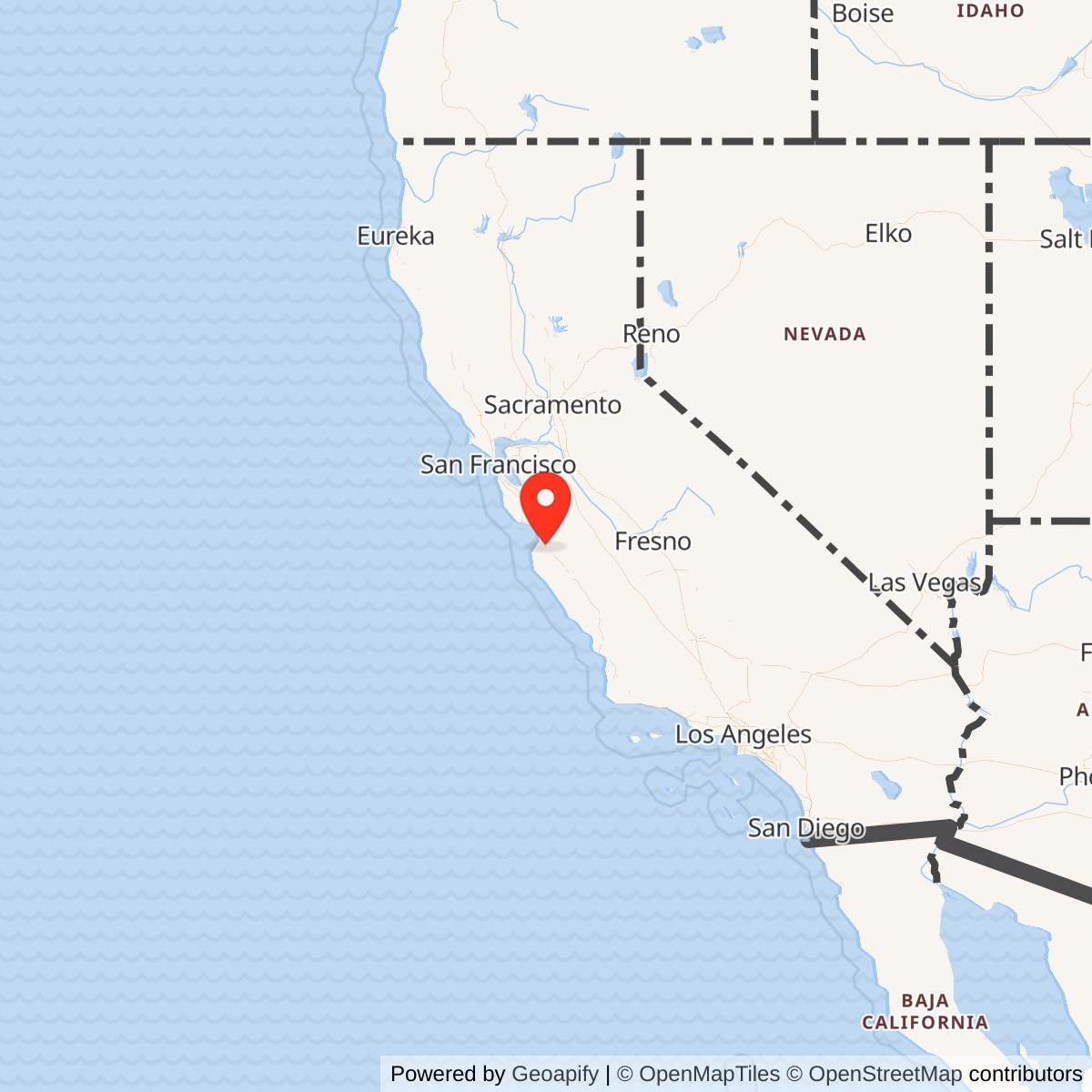
Longitude: -121.6071670
Airport ICAO ID: KSNS
Official Base Website: Salinas Municipal Airport
Current Role: Salinas Municipal Airport: active City of Salinas-owned public general-aviation and business-aviation airport with control tower, two runways, airshow, maintenance, and regional aviation services.
Salinas Army Air Base was a World War II Army Air Forces installation built into the agricultural edge of Salinas, California, where the Salinas Valley opens toward Monterey Bay and Fort Ord. Its location explains its military value. It stood close enough to Fort Ord to support Army ground-force training and coastal defense, close enough to the Pacific coast to participate in wartime patrol and observation work, and far enough inland to give the Army a usable aviation field with generally favorable Central Coast flying weather. The field later became Salinas Municipal Airport, but its wartime identity was not simply that of a civilian airport temporarily borrowed by the Army. It became a Fourth Air Force operating, processing, observation, fighter-replacement, night-fighter, and Air Transport Command support field whose missions changed several times between 1941 and 1945.
The installation should be understood as a wartime Army Air Forces field rather than a permanent post. It did not become a major postwar Air Force base, and it did not continue as a federal military installation after the war. Its military importance came from what it did during a short, crowded period: it gave the Army a working air base on the central California coast at the moment when the West Coast feared Japanese attack, when Fort Ord and other Army ground installations needed air-ground cooperation, and when the Army Air Forces needed more fields for observation, reconnaissance, fighter, and night-fighter training. Salinas moved from observation-aircraft work into P-38 Lightning replacement training, then into the Army Air Forces night-fighter training network for P-70 Havocs and P-61 Black Widows. That mission sequence makes it more specialized than a generic municipal-airport wartime lease.
Salinas Municipal Airport is now a City of Salinas-owned, tower-controlled public general-aviation airport serving business aviation, flight training, maintenance, airshow, and regional aviation needs. The present airport covers about 605 acres, has two principal asphalt runways and a helipad, and remains open to the public. The old Army Air Base name survives in historical records, local photographs, and the layout of a municipal airport that still carries a World War II military aviation foundation.
Mission Evolution
The Salinas aviation story began before the Army base. Salinas had an earlier municipal flying field, American Legion Airport, also known as Legion Field, before the present airport site took over the city's aviation role. The present airfield opened during the World War II buildup and was active in Army Air Forces use by late 1941 or 1942, depending on whether one emphasizes local construction and military occupancy or the later FAA-style airport activation date.
The first wartime mission was tied to observation and air support. California State Military Museum material on major Army Air Forces installations notes that Salinas became the base for observation squadrons after Moffett Field returned to Navy control. That was a critical shift. Observation aviation linked aircraft to ground-force operations: pilots and observers flew light aircraft to locate targets, watch movement, adjust artillery, photograph terrain, support field problems, and perform coastal or security patrol tasks. Salinas was especially well placed for this mission because Fort Ord, Hunter Liggett, Camp Roberts, the Monterey Bay coast, and the Salinas Valley all sat within practical operating distance.
The base's early Army Air Forces role also included processing. Later summaries identify Salinas as an incoming personnel processing center and as a field for reconnaissance and observation training. This made the air base both a flying field and an administrative node. Aviation units and personnel passed through Salinas while the Army Air Forces expanded faster than its permanent base structure could handle. The 301st Base Headquarters and Air Base Squadron is the key base-support organization listed for the field in California World War II Army airfield summaries. That sort of base unit handled the behind-the-scenes work that made training possible: administration, supply, communications, transportation, mess, quarters, maintenance coordination, security, and airfield operations.
The second major mission phase came when the field shifted toward fighter replacement training. In 1943 Salinas became associated with the 360th Fighter Group and P-38 Lightning replacement training under IV Fighter Command. The P-38 was a twin-engine, high-performance fighter used in long-range escort, interception, ground attack, and reconnaissance roles. Training replacement pilots on it required more than a runway. It required a base organization, maintenance skill, clear training airspace, instrument and communications support, and a regional network of other fields. Salinas therefore became part of the wider Fourth Air Force system that turned newly qualified or transitioning pilots into combat-ready fighter replacements.
The final major wartime phase was the night-fighter mission. In 1944 Salinas was used as an auxiliary field in the IV Fighter Command night-fighter training system centered at Hammer Field and connected to other San Joaquin Valley and Central Coast fields. The aircraft involved included modified Douglas A-20 Havocs designated P-70s and the Northrop P-61 Black Widow, the Army Air Forces' purpose-built night fighter. The 548th Night Fighter Squadron was established and activated in 1944 with Salinas as its initial station, and other night-fighter squadrons moved flights through Salinas during training. This made the base part of a specialized technological mission: training crews to fight at night using airborne radar, ground control, interception procedures, and new twin-engine aircraft designed for a very different type of air combat from daylight pursuit training.
The Army mission wound down in 1945. The night-fighter replacement-training role ended as overseas demands changed and the war approached its conclusion. Operations phased down to standby status, and the field was declared excess to military requirements and returned to civilian control. Its later history belongs primarily to the City of Salinas and to civilian aviation rather than to the federal military base system.
World War II Mission and Activity
Salinas Army Air Base functioned as a working wartime air station. Its daily activity would have included flight operations, aircraft maintenance, fueling, dispatch, weather and communications work, security, personnel processing, physical training, ground school, simulator or classroom instruction where applicable, mess and quarters operations, vehicle movement, and coordination with other Fourth Air Force fields. The base's importance lay in the cumulative value of these ordinary military routines. A wartime aviation base did not need a famous battle on its runway to matter. It mattered because aircraft, crews, maintainers, clerks, instructors, commanders, and trainees used it every day to prepare for combat elsewhere.
The observation phase was tied closely to the war emergency on the Pacific Coast. After Pearl Harbor, California's Army Air Forces fields supported continental defense, anti-submarine patrol, coastal observation, air-ground cooperation, and the training of new tactical aviation units. Observation groups at Salinas used light aircraft and liaison/reconnaissance types suited to visual reconnaissance and cooperation with ground forces. These aircraft were not glamorous compared with heavy bombers or advanced fighters, but they were crucial to the Army's combined-arms doctrine. They helped commanders see terrain, locate movement, practice artillery adjustment, and connect aviation with soldiers training on the ground.
The Fort Ord relationship was central. Fort Ord was one of the Army's major California training posts, and Salinas was close enough to serve as an aviation partner for ground training and movement across the central coast. Aerial observation and reconnaissance supported the sort of field exercises that large ground-force camps required. The Salinas field also had a natural coastal-defense logic. Aircraft operating from Salinas could patrol portions of the Monterey Bay and Central Coast approaches, watch for suspicious activity, and serve as part of the layered home-front defense system that the Army rapidly expanded in 1941 and 1942.
The Air Transport Command presence added another dimension. ATC used the field and operated an air-freight terminal for cargo transshipment. This cargo role is easy to overlook because Salinas is best remembered for observation and training, but it shows that the base also served the wartime logistics system. Even relatively small or regional airfields could become nodes in the movement of priority cargo, mail, equipment, and personnel. Air transport work connected Salinas to a national and international movement system that supported the global war effort.
The P-38 phase represented a different operational culture. P-38 replacement training was built around a fast, complex, twin-engine fighter that demanded careful transition and proficiency. The 360th Fighter Group trained replacement pilots at Salinas using the 371st, 372d, 373d, and 446th Fighter Squadrons as its operational squadrons. The field's role was to convert pilot skill into combat usability: take men who had advanced through other training channels, move them into a specific aircraft type, teach them tactics and handling, and send them onward to combat units or further staging. The field therefore sat between flying school and war zone.
The night-fighter phase made Salinas part of one of the most technically demanding Army Air Forces missions of the war. Night fighting required crews to combine flight discipline, radar interpretation, ground-control direction, crew coordination, radio procedure, and aircraft performance in darkness or poor visibility. The P-61 Black Widow and P-70 Havoc were not used like ordinary pursuit aircraft. Their crews had to find and intercept targets at night, often with the assistance of ground radar and airborne radar. Training such crews required specialized instructors, aircraft, maintenance, radar equipment, and airspace. Salinas helped supply that training environment.
The 548th Night Fighter Squadron gives Salinas a direct combat connection. The squadron's World War II lineage began as the 548th Night Fighter Squadron in 1944, and its first station was Salinas Army Air Base. After training, it deployed to the Pacific, where its P-61s supported air defense of B-29 bases and later operations from Iwo Jima, Saipan, and Okinawa. The battles were fought across the Pacific, not at Salinas, but the squadron's formation and initial training at Salinas tied the base to the Pacific night-fighter campaign and to the protection of the very-long-range bomber offensive against Japan.
The field also participated in the reorganization of Army Air Forces training in 1944. The Army Air Forces found that traditional numbered groups and squadrons were often poorly suited to the specialized, high-volume training mission, so many bases shifted to numbered Army Air Forces Base Units. Salinas became associated with the 451st Army Air Forces Base Unit in the night-fighter replacement-training system. This change is important because it shows the Army Air Forces adapting its organization to function rather than tradition. At Salinas, the mission mattered more than the prestige of a group designation: the field existed to generate trained replacements and support combat-bound aviation units.
Units, Organizations, and Systems
The 301st Base Headquarters and Air Base Squadron is the principal base-support unit associated with Salinas in California World War II Army airfield summaries. Base headquarters and air base squadrons were the practical backbone of wartime airfields. They provided the permanent support framework even as flying organizations arrived, trained, moved, or were reorganized. For Salinas, that meant maintaining continuity while observation groups, fighter units, night-fighter units, and transport functions used the installation.
The early observation and reconnaissance mission involved units such as the 69th Observation Group, 71st Observation Group, and 70th Observation Group or their successor reconnaissance designations in various summaries. Their presence connects Salinas to the Army Air Forces' prewar and early-war observation tradition, when aircraft were still often described in terms of support to ground commanders rather than independent air combat. These organizations used aircraft such as O-series observation planes and other light aircraft before broader reconnaissance and fighter training missions took over.
The 360th Fighter Group marks the P-38 replacement-training phase. Its squadrons, including the 371st, 372d, 373d, and 446th Fighter Squadrons, operated in the Fourth Air Force training system. The group did not make Salinas a permanent fighter base in the postwar sense; instead, it used the field as a training location in a rotating wartime pipeline. That distinction matters. Salinas was less a home station for a peacetime wing than a wartime training and replacement machine.
The 481st Night Fighter Operational Training Group and the 451st Army Air Forces Base Unit define the night-fighter phase. Salinas functioned as one of the fields used by this network rather than as the sole center of the mission. Hammer Field was the key center in the region, with Salinas and other fields used to disperse aircraft, training, and personnel. This networked structure allowed the Army Air Forces to teach a highly specialized mission while spreading flying activity across multiple airfields.
The 548th Night Fighter Squadron is the most distinctive unit tied to Salinas. The squadron was established in March 1944, activated in April 1944, and initially stationed at Salinas Army Air Base before moving through other training and deployment locations. Its later service in the Pacific gives Salinas a clear link to combat operations far beyond California. The squadron's origin at Salinas also demonstrates the base's role in forming new organizations, not merely hosting existing ones.
Air Transport Command is another major system presence. Its air-freight terminal at Salinas connected the base to wartime cargo movement. ATC missions generally get less attention than fighter or bomber training, but the movement of materiel was one of the Army Air Forces' decisive wartime functions. Even a moderate-sized California field could contribute to that system when placed at a useful road, rail, agricultural, and coastal location.
Facilities and Physical Layout
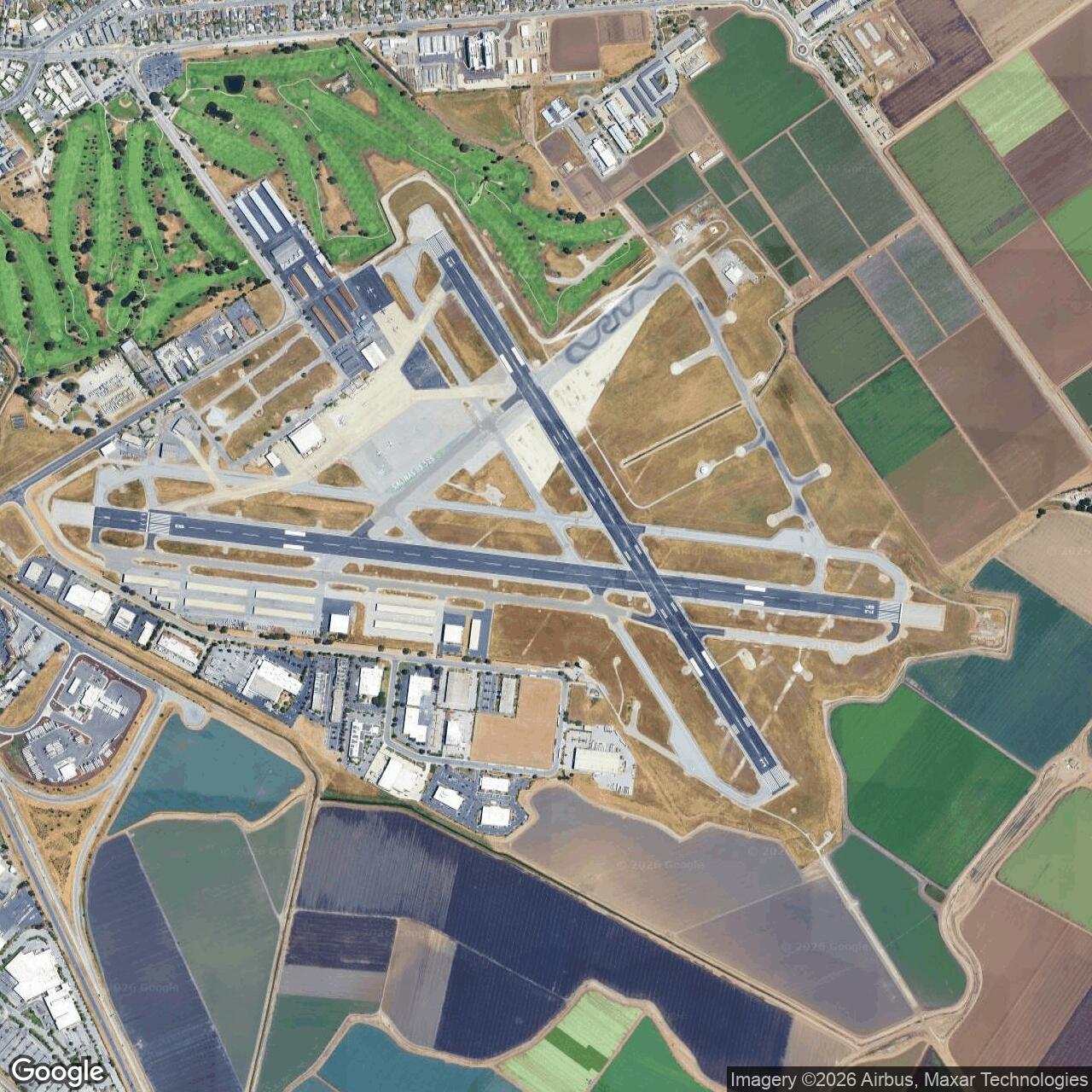
The wartime field lay southeast of Salinas on the site now occupied by Salinas Municipal Airport. The modern airport's general shape preserves the military airfield logic: long paved runways, taxiways, ramp and hangar areas, support buildings, approach zones, and open surrounding land. Current FAA/SkyVector data describes Salinas Municipal Airport as a 605-acre public airport with two asphalt runways, one helipad, a control tower, fuel, maintenance services, and public airport ownership by the City of Salinas. While the present airport has been rebuilt and modernized since the war, the basic aviation footprint remains a direct descendant of the Army Air Base.
The runway system reflects the field's continuing aviation utility. The modern airport has Runway 8/26 at about 6,004 by 150 feet and Runway 13/31 at about 4,825 by 150 feet. Those dimensions are modern current-airport figures rather than a precise wartime inventory, but they show why the site remained useful after the Army left. The field had enough land, orientation, and approach clearance to continue as a municipal airport rather than being subdivided completely after surplus disposal.
Wartime facilities would have included hangars, operations space, administration buildings, barracks or personnel quarters, mess and support facilities, maintenance areas, fuel storage, roads, ramps, and communications facilities. Calisphere and Salinas Public Library photographs show review and presentation scenes at the wartime base and images of personnel and command figures associated with the installation. Those images are important because the wartime built environment has been substantially altered by later airport development; photographs preserve the human and physical scale of the Army base in a way that the modern airfield cannot fully convey.
Role in the Wider Military Network
Salinas Army Air Base belonged to several overlapping wartime networks. First, it was part of the California Army Air Forces buildout. California was favored for Army aviation because of its weather, open land, industry, coast-defense requirements, and proximity to Pacific deployment routes. California State Military Museum material emphasizes that most wartime California airfields were multipurpose and that the Army Air Forces used municipal airfields extensively after Pearl Harbor. Salinas fits that pattern exactly: it was a municipal/civil aviation site transformed into an Army Air Forces field serving defense, training, processing, and transport functions.
Second, Salinas was part of the Fourth Air Force tactical and replacement-training network. Fourth Air Force was responsible for West Coast defense and for training tactical aviation units before overseas deployment. Salinas supported observation and reconnaissance work, then fighter and night-fighter training. The field's role changed because the Army Air Forces' needs changed. In 1941 and 1942, the emergency was observation, coastal defense, and air-ground support. By 1943 and 1944, the urgent need was trained replacement pilots and specialized night-fighter crews.
Third, Salinas was part of the Fort Ord and Central Coast training environment. Fort Ord, Hunter Liggett, Camp Roberts, and other regional Army installations made the central California coast a major training landscape. Salinas provided aviation support within that landscape. Observation aircraft could work with ground troops; transport and personnel functions could support movement; and the air base could draw on the infrastructure, labor, roads, and rail access of a growing wartime region.
Fourth, Salinas belonged to the night-fighter training system connected to Hammer Field and other California airfields. The night-fighter mission was inherently networked because it required specialized aircraft, instructors, radar and communications training, and multiple fields for dispersed operations. Salinas was not the only night-fighter field, but its participation in the P-70/P-61 training network gives it a strong place in the evolution of American night air defense during World War II.
Finally, the base connects to the Pacific war through the units it trained and helped form. The 548th Night Fighter Squadron moved from Salinas into a Pacific combat path tied to the defense of B-29 operating bases and operations over Saipan, Iwo Jima, and Okinawa. This is the key historical bridge between a California airport and the combat theater. Salinas did not fight the Pacific war directly, but the crews and units that passed through it did.
Closure, Transfer, and Current Status
By 1945 the wartime training demand was falling. The 451st Army Air Forces Base Unit concluded its replacement-pilot training role in May 1945, and operations at the field were phased down. With the end of World War II, Salinas Army Air Base was declared excess to military needs and returned to civil control. The older Legion Field aviation site closed shortly after the present airport returned to civilian operation, leaving the former Army airfield as the enduring Salinas aviation site.
The airport did not become a major postwar Air Force base. That is an important distinction from places such as Mather, Travis, March, McClellan, Norton, or Beale, where Army Air Forces or Army facilities transitioned into longer Cold War Air Force careers. Salinas instead returned to the municipal airport system. Its military period was brief but intense, and its postwar meaning became local and regional rather than federal military.
Today Salinas Municipal Airport is an active public airport owned by the City of Salinas. The City describes it as a leading business-aviation destination on the California Central Coast, with all-weather landing and navigation systems, restaurant and meeting amenities, airframe and powerplant services, refinishing services, uncongested airspace, and room for expansion. The airport handles roughly 80,000 annual flight operations in the City's current public description and remains a significant general-aviation facility for the Salinas Valley and Monterey Bay region.
Chronology
- 1928 Salinas established an earlier local airport known as Salinas American Legion Airport or Legion Field.
- 1938 Local histories and later secondary summaries indicate that the City of Salinas acquired land for a larger municipal airport site southeast of the city before World War II.
- 1941 The present airfield entered the Army Air Forces buildup period, with Salinas used as a wartime Army airfield by late 1941 in several historical summaries.
- 1941-10 The 69th Observation Group was associated with Salinas during the early observation-aircraft phase after Moffett Field returned to Navy control.
- 1941-12 After Pearl Harbor, Salinas became part of the West Coast air-defense and training network during the emergency mobilization period.
- 1942-06 Current FAA/SkyVector airport data lists June 1942 as the activation date for Salinas Municipal Airport; this is the safest date for a modern airport-record activation entry, while the military origin belongs to the 1941-1942 wartime buildout.
- 1942 Salinas supported observation, reconnaissance, and air-ground training activity related to Fort Ord and the Central Coast training environment.
- 1942 The field was also used by Air Transport Command, including an air-freight terminal for cargo transshipment.
- 1943 Salinas became associated with IV Fighter Command fighter replacement training, including P-38 Lightning work by the 360th Fighter Group and its squadrons.
- 1944-01 As night-fighter training shifted in California, Salinas became part of the night-fighter training network associated with Hammer Field and the 481st Night Fighter Operational Training Group.
- 1944-02-13 Salinas Public Library / Calisphere photographs document review and presentation activity at Salinas Army Air Base.
- 1944-03-23 The 548th Night Fighter Squadron was constituted.
- 1944-04-10 The 548th Night Fighter Squadron activated at Salinas Army Air Base.
- 1944-06 The 548th Night Fighter Squadron moved from Salinas to Delano Army Air Field for continued training.
- 1944-12 The 481st Night Fighter Operational Training Group was inactivated as the Army Air Forces reorganized its training structure.
- 1944-1945 The 451st Army Air Forces Base Unit carried forward night-fighter replacement-training functions in the regional training network.
- 1945-05 The 451st Army Air Forces Base Unit concluded replacement-pilot training, and Salinas operations began phasing down.
- 1945 With World War II ending, Salinas Army Air Base was declared excess to military requirements and returned to civil control.
- Post-1945 The former Army field became Salinas Municipal Airport, while the earlier Legion Field closed.
- 1962 United Airlines ended daily Convair service at Salinas according to later airport histories.
- 1981 Scheduled commercial service ended after commuter airline service ceased, leaving Salinas primarily in the general-aviation and business-aviation role.
- Present Salinas Municipal Airport remains an active City of Salinas-owned public airport of about 605 acres and is no longer an Army installation.