Charleston Arsenal, Charleston South Carolina
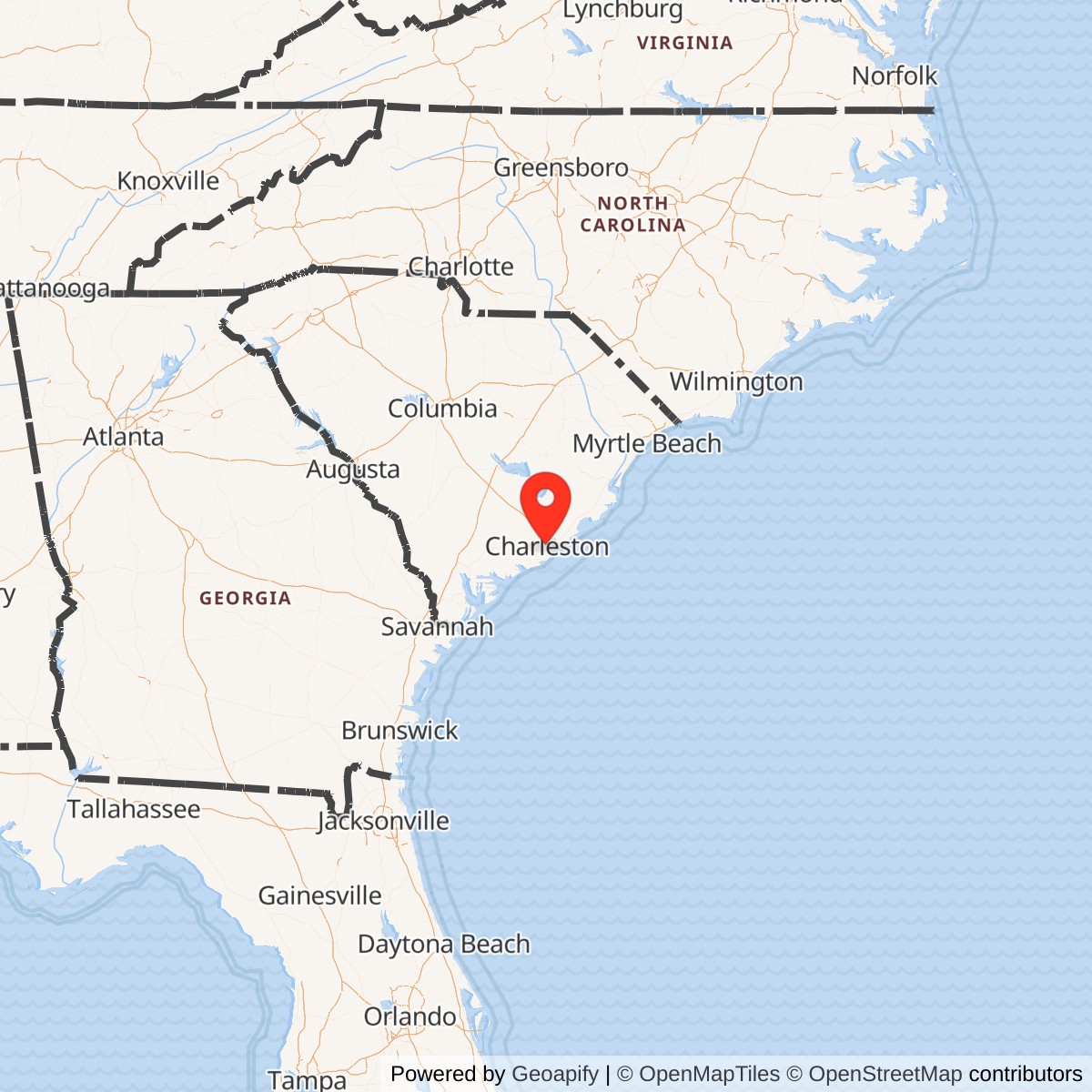
Longitude: -79.94778
Official Base Website: https://www.nps.gov/places/porter-military-academy.htm
Current Role: Medical University of South Carolina campus historic landscape; St. Luke's Chapel survives as the former arsenal artillery shed converted to chapel use; site is not an active Army installation.
Charleston Arsenal was a nineteenth-century United States Army arsenal on the Charleston peninsula, built to store and manage federal small arms, ammunition, ordnance, and field-artillery equipment in one of the most politically sensitive and strategically exposed harbor cities in the United States. Its footprint was small compared with the great coastal forts in Charleston Harbor, but its military value was out of proportion to its size. Fort Moultrie and Fort Sumter guarded channels and approaches. Castle Pinckney sat inside the harbor. Charleston Arsenal held the weapons, fixed ammunition, and ordnance material that could sustain troops, militia, and field forces ashore.
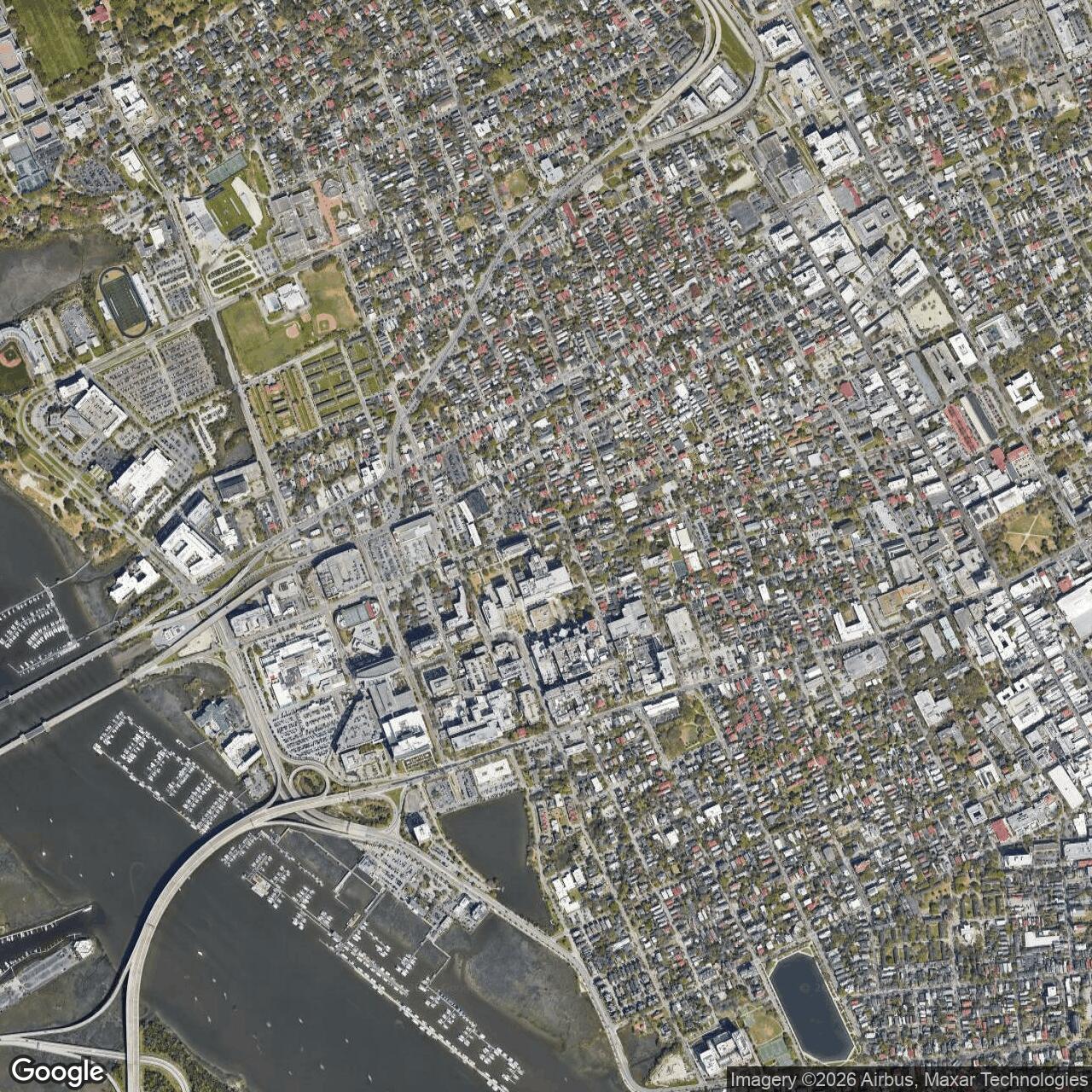
The site occupied land near Ashley Avenue and what was historically Mill Street, west of the older commercial core of Charleston and close enough to the harbor defenses to support them, but inland enough to function as a secure storage and work yard. The federal government acquired the land in 1825, and the arsenal was built between 1825 and 1832. That origin distinguishes Charleston Arsenal from the better-known South Carolina State Arsenal, also called the Old Citadel, at Marion Square. The Old Citadel was a state arsenal and later the Citadel Academy. Charleston Arsenal was a federal U.S. Army arsenal. It therefore belongs in the U.S. Army installation record as a distinct federal ordnance reservation, not as a duplicate of The Citadel or the state arsenal.
The arsenal's career falls into four main phases. First, it served the antebellum Army as a federal ordnance depot in Charleston, supplying and storing military property in a harbor city whose defenses were part of the national coastal-defense system. Second, during the sectional crisis of 1860, it became one of the first federal military properties seized by South Carolina forces after secession. Third, during the Civil War, Confederate forces used the former federal arsenal for weapons and munitions storage and manufacturing, including foundry work. Fourth, after the fall of Charleston in 1865, federal troops reoccupied the property and kept it in military use through Reconstruction until 1879, when the arsenal ceased to function as a military installation.
Charleston Arsenal was later adapted into an educational and medical-campus landscape. Reverend Anthony Toomer Porter obtained the former arsenal for the school that became Porter Military Academy. The school converted existing military buildings to educational use, and in 1883 Porter converted the old artillery shed into St. Luke's Chapel. The Medical University of South Carolina acquired the property in the 1960s, and most arsenal-era structures have disappeared. The surviving built legacy is still important, especially St. Luke's Chapel, whose fabric preserves the story of a U.S. Army artillery and ordnance building converted to civilian religious and ceremonial use.
Mission Evolution
The arsenal's original mission was ordnance storage and support. The War Department needed secure federal facilities where arms, ammunition, gun carriages, artillery equipment, and related military stores could be held outside the immediate walls of a coastal fort. Charleston was an obvious location for such a facility. It was a major Atlantic port, a commercial center, and a military harbor whose defenses required federal coordination. In peacetime, an arsenal protected federal property and allowed the Army to maintain equipment for coastal defense, militia support, and emergency mobilization. In wartime or crisis, that same storage function could become politically explosive, because whoever controlled the arsenal controlled access to a local reserve of arms and ammunition.
During the antebellum decades, the arsenal's mission was tied to the U.S. Army Ordnance Department and to the Charleston harbor-defense network. It was not a line fort and did not exist to fire on enemy ships. Its role was to hold and distribute ordnance. MUSC's Waring Historical Library describes the arsenal as a U.S. Government facility built between 1825 and 1832 that stored small arms and ammunition and included gun-carriage equipment for field artillery. That phrasing is important because it identifies the installation as a supply and technical node rather than a combat post. The arsenal supported military readiness by preserving physical stores, maintaining controlled custody, and making ammunition available when ordered.
The Mexican-American War and the pre-Civil War period gave the arsenal added importance. Charleston was not a Mexican War battlefield, but federal arsenals across the country were part of the system that manufactured, stored, and issued arms and ammunition for national war needs. Later accounts of the Charleston Arsenal state that it produced or handled substantial amounts of artillery and small-arms ammunition in the Mexican War era and before the Civil War. That work placed the installation inside the broader national ordnance system, a system that depended on relatively small facilities as well as large national arsenals.
The mission changed abruptly in late 1860. After South Carolina seceded from the Union on December 20, 1860, federal military property in Charleston became the immediate focus of state action. The arsenal contained arms and ammunition that secessionist authorities did not want left under federal control. South Carolina militia surrounded and demanded the surrender of the facility on December 30, 1860. Frederick C. Humphreys, the U.S. Army military storekeeper in charge, reported that the arsenal had been taken by force of arms. Federal personnel withdrew, and the arsenal passed into South Carolina and then Confederate use. A peacetime federal storage mission had become a trigger point in the collapse of federal authority in Charleston.
During Confederate control, the arsenal's mission expanded from storage into wartime manufacturing and repair. The Waring Historical Library account states that Confederate forces used the site for weapons and munitions storage and manufacturing, and that in 1861 the Confederacy constructed a foundry used for casting, rifling, and rebanding cannon. That was a significant transformation. The installation was no longer merely a captured stockpile. It became part of the Confederate ordnance system that tried to sustain coastal defense, field forces, and siege operations under blockade conditions.
Federal reoccupation in 1865 changed the mission again. Once Charleston fell, U.S. troops returned to the property and used it through the Reconstruction period. The arsenal no longer stood on the front line of a sectional crisis, but it remained a symbol and tool of federal authority in Charleston. Federal control of the property after the war paralleled the occupation of other military and governmental sites in the city. The postwar Army's presence at the former arsenal was not as famous as the guns of Fort Sumter, but it belonged to the same larger story of military Reconstruction and federal reassertion.
The final mission change came in 1879, when the Army gave up military use. Reverend Anthony Toomer Porter obtained the property for educational purposes, and the former arsenal became part of a school landscape. From that point forward, Charleston Arsenal's military mission was over, but its physical shell shaped later civilian institutions. The old ordnance yard became a military academy, then part of MUSC. St. Luke's Chapel, originally an artillery shed, is the clearest surviving reminder of how a federal military support facility was absorbed into Charleston's educational and medical history.
Operational Role
Charleston Arsenal's operational role was custody, storage, and readiness. A depot of this type did not gain significance through battlefield movements or garrison strength. It mattered because weapons and ammunition are the physical basis of military action. The United States could not defend Charleston Harbor, support troops, or respond to emergency orders without local ordnance stores. The arsenal held that material under federal control.
The everyday work of the installation would have been administrative, technical, and security focused. Military storekeepers and ordnance personnel received, inventoried, protected, issued, and sometimes maintained stores. Ammunition had to be kept dry and secure. Arms had to be accounted for. Powder, fixed ammunition, percussion caps, primers, shot, shells, and gun-carriage equipment had to be stored in ways that reduced loss, theft, fire, and accidental explosion. Such work rarely appears dramatic until a crisis exposes its importance.
That crisis came before the first shots at Fort Sumter. On November 10, 1860, Frederick C. Humphreys reported that he had received an order from Colonel John L. Gardner, commanding U.S. troops in the harbor, to issue fixed ammunition for small arms, including percussion caps and primers, because such action was considered advisable for the protection of federal property amid local excitement. This episode shows how closely Charleston Arsenal was tied to the federal garrison's security concerns. The arsenal was not separate from Fort Moultrie and Fort Sumter. Its stores were part of the immediate military calculation around the harbor.
The seizure of December 30, 1860 was the defining operational event in the arsenal's history. South Carolina Governor Francis W. Pickens ordered state militia to surround the arsenal. Colonel John Cunningham of the South Carolina militia demanded immediate surrender in the name of the state. Humphreys reported that the arsenal had been taken by force of arms and asked what disposition he should make of his command. Federal troops withdrew from the arsenal and relocated to Fort Sumter. This was a short event, but it had enormous meaning. It showed that the contest over Charleston Harbor was not confined to masonry forts. It also included depots, magazines, ammunition stores, and the administrative machinery of federal military power.
Once in Confederate hands, the arsenal became an operational support site for Charleston's defense. Confederate forces used the property for storing weapons and munitions. They also developed manufacturing and repair functions. The reported construction of a foundry for casting, rifling, and rebanding cannon was especially important because Charleston became one of the Confederacy's most heavily contested coastal cities. Under naval blockade and repeated Union pressure, the Confederacy needed local ways to keep artillery serviceable, adapt guns, produce ammunition, and sustain defenses. Charleston Arsenal helped meet that need inside the city.
The arsenal's wartime work must be understood alongside the broader Confederate defense of Charleston. Fort Sumter, Fort Moultrie, Battery Wagner, Castle Pinckney, James Island batteries, Sullivan's Island batteries, and numerous inner-harbor works needed ammunition, gun repairs, carriages, shot, shell, torpedoes, and related ordnance. The Charleston Arsenal was one of the places where those needs could be addressed. It did not command the harbor with guns, but it helped feed the guns that did.
The return of federal troops in 1865 turned the arsenal back into a federal property. Its operational role after the war was less about large-scale ordnance production and more about occupation, custody, and federal presence. The Army's continued use through 1879 kept the site within the military system during Reconstruction. Charleston, like other former Confederate cities, was not simply demilitarized the moment the war ended. Federal troops and federal facilities remained part of the political and security environment.
Facilities and Physical Layout
Charleston Arsenal occupied a compact urban reservation rather than a remote, dispersed industrial site. Later records describe the federal military reservation as about 11.26 acres. The site stood near Ashley Avenue and Mill Street, with the surviving St. Luke's Chapel located at 181 Ashley Avenue near Bee Street. Its footprint was large enough for storehouses, workshops, yard space, walls, and support buildings, but it did not resemble a frontier fort or coastal battery. It was a walled federal ordnance compound embedded in a city.
The original federal construction occurred between 1825 and 1832, and the facility was enlarged in the 1840s. NPS describes the site as partially built after federal acquisition and then greatly enlarged in the 1840s. That suggests a phased development pattern typical of many antebellum military support installations. The first stage established the arsenal function. Later construction adapted the site to larger stores, more complicated ordnance requirements, or increased federal concern about Charleston's military importance.
The surviving and remembered buildings reveal the site's function. MUSC identifies St. Luke's Chapel as an original component of the federal arsenal, specifically an artillery shed later converted into a chapel in 1883. The Waring Historical Library notes that the arsenal included gun-carriage equipment for field artillery. Those details fit together. A federal arsenal in a harbor city needed storage for small arms and ammunition, but also sheds and shops for the wooden and iron equipment that allowed field guns to move, be mounted, and remain serviceable.
The Civil War changed the physical plant. Confederate use brought manufacturing and foundry work to the site. A foundry built in 1861 for casting, rifling, and rebanding cannon would have required heat, power, metalworking equipment, labor, storage, and movement space. Later descriptions also refer to Confederate torpedoes, shot, shells, rifled cannon, Blakely guns, and other ammunition in the arsenal yard. The site therefore operated during the war as a dense ordnance yard where stored munitions, repaired artillery, and newly worked metal pieces occupied the same urban military space.
Postwar civilian adaptation altered the built environment. Porter Military Academy reused arsenal structures for dormitories, classrooms, chapel space, parade-ground functions, and a boarding-school campus. Dr. Porter converted the artillery shed into St. Luke's Chapel in 1883 by altering the building, raising walls, and adding a Gothic roof and stained glass windows. Later school buildings, including Waring Library, changed the appearance of the site again. MUSC's acquisition in the 1960s brought another major transformation, and many buildings were removed for medical campus development.
Today the physical remains are fragmentary, but they are not meaningless. St. Luke's Chapel preserves the most direct architectural survival from the arsenal. NPS also identifies Colcock Hall as one of the surviving military buildings on the site, though it was built by the Confederate government rather than the original U.S. Army arsenal. The brick walls along Ashley Avenue and later Porter-era and MUSC-era buildings add layers to the landscape. The result is not a preserved arsenal campus in the usual sense, but an urban historic district in which federal ordnance, Confederate military use, religious education, and medical education are still physically connected.
Units, Organizations, and People
Charleston Arsenal was primarily an Ordnance Department installation. Its most important federal organization was not a regiment, but the U.S. Army's ordnance and storekeeping apparatus. The key named federal officer in the crisis of 1860 was Frederick C. Humphreys, Military Storekeeper Ordnance, who reported the pre-seizure movement of ammunition and then the armed seizure of the arsenal. His role illustrates the nature of the post. The commanding figure was a keeper of military stores, responsible for custody, issue, and accountability.
Colonel John L. Gardner, commanding U.S. troops in Charleston Harbor, appears in the pre-seizure correspondence because he ordered fixed ammunition for small arms to be issued for the protection of federal property. His involvement ties the arsenal directly to the harbor garrison. The arsenals, forts, and troops in Charleston operated as a system, and Gardner's order shows that the ammunition held at the arsenal could be drawn into immediate defensive planning.
On the South Carolina side, Governor Francis W. Pickens ordered militia action against the federal arsenal. Colonel John Cunningham, identified in the Waring Historical Library account as colonel of the Seventeenth Regiment Infantry, South Carolina Militia, demanded the surrender of the arsenal on December 30, 1860. That demand was issued in the name of the state and under the governor's authority. The seizure therefore was not a spontaneous mob action. It was an organized military act by state authority against a federal installation.
During Confederate control, the arsenal became part of the Confederate ordnance system. Josiah Gorgas, the Confederate chief of ordnance, is associated in later summaries with enlarging and modernizing the arsenal through the installation of steam power. The site's wartime foundry and manufacturing functions also tie it to Confederate ordnance workers, artisans, mechanics, military guards, and administrative personnel whose labor supported the defense of Charleston.
After the Civil War, federal troops again occupied the property. The specific units using the arsenal during Reconstruction require deeper post returns and War Department research, but the broader role is clear. The installation was part of the Army's postwar federal presence in Charleston until 1879. Once transferred to school use, the leading figure became Reverend Anthony Toomer Porter, whose efforts converted the former military reservation into Porter Military Academy.
Role in the Wider Military Network
Charleston Arsenal was one node in the Army's coastal and ordnance network. It made little sense by itself. Its importance came from its relationship to Charleston Harbor, the federal forts, the Ordnance Department, the South Carolina crisis, and later the Confederate defense system.
In the antebellum Army, Charleston Harbor was defended by a set of federal coastal works, most famously Fort Moultrie, Fort Sumter, and Castle Pinckney. Those forts needed ammunition and military stores. The arsenal existed on shore to hold and manage those stores. It was therefore the logistical back room of the harbor-defense system. The forts were visible symbols of federal military power. The arsenal was the supply mechanism that helped make that power usable.
The arsenal also connected Charleston to the national ordnance system. Nineteenth-century arsenals and depots formed a distributed network of production, storage, inspection, and issue points. Some were major manufacturing centers. Others were local storage and support installations. Charleston Arsenal was in the second category for most of its federal life, but that did not make it minor. In a crisis, a small stock of percussion caps, primers, cartridges, muskets, field-artillery carriages, or shells could become strategically decisive.
During the secession crisis, Charleston Arsenal became part of the same chain of events as Castle Pinckney, Fort Moultrie, Fort Sumter, and the Star of the West. South Carolina forces seized federal properties, while Major Robert Anderson concentrated his garrison at Fort Sumter. The arsenal's seizure deprived the United States of local ordnance custody and strengthened state and Confederate control over military supplies. It was one of the early practical steps by which South Carolina transformed political secession into military control of Charleston.
Under Confederate control, the arsenal joined a new network. It supported the Confederate Ordnance Bureau, Charleston's local defenses, and the wartime effort to sustain artillery under blockade. The foundry and manufacturing functions linked the site to other Confederate industrial and military facilities, including cannon repair, ammunition fabrication, and harbor-defense supply. Charleston's long resistance to Union pressure depended not only on batteries and forts, but also on shops, depots, and yards like this one.
After 1865 the network changed again. Federal troops reoccupied the city, and the arsenal became part of Reconstruction-era federal military control. The postwar Army used military sites across the former Confederacy to support occupation, civil authority, property protection, and political stabilization. Charleston Arsenal's continued military use until 1879 therefore belongs to the Army's Reconstruction system as well as its ordnance history.
Current Status
Charleston Arsenal is no longer an Army installation. The former arsenal site is now part of the Medical University of South Carolina campus landscape. NPS identifies the Porter Military Academy site at 175-181 Ashley Avenue as managed by MUSC and not open to the public in the ordinary historic-site sense. St. Luke's Chapel remains active as a non-denominational chapel and event space for MUSC and the wider community, located at 181 Ashley Avenue at Bee Street.
The surviving landscape is a layered historic district rather than an intact military post. Only a small portion of the arsenal-era fabric survives. St. Luke's Chapel is the key building because it began as an arsenal artillery shed before its 1883 conversion. NPS also identifies Colcock Hall as a surviving military building associated with the site, although from the Confederate rather than original federal construction phase. Waring Library and other Porter-era features preserve the later school history rather than the Army arsenal function.
The site was listed on the National Register of Historic Places as Porter Military Academy in 1996. That designation reflects the full sequence of site history, including the federal arsenal, Confederate use, Reconstruction, Porter Military Academy, and later MUSC use.
Chronology
- 1825 The federal government acquired land in Charleston for a new United States Arsenal near Ashley Avenue and Mill Street.
- 1825-1832 The U.S. Government built the Charleston Arsenal as a federal ordnance storage and support facility.
- 1830s-1840s The arsenal served as a U.S. Army storage place for small arms, ammunition, ordnance, and field-artillery equipment in Charleston.
- 1840s NPS notes that the arsenal was greatly enlarged during this period.
- Mexican-American War era Later historical accounts associate the arsenal with artillery and small-arms ammunition production or support during and before the Mexican-American War period.
- 1860-11-10 Frederick C. Humphreys, Military Storekeeper Ordnance, reported that he had issued fixed ammunition for small arms at Colonel John L. Gardner's order because of the security situation in Charleston.
- 1860-12-20 South Carolina seceded from the United States, placing federal military property in Charleston in immediate danger of seizure.
- 1860-12-30 South Carolina militia surrounded Charleston Arsenal and demanded its surrender; Humphreys reported that the arsenal had been taken by force of arms.
- 1860-12-30 Federal personnel withdrew from the arsenal, and federal troops relocated to Fort Sumter.
- 1861 Confederate authorities constructed a foundry at the arsenal for casting, rifling, and rebanding cannon.
- 1861-1865 Confederate forces used the arsenal for weapons and munitions storage and manufacturing during the Civil War.
- 1865 Federal troops reoccupied the arsenal after the fall of Charleston.
- 1865-1879 The U.S. Army retained the former arsenal during the Reconstruction period.
- 1866-07-16 The U.S. government designated the site as an 11.26-acre Federal Military Reservation, according to later National Register / South Carolina historic-property summaries.
- 1879 The Army closed or ended military use of Charleston Arsenal, and the property was leased for Reverend Anthony Toomer Porter's school.
- 1880 Holy Communion Church Institute moved to the former arsenal property and became associated with the Porter Military Academy campus.
- 1883 Reverend Porter converted the former arsenal artillery shed into a chapel, later known as St. Luke's Chapel.
- 1888 The former arsenal building and land were sold to Porter Military Academy, according to later historical summaries.
- 1963-1964 The Medical College / Medical University of South Carolina acquired the former Porter Military Academy and arsenal-site property during campus expansion.
- 1965 St. Luke's Chapel ceased serving Porter Academy students as the school moved and merged into the Porter-Gaud School system.
- 1966-04-17 The chapel was rededicated as St. Luke's Chapel after MUSC took possession of the property.
- 1989-09 Hurricane Hugo severely damaged St. Luke's Chapel.
- 1994-02-10 St. Luke's Chapel was restored and rededicated.
- 1996-06-21 The Porter Military Academy historic district, including the former Charleston Arsenal site, was listed in the National Register of Historic Places.
- Present The former Charleston Arsenal site is part of the MUSC campus landscape; St. Luke's Chapel survives as the principal arsenal-era building adapted to later use.