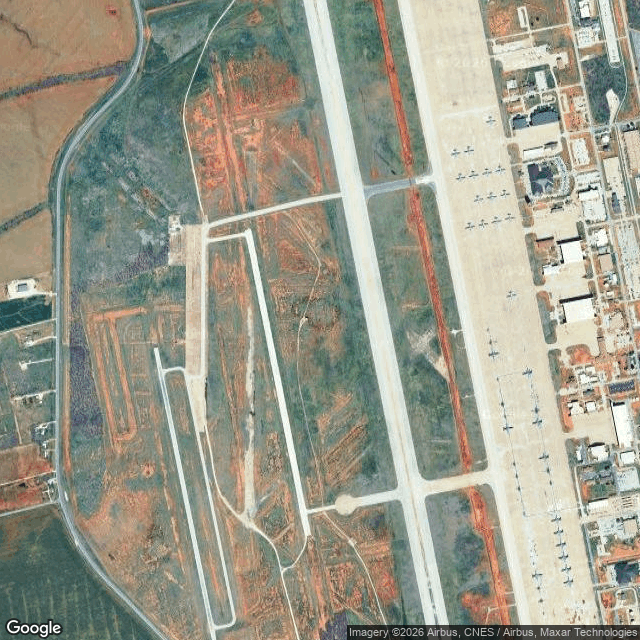
Abilene Army Air Field, Abilene Texas
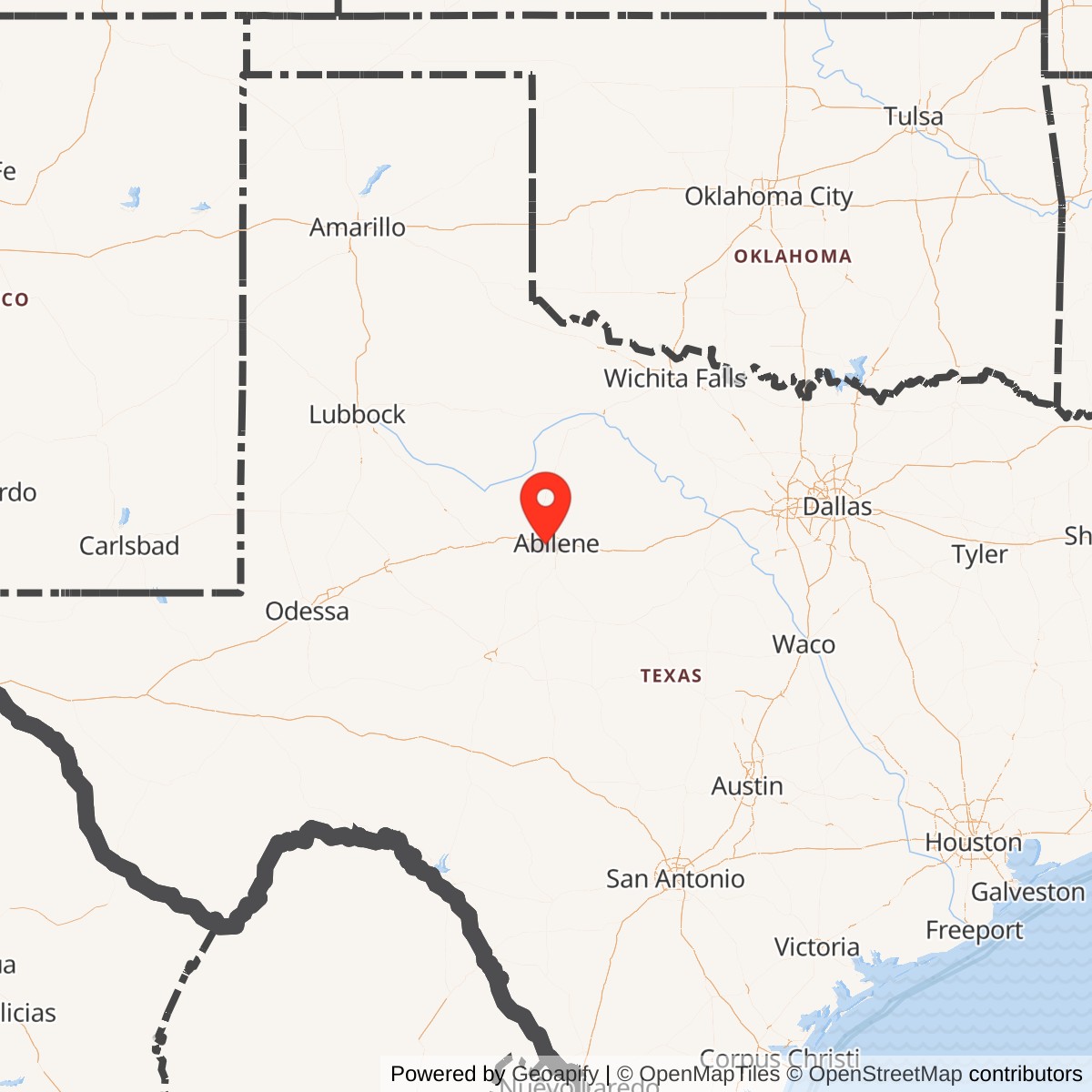
Longitude: -99.856545
Approximate Base Size: 1500 Acres
Official Base Website: https://www.dyess.af.mil/Fact-Sheets/Display/Article/812832/dyess-history/
Current Role: Active Dyess Air Force Base; former Army Air Forces field core reused as current USAF installation.
World War II Army Air Forces airfield west-southwest of Abilene near Tye. Opened 18 Dec 1942 as Abilene Army Air Base, renamed Abilene Army Airfield 8 Apr 1943, and popularly known as Tye Army Air Field/Tye Field. First host unit was 474th Base HQ and Air Base Squadron. Supported flying cadet training, 77th Reconnaissance Group, 69th Tactical Reconnaissance Group, 408th Fighter-Bomber Group, and P-47 Thunderbolt training by the 261st AAF Base Unit. Declared inactive 31 Jan 1946; deeded/sold to Abilene in 1947; later rebuilt as Abilene AFB/Dyess AFB.
Abilene Army Air Field was the official World War II Army Air Forces installation built west-southwest of Abilene, Texas, on the site commonly known at the time as Tye Army Air Field or Tye Field. It should be treated as a separate installation entry rather than only as a note under Camp Barkeley. Camp Barkeley was the large Army ground-force training reservation southwest of Abilene; Abilene Army Air Field was the Army Air Forces flying field built nearby to support wartime aviation training and group preparation. The two installations were closely related in geography and wartime context, and contemporary accounts sometimes described the airfield as an adjunct of Camp Barkeley, but the airfield had its own name sequence, air-base squadron, flying mission, assigned tactical groups, runways, hangars, flight-line facilities, post newspaper, and postwar disposal history.
This entry covers the Army / Army Air Forces installation as it existed from 1942 to 1946. It is no longer active as an Army installation. The field opened on 18 December 1942 as Abilene Army Air Base, was renamed Abilene Army Airfield on 8 April 1943, and was declared inactive on 31 January 1946. The former Army field was subsequently conveyed to the city of Abilene in the postwar surplus process, with 1947 commonly cited for the deed transfer. The former Army airfield later became the physical foundation for an active Air Force installation: Abilene Air Force Base, opened in 1956 and renamed Dyess Air Force Base in December 1956. The present site remains active under the U.S. Air Force, but the World War II Army Air Forces installation itself closed as an active Army airfield after the war.
The military geography explains why the field was placed where it was. Abilene sat in west-central Texas in a region of open terrain, generally favorable flying weather, and enough distance from coastal attack routes to make it useful for inland mobilization training. The location lay near rail, highways, utilities, and a wartime labor base already enlarged by Camp Barkeley. The nearby community of Tye and the open land west and southwest of Abilene gave the Army Air Forces room for runways, approach zones, aircraft dispersal, maintenance facilities, and training activity without inserting a full military airfield into the center of Abilene itself. The result was a temporary but substantial wartime air installation whose later reuse made it one of the clearer examples of a World War II Army Air Forces field becoming the seed of a long-lived Cold War and modern Air Force base.
Mission Evolution
The field's first mission was wartime aviation training. The United States Army Air Forces built Tye Army Air Field in 1942, opened it on 18 December 1942 as Abilene Army Air Base, and placed it initially under Second Air Force as a flying training center for cadets. The first host unit was the 474th Base Headquarters and Air Base Squadron, established on the same opening date. This host organization represented the airfield's installation backbone: administration, base operations, supply, housing, mess, maintenance coordination, and the everyday military services required to keep transient and training units flying.The official name change in April 1943 from Abilene Army Air Base to Abilene Army Airfield reflected the standard Army Air Forces nomenclature of the period, but the local name "Tye Army Air Field" persisted because the field was located near Tye and because many Abilene residents understood the wartime airfield through that local geography. In June 1943 the field was formally dedicated as Abilene Army Air Field. By then its mission had expanded beyond the simple idea of cadet flying. Reconnaissance, tactical reconnaissance, fighter-bomber, and fighter-training activity passed through the base in a short period, demonstrating how flexible wartime Army airfields had to be.
During 1943 Abilene trained or supported several named groups. The 77th Reconnaissance Group used the field from 6 April to 12 September 1943. The 69th Tactical Reconnaissance Group followed from 10 September to 12 November 1943. Both organizations trained reconnaissance personnel who later served overseas. The 408th Fighter-Bomber Group trained at Abilene from 10 November 1943 into January 1944; the official Dyess history states that the 408th received A-24, A-26, P-40, and P-47 aircraft in October 1943, began training, and was disbanded shortly after leaving Abilene on 1 April 1944. This sequence shows that Abilene AAF was not a single-aircraft or single-course school in a narrow sense. It was a wartime training and staging field whose mission changed with Army Air Forces personnel and aircraft demands.
The mission narrowed again in 1944. On 25 March 1944, Republic P-47 Thunderbolt training for flight cadets was taken over by the 261st Army Air Force Base Unit. P-47 training continued until 1 April 1946. The Thunderbolt was a large, powerful single-engine fighter, and training pilots in it required a different kind of airfield work than basic primary flying. Cadets and pilots needed gunnery, formation, instrument, navigation, emergency, and transition routines, while maintenance personnel had to support high-performance aircraft engines, armament systems, radios, tires, brakes, and flight-control equipment. Abilene's wartime role therefore shifted from a field serving multiple groups to a base unit and fighter-training environment centered on the demands of the P-47 era.
At the end of World War II the field's original Army mission no longer justified continued active use. Abilene AAF was declared inactive on 31 January 1946. Although still assigned administratively within the postwar air establishment and described as an inactive sub-base of Fort Worth Army Airfield, it no longer functioned as a busy wartime training center. It was sold or deeded to the city of Abilene for a nominal amount and then used for local or reserve purposes, including Texas Army National Guard training. That postwar interval is important because the field did not disappear physically. Its runways, land, and airfield geography survived long enough for Abilene civic leaders to make the case during the Korean War buildup that the former Tye AAF should become a permanent Air Force base.
The successor mission after Army closure was Strategic Air Command, then wider Air Force global strike and airlift. Abilene civic leaders argued that the former 1,500-acre Tye AAF site was well suited for reactivation and helped raise almost $1 million to buy additional adjacent land. In July 1952 Congress approved major construction funding for the new Air Force base. Ground was broken in 1953, the base opened as Abilene Air Force Base on 15 April 1956, and it was renamed Dyess Air Force Base in December 1956 in honor of Lt. Col. William Edwin Dyess. The World War II Army field thus became the foundation of a Cold War bomber, tanker, missile, and later B-1B and C-130 installation. The mission lineage changed from Army Air Forces training to Strategic Air Command deterrence and eventually to today's combination of long-range strike and tactical airlift.
Operational Role
What actually happened at Abilene Army Air Field was the conversion of west Texas open ground into a fast-built training airfield that could absorb aircraft, students, instructors, maintainers, administrators, and transient tactical units. The field had to do many things simultaneously. Base personnel received soldiers and airmen, issued equipment, assigned quarters, managed food service, operated the control tower and flight line, coordinated fuel and maintenance, kept vehicles and utilities running, and maintained discipline and morale. Flight units used the runways and surrounding airspace to turn pilots and aircrews into operational personnel. The installation's usefulness came from this combination of aviation plant, instructional routine, and military support organization.The 474th Base Headquarters and Air Base Squadron gave the field its first operational base structure. At a temporary war airfield, the host squadron mattered because flying organizations could not train if the base itself failed. Aircraft had to be parked, fueled, inspected, repaired, and dispatched. Trainees had to be housed and fed. Medical, fire, crash-rescue, guard, transportation, and communications functions had to exist before the tactical training mission could work. The 474th was therefore not a secondary administrative detail; it was the unit that made Abilene Army Air Base a functioning installation rather than just a set of runways.
The reconnaissance groups gave the field one of its first wartime tactical meanings. The 77th Reconnaissance Group and the 69th Tactical Reconnaissance Group trained reconnaissance personnel at Abilene in 1943. Reconnaissance training was more than simply learning to fly an airplane. It required navigation, observation, photography or visual reporting skills, radio procedure, map interpretation, mission planning, and coordination with ground and air commands. The rapid succession of the 77th and 69th through Abilene shows how Army Air Forces installations were used as staging and preparation nodes in a national system. Units arrived, trained, reorganized, and moved on as combat requirements elsewhere changed.
The 408th Fighter-Bomber Group brought a different operational profile. The official Dyess history lists A-24, A-26, P-40, and P-47 aircraft associated with the group's training period. Those types indicate a tactical mission set oriented toward attack, fighter-bomber, and pursuit operations rather than only observation. The field therefore had to support aircraft with different speeds, weights, maintenance requirements, and training objectives. Even if a group remained only briefly, its presence affected the installation's tempo: more transient maintenance problems, more flight scheduling, more aircraft parking and dispersal, and more need for technical coordination between the airfield and the group.
The 261st Army Air Force Base Unit period placed P-47 training at the center of Abilene's late-war role. The P-47 Thunderbolt was one of the major American fighters of the war, but it was also a demanding machine. Training in it meant teaching pilots to manage a heavy, powerful aircraft with high takeoff and landing speeds, substantial engine output, and a combat role that could include escort, fighter sweep, close support, and ground attack. Abilene's runways, maintenance spaces, and airspace were thus part of the national process by which the Army Air Forces converted trainees and transition pilots into men ready for combat units or advanced operational assignments.
Daily military life at the field is visible in the survival of The Fighter, the weekly newspaper published by Special Service at Abilene Army Air Field. The newspaper matters because it demonstrates that the field was not merely a technical training site. It was a temporary military community with news, recreation, notices, local advertising, sports, social activity, and morale work aimed at Army Air Forces personnel living on or near the base. Special Service activities were not peripheral luxuries in a wartime training environment; they helped manage morale, routine, and identity on a post where many young men were away from home, under instruction, waiting for orders, or preparing for overseas service.
The postwar operational role was reduced but still consequential. Once the field was inactive, it became a physical asset rather than a fully active training base. Its survival as an airfield allowed Abilene to use it briefly for municipal purposes and allowed the Texas Army National Guard to use parts of the former property for training. More importantly, the runways and landholding gave Abilene a ready-made argument during the Korean War mobilization. The city could point to an existing military airfield rather than proposing a base from nothing. That was the bridge between the temporary Army Air Forces camp and the permanent Air Force base.
Units, Organizations, and Systems
The 474th Base Headquarters and Air Base Squadron was the first host unit at Abilene Army Air Base. Established on 18 December 1942, it represented the base operating structure. In the wartime Army Air Forces, such squadrons managed the practical installation functions that allowed flying organizations to train: administration, supply, billeting, transportation, communications, guard functions, flight-line support, and coordination with higher headquarters.Second Air Force initially controlled the field and assigned it the mission of a flying training center for cadets. Second Air Force's use of Abilene reflected the broader wartime training system in the interior United States. The service needed large numbers of flying personnel, and inland fields in Texas, Oklahoma, Kansas, Colorado, and adjacent regions became part of that system because they offered airspace, weather, and land.
The 77th Reconnaissance Group trained at Abilene from 6 April 1943 to 12 September 1943. Its presence tied the field to the reconnaissance side of Army Air Forces operations. Reconnaissance personnel trained at such fields later contributed to overseas combat operations by providing the observation and reporting required for ground and air commanders.
The 69th Tactical Reconnaissance Group trained at Abilene from 10 September 1943 to 12 November 1943. Its short stay overlapped the transition from general reconnaissance preparation to more tactical reconnaissance requirements. The group's presence reinforces Abilene's role as a rotational training station rather than a home for a single permanent wartime wing.
The 408th Fighter-Bomber Group trained at Abilene from 10 November 1943 into January 1944. The official Dyess history lists A-24, A-26, P-40, and P-47 aircraft in connection with the group's training. The group's short stay shows how quickly wartime unit requirements could change; it left Abilene and was disbanded shortly afterward.
The 261st Army Air Force Base Unit took over P-47 Thunderbolt training for flight cadets on 25 March 1944. Its training mission continued until 1 April 1946, after the field had already been declared inactive. The unit represents Abilene's late-war and immediate postwar transition from multiple group training to base-unit-managed fighter training.
Continental Air Command and Fort Worth Army Airfield appear in the field's postwar administrative story. After Abilene AAF was declared inactive, it was classified as an inactive sub-base of Fort Worth Army Airfield. That status captures the awkward transition after World War II, when many wartime airfields remained on the books while the military decided which would be closed, transferred, held in reserve, or eventually reactivated.
The Texas Army National Guard used the former field after the Army Air Forces period. This local and state use kept military activity associated with the former installation even after the wartime flying mission ended. It also shows why the site remained visible to Abilene's civic and military leaders during the Korean War.
The successor Air Force organizations are not part of the Army Air Forces installation period, but they are essential to the site's full history. The 341st Bombardment Wing became Dyess's first Strategic Air Command combat wing. The 96th Bombardment Wing gave the base its long Cold War bomber identity. The 7th Bomb Wing is today's host unit, assigned to Eighth Air Force and Air Force Global Strike Command, and operates the B-1B mission. The 317th Airlift Wing leads the Dyess C-130J airlift mission. Together these successor units explain why the former Abilene Army Air Field site remains militarily active even though the original Army field closed decades ago.
Facilities and Physical Layout
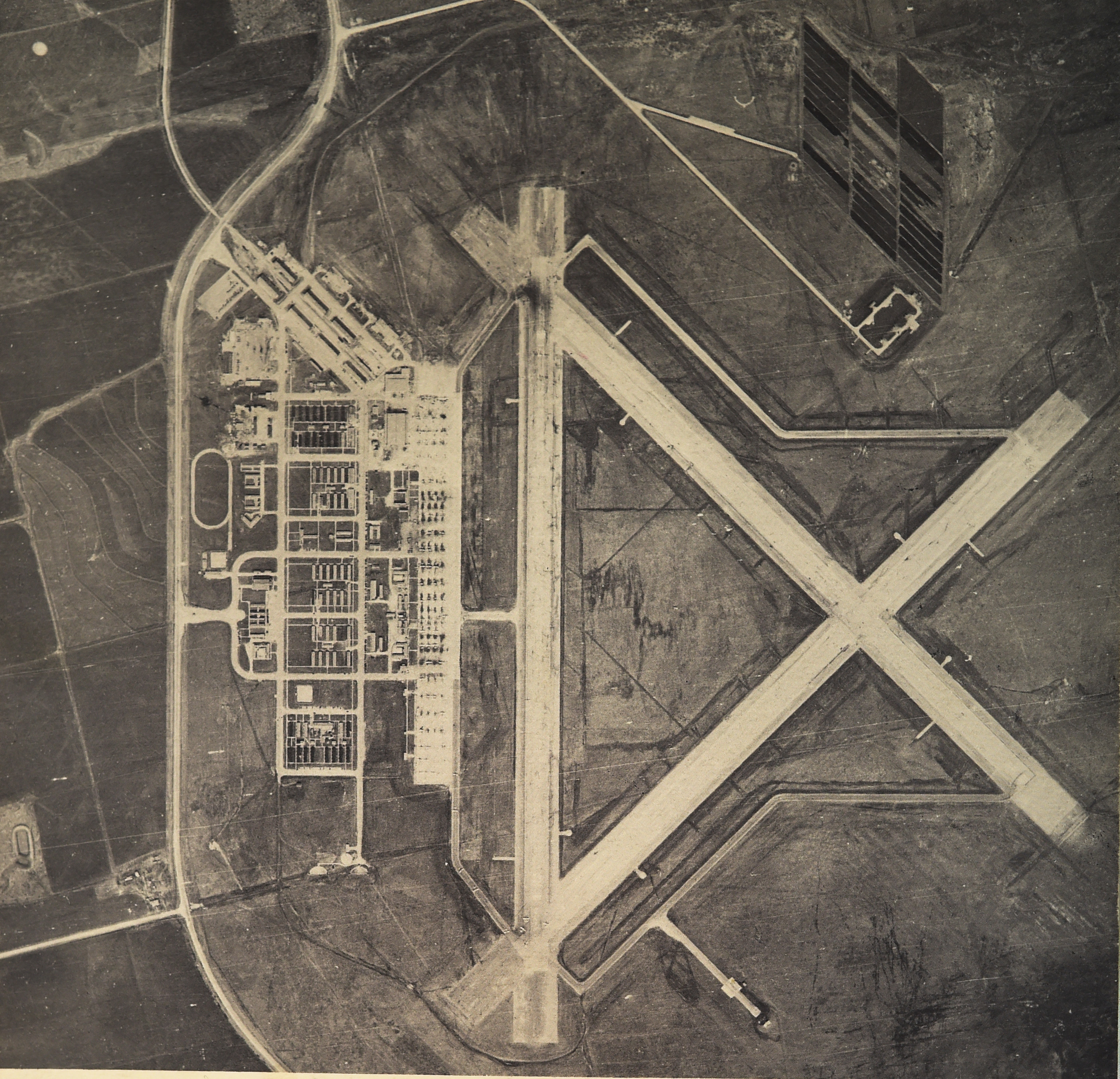
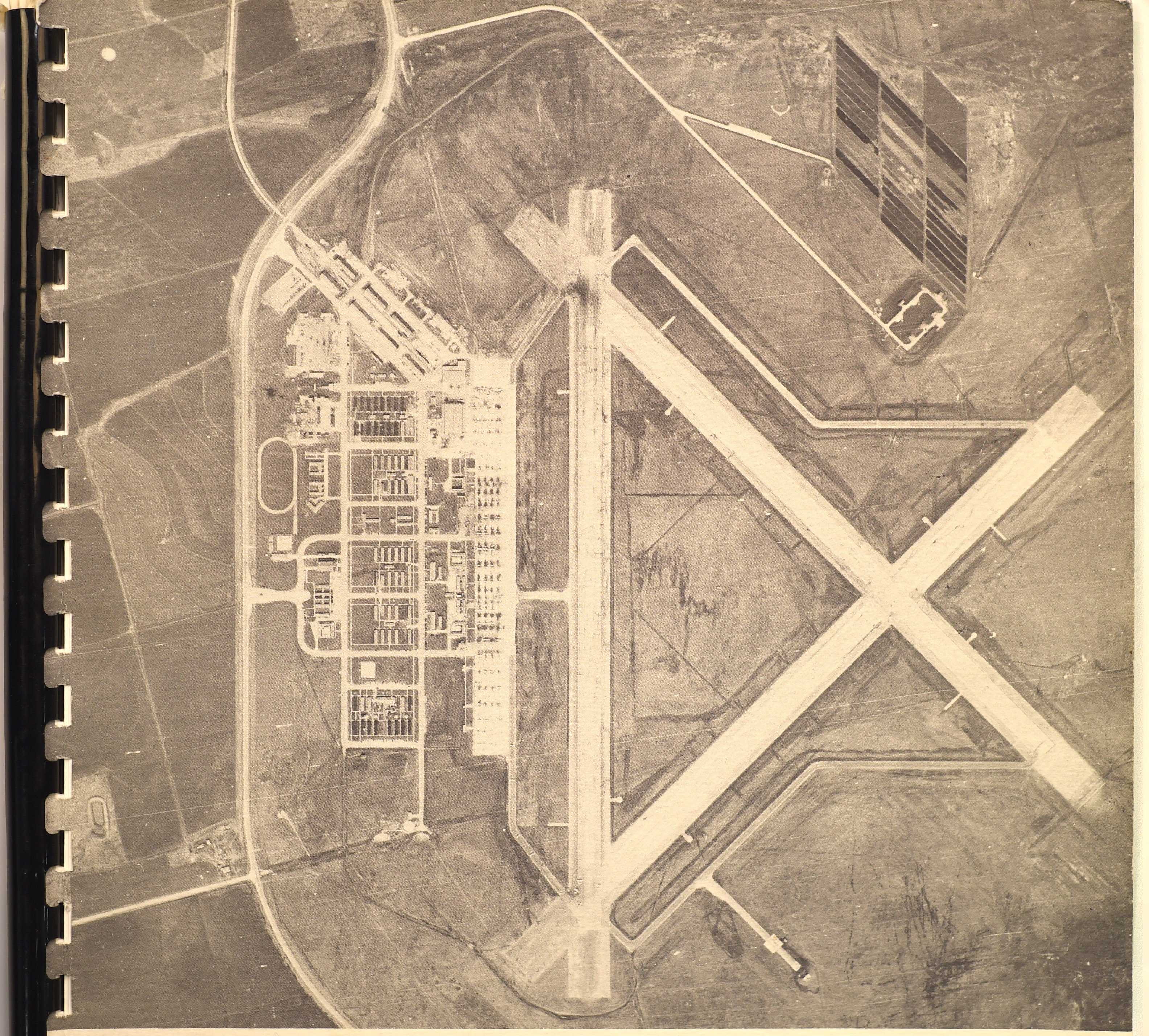
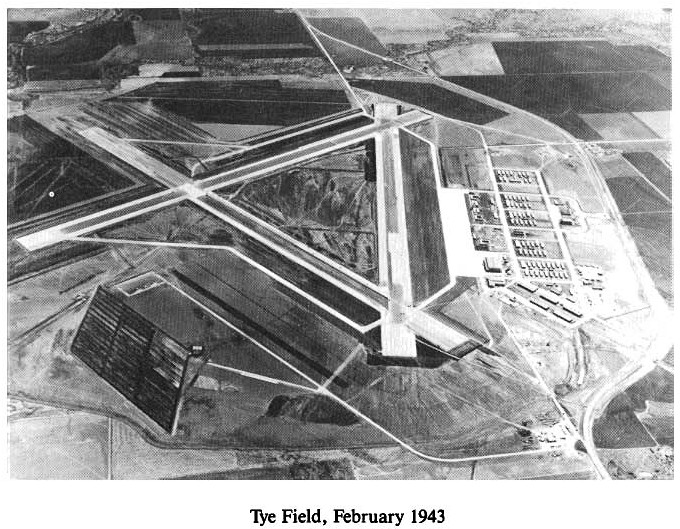
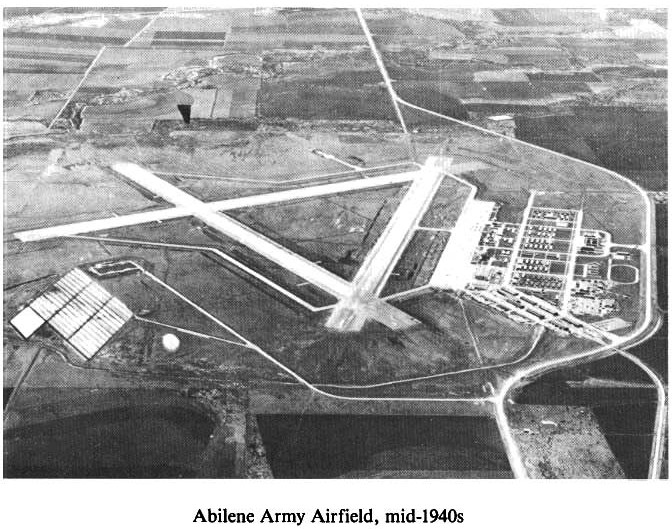
Abilene Army Air Field's layout followed the standard logic of a World War II military airfield. The core was a runway and taxiway system large enough to support military training aircraft and later fighter operations. The surviving historic aerial map reproduced by the Air Force and DVIDS shows the wartime field with multiple intersecting runways, taxiways, and a compact cantonment/flight-line area with hangars, maintenance buildings, administrative structures, and housing or support rows. The design was not ornamental. It separated aircraft movement from living and administrative areas while keeping maintenance, parking, and dispatch close to the flight line.The former field's acreage is best treated as approximately 1,500 acres for the World War II / former Tye AAF core. That is the figure cited in the official Dyess history when discussing the former Tye AAF site identified by Abilene leaders during the Korean War. Later Dyess Air Force Base became larger because Abilene civic leaders raised money for additional adjacent acreage and because the Air Force built a permanent Strategic Air Command base there. For historical accuracy, this entry therefore distinguishes the smaller Army Air Forces field from the later, larger Dyess AFB landholding.
The field had the facilities expected of a wartime Army Air Forces training base: runways, taxiways, aircraft parking and apron areas, hangars, maintenance shops, administrative buildings, supply and motor-pool functions, barracks or quarters, mess facilities, utilities, and recreational or Special Service spaces. Even if many wartime buildings were temporary, the base had to be complete enough to function as a military community. A flying field without maintenance shops, fuel service, fire protection, or communications could not support tactical training; an air base without barracks, mess, sanitation, and recreation would quickly lose control of its personnel flow.
The relationship between flight-line and cantonment is visible in historic images. Aircraft-related facilities clustered near the paved areas, while support buildings formed a more rectilinear pattern nearby. This pattern was common across wartime airfields because it allowed efficient movement of people, tools, and vehicles to the flight line while keeping administrative and living spaces outside the most hazardous aircraft operating zones. The location near Tye also left room for approaches and safety zones that would have been difficult inside a denser urban area.
The postwar physical survival of the airfield was the key to its successor history. Even after active Army Air Forces use ended, the runways and land remained a reusable military asset. When Abilene sought a new permanent air base during the Korean War buildup, the former Tye AAF site provided the geographic and infrastructural base from which Dyess could be built. The later Air Force base was not simply a continuation of every wartime building or organization, but it was a continuation of the military value of the same ground.
System-Level Context
Abilene Army Air Field belonged to the national Army Air Forces training system that expanded at extraordinary speed during World War II. The United States needed pilots, reconnaissance personnel, fighter crews, tactical units, maintainers, and air-base support personnel on a scale that prewar installations could not handle. Temporary and semi-permanent fields across Texas and the interior West became the physical framework for that expansion. Abilene's role was to provide another piece of that system: a field where cadets, reconnaissance organizations, fighter-bomber trainees, and P-47 pilots could be processed through the Army Air Forces training pipeline.The field also belonged to Abilene's larger wartime mobilization system. Camp Barkeley brought tens of thousands of soldiers into the area for ground-force and medical training. Abilene Army Air Field added a separate aviation layer to that mobilization. The two installations changed the city's economy, transportation, housing, and social life. Soldiers and airmen moved through Abilene businesses, churches, theaters, newspapers, USO-style activities, and local transportation networks. This wartime military presence helped establish Abilene as a city with a durable connection to national defense.
The postwar transition from Abilene AAF to Dyess AFB also places the site in the system-level history of the U.S. Air Force. The Army Air Forces became a separate Air Force in 1947, but the physical inheritance of World War II airfields shaped the early Cold War basing system. Some fields closed permanently, some became municipal airports, and some were reactivated or rebuilt for Strategic Air Command and other Air Force missions. Abilene/Tye was in the third category. It began as a temporary Army field, briefly became surplus, and then returned to federal military life as a permanent Air Force base because Cold War requirements made its location and land valuable again.
The successor Dyess system then connected the old Army field to global strike, tanker, tactical airlift, missile defense, and nuclear-deterrence history. Strategic Air Command brought B-47s, later B-52s and tankers, and the regional Atlas missile system. The Army returned to the Dyess story in the late 1950s and early 1960s through Nike Hercules air-defense work associated with the protection of SAC bombers and Atlas missile sites. In the post-Cold War era, Dyess became one of the unusual bases combining B-1B long-range strike with a large C-130J tactical airlift mission. That modern role does not erase the Army Air Forces origin; it demonstrates the long-term system value of the site chosen in 1942.
Chronology
- 1942 The United States Army Air Forces built Tye Army Air Field on the site that later became Dyess Air Force Base.
- 1942-12-18 The field opened as Abilene Army Air Base.
- 1942-12-18 The 474th Base Headquarters and Air Base Squadron was established as the first host unit.
- 1943-04-06 The 77th Reconnaissance Group began its training period at Abilene.
- 1943-04-08 Abilene Army Air Base was renamed Abilene Army Airfield.
- 1943-06-05 The field was formally dedicated as Abilene Army Air Field.
- 1943-09-10 The 69th Tactical Reconnaissance Group began its Abilene training period.
- 1943-09-12 The 77th Reconnaissance Group's Abilene training period ended.
- 1943-11-10 The 408th Fighter-Bomber Group began training at Abilene.
- 1943-11-12 The 69th Tactical Reconnaissance Group's Abilene training period ended.
- 1944-01 The 408th Fighter-Bomber Group left Abilene after a short training period.
- 1944-03-25 Republic P-47 Thunderbolt training for flight cadets was taken over by the 261st Army Air Force Base Unit.
- 1945 Issues of The Fighter, the Abilene Army Air Field newspaper published by Special Service, documented the field as an active military community.
- 1946-01-31 Abilene Army Air Field was declared inactive.
- 1946-04-01 P-47 training under the 261st Army Air Force Base Unit ended.
- 1947 The former Army airfield was deeded or sold to the city of Abilene as surplus property.
- Early 1950s The former field served briefly as a municipal airport and was also used for Texas Army National Guard training.
- 1952-07 Congress approved funding for a new Air Force base on the former Tye AAF site.
- 1953-09 Ground was broken for the new Abilene Air Force Base.
- 1955-09-01 The 341st Bombardment Wing activated as the first Strategic Air Command combat wing associated with the rebuilt base.
- 1956-04-15 Abilene Air Force Base opened.
- 1956-12 Abilene Air Force Base was renamed Dyess Air Force Base in honor of Lt. Col. William E. Dyess.
- 1957-09-08 The 96th Bombardment Wing activated at Dyess, beginning the base's long association with that wing.
- 1959-11-19 The U.S. Army held groundbreaking ceremonies at Dyess AFB for the battalion headquarters of the 5th Missile Battalion, 517th Artillery, associated with Nike Hercules defense of SAC and Atlas facilities.
- 1961 The C-130 mission began arriving in the Big Country, establishing the airlift thread that later became central to Dyess.
- 1965-1973 B-52 and KC-135 assets from Dyess-supported organizations participated in Southeast Asia combat operations during the Vietnam War period.
- 1985-06 Dyess received the B-1B Lancer, beginning the modern bomber era at the successor installation.
- 1993-10-01 The 7th Wing replaced earlier Dyess wing structures and combined B-1B and C-130 missions under the post-Cold War reorganization.
- 1997-04-01 Dyess's C-130 mission returned to Air Mobility Command control, and the 317th Airlift Group was reactivated as the parent unit for the C-130 squadrons.
- 2010-2013 The Dyess airlift mission converted from older C-130H aircraft to new C-130J-30 Super Hercules aircraft.
- 2015-10-01 Dyess became part of Air Force Global Strike Command.
- 2017-07-06 The 317th Airlift Group was activated as the 317th Airlift Wing at Dyess.
- 2024-10-28 A Dyess Memorial Center history video again traced the base's origins to Abilene Army Air Field / Tye Field.
- Present The former Abilene Army Air Field site remains in active federal military use as Dyess Air Force Base, home to the 7th Bomb Wing and 317th Airlift Wing.
Jory Vandenberg, Dyess Memorial Center curator, speaks about the origins and history of Dyess Air Force Base at Dyess AFB, Texas, Oct. 28, 2024. Dyess AFB traces its origins back to World War II when it was known as the Abilene Army Airfield, or Tye field. (U.S. Air Force video by Airman 1st Class Jade Caldwell)