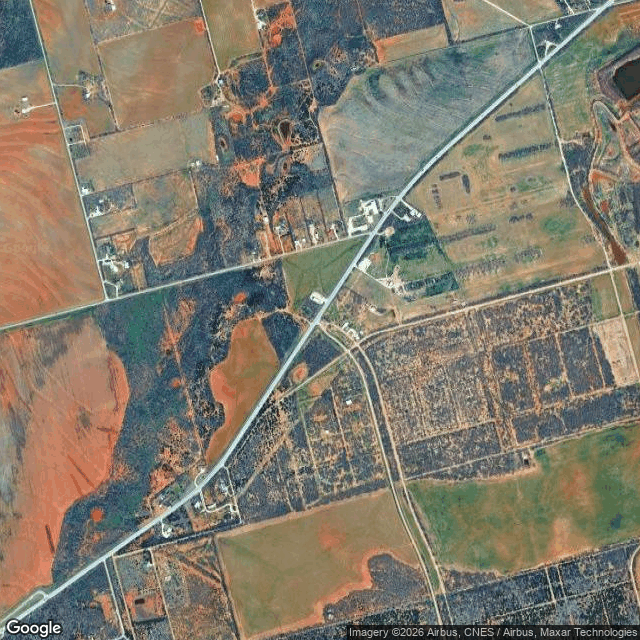
Camp Barkeley Army Base, Abilene Texas
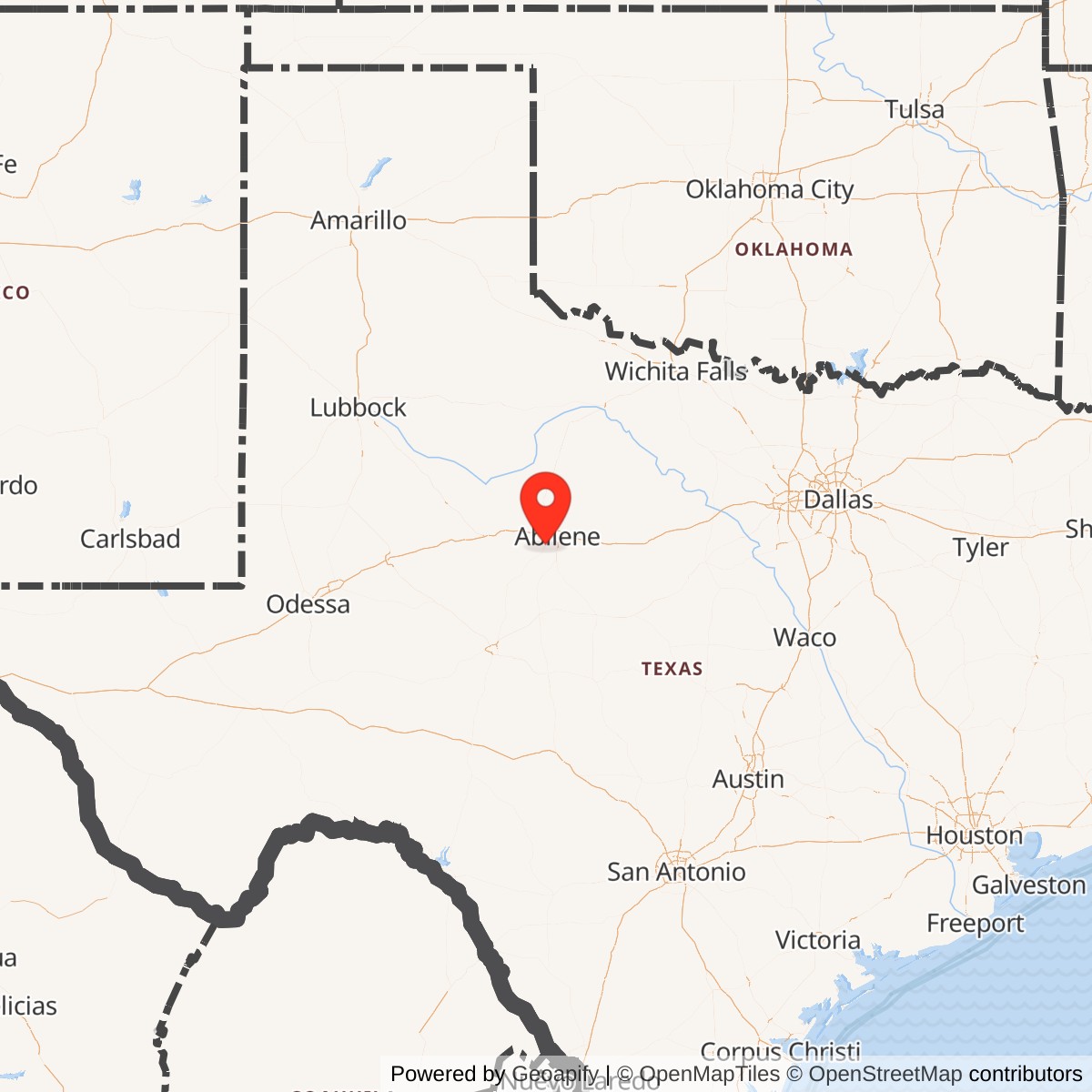
Longitude: -99.866825
Current Role: Abilene development
Approximate Base Size: 77,436 acres
Camp Barkeley was a temporary World War II U.S. Army mobilization, replacement-training, medical-training, armored-division-training, and prisoner-of-war installation southwest of Abilene, Texas. It is closed and inactive as a federal Army installation. Its operational life was short but intense: construction began in December 1940, the first large troop body arrived in February 1941, the Medical Replacement Training Center was activated in November 1941, the Medical Administrative Corps Officer Candidate School began producing officers in 1942, the German prisoner-of-war compound opened in 1944, and the Army Service Forces Training Center closed on 1 April 1945, followed by the camp's deactivation on 30 April 1945. The Texas Historical Commission marker uses the interpretive span 15 February 1941 to 21 March 1945, while the Texas State Historical Association places full camp deactivation on 30 April 1945.
The historically correct spelling is Camp Barkeley, with the second "e." The camp was named for Private David Bennes Barkley, a San Antonio native and World War I Medal of Honor recipient who died during the Meuse-Argonne campaign. The Army's spelling became "Barkeley" rather than Barkley; contemporary and later sources sometimes use both spellings, but the Army camp, the Texas historical marker, the Portal to Texas History collections, and the standard Handbook of Texas entry all use Camp Barkeley.
The installation was not a permanent fort, depot, or arsenal. It was a wartime cantonment assembled quickly from leased and purchased land to absorb the enormous manpower expansion that followed the war in Europe and then Pearl Harbor. Its importance came from scale and specialization. Camp Barkeley trained infantry and armored divisions, hosted one of the largest medical training centers in the Army, produced most of the Army's Medical Administrative Corps officer candidates trained at the post during the war, housed German prisoners of war, and transformed Abilene's wartime economy and postwar military future. When the Army no longer needed it, the leased lands reverted to former owners, Army improvements were dismantled or sold, and most of the former camp returned to private rural, agricultural, institutional, or development uses.
Location, Terrain, and Why the Site Mattered
The camp lay about eleven miles southwest of Abilene in Taylor County on the dry, open, rolling plains of West Texas. The location mattered for the same reasons many World War II temporary training camps were placed in Texas, Oklahoma, Louisiana, and the interior South and Southwest. The Army needed large tracts of relatively open land, year-round training weather, rail and road access, enough distance from dense coastal targets, and local communities capable of supporting a sudden flood of soldiers, civilian workers, families, contractors, and service activity. Abilene sat on important regional transportation routes and had a civic leadership eager to attract and retain a major military presence.The landscape was both useful and difficult. The main camp occupied roughly 2,500 acres, while hills to the south and west provided more than 58,000 acres of bivouac and maneuver ground and a separate 9,400-acre combat range tract lay to the west. That arrangement let the Army place administrative, barracks, hospital, classroom, supply, and service functions in a concentrated cantonment while pushing field exercises, weapons training, live-fire ranges, marches, and bivouacs into a much larger surrounding reservation. The same open terrain that made the camp valuable also made it harsh. Medical Department accounts described the camp's altitude at about 1,870 feet, the higher terrain south and west rising roughly 400 feet above the main camp, the climate as suitable for year-round training, and the lack of shade and spring and summer dust storms as serious discomforts for trainees.
Camp Barkeley's location also explains its relationship to the later Dyess Air Force Base story. The Army camp itself was not the present Dyess Air Force Base. During World War II, however, the wider Abilene military complex included the Camp Barkeley ground installation and the nearby Army airfield known as Tye Army Air Field and then Abilene Army Airfield. TSHA describes that airfield as an adjunct of Camp Barkeley before its later postwar evolution into Dyess Air Force Base. Camp Barkeley helped prove that Abilene could host a large military population, manage military-civilian relations, and support federal defense investment. That wartime experience became part of the argument for bringing a permanent Air Force installation back to Abilene in the 1950s.
Mission Evolution
Camp Barkeley began with the Army's pre-Pearl Harbor mobilization. After Germany's invasion of Poland and the rapid collapse of much of western Europe, the United States expanded the Regular Army, federalized National Guard units, and constructed temporary camps to house and train the growing force. The first mission at Barkeley was straightforward: provide a major training camp for infantry and supply troops. Construction began in December 1940 and was completed with remarkable speed in about seven months, even as soldiers began arriving before all work was finished.The first major occupant was the 45th Infantry Division under Major General William S. Key. About 19,000 soldiers of the 45th arrived on 23 February 1941. That first phase gave Camp Barkeley its divisional-training identity. The 45th, a National Guard division with strong Oklahoma, Colorado, Arizona, and New Mexico roots, used the new Texas camp while the Army was still learning how to scale temporary training installations. The division later moved away for further training and eventually served in major campaigns overseas, but its arrival established Barkeley as one of the Army's large wartime ground-force camps.
The mission began changing even before Pearl Harbor because the Army Medical Department needed more replacement-training capacity. In March 1941 the Surgeon General studied expansion of Medical Replacement Training Centers, and on 12 July 1941 the War Department authorized a new Medical Replacement Training Center at Camp Barkeley with capacity for 4,000 trainees. The center was activated on 1 November 1941 under Brigadier General Roy C. Heflebower, and the first training cycle began on 1 December 1941. Only six days later, the Japanese attack on Pearl Harbor and U.S. entry into the war made Barkeley's medical mission far more urgent.
During 1942 and 1943 the medical-training mission expanded repeatedly. The MRTC nearly doubled to 7,600 trainees by February 1942, then grew toward roughly 15,000 trainees as demand for Medical Department enlisted men surged. The Medical Administrative Corps Officer Candidate School was established at Camp Barkeley in spring 1942, with the first class of 250 candidates beginning on 11 May 1942. When the Carlisle Barracks school became too small or was shuttered for a period, Camp Barkeley became the Army's critical source of Medical Administrative Corps officers. The post's mission therefore shifted from ordinary divisional training toward a national medical-manpower role.
Camp Barkeley also remained a combat-division training site. The 90th Infantry Division was reactivated at Camp Barkeley on 25 March 1942 and trained there before moving through Louisiana maneuvers and later specialized training. The 11th Armored Division passed through in 1943 before further maneuvers and staging. The 12th Armored Division arrived at Barkeley in November 1943 and became the last combat division stationed there, using the camp's plains, roads, ranges, and surrounding maneuver land for intensive armored training before shipping out for Europe in September 1944. This dual identity is essential: Camp Barkeley was not only a medical schoolhouse, and it was not only a division camp. It was both at once.
In 1944 the mission broadened again when the 1846th Unit POW Camp was established at Camp Barkeley on 1 February 1944. The prison compound eventually held 840 German prisoners of war. By then, Camp Barkeley had become a layered Army Service Forces and Army Ground Forces landscape: medical replacement training, officer-candidate training, reconditioning and hospital activity, armored division preparation, post support, and POW custody all occupied the same reservation.
The final mission shift came as the war in Europe approached its end and the Army's medical-training requirements declined. In late 1944 the training load at Barkeley was cut sharply. In March 1945 the Army Service Forces consolidated Medical Department training at Camp Barkeley with Signal Corps training at Camp Crowder, Missouri. The last MAC OCS class graduated on 15 March 1945; the ASF Training Center closed on 1 April 1945; and Camp Barkeley was deactivated on 30 April 1945. The camp was then declared surplus, dismantled, and mostly returned to private ownership or local reuse.
Operational Role
What happened at Camp Barkeley was mass mobilization in physical form. The Army took ranch and farm country outside Abilene and turned it into a temporary military city. Roads, warehouses, mess halls, hutments, barracks, classrooms, recreation halls, chapels, post exchanges, theaters, hospital wards, cold-storage plants, a bakery, service clubs, motor pools, ranges, and maneuver grounds had to be built or improvised in months. The Texas Historical Commission marker notes that Barkeley became a complete city unit more than twice the size of wartime Abilene, with a 2,300-bed hospital, two cold-storage plants, a bakery, four theaters, two enlisted service clubs, fifteen chapels, and thirty-five post exchange buildings.At the divisional level, the camp's operational role was to turn mobilized units into deployable combat organizations. For the 45th Infantry Division, that meant adapting federalized National Guard soldiers to full-time Army life, field discipline, weapons qualification, unit movement, and the routine of a national mobilization camp. For the 90th Infantry Division, reactivated in March 1942, it meant building a division out of cadres and new soldiers, first as an infantry division, then amid a period of motorization, and then again as an infantry division before overseas movement. For armored divisions, especially the 12th, it meant integrating tanks, armored infantry, field artillery, engineers, signals, medical support, ordnance, and quartermaster functions into a fast-moving combined-arms division.
The 12th Armored Division chapter is especially important because it was the last combat division stationed at Barkeley and because its training there was directly tied to combat readiness. The Texas Historical Commission marker for the 12th Armored Division at Camp Barkeley states that the division, activated at Camp Campbell, Kentucky, in September 1942, was assigned to Barkeley in November 1943. By April 1944 it had reached peak strength with combat commands, three battalions each of tanks, armored infantry, and armored field artillery, plus numerous support units. Intensive day and night training culminated in tests that qualified the division for combat. The division shipped out to Europe in September 1944, then fought in the European Theater, where the "Hellcats" became part of the final Allied drive into Germany and are remembered in Abilene through the 12th Armored Division Memorial Museum.
At the medical level, Barkeley's operational role was even more nationally specialized. The Medical Replacement Training Center existed to train enlisted medical replacements, fillers, cadres, and specialists for field units and installations. These men had to be trained not merely as soldiers but as medical soldiers: stretcher bearers, aidmen, ambulance personnel, clerks, supply personnel, laboratory and X-ray assistants, dental technicians, cooks, bakers, and other support personnel needed by a global medical system. The Center faced the recurring problems of wartime expansion: not enough cadre, not enough classrooms, imperfect housing, shortages of equipment, changing training cycles, and unpredictable quotas driven by overseas needs.
The early months of the MRTC show how improvisational the operation was. Cadre came from Camps Lee and Grant, and some promising trainees were retained as instructors. Officers were sent to the Medical Field Service School at Carlisle Barracks and then to Camp Grant for on-the-job preparation before assignment to Barkeley. Heavy rains delayed construction; when the first trainees arrived in mid-November 1941, the building program was weeks behind. The first training cycle began on 1 December 1941 amid cold, wet weather, incomplete classrooms, and heating problems. Because outdoor training was impractical, classes sometimes met in barracks, with men sitting on the floor in overcoats. That rough beginning did not prevent the center from becoming one of the Army's main medical training institutions.
The Medical Administrative Corps Officer Candidate School added another layer. The MAC existed because modern military medicine required trained administrators who could handle supply, records, personnel, registrar work, adjutant functions, and medical-unit management, allowing physicians and surgeons to focus on treatment. Camp Barkeley's MAC OCS graduated about 12,500 candidates between May 1942 and March 1945, including the great majority of MAC officers trained there during the war. TSHA gives the larger figure as 12,500 of 17,094 MAC officers and notes that Barkeley also trained 77,898 of 293,566 Medical Department enlisted men, not counting the tens of thousands of infantry and supply troops who passed through other training functions.
The POW role was smaller in numbers but significant in the camp's daily operation and local memory. The 1846th Unit POW Camp under Lieutenant Colonel Harry Slaughter was established on 1 February 1944 and eventually held 840 German prisoners. The POW compound made Camp Barkeley part of the nationwide prisoner-of-war system that housed Axis prisoners inside the United States, often on or near existing military installations where fencing, guard forces, labor needs, and isolated land could be used efficiently. The Texas Historical Commission marker records local alarm over escapes and attempted tunneling. In this respect, Camp Barkeley joined other Texas camps that combined training missions with enemy-prisoner custody in 1944 and 1945.
Units, Organizations, and Systems
The first major combat unit associated with Camp Barkeley was the 45th Infantry Division. About 19,000 soldiers arrived in February 1941 under Major General William S. Key. The division's presence shaped the initial layout and early camp culture. Its soldiers occupied hutments and training areas, built early routines, and left behind spaces that were later absorbed by the expanding Medical Replacement Training Center. Bill Mauldin, later famous for his Stars and Stripes cartoons of Willie and Joe, served on the division newspaper staff during this broader early-war period, linking Barkeley's early occupant to a major cultural voice of the American infantryman.The 90th Infantry Division was another major Barkeley formation. It was reactivated at Camp Barkeley on 25 March 1942 under Major General Henry Terrell Jr. The division trained in the West Texas environment, participated in Louisiana maneuvers, and returned to Barkeley for additional specialized training such as attacks against fortified areas, river crossings, and street fighting before eventual overseas movement. The division later fought in Normandy, Northern France, the Ardennes, the Rhineland, and Central Europe. Barkeley's importance to the 90th lies in reactivation and preparation rather than battlefield action at the camp itself.
The 11th Armored Division had a shorter but real Camp Barkeley connection. The division, activated at Camp Polk in 1942, moved to Camp Barkeley in September 1943 before participation in later maneuvers and transfer to Camp Cooke, California. Its stay was not as defining as the 12th Armored Division's, but its presence confirms that Barkeley served as part of the Army's armored-training pipeline as well as its medical-training system.
The 12th Armored Division was the most visible armored-division occupant. Assigned to Camp Barkeley in November 1943, it reached peak strength by April 1944 with a full divisional structure that included combat commands, tank battalions, armored infantry battalions, armored field artillery battalions, and support units. Its day-and-night training at Barkeley culminated in combat qualification, and the division left for Europe in September 1944. The 12th Armored Division Memorial Museum in Abilene preserves the division's archives, photographs, newspapers, oral histories, and legacy, making the Barkeley-to-Europe connection one of the best-documented unit stories associated with the former camp.
The Medical Replacement Training Center was Barkeley's most specialized and numerically important training organization. It was authorized on 12 July 1941, activated on 1 November 1941, and initially built for 4,000 trainees. It expanded to 7,600 trainees in early 1942, then toward 15,000, and by April 1944 the medical training operation was incorporated into the Army Service Forces Training Center with a capacity listed at 37,150 trainees, cadre, replacements, and fillers. The MRTC's units included medical training regiments and battalions responsible for shaping enlisted medical soldiers for the Army's global medical system.
The Medical Administrative Corps Officer Candidate School was a distinct and crucial institution within Barkeley. Established in 1942, it trained administrative officers for the Medical Department. Its courses produced second lieutenants who could serve as registrars, adjutants, supply officers, medical administrators, and assistant battalion surgeons under revised wartime rules. The school expanded from 250-candidate classes to larger and more frequent classes, peaked in 1943, contracted sharply in early 1944, then revived briefly after Medical Department organization changes made MAC officers useful in additional positions.
African American trainees and officer candidates form an important part of Barkeley's institutional history. In August 1943, as Camp Pickett closed, Barkeley was assigned responsibility for training Black medical troops. During the following year, TSHA and AMEDD accounts place the number of African American trainees at roughly 1,000 to 1,400. A few Black candidates also attended the MAC OCS, and TSHA notes that Barkeley graduated 158 of the 189 Black MAC officers trained during the period covered by its statistics. Their service took place in a segregated Army and a segregated Texas community. Sources state that there were not enough Black soldiers to justify fully segregated training, but most recreational facilities on post were off limits to them, and Abilene itself was strictly segregated. Barkeley's medical mission therefore intersected directly with the racial contradictions of the World War II Army: Black soldiers trained to support a global fight against Axis powers while facing discrimination in both military recreation and local civilian life.
The 1846th Unit POW Camp was the main enemy-prisoner organization associated with Camp Barkeley. Established on 1 February 1944, it operated inside the larger post system and eventually held 840 German POWs. Guarding, feeding, processing, employing, and securing those prisoners required coordination between camp authorities, guard units, national POW regulations, and local civilian concerns. Its presence gave Barkeley a custodial mission in addition to training and medical functions.
Facilities and Physical Layout
Camp Barkeley was built as a dispersed but highly organized temporary city. The main camp of about 2,500 acres contained the administrative and cantonment core: headquarters, barracks, hutments, classrooms, mess halls, recreation halls, post exchanges, service clubs, chapels, warehouses, motor pools, hospital buildings, and utility infrastructure. The larger surrounding reservation provided bivouac and maneuver land, while the western range tract supported combat training and live-fire functions. This separation between the city-like main camp and the large field-training areas was typical of World War II mobilization camps, but Barkeley's scale made it especially striking.Housing was a constant issue. The Texas Historical Commission marker states that most military personnel lived in hutments, with about 4,000 housed in barracks. AMEDD sources describe standard two-story cantonment barracks and one-story general-purpose buildings in the original MRTC area, with each battalion quadrangle containing large classroom buildings and recreation halls. When the training load grew, Barkeley used 15-man hutments vacated by the 45th Infantry Division. Trainees reportedly preferred those one-story hutments to more modern barracks for living, but the long, narrow, low-ceilinged buildings were poor classroom spaces. Later expansion forced men into tents and temporary housing while new hutment areas were being planned and built.
The hospital complex was one of the defining features of the post. The THC marker gives Barkeley a 2,300-bed hospital, and Portal to Texas History photographs document the outpatient station hospital in 1943. The hospital served the camp's large troop population, supported the medical-training environment, and created a visible medical identity long before the site became known historically for the MRTC and MAC OCS. The presence of a camp newspaper called The Crutch, published by the Reconditioning and Training Section of the Regional Hospital, is a reminder that Barkeley's medical world included not only replacement training but also treatment, rehabilitation, daily patient life, and morale functions.
Classroom facilities lagged behind demand throughout the training-center expansion. AMEDD documentation notes that the original MRTC was built to house and train 4,000 enlisted men, but wartime increases forced trainees into borrowed hutments, temporary classrooms, and structures that were inadequate for technical instruction. The Surgeon General objected that such expedients threatened to qualify trainees toward mediocrity rather than balanced training. That complaint illustrates the tension between rapid mobilization and quality control. Barkeley had to produce trained medical soldiers quickly, but medical training required classrooms, demonstration spaces, training aids, and specialist facilities that simple hutments could not provide.
The camp's support facilities made it a self-contained city. The THC marker lists two cold-storage plants, a bakery, four theaters, two service clubs for enlisted men, fifteen chapels, and thirty-five post exchange buildings. These were not decorative additions. A camp with 50,000 to 60,000 personnel at peak required food production, refrigeration, recreation, religious services, family visitation, retail exchange, postal service, traffic control, and sanitation on an urban scale. The camp's physical plant had to keep soldiers fed, housed, trained, entertained, medically treated, and disciplined while their units cycled toward deployment.
The POW compound was a separate controlled facility within the larger reservation. Its specific physical details are less well preserved in readily available public sources than the main camp and hospital, but its function required fencing, guard arrangements, prisoner housing, work control, and internal discipline. The reports of escape and attempted tunneling preserved in marker and local memory indicate that the compound had enough permanence and security infrastructure to be treated as a recognized camp inside the post rather than a temporary holding pen.
Current Status and Site Reuse
Camp Barkeley is no longer an active Army installation. After deactivation and surplus proceedings in 1945, the leased land reverted to owners, federal improvements were dismantled or sold, and the former military city disappeared quickly. Unlike some World War II camps that retained a large federal core or became permanent Army posts, Barkeley largely dissolved back into private and local land uses. That makes the camp harder to read on the ground today than its wartime size would suggest.The current landscape is a mixture of private property, rural roads, agricultural and ranch land, scattered institutional or development uses, and commemorative interpretation. Some former concrete roads and traces have been described in local accounts as visible reminders of the camp. The historical marker at the former main entrance, placed in 1969, has itself become part of the site's preservation story; the THC record notes that the marker was reported missing in December 2021 and that replacement was in progress. The 12th Armored Division Memorial Museum in Abilene, while not located on the exact full camp footprint, serves as the most important public institution for interpreting the 12th Armored Division and its Camp Barkeley experience.
The relationship with Dyess Air Force Base should be stated carefully. Dyess is an active U.S. Air Force base whose wartime predecessor was the nearby Tye / Abilene Army airfield, an adjunct to the Camp Barkeley complex. Camp Barkeley itself was an Army ground and medical training camp, not the present Air Force base. Still, the wartime success of the Abilene military community helped create the political and civic conditions that later supported reactivation and permanent Air Force investment. Camp Barkeley's current military legacy therefore survives more through memory, local military identity, and Dyess's presence in Abilene than through active Army control of the old camp.
Chronology
- 1918-11-09 Private David Bennes Barkley dies during a secret scouting mission across the Meuse River in the Meuse-Argonne campaign; he later receives the Medal of Honor and becomes the namesake for Camp Barkeley.
- 1940-09 The U.S. Army's emergency mobilization accelerates after the outbreak of war in Europe and the federalization of National Guard divisions, creating the need for new temporary training camps.
- 1940-12 Construction begins on the Camp Barkeley cantonment southwest of Abilene.
- 1941-01-10 The War Department reportedly names the camp for David B. Barkley, with the spelling rendered as Barkeley in Army and later historical use.
- 1941-02-15 The Texas Historical Commission marker uses this date as the beginning of Camp Barkeley's interpretive wartime operating span.
- 1941-02-23 About 19,000 soldiers of the 45th Infantry Division under Major General William S. Key become the first major troop body to occupy Camp Barkeley.
- 1941-07 Construction of the initial camp is substantially completed after roughly seven months of work.
- 1941-07-12 The War Department authorizes establishment of a third Medical Replacement Training Center at Camp Barkeley with an initial capacity of 4,000 trainees.
- 1941-09-10 Brigadier General Roy C. Heflebower reports to Camp Barkeley to command the Medical Replacement Training Center.
- 1941-11-01 The Medical Replacement Training Center at Camp Barkeley is officially activated.
- 1941-11 The first MRTC trainees arrive while construction is still behind schedule.
- 1941-12-01 The first Medical Replacement Training Center training cycle begins at Camp Barkeley.
- 1941-12-07 The Japanese attack on Pearl Harbor and U.S. entry into World War II intensify Barkeley's medical and replacement-training mission.
- 1942-02 The MRTC nearly doubles to 7,600 trainees as it takes over hutments vacated by the departing 45th Infantry Division.
- 1942-03 War Department reorganization places the Surgeon General under the new Army Service Forces structure that administers Medical Replacement Training Centers.
- 1942-03-25 The 90th Infantry Division is reactivated at Camp Barkeley.
- 1942-04-11 The second Medical Administrative Corps Officer Candidate School is established at Camp Barkeley to supplement the school at Carlisle Barracks.
- 1942-05-11 The first Camp Barkeley MAC OCS class of 250 candidates begins training.
- 1942-06 The MRTC is again ordered to expand, creating severe shortages of housing, classroom space, and training facilities.
- 1942-09 The 90th Infantry Division enters a motorized-division phase during its broader training period.
- 1942-12 Tye Army Air Field opens nearby as an adjunct to the wider Camp Barkeley / Abilene military complex; it later becomes part of the history leading to Dyess Air Force Base.
- 1943-02 Carlisle Barracks MAC OCS is shuttered for more than a year, making the Barkeley MAC OCS the Army's sole source of Medical Administrative Corps officers during that period.
- 1943-04 The 90th Infantry Division returns to Camp Barkeley after Louisiana maneuvers for additional specialized training.
- 1943-05 The 90th Infantry Division is again designated as an infantry division after its motorized period.
- 1943-07 MAC OCS enrollment at Camp Barkeley peaks at 3,011 candidates.
- 1943-08 With Camp Pickett closing, Camp Barkeley is assigned responsibility for training African American medical troops.
- 1943-09-05 The 11th Armored Division transfers to Camp Barkeley.
- 1943-10-29 The 11th Armored Division begins movement away from Camp Barkeley for California maneuvers.
- 1943-11 The 12th Armored Division is assigned to Camp Barkeley for intensive training.
- 1944-01 MAC OCS enrollment has shrunk to 106 candidates, reflecting a temporary perceived surplus of Medical Administrative Corps officers.
- 1944-02-01 The 1846th Unit POW Camp is established at Camp Barkeley under Lieutenant Colonel Harry Slaughter.
- 1944-03-09 Revised Medical Department organization allows MAC officers to fill more positions previously reserved for Medical Corps officers, helping revive the Barkeley OCS.
- 1944-04 The MRTC is redesignated as an Army Service Forces Training Center with 37,150 trainees, cadre, replacements, and fillers.
- 1944-04 The 12th Armored Division reaches peak strength at Camp Barkeley with combat commands, tank battalions, armored infantry battalions, armored field artillery battalions, and support units.
- 1944-07 Camp Barkeley MAC OCS resumes large classes after the March 1944 Medical Department organizational changes.
- 1944-09 The 12th Armored Division ships out to Europe after completing training and qualification at Camp Barkeley.
- 1944-09 Medical Department training requirements begin to decline, and the training load at Barkeley is reduced to 24,894.
- 1944-11 The Barkeley training load is cut by another 10,000 as Army medical manpower needs decline.
- 1945-03 The 1846th Unit POW Camp reaches its peak of about 840 German prisoners.
- 1945-03-11 to 1945-03-17 Medical Department training at Camp Barkeley is transferred and consolidated with the Signal Corps training center at Camp Crowder, Missouri.
- 1945-03-15 The last MAC OCS class graduates at Camp Barkeley.
- 1945-03-17 Overall Medical Department training activities at Camp Barkeley effectively end.
- 1945-03-21 The Texas Historical Commission marker uses this date as the end of its interpretive camp-span date range.
- 1945-04-01 The Army Service Forces Training Center at Camp Barkeley closes.
- 1945-04-30 Camp Barkeley is deactivated.
- 1945-09 The War Department's cost accounting for the camp's construction, land, and operation reaches $27,332,000 by this period; the former reservation is being dismantled and returned to nonmilitary use.
- 1945 Camp Barkeley is declared surplus; leased land reverts to owners and most military buildings are removed, sold, or dismantled.
- 1950s Abilene's proven wartime military capacity helps support the successful effort to establish a permanent Air Force base at the former Abilene / Tye Army Air Field area.
- 1956 The nearby air base is named Dyess Air Force Base, preserving the broader Abilene military legacy but not reactivating Camp Barkeley itself.
- 1969 A Texas Historical Marker is erected at the Camp Barkeley main entrance site.
- 1992 A Texas Historical Commission marker commemorating the 12th Armored Division at Camp Barkeley is placed in Abilene.
- 2001 The 12th Armored Division Memorial Museum opens in Abilene, becoming the most important public institution preserving Barkeley's 12th Armored Division legacy.
- 2021-12 The Texas Historical Commission record notes that the Camp Barkeley marker was reported missing and that replacement was in progress.
- Present Camp Barkeley remains closed and inactive as an Army installation; the former reservation is mostly private or local-use land with scattered physical traces, marker interpretation, and archival preservation through the 12th Armored Division Memorial Museum, the Portal to Texas History, TSHA, and local history collections.