
Minuteman Launch Facility R-04 (Romeo-04 LF), Meriden Wyoming
Longitude: -104.429524
Site Type: Missile Launch Facility - Silo
A LF consists of a launcher and an associated launch facility support building (LFSB). All facilities are enclosed within a security fence. The sites average about 1.6 acres in size and holds one missile.
Missile Type: LGM-30B Minuteman I; LGM-30G Minuteman III; LGM-118A Peacekeeper
Parent Base: F.E. Warren AFB
Missile Wing: 90th Missile Wing; 90th Strategic Missile Wing during SAC era
Missile Squadron: 400th Missile Squadron / 400th Strategic Missile Squadron (Peacekeeper-converted former squadron)
Permanent Installation Number: 8509
Installation Location Code: GHYY
Current Site Use: Former Minuteman / Peacekeeper launch facility; part of the 50 former F.E. Warren Peacekeeper launch facilities selected for New START-era elimination; current parcel-level reuse not verified.
Site Ownership: Former U.S. Air Force missile field property; post-elimination disposition may have passed through adjacent-landowner, government-agency, or public-auction process; current parcel ownership not verified.
Accessible: No public access confirmed; view only from public roads where legal; do not enter former LF or surrounding land without current owner permission.
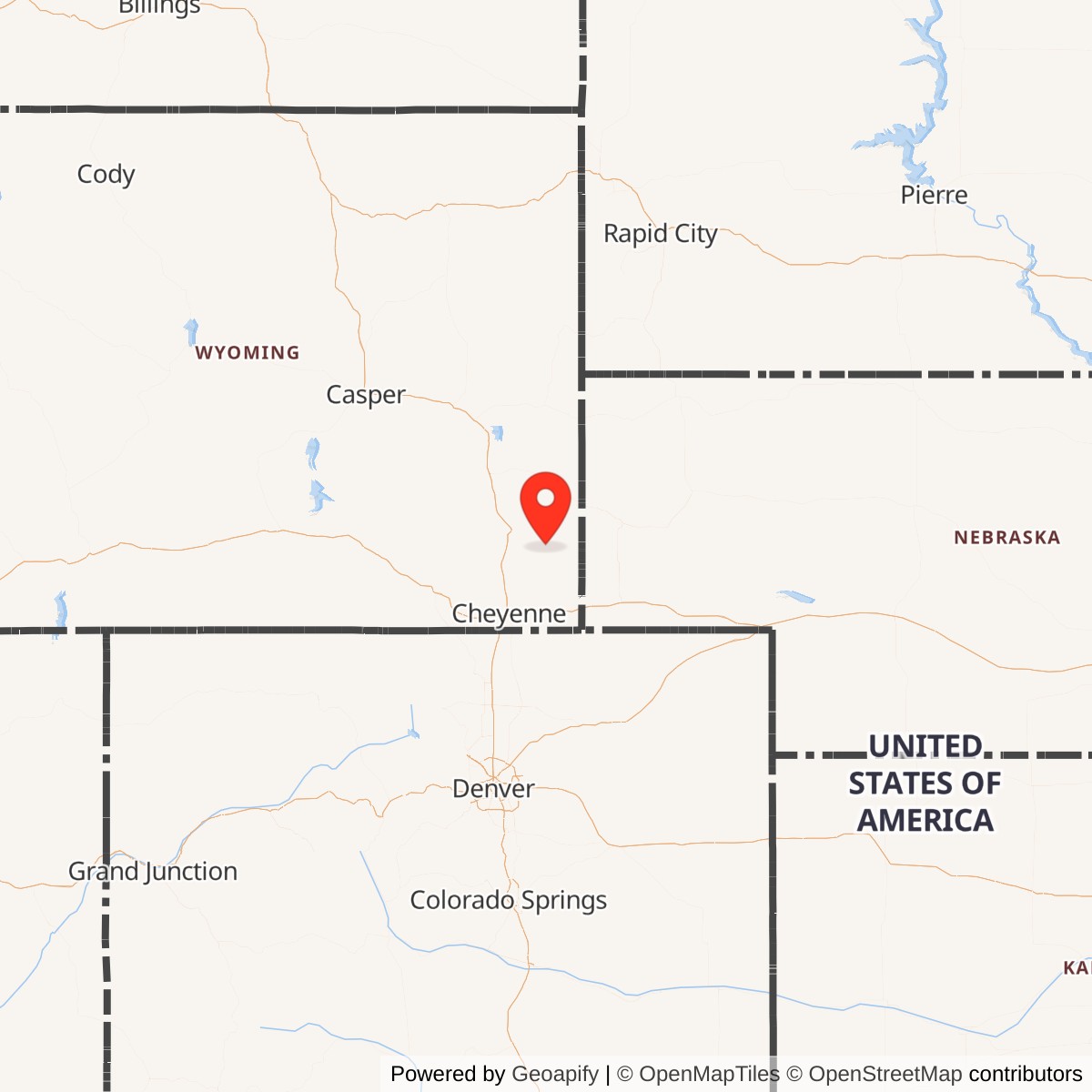
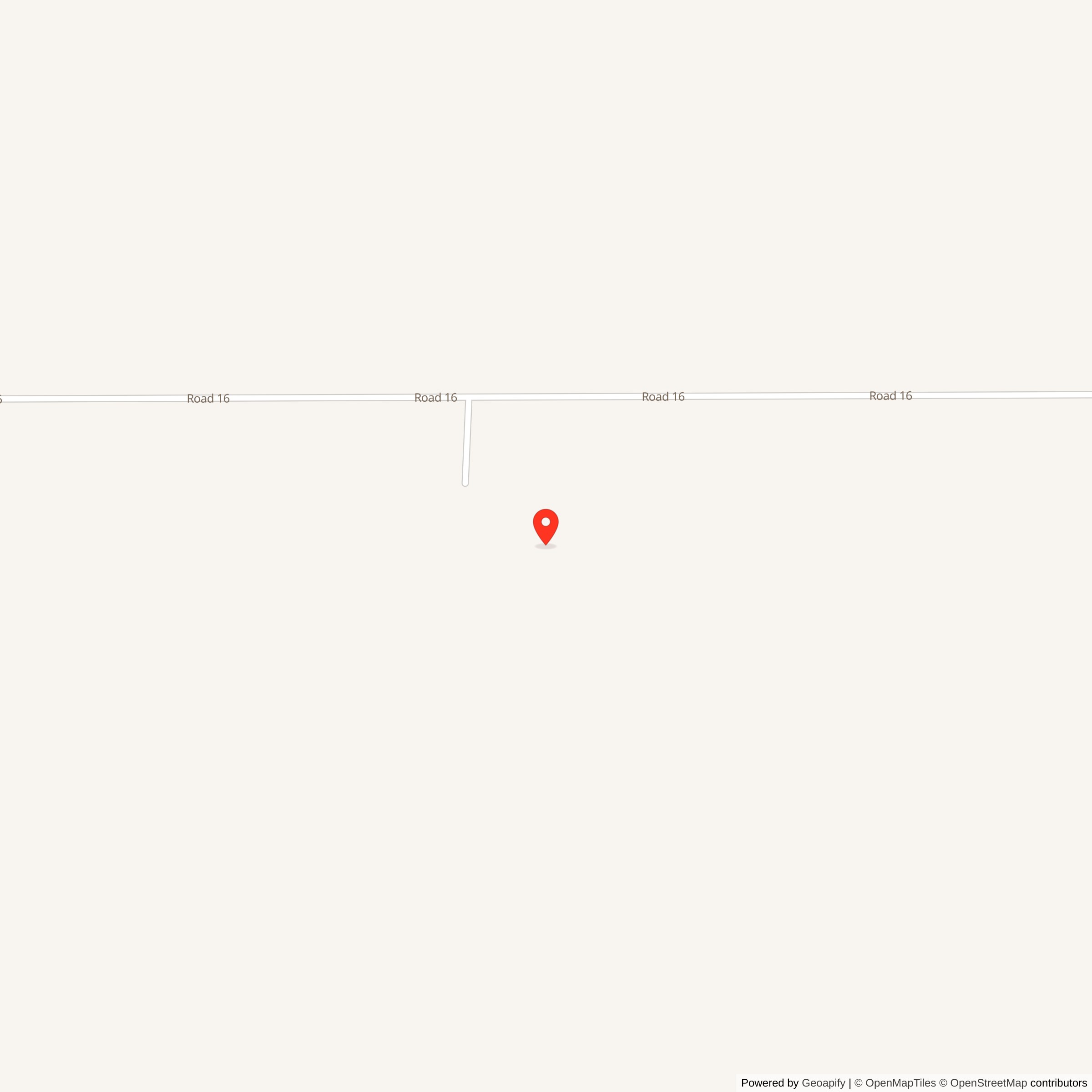
R-04 was built to look forgettable. That was part of the point. From the road, it was a small fenced utility compound on Wyoming high plains; underground, it was tied into a launch-control network that first served Minuteman and later carried the most powerful operational ICBM the United States ever deployed. Its history is not a story of public monuments or visible ruins. It is the quieter story of how an ordinary Romeo Flight silo became part of the Peacekeeper missile field and then passed into the post-Cold War landscape of treaty elimination.
Launch Facility R-04 was an unmanned missile silo / Launch Facility in Romeo Flight, controlled from R-01, the Romeo Flight Missile Alert Facility / Launch Control Center. The site belonged to the F.E. Warren Air Force Base missile field, the 90th Strategic Missile Wing during the Strategic Air Command era, and the 400th Strategic Missile Squadron / later 400th Missile Squadron during the Minuteman and Peacekeeper years. aR-04 was originally built for the LGM-30B Minuteman I, later served in the LGM-30G Minuteman III force, and was then converted for the LGM-118A Peacekeeper.
The site is located north of Meriden in Goshen County, Wyoming, in the eastern portion of the former Peacekeeper sector of the F.E. Warren missile field. Public Peacekeeper site-photo documentation identifies the same site as Francis E. Warren AF Missile Site R-04, Permanent Installation Number 8509, Installation Location Code GHYY, at 41-39-56, 104-25-47.
R-04 lay north of Meriden, east-southeast of the R-01 control site, in open agricultural and ranch country. The setting is characteristic of the F.E. Warren missile field: long section roads, low relief, sparse development, and wide separation between facilities. That landscape was not incidental. Minuteman launch facilities were dispersed so that a single enemy strike could not destroy a large share of the force, and later Peacekeeper conversion reused that dispersed Minuteman geography rather than building an entirely new missile field.
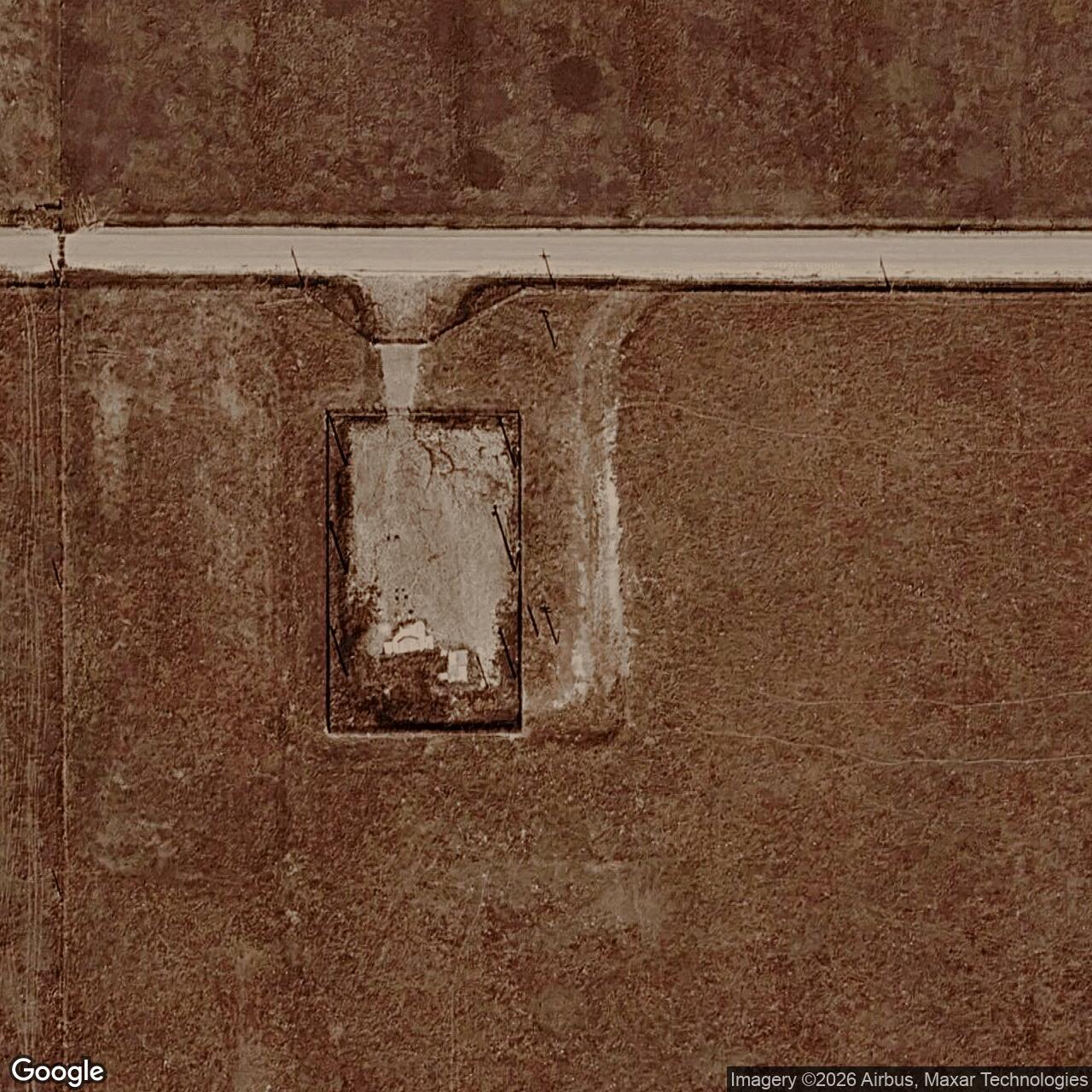
As a Launch Facility, R-04 was normally unmanned. Missile combat crews served in the underground Launch Control Center at R-01, while security forces, maintenance teams, communications specialists, and other support personnel visited the launch facility when required. The site's surface features were utilitarian: access road, fenced compound, security and utility features, power and communications connections, and the hardened launcher area above the buried silo and support equipment. Its most important features were below grade and tied back through hardened command-and-control infrastructure to Romeo Flight's control site.
Public exterior documentation for R-04 is limited compared with some neighboring sites. Scott D. Murdock's Peacekeeper field-photo listing identifies the site and includes four general-view photographs. Those photographs confirm the public identity of the former LF and provide a basic visual record.
R-04 is inactive and decommissioned. It was one of the 50 former F.E. Warren Peacekeeper launch facilities addressed by the post-Peacekeeper arms-control and disposal program. Public Air Force reporting in 2013 stated that the United States had chosen to permanently eliminate 50 previously deactivated F.E. Warren Peacekeeper launch facilities under New START. The stated method for the Warren Peacekeeper launch facilities was to fill the silos with earth and gravel. Air Force Civil Engineer Center reporting also described treaty requirements for dismantling deactivated ICBM facilities so that they could no longer be used as missile launch facilities.
For the full Romeo Flight narrative, see R-01 Missile Alert Facility / Launch Control Center
Chronology
- 1962 Construction planning and field work for the F.E. Warren Minuteman missile field were underway during the early 1960s.
- 1963-07-01 The 90th Strategic Missile Wing was activated at F.E. Warren Air Force Base.
- 1964-07-01 The 400th Strategic Missile Squadron stood up as part of the F.E. Warren Minuteman force.
- 1965-06 The 400th Strategic Missile Squadron, including Romeo Flight, became operational with Minuteman IB missiles.
- 1965-06-15 F.E. Warren's 200th Minuteman missile was placed on alert, completing the original 90th Strategic Missile Wing Minuteman force.
- 1972 F.E. Warren began major force-modernization work associated with conversion from Minuteman I to Minuteman III.
- 1974-09-03 The last Minuteman IB at F.E. Warren went off alert.
- 1975 Minuteman III replaced Minuteman I at F.E. Warren; Minuteman II was never deployed at the base.
- 1982-11-22 President Ronald Reagan announced the plan to deploy the MX / Peacekeeper missile at F.E. Warren.
- 1984-07 Construction began for Peacekeeper support facilities at F.E. Warren.
- 1986-10-10 The first Peacekeeper site at F.E. Warren was strategically postured.
- 1986-12-16 F.E. Warren achieved Peacekeeper initial operating capability.
- 1988 Fifty Peacekeeper missiles were in service at F.E. Warren.
- 1991-09-01 The 90th Strategic Missile Wing was redesignated the 90th Missile Wing.
- 2005-09-19 The Peacekeeper missile mission ended at F.E. Warren; no Peacekeeper ICBMs remained on strategic alert in the 400th Missile Squadron.
- 2011-02 New START entered into force, setting the arms-control framework for later elimination of deactivated silos.
- 2013-08-04 Public site photographs documented R-04 as Francis E. Warren AF Missile Site R-04, PIN 8509 / ILC GHYY.
- 2013-08-23 The Air Force announced permanent elimination of 50 previously deactivated F.E. Warren Peacekeeper launch facilities.
- 2014 Public Air Force reporting stated that elimination of the 50 former F.E. Warren Peacekeeper launch facilities was scheduled to be completed by December 2014.
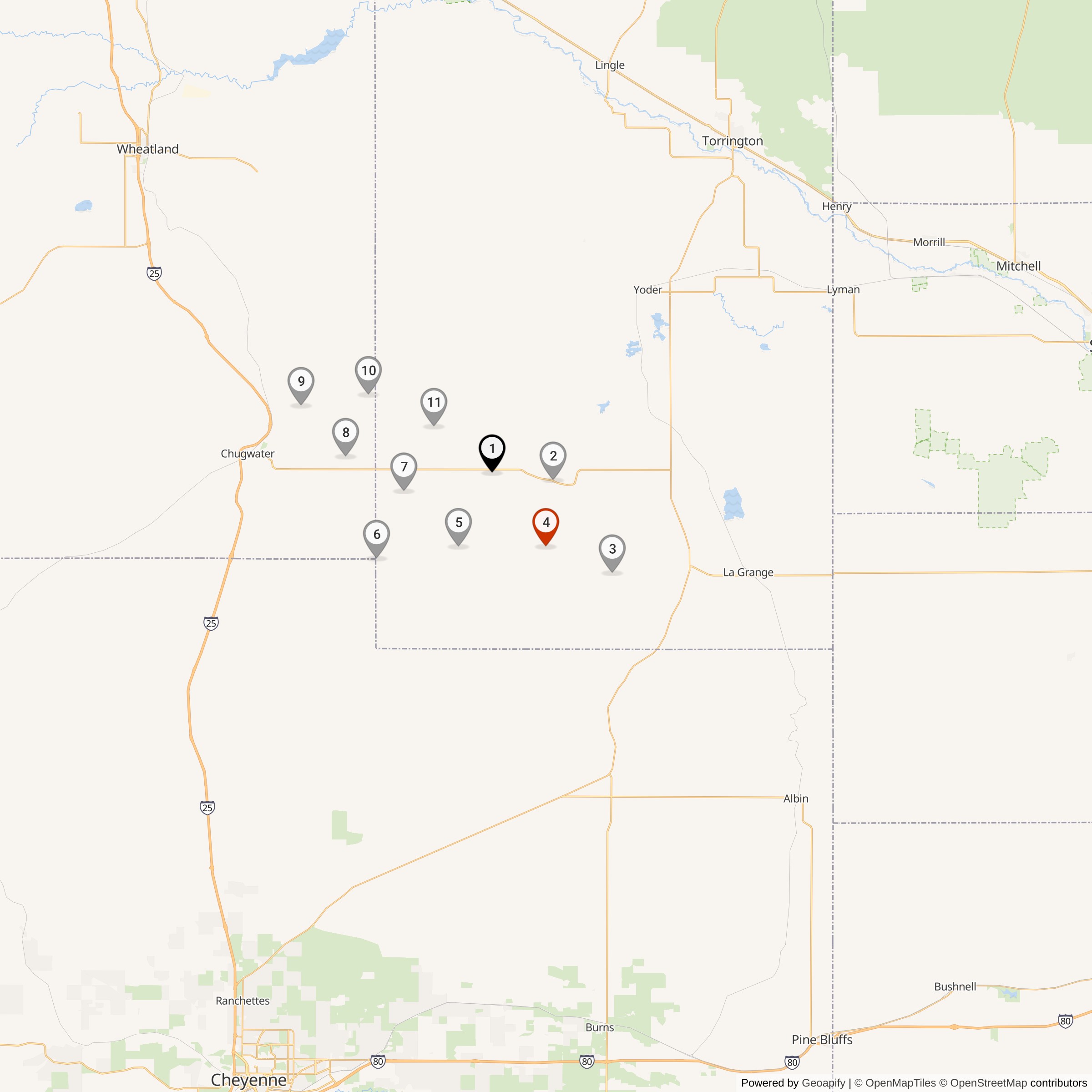
Read about the Peacekeeper Missile at F.E. Warren AFB
All Peacekeeper Missile Silo Locations
All Minuteman/Peacekeeper Missile Silo Locations