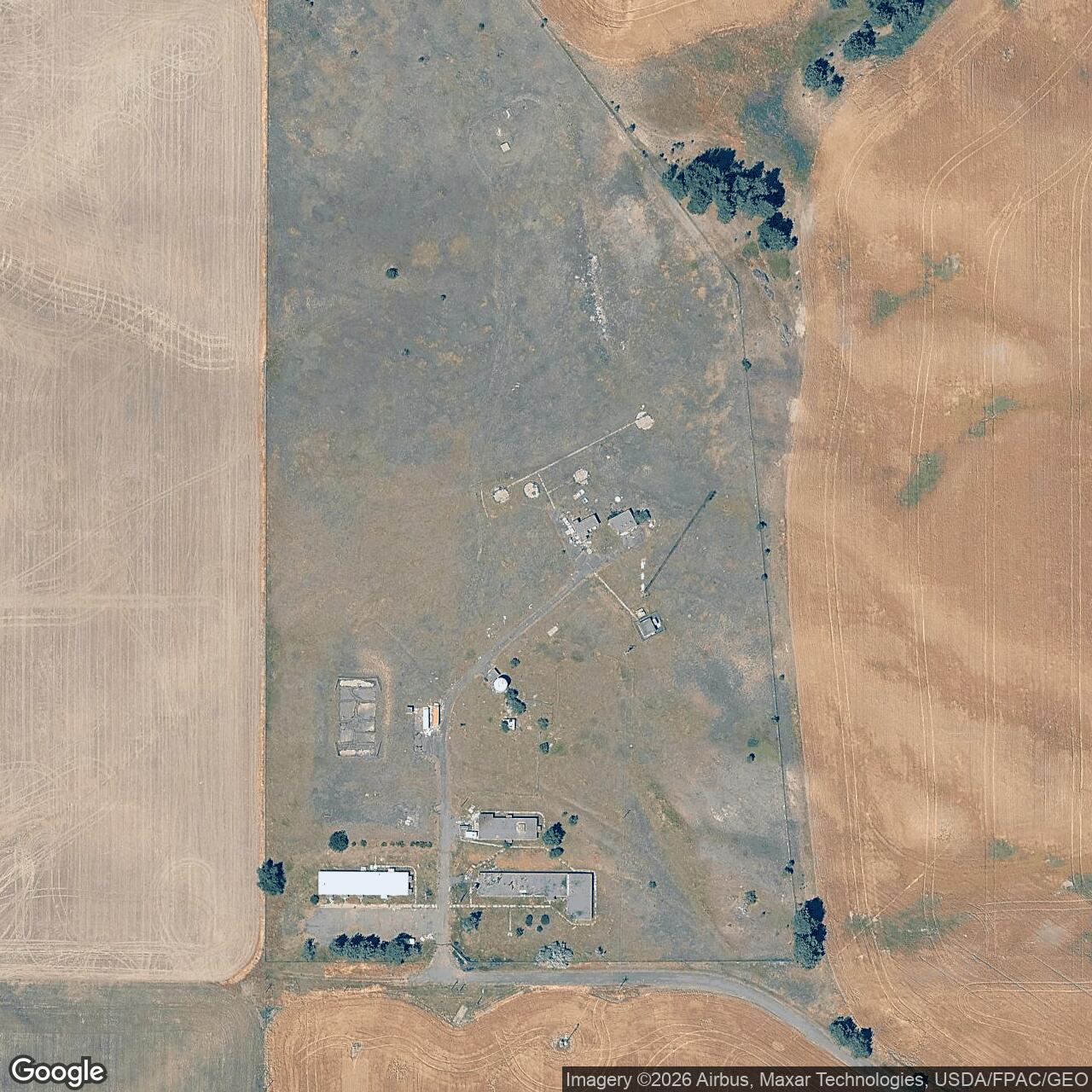
Nike Missile Site F-87 IFC, Deep Creek Washington
Longitude: -117.74225456143700
This location was part of the Fairchild Defense Area
Site ID: F-87
Configuration: 2B,1C/18H/11L-U
This site controlled the missiles at the Launch Area located here.
Site Role: IFC
A typical Nike air defense site consisted of two separate parcels of land. One area was known as the Integrated Fire Control (IFC) Area. This site contained the Nike system's ground-based radar and computer systems designed to detect and track hostile aircraft, and to guide the missiles to their targets.
The second parcel of land was known as the Launcher Area. At the launcher area, Nike missiles were stored horizontally within heavily constructed underground missile magazines. A large, missile elevator brought the Nikes to the surface of the site where they would be pushed across twin steel rails to one of four satellite launchers.
Elaboration on how Nike worked here.
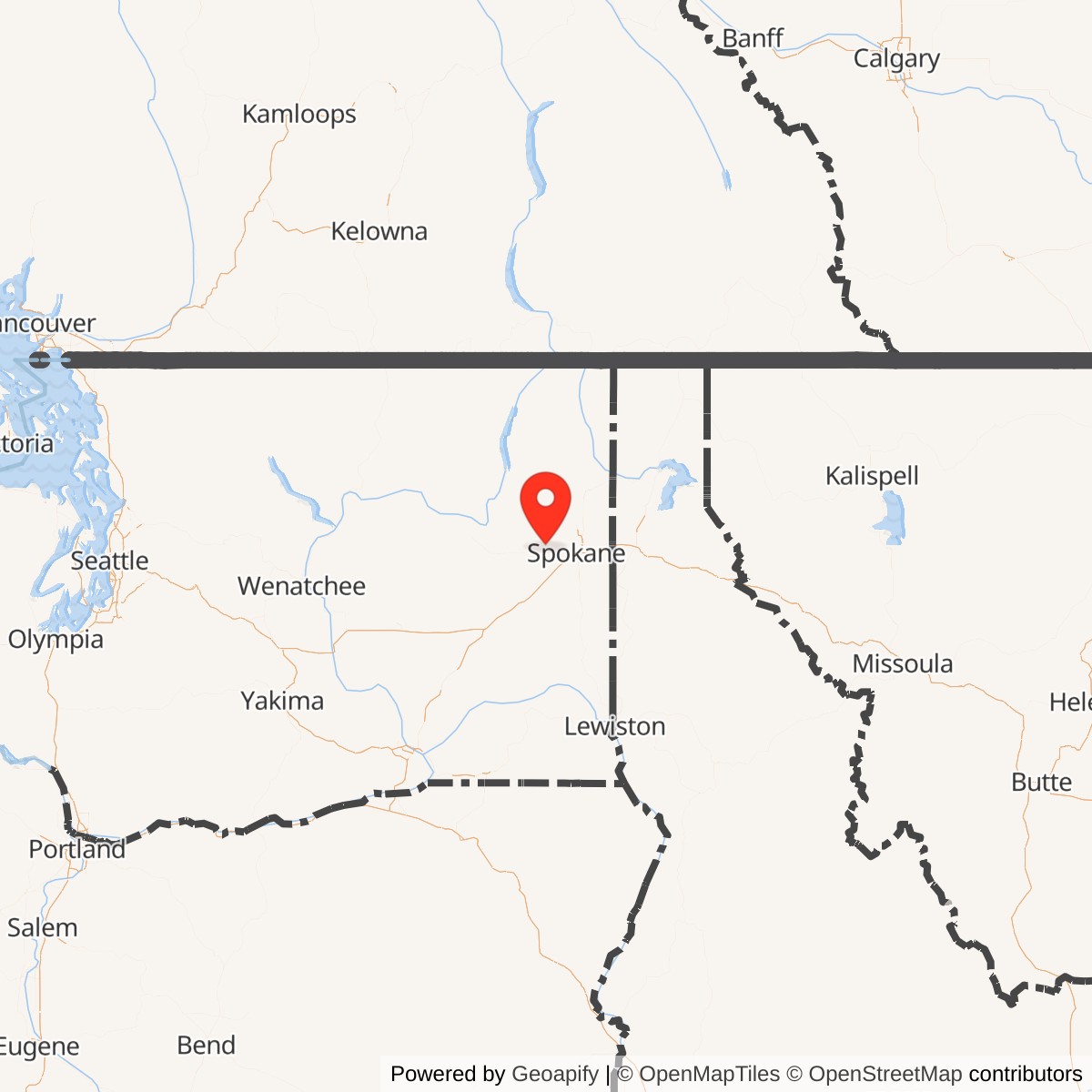
Nike site F-87 was the Deep Creek Nike missile battery in Spokane County, Washington. It was part of the Fairchild Air Force Base Defense Area, the Army air-defense network built to protect Fairchild Air Force Base and the Spokane-region military complex during the Cold War. It was an Army surface-to-air missile site, not an Air Force Atlas, Titan, or Minuteman installation.
F-87 is no longer an active military installation. The best site-specific federal inventory gives its active service as September 1958 to March 1966.
The site began as a Nike Ajax battery and was then modernized for Nike Hercules. The federal inventory lists the site as Nike 2B,1C/18H/11L-U, meaning it retained an underground Nike-magazine layout and served in the later Hercules era. Appendix D of Mary T. Cagle's Nike Hercules history appears to list F-87 under converted defense sites, with conversion construction from July 1958 to March 1959 and an operational date with Hercules missiles of June 29, 1959.
The site consisted of two physically separated components. The integrated fire control area, or IFC, held the radars, control vans/equipment, administrative functions, barracks/support buildings, communications, and the tactical fire-control system. The launch area held the underground magazines, elevators, launchers, handling and support facilities, security fencing, utilities, and the structures needed to store, prepare, and fire missiles.
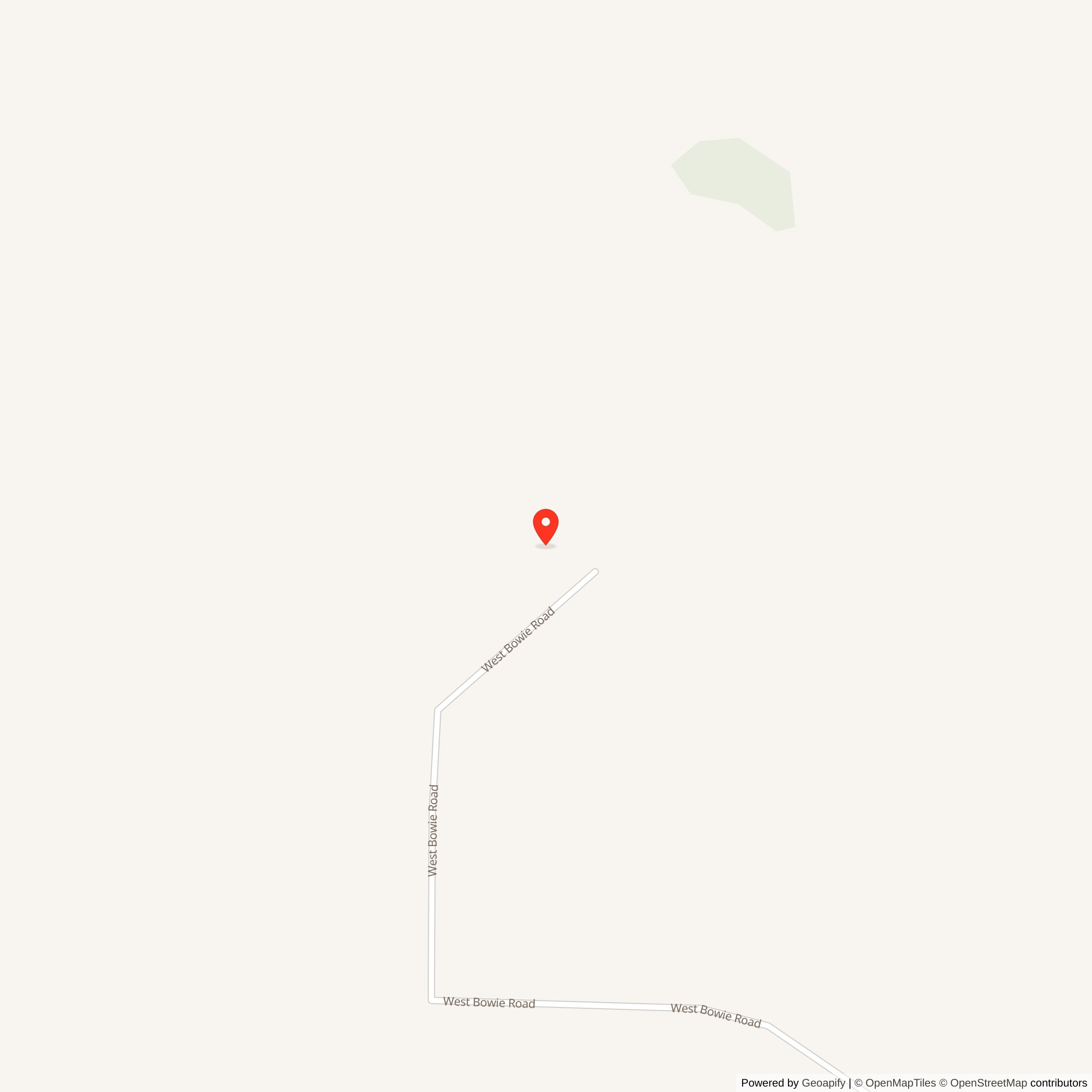
The IFC/control coordinate places the radar/control complex in the Deep Creek area, associated in later historical summaries with Bowie Road. The launch coordinate places the missile-launch complex to the south-southeast, associated with the Sprague Road area.
Defense Area and Strategic Purpose
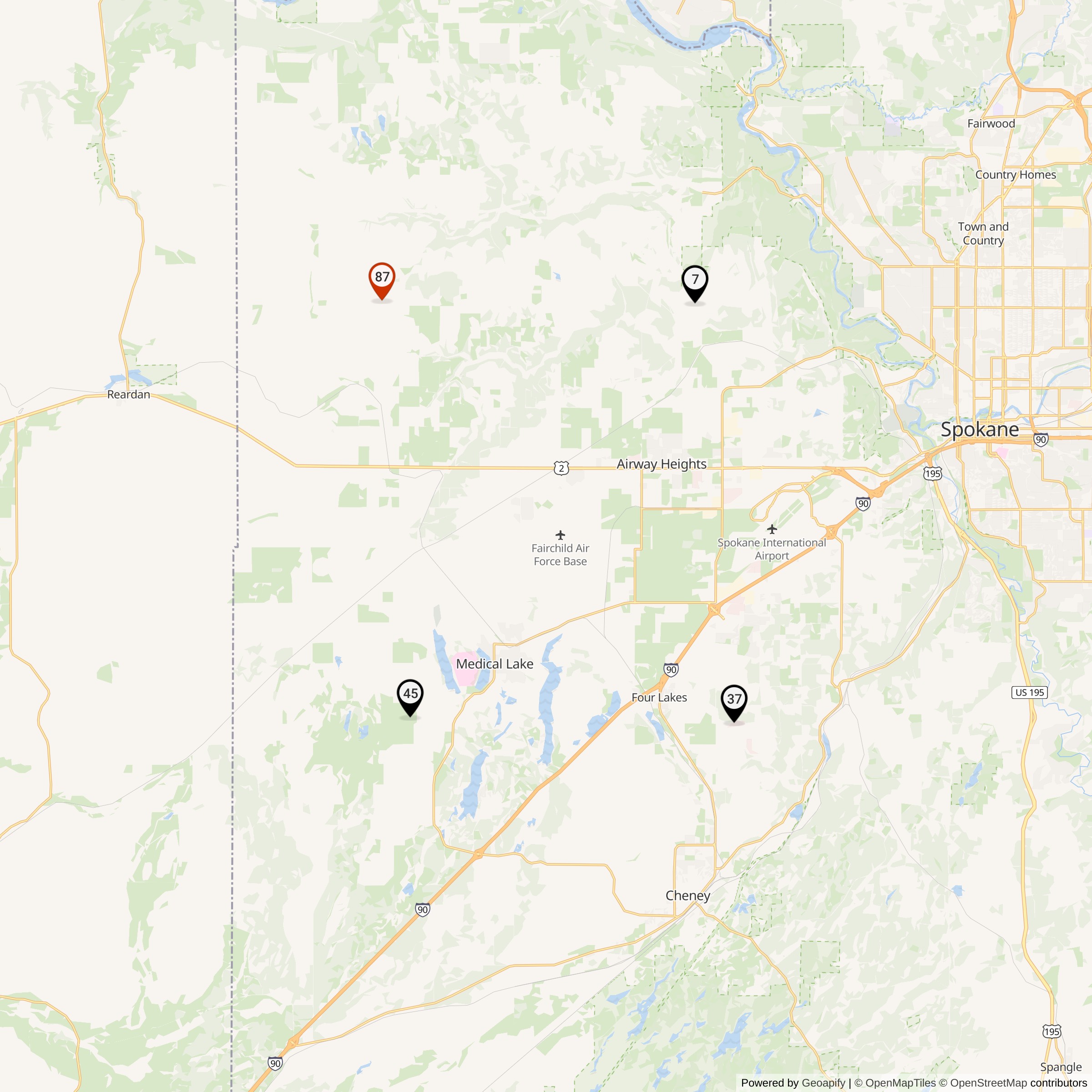
F-87 belonged to the Fairchild Air Force Base Defense Area. Fairchild AFB was a Strategic Air Command installation, and SAC bases were among the highest-priority military targets in the Cold War because they supported the United States' nuclear deterrent bomber force. The Fairchild Nike batteries were therefore not ordinary local air-defense outposts. They were part of the national defensive system intended to protect a strategic bomber base and the Spokane military region from Soviet bomber attack.The Fairchild Defense Area had four Nike batteries: F-07 at Airway Heights/Spokane, F-37 at Cheney/Four Lakes, F-45 at Medical Lake, and F-87 at Deep Creek. The federal history states that F-07, F-37, and F-45 were built and activated in 1957 and that F-87 was built and activated in 1958. Headquarters facilities were located at Fairchild. The Seattle District of the U.S. Army Corps of Engineers handled land acquisition, design, and construction-supervision responsibilities for the Fairchild Nike sites.
F-87 was the northern/northwestern part of the Fairchild defensive ring. Its placement at Deep Creek helped close the air-defense geometry around the base and gave the Army another radar-guided missile battery outside the immediate airfield perimeter. When the Army consolidated the Fairchild network around Hercules-capable batteries, F-07 and F-37 closed in June 1960, while F-45 and F-87 remained in service until March 1966.
Site Layout and Facilities
F-87 followed the standard Nike site separation between an IFC/control area and a launch area. The separation was essential to the Nike system. The IFC needed a position with useful radar coverage and line-of-sight relationship to the launch area and the airspace being defended. The launcher area needed enough land for magazines, launchers, missile-handling surfaces, ready buildings, utilities, security fencing, safety clearances, and road access.At the IFC, Nike personnel used acquisition radar to search for targets, tracking radar to follow the target, and missile-tracking radar to follow the launched missile. Battery-control equipment generated the steering commands that guided the missile toward the predicted intercept point. The IFC was therefore the command and fire-control brain of the site.
The launch area was the ordnance side of the battery. Nike Ajax missiles were stored below grade in underground magazines and raised by elevators to surface launchers. The Ajax missile used a solid booster and a liquid-fuel sustainer, so Ajax-era launch areas included facilities and procedures connected to missile fueling, handling, safety, and maintenance. Nike Hercules was larger and solid-fueled, and a Hercules-capable site needed modified storage, handling, launcher, security, and warhead-control arrangements. Because Hercules could carry a nuclear warhead, the converted site also had a higher level of security and special-weapons operational discipline than a purely Ajax-era battery.
The federal configuration code for F-87, Nike 2B,1C/18H/11L-U, indicates a converted underground-magazine site with Hercules capacity. In plain language, F-87 was not a small temporary battery. It was a permanent missile installation with underground magazines, a separate radar/control site, and enough launch capacity to remain operational after the Fairchild Defense Area was reduced to two Hercules-capable batteries.
Operational History
The Nike program arose because conventional antiaircraft guns could not reliably stop high-altitude jet bombers, especially if those aircraft carried nuclear weapons. Nike Ajax was the first operational U.S. surface-to-air missile system. It used radar guidance and a command-control system that allowed the battery to engage enemy aircraft at ranges and altitudes beyond conventional gun defenses. Nike Hercules, the successor system, added greater range, solid-fuel propulsion, improved high-altitude performance, and nuclear-warhead capability intended to destroy bomber formations rather than a single aircraft.The Fairchild Defense Area was part of this national shift. Fairchild AFB's SAC mission made the Spokane region a high-value target, and the Army built Nike batteries in a defensive ring around it. The initial sites went into service in the late 1950s. F-87, the fourth Fairchild-area battery, was activated in September 1958 at Deep Creek.
F-87's early operation coincided with the transition from Nike Ajax to Nike Hercules. The Appendix D Hercules conversion table in History of the Nike Hercules Weapon System places F-87's conversion work between July 1958 and March 1959 and gives June 29, 1959 as the operational date with Hercules missiles. That timing makes F-87 one of the Fairchild-area batteries retained for the more capable Hercules era rather than one of the Ajax-only sites that closed in 1960.
In 1960, the Fairchild Defense Area contracted. F-07 at Airway Heights/Spokane and F-37 at Cheney/Four Lakes closed as Nike Ajax batteries. F-45 at Medical Lake and F-87 at Deep Creek remained active as the area's two Hercules-capable batteries. Together they continued to defend Fairchild AFB and the surrounding military region during a period when the national air-defense system was increasingly tied into Air Force radar networks, Army command posts, and semi-automated target assignment systems.
The Fairchild Nike batteries operated during a transitional moment in U.S. strategic defense. In the mid-1950s, the central fear was Soviet long-range bomber attack. By the early 1960s, intercontinental ballistic missiles and submarine-launched ballistic missiles were becoming the dominant nuclear threat. Nike Hercules could defend against bomber attack, but it could not solve the problem of massed ballistic-missile attack. That changing threat, combined with cost and the reorganization of continental air defense, helped shorten the life of many interior Nike batteries.
F-87 remained active until March 1966. Its closure ended the Deep Creek site's active Army air-defense role and left the Fairchild Defense Area without the four-site Nike ring that had existed less than a decade earlier.
Post-Closure and Current Condition
The federal Nike inventory lists both the control and launch sites as private ownership. Later site summaries describe the IFC as privately owned with electrical service, buildings, and radar towers standing, and the launch site as privately owned, with some military buildings in use and newer buildings erected over or near the magazine area. Because the site is private property and may have changed through grading, construction, salvage, or vegetation growth, this history describes current condition conservatively: F-87 is a closed, privately owned former Nike site with surviving or historically documented Nike-era fabric at both the IFC and launch properties, but with later private reuse and alteration.
Chronology
- June 1945 The U.S. military initiated development of what became the Nike guided-missile air-defense system.
- 1953 Nike Hercules development was under way as the successor to Nike Ajax.
- 1954 The Army Corps of Engineers began survey and land-acquisition work for Nike defenses in several U.S. defense areas, including the Fairchild/Spokane region.
- April 1956 Construction of Fairchild-area Nike batteries began.
- January 1957 The first three Fairchild-area Nike Ajax batteries were operational at F-07 Spokane/Airway Heights, F-37 Cheney/Four Lakes, and F-45 Medical Lake.
- July 1958 Beginning of F-87 Hercules conversion construction.
- September 1958 F-87 at Deep Creek became active according to the federal Nike inventory and site-coordinate summaries.
- March 1959 End of F-87 Hercules conversion construction.
- June 29, 1959 F-87's operational date with Nike Hercules missiles.
- June 1960 F-07 and F-37 closed as Ajax-only batteries while the Fairchild Defense Area consolidated around Hercules-capable batteries.
- 1960-1961 F-45 completed its Hercules conversion, leaving F-45 and F-87 as the two retained Fairchild-area Hercules batteries.
- March 1966 F-87 was deactivated.
List of all Nike Installations in Washington