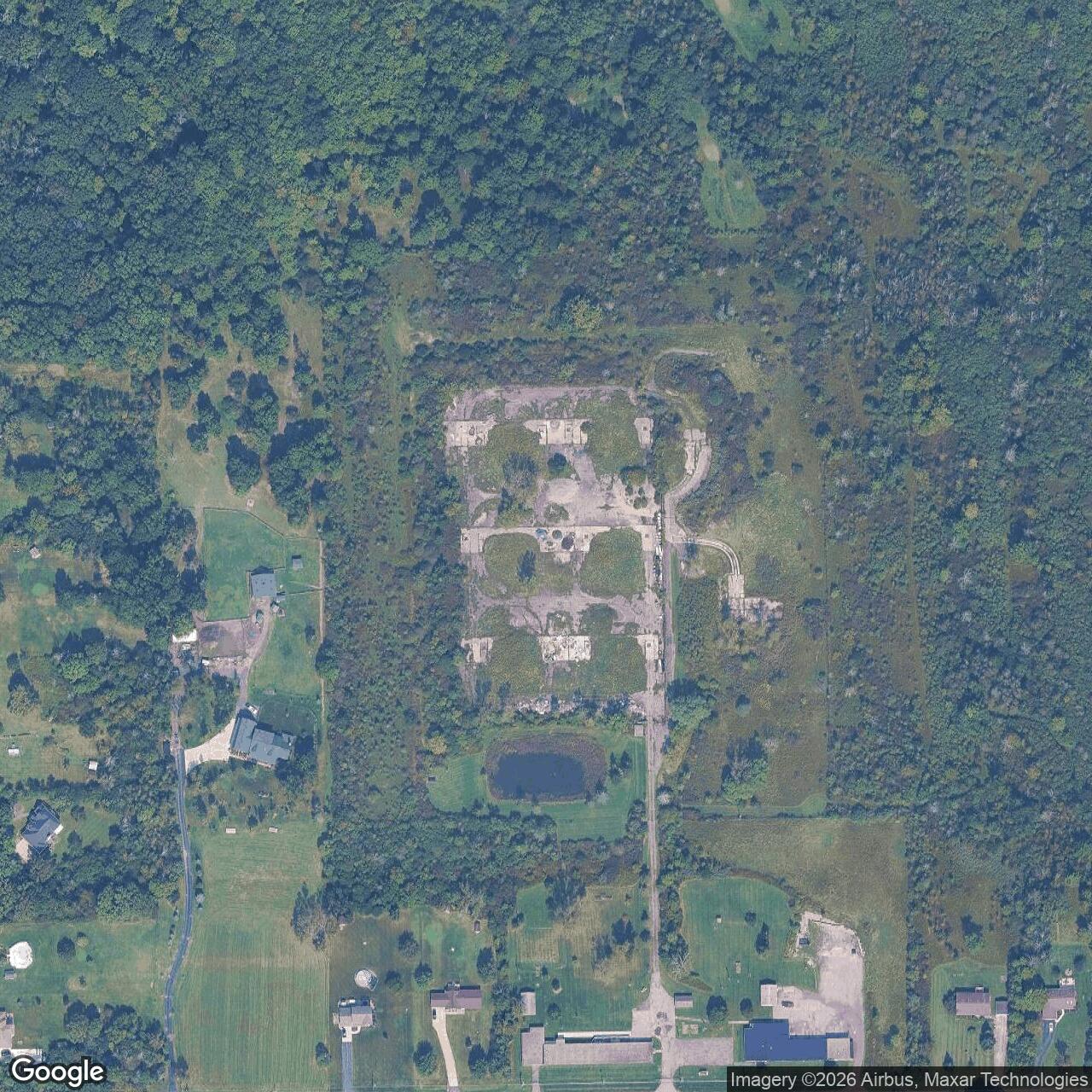
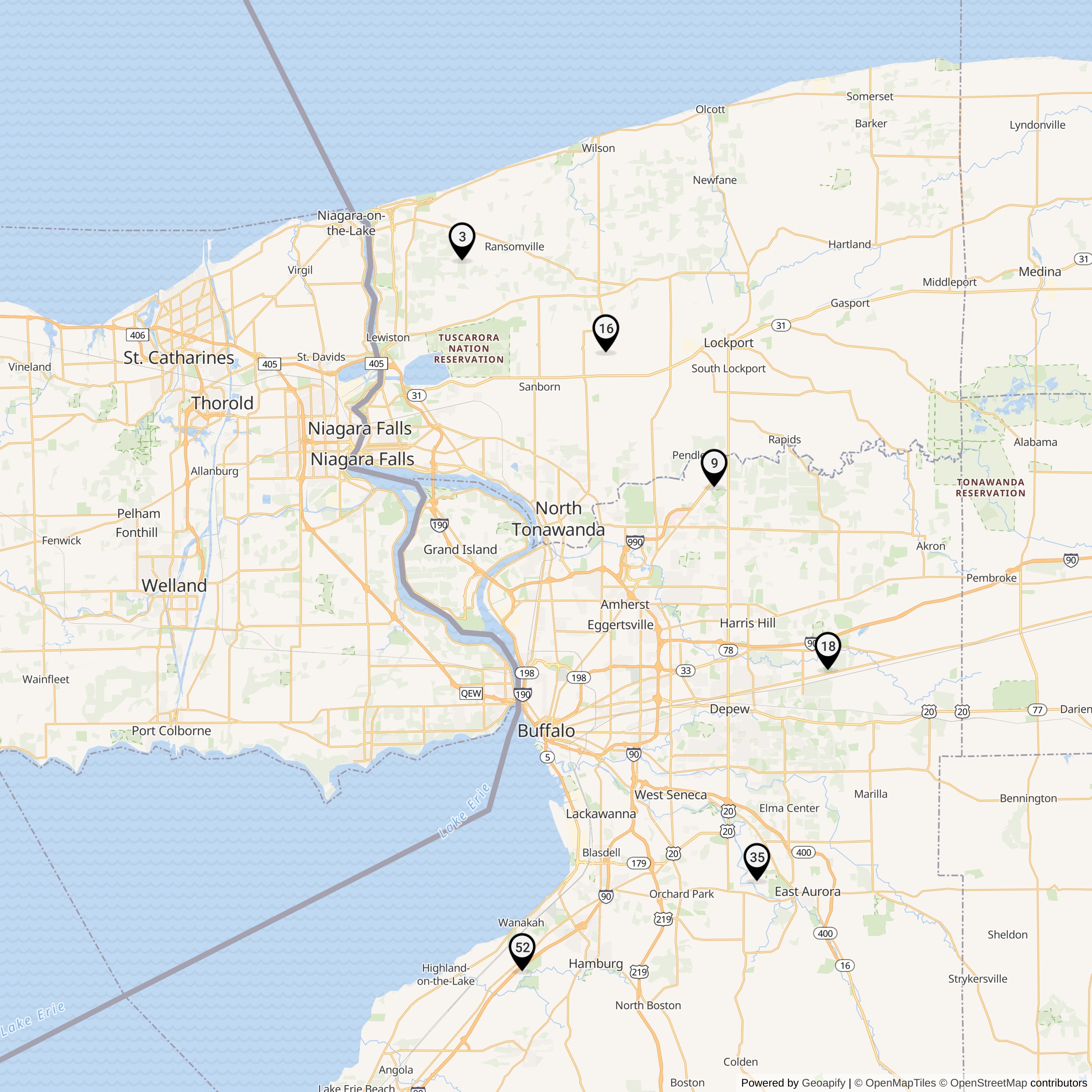
Nike Missile Site NF-41 Launcher, Grand Island New York
Longitude: -79.0156647581366
This location was part of the Niagara Falls-Buffalo Defense Area
Site ID: NF-41
Missile / battery configuration: Nike 1B,2C/18H/11L-U
The missiles at this Launch Area were controlled by the Integrated Fire Control site located here.
Site Role: Launcher
A typical Nike air defense site consisted of two separate parcels of land. One area was known as the Integrated Fire Control (IFC) Area. This site contained the Nike system's ground-based radar and computer systems designed to detect and track hostile aircraft, and to guide the missiles to their targets.
The second parcel of land was known as the Launcher Area. At the launcher area, Nike missiles were stored horizontally within heavily constructed underground missile magazines. A large, missile elevator brought the Nikes to the surface of the site where they would be pushed across twin steel rails to one of four satellite launchers.
Elaboration on how Nike worked here.
Missile Type: Ajax/Hercules/Improved Hercules
The Nike Ajax was the first in the Army's family of guided missiles, and the world's first operational, guided, surface-to-air missile system. Nike Ajax had a burnout speed of Mach 2.3, a range of 25-30 miles, and a ceiling of 65,000 feet.
Designed to carry either nuclear and/or high-explosive warheads, the Nike Hercules missile could attack supersonic aircraft operating at altitudes in excess of 150,000 feet and at a range of more than 87 miles.
Grand Island's Nike site did not merely exchange one missile for another. It changed identity.
The installation began in 1955 as the paired NF-74 and NF-75 Nike Ajax site, a dual battery with two fire-control sections and twice the launcher capacity of a standard position. During the 1958-1959 transition to Nike Hercules, the Army retired one half of that double Ajax installation, converted the surviving firing section, and redesignated the operational battery NF-41. The resulting site became the second Hercules position in the Niagara-Buffalo defensive ring.
That transition placed Grand Island at the center of nearly every major change in the regional missile defense. Regular Army soldiers opened the dual Ajax site. Battery C of the 1st Missile Battalion, 4th Artillery operated the Hercules battery. On 1963-04-19, Battery A of the 2nd Missile Battalion, 209th Artillery, New York Army National Guard, assumed the mission in a formal command transfer. Later that year, NF-41 received the defense area's second High-Power Acquisition Radar and became its third Improved Nike Hercules battery.
The site remained on alert until 1970-03-31, when Grand Island, Cambria, and Lancaster closed as the final Nike batteries in the Niagara-Buffalo Defense. The Cold War structures then entered two very different community afterlives. The former fire-control and administrative property on Whitehaven Road became the Town of Grand Island's Nike Base Park, Golden Age Center, Community Center, recreation offices, trails, and golf course. The former launch area on Staley Road became the Grand Island Central School District's Eco Island Nature Center and ecological education reserve.
Few missile sites have been absorbed so completely into daily community life while retaining the military name. Grand Island residents still gather, walk, learn, and play at places called Nike Base Park and Eco Island. The missiles are gone, but the landscape continues to carry the vocabulary and physical divisions of the former battery.
Location and the Island Setting
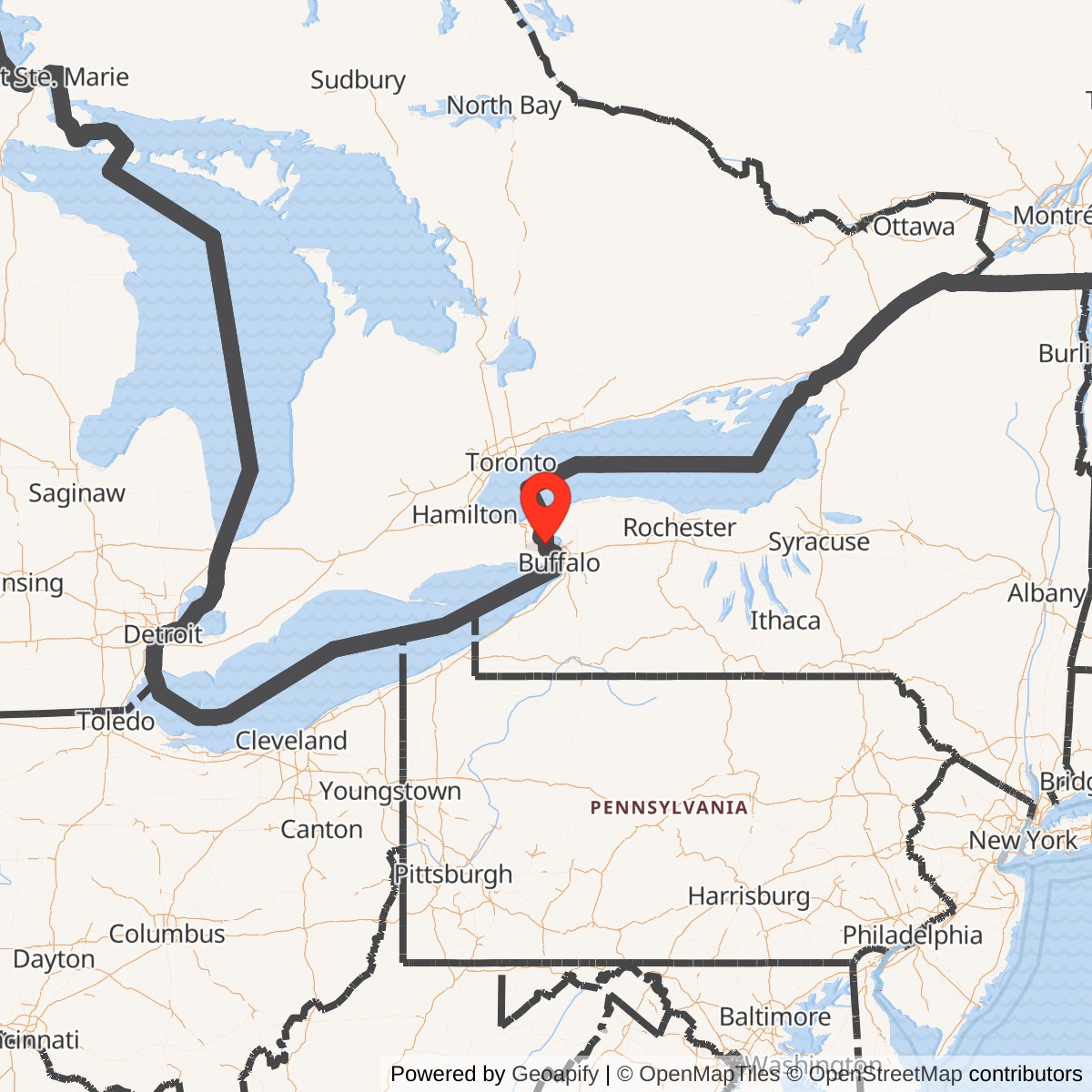
NF-41 occupied two principal properties on the western side of Grand Island, an island in the Niagara River between Buffalo and Niagara Falls.
The Integrated Fire Control, administration, and support property was south of Whitehaven Road. The Town of Grand Island now identifies this area as Nike Base Park at 3278 Whitehaven Road.
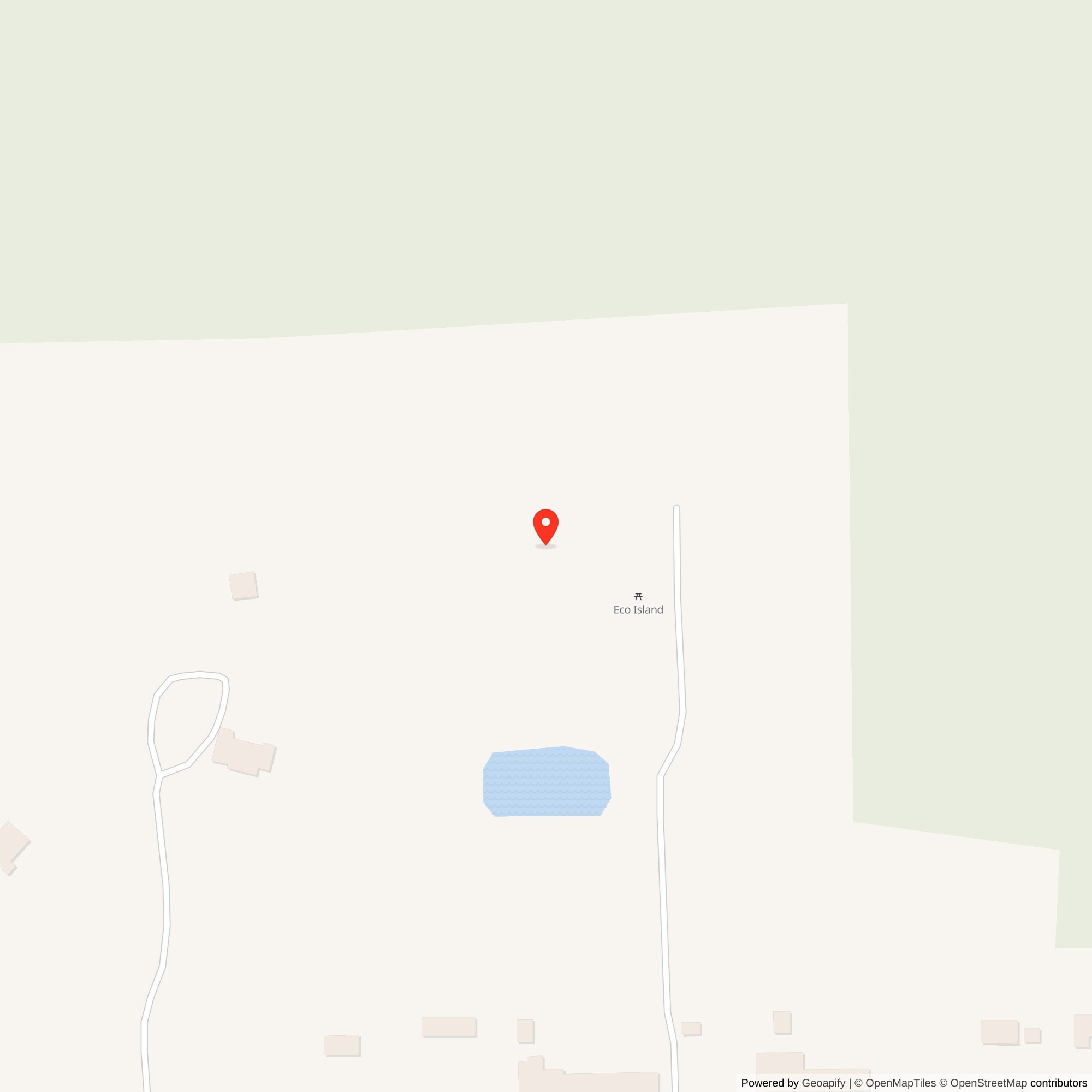
The launch property was farther south and west, near Staley Road and West River Parkway. The Grand Island Central School District now operates the Eco Island Nature Center at 3325 Staley Road.
The separation was essential to Nike command guidance. Radar operators needed enough distance from the launchers to track both an attacking aircraft and the outbound missile. The fire-control computer continuously compared those two tracks and transmitted steering commands. A launch area beside the radar compound would have created poor geometry for precise missile tracking.
Grand Island offered an unusually strategic location. It sits between the industrial concentration at Buffalo and the hydroelectric and industrial targets at Niagara Falls. A battery on the island could cover approaches along the Niagara River and overlap the defensive fields of Cambria, Model City, Lancaster, and the other Buffalo-sector sites.
The island also provided open land for radar horizons and magazine construction without placing the missile launchers in the center of either city. Yet the site was not isolated from civilian life. Farms, homes, roads, schools, and community institutions surrounded the military properties, and soldiers stationed there became part of the island community.
Air Defense Before the Nike Site
Grand Island had an air-defense role before the guided-missile battery opened.
During the early 1950s, Regular Army and New York Army National Guard units operated 90-millimeter antiaircraft gun positions on the island. Regional records identify gun batteries along Staley Road and Ransom Road, although the exact relationship among all temporary gun properties and the later Nike parcels is not completely clear.
The 606th Antiaircraft Artillery Battalion and elements of the 44th Antiaircraft Artillery Battalion rotated through Grand Island gun positions. New York Army National Guard organizations also trained and served on the island.
Those gun batteries represented the first layer of the Cold War response to Soviet bomber threats. Radar-directed 90-millimeter guns could engage conventional aircraft, but jet bombers were flying higher and faster than World War II weapons could reliably counter.
The Army's Nike Ajax system replaced that gun-based local defense with guided missiles. The transition did not happen all at once. Gun units remained active on Grand Island while the Nike site was built, tested, and staffed.
This earlier history matters because Grand Island did not suddenly become militarized in 1955. The Nike installation grew from an existing air-defense presence and inherited soldiers, local relationships, access routes, and a community already familiar with restricted military compounds.
Construction and the 1955 Ajax Opening
Construction of the Grand Island Nike Ajax site began during the first regional deployment wave.
The 44th Antiaircraft Artillery Battalion sent a cadre to the Army Air Defense School at Fort Bliss, Texas, for the thirty-two-week Nike Ajax course. The unit was redesignated the 44th Antiaircraft Artillery Missile Battalion on 1955-03-22.
On 1955-06-15, the battalion passed in review at Fort Niagara before moving to its assigned missile batteries at Model City, Grand Island, and, slightly later, Cambria.
Batteries C and D operated the Grand Island dual site. The original designations were NF-74 and NF-75. Each designation represented one firing section of the combined installation.
The site was a major construction project. The launch area required six underground magazines, elevators, surface rails, twenty-four launchers, missile assembly and testing space, propellant facilities, generators, barracks, roads, fencing, and security posts.
The fire-control area required two complete sets of tracking and guidance functions. Acquisition radar searched the assigned airspace. Target-tracking radar followed the bomber. Missile-tracking radar followed the Nike Ajax after launch. Computers calculated steering commands and transmitted them to the missile.
A regional historical photograph shows Nike Ajax missiles raised at Battery D on Grand Island during winter conditions. It provides direct visual evidence of the site's double-battery Ajax period and of the exposed surface work launcher crews performed in western New York weather.
NF-74 and NF-75 as a Dual Ajax Site
The paired NF-74 and NF-75 designations are central to understanding the installation.
The Grand Island complex was not two unrelated missile sites scattered across the island. It was one dual battery with two firing sections operating an expanded launch property.
A standard Nike Ajax battery usually had three underground magazines, approximately thirty missiles, and twelve launchers. A double site duplicated that arrangement. Grand Island therefore had six underground magazines, a nominal sixty-missile Ajax authorization, and twenty-four launchers.
The two fire-control sections could conduct separate engagements. This allowed the site to attack two bomber tracks at the same time, an important capability if a raid approached the Niagara frontier in formation.
The double site also demanded a larger workforce. Two command sections, expanded radar equipment, six magazine crews, twenty-four launch positions, missile assembly operations, generators, communications, and security had to remain ready.
Nike Ajax used a solid-fueled booster and a liquid-fueled sustainer. The sustainer required fuel and nitric-acid oxidizer, making the launch area both a missile base and a hazardous industrial workplace.
Missiles arrived unassembled. Crews inspected guidance sections, pressurized systems, installed batteries, connected the booster, handled propellants, and attached the three conventional fragmentation warheads.
During an alert, an elevator raised a missile from horizontal underground storage. Rail equipment moved it to a launcher, where it was erected and prepared for firing.
The Grand Island site therefore combined underground storage, surface launcher operations, precision electronics, and hazardous-material handling in a single continuous readiness mission.
Site Configuration and Plain-English Decoding
The recorded Hercules-era configuration for NF-41 is Nike 1B,2C/18H/11L-U.
Decoded in plain English, the surviving NF-41 half of the former dual site retained one B-type and two C-type underground magazines in the recorded physical layout. The operational Hercules battery carried eighteen Nike Hercules missiles and used eleven universal launchers.
Universal launchers could handle Nike Hercules and, where required during conversion periods, Nike Ajax. At Grand Island, the final mission was Hercules.
The code must be read together with the site's earlier history. It describes the final NF-41 configuration, not the original six-magazine NF-74/NF-75 double Ajax complex.
The B magazine was a larger structure that could be modified to handle Hercules launch equipment. The C magazines were original Ajax-type structures. The national configuration code records the physical magazine types that remained in the three-magazine half of the site, but it does not prove that every original C magazine served the final Hercules mission in precisely the same way.
The reduction from twenty-four Ajax launchers to eleven universal Hercules launchers shows that the Army did not convert the entire dual site. One firing section and one three-magazine half became NF-41. The other Ajax section was retired.
This distinction explains why historical sources can correctly describe Grand Island as both a former dual Ajax site and an eighteen-missile Hercules battery.
How NF-74 and NF-75 Became NF-41
The regional Hercules conversion began in 1958.
Cambria was the first Niagara-Buffalo site selected for Hercules. Grand Island was the second. Lancaster became the third and completed the three-site Hercules ring in November 1959.
Unit tables show the former NF-75 firing section ending in April 1959. The surviving Grand Island battery continued as NF-41 under Battery C.
The national site inventory begins NF-41's active-service period in April 1959. That date is best understood as the start of the consolidated Hercules-era identity, not the first military use of the physical site.
The renumbering reflected a major operational change. The Army no longer needed two separate Ajax firing sections and twenty-four short-range launchers on Grand Island. Hercules had greater range, speed, altitude, and destructive power. A single Hercules battery could cover a much larger sector.
The conversion required changes at both properties.
At the launch area, the larger missile required modified elevators, racks, rails, and launchers. Ajax fueling facilities became unnecessary for solid-fueled Hercules, while nuclear-warhead security and handling procedures became critical.
At the IFC area, the radar and computer system had to support longer-range engagements. Identification, tracking, electronic-countermeasure resistance, and communications were upgraded.
The site's physical contraction from a double Ajax battery to a single Hercules battery was therefore not a loss of mission importance. It was a concentration of greater capability into a smaller operational organization.
Battery C and Regular Army Hercules Operations
Battery C of the 1st Missile Battalion, 4th Artillery operated NF-41 during the Regular Army Hercules period.
The 44th Missile Battalion had been redesignated under the Combat Arms Regimental System. The change connected the modern missile organization with the historic lineage of the 4th Artillery.
Battery C inherited a site in transition. Personnel had to support the newly converted Hercules equipment while the former NF-75 Ajax half was being retired or placed outside the active mission.
Nike Hercules was much larger than Ajax and used solid propellant. It could carry a conventional warhead, but its defining air-defense role involved the nuclear W-31 warhead.
A nuclear Hercules was intended to destroy an entire bomber formation rather than rely on a near-direct conventional intercept. This capability increased the site's defensive reach but also imposed strict security, custody, communications, and authorization procedures.
Armed guards controlled access to the launch area. Nuclear components were handled under formal accountability rules. Crews drilled repeatedly so that they could respond quickly without compromising safety.
The battery continued to use command guidance. Ground radar tracked the target and the missile. The computer generated steering commands and issued the burst order at the calculated intercept point.
A photograph preserved in the regional history shows Nike Hercules equipment at Grand Island, while another records New Year's Eve 1960 at the site. Together, they capture both the technical and human dimensions of a remote missile battery that operated every day of the year.
Role in the Wider Military Network
NF-41 was one firing unit within a layered command system.
Fort Niagara originally housed the headquarters and Army Air Defense Command Post for the Niagara Falls Defense Area. Higher headquarters received warning information, identified threats, and assigned targets to individual batteries.
In 1961, the command post moved to Lockport Air Force Station in the Shawnee and Sanborn area. The move colocated Army missile control with Air Force radar and interceptor-control systems.
The Missile Master fire-distribution system linked the Nike batteries to the larger SAGE and NORAD warning network. It could monitor many targets, distribute engagements, and reduce the chance that several batteries would fire unnecessarily at the same aircraft.
In September 1963, the smaller BIRDIE system replaced Missile Master for the Niagara-Buffalo Defense.
Grand Island's location gave it overlapping coverage with Cambria and Lancaster. If an aircraft crossed the Niagara frontier, the command post could choose the battery with the best geometry, readiness, or remaining missile inventory.
The site also depended on regional maintenance and supply. The U.S. Army Support Center on Porter Road in Niagara Falls and the Combined Field Maintenance Shop provided specialized technical support beyond the capability of one firing battery.
NF-41 was therefore part of a chain extending from continental early-warning radar through Lockport command equipment to the Grand Island trackers and launchers.
The 1963 New York Army National Guard Handoff
Grand Island passed from the Regular Army to the New York Army National Guard on 1963-04-19.
The transfer was formal and specific. Captain Robert H. Dupont, commander of Battery A, 2nd Missile Battalion, 209th Artillery, NYARNG, relieved Lieutenant Ronald McQuaid, commander of Battery C, 1st Missile Battalion, 4th Artillery.
The change placed NF-41 in the hands of a community-based Guard organization with deep western New York roots. The 209th Artillery traced its lineage through coast and antiaircraft units and used the motto Im Promptu, translated as In Readiness.
The Guard mission was not a part-time imitation of Regular Army air defense. NF-41 still had to remain operational around the clock.
Full-time technicians maintained radars, computers, generators, security, communications, missiles, and launch equipment. Traditional Guardsmen trained regularly and were expected to report rapidly during alerts and exercises.
The battalion also operated the Lancaster Hercules site. Battery A served Grand Island, and Battery B served Lancaster.
Cambria remained under the Regular Army, creating a three-site regional defense that combined one active Army battery with two Guard batteries.
Improved Nike Hercules and HIPAR
Grand Island received another major modernization in late 1963.
The battery received the second High-Power Acquisition Radar, or HIPAR, in the Niagara-Buffalo Defense and became the third battery in the region equipped with Improved Nike Hercules.
HIPAR extended the acquisition range and improved high-altitude detection. The Improved Hercules package also increased resistance to electronic countermeasures and provided a limited capability against some ballistic-missile targets.
This upgrade made NF-41 more capable than the 1959 Hercules battery. Its crews could detect and manage faster or higher targets with better warning and more robust electronics.
The modernization also shows that the Army expected Grand Island to remain important after the National Guard transfer. The site was not merely being handed to the Guard to await closure. It received new radar equipment and continued as part of the modernized regional defense.
Improved Hercules could not defeat a large intercontinental ballistic missile attack. The Nike system had been designed primarily against aircraft. Its limited anti-ballistic capability did not reverse the strategic shift toward Soviet ICBMs and submarine-launched missiles.
Nevertheless, the upgrade kept NF-41 relevant against bomber threats through the end of the 1960s.
National Guard Readiness
The 2nd Missile Battalion, 209th Artillery operated within the same demanding inspection and annual-practice system as Regular Army units.
Nike batteries traveled to firing ranges near Fort Bliss for Short Notice Annual Practice exercises. Crews received little warning, moved operating teams and equipment, assembled missiles, calibrated radar and fire-control systems, and fired against controlled targets.
The regional battalion reported dozens of missile firings and a strong record of clean kills during the early 1960s. The available record does not assign every firing to Grand Island, so those totals should be understood as battalion performance rather than a site-specific NF-41 score.
At home, readiness depended on continuous routine. Radar operators monitored equipment status. Launcher crews inspected missiles and universal launchers. Generator personnel protected the site from power interruptions. Communications crews maintained links to Lockport.
The Guard also faced the special burden of nuclear security. Access controls, armed response, accountability, and warhead procedures remained active whether most citizen-soldiers were present or not.
The Grand Island battery therefore combined a community-based workforce with a strategic mission that allowed no unprotected hours.
Community Connections
The Nike site was both secretive and visible.
Its nuclear capability and operating procedures were restricted, but the buildings, radar towers, soldiers, vehicles, and fences were part of daily island life.
The Army and Guard participated in open houses and public events. In May 1969, the 18th Artillery Group announced Armed Forces Day open houses at Cambria, Grand Island, Lancaster, and the Lockport headquarters.
Such events allowed residents to see selected equipment and meet the personnel who operated the batteries. They also reinforced public support for a system whose costs and strategic value were increasingly questioned.
Earlier Grand Island gun batteries had welcomed community and youth visits, and local organizations supported soldiers with social events and holiday gifts. The missile-era installation inherited that relationship even as the weapons became more sophisticated and more tightly controlled.
The site also affected the local economy. Soldiers and full-time Guard technicians lived, shopped, and raised families in western New York. Civilian employees, contractors, utilities, and maintenance services connected the battery to the island and the broader Niagara-Buffalo area.
Final Years and Closure
By the late 1960s, fixed Nike batteries were being reduced across the United States.
The Soviet bomber force remained a threat, but strategic concern had shifted toward ballistic missiles. The Vietnam War placed heavy pressure on defense budgets. Improved Hercules could not justify retaining every domestic battery indefinitely.
On 1969-12-19, newspapers reported that the Cambria, Grand Island, and Lancaster sites would close within 105 days.
These were the final three Nike batteries in the Niagara-Buffalo Defense.
The closure announcement affected approximately 340 people at the two Erie County batteries, Grand Island and Lancaster. The regional payroll impact from the reductions was estimated at more than one million dollars.
The scheduled deactivation date was 1970-03-31.
Closure required an organized drawdown. Missiles, launchers, radar components, communications equipment, warhead-related materiel, and other reusable property were inventoried and shipped to depots or other users.
Fixed structures remained. Underground magazines, concrete radar towers, roads, barracks, administrative buildings, utility systems, and fencing could not simply be carried away.
Those immovable remains gave the Grand Island site its long community afterlife.
Transfer and Reuse of the IFC Property
The federal government divided the former Nike property among local public institutions.
The Town of Grand Island received the former fire-control and administrative area on Whitehaven Road.
The Town now operates the property as Nike Base Park. The military name remains the official civic name rather than a forgotten nickname.
The park contains the Golden Age Center, Community Center, Parks and Recreation administrative functions, trails, a pavilion, and a par-three nine-hole golf course. Town recreation pages continue to identify Nike Base Park as an active public facility.
This reuse preserved the site's open landscape and some of its building pattern while adding new community structures and recreational features.
The former IFC compound is no longer interpreted primarily as a military installation. Visitors encounter a park and community center. Yet the location and name preserve the site's Cold War identity.
Older military inventories described the control property as private ownership. That status is now obsolete. Current official Town pages establish municipal ownership and active public use.
Transfer and Reuse of the Launch Property
The Grand Island Central School District received the former launch property near Staley Road.
The district operates it as the Eco Island Nature Center. Its official page explicitly identifies the property as a former Nike base transferred by the federal government.
Eco Island uses the former military landscape for environmental education. Indoor rooms interpret local animals, plants, trees, wetlands, and Niagara natural history. Outdoor features include lawns, picnic areas, a pond, planted trees, and mowed trails.
The site presents a striking reversal of purpose. A property designed to store nuclear-capable antiaircraft missiles became a place where students learn about ecology and stewardship.
The school district's official materials confirm the current educational use but do not provide a complete structural inventory of the underground magazines or launcher surfaces.
Older site inventories reported that the former three-magazine Hercules half remained in an altered and overgrown condition, with earth placed over portions of the magazine area. Those descriptions are useful historical observations, but the present condition of each magazine, elevator, door, and launcher position has not been independently verified.
The launch property should therefore be described as a school-district ecological education reserve containing a heavily altered former missile landscape, not as a preserved launch museum.
Current Condition and Access
The former IFC area is an active Town park and community complex.
Nike Base Park is publicly used for programs, trails, golf, gatherings, and recreation. Public access is governed by Town park and facility rules.
The former launch property is an educational nature center belonging to the Grand Island Central School District. Access is associated with school programming and approved nature-center use rather than unrestricted historic exploration.
Neither property should be treated as an abandoned military ruin.
At Nike Base Park, later construction and recreation have changed the Cold War layout. At Eco Island, vegetation, educational reuse, earthwork, and decades of alteration have made the missile features difficult to interpret.
The underground structures create additional safety concerns even where they are filled, sealed, covered, or inaccessible. Visitors should remain on authorized paths and respect district and Town restrictions.
Chronology
- 1955-06 The Grand Island physical installation opened as the paired NF-74 and NF-75 dual Nike Ajax site under Batteries C and D of the 44th Antiaircraft Artillery Missile Battalion.
- 1958-09-01 The operating organization became part of the 1st Missile Battalion, 4th Artillery.
- 1958-1959 The Army began converting one half of the dual Ajax site to Nike Hercules and retiring the other half.
- 1959-04 The NF-75 Ajax section ended, and the consolidated Hercules-era NF-41 identity began.
- 1959 Grand Island became the second Niagara-Buffalo battery converted to Nike Hercules.
- 1961-12 The Buffalo and Niagara Falls Defense Areas merged into one regional defense.
- 1963-04-19 Battery A, 2nd Missile Battalion, 209th Artillery, New York Army National Guard, assumed NF-41 from Regular Army Battery C.
- Late 1963 Grand Island received the defense area's second HIPAR radar and became its third Improved Nike Hercules battery.
- 1963-1969 The New York Army National Guard maintained the site on continuous alert within the Lockport BIRDIE and wider SAGE-NORAD command network.
- 1969-05 NF-41 participated in an Armed Forces Day open house.
- 1969-12-19 The Army announced that Grand Island, Cambria, and Lancaster would close within 105 days.
- 1970-03-31 NF-41 ended active service.
- After 1970 The Town of Grand Island received the IFC and administration property, while the Grand Island Central School District received the launch property.
- Later reuse The IFC property became Nike Base Park and associated community facilities. The launch property became the Eco Island Nature Center and ecological education reserve.
List of all Nike Installations in the Niagara Falls-Buffalo Defense Area
List of all Nike Installations in New York