
Bray Island FOX-A DEW Line Station, Canada
A small crew kept two Doppler paths, three generators and an Arctic airstrip working between the larger DEW Line stations.
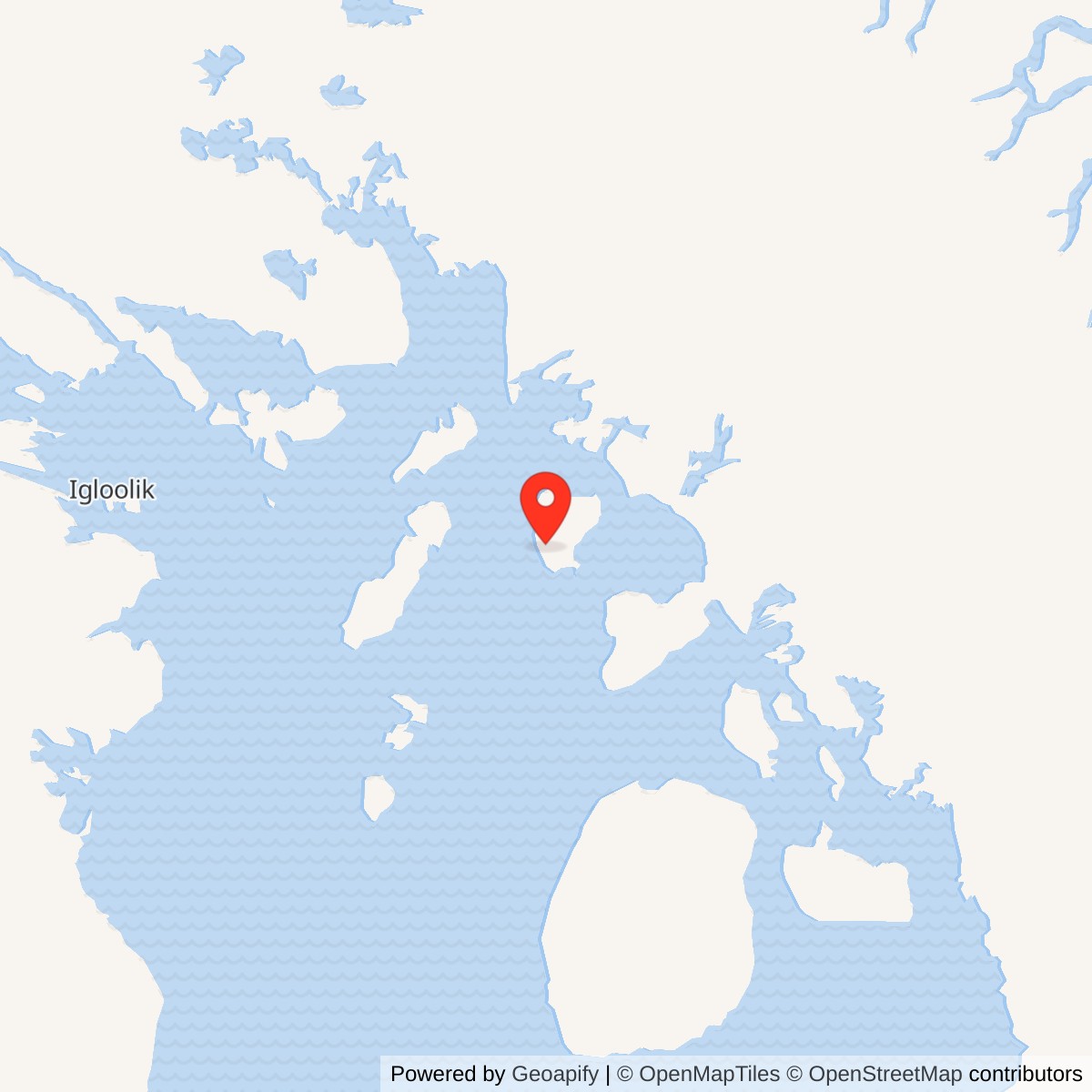
Longitude: -77.23
Site Number: FOX-A
Current Role: A later North Warning System short-range radar was built on the site from 1990 to 1993 and documented as operating in 2012; present status unverified.
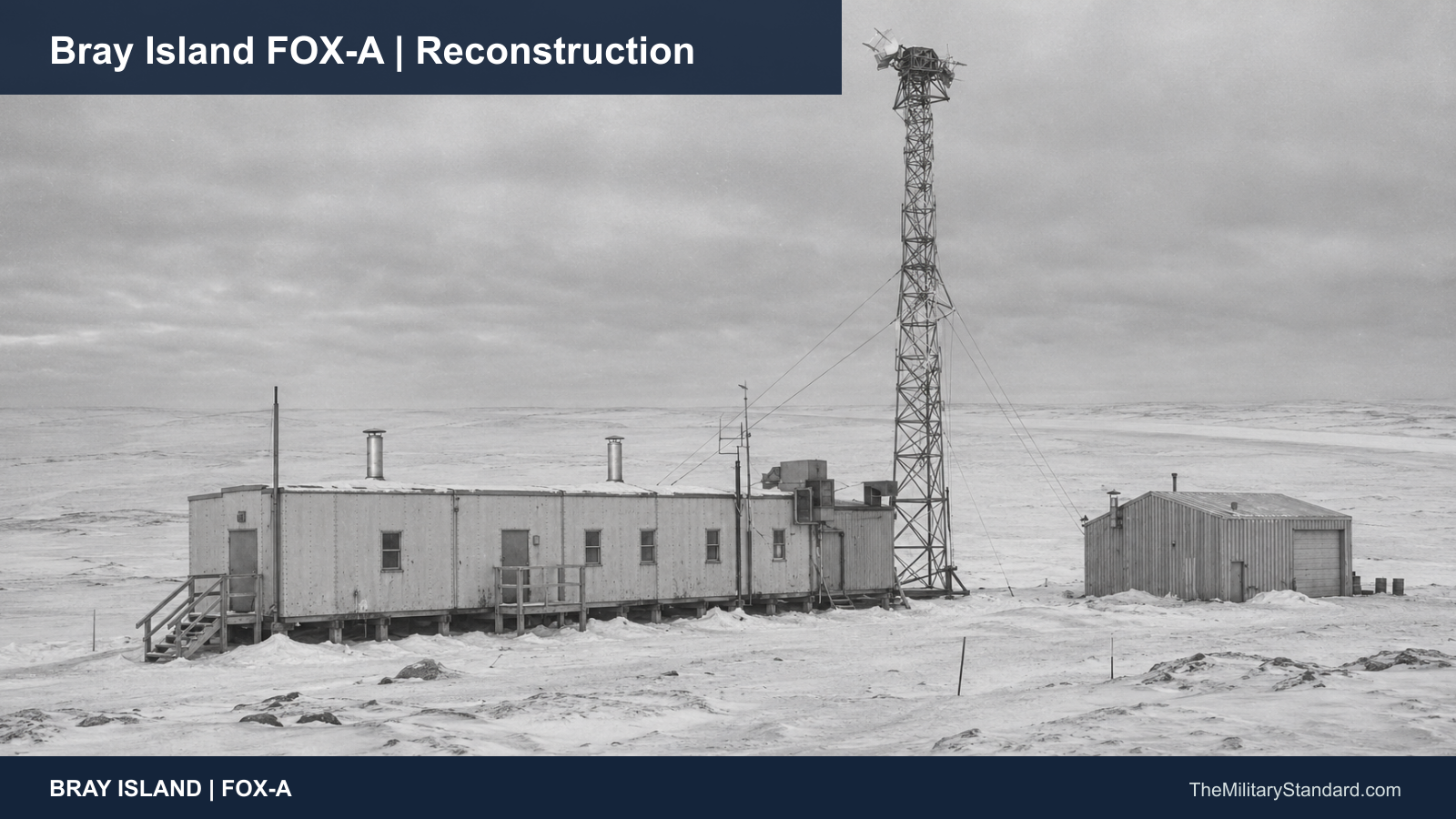
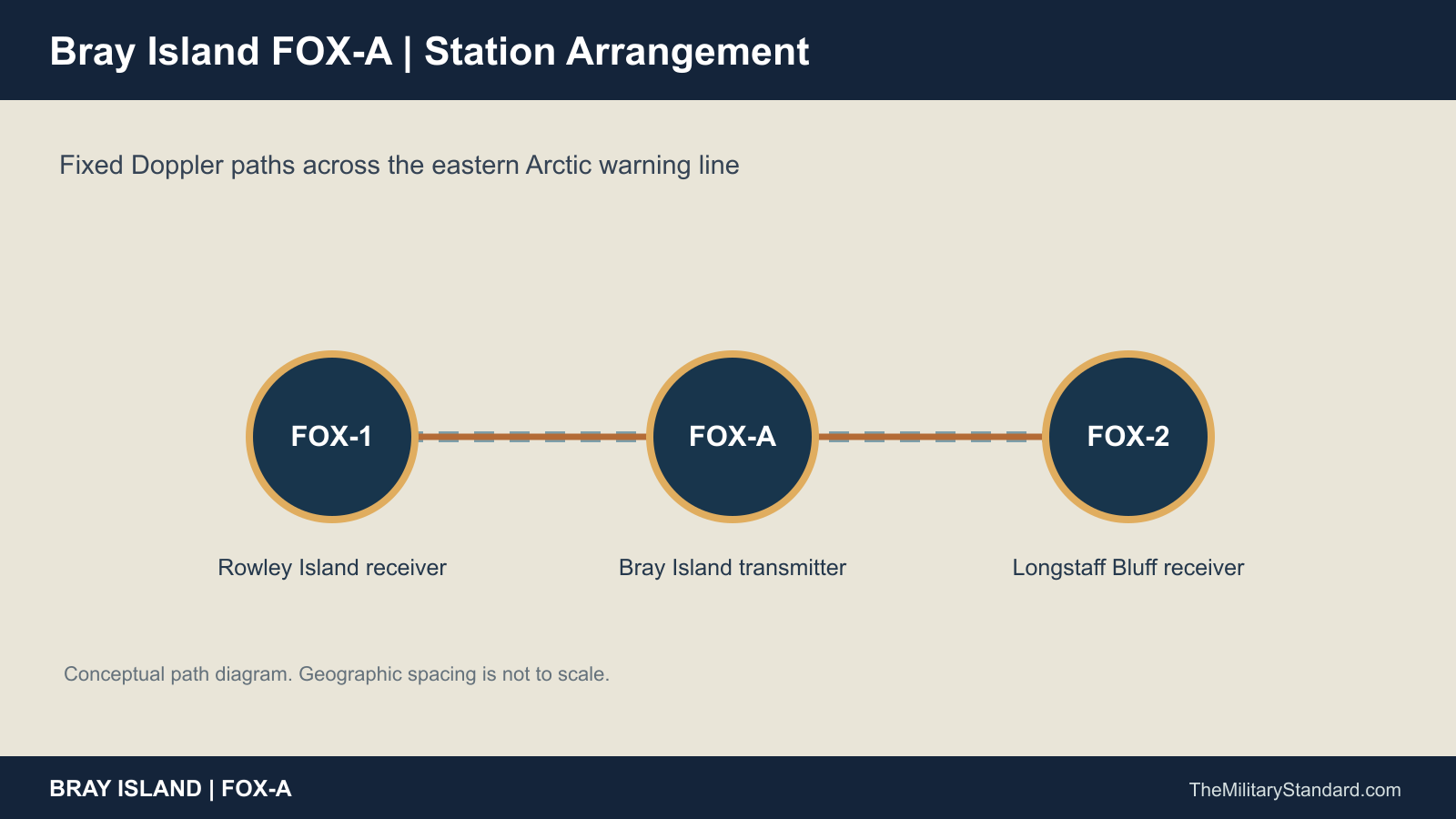
Bray Island FOX-A was an intermediate station in the eastern Canadian sector of the Distant Early Warning Line. It stood on the west side of Bray Island in Foxe Basin, between the larger stations at Rowley Island FOX-1 and Longstaff Bluff FOX-2. Its Doppler equipment watched a low-altitude gap in the northern air approaches and passed alarms into the wider warning network. [1] [2] [4]
- DEW Line code
- FOX-A
- Role
- Intermediate Doppler station
- Radar
- AN/FPS-23
- Resident crew
- Four
- Operation
- August 1957 to July 21, 1963
- Location
- Bray Island, Nunavut
Bray Island and the Warning Line
The remote island lies west of Hall Beach and Igloolik in present-day Nunavut. A small airstrip served the station, although the low, featureless terrain and shore ice made the runway difficult to pick out from an approaching aircraft. A visit by DC-3 in spring 1961 showed how much routine movement depended on weather and a usable strip. [2] [3]
Construction and Station Layout
Construction of FOX-A formed part of the mid-1950s effort to complete the DEW Line across Arctic Canada. Aerospace Defense Command records show manual operation beginning in August 1957. The compact intermediate station required less space and fewer people than a main or auxiliary radar station, but it still needed its own power, communications, living quarters, garage and air access. [1] [3] [4]
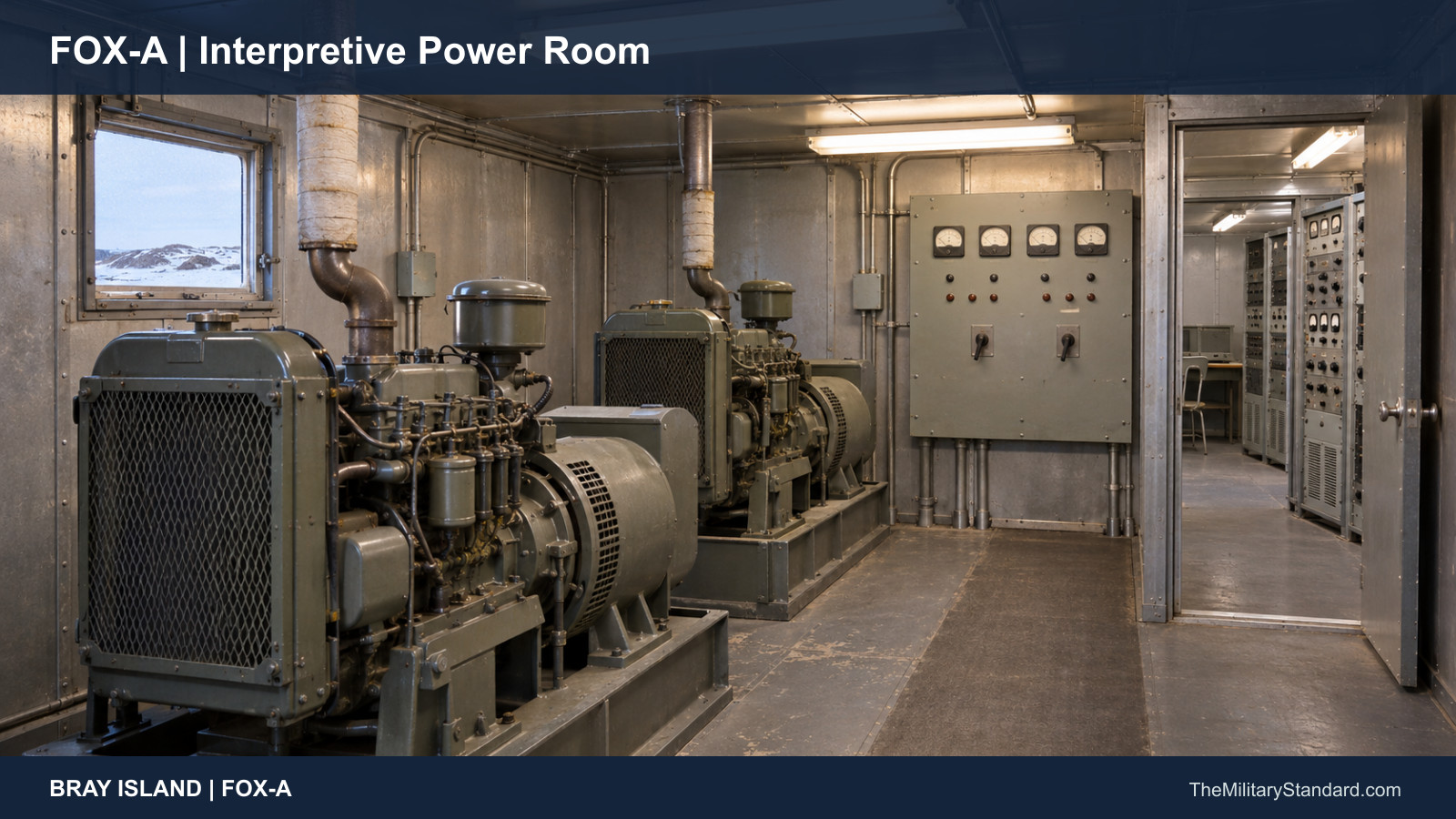
A visitor in 1961 remembered five joined modules. The first contained the power plant and control panel; the second held radar and communications equipment. A central module served as kitchen, dining room and lounge. Another contained sleeping rooms, washing facilities and sewage storage, while the last held the water supply. This arrangement kept living and technical work together in an enclosed building train. [3]
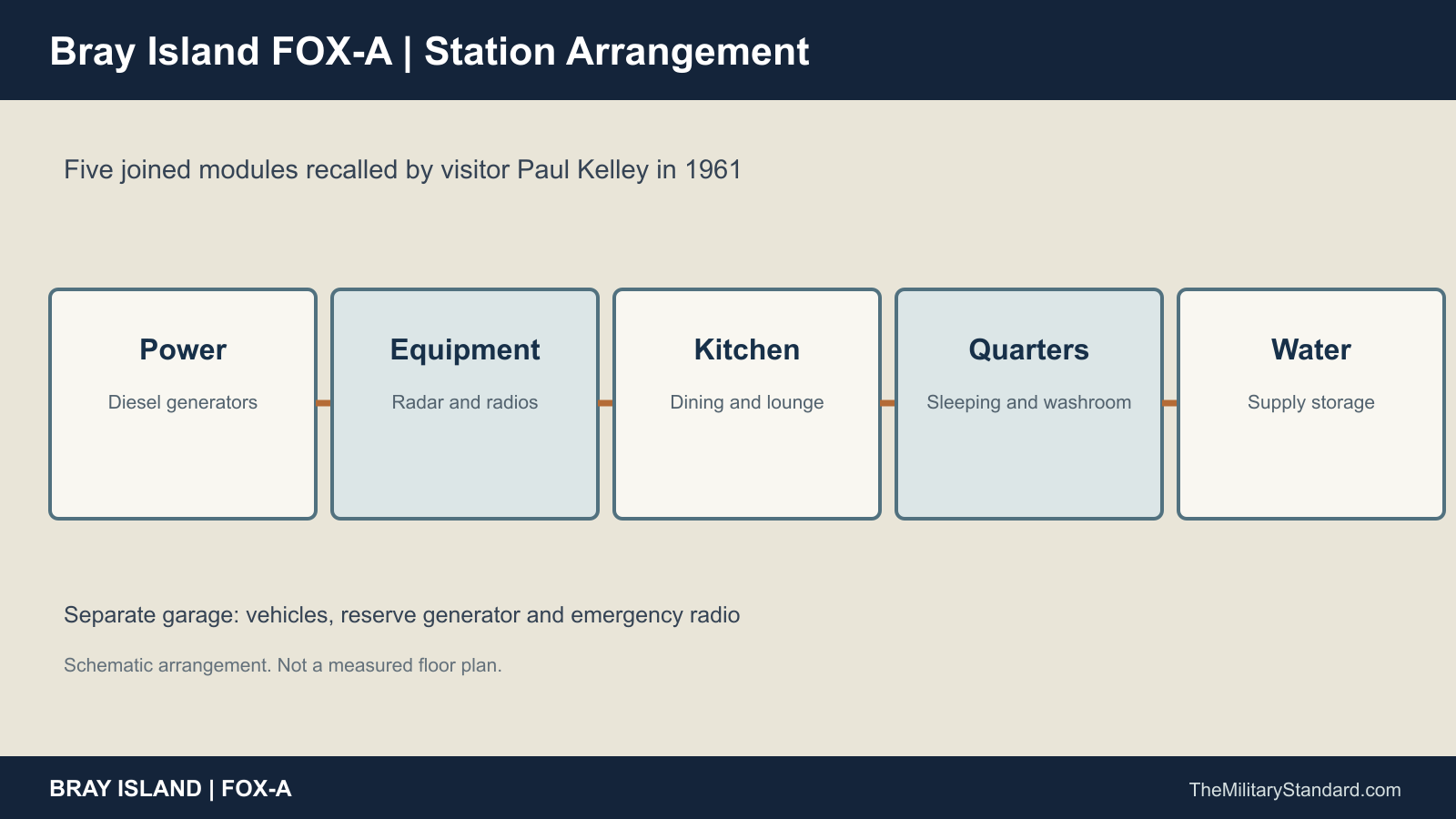
A separate garage housed vehicles, a reserve generator and an emergency radio. The station also had a Doppler tower, runway lights, weather instruments and fuel storage. The garage offered a refuge if a serious failure made the main modules unusable. [3]
Radar, Radio and Power
The AN/FPS-23 at FOX-A was a bistatic Doppler gap-filler system. Paired AN/FPT-4 transmitters sent signals toward receivers at Rowley Island FOX-1 and Longstaff Bluff FOX-2. Aircraft crossing a path could disturb the received signal and trigger an alarm. This was a fixed-path warning mission, distinct from the rotating search radar under a main-station radome. [1] [3] [4]
The equipment module also carried a General Electric VO-38 ground-to-ground FM transceiver for local voice communication and a Collins transmitter and receiver for air-to-ground calls. A Marconi HF set in the garage monitored the DEW Line disaster frequency of 5295 kilohertz. Those radio paths were vital for reporting alarms, coordinating aircraft and maintaining contact if other links failed. [3]
Two 20-kilovolt-ampere diesel generators in the power module normally supplied the site. One fed the radar and electronic equipment through a converter that supplied 400-cycle power where needed. The other supplied building utilities and tower and runway lights. A third generator in the garage could back up either circuit. Keeping these sets fueled and running was essential to both the radar watch and life at FOX-A. [3]
Crew, Airlift and Daily Life
FOX-A had a four-person resident crew: a radician who served as station chief, two mechanics and a cook-baker. One mechanic maintained the physical plant; the other worked with the tractor, road grader and other heavy equipment. Everyone needed some familiarity with the machines in an emergency. The crew lived in the five-module station, sharing its kitchen and lounge between maintenance and watch duties. [3]
The runway and its lights were the station's connection to visiting aircraft. Workers used a grader to prepare the strip and tracked equipment to move freight. Flights could be delayed by poor visibility, blowing snow or the difficulty of finding the strip against bright ice. The crew therefore depended on stored fuel, food, water and spares, and on the skills of the mechanics and radician to keep the isolated site working. [3]
Paul Kelley, who visited in 1961, recalled an Inuit outside mechanic who lived with his family nearby. His account also describes the station's practical division of labor and the importance of the garage as a backup shelter. [3]
Inactivation and Later Radar
Aerospace Defense Command recorded FOX-A as inactivated on July 21, 1963. The original DEW Line operation ended, but the property had a later air-defense use. Between 1990 and 1993 a new automated short-range radar was built on the same site for the North Warning System. A Canadian government profile described that later radar as operating when the profile was published in 2012. [1] [2]
Chronology
- Mid-1950s FOX-A is constructed as an intermediate DEW Line station.
- August 1957 Manual operation begins with AN/FPS-23 Doppler equipment.
- Spring 1961 Paul Kelley visits and records the station, crew and equipment.
- July 21, 1963 The original FOX-A station is inactivated.
- 1990 to 1993 An automated short-range radar is built on the same site.
Related Sites
Information sources (4)
- PDF[1] Aerospace Defense Command, Historical Data, 1946-1973, DEW Line station table
Dates FOX-A manual operation to August 1957, identifies AN/FPS-23, and records inactivation on July 21, 1963.
- PDF[2] Aboriginal Affairs and Northern Development Canada, The Big Picture: Contaminated Sites in Nunavut, FOX-A profile
Places FOX-A on Bray Island, describes the original station and documents construction of a later short-range radar on the same site.
- WEB[3] Paul Kelley, Memories of FOX-A, Spring 1961, The DEWLine
Eyewitness account of the crew, five modules, radar, generators, radio equipment, garage, aircraft access and weather.
- PDF[4] U.S. Air Defense Command, A History of the DEW Line, 1946-1964
Background on construction, intermediate Doppler stations, staffing and warning-system operations.