
Keflavik Airport, Iceland
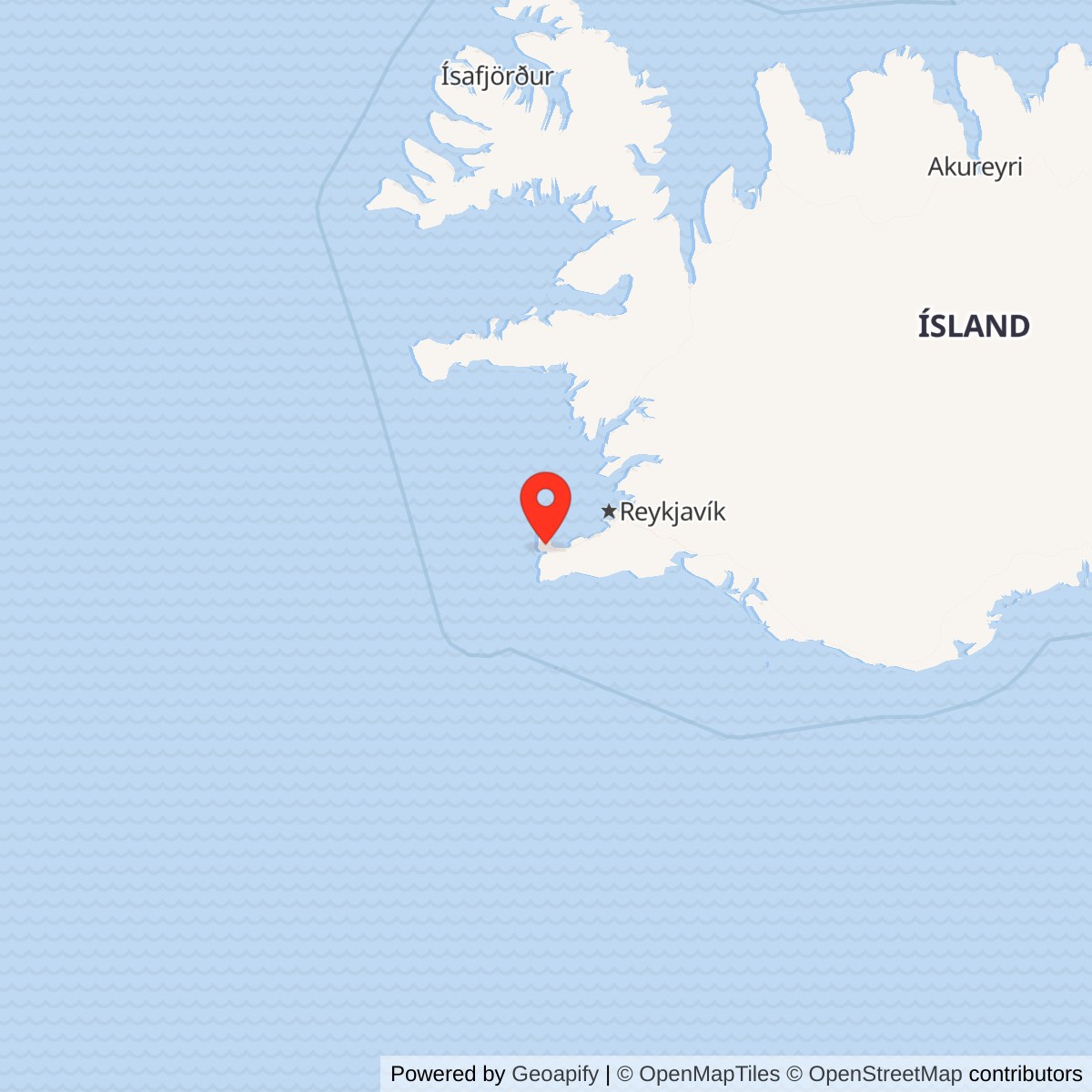
Longitude: -22.605
Origin of current name: Named after a town in Iceland.
Date current name was assigned to base: October 25, 1946
Previous Names: Reykjavik Adrm, 6 Aug 1941 (U.S. occupation); Meeks Fld, c. Jul 1942.
Base Units: 824th Engrg Bn, Avn, Feb 1942; 14th Det, North Atlantic Wg, Air Trpt Comd, 28 Aug 1943 (rdsgd Stn 14, North Atlantic Wg, Air Trpt Comd, 18 Oct 1943); 1386th AAF BU, 1 Aug 1944; OL 53, 1100th AAF BU, 25 Mar-7 Apr 1947. 1400th AB Gp, 23 May 1951; Iceland AD Force, 15 Jan 1954 (rdsgd Air Forces Iceland, 1 Jan 1960)
Changes in Capability: First runway completed Sep 1942; runway, control tower, and first hangar became operational Mar-May 1943; all major construction, including four 6,500-ft runways, completed Jul 1943; field served as refueling stopover for two-and four-engine aircraft on flights between U.S. and U.K. during 1943; base also became transit point for aircraft returning from the European Theater of Operations to the United States; runways lengthened slightly following World War II; U.S. flying operations phased down in preparation for transfer of the base to the Icelandic government at the end of 1946; the Office of Foreign Liquidation Commissioner, established on 16 Feb 1947, assisted in disposing of noncritical surplus equipment and supplies; all U.S. air activity ended on 11 Mar 1947; American Overseas Airlines, followed by Airport Overseas Corporation personnel, operated the military portion of Keflavik Fld after its reversion to Icelandic control at the end of Mar 1947; operation of Keflavik Aprt assumed by Military Air Transport Service (MATS) following signing of a defense agreement between the United States and Iceland in May 1951; general rehabilitation project, chiefly construction of barracks, completed mid-1952; despite 50-plus knot winds, field served as refueling station along the Great Arctic Circle route starting 1953; main runway extended to 10,000 ft, taxiways completed, and aprons extended 1954; concrete surfaces upgraded, additional hangars constructed to accommodate an F-89 squadron, and two air rescue squadrons and TAC and SAC transient aircraft accommodated, 1955-1956; hangar, dormitories, operations building, and underground POL tanks accepted by USAF 1956-1957; retrenchment of USAF operations, including the reduction of F-89 and elimination of F-102 and SAC (tenant) activities occurred in 1959-1960; USAF assigned field to USN, which named it U.S. Naval Station Keflavik, although Keflavik Aprt remained a tenant USAF activity with one fighter-interceptor and two aircraft warning squadrons, on 1 Jul 1961; Keflavik Aprt supported the air defense interception and identification of non-NATO aircraft, mostly Soviet long-range bombers, that penetrated Iceland's military air defense identification zone after 1 Jul 1961; operation of the air terminal and hotel turned over to Icelandic Civil Aeronautics Administration and the Loftleidir Icelandic Airlines, 15 May 1962; major plumbing and electrical lines repaired, flight-line maintenance facilities and all roadways rebuilt, runway arresting barriers and night visibility markers installed, 1962-1965; airmen's dormitories and operations building renovated, and new dining hall constructed, 1966-1967; runways and major surfaced areas repaired, seven Butler-type aircraft ready shelters and an addition to base power plant built, runway approach lights for runway 21 and a BAK-12 aircraft arrester system installed, 1974-1975; extensive maintenance and repair of surfaced areas, 1976-1978; maintenance and repair of igloos at Patterson ramp completed, hangar 884 renovated, and flammable and munitions storage facilities constructed, 1979-1981.
Changes in Status: Returned to Iceland on 7 Apr 1947; returned to joint Icelandic-USAF control, 23 May 1951. Air Forces Iceland changed from host to tenant status on 1 Jul 1961, when the U.S. Navy gained jurisdiction; the installation was renamed U.S. Naval Station Keflavik, and Keflavik Airport became one of its tenants.
Base was Decommissioned on June 28, 2006
Current Role: Active civilian airport; periodic NATO/U.S. use
History:
Keflavik Airport was constructed by the United States during World War II between 1942 and 1943 as part of efforts to secure the North Atlantic and protect vital shipping lanes. Iceland's strategic position between North America and Europe made it essential for ferrying aircraft and supporting anti-submarine warfare operations against German U-boats. The base quickly became a critical link in transatlantic air routes.After the war, the installation was initially handed over to Icelandic authorities, but with the onset of the Cold War, U.S. forces returned under NATO agreements. The base became Naval Air Station Keflavik, serving as a key outpost for monitoring Soviet naval and air activity in the North Atlantic, particularly in the strategically important GIUK (Greenland-Iceland-UK) gap.
During the Cold War, Keflavik hosted U.S. Navy patrol squadrons flying P-3 Orion aircraft, along with U.S. Air Force interceptor units tasked with air defense. The base played a vital role in tracking Soviet submarines and aircraft transiting between the Arctic and the Atlantic. Its location allowed NATO to maintain surveillance over one of the most critical maritime choke points of the Cold War.
In addition to its military role, Keflavik served as an important transatlantic refueling and staging base. It supported both military and civilian flights crossing the Atlantic, reinforcing its importance as a logistical hub. The base also housed radar, communications, and command facilities supporting NATO operations.
Following the end of the Cold War, the strategic need for a permanent U.S. presence declined. The United States withdrew from Keflavik in 2006, closing Naval Air Station Keflavik. However, the airfield remained active as Iceland's primary international airport, and NATO forces, including U.S. aircraft, continue to deploy there on a rotational basis for air policing and exercises.