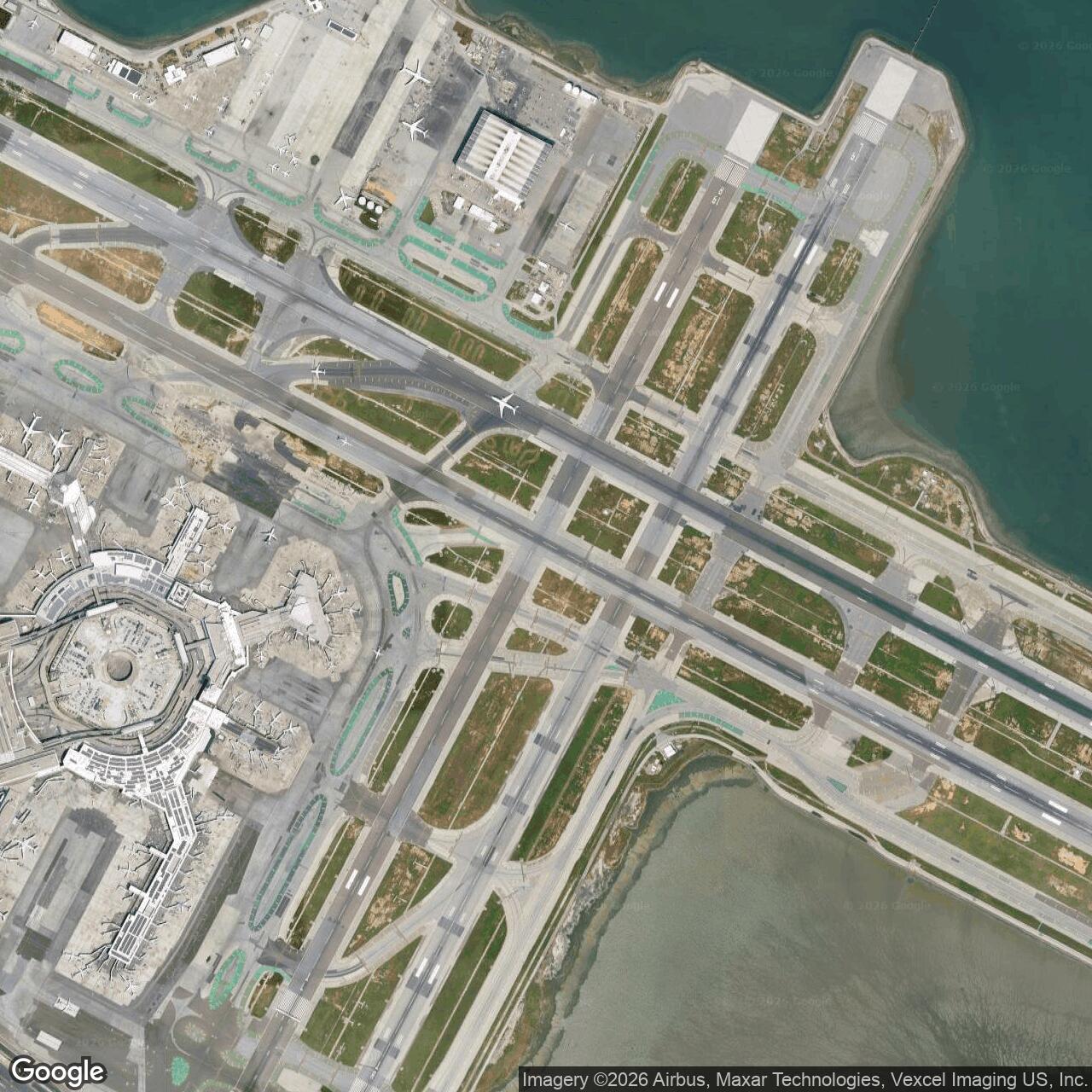
Naval Auxiliary Air Facility Mills Field, South San Francisco California
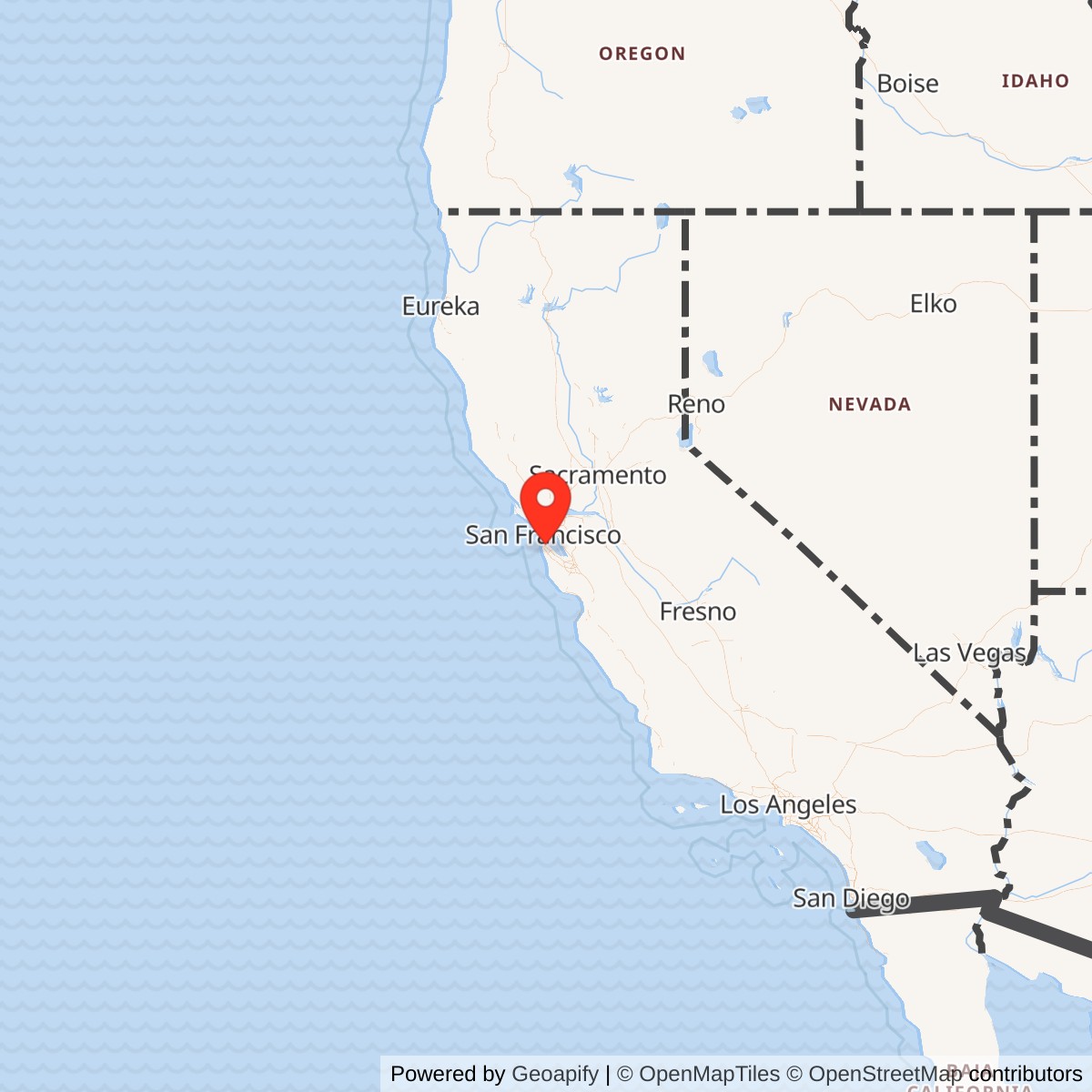
Longitude: -122.3754167
Airport ICAO ID: KSFO
Current Role: Former NAS Alameda auxiliary air facility at Mills Field / San Francisco Airport, built for use primarily by a private airline operating under Navy contract and associated with Pan American wartime contract operations; now San Francisco International Airport (KSFO).
Naval Auxiliary Air Facility Mills Field was the wartime Navy identity at San Francisco Airport, the former Mills Field Municipal Airport of San Francisco. Its name can be confusing because wartime Navy construction histories often describe it as the South San Francisco facility, while Navy activity lists identify the same installation more formally as "Mills Field, Calif. Naval Auxiliary Air Facility." The site was not a separate municipal airport in South San Francisco proper. It was the existing San Francisco Airport / Mills Field airfield on the San Mateo County shoreline, close to South San Francisco, San Bruno, and Millbrae, and it is now San Francisco International Airport. The site began as civil aviation infrastructure before the Navy used it. San Francisco opened Mills Field Municipal Airport of San Francisco on May 7, 1927, after leasing 150 acres of pastureland from the Mills estate. The city purchased 1,112 acres in 1930, renamed the field San Francisco Airport in 1931, and improved it during the 1930s with paved runways, taxiways, lighting, and a Spanish Colonial Revival terminal and control tower. By the time war came to the Pacific, Mills Field was already the Bay Area's principal landplane airport south of San Francisco and a logical place for military, Coast Guard, and Navy-contracted air operations. The Navy role at Mills Field was narrower than the role of a full naval air station. NAS Alameda was the main Navy air base in the Bay Area. Mills Field functioned as a supporting auxiliary air facility tied to Alameda's wartime network and to airline-operated transport work under Navy contract. The Navy's own wartime construction history says that Alameda's auxiliary system grew in spring 1942 with fields at Cotati, Concord, and Hollister and later with Crows Landing, Santa Rosa, and South San Francisco. It adds that the South San Francisco facilities were built primarily for a private airline operating under Navy contract because the Navy had taken over that airline's facilities at Treasure Island. Coast Guard aviation history clarifies the aviation mission further: the Navy leased 85 acres at Mills Field and commissioned a Naval Auxiliary Airfield supporting Pan American, while the commanding officer of Coast Guard Air Station San Francisco also served as commanding officer of the Naval Air Facility.
Mission Evolution
Mills Field's first mission was civilian. In 1927 it served air mail, local commercial aviation, flight activity, and the larger San Francisco ambition to become a western air gateway. Early facilities were modest, and the airport had to overcome mud, shoreline conditions, and the uncertainty of commercial air travel. The 1930 land purchase and the 1937 terminal and runway improvements made the site permanent and usable by heavier, faster transport aircraft. The military mission emerged out of the emergency conditions of 1941 and 1942. After the Coast Guard transferred to the Navy Department on November 1, 1941, Coast Guard Air Station San Francisco came under the operational command of the Twelfth Naval District and then, in April 1942, under the Commander, Western Sea Frontier. Coast Guard aircraft continued search-and-rescue work and began coastal patrols, with Coast Guard and Navy personnel flying joint antisubmarine patrols in OS2U-3 Kingfisher aircraft. That put Mills Field inside the Navy-controlled wartime defense system for the approaches to San Francisco Bay. The Navy auxiliary-air-facility role developed alongside that Coast Guard mission. The Navy needed to preserve and redirect Pan American Airways facilities and operations after taking over Treasure Island. Pan Am had used Treasure Island for transpacific seaplane work, but wartime Navy control of Treasure Island forced a relocation of airline and contract aviation activity. Regular Pan Am flight operations moved to Mills Field in 1944 as ship traffic in the Bay grew heavier and the Navy's use of Treasure Island intensified. Mills Field therefore became part of a wartime solution to a practical problem: how to keep airline-operated Navy transport support functioning while the Navy absorbed or redirected major Bay Area aviation facilities. By the end of World War II, the purely Navy auxiliary role faded. Coast Guard aviation history records the Coast Guard air station returning to Coast Guard operational control after release from the Navy on June 30, 1946. The airport itself resumed and expanded its civilian role. SFO's own airport history notes that "International" was added to the airport's name right after World War II as international air service developed. In that sense, the wartime Navy facility was brief, but it sat at the hinge between prewar municipal aviation and postwar international commercial aviation.Operational Role
The most important thing Naval Auxiliary Air Facility Mills Field did was support wartime transport and patrol systems without becoming a large stand-alone Navy air station. It was a small but strategically placed air node at the edge of San Francisco Bay, connected to NAS Alameda, Treasure Island, Coast Guard Air Station San Francisco, Pan American wartime contract operations, and the Western Sea Frontier. Its Coast Guard-associated mission involved maritime security. Under Navy operational control, Coast Guard Air Station San Francisco continued search and rescue and began coastal patrol work. Coast Guard and Navy personnel flew joint antisubmarine patrols in OS2U-3 Kingfishers. West Coast submarine activity never reached the intensity of the Battle of the Atlantic, but the Bay Area was still a major naval, shipbuilding, embarkation, repair, supply, and transportation center. The approaches to San Francisco Bay had to be watched, and Mills Field gave Coast Guard and Navy aviation a usable landplane base on the peninsula. The Pan American contract mission gave Mills Field a different kind of military significance. Pan Am's prewar transpacific experience, aircraft, technical staff, and facilities made the airline valuable to the Navy. The Navy's takeover of Treasure Island displaced some of those facilities, and the South San Francisco / Mills Field buildout supported airline work under Navy contract. This was not ordinary commercial aviation. Civilian airline personnel, company procedures, and large transport operations were folded into a wartime naval logistics and communications system. Mills Field helped bridge that civilian-to-military conversion. The installation's operational footprint was therefore modest but important. The Navy did not need to duplicate Alameda's massive hangars, shops, carrier-aircraft facilities, seaplane basin, and personnel plant at Mills Field. It needed enough leased land, aircraft operating space, and support facilities to let Navy-directed contract air operations continue at a major civil airport while other Bay Area facilities were absorbed by wartime Navy missions. That is why the installation is best described as a Naval Auxiliary Air Facility rather than as a naval air station.Facilities and Physical Layout
The Navy used an existing airfield rather than building a new one from scratch. Mills Field already had a developed municipal airport layout by the late 1930s: paved and widened runways and taxiways, boundary and runway lighting, aircraft parking, hangars, and the 1937 terminal and control tower. That made it a useful wartime site because the basic aviation infrastructure was already in place. The most specific Navy footprint identified in available public history is the 85-acre lease at Mills Field. That leased area supported the commissioned Naval Auxiliary Airfield connected to Pan American's Navy contract work. The Navy activity list names the facility directly as Naval Auxiliary Air Facility Mills Field, while the broader construction history describes the South San Francisco facilities as part of Alameda's auxiliary expansion. The larger airport changed rapidly after the war. SFO planning history records that by the end of World War II the airport had 700 acres in use and another 2,000 acres under development. The old Bayshore Highway alignment was abandoned and a new Bayshore Freeway was constructed farther west, allowing the airport to expand toward the modern runway and terminal footprint. Almost nothing visible today reads specifically as a Navy auxiliary air facility because the wartime lease area was absorbed into one of the most heavily rebuilt airports in the United States. The physical continuity is the airfield itself, not a preserved Navy cantonment.Units, Organizations, and Systems
Naval Auxiliary Air Facility Mills Field belonged to the NAS Alameda auxiliary-field system. Alameda was the main Navy aviation station in the Bay Area, while Mills Field was one of several supporting fields used to spread training, contract, and operational workloads across northern California. In that system, Mills Field was unusual because it was built primarily around private-airline wartime contract use rather than ordinary carrier-pilot training. The Coast Guard role was also central. Coast Guard Air Station San Francisco had been placed under Navy authority during the war, and its commanding officer also acted as commanding officer of the Naval Air Facility. This dual command arrangement explains why some sources emphasize the Coast Guard air station while others list a Navy auxiliary facility. The same airfield area served overlapping Navy and Coast Guard wartime needs. Pan American Airways formed the third leg of the system. The airline's prewar Pacific operations, Treasure Island facilities, and contract relationship with the Navy made it part of the military air-transport network. Mills Field's Navy-funded or Navy-directed facilities supported that transition after Treasure Island came under stronger Navy use.Role in the Wider Military Network
Mills Field was a small node in a very large Bay Area wartime military network. The Bay Area contained NAS Alameda, Naval Station Treasure Island, Mare Island Navy Yard, Hunters Point Naval Shipyard, Naval Supply Depot Oakland, naval fuel and ammunition facilities, Army ports, shipyards, airfields, coastal-defense installations, and West Coast command headquarters. Mills Field's significance came from how it connected those systems rather than from the size of the facility alone. Within the Navy aviation network, Mills Field helped NAS Alameda handle the overflow and specialization that came with wartime expansion. Alameda could not absorb every supporting task on its own. Auxiliary fields at Cotati, Concord, Hollister, Crows Landing, Santa Rosa, South San Francisco / Mills Field, and other sites distributed aircraft operations, training, staging, and special functions across the region. Mills Field's role was especially tied to transport and contract-airline use. Within the maritime-defense network, Mills Field supported patrol and rescue work in the San Francisco approaches. Coast Guard and Navy aviation did not act in isolation. Their aircraft were part of a larger harbor-defense, convoy, search-and-rescue, and antisubmarine system tied to surface craft, coastal communications, Western Sea Frontier command, and the Navy's control of local port and island facilities. Within the civilian-to-military mobilization system, Mills Field shows how the Navy used commercial aviation infrastructure without always converting it into a full naval station. During World War II the military relied heavily on civilian companies, airline crews, contractors, and municipal facilities. Mills Field was one of the places where that relationship became physical: a municipal airport became a Navy auxiliary air facility while still preserving the runway, transport, and airline logic that would make it a postwar international gateway.Current Status
The former Naval Auxiliary Air Facility Mills Field is now part of San Francisco International Airport. SFO remains owned and operated by the City and County of San Francisco and is physically located in San Mateo County, about 14 miles south of San Francisco. The modern airport uses ICAO identifier KSFO and operates as one of the major commercial airports of the western United States. No separate Navy field remains visible as an independent site. The former 85-acre Navy auxiliary-airfield footprint has been absorbed by decades of runway, terminal, taxiway, cargo, maintenance, road, and shoreline development. The historical identity is therefore best preserved in documentary form: Navy activity lists, Navy construction history, Coast Guard aviation history, SFO airport history, and the surviving memory of Mills Field as the prewar airport that became SFO.Chronology
- 1927-05-07 Mills Field Municipal Airport of San Francisco opened on leased land from the Mills estate.
- 1930 The City and County of San Francisco purchased the airport land, expanding the civil airport's permanence and development potential.
- 1931 Mills Field was renamed San Francisco Airport.
- 1937 Major New Deal-era improvements, including paved runway and taxiway work, lighting, and a new terminal/control tower, were completed.
- 1941-11-01 The Coast Guard was transferred to the Navy Department by executive order, placing Coast Guard Air Station San Francisco under Navy operational authority.
- 1942-04 Coast Guard Air Station San Francisco came under operational control of Commander, Western Sea Frontier.
- 1942 The Navy leased 85 acres at Mills Field and commissioned a Naval Auxiliary Airfield to support Pan American wartime contract operations.
- 1942 NAS Alameda's wartime auxiliary-field expansion included fields at Cotati, Concord, and Hollister, followed later by Crows Landing, Santa Rosa, and South San Francisco / Mills Field.
- 1943 Coast Guard Air Station San Francisco supported construction work for secret LORAN stations in the North Pacific while continuing wartime search-and-rescue and patrol activity.
- 1944 Regular Pan American flight operations moved from Treasure Island to Mills Field / San Francisco Airport as wartime ship traffic and Navy use of Treasure Island increased.
- 1945 World War II ended, reducing the need for the Navy auxiliary-airfield arrangement at Mills Field.
- 1946-06-30 Coast Guard Air Station San Francisco was released from wartime Navy control and resumed normal Coast Guard operational control.
- Post-1945 "International" was added to San Francisco Airport's name as postwar overseas air service expanded.
- Present The former Navy auxiliary-airfield site is part of San Francisco International Airport, an active public airport using ICAO identifier KSFO.