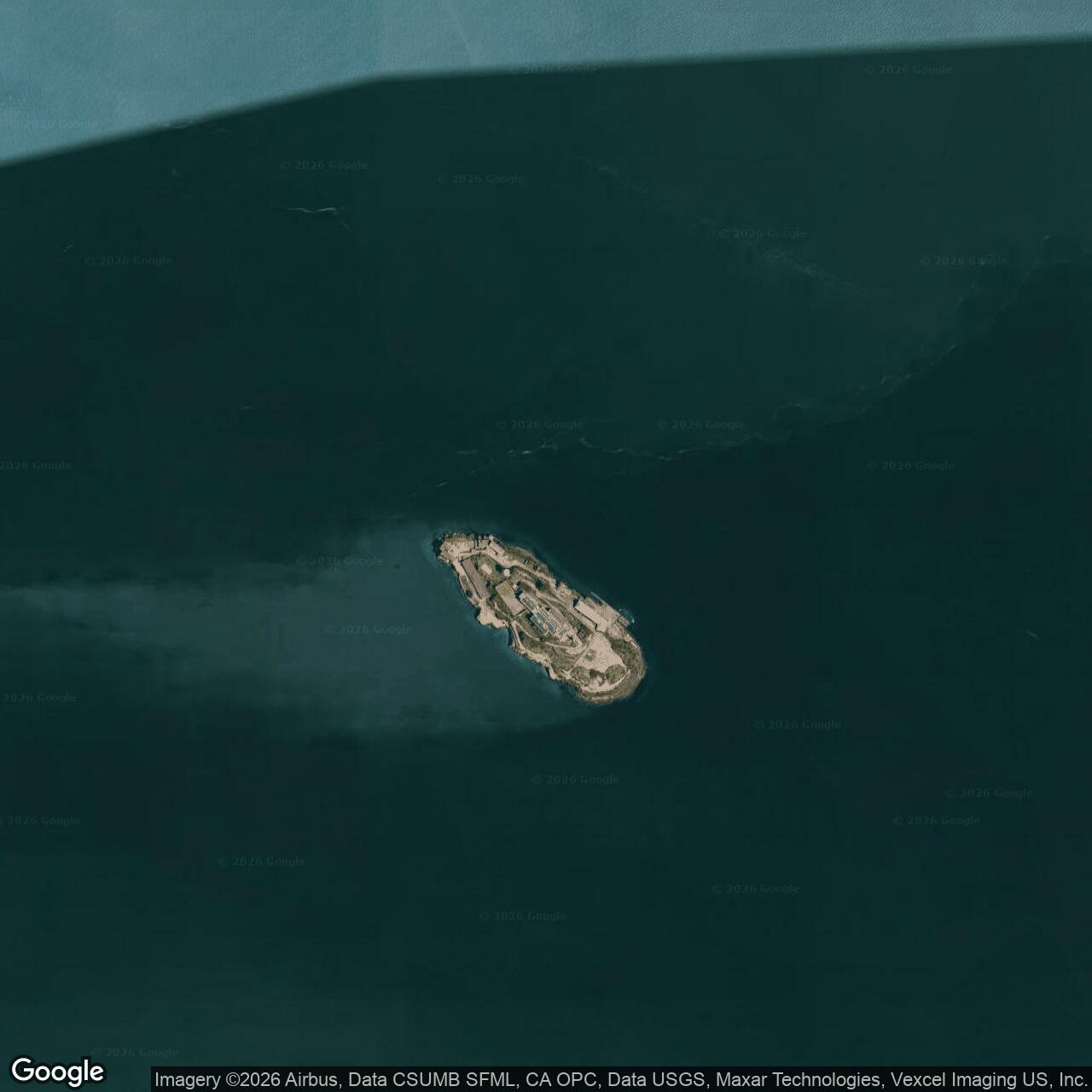
Fort Alcatraz Army Base, Alcatraz Island California
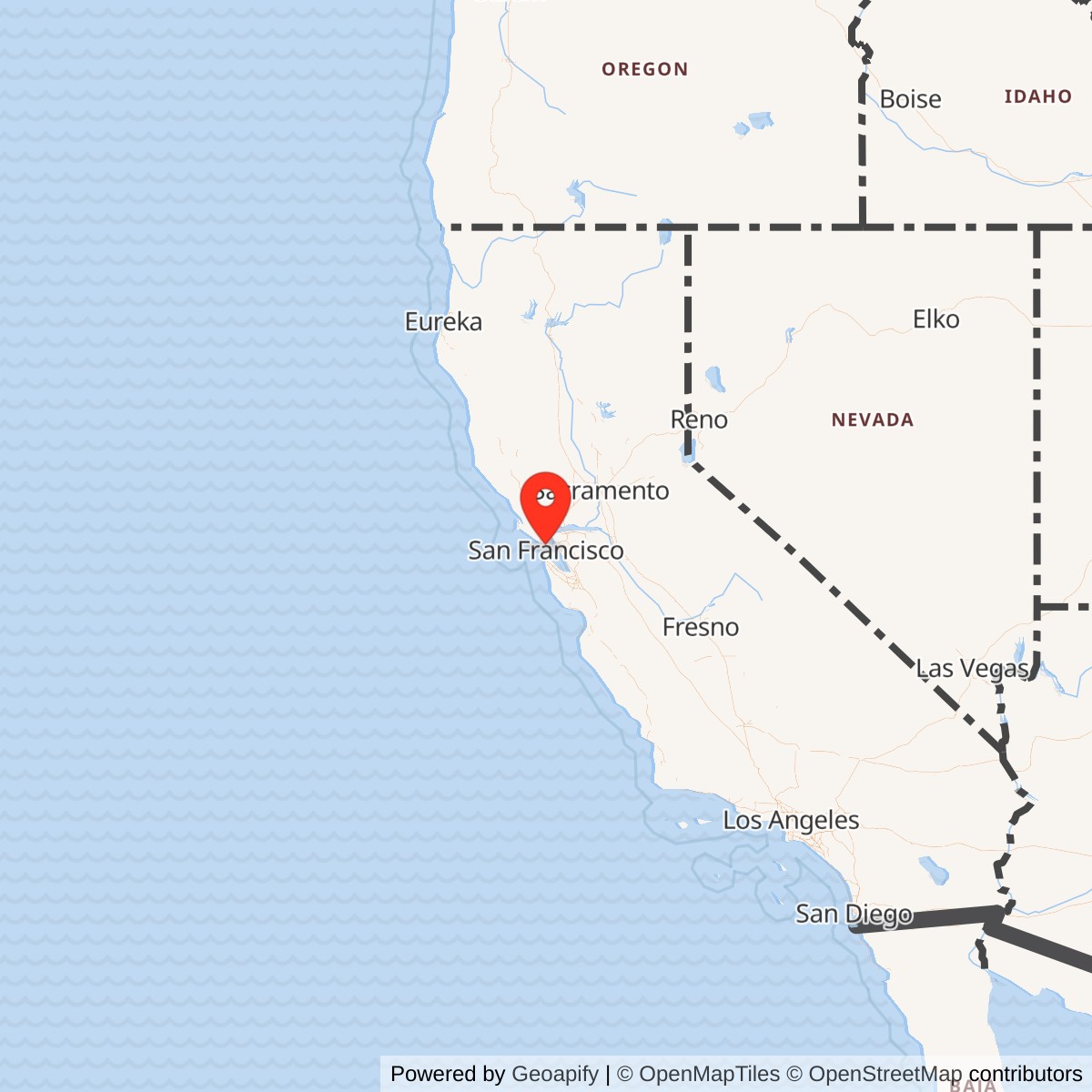
Longitude: -122.422844
Official Base Website: https://www.nps.gov/alca/
Current Role: Alcatraz Island historic site within Golden Gate National Recreation Area; public history, preservation, interpretation, seabird habitat, and authorized ferry visitor access.
Alcatraz Island is usually remembered as a federal penitentiary, but its first federal identity was military. The island was reserved for United States military use in 1850, in the immediate aftermath of the California Gold Rush and statehood, when San Francisco suddenly became one of the most important American ports on the Pacific. The same geography that later made Alcatraz famous as an escape-resistant prison made it valuable to Army engineers. The island stood in the middle of the inner bay, close enough to the city and the shipping channel to cover approaches with artillery, yet separated from the mainland by cold water, strong tidal currents, fog, and steep rock. Before it was "The Rock" of prison legend, it was a natural redoubt placed in the throat of San Francisco Bay.
The Army installation developed under several overlapping names and roles: Alcatraz Island, Fort Alcatraz, The Post at Alcatraz, Pacific Branch, U.S. Military Prison, and Pacific Branch, U.S. Disciplinary Barracks. Those names are not merely clerical variations. They mark the island's transformation from coast-defense work to military prison. Construction began in 1853 as part of the San Francisco Bay defense system. By the late 1850s, Alcatraz had permanent batteries, a fortified sally port, a defensive barracks or citadel on the summit, and the West Coast's first operational lighthouse. The first permanent garrison arrived in December 1859, and the island's prison function began almost immediately when soldiers were confined in the sally port basement.
Alcatraz's military significance comes from that double identity. It was one of the earliest and most heavily armed U.S. harbor-defense works on the Pacific Coast, and it became one of the Army's most important long-running incarceration sites. During the Civil War it helped secure California for the Union and held Confederate privateers, soldiers, and civilians accused of disloyalty. In the late nineteenth century it held Army offenders, deserters, escapees, and American Indian prisoners sent there after conflicts with federal authorities. After the Spanish-American and Philippine-American wars, its military-prison population expanded dramatically. In 1907 the Army formally abandoned the island's future as a fortress and made it the Pacific Branch, U.S. Military Prison. In 1915 that prison became the Pacific Branch, U.S. Disciplinary Barracks, emphasizing discipline, work, training, education, and restoration to duty. Army control ended when the island transferred to the Department of Justice / Bureau of Prisons in 1933, setting up the better-known federal penitentiary period that began in 1934.
Alcatraz was an Army coastal fort, arsenal-like munitions and small-arms security point for the bay, Civil War defense post, military prison, disciplinary barracks, and only afterward a civilian maximum-security penitentiary. Its present status as a National Park Service unit preserves all of those layers on a compact island of about 22.5 acres.
Mission Evolution
Alcatraz's first federal mission was coastal defense. In 1850, the United States needed to secure a newly acquired and rapidly growing Pacific port. The Gold Rush had turned San Francisco into a boom city, and the bay's military value grew with every ship, warehouse, dock, and banking house. Army engineers designed a bay-defense scheme often described as a "triangle of defense," with Alcatraz Island, Fort Point, and the planned Lime Point works positioned to control ships entering the Golden Gate and moving toward San Francisco. Lime Point was never completed because the government could not acquire the site on acceptable terms, but Alcatraz and Fort Point became the central Third System-era works guarding the harbor.
Construction on Alcatraz began in 1853. The Army did not build a conventional flat masonry fort of the Fort Point type. Instead, engineers adapted the island's natural topography. Workers blasted rock, cut roads, built retaining walls, placed brick and stone defenses into the slopes, and armed batteries on the north, south, and west sides. A defensive barracks, usually called the Citadel, stood at the island's crest and served as a last redoubt. The arrangement made Alcatraz unusual among American coastal forts because the entire island functioned as a fortified landscape. Its cliffs, wharf road, sally port, walls, batteries, parade ground, citadel, and lighthouse all worked together as a single military system.
The mission changed almost as soon as the garrison arrived. The first permanent troops took post in December 1859, and the first recorded military prisoners were confined on the island that same month. Alcatraz's isolation made the logic obvious. The cold bay water and strong currents made escape difficult; the small island allowed guards to control movement; and nearby posts such as the Presidio and Fort Point needed a secure place to hold deserters, thieves, drunkards, escapees, and other offenders. In 1861, the Army designated Alcatraz as the military prison for the Department of the Pacific. From that point forward, the prison mission existed beside the defense mission and eventually displaced it.
The Civil War gave Alcatraz its most important harbor-defense test, even though no enemy fleet attacked it. California contained both Union and Confederate sympathizers, and San Francisco's harbor, ship traffic, gold, and communications made it strategically valuable. Early in the war, weapons and ammunition were moved to Alcatraz for security, and the island became the primary Union defense post of the bay. Confederate privateer threats, local treason arrests, and wartime anxieties gave the fort a real operational purpose. Yet the Civil War also revealed the limits of the old harbor-defense model. Smoothbore cannon and masonry walls were becoming obsolete against rifled artillery and modern naval weapons.
After the Civil War, the Army tried limited modernization. Rodman cannon and proposed earthwork-style improvements reflected the effort to adapt an aging fort to a changing artillery environment. But the strategic trend was clear. By the late nineteenth century, Alcatraz was less valuable as a fortification and more valuable as a secure military prison. The Spanish-American War and Philippine-American War accelerated the change. Large numbers of soldiers returned through San Francisco, including men convicted of desertion, treason, violence, or other offenses during and after the Philippine conflict. The existing prison facilities became overcrowded, and temporary stockades spread across the parade ground.
In 1907 the Army made the transition formal by redesignating the island as the Pacific Branch, U.S. Military Prison. Prisoners themselves then became part of the island's construction force. From 1909 to 1911 they helped demolish older Civil War-era structures and build the massive concrete cellhouse that still dominates the island. In 1915 the facility became the Pacific Branch, U.S. Disciplinary Barracks, a name that reflected a broader Progressive Era penal philosophy within the Army: punishment, labor, education, discipline, vocational training, and, when possible, restoration to military duty. The island remained an Army disciplinary installation until its transfer to the Bureau of Prisons in 1933.
Harbor Defense Role and Fortification Landscape
Fort Alcatraz was built because the Army wanted to prevent hostile ships from entering San Francisco Bay or threatening the city's waterfront. The island's position made it one of the most commanding artillery sites in the bay. A ship moving directly toward San Francisco had to pass within short range, and the island's guns could cover interior waters between the city, Angel Island, and the bay entrance. In an age of smoothbore seacoast guns, that mattered enormously.
The early Alcatraz batteries were distributed around the island rather than concentrated in one casemated wall. The rugged island itself became part of the fort. Steep defensive walls shaped the landward edges. A sally port and guardhouse controlled the road from the landing area up to the higher ground. Columbiads and other seacoast cannon were mounted to fire toward likely ship approaches. The citadel on the summit provided infantry defense and a last-stand position if attackers landed. The lighthouse, completed in 1854, served maritime safety, but it also belonged physically to the same federally controlled military landscape.
By the eve of the Civil War, Alcatraz was the only completed fort in the San Francisco Bay defense system and held a large concentration of mounted guns. The island also became a secure storehouse for arms. The transfer of thousands of muskets and cartridges to Alcatraz early in the war reflected fears that Confederate sympathizers might seize vulnerable mainland stores. The fort therefore protected the bay not only through cannon fire but through its role as a guarded federal stronghold.
Alcatraz's guns did not fire in battle, but that does not make the fort irrelevant. Many harbor defenses achieved their purpose by deterring attack rather than by fighting. The presence of a heavily armed island in the middle of the bay complicated any Confederate raider, foreign warship, or local insurrection plan. The post also shaped military behavior in peacetime ceremonies and wartime security. It fired salutes, controlled harbor protocol, supported the Department of the Pacific, and visibly announced that San Francisco Bay was under federal military protection.
The postwar decline of Fort Alcatraz as a fighting work followed the broader fate of many masonry and early earthwork defenses. Rifled guns, ironclad ships, and longer-range naval artillery reduced the value of nineteenth-century works. The Army attempted earthwork modifications in the 1870s, including cutting down exposed rock, adding traverses, and adapting magazines and gun positions, but the island's defense future was limited. Its prison future, by contrast, was expanding.
Civil War Service and Department of the Pacific Prison
The Civil War was Alcatraz's decisive military period. The island secured the most important harbor on the West Coast at a moment when the Union could not afford to lose California's gold, port facilities, communications, or political allegiance. Local Confederate sympathies created real concern. Alcatraz held arms, ammunition, soldiers, and prisoners, and its existence helped anchor federal authority in San Francisco Bay.
The post also became a place where the wartime state measured loyalty. In 1861, Alcatraz was officially designated the military prison for the Department of the Pacific. That made it the principal prison site for a vast western military department. The prisoners were not only ordinary Army offenders. During the war, civilians arrested for treason or disloyal speech, Confederate privateers, and political detainees joined soldiers in confinement. The crew of the Confederate privateer Chapman, captured before it could go to sea from San Francisco Bay, became part of the island's wartime prisoner population. The Chairman of the California Democratic Committee was also sent to Alcatraz after a speech judged incendiary during the 1864 election campaign.
This prison role made the island part of the Civil War's internal-security system. On the East Coast, fort-prisons such as Fort McHenry and Fort Warren held Confederate soldiers and political detainees. On the Pacific Coast, Alcatraz filled a comparable role for the Department of the Pacific. It was geographically remote from the major theaters of combat, but its wartime function was still direct: guard the harbor, keep weapons out of hostile hands, and hold people the Army considered dangerous to Union control.
The Civil War also fixed the island's architectural and institutional direction. The number of prisoners increased beyond the capacity of the guardhouse and sally port. Temporary wooden prison structures were built near the guardhouse in 1863, and those facilities evolved into the "Lower Prison." Prison labor became routine. Prisoners worked on construction, quarrying, fortification improvements, island landscaping, and details at other military posts. The punishment system and the construction system were intertwined; the men confined on Alcatraz helped build and alter the island that confined them.
American Indian Prisoners and Western Military Policy
Alcatraz also became a prison for American Indian prisoners connected to federal military conflicts and coercive assimilation policies. This history is essential because it shows that the Army prison was not only a place for military discipline. It was also a western imperial institution, tied to the Army's role in conquest, reservation enforcement, and Indian policy.
In the 1870s and 1890s, American Indian prisoners from several conflicts were sent to Alcatraz. Some were scouts or individuals accused of offenses within the Army system. Others were leaders or participants in resistance to federal authority. The NPS account highlights prisoners connected to the Modoc War and the Chiricahua Apache world, as well as the 1895 imprisonment of nineteen Hopi leaders. The Hopi prisoners were sent from northern Arizona after resisting federal efforts to impose compulsory education policies on their children and to enforce land-related directives. On Alcatraz they were put to work and shown San Francisco schools, while federal officials attempted to force compliance.
The American Indian prisoner history complicates the later Native occupation of Alcatraz in 1969-1971. When Indians of All Tribes claimed the island, they were not occupying a neutral ruin. They were reclaiming a place where the U.S. Army had once imprisoned Native people who resisted federal power. The later occupation transformed Alcatraz into a symbol of Native sovereignty and self-determination, but the symbolic power partly came from the island's earlier Army prison history.
Spanish-American War, Philippine-American War, and the Turn to a Prison Island
The Spanish-American War and the Philippine-American War changed Alcatraz from a fort with a prison into a prison with a fading fort. San Francisco was a major embarkation and return port for Pacific operations. Thousands of soldiers passed through the bay on their way to and from the Philippines. The wars created new military offenders: deserters, men convicted of violence or disobedience, soldiers punished for crimes in the islands, and a few politically charged cases involving soldiers who had sided with Filipino nationalists or opposed the war.
Alcatraz was already holding military prisoners, but the new influx overwhelmed older facilities. Between 1899 and 1900, the prison population rose sharply. A new temporary complex, often called Upper Prison, was built on the parade ground. It contained wooden cellhouses within a stockade and was intended as an emergency solution. It was also a sign that the island's future was changing. The parade ground, once a symbol of garrison order and ceremonial military life, became prison space.
The Philippine conflict was especially important. U.S. soldiers who had believed they were fighting Spain found themselves suppressing Filipino independence. Some deserted, resisted, or committed crimes amid a brutal colonial war. Alcatraz became the designated place to confine many returning prisoners from that conflict. NPS has emphasized that the war "sealed" Alcatraz's fate: in 1907 the island officially became a military prison, and construction of the new cellhouse followed soon after.
This shift connected Alcatraz to a much larger story of American overseas expansion. The prison population on the island was shaped not only by local San Francisco discipline problems but by national decisions to annex and govern overseas territory. The island in San Francisco Bay thus became a penal endpoint for conflicts fought thousands of miles away.
Pacific Branch, U.S. Military Prison and U.S. Disciplinary Barracks
In 1907 the Army redesignated Alcatraz as the Pacific Branch, U.S. Military Prison. That decision ended the island's formal identity as a coast-defense post. The Army no longer viewed Alcatraz primarily as a place to mount new guns; it saw the island as a controlled prison environment.
The most visible result was the construction of the new cellhouse. In 1909, the Army demolished the upper portions of the old citadel, leaving parts of its basement and foundations to support the new structure. Military prisoners performed much of the labor. Between 1909 and 1911 they built the concrete prison, power plant, and associated facilities that defined the island's twentieth-century appearance. The cellhouse opened in 1912 with approximately 600 cells, a kitchen, dining hall, hospital, administrative offices, and support spaces. At the time, it was described as the largest reinforced-concrete building of its kind.
The prison held Army offenders but also reflected changing ideas about military punishment. In 1915, it was renamed the Pacific Branch, U.S. Disciplinary Barracks. The disciplinary-barracks model was not simply warehousing. Prisoners were locked in cells at night but often spent days in work, school, drill, vocational programs, or outdoor labor. Some were restored to duty after serving their sentences; others received dishonorable discharges. The Army wanted the institution to look less like a civilian convict prison and more like a disciplined military correctional system, though the island's harsh reputation never disappeared.
World War I expanded the meaning of the disciplinary barracks. Alcatraz held conscientious objectors and other prisoners whose cases reflected the legal and moral conflicts of wartime service. NPS interpretation highlights figures such as Philip Grosser, an anarchist conscientious objector who refused to work and was punished severely. Alcatraz therefore continued to sit at the intersection of discipline, dissent, citizenship, military authority, and punishment.
The Army's prison on Alcatraz was minimum security compared with the later federal penitentiary, but that term can mislead. The island itself provided the main security barrier. Water, tides, cold, distance, guards, strict routines, and restricted transport all helped control prisoners. The daily regime could include work details, quarrying, gardening, construction, laundry, maintenance, education, drill, and recreation, but leaving the island was almost impossible without official movement.
Facilities and Physical Layout
Alcatraz's physical layout is unusually layered because each mission reused or erased parts of the previous one. The island began as a fortified rock. The Army cut roads from the landing, built retaining walls, placed batteries around the slopes, and raised a citadel on the summit. The sally port and guardhouse controlled the movement corridor from the wharf to the higher interior. The lighthouse stood near the summit and linked the site to maritime navigation as well as military occupation.
The Civil War and immediate postwar layers included batteries, bombproofs, guardhouse spaces, prisoner rooms, magazines, barracks, officers' quarters, and work areas. In the 1870s, the Army began earthwork-style modifications intended to protect guns and magazines from improved artillery. The parade ground at the south end of the island was leveled in this era, making room for ceremonial, training, and later prison use.
The prison landscape gradually overtook the fortification landscape. Lower Prison developed near the sally port and guardhouse. Upper Prison later occupied the parade ground during the Spanish-American and Philippine-American War period. The 1909-1912 cellhouse transformation was the most dramatic physical change. The old citadel was partially removed, and the new reinforced-concrete cellhouse rose over its basement and moat. The prison complex included cellblocks, dining facilities, a hospital, administrative spaces, and a recreation yard. A power plant produced electricity and steam heat. Additional shops, industries buildings, quarters, and service structures supported daily operations.
The island's compactness intensified every use. There was little spare land. Families of officers and staff lived close to prisoners. Work areas, gardens, batteries, cellblocks, wharf facilities, and utility systems all had to fit within the island's steep rock perimeter. This compressed geography is one reason Alcatraz feels so legible today: the visitor can see the fort, prison, lighthouse, parade ground, industries buildings, staff housing ruins, water tower, and military road system as a single dense landscape rather than as a large dispersed post.
Units, Organizations, and Systems
Alcatraz's military story is best understood through systems rather than through a single famous field unit. The earliest garrison belonged to the regular Army artillery community assigned to defend San Francisco Bay. Company H, 3rd U.S. Artillery, received the completed defensive works in December 1859, making the post a functioning Army installation on the eve of the Civil War. The Department of the Pacific controlled the island during the Civil War and used it as both a harbor-defense stronghold and the department military prison.
The island was also part of the broader San Francisco Bay defense system. Fort Point, the Presidio, Angel Island, Point San Jose, planned Lime Point defenses, harbor shipping, ordnance depots, and later Endicott-era batteries formed a network in which Alcatraz was one node. Early on it was the most important completed node. Later, as modern batteries elsewhere became more relevant, Alcatraz's role shifted toward incarceration.
The prison system became the dominant organization. The Department of the Pacific military prison, Pacific Branch, U.S. Military Prison, and Pacific Branch, U.S. Disciplinary Barracks all represented different phases of Army correctional administration. Guard forces, prison officers, medical staff, clerks, engineers, civilian employees, and prisoners themselves formed the working population. Prisoners were part of the labor system that built and maintained the island. They quarried rock, built walls, demolished obsolete structures, constructed the cellhouse, maintained facilities, cultivated gardens, and supported the institution's internal economy.
Alcatraz also sat inside the Army's Philippine War and World War I disciplinary systems. Soldiers convicted of offenses in overseas service returned through San Francisco and were sent to the island. Conscientious objectors and wartime prisoners during World War I connected Alcatraz to the national enforcement of military service law. The island's Army identity ended when the Department of Justice took over, but the Bureau of Prisons inherited a physical plant built by the Army and military prisoners.
Transfer to the Bureau of Prisons and Later Federal Use
By the early 1930s, the Army no longer needed Alcatraz as a disciplinary barracks. Military budgets were tight during the Depression, and the Department of Justice wanted a secure federal prison for men considered violent, escape-prone, or unmanageable at other institutions. The island matched that requirement. It already had a major cellhouse, strong perimeter isolation, dock control, and a national reputation.
In 1933, Alcatraz transferred from the Army to the Department of Justice / Bureau of Prisons. In 1934 it opened as a federal penitentiary. The federal prison period made Alcatraz famous in popular culture, but much of the physical environment the Bureau of Prisons used had been created during the Army period. The cellhouse, power plant, island circulation, prison labor legacy, and the very idea of Alcatraz as a place for difficult prisoners were all military inheritances.
The federal penitentiary operated until 1963. After closure, the island sat in uncertain federal status before becoming a landmark of Native activism. In 1964, a short occupation asserted Native claims to surplus federal land. In 1969, Indians of All Tribes began a much longer occupation that lasted nineteen months, until 1971. That action launched Alcatraz into the center of the Red Power movement and reshaped federal Indian policy debates. The occupation is now part of the island's nationally significant history, alongside the Army and Bureau of Prisons periods.
Alcatraz became part of Golden Gate National Recreation Area in the early 1970s and reopened to the public as an NPS-managed historic site in 1973. It is now interpreted not only as a prison but as a layered cultural landscape: Native homeland and memory site, Spanish-named island, lighthouse, Army fortress, military prison, federal penitentiary, American Indian occupation site, seabird habitat, and public historic landmark.
Current Status
Alcatraz Island is no longer an Army installation. It is administered by the National Park Service as part of Golden Gate National Recreation Area. The island's current use is public history, preservation, interpretation, cultural landscape management, bird habitat protection, and visitor access by authorized ferry. NPS does not charge a separate entrance fee for the island, but public access depends on ferry transportation by the authorized concessioner.
The island remains one of the most visited and recognizable historic sites in the National Park System. The Army layers are still visible. Visitors pass through the dock and climb the road through a landscape shaped by military engineering. The sally port, guardhouse area, parade ground, surviving walls, battery traces, citadel remains beneath the cellhouse, lighthouse area, officers' housing ruins, and prison structures all show how the Army built the island before the Bureau of Prisons made it famous.
Chronology
- 1775 Spanish naval officer Juan Manuel de Ayala entered San Francisco Bay and applied the name Isla de los Alcatraces to one of the bay islands; the name was later shortened and Anglicized to Alcatraz.
- 1850 A presidential order reserved Alcatraz Island for possible use as a United States military reservation.
- 1853 Construction began on the Army fortification works on Alcatraz Island.
- 1854 The first operational lighthouse on the West Coast of the United States began service on Alcatraz Island.
- 1855 Early permanent harbor-defense batteries on Alcatraz were nearing operational use.
- 1858 The guardhouse and sally port controlling the road from the landing to the island heights were completed.
- 1859-12 The first permanent Army garrison arrived on Alcatraz; the island's use as a prison began almost immediately with soldiers confined in guardhouse spaces.
- 1859-12-30 Company H, 3rd U.S. Artillery, took post on Alcatraz after the defensive works were turned over.
- 1861 Alcatraz was designated the military prison for the Department of the Pacific.
- 1861-1865 During the Civil War, Alcatraz served as a key Union harbor-defense post, weapons-security site, and military prison for soldiers, Confederate privateers, and civilians accused of disloyalty.
- 1863 A temporary wooden prison was built north of the guardhouse as prisoner numbers outgrew earlier confinement spaces.
- 1864 Fifteen-inch Rodman guns began to be mounted on Alcatraz as part of limited modernization.
- 1865 The Civil War ended; Alcatraz's old smoothbore defenses were increasingly obsolete, but its prison role continued to grow.
- 1870 Army engineer George Mendell's plan proposed new earthwork-style defenses to improve the island's ability to withstand modern artillery.
- 1873 American Indian prisoners associated with western conflicts and military discipline began appearing in the Alcatraz prison record in this era.
- 1876 San Francisco's Centennial demonstrations highlighted the aging character of the bay's old harbor defenses.
- 1895 Nineteen Hopi leaders were imprisoned on Alcatraz after resisting federal directives tied to land and compulsory education policies.
- 1898 The Spanish-American War increased Army strength and helped swell the Alcatraz prison population.
- 1899-1902 The Philippine-American War generated a large influx of military prisoners returning through San Francisco, accelerating Alcatraz's transformation into a prison island.
- 1900 A temporary Upper Prison complex was built on the parade ground to handle overcrowding.
- 1902 Prison overcrowding and fire risks underscored the inadequacy of the older wooden prison facilities.
- 1906 After the San Francisco earthquake and fire, civilian prisoners from the city were temporarily evacuated to Alcatraz.
- 1907 The Army redesignated Alcatraz as the Pacific Branch, U.S. Military Prison, ending its formal future as a fortress.
- 1909 The Army began demolishing upper portions of the old citadel and using its lower level as the foundation for the new cellhouse.
- 1909-1911 Military prisoners helped construct the new concrete prison complex.
- 1912 The new 600-cell reinforced-concrete cellhouse opened atop the island.
- 1915 The facility was renamed the Pacific Branch, U.S. Disciplinary Barracks, emphasizing military discipline, education, work, and possible restoration to duty.
- 1917-1918 During World War I, Alcatraz held conscientious objectors and other military prisoners.
- 1920s Landscaping, prison work programs, and disciplinary-barracks operations continued, while the island's fortification identity faded.
- 1933 The Army transferred Alcatraz to the Department of Justice / Bureau of Prisons.
- 1934 Alcatraz opened as a federal penitentiary.
- 1963 The federal penitentiary closed.
- 1964 A short Native occupation asserted claims to Alcatraz as surplus federal land.
- 1969-11-20 Indians of All Tribes began the major occupation of Alcatraz Island.
- 1971-06-11 The 1969-1971 occupation ended after nineteen months.
- 1972 Alcatraz became part of Golden Gate National Recreation Area.
- 1973 The island reopened to the public as a National Park Service historic site.
- 1976 Alcatraz was listed in the National Register of Historic Places.
- 1986 Alcatraz Island was designated a National Historic Landmark.
- Present Alcatraz Island is preserved and interpreted by the National Park Service as part of Golden Gate National Recreation Area, with its Army fortress, military prison, federal penitentiary, American Indian occupation, lighthouse, cultural landscape, and seabird habitat histories interpreted together.