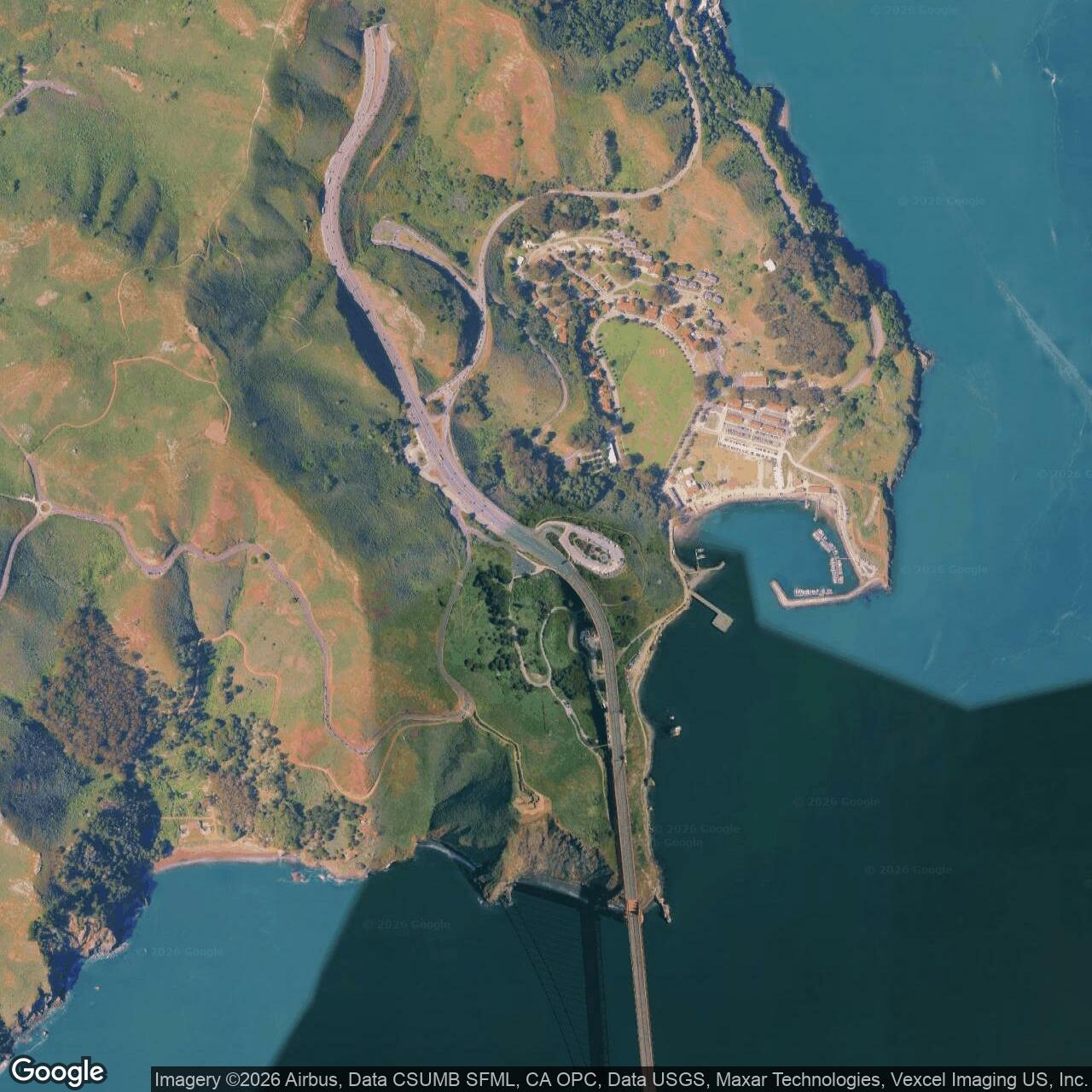
Fort Baker Army Base, Sausalito California
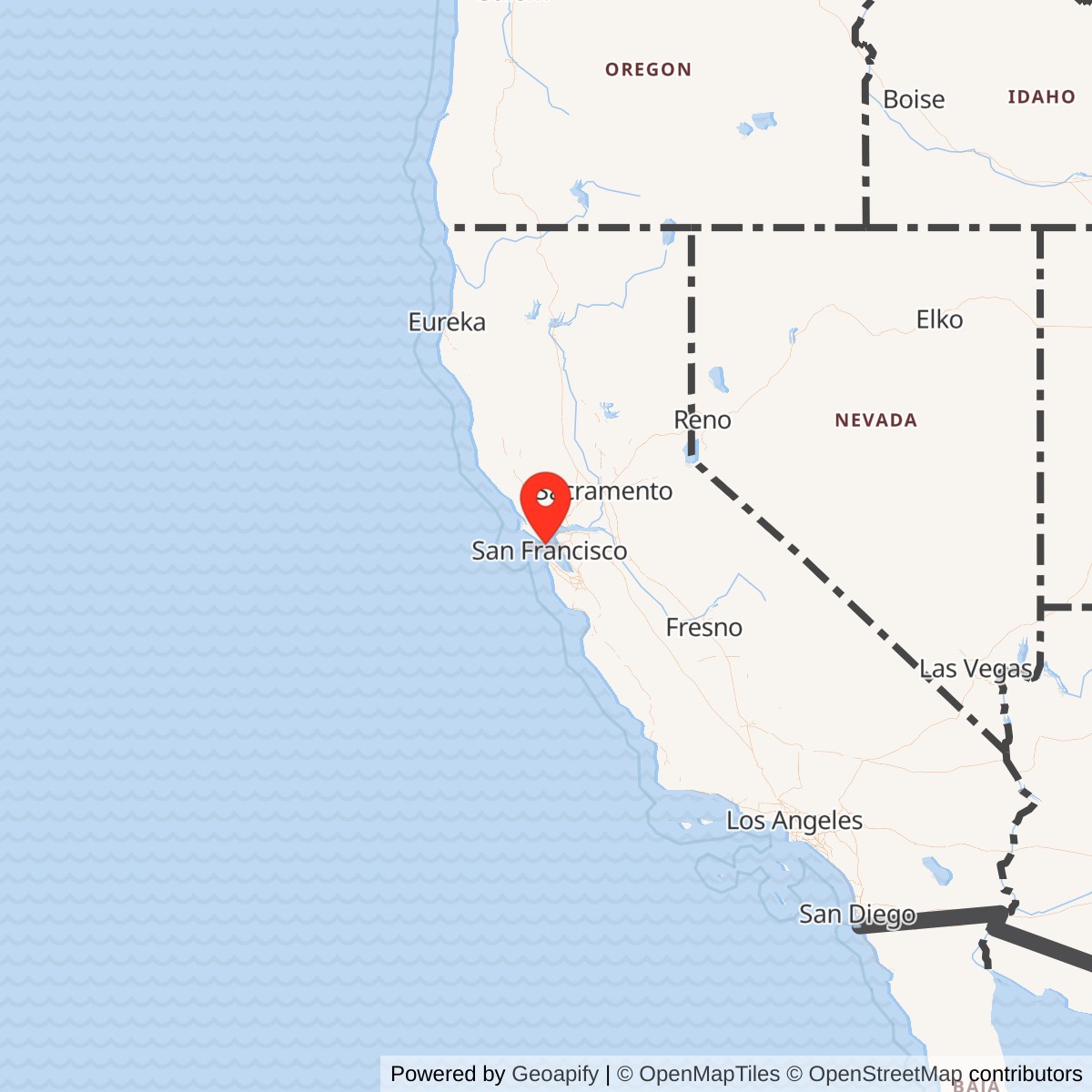
Longitude: -122.4814
Official Base Website: https://www.nps.gov/places/000/fort-baker.htm
Current Role: Golden Gate National Recreation Area; preserved former Army post with historic parade ground, Horseshoe Cove, Cavallo Point Lodge, Bay Area Discovery Museum, U.S. Coast Guard Station Golden Gate, Travis Sailing Center, former batteries, trails, marina uses, and habitat restoration.
Fort Baker was a U.S. Army seacoast-defense, submarine-mine, air-defense command, Army Reserve, and support installation on the Marin County side of the Golden Gate. It occupied one of the most strategically compressed pieces of military ground on the Pacific Coast: a sheltered cove and steep headland immediately opposite the Presidio of San Francisco and Fort Point, at the narrows through which every ship entering San Francisco Bay had to pass. The active Army post is closed. Army land was transferred to Golden Gate National Recreation Area beginning in phases during the late twentieth century, the main military transfer occurred in 1995, the last soldiers left in 2000, and the final Army landholdings in the east Fort Baker core were transferred to the National Park Service in 2002. Today Fort Baker is a 335-acre unit of Golden Gate National Recreation Area, with preserved Army buildings, a parade ground, Horseshoe Cove, former gun batteries, park partners, Cavallo Point Lodge, the Bay Area Discovery Museum, Coast Guard Station Golden Gate, marina uses, trails, and habitat restoration.
Fort Baker has to be understood in three overlapping identities. The first was the Lime Point Military Reservation, the mid-nineteenth-century federal reservation established to control the north side of the Golden Gate and to complement the older defenses at Fort Point and the Presidio. The second was the Endicott-era Army post that emerged between the 1890s and 1910, when new reinforced-concrete batteries and permanent garrison buildings turned the reservation into a modern Coast Artillery installation. The third was the twentieth-century support and command post that remained useful after the seacoast guns became obsolete, first through World War II mine and harbor-defense work, then through Cold War air-defense command, and finally through Army Reserve training support.
The modern visitor sees the former post as a scenic national park landscape, but that appearance can hide how operational the place once was. Horseshoe Cove was not merely a picturesque harbor. It was a working Army marine base for controlled minefields, mine-planting craft, cable systems, fuel docks, repair shops, and Coast Artillery waterfront activity. The batteries above the cove were not isolated ruins. They were pieces of a technical harbor-defense network that included Fort Winfield Scott, Fort Point, Fort Barry, Fort Cronkhite, Fort Miley, Fort Funston, Angel Island, Alcatraz, Yerba Buena Island, fire-control stations, searchlights, submarine mines, antiaircraft positions, radar, and later Nike missile sites. Fort Baker's importance came from its place in that system.
Fort Baker is distinct from Fort Barry and Fort Cronkhite even though the three are often grouped together. Fort Baker was the sheltered inner-Golden-Gate post, the site of the permanent Endicott-period cantonment around the parade ground, the Horseshoe Cove mine depot and marine repair complex, and later the Sixth ARADCOM regional air-defense headquarters. Fort Barry, farther west in the Marin Headlands, carried many of the heavier outer harbor batteries and later Nike SF-88. Fort Cronkhite, developed later and lower on the Pacific side at Rodeo Lagoon, became the major World War II cantonment and the setting for Battery Townsley. They functioned together as a Marin Headlands defense district, but Fort Baker had its own identity as the administrative, domestic, and waterfront-working post on the north side of the strait.
Mission Evolution
Fort Baker's mission began with a problem that predated the post itself: San Francisco Bay could not be defended from only one side of the Golden Gate. During the Gold Rush and the early decades of American control in California, San Francisco became a critical port, naval anchorage, and commercial gateway. Fort Point and the Presidio protected the south shore, but any serious harbor-defense plan required federal control of the north shore as well. The headlands around Lime Point and Point Cavallo gave the Army positions from which guns could crossfire with southern batteries, observe ships entering the strait, and control a sheltered cove useful for logistical work.
The first Army ambition for Lime Point was a massive casemated fortification to match Fort Point across the channel. That plan belonged to the Third System generation of masonry seacoast forts. It was overtaken by events. The Civil War demonstrated the vulnerability of masonry works to modern rifled artillery, and the engineering problem at Lime Point was exceptionally difficult because the proposed fort site would have required major blasting of hard rock near the waterline. By the time the Army's legal and engineering difficulties were resolved enough for work to proceed, the masonry-fort concept was becoming obsolete. Instead of building a northern twin to Fort Point, the Army moved toward earthwork and barbette batteries.
The first practical military works on the reservation were post-Civil War batteries. Battery Cavallo, begun in the 1870s at Point Cavallo, represented this transitional generation. It was an earthwork and brick emplacement intended for enormous Rodman cannon and other heavy weapons, though its full planned armament was never realized in the way originally imagined. Ridge and cliff batteries, along with Gravelly Beach works, gave the Army a dispersed set of north-shore positions. These works showed the Army's continuing interest in the site before Fort Baker became a formal named post. They also reveal the longer arc of seacoast defense: Fort Baker did not appear out of nowhere in 1905; it inherited decades of federal effort to adapt the north side of the Golden Gate to changing weapons.
The decisive transformation came in the Endicott period. In 1885 the Endicott Board called for a national modernization of seacoast defenses, and San Francisco Bay was among the harbors whose defenses were considered critical. Between 1897 and 1905 the Army built new modern fortifications at Fort Baker, including Batteries Spencer, Duncan, Kirby, Orlando Wagner, and Yates, while also adapting earlier works such as Battery Cavallo. The new batteries used reinforced concrete, armored magazines, disappearing carriages or rapid-fire mounts where appropriate, better fire-control systems, and improved ammunition handling. Their purpose was to replace older open batteries and masonry forts with a distributed, hard-to-destroy system capable of defending against modern steel warships and smaller torpedo craft.
The named post of Fort Baker emerged in this same period. The reservation was renamed for Edward Dickinson Baker, the U.S. senator from Oregon and Civil War officer killed at Ball's Bluff. In 1897 Battery I of the 3rd U.S. Artillery established camp in the area that became the parade ground, and the Army moved barracks by barge from the Presidio to support the first garrison. Permanent construction followed. Between roughly 1901 and 1910 the Army built the main post buildings around the parade ground: barracks, officers' quarters, headquarters, hospital, guardhouse, storehouses, shops, and recreation facilities. The post became both a tactical battery station and a permanent Army community.
That domestic mission mattered. Fort Baker was part of a national Army effort to improve soldier living conditions and reduce desertion, disease, and poor morale. The permanent buildings around the parade ground were not incidental architecture; they represented a shift away from cramped, improvised, and unhealthy frontier-style post life. The large ventilated barracks, clean water, indoor plumbing, hospital, gymnasium, post exchange, reading room, and bowling alley reflected the same reform impulse that built more orderly posts throughout the Army in the early twentieth century. Fort Baker's parade ground landscape therefore tells two stories at once: a weapons story and an Army-life story.
During World War I, Fort Baker remained part of the Coast Artillery system rather than becoming a large expeditionary training camp. The guns, garrison, communications, and harbor-control role remained central. The San Francisco defenses guarded a port that served war logistics and Pacific movement, and the post continued to support the professional and technical routines of seacoast artillery. Even when no enemy fleet approached, the work of readiness persisted: maintaining batteries, training gun crews, supporting observation and fire-control systems, and keeping the harbor-defense network coordinated.
The interwar years brought landscape and infrastructure change. Army work projects, road work, planting, retaining walls, drainage, and other improvements reshaped the post. The Golden Gate Bridge and its approach roads physically altered the Fort Baker landscape in the 1930s, especially around Lime Point, Conzelman Road, and the bridge's north anchorage. The bridge made the post more visible and more connected, but it also imposed modern transportation infrastructure directly on top of older defensive terrain. Fort Baker became a place where nineteenth-century military geography, early twentieth-century Army architecture, and twentieth-century civil engineering collided.
World War II changed Fort Baker more dramatically than any earlier period after the Endicott buildout. The post became part of the wartime Harbor Defenses of San Francisco. Its batteries remained in the system, but its most consequential role was at Horseshoe Cove. The Army developed the cove as a mine depot and marine-support complex for controlled underwater minefields outside the Golden Gate. Those minefields eventually consisted of hundreds of electrically detonated mines laid in arcs beyond the entrance to the bay. Fort Baker also supported waterfront repair, cable storage, mine loading, marine railways, a station hospital, temporary buildings, antiaircraft functions, and broader coordination with Forts Barry and Cronkhite and with the Navy's anti-submarine net system.
After World War II, the seacoast-defense mission ended quickly. The old harbor guns had lost their relevance in an era of aircraft, missiles, atomic weapons, and long-range naval power. By 1946 all coast artillery weapons at Fort Baker were deactivated. Mining activity continued briefly as the last traditional harbor-defense function at the post, but in 1949 submarine mine responsibilities transferred away from the Army to the Navy. The Coast Artillery Corps itself was abolished in 1950. Fort Baker survived by finding new uses in the Cold War defense system.
The Cold War mission shifted from ships to aircraft. From the 1950s into the 1970s Fort Baker served as headquarters for the Sixth ARADCOM Region, a U.S. Army Air Defense Command organization responsible for Nike missile defenses around the Bay Area. The command linked radar, communications, launch sites, control areas, and regional response procedures into a defensive network against Soviet bomber attack. Fort Baker no longer controlled guns at the water's edge, but it remained a command node guarding the same metropolitan region.
From the 1970s into the 1990s Fort Baker's Army identity centered on reserve training and support, especially the 91st Division (Training Support). That mission was less visible than the batteries and mine depot, but it kept the post in active Army use during the long transition from coastal defense to parkland. When the Golden Gate National Recreation Area was established in 1972, Fort Baker was identified for eventual transfer once no longer needed for military purposes. That transfer unfolded gradually, culminating in the 1995 post-to-park transition, the departure of the last soldiers in 2000, and the final land transfer in 2002.
Operational Role
Fort Baker's earliest operational role was to make the north side of the Golden Gate usable for harbor defense. In practical terms, that meant acquiring land, building roads and trails across steep terrain, constructing batteries on tactically useful ridges and points, and linking those batteries to storage, quarters, water, communications, and command structures. Geography gave the Army the opportunity; engineering made it operational. The distinction matters because Fort Baker was never only a "fort" in the romantic sense. It was a technical operating plant for coastal warfare.
The Endicott batteries required trained crews and tightly coordinated fire-control systems. Battery Spencer, completed in 1897 on the high ridge near the future bridge approach, was positioned to command the Golden Gate. Battery Kirby, Battery Duncan, and Battery Orlando Wagner added heavy-gun coverage in different arcs. Battery Yates, completed in 1905 at Cavallo Point, used smaller 3-inch rapid-fire rifles to defend against fast torpedo boats and, later, to protect the anti-submarine net during World War II. Battery Cavallo preserved an older generation of artillery thinking, but it too remained part of the layered landscape of defense. These works were not interchangeable; each answered a specific tactical problem.
Operating those batteries was a technical routine. Gun crews needed target information from observation stations, corrections from plotting rooms, communications from telephones or other signal systems, and a steady ammunition supply from magazines. Heavy guns required careful loading, recoil control, elevation, traverse, and safety discipline. Rapid-fire batteries required speed, precision, and the ability to engage smaller vessels at close range. Searchlights, power systems, and later radar and antiaircraft defenses added to the complexity. Fort Baker's soldiers were artillery technicians as much as garrison troops.
The post's operational life also included ordinary Army routines: guard duty, drill, inspection, physical training, post maintenance, medical care, education, recreation, and discipline. The parade ground was not ornamental; it was the organizing space for formation, ceremony, training, and inspection. The guardhouse, gymnasium, post exchange, hospital, storehouses, shops, and barracks all supported readiness by sustaining the garrison. Fort Baker's architecture was therefore part of its military function. Healthy, stable, permanent quarters helped keep skilled Coast Artillery soldiers at a post whose weapons demanded training and continuity.
World War II made Fort Baker a waterfront operating base. Horseshoe Cove became the home of the mine depot for the Harbor Defenses of San Francisco. Coast Artillery soldiers filled controlled mines with explosive, stored and protected mine components, maintained underwater cable systems, and moved mines by specialized vessels. The mines were not simple contact mines drifting in water. They were controlled submarine mines connected to shore by electrical cables and detonated from land when a target entered the correct area. That required careful cable layout, shore stations, switching systems, mine casemates, communications, observation, and disciplined target identification.
The scale of the World War II mine mission was large. The Golden Gate minefields eventually included 368 electrically detonated underwater mines outside the harbor entrance. Three large Army mine planters, USAMP Ellery W. Niles, USAMP Samuel M. Mills, and USAMP Horace F. Springer, were berthed at Horseshoe Cove. Soldiers and crews used cranes, anchors, cables, buoys, and shore-control systems to maintain the underwater barrier. The purpose was to make the entrance to San Francisco Bay physically deniable. If a hostile submarine or surface vessel tried to enter, the harbor-defense command could use mines as a controlled weapon, integrated with guns, searchlights, anti-submarine nets, Navy cooperation, and patrol craft.
The mine depot was also a marine maintenance center. In the months after Pearl Harbor, the Army faced a shortage of boats for mine and harbor-defense work, and commercial fishing boats were brought into service. Horseshoe Cove's Marine Repair Shop, constructed in 1943, maintained these vessels and the mine flotilla. Its marine railways allowed boats to be hauled from the water into shops for repair; one railway had a small-capacity line and another could handle larger vessels. Fuel docks, repair buildings, cable tanks, mine storehouses, and loading facilities turned the cove into a small military-industrial waterfront. The current marina setting preserves the shape of that environment, even though much of the wartime activity has disappeared.
Fort Baker also had a wartime medical function. The station hospital at Horseshoe Cove developed into a 229-bed wood-frame facility that treated San Francisco soldiers and eventually worked as a branch of Letterman General Hospital as wounded soldiers returned from the Pacific. Covered walkways helped patients move between buildings, and rehabilitation and morale support became part of the hospital environment. This hospital layer is important because it shows that Fort Baker's wartime expansion was not only about weapons. It also served the medical and human consequences of a Pacific war fought through a major West Coast port.
By 1945 and 1946 the operational logic of Fort Baker changed abruptly. The Japanese fleet threat had ended, the minefields were raised, antiaircraft guns were placed in storage, and the old seacoast weapons were deactivated. The last coast-defense work at the post was related to submarine mines; when the Navy assumed that function in 1949, Fort Baker's classic harbor-defense mission was over. The same terrain that once housed guns and mines could no longer justify itself on those grounds.
The Cold War air-defense mission gave Fort Baker a new operational purpose. As Sixth ARADCOM Region headquarters, the post coordinated a ring of Nike missile sites around the San Francisco Bay Area. This was a fundamentally different kind of warfare. The threat was not a battleship or raider entering the Golden Gate; it was a formation of nuclear-armed bombers detected by radar and engaged by guided missiles. The Bay Area Nike network included sites in the Marin Headlands, East Bay, South Bay, Peninsula, Angel Island, and other locations. Fort Baker's headquarters role required communications, administrative space, command procedures, and integration with radar stations such as Mill Valley Air Force Station on Mount Tamalpais. In this phase, Fort Baker guarded the region by managing information and command authority rather than by firing from its own batteries.
The Army Reserve period shifted the mission again. The 91st Division (Training Support) used Fort Baker to prepare training exercises for Army National Guard, Army Reserve Combat Support, and Combat Service Support units. This work connected Fort Baker to the reserve-component training system rather than to a fixed defensive perimeter. It also kept the post occupied long enough that the transfer to park use became a negotiated post-to-park conversion rather than an immediate abandonment after the Coast Artillery era.
Units, Organizations, and Systems
The Coast Artillery Corps was the defining Fort Baker organization of the early twentieth century. The post existed to support coast artillery companies operating the north-Golden-Gate batteries. Early garrison history included Battery I, 3rd U.S. Artillery, and later numbered Coast Artillery companies such as the 68th, 61st, 32nd, 148th, 161st, and 67th Companies. The exact mix changed over time, but the pattern was consistent: Fort Baker housed technically trained artillery soldiers responsible for fixed defenses whose operation required specialized crews.
The Harbor Defenses of San Francisco was the larger system that gave Fort Baker strategic meaning. Fort Baker's batteries and mine depot were only one part of a baywide defensive system. Fort Winfield Scott served as the headquarters anchor. Fort Barry and Fort Cronkhite pushed defenses farther west into the Marin Headlands. Fort Funston and Fort Miley covered the San Francisco side of the outer approaches. Fort Point, the Presidio, Alcatraz, Angel Island, Fort McDowell, Yerba Buena Island, and other sites added older works, command functions, searchlights, observation points, and supporting roles. The harbor-defense system combined guns, mines, nets, searchlights, fire-control stations, antiaircraft weapons, communications, and patrols into one integrated coastal defense.
The mine command and mine detachments were central to Fort Baker's World War II identity. Submarine mine warfare was a Coast Artillery specialty, and it required a different skill set from gun service. Soldiers had to understand explosive loading, mine planting, cable maintenance, electrical circuits, marine handling, boat operations, and shore-based detonation systems. The Fort Baker mine depot linked land-based artillery soldiers with maritime work. It also connected the Army to Navy harbor-defense functions, especially the anti-submarine net operated through the Tiburon Naval Net Depot and stretched across the bay entrance between the north and south sides.
The station hospital and medical personnel formed another wartime institutional layer. During World War II, Fort Baker's hospital cared for soldiers, supported rehabilitation, and later worked in relation to Letterman General Hospital. After the war, the hospital buildings were converted to the Fort Baker Medical Laboratory, with divisions including immunology, entomology, pathology, and chemistry. That laboratory work placed the former post hospital into a broader military-medical system for the western states. The laboratory history is often overshadowed by the batteries, but it is one of Fort Baker's more unusual postwar uses.
The Sixth ARADCOM Region was the defining Cold War organization at Fort Baker. ARADCOM, the Army Air Defense Command, managed continental missile defenses against air attack. Fort Baker's headquarters role tied it to twelve permanent Nike launch sites around the Bay Area, including sites at Fort Barry, Fort Cronkhite, Angel Island, San Rafael, Fort Winfield Scott, Fort Funston, Milagra Ridge, San Pablo Ridge, Rocky Ridge, Lake Chabot, and Coyote Hills. The Nike system depended on radar acquisition, computer tracking, communications, command authorization, and missile launch crews. Fort Baker's role was to coordinate the regional network.
The 91st Division (Training Support) represented the final Army era. The 91st Division had earlier World War service and was reactivated in the Army Reserve after World War II. At Fort Baker, it became associated with reserve-component training support rather than with fixed coastal defense. Its departure to Camp Parks marked the end of active Army presence at the post. The 91st Division's Fort Baker phase is important because it explains why Army occupancy continued long after the batteries were silent and the Nike network had disappeared.
The U.S. Coast Guard is part of the current federal presence at Horseshoe Cove but not a continuation of Fort Baker as an Army installation. Coast Guard Station Golden Gate moved to Fort Baker in 1991 and continues search and rescue, maritime law enforcement, homeland security, environmental protection, and boating-safety work. The Coast Guard's presence reinforces the continuing maritime importance of Horseshoe Cove, but the former Army post itself is closed and administered primarily as national parkland.
Facilities and Physical Layout
Fort Baker's physical layout is unusually clear because it combined a compact garrison core with surrounding batteries, roads, and waterfront working areas. The main post clustered around Murray Circle and the parade ground above Horseshoe Cove. The parade ground created the formal center of Army life. Barracks, officers' quarters, headquarters, the guardhouse, post exchange, gymnasium, hospital, storehouses, and support buildings framed the open space. This core is one of the best surviving examples in Golden Gate National Recreation Area of a turn-of-the-century Endicott-period Army post.
The architecture was largely Colonial Revival, a style that expressed order, permanence, and institutional self-confidence. The buildings used porches, symmetrical forms, classical details, and generous ventilation. For enlisted men, the barracks represented a substantial improvement over older nineteenth-century Army housing. For officers and families, the quarters around the parade ground created a formal domestic landscape with views toward the bay. For the Army, the post made a statement that skilled coast-artillery soldiers required a stable, healthier garrison environment.
The batteries lay outside the domestic core, where terrain and firing arcs required them. Battery Cavallo stood at Point Cavallo as a rare survivor of the 1870s post-Civil War earthwork generation. Battery Spencer occupied high ground near the future Golden Gate Bridge north anchorage and became one of the most commanding visual points in the defense landscape. Batteries Duncan, Kirby, and Orlando Wagner added heavy Endicott firepower, while Battery Yates handled rapid-fire defense near the bay entrance and later guarded the anti-submarine net. Smaller, related structures included plotting rooms, magazines, power and communications features, searchlight support, and observation elements.
Horseshoe Cove formed the waterfront operations zone. Its naturally protected shape made it valuable before the Army arrived, but military development turned it into a working harbor. The cove had piers, seawalls, breakwaters, wharves, a marine railway, boat repair facilities, a mine storehouse, cable tanks, generator structures, mine-loading spaces, and support buildings. Building 670 served as a Cable Storage Building where underwater cables were stored in saltwater tanks to protect their rubber coatings. Other facilities supported mine loading, maintenance, and vessel repair. The cove's physical features explain why Fort Baker, rather than a more exposed Marin Headlands site, became the mine depot.
The Baker-Barry Tunnel linked Fort Baker and Fort Barry and gave the Marin Headlands defense system an internal transportation route. The tunnel mattered because coastal posts had to move men, supplies, ammunition, equipment, and vehicles through steep terrain. Roads such as Conzelman Road, McReynolds Road, East Road, and Center Road tied the parade ground, batteries, tunnel, bridge approaches, and waterfront together. The landscape may appear recreational now, but its road network was once a military circulation system.
World War II temporary construction expanded the post far beyond its peacetime appearance. Temporary hospital buildings, mine facilities, storage structures, antiaircraft positions, waterfront construction, and support buildings crowded the Horseshoe Cove and post areas. The Cultural Landscape Report notes that by the war years a large hospital complex stood near the shoreline and that numerous temporary structures altered the landscape. Most of those temporary buildings are gone, but the wartime expansion explains later environmental, preservation, and reuse challenges.
The Golden Gate Bridge dramatically changed Fort Baker's setting. The bridge's north tower stands near the old Lime Point military landscape, and the approach roads cut across terrain long used by the Army. The bridge made Fort Baker one of the most visible former military landscapes in the country, but it also physically altered military roads, slopes, and the old relationship between cove, ridge, and point. After 1937, the post existed not only as a defense installation but as the military landscape beneath one of the nation's most famous civil-engineering structures.
Post-to-park reuse required another round of physical change. Incompatible modern buildings were removed or repurposed, historic structures were rehabilitated, contaminated soils and older infrastructure had to be addressed, and natural habitat was restored. Cavallo Point Lodge reused many former Army buildings, while the Bay Area Discovery Museum and other park partners adapted parts of the former post. The challenge was to preserve Fort Baker's military landscape without freezing it as an abandoned base. The present site is therefore a rehabilitation landscape as much as a preserved ruin.
World War II Service
Fort Baker's World War II service was inseparable from the fear that the Pacific Coast could become a target after Pearl Harbor. San Francisco Bay was a major port, naval and military logistics center, shipbuilding region, and gateway to the Pacific. The Army's harbor defenses had to protect not only a city but an entire wartime transportation and industrial system. Fort Baker's location just inside the Golden Gate made it one of the key places where that defense became practical.
The wartime mine depot at Horseshoe Cove was Fort Baker's most important contribution. Controlled minefields were among the most effective ways to deny a harbor entrance. A minefield could be silent, invisible, and held in reserve until a target entered a designated zone. Unlike uncontrolled mines, controlled mines could allow friendly traffic to pass while preserving the ability to detonate against enemy ships or submarines. This was essential at San Francisco, where the harbor had to remain open to American and Allied shipping while still protected from attack.
The process was labor-intensive and dangerous. Mines had to be loaded with explosive, connected to cables, checked, moved by boat, planted at assigned locations, and connected to shore-control stations. The NPS history states that Coast Artillery soldiers loaded 800 pounds of TNT into metal mines before placing them underwater outside the bay entrance. The Cultural Landscape Report records a greatly expanded trio of minefields outside the Golden Gate with 368 electrically detonated underwater mines. That number conveys the scale of the operation. Fort Baker's soldiers were not merely guarding a harbor; they were maintaining an underwater weapons system spread across the mouth of one of the most important bays in the United States.
The mine-planting fleet made Horseshoe Cove a busy military harbor. USAMP Ellery W. Niles, USAMP Samuel M. Mills, and USAMP Horace F. Springer were among the large mine planters berthed there. Smaller craft, including appropriated civilian fishing boats, supported the mine operation and harbor-defense work. The marine repair shop kept that flotilla functioning. Its parallel marine railways, boat cradles, shops, and wharf structures allowed vessels to be hauled out, repaired, fueled, and returned to service. Without that repair and maintenance capability, the minefield could not have remained reliable.
Fort Baker also worked with the anti-submarine net system. The Navy's Tiburon Net Depot operated the anti-submarine net that stretched across the bay entrance from the Marin side toward San Francisco. Battery Yates, with rapid-fire 3-inch guns, protected the bay entrance and the net against small fast craft. The net, mines, guns, patrol boats, and observation systems together created a layered defense. The German and Japanese submarine threats to American coastal waters made this kind of system credible even though no enemy force entered San Francisco Bay.
The wartime hospital gave Fort Baker another role. The Fort Baker Station Hospital served San Francisco soldiers and later became increasingly connected to Letterman General Hospital as Pacific wounded returned. Its 229-bed wood-frame complex, covered walkways, Red Cross support, and rehabilitation emphasis turned the former seacoast post into part of the medical rear of the Pacific war. The wounded who moved through the hospital made the distant war visible on the north side of the Golden Gate.
Fort Baker's wartime population and physical plant expanded with temporary buildings and support functions. The guns of some batteries were adjusted or updated, older batteries received renewed attention, and antiaircraft defenses were added or maintained as the threat changed. Yet as the war moved westward and the direct threat to California declined, the old harbor-defense system began to wind down. By 1946 all Fort Baker coast artillery weapons were deactivated, and the minefields were removed.
Postwar and Cold War Activity
The immediate postwar period was a time of conversion, not simple abandonment. The Mine Detachment, Seacoast Branch of the Artillery School, was activated at Fort Baker in November 1946, showing that the Army still treated mine warfare as a specialized skill even after the guns were being shut down. But this was a short-lived afterglow of the old system. In 1949 submarine mine activities transferred to the Navy, and the Army's seacoast-defense era at Fort Baker effectively ended. The Coast Artillery Corps deactivation in 1950 confirmed that the world Fort Baker had been built for was gone.
The former station hospital became the Fort Baker Medical Laboratory. Its divisions included immunology, entomology, pathology, and chemistry, and the Army used it for research and specimen work serving the western states. This laboratory history is one of Fort Baker's less visible chapters, but it is consistent with the way many older posts survived after their original missions ended: existing buildings, utilities, roads, and secure federal ownership made them useful for specialized support functions. The medical laboratory also demonstrates that postwar Fort Baker was not merely an empty set of obsolete batteries.
The larger Cold War mission was air defense. The United States built the Nike missile system as the last line of defense against Soviet bomber attack. Around the San Francisco Bay Area, missile launch and control sites formed a ring around the region. Fort Baker became the headquarters of the Sixth ARADCOM Region, responsible for managing that regional network. From Fort Baker, air-defense command related to sites north, east, and south of the Golden Gate, with radar information from Mill Valley Air Force Station and other components feeding the system.
This mission fundamentally changed the meaning of Fort Baker. The old batteries had defended against ships visible through the Golden Gate. The Nike network defended against aircraft that might arrive at high speed and high altitude. The key tools were radar, computers, communications, command posts, and missiles rather than disappearing guns and submarine mines. Fort Baker's value in this era came from its headquarters space, communications connections, and enduring military reservation status.
The Army Reserve and 91st Division phase followed the Nike era. From the 1970s to the 1990s, the 91st Division (Training Support) used Fort Baker to design and support exercises for reserve-component units. The post's parade ground buildings, offices, roads, and federal military status allowed the Army to retain a presence even as much of the surrounding Marin Headlands entered National Park Service stewardship. The 91st Division planted a Bicentennial memorial tree in 1975 and dedicated the parade ground and flagpole to citizen soldiers, an act that symbolically connected the old Coast Artillery post to the reserve Army.
Closure, Transfer, and Current Status
Fort Baker's closure unfolded in stages rather than on a single day. The creation of Golden Gate National Recreation Area in 1972 established the legal and planning framework for former military lands around the Golden Gate to become public parkland when no longer needed by the armed forces. Fort Baker, Fort Barry, Fort Cronkhite, the Presidio, and related properties all became part of a broader post-to-park transformation. Fort Baker was listed with Forts Barry and Cronkhite as a nationally significant historic district in the National Register of Historic Places in 1973.
Several transfers occurred before the final post conversion. Portions of west Fort Baker and surrounding lands moved to National Park Service administration during the 1970s and 1980s. The U.S. Coast Guard moved to Horseshoe Cove in 1991. The Army transferred its remaining Fort Baker land to Golden Gate National Recreation Area in 1995, while Army activity continued for a short period as the 91st Division completed its relocation. In 2000 the last soldiers left Fort Baker, and in 2002 the Army transferred its last east Fort Baker landholding, including the core cantonment and eastern parts of Horseshoe Cove, to the National Park Service.
The current Fort Baker is not an active Army installation. It is a former Army post preserved and reused as part of Golden Gate National Recreation Area. The National Park Service manages the historic landscape, while partner institutions operate within rehabilitated buildings. Cavallo Point Lodge occupies and maintains many former Army structures as part of a public-private preservation and lodging partnership. The Bay Area Discovery Museum occupies other former military buildings. The U.S. Coast Guard continues at Horseshoe Cove, and the Travis Sailing Center and Presidio Yacht Club continue maritime recreation and military-community use.
The post-to-park conversion was complex because Fort Baker was not a blank park site. It had dozens of historic buildings, incompatible modern structures, unmapped and deteriorated infrastructure, contaminated soils, sensitive habitat, and a requirement that parts of the site become financially self-supporting. Reuse therefore required environmental cleanup, preservation planning, building rehabilitation, habitat restoration, utility work, traffic planning, and public interpretation. Fort Baker today is a working example of military adaptive reuse: the old post remains legible, but its function has shifted from defense to preservation, education, lodging, recreation, maritime safety, and habitat stewardship.
The natural-resource layer now shapes how the former military landscape is managed. Horseshoe Cove supports eelgrass and important fish, bird, crab, seal, and herring habitat. The ridge tops include habitat for the endangered Mission blue butterfly. Battery Cavallo itself now preserves both military architecture and sensitive grassland habitat. This ecological role is not separate from the history. Military control unintentionally preserved open land that might otherwise have been developed, and the National Park Service inherited both the cultural landscape and the natural landscape that military reservation status had protected.
Chronology
- 1850 President Millard Fillmore designated the Lime Point area on the north side of the Golden Gate for military reservation and harbor-defense purposes.
- 1866 After land and ownership disputes, the federal government secured the reservation, making practical Army development of the north Golden Gate defenses possible.
- 1871 Ridge Battery was constructed as part of the early post-Civil War north-shore defense system.
- 1872 Construction began on Battery Cavallo at Point Cavallo.
- 1870s Battery Cavallo and related earthwork batteries reflected the Army's move away from masonry fort designs toward dispersed earth-and-brick coastal works.
- 1897 Battery Spencer was completed on high ground above the Golden Gate.
- 1897 Battery I, 3rd U.S. Artillery, established camp in the area that became Fort Baker's parade ground, becoming the first garrison associated with the named post.
- 1897 The reservation was renamed Fort Baker in honor of Edward Dickinson Baker.
- 1897 Two barracks were moved by barge from the Presidio and erected near Horseshoe Cove to support the first garrison.
- 1897-1905 The Army built the main Endicott-era seacoast batteries at Fort Baker, including Batteries Spencer, Duncan, Kirby, Orlando Wagner, and Yates.
- 1900 Batteries Duncan and Kirby were completed as part of the modernized coast-defense system.
- 1901 Battery Orlando Wagner was completed.
- 1901-1910 The Army constructed the permanent post buildings around the parade ground, including barracks, officers' quarters, support buildings, and other garrison facilities.
- 1905 Battery Yates was completed with rapid-fire 3-inch guns for close-in defense against fast vessels.
- 1907 The Coast Artillery Corps was established, formalizing the specialized branch that would operate Fort Baker's batteries.
- 1907 The 148th Company, Coast Artillery Corps, joined the Fort Baker garrison, part of the post's growing early twentieth-century Coast Artillery presence.
- 1909 The 67th Company, Coast Artillery Corps, arrived at Fort Baker, bringing the garrison above 500 enlisted men for the first time.
- 1913 The 68th Company transferred to Hawaii, leaving the 32nd, 61st, and 148th Companies at Fort Baker at the end of the year.
- 1929 A new pier section along Horseshoe Cove was begun, part of the waterfront improvements that later supported military marine work.
- 1934 The second major section of the Horseshoe Cove pier was completed.
- 1935 WPA and CCC-related work improved Fort Baker's landscape, utilities, drainage, retaining walls, and related infrastructure.
- 1937 The Golden Gate Bridge was completed, physically altering the Fort Baker landscape and bridge approach roads around Lime Point and Conzelman Road.
- 1941 The Fort Baker Station Hospital expanded as wartime mobilization increased medical demand in the San Francisco defense system.
- 1942 The Army built a new wooden bulkhead along part of Horseshoe Cove to protect hospital structures and stabilize the shoreline.
- 1942 Fort Baker became a major mine depot for the Harbor Defenses of San Francisco during World War II.
- 1942 Coast Artillery soldiers at Fort Baker loaded and planted controlled mines outside the Golden Gate.
- 1943 The Marine Repair Shop at Horseshoe Cove was constructed to support mine-planter and harbor-defense craft.
- 1943 The Mobile Searchlight Storage Building, Building 691, was constructed to support World War II coastal defense activities at Fort Baker, Barry, and Cronkhite.
- 1945 With the war ending, the Army accelerated disarming of San Francisco harbor defenses, raised the minefields, and placed antiaircraft guns in storage.
- 1946 All coast artillery weapons at Fort Baker were deactivated; Battery Yates was among the last rapid-fire gun positions to leave service.
- 1946-11-25 The Mine Detachment, Seacoast Branch of the Artillery School, was activated at Fort Baker, reflecting the last Army mine-warfare function at the post.
- 1949 Submarine mine activities were transferred to the U.S. Navy, ending the last traditional coast-defense function at Fort Baker.
- 1950 The U.S. Army deactivated the Coast Artillery Corps.
- 1950s-1970s Fort Baker served as headquarters for the Sixth ARADCOM Region, which coordinated Nike missile defenses around the San Francisco Bay Area.
- 1959 Additional military family housing was constructed at Fort Baker during its post-coast-artillery Army use period.
- 1972 Golden Gate National Recreation Area was established, creating the framework for eventual transfer of Fort Baker and nearby military lands to National Park Service stewardship.
- 1973 Fort Baker, Fort Barry, and Fort Cronkhite were listed together as a nationally significant historic district in the National Register of Historic Places.
- 1975 The Army transferred portions of west Fort Baker and related Marin Headlands lands to National Park Service administration.
- 1975 The 91st Division, U.S. Army Reserve, planted a Bicentennial memorial tree and dedicated the Fort Baker parade ground and flagpole to citizen soldiers.
- 1985 The Army transferred additional portions of east Fort Baker to the National Park Service.
- 1986 The Army transferred about 257.7 acres in east Fort Baker to the National Park Service, including Quartermaster warehouse area and lands near Battery Duncan and East Road.
- 1991 U.S. Coast Guard Station Golden Gate moved to Horseshoe Cove.
- 1995 The military transferred Fort Baker land to Golden Gate National Recreation Area as part of the post-to-park conversion.
- 1998 National Park Service planning for east Fort Baker led toward the Fort Baker Plan and related environmental review.
- 2000 The Record of Decision on the Fort Baker Plan was signed.
- 2000 The last soldiers left Fort Baker as the 91st Division (Training Support) moved its activities to Camp Parks.
- 2002 The Army transferred its last landholding in east Fort Baker, including the core cantonment and eastern portions of Horseshoe Cove, to the National Park Service.
- 2008 Cavallo Point Lodge opened in rehabilitated former Army buildings at Fort Baker, becoming a major adaptive-reuse component of the former post.
- Present Fort Baker remains a closed former Army post within Golden Gate National Recreation Area, with preserved historic buildings, former batteries, Coast Guard use, park partners, maritime recreation, habitat restoration, and public interpretation.