
Camp Adair Army Base, Corvallis Oregon
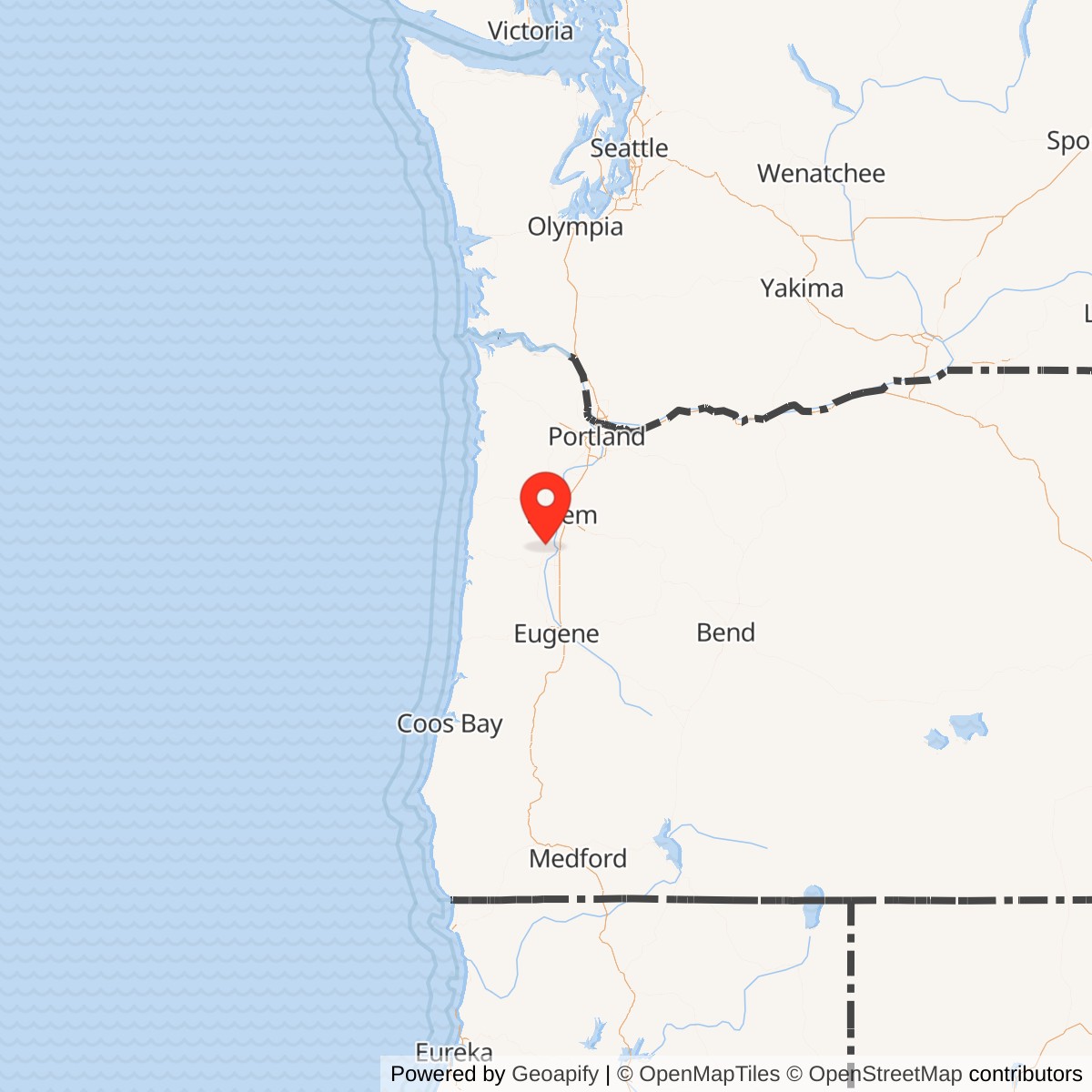
Longitude: -123.203782
Official Base Website: Former Camp Adair / E.E. Wilson Wildlife Area
Current Role: E.E. Wilson Wildlife Area; Adair Village; agriculture, forestry, housing, schools, public and private uses; active Oregon National Guard Camp Adair Training Site on a residual former range; ongoing USACE FUDS munitions response
Camp Adair was one of the largest World War II Army training reservations in the Pacific Northwest. Built in 1942 on more than 56,000 acres north of Corvallis, it transformed farms, orchards, small communities, roads, rail lines, streams, and cemeteries into a division-scale training center. At peak strength, approximately 40,000 soldiers and civilian workers lived or worked there, enough to make the temporary cantonment Oregon's second-largest population center.
The installation existed for only a few years, but its influence extended far beyond Oregon. The 96th, 104th, 70th, and 91st Infantry Divisions trained there before combat in the Pacific, western Europe, and Italy. Soldiers practiced rifle and machine-gun fire, mortars, artillery, antitank weapons, antiaircraft defense, demolitions, tank-infantry coordination, field engineering, communications, logistics, and large-unit maneuver. Army Air Forces aircraft supported ground exercises, and Navy and Marine aviators later used portions of the reservation for bombing and gunnery practice.
Camp Adair also became a prisoner-of-war installation and a major military hospital site. Italian and German prisoners were held there during the final years of the war and supplied labor for agriculture and military support. As Army training declined, the hospital transferred to the Navy and treated personnel returning from the Pacific. After the war, hospital and housing buildings helped accommodate Oregon State College students and faculty during the enrollment surge created by returning veterans.
The Army declared Camp Adair surplus in April 1946. Most buildings were dismantled, land returned to farming or transferred to public agencies, and the once-crowded cantonment became a landscape of roads, foundations, chimneys, concrete pads, and utility remnants. The former camp now contains E.E. Wilson Wildlife Area, Adair Village, private farms and homes, state and county facilities, Oregon State University and U.S. Forest Service lands, and an active Oregon National Guard training parcel.
The surviving cantonment footprint is nationally important. National Park Service researchers have described it as possibly the most intact surviving physical footprint of a World War II Army cantonment. Its street grid and foundations preserve the scale and repetitive organization of the temporary cities built to prepare millions of American soldiers for war.
Selection of the Willamette Valley Site
Army planners began examining western Oregon for a major training installation before the attack on Pearl Harbor. The expanding Army needed division camps with mild weather, rail and highway access, open land for cantonments, and nearby terrain suitable for realistic maneuver.The central Willamette Valley offered large areas of farmland between Corvallis, Albany, Monmouth, and Independence. The Coast Range foothills west of the valley provided wooded and broken terrain, while the valley floor offered space for barracks, hospitals, warehouses, roads, and training ranges.
Army planners believed the area's wet climate, vegetation, rolling hills, and agricultural landscape resembled parts of western Europe. This made it attractive for infantry divisions expected to fight in Germany or nearby countries.
The site centered on the small community of Wells, north of Corvallis. The proposed reservation extended across portions of Benton, Polk, and Linn Counties and included farms, orchards, vineyards, timberland, schools, churches, roads, rail lines, and family cemeteries.
The War Department selected the site in 1941. Construction funds and full mobilization followed after the United States entered World War II.
Land Acquisition and Displaced Communities
The creation of Camp Adair required the purchase or condemnation of thousands of acres. Families who had lived on the land for generations had to sell and relocate.The community of Wells disappeared almost entirely. Its school, homes, businesses, roads, and social landscape were absorbed into the military reservation. Smaller rural neighborhoods and farms also vanished.
The Army rerouted roads and railroad tracks to fit the cantonment and range plan. Existing drainage systems, streams, fences, and property boundaries were altered or removed.
Cemeteries within the reservation presented a particularly sensitive problem. Local historical accounts document the relocation of 414 grave markers, some dating to the 1850s. Families lost not only homes and farms but familiar burial places and community landmarks.
Compensation did not eliminate the disruption. Wartime urgency limited the time available for relocation, and the scale of the project permanently changed the region north of Corvallis.
The camp's history therefore begins with two simultaneous mobilizations. The Army rapidly created a military city, while civilians were forced to dismantle and reestablish their own lives elsewhere.
Naming for Henry Rodney Adair
Camp Adair was named for First Lieutenant Henry Rodney Adair, an Oregon-born cavalry officer.Adair was born in Astoria and belonged to a prominent Oregon family. He graduated from the U.S. Military Academy and entered the cavalry.
During the 1916 Punitive Expedition into Mexico, U.S. forces attempted to capture or disperse forces associated with Francisco "Pancho" Villa. Adair served with the 10th Cavalry, one of the Army's Buffalo Soldier regiments.
On 1916-06-21, Adair was killed during the Battle of Carrizal in Chihuahua. The clash between American and Mexican forces became one of the most serious incidents of the expedition.
The camp's name connected Oregon's largest World War II Army installation to a native son killed during an earlier American military operation.
The name later passed to Adair Air Force Station and the incorporated community of Adair Village.
Construction of the Cantonment
Construction began in spring 1942 and proceeded at extraordinary speed. The Army and its contractors completed the principal cantonment in approximately six months.The reservation measured roughly six miles by ten miles and eventually encompassed 56,815.17 acres according to the U.S. Army Corps of Engineers Formerly Used Defense Sites record.
More than 1,700 buildings were constructed across the camp. Sources commonly describe approximately 1,800 total structures when the wider installation is considered.
The cantonment contained barracks, headquarters, mess halls, kitchens, warehouses, machine shops, motor pools, chapels, theaters, post exchanges, medical buildings, a bakery, a bank, fire stations, utilities, and recreational facilities.
Most structures were standardized temporary wood-frame buildings intended to last only through the emergency. Speed and economy mattered more than long-term durability.
The street system organized unit areas into repetitive blocks. Barracks, mess halls, administration buildings, and recreation facilities followed standardized patterns that could be duplicated rapidly for each regiment or supporting organization.
The main cantonment and hospital lay east of Highway 99W. Live-fire and maneuver areas extended primarily to the west into rougher terrain.
The Army built water, sewer, electrical, telephone, storm-drainage, and road systems on a scale comparable to a large city. Wet winter conditions made drainage essential.
The portion later known as E.E. Wilson Wildlife Area was remembered as "Swamp Adair." Rain, mud, standing water, and mosquitoes complicated construction and training. The Army drained wetlands, channelized streams, and installed storm sewers in an effort to keep the cantonment usable.
Population and Daily Life
Camp Adair's population reached approximately 40,000 when two divisions and supporting organizations trained simultaneously. Some sources place the broader military and civilian population as high as 45,000.Corvallis had fewer than 9,000 residents in 1940. Camp Adair therefore dwarfed nearby communities and placed enormous pressure on housing, transportation, utilities, restaurants, entertainment, and law enforcement.
Military trains and buses carried soldiers between the camp and surrounding towns. Corvallis, Albany, Independence, Monmouth, Salem, and smaller communities experienced crowds of soldiers during passes and weekends.
Civilian employees worked in construction, administration, maintenance, transportation, food service, laundries, hospitals, communications, and supply.
Daily life followed the rhythm of division training. Reveille, physical training, inspections, weapons instruction, field problems, maintenance, classroom work, and night exercises filled the schedule.
The cantonment offered theaters, chapels, service clubs, post exchanges, athletic fields, and other recreation. These facilities provided limited relief from demanding training and the wet Oregon climate.
The sudden concentration of young soldiers created social and economic opportunities but also traffic, accidents, crowding, shortages, and tension with nearby communities.
Training Mission
Camp Adair's principal mission was to prepare infantry divisions for overseas combat. The reservation supported individual, small-unit, regimental, and division-level training.Soldiers learned rifle and pistol marksmanship, automatic weapons, mortars, hand grenades, antitank weapons, mines, demolitions, field fortifications, camouflage, communications, first aid, and map reading.
Artillery units fired into large impact areas. Antiaircraft and antitank crews practiced against ground and aerial targets.
Engineers built roads, bridges, obstacles, defensive positions, and field water systems. Signal units installed wire and radio networks. Medical units practiced casualty collection, treatment, and evacuation.
Tank and mechanized elements supported combined-arms exercises. Army Air Forces aircraft participated in reconnaissance, observation, target support, and coordination training.
Night operations, field bivouacs, forced marches, live-fire exercises, and tactical problems attempted to reproduce combat conditions.
The reservation's western hills and forests allowed units to practice movement in difficult terrain. The central Oregon maneuver areas near Bend added large-scale field experience under drier and more open conditions.
The training system extended beyond Camp Adair itself. Divisions moved between Adair, Camp White, Fort Lewis, central Oregon maneuver areas, desert centers, amphibious training bases, and embarkation points as they advanced through their preparation cycles.
The 96th Infantry Division
The 96th Infantry Division, known as the "Deadeye Division," activated at Camp Adair in August 1942.Its soldiers began with individual and unit training, then moved through field exercises and larger maneuvers. The division's marksmanship culture became an important part of its identity.
The 96th left Camp Adair in May 1943 for Fort Lewis and later trained in the central Oregon maneuver area. It subsequently moved to Camp White and California for amphibious preparation.
The division deployed to the Pacific and fought in the Philippines. It landed on Leyte in October 1944 and participated in difficult operations against Japanese forces.
In April 1945, the 96th entered combat on Okinawa. The division fought through heavily fortified positions and suffered severe casualties.
Major General Claudius Easley, the assistant division commander, was killed on Okinawa in June 1945.
The division's combat record linked Camp Adair directly to two of the major campaigns in the final year of the Pacific War.
The 104th Infantry Division
The 104th Infantry Division, the "Timberwolf Division," activated at Camp Adair in September 1942.The division trained under Major General Gilbert R. Cook and later Major General Terry Allen. Its soldiers developed infantry skills in the wet forests and fields of western Oregon.
In 1943, the 104th participated in training in the central Oregon maneuver area before moving to the Arizona and California desert training system.
The division later moved to Camp Carson, Colorado, and prepared for overseas deployment.
The 104th arrived in France in September 1944 and entered combat in Belgium and the Netherlands before advancing into Germany.
Its soldiers crossed the Roer and Rhine Rivers and continued eastward until they met Soviet forces near the Elbe in April 1945.
The division's movement from rainy Oregon to desert training and then northern European combat illustrates the Army's multi-stage preparation system.
The 70th Infantry Division
The 70th Infantry Division, known as the "Trailblazer Division," activated at Camp Adair in June 1943.Its soldiers trained in infantry tactics, weapons, field engineering, communications, logistics, and division maneuver.
The division remained at Camp Adair until July 1944, when it moved to Fort Leonard Wood, Missouri.
An advanced force of three infantry regiments deployed to France late in 1944. These troops entered combat during the winter crisis created by the German Ardennes offensive.
The remainder of the division arrived in early 1945. The 70th fought near the Saar River, attacked through the Siegfried Line, and advanced into Germany.
The division's combat experience reflected the type of forest, village, and fortified-position warfare that Camp Adair's planners had anticipated when selecting the Willamette Valley site.
The 91st Infantry Division
The 91st Infantry Division, the "Powder River Division," reactivated at Camp White in August 1942 and moved to Camp Adair in November 1943.Its arrival represented the continuing exchange of divisions among Pacific Northwest training installations.
At Camp Adair, the 91st completed advanced division preparation before moving to Virginia in March 1944.
The division then deployed to North Africa for additional training and entered combat in Italy in June 1944.
The 91st fought north through the Italian peninsula, crossed the Arno River, and attacked the German Gothic Line.
In spring 1945, the division crossed the Po River during the final Allied offensive in Italy.
Although the 91st was not activated at Camp Adair, its late-stage training there made it one of the four divisions permanently associated with the camp.
The Oregon Maneuver Connection
Camp Adair divisions participated in large-scale training in central Oregon during 1943.The maneuver area near Bend offered open, dry terrain that contrasted sharply with the wet Willamette Valley. Units practiced long-distance movement, supply, communications, reconnaissance, and division operations.
The 96th and 104th Divisions moved through the central Oregon system during their training cycles. The 91st also used the maneuver area before its final preparation at Camp Adair.
The exercises forced headquarters and support units to operate beyond permanent cantonments. Water, fuel, food, ammunition, maintenance, medical care, and communications had to function under field conditions.
The maneuvers linked Camp Adair to Camp White, central Oregon ranges, railroads, highways, and other regional military facilities.
They also exposed soldiers to dust, heat, vehicle breakdowns, navigation problems, and the logistical complexity of moving thousands of troops.
Hospital Mission
Camp Adair included a large station hospital serving soldiers, civilian workers, and training organizations.The hospital treated illness, injuries, accidents, and medical conditions that arose among a population comparable to a city.
Training accidents could involve weapons, vehicles, artillery, explosives, construction, and field exercises. Respiratory illness, influenza, and other diseases spread easily through crowded barracks.
Medical organizations trained at or supported the camp, gaining experience in patient administration, surgery, nursing, laboratory work, pharmacy, sanitation, and evacuation.
As Army division training declined in 1944, the hospital's mission changed.
The Navy needed additional capacity for wounded and sick personnel returning from the Pacific. The former Camp Adair hospital was transferred to Navy use and formally commissioned as a naval hospital on 1945-02-03.
The naval hospital treated sailors and Marines from Pacific operations. It remained open until 1946-05-31.
This Navy phase should be understood as a reuse of the Camp Adair hospital complex rather than the creation of a separate full-scale naval base.
Prisoners of War
Camp Adair became a prisoner-of-war site during the final stage of World War II, known as Camp Adair POW Annex.Italian prisoners arrived as the last infantry divisions were leaving. German prisoners later joined them.
The POW mission operated approximately from July 1944 to April 1946. The compound functioned as part of the national system that held hundreds of thousands of Axis prisoners in the United States.
Prisoners worked in agriculture and military support under guard. Labor details helped harvest hops, beans, cherries, and other crops during wartime labor shortages.
POWs also performed authorized work connected to maintenance and support activities.
Italian prisoners who entered Italian Service Units could receive different privileges and work assignments after Italy changed sides in the war.
The presence of prisoners was not widely publicized. Many nearby residents knew little about the compound while it operated.
The POW camp required guards, administration, medical care, kitchens, transportation, censorship, recreation, and compliance with international rules.
Navy and Marine Aviation Use
As Army ground training declined, portions of the reservation supported Navy and Marine aviation.Pilots used bombing and gunnery targets within the former training landscape during 1944 and 1945.
The reservation's large impact areas allowed aircraft to practice with live or inert ordnance away from densely populated areas.
This use added another layer to the munitions history of the property. Army small arms, mortars, artillery, antitank weapons, grenades, and demolitions were joined by aerial bombing and gunnery.
The combined Army, Navy, Marine, and Army Air Forces activity helps explain the complexity of later unexploded-ordnance investigation.
Closure and Surplus Disposal
The Army began reducing Camp Adair operations during 1944 as its divisions moved to later training stations and overseas.By 1945, the cantonment's principal Army role involved storage, POW operations, administration, and support to the naval hospital.
The Army declared Camp Adair surplus and assigned it for disposition in April 1946.
A War Department letter in August 1946 stated that the property had been "dedudded" to make it reasonably safe for other use. A formal clearance certificate followed in March 1947.
These actions did not mean that every munition item had been found. Later investigations discovered continuing risks from unexploded ordnance and discarded military munitions.
Temporary buildings were sold, dismantled, moved, or reused. Lumber, windows, plumbing fixtures, and other materials entered the postwar construction market.
Most of the maneuver land returned to agriculture, forestry, or private ownership. Other tracts went to federal, state, county, educational, and military organizations.
The disappearance of the buildings was so rapid that the former city became known as one of Oregon's largest ghost towns.
Oregon State College Housing
The end of World War II brought a surge of veterans into colleges under the G.I. Bill.Oregon State College, now Oregon State University, faced an urgent need for classrooms and family housing.
Beginning in 1946, former Camp Adair hospital buildings and other structures were adapted for faculty and student housing.
Some former military buildings were moved to the Corvallis campus or other locations. Others remained near the former hospital area.
This reuse connected Camp Adair's wartime infrastructure to the expansion of higher education.
Veterans who had passed through Army camps returned as students and families, creating a direct transition from military mobilization to postwar civilian opportunity.
Adair Air Force Station
The Air Force later reacquired part of the former cantonment for Cold War air defense.Beginning in the mid-1950s, Adair Air Force Station became a Semi-Automatic Ground Environment support and command site.
The station served as headquarters of the 26th Air Division and contributed to air defense across several western states.
Military family housing and operations buildings occupied parts of the former Camp Adair headquarters and hospital landscape.
The Air Force selected nearby land for a BOMARC missile facility in 1959. Construction began but was never completed.
Adair Air Force Station closed in 1969, and remaining federal property was declared excess in 1970.
Adair Village
The modern community of Adair Village grew from former military housing and support buildings.After the Air Force closure, residences and infrastructure passed into civilian use. The community incorporated in 1976.
Street names, surviving buildings, foundations, and the community name preserve the military lineage.
Adair Village owns portions of the former Army hospital and Air Force operations landscape. Other former camp properties are used by schools, businesses, public agencies, and residents.
The city is not simply located near Camp Adair. It occupies part of the former military installation and developed from its surviving built environment.
E.E. Wilson Wildlife Area
In 1950, the federal government transferred a major portion of the former cantonment to the Oregon Department of Fish and Wildlife.The E.E. Wilson Wildlife Area now covers approximately 1,788 acres and protects Willamette Valley habitats while supporting hunting, fishing, wildlife viewing, education, archery, and shotgun shooting.
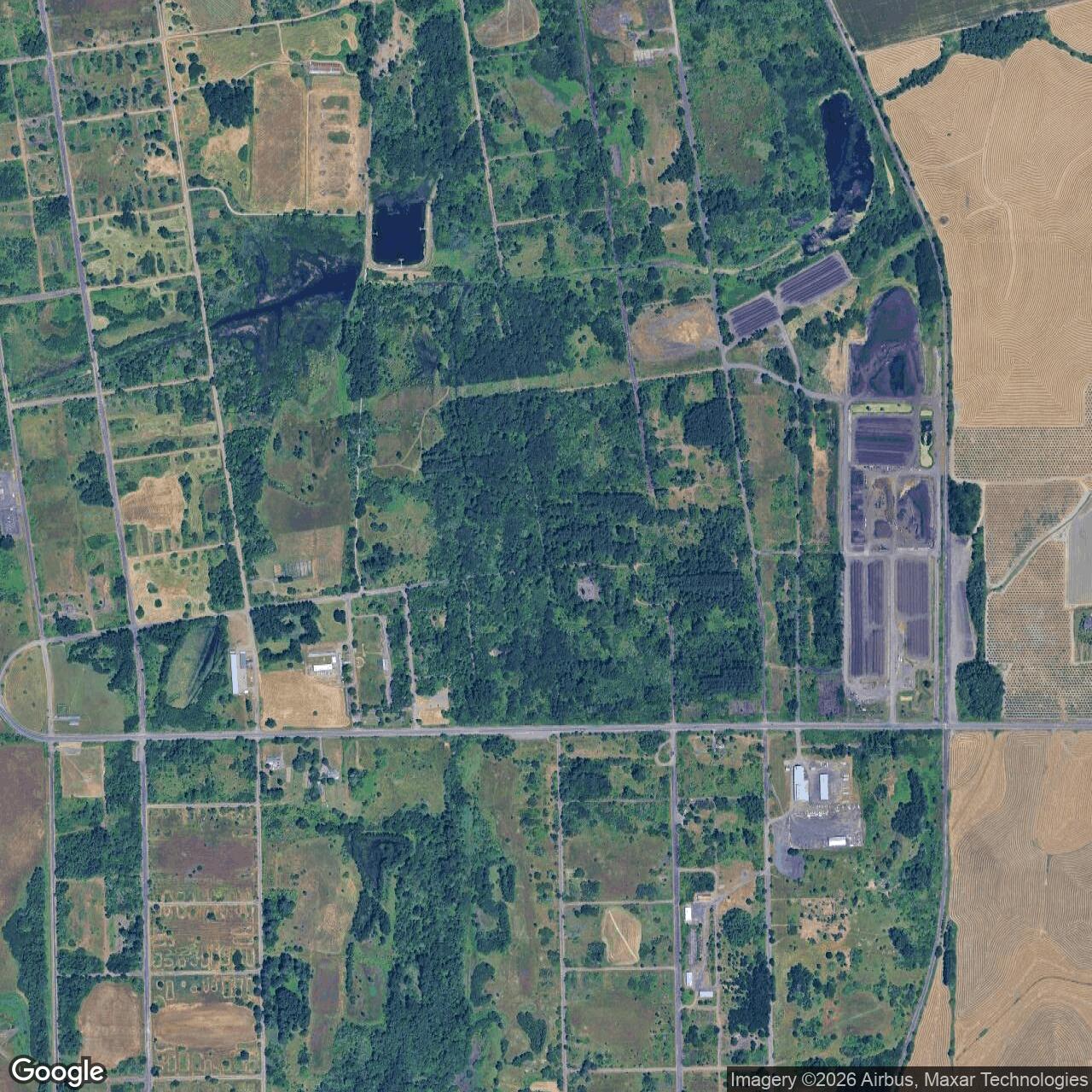
The wildlife area's roads largely follow the former Camp Adair street grid. Concrete foundations, pads, piers, chimneys, drainage structures, and other remnants remain visible.
A memorial garden commemorates the four infantry divisions associated with the camp.
ODFW has restored and enhanced seasonal wetlands that the Army had drained or channelized during construction.
The property therefore embodies a major reversal in land use. A site engineered for mass military training and rapid drainage became a wildlife-management landscape focused on habitat restoration.
The former cantonment creates preservation challenges. Historic foundations and roads may conflict with habitat projects, while vegetation management can obscure or damage archaeological features.
Historic Military Landscape
National Park Service research identified the Camp Adair cantonment as historic archaeological site 35BE158.The cantonment footprint covers approximately 1,745 acres. About 1,415 acres lie within the wildlife area, with the remainder under other ownership.
Researchers identified the locations of approximately 1,432 Camp Adair structures. More than 1,100 of those locations fall within land managed by ODFW.
Almost all buildings are gone, but their foundations and the street plan preserve the organizational pattern of the wartime camp.
The repetitive arrangement of barracks, mess halls, headquarters, and support buildings shows how the Army created standardized temporary cities.
Researchers have argued that the site is better understood as a historic military landscape than as a collection of isolated archaeological features.
Camp Adair may be the most intact surviving footprint of a World War II Army cantonment in the United States.
Oregon National Guard Training Site
A small portion of the former reservation retains an active military function.The Oregon National Guard uses former Known Distance Rifle Range No. 4 for small-arms and platoon-level tactical training.
The Oregon Department of Public Safety Standards and Training also uses the range for law-enforcement firearms instruction.
Current state facility records identify Camp Adair as an Oregon Military Department training site with range-control, target-storage, classroom, sanitation, and support buildings.
This active parcel does not make the entire former 56,815-acre camp an active installation. The World War II camp closed and was disposed of.
It does, however, preserve a direct continuity of military training on part of the original range system.
The Camp Adair name therefore survives both as a historical designation and as the name of a limited current National Guard training facility.
Munitions and Environmental Legacy
Camp Adair's intensive live-fire history created long-term environmental and safety responsibilities.The U.S. Army Corps of Engineers manages the former installation under the Formerly Used Defense Sites program as property F10OR0029.
Training included small arms, grenades, explosives, mortars, artillery, antiaircraft and antitank guns, tanks, aerial bombing, and gunnery.
The Corps has identified multiple munitions-response sites, including grenade courts, explosive ranges, artillery and field-combat ranges, bombing targets, and other training areas.
Three grenade courts cover approximately 75 acres. A group of nineteen explosive-munitions ranges and overlapping targets covers approximately 15,455 acres. Three field-combat ranges cover approximately 1,324 acres.
Unexploded ordnance, discarded military munitions, fragments, and contaminated areas can remain even after wartime clearance.
The former camp has more than a thousand property owners and extensive public access, which complicates investigation and risk communication.
Farms, forests, homes, recreation sites, schools, public facilities, and training ranges occupy land that once supported weapons use.
USACE studies, removals, land-use controls, and public information remain part of Camp Adair's current history.
Current Status
Camp Adair is closed as a World War II Army installation.The former reservation is divided among more than a thousand public and private owners. Uses include wildlife management, agriculture, forestry, housing, education, local government, industry, recreation, law-enforcement training, and limited National Guard activity.
E.E. Wilson Wildlife Area preserves much of the cantonment footprint and offers the clearest public access to the former camp landscape.
Adair Village occupies former headquarters, hospital, and Air Force areas.
The Oregon National Guard continues training on a former range parcel, while USACE conducts munitions-response work across portions of the old reservation.
The former Army camp and the later Adair Air Force Station should remain separate service histories. They share a physical landscape but had different missions, time periods, facilities, and service administration.
Chronology
- 1916-06-21 First Lieutenant Henry Rodney Adair was killed during the Battle of Carrizal in Mexico.
- 1941 The War Department selected the Willamette Valley site centered on Wells, Oregon, for a new division-training cantonment.
- 1942 spring Construction began, and farms, roads, rail lines, homes, schools, and cemeteries were relocated or removed.
- 1942 summer The principal cantonment was completed after approximately six months of rapid construction.
- 1942-08 The 96th Infantry Division activated at Camp Adair.
- 1942-09 The 104th Infantry Division activated at Camp Adair.
- 1943-05 The 96th Infantry Division departed for Fort Lewis and later training stations.
- 1943-06 The 70th Infantry Division activated at Camp Adair.
- 1943 Camp Adair divisions participated in central Oregon maneuver training.
- 1943-11 The 91st Infantry Division arrived from Camp White for advanced training.
- 1944-03 The 91st Infantry Division left Camp Adair and later entered combat in Italy.
- 1944-07 The 70th Infantry Division departed for Fort Leonard Wood and later Europe.
- 1944 Army division training declined; Navy and Marine aviation used portions of the reservation for bombing and gunnery practice.
- 1944-07 to 1946-04 Italian and German prisoners of war were held at Camp Adair and supplied authorized labor.
- 1945-02-03 The former Army station hospital was commissioned as a U.S. naval hospital.
- 1945 The naval hospital treated personnel returning from the Pacific.
- 1946-04 The Army declared Camp Adair surplus and assigned it for disposition.
- 1946-05-31 The naval hospital closed.
- 1946 onward Former hospital and housing facilities supported Oregon State College students and faculty.
- 1946-08 The War Department reported that the property had been dedudded to make it reasonably safe for other use.
- 1947-03 A clearance certificate was issued for the former property.
- 1950 A major portion of the former cantonment became E.E. Wilson Wildlife Area.
- 1955 The Air Force began reacquiring former camp property for an air-defense installation.
- 1957-1958 Adair Air Force Station began operating as a SAGE-related air-defense command site.
- 1959 The Air Force selected nearby land for a BOMARC missile facility, but construction was not completed.
- 1969 Adair Air Force Station closed.
- 1970 Remaining Air Force property was declared excess and transferred or sold.
- 1976 Adair Village incorporated around former military housing and infrastructure.
- 1986 The Benton County Historical Museum opened a major Camp Adair exhibit.
- 2009 Oregon installed a state historical marker at Camp Adair Memorial Park.
- 2010s-2020s USACE continued munitions-response investigation and planning across former ranges and training areas.
- 2024 The National Park Service published a detailed presentation describing Camp Adair as an unusually intact World War II cantonment landscape.
- Present The former reservation supports E.E. Wilson Wildlife Area, Adair Village, agriculture, forestry, homes, schools, public facilities, private ownership, an Oregon National Guard training parcel, and ongoing FUDS work.
Sources & References
- WEB U.S. Army Corps of Engineers, Kansas City District Camp Adair Environmental Project and FUDS History
- WEB National Park Service Preserving the Historic Military Landscape at Camp Adair
- WEB Oregon Department of Fish and Wildlife E.E. Wilson Wildlife Area Visitor's Guide
- WEB Oregon Department of Fish and Wildlife E.E. Wilson Wildlife Area History
- WEB Oregon Department of Fish and Wildlife Camp Adair Division Timelines
- WEB Oregon Department of Fish and Wildlife Share memories of Camp Adair
- WEB Oregon Encyclopedia Adair Village
- WEB City of Adair Village About Adair Village
- WEB Oregon State University Special Collections and Archives Camp Adair Local History Guide
- WEB Archives West Camp Adair Maps and Aerial Photographs, 1942-1973
- WEB Oregon State University Special Collections and Archives Research Center The Prisoners of War Who Weren't Supposed to Be There
- WEB Adair Living History Camp Adair History
- WEB Oregon Travel Information Council Camp Adair Historical Marker
- PDF Oregon Military Department Camp Adair Training Site Integrated Natural Resources Management Plan Environmental Assessment
- PDF Oregon Military Department 2025-27 Agency Facility Plan
- WEB U.S. Army 192nd Infantry Brigade discontinued
- PDF U.S. Army Corps of Engineers Formerly Used Defense Sites Inventory for Oregon