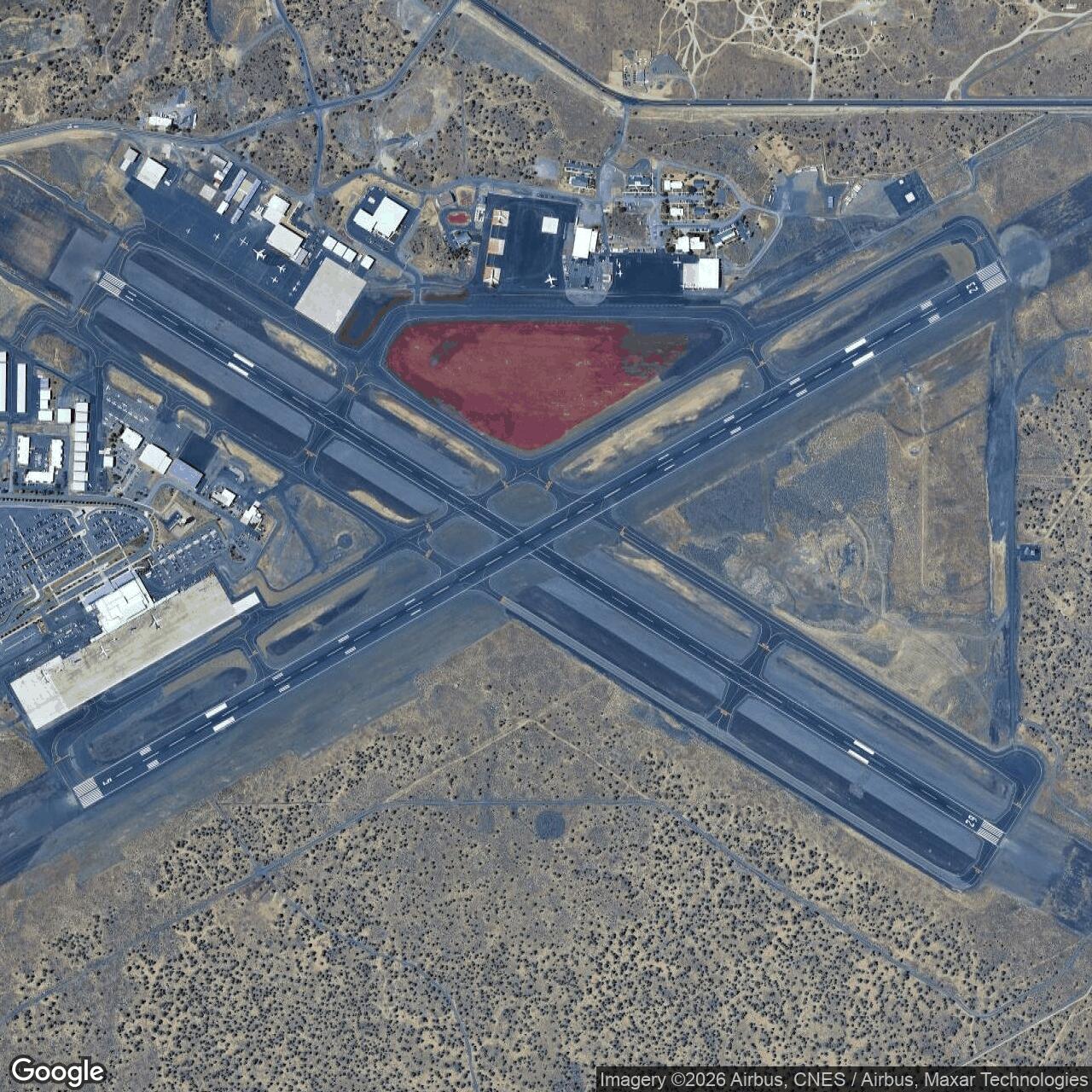
Redmond Army Airfield - Roberts Field, Redmond Oregon
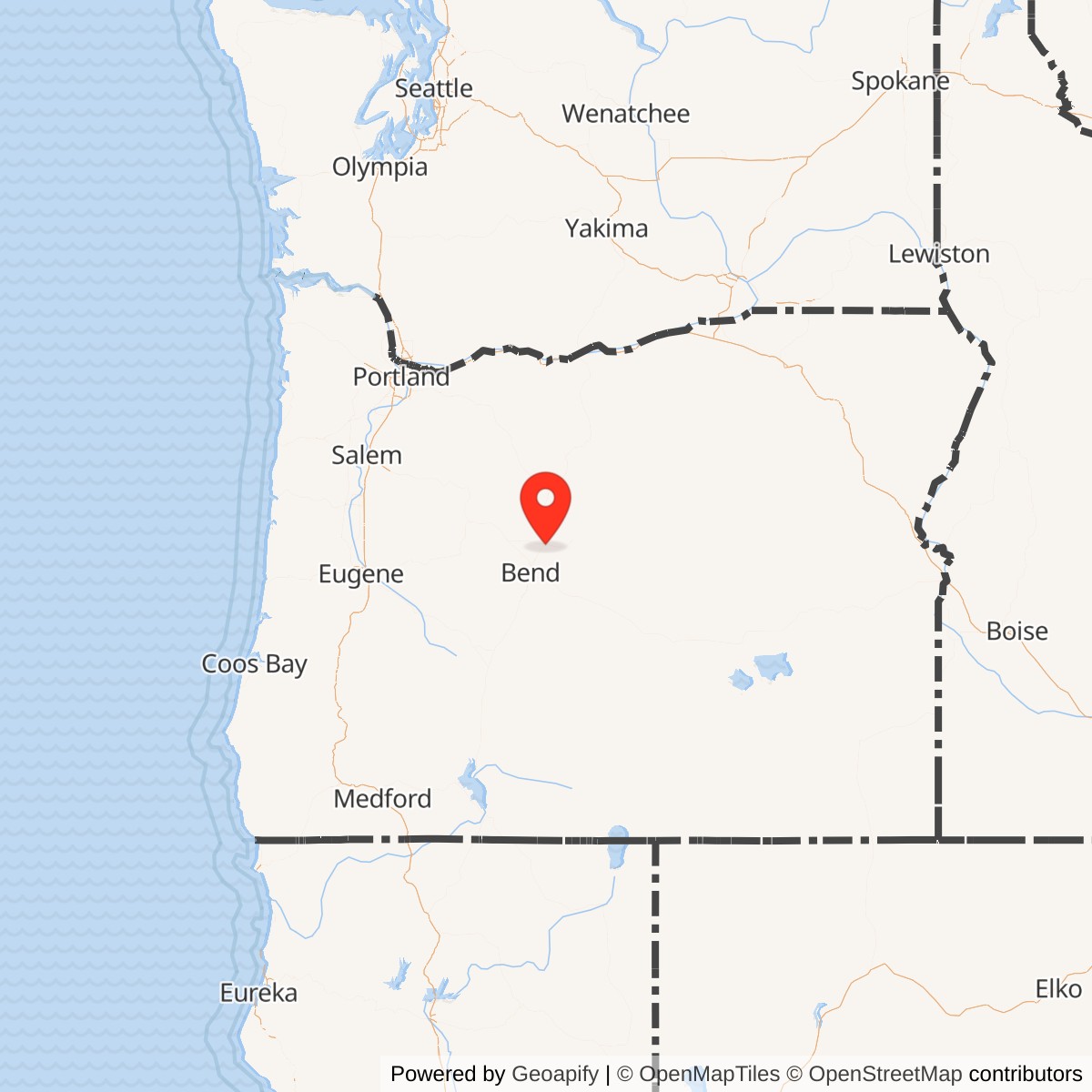
Longitude: -121.1499714
Airport ICAO ID: KRDM
Official Base Website: Redmond Municipal Airport
Current Role: Roberts Field / Redmond Municipal Airport, a City of Redmond public commercial-service airport serving Central Oregon; also home to Redmond Air Center, Redmond Smokejumpers, air cargo, general aviation, and wildland-fire aviation support.
Redmond Army Airfield was a World War II Army Air Forces use of what is now Roberts Field / Redmond Municipal Airport, the principal commercial airport serving Central Oregon. The field sits in the high desert just southeast of Redmond, near the center of a region that offered exactly what the Army needed in 1942 and 1943: open flying weather, wide maneuver country, enough isolation for training, and a central position between Bend, Prineville, Madras, and the larger training areas of eastern and central Oregon. Today the same site is a public airport owned and operated by the City of Redmond, with the airport's current FAA and ICAO identity recorded as RDM / KRDM.
Its military identity was a World War II Army Air Corps and Army Air Forces field that returned to civilian use after the war. It did not carry forward as a post-1947 Air Force base in the way that Paine Field, Perrin Field, or Indian Springs did. That distinction is important. Redmond was militarized during the wartime emergency, but its long-term successor is a civil airport and wildland-fire aviation center rather than a continuing Air Force installation.
Local and aviation sources use several related names: Redmond Air Base, Redmond Army Air Base, Redmond Army Airfield, Roberts Field, and Redmond Municipal Airport. The Army-era name identified the wartime training field. The Roberts Field name honors J. Roy Roberts, a Redmond civic leader and early aviation supporter, rather than a military officer. The present airport therefore carries a civil memorial name while occupying a field whose runways and wartime expansion were shaped by the Army Air Forces.
Prewar Aviation and Army Takeover
Redmond's aviation story began before World War II. The Oregon Encyclopedia describes the original small airfield as a local project built in 1928 by members of the American Legion Post and the Redmond Commercial Club. During the 1930s the city used Works Progress Administration funds to improve the airfield. AirNav's current FAA data shows an airport activation date of September 1938, and Oregon historical sources note that passenger service began in 1940. By the time the United States entered World War II, Redmond already had a functional airfield that could be expanded instead of built entirely from scratch.
World War II changed the field's scale and purpose. The U.S. Army purchased or took over the airport, halted ordinary civil passenger operations, and turned the site into Redmond Air Base / Redmond Army Airfield. The City of Redmond states that during the war the Army Air Corps took over the airport and turned it into Redmond Air Base to train pilots of B-17s and P-38s. The Oregon Encyclopedia similarly identifies the field as an Army training base for bomber pilots. This was the transformation that made the airport a military installation. A local civil field became part of the Army Air Forces' wartime training geography.
The airfield's location was the key asset. Redmond sat beside the large maneuver country chosen for the Oregon Maneuver and near other central Oregon fields, roads, camps, and training installations. The surrounding landscape gave aircraft room to support ground exercises, train crews, practice navigation and reconnaissance, and move in and out of the high-desert theater without the congestion of coastal defense fields or major urban airports. Redmond's prewar civic investment therefore became wartime infrastructure almost overnight.
World War II Mission and Operations
Redmond Army Airfield's main wartime value was not that it became a giant permanent air base. Its value was that it gave the Army Air Forces a central Oregon platform for training, reconnaissance, and air support at the moment when the Army was preparing divisions, staffs, and air-ground teams for overseas war. Local history emphasizes B-17 and P-38 pilot training, while Air National Guard historical material ties Redmond directly to the 1943 Oregon Maneuver and to tactical reconnaissance units operating from the field.
The Oregon Maneuver was the largest military training exercise ever held in the Pacific Northwest. Oregon Encyclopedia places the exercise in central Oregon from September 13 to November 8, 1943, and explains that the training was meant to develop the ability of senior officers and support staffs to coordinate infantry, armor, artillery, and aircraft under field conditions. It involved more than 75,000 Army personnel and drew on installations such as Camp White, Camp Adair, Camp Abbot, and a large air base constructed at Redmond. That statement places Redmond inside the same operational landscape as the Army's major Oregon ground-training camps.
The airfield's aviation activity during the maneuver was diverse. The 142nd Wing's historical account, based on Army Air Corps Tech. Sgt. Fred Parish's recollections and later research, identifies the 35th Photo Reconnaissance Squadron, 26th Tactical Reconnaissance Squadron, 116th Tactical Reconnaissance Squadron, and 112th Liaison Squadron as part of the 70th Tactical Reconnaissance Group during the Oregon Maneuver. The same account associates the 35th Photo Reconnaissance Squadron with B-25 Mitchell aircraft, the 26th and 116th Tactical Reconnaissance Squadrons with Bell P-39 Airacobras, and the 112th Liaison Squadron with Stinson L-5 Sentinels. Another 142nd Wing article documents an O-47A of the 123rd Observation Squadron that was heavily damaged in a crash landing at Redmond Army Air Base on August 31, 1943, during the Oregon Maneuver.
These aircraft types show why Redmond cannot be reduced to a single bomber-training label. B-17 and P-38 references capture the heavy bomber and fighter training memory preserved in local accounts. The Oregon Maneuver sources add a tactical-reconnaissance and liaison layer. B-25s, P-39s, L-5s, and O-47s connected the field to observation, photo reconnaissance, liaison, and air support functions. That mix made sense in a maneuver environment where the Army was not simply producing pilots, but learning how to integrate air power with moving ground formations.
Role in the Wider Military Network
Redmond Army Airfield was one node in the Army's larger Pacific Northwest mobilization network. Camp Adair, Camp White, and Camp Abbot trained ground forces. The Oregon Maneuver tested division-level operations across the dust, lava, timber, and sagebrush of central and eastern Oregon. Redmond supplied an airfield close enough to that theater to support reconnaissance, liaison, and simulated combat activity. Its location made it more useful than a distant coastal or urban base would have been for the specific problem the Army was trying to solve in 1943: coordinating air and ground units over a harsh inland training landscape.
The field also belonged to a wider Army Air Forces expansion. During the war, the Army Air Forces rapidly multiplied its domestic network of main bases, subbases, auxiliary fields, gunnery ranges, and training locations. Redmond fit that system as a converted civil airport whose local investment, WPA improvements, and high-desert geography allowed quick military use. It was not unique in that sense. Many WWII Army airfields began as municipal fields, emergency landing grounds, or local aviation projects. What made Redmond distinctive was its direct connection to the Oregon Maneuver and its later civil and firefighting afterlife.
The field's postwar story also ties it to a different national system: public aviation and wildland-fire aviation. After Army control ended, Roberts Field became Central Oregon's main airport. The U.S. Forest Service later established the Redmond Air Center and Redmond Smokejumper Base at the airport. In that sense, the physical infrastructure that wartime aviation helped expand became useful to another federal aviation mission, fire response, even though the Army installation itself had closed.
Closure, Civil Return, and Current Use
After the war, the federal government returned the field to local civil use. Oregon Encyclopedia states that in 1946 the federal government sold the base to the city for one dollar. The City of Redmond's history page similarly states that after the war the airport and its improvements were returned to the city and commercial air service began. The military field did not continue as an independent USAF installation after 1947.
Roberts Field grew steadily after the Army era. The current airport is owned and operated by the City of Redmond and serves the tri-county Central Oregon region. The official airport website describes it as Oregon's third largest commercial service airport, with scheduled passenger service, air cargo, general aviation, and major aviation tenants. AirNav lists KRDM as a public airport one mile southeast of Redmond, with two major asphalt runways, Runway 5/23 at 7,038 by 150 feet and Runway 11/29 at 7,006 by 100 feet. Current sources describe the airport as 2,518 acres, making it one of the largest municipal airport properties in Oregon.
The U.S. Forest Service presence gives the field a significant post-Army federal aviation role. The Redmond Air Center at Roberts Field is home to the Regional Aviation Group, Pacific Northwest Training Center, Interagency Hotshots, Redmond Smokejumpers, and the Interagency Support Cache. The Forest Service identifies the Redmond Smokejumper Base as located at the Redmond Air Center at Roberts Field, about two miles east of Redmond. Although this is not a continuation of Army ownership, it is an important continuity of aviation utility. The same field that trained and supported wartime aircraft became a major peacetime base for fire aviation and emergency response.
Current Status
Redmond Army Airfield is closed as a U.S. Army installation. Its successor site, Roberts Field / Redmond Municipal Airport, remains active as a public airport. The airport is a major transportation gateway for Central Oregon and a federal, local, and private aviation hub. It supports scheduled commercial airline service, general aviation, air cargo, fixed-base operations, flight training, and firefighting aviation. The Army-era installation boundary is not separately preserved as a distinct military site, but the airport's continued runway use makes the wartime field unusually legible compared with many temporary WWII airfields that disappeared entirely.
Chronology
- 1928 Members of the American Legion Post and the Redmond Commercial Club built a small airfield at Redmond.
- 1930s The City of Redmond used Works Progress Administration funds to improve the airfield.
- 1938-09 FAA/AirNav data records the airport activation date as September 1938.
- 1940 Air passenger service began at Redmond.
- 1942 The Army takeover and wartime construction/expansion period began, with the field becoming Redmond Air Base / Redmond Army Airfield.
- 1942-1943 The airfield was developed for Army Air Corps / Army Air Forces wartime use.
- 1943-08-31 An O-47A associated with the 123rd Observation Squadron was heavily damaged in a crash landing at Redmond Army Air Base during the Oregon Maneuver.
- 1943-09-13 The Oregon Maneuver began in central Oregon, with Redmond serving as the major nearby air base for aviation support.
- 1943-11-08 The Oregon Maneuver ended after large-scale central Oregon training operations.
- 1946 The federal government sold or returned the base to the City of Redmond for one dollar, and the airport returned to civil use.
- 1950 A passenger terminal was built at Roberts Field.
- 1964 The U.S. Forest Service located a large smokejumper base at the airport, establishing the Redmond Air Center / Redmond Smokejumper Base legacy.
- 1981 The 1950 terminal was replaced by a larger terminal.
- 2009 A major terminal expansion opened for public use.
- Present Roberts Field / Redmond Municipal Airport remains an active public airport owned and operated by the City of Redmond, with commercial passenger service, cargo, general aviation, and major wildland-fire aviation functions.