Fort Flagler Army Base, Nordland Washington
Longitude: -122.701643
Official Base Website: https://parks.wa.gov/find-parks/state-parks/fort-flagler-historical-state-park
Current Role: Fort Flagler Historical State Park, preserved batteries/garrison buildings, museum, retreat center, campground, vacation housing, trails, shoreline recreation, and boat launch
Closed Endicott-period U.S. Army Coast Artillery post on the northern tip of Marrowstone Island. A military reservation was set aside in 1866; construction contract awarded 1897-06-22; Fort Flagler activated 1899-07-27 and permanently deactivated 1953-06-30. It was the first of the Puget Sound Triangle of Fire forts to activate and served with Fort Worden and Fort Casey in the Harbor Defenses of Puget Sound. Completed with 26 artillery pieces and batteries including Wilhelm, Bankhead, Revere, Rawlins, Calwell, Grattan, Lee, Downes, and Wansboro; used for World War I trench-training, interwar ROTC/National Guard activity, and World War II/Korean War amphibious landing, maneuver, harbor-defense, antiaircraft, and AMTB functions. Transferred to GSA in 1954 and acquired by Washington State Parks in parcels between 1957 and 1962; current park preserves batteries, historic garrison buildings, museum, retreat center, vacation houses, trails, and shoreline.
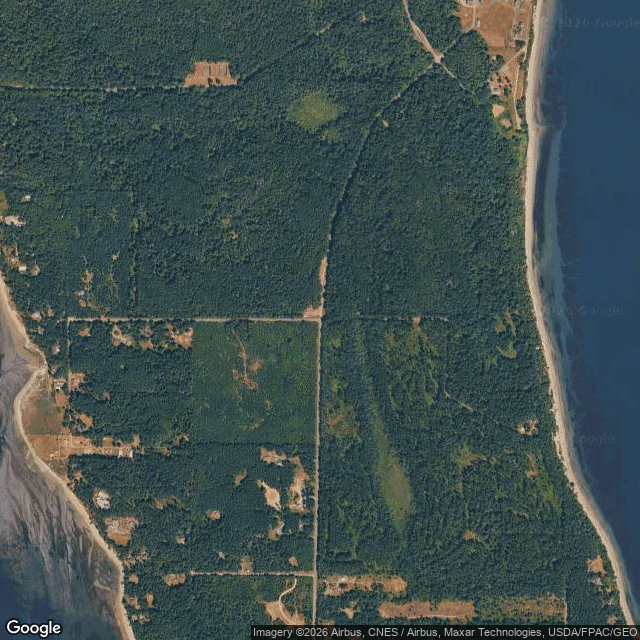
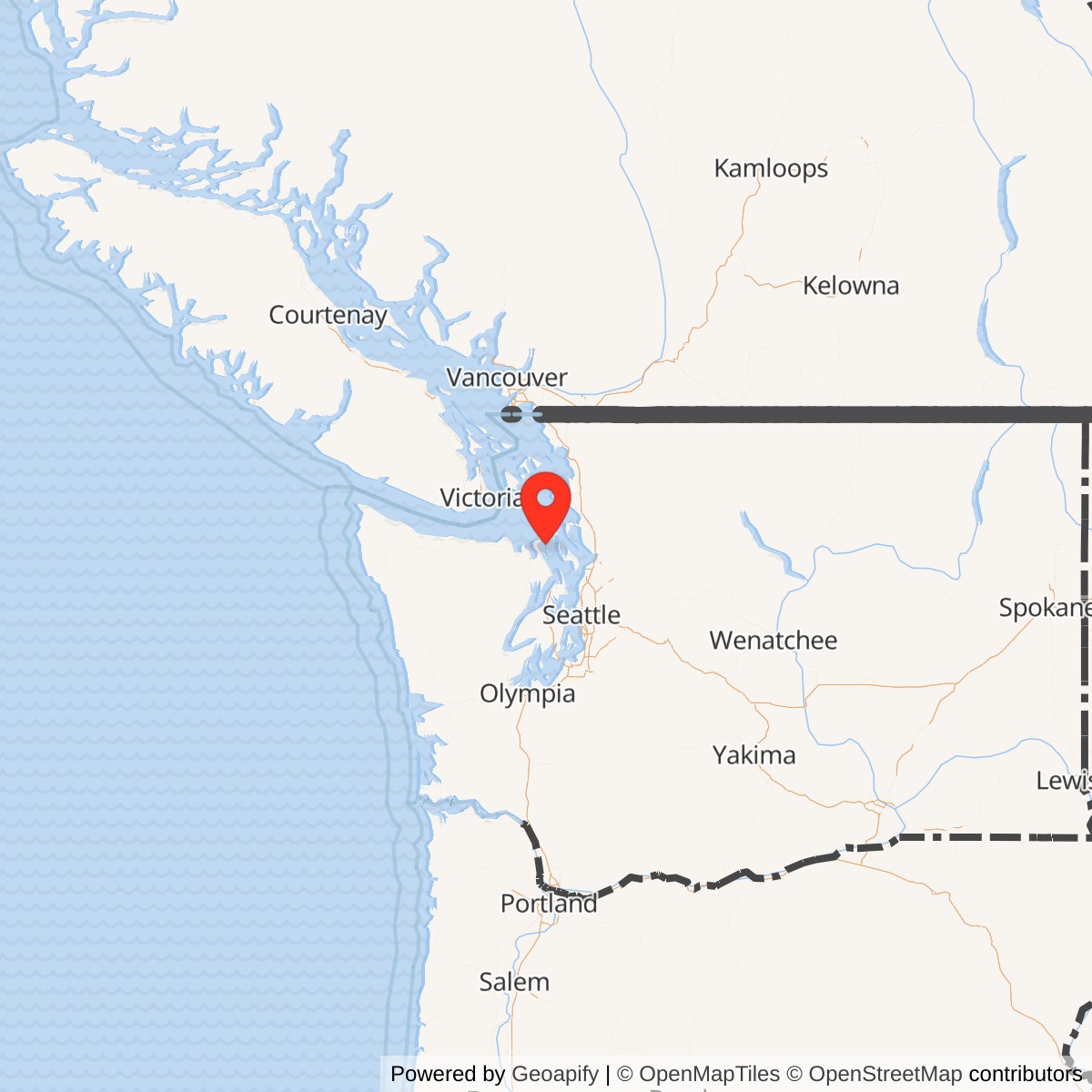
Location: 10541 Flagler Road, Nordland, Marrowstone Island, Jefferson County, Washington. The fort occupies the northern end of Marrowstone Island at Marrowstone Point, bounded by Admiralty Inlet, Port Townsend Bay, and Kilisut Harbor, with views toward Whidbey Island, Port Townsend, Indian Island, the Olympic Mountains, and the Puget Sound entrance.
Fort Flagler was an Endicott-period U.S. Army Coast Artillery fort on Marrowstone Island, built to defend the entrance to Puget Sound at Admiralty Inlet. It is no longer an active Army installation. The fort was officially activated on July 27, 1899, served through World War I, World War II, and the Korean War era, and was permanently deactivated on June 30, 1953. The former post is now Fort Flagler Historical State Park, a large Washington state park that preserves batteries, buildings, shoreline, trails, a museum, retreat facilities, and historic vacation housing.
The fort was one side of the Puget Sound "Triangle of Fire," the three-fort defense system formed by Fort Flagler, Fort Worden, and Fort Casey. Fort Flagler stood at the northern end of Marrowstone Island, Fort Worden guarded the Port Townsend side of Admiralty Inlet, and Fort Casey occupied Admiralty Head on Whidbey Island. Together they were intended to trap any hostile warship entering the inlet under overlapping fire. Fort Flagler was the first of the three to activate officially and temporarily served as headquarters of the Harbor Defense Command of Puget Sound during the early buildout.
Fort Flagler's location was chosen because Marrowstone Point gave the Army direct command of the channel. Any warship passing from the Strait of Juan de Fuca toward Bremerton, Seattle, Tacoma, Everett, or the inner Puget Sound ports had to enter the waterway visible from the fort. The surrounding water also made the site defensible and separated from dense urban development, while still close enough to Port Townsend and other regional nodes to support construction, garrison life, and harbor-defense coordination.
The fort's active identity was never that of a large infantry cantonment or maneuver post. It was a technical artillery installation. Its purpose was to house Coast Artillery troops and give them the guns, fire-control systems, searchlights, magazines, communications, barracks, and support buildings needed to defend Admiralty Inlet. During its later life, the post also became useful for World War I training, reserve and National Guard training, World War II amphibious landings and maneuvers, antiaircraft and motor-torpedo-boat-defense modifications, and Korean War-era military activity. The guns were never fired against an enemy, but Fort Flagler remained militarily relevant for more than half a century because the site and its infrastructure could be adapted to successive training and defense needs.
Mission Evolution
Fort Flagler's origins reach back to 1866, when a military reservation was set aside on Marrowstone Island. That early reservation reflected longstanding awareness that Admiralty Inlet was the key maritime entry into Puget Sound. The reservation remained undeveloped as a major artillery post until the late nineteenth century, when the Endicott Board's modern coastal-defense program and renewed Pacific strategic concerns pushed the Army to fortify the inlet.In 1896, Congress authorized construction of the three Admiralty Inlet forts. Engineers surveyed the Marrowstone site, and the construction contract for Fort Flagler's gun emplacements was awarded on June 22, 1897, to the Pacific Bridge Company of Portland. The physical work was difficult. The contractor had to clear timber, excavate hard rocky soil, pour large amounts of concrete, shape earth cover over the batteries, build roads, and create a post in a relatively remote location. Many laborers left after only short periods, drawn by the excitement of the Alaska and Yukon gold rush, and the construction force initially had few labor-saving machines.
Despite those difficulties, Fort Flagler activated on July 27, 1899. Its initial occupied batteries included Rawlins, Revere, and Wilhelm, and between 1900 and 1906 additional gun emplacements were added. When completed, Fort Flagler had twenty-six artillery pieces: two 12-inch guns, four 10-inch guns, six 6-inch guns, two 5-inch pedestal guns, four 3-inch pedestal guns, and eight 12-inch mortars. This armament placed the post among the major Puget Sound coast-defense works and made it a full partner with Fort Casey and Fort Worden in the Triangle of Fire.
The World War I period changed the mission from pure fixed harbor defense to training and wartime manpower support. Fort Flagler trained soldiers for the trench warfare of Europe, and some artillery pieces from the fort were removed for wartime conversion or use elsewhere. After the war, the fort continued as a training camp for Army Reserve Officer Training Corps and Washington National Guard activity. This interwar use kept the reservation alive even as fixed heavy batteries became less dominant in national defense.
By the 1920s, Fort Flagler's original mission was increasingly obsolete. Naval guns outranged the older batteries, aircraft made open emplacements vulnerable, and coast defense doctrine began shifting toward new weapons and layered approaches. Still, the post's buildings, parade ground, batteries, shoreline, and open land made it useful. The Army demolished some deteriorating buildings in the 1930s, but World War II and the Korean War brought renewed activity. During those periods the fort supported amphibious landing training, maneuvers, and modified defense functions, including antiaircraft and antitorpedo-boat roles.
The final mission evolution was from active Army post to historic state park. Fort Flagler was permanently deactivated on June 30, 1953, transferred to the General Services Administration in April 1954, and acquired by Washington State Parks in parcels between 1957 and 1962. The state park opened for picnics and boat launching in 1960, then developed campgrounds, trails, museum interpretation, retreat facilities, vacation housing, and historic-gun displays. The military reservation ceased to be an Army post, but its buildings and batteries remained useful as a preserved public landscape.
Operational Role
Fort Flagler's operational role was to guard the northern approach to Admiralty Inlet and integrate its fire with Fort Worden and Fort Casey. That mission required a complete harbor-defense operating system. The visible batteries were only one part of it. Soldiers needed magazines, plotting rooms, range-finding stations, observation posts, searchlights, electrical systems, communications links, barracks, mess facilities, hospitals, warehouses, roads, docks, and headquarters spaces. Fort Flagler therefore operated as a garrisoned technical installation as much as a weapons platform.The early garrison arrived before all construction was complete. Battery B, Third Coast Artillery occupied the post before the final buildout, and Fort Flagler temporarily served as headquarters of the Harbor Defense Command of Puget Sound. The first detachment included three officers and eighty-six enlisted men under Captain John D. C. Hoskins. These early soldiers helped turn a construction site into a working defense post, while engineers and contractors continued adding batteries, support buildings, and utilities.
The fort's firing mission required coordination across the water. A hostile ship moving through Admiralty Inlet could be engaged from multiple directions. Fort Flagler's guns overlooked the channel from Marrowstone Island, Fort Worden's batteries guarded the Port Townsend side, and Fort Casey's guns covered the Whidbey side. This triangulation was the purpose of the entire system. Fort Flagler did not need to defeat an enemy fleet alone; it needed to contribute to an interlocking field of fire that made the inlet dangerous to penetrate.
The batteries at Fort Flagler covered different target types. The large 12-inch and 10-inch guns were intended for major warships. The 6-inch guns could engage faster vessels and secondary targets. The 5-inch and 3-inch guns addressed lighter craft, mine sweepers, and closer threats. The 12-inch mortars were designed for high-angle fire against ship decks. Later antiaircraft and antitorpedo-boat modifications reflected the changing character of naval and air threats.
Training was constant. Coast Artillery soldiers had to drill on weapons handling, projectile and powder service, fire-control calculations, maintenance, signaling, searchlight support, and coordinated battery operations. Even though Fort Flagler never fired against an enemy vessel, gunners and support troops trained repeatedly to make the deterrent credible. In peacetime, that training was the main operational activity; in wartime, it became part of the larger national mobilization system.
During World War II and the Korean War, Fort Flagler's role moved beyond original coast-defense gunnery. State Parks and HistoryLink both describe the post being used for amphibious landings and maneuvers. That activity made sense because Marrowstone Island offered shoreline, former military buildings, open land, and a controlled environment for practicing operations associated with modern amphibious warfare. Some gun emplacements were also modified to accommodate antiaircraft guns, and Coast Defense Study Group documentation identifies a later AMTB Marrowstone battery, reflecting the shift toward defense against smaller, faster naval craft.
World War I, World War II, and Korean War Era Activity
Fort Flagler's World War I mission included training soldiers for the trenches of Europe. This is an important expansion beyond the original harbor-defense mission. The United States needed trained men and heavy-artillery expertise for a continental land war, and Coast Artillery posts became part of that manpower and training system. At Fort Flagler, as at other coast-defense forts, some artillery pieces were removed or repurposed during the war, while the reservation itself continued to support training and readiness.After World War I, the post did not simply close. It served as a training camp for the Army Reserve Officer Training Corps and the Washington National Guard. That interwar activity preserved the military usefulness of the site even while the main batteries lost relevance. Fort Flagler became a place where reserve and Guard personnel could use former regular Army infrastructure, practice military skills, and remain connected to the Puget Sound defense system.
World War II brought a renewed but different military function. Fort Flagler's original heavy-gun role had diminished, but the reservation remained valuable for amphibious warfare training, maneuvers, harbor-defense support, and adapted local-defense roles. Some older gun emplacements were modified for antiaircraft weapons. Coast Defense Study Group listings also identify Battery AMTB Marrowstone, active during the World War II era with 90mm guns, as part of the site's wartime defense adaptation. This reflected the Army's shift toward defending against aircraft and fast surface craft rather than relying solely on massive fixed guns aimed at battleships.
Fort Flagler also remained connected to Puget Sound Coast Artillery units. The 14th Coast Artillery was a key Regular Army regiment in the Harbor Defenses of Puget Sound, with elements distributed among Fort Worden, Fort Casey, and Fort Flagler. Coast Defense Study Group material records elements and battery commanders at Fort Flagler during the 1940-1941 mobilization period. The Washington National Guard's 248th Coast Artillery also formed part of the broader Puget Sound harbor-defense mobilization. Those unit connections show that Fort Flagler was still part of an active defense command even as the specific batteries and weapons changed.
The Korean War era extended the post's final active military use. Washington State Parks notes that Fort Flagler remained active for amphibious landings and maneuvers during the Korean War period. This did not make Fort Flagler a Korean War combat base in the overseas sense, but it did keep the reservation within the Army's training system during the early Cold War. The post's permanent deactivation in 1953 closed that chapter.
No battle was fought at Fort Flagler, and its guns were never fired against an enemy. Its war contributions were deterrence, training, mobilization, and adaptation. It helped defend Puget Sound by its presence, trained soldiers for overseas and modern warfare needs, and supported amphibious and maneuver training during later conflicts. Its significance lies in preparation and system defense rather than battlefield action on the post itself.
Units, Organizations, and Systems
Fort Flagler's most important system was the Harbor Defenses of Puget Sound. This command integrated Fort Flagler, Fort Worden, Fort Casey, and later supporting works into one defensive network. The system protected Admiralty Inlet, the Puget Sound Naval Yard, and the urban-industrial centers of the inner sound. Fort Flagler's early role as temporary headquarters of the harbor-defense command shows how central the post was during the initial buildout.The Coast Artillery Corps was the principal Army branch at Fort Flagler. Coast artillerymen operated heavy fixed guns, mortars, fire-control equipment, communications systems, searchlights, and later antiaircraft or antitorpedo-boat weapons. The work was technical and highly procedural. Gunners needed to handle ammunition safely, calculate firing data, maintain complex mounts, and coordinate fire with observation and command stations.
Battery B, Third Coast Artillery occupied Fort Flagler before the post was complete and represented the first garrisoned operational phase. The detachment's presence before full activation underscores the urgency of establishing a working defense system even while construction continued. Fort Flagler was not built in isolation and then occupied at leisure; garrisoning and building overlapped.
The 14th Coast Artillery became a major Regular Army unit in the Puget Sound harbor defenses. During World War II mobilization, elements were stationed across the defense system, including Fort Flagler. Coast Defense Study Group summaries identify Battery C movements to Fort Flagler and note Battery G command at the post during the 1941 mobilization period. These details show how Fort Flagler functioned as a working sub-post in a regimental defense network.
The Washington National Guard's 248th Coast Artillery was part of the broader state and federal harbor-defense mobilization. The regiment's service connects the Puget Sound forts to Washington's National Guard history and the Army's World War II expansion. Although Fort Worden was the principal concentration site for the regiment, Fort Flagler's mission must be understood inside the same Puget Sound defensive command.
Later training organizations used Fort Flagler in a different way. Army Reserve Officer Training Corps units, Washington National Guard units, World War II amphibious and maneuver units, and Korean War-era training forces all used the reservation's land, shoreline, and surviving buildings. Their presence reflects the post's transition from fixed artillery station to flexible training landscape.
Batteries, Physical Layout, and Facilities
Fort Flagler was built as a concealed concrete and earthwork artillery post rather than a masonry fort. The batteries were placed and shaped to be difficult to see from the water. Earth cover helped hide and protect concrete structures. Magazines, ammunition rooms, corridors, hoists, and service areas were built into the batteries, while guns on disappearing, pedestal, or mortar mounts faced Admiralty Inlet.The principal battery group included Battery Wilhelm, Battery Bankhead, Battery Revere, Battery Rawlins, Battery Calwell, Battery Grattan, Battery Lee, Battery Downes, and Battery Wansboro. Battery Wilhelm mounted the large 12-inch guns. Batteries Revere and Rawlins mounted 10-inch guns. Battery Bankhead held the 12-inch mortars. Batteries Calwell and Grattan carried 6-inch guns. Battery Lee carried 5-inch guns. Batteries Downes and Wansboro held 3-inch guns. Later antiaircraft and AMTB modifications added another layer to the original Endicott system.
The post's physical plant included more than batteries. Early construction included offices, mess hall, barracks, roads, and support buildings. Over time the fort gained officers' quarters, noncommissioned officers' quarters, a hospital, dormitories, administrative and quartermaster buildings, utility systems, and a parade-ground landscape. Many of these buildings survive in state-park use, making Fort Flagler one of the most complete historic military landscapes in the Puget Sound fortification system.
The terrain shaped the post. Marrowstone Island's northern tip provided water on three sides, long shoreline access, and lines of sight toward Admiralty Inlet and Port Townsend. The fort's battery row, parade ground, and garrison buildings took advantage of the geography. Unlike some forts where the batteries are the only obvious survivors, Fort Flagler retains a broader military-campus feeling because many buildings remain in use.
The state park brochure identifies the present Fort Flagler Historical State Park as a 1,469-acre park with 19,100 feet of shoreline. It preserves batteries, dormitories, gun emplacements, noncommissioned officers' quarters, the hospital building, museum functions, retreat-center facilities, vacation houses, campgrounds, trails, beaches, and boat-launch facilities. The current layout therefore still reflects the old Army distinction between weapon spaces, garrison spaces, support spaces, and shoreline access.
Current Status
Fort Flagler is closed as an Army installation and active as Fort Flagler Historical State Park. The official park address is 10541 Flagler Road, Nordland, Washington. The park occupies the former Army post at the northern end of Marrowstone Island and is administered by Washington State Parks.The park preserves many of the original or historic military features. Visitors can see batteries, gun emplacements, noncommissioned officers' quarters, the hospital, museum exhibits, and historic houses. Some former officers' and engineers' houses have been restored for overnight rental. The retreat center uses former fort buildings and can support group events. The park also includes campgrounds, picnic areas, hiking and beach trails, moorage, boat launch facilities, and broad shoreline access.
The museum and interpretive program make Fort Flagler more than a recreational park. The historic quartermaster storehouse serves as a museum space, and the batteries and hospital are major interpretive features. Two 3-inch guns obtained from Fort Wint in the Philippines were mounted at Battery Wansboro in 1963, adding a visible artillery element to the preserved landscape. A later restored antiaircraft gun display further connects the park to the post's twentieth-century military evolution.
The site remains a strong example of adaptive reuse. The Army reservation became a state park without erasing the military layout. Batteries became interpretive structures, barracks and houses became retreat or vacation facilities, roads and trails became public circulation routes, and the shoreline became a recreation and education resource. Fort Flagler's current status is therefore dual in the same way many successful military historic parks are dual: it is a closed Army fort and an active public landscape.
Chronology
- 1866 A military reservation was set aside on Marrowstone Island for future defense purposes.
- 1896 Congress authorized the construction of three forts to defend Admiralty Inlet and the entrance to Puget Sound.
- 1896 Army engineer Eugene Ricksecker surveyed the Marrowstone Island site for fortification work.
- 1897 The government purchased additional land from individual owners to support Fort Flagler gun emplacements.
- 1897-06-22 The construction contract for Fort Flagler's gun emplacements was awarded to the Pacific Bridge Company of Portland, Oregon.
- 1897-1899 Workers cleared timber, excavated hard soil, poured concrete, backfilled batteries, built roads, and shaped the early fortification landscape.
- 1899-06 Twelve early post buildings, including offices, mess hall, and barracks, were complete.
- 1899-07-27 Fort Flagler was officially activated and named for Brigadier General Daniel Webster Flagler.
- 1899 Battery B, Third Coast Artillery occupied the post before completion, and Fort Flagler served as temporary headquarters of the Harbor Defense Command of Puget Sound.
- 1900-1906 Additional batteries were added, including Bankhead, Calwell, Grattan, Lee, Downes, and Wansboro.
- 1906 Fort Flagler's major Endicott battery system was substantially complete.
- 1917-1918 During World War I, Fort Flagler trained soldiers for trench warfare and wartime service.
- 1917-1919 Twelve artillery pieces were removed from Fort Flagler for wartime use or conversion.
- 1919-1930s Fort Flagler served as a training camp for Army ROTC and Washington National Guard activity.
- 1936 Many deteriorated buildings at Fort Flagler were demolished because of dry rot.
- 1940-1941 Puget Sound harbor-defense units mobilized, and Fort Flagler again became part of a more active wartime defense posture.
- 1941-1945 During World War II, Fort Flagler supported amphibious landings, maneuvers, harbor-defense, and modified antiaircraft or local-defense functions.
- 1943-1946 AMTB Marrowstone was associated with the Fort Flagler area as a motor-torpedo-boat defense battery with 90mm guns.
- 1951-1953 During the Korean War era, Fort Flagler continued to support amphibious training and maneuvers.
- 1953-06-30 Fort Flagler was permanently deactivated, ending active Army jurisdiction.
- 1954-04 The property was transferred to the General Services Administration for disposal.
- 1957-1962 Washington State Parks acquired Fort Flagler in five parcels under the Federal Lands to Parks Program.
- 1958-1989 The Seattle Youth Symphony Orchestra held summer music activity at the former fort, contributing to the post's cultural reuse.
- 1960 Fort Flagler opened for picnics and boat launching as a state park.
- 1963 Two 3-inch guns from Fort Wint in the Philippines were mounted at Battery Wansboro.
- 1976 Fort Flagler was listed on the Washington Heritage Register and the National Register of Historic Places as a historic district.
- 2005 A restored 120mm antiaircraft gun was placed on permanent display at the Fort Flagler Museum.
- Present Fort Flagler remains closed as an Army installation and preserved as Fort Flagler Historical State Park, with batteries, historic buildings, museum exhibits, retreat facilities, vacation houses, campgrounds, trails, and shoreline recreation.