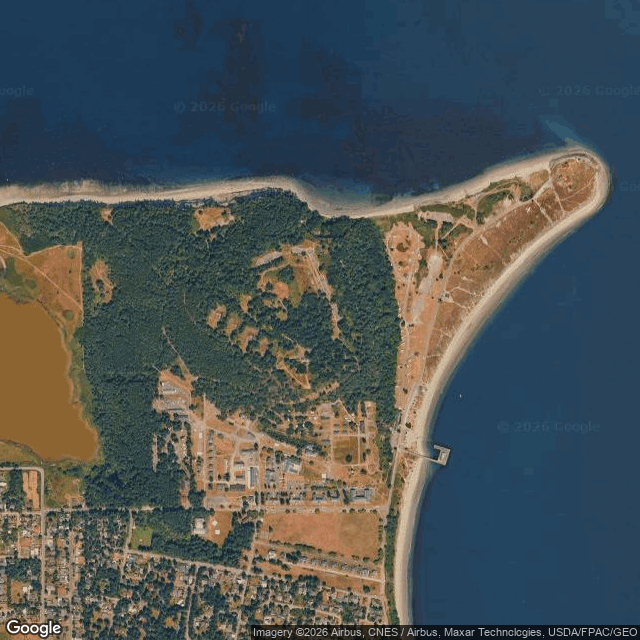
Fort Worden Army Base, Port Townsend Washington
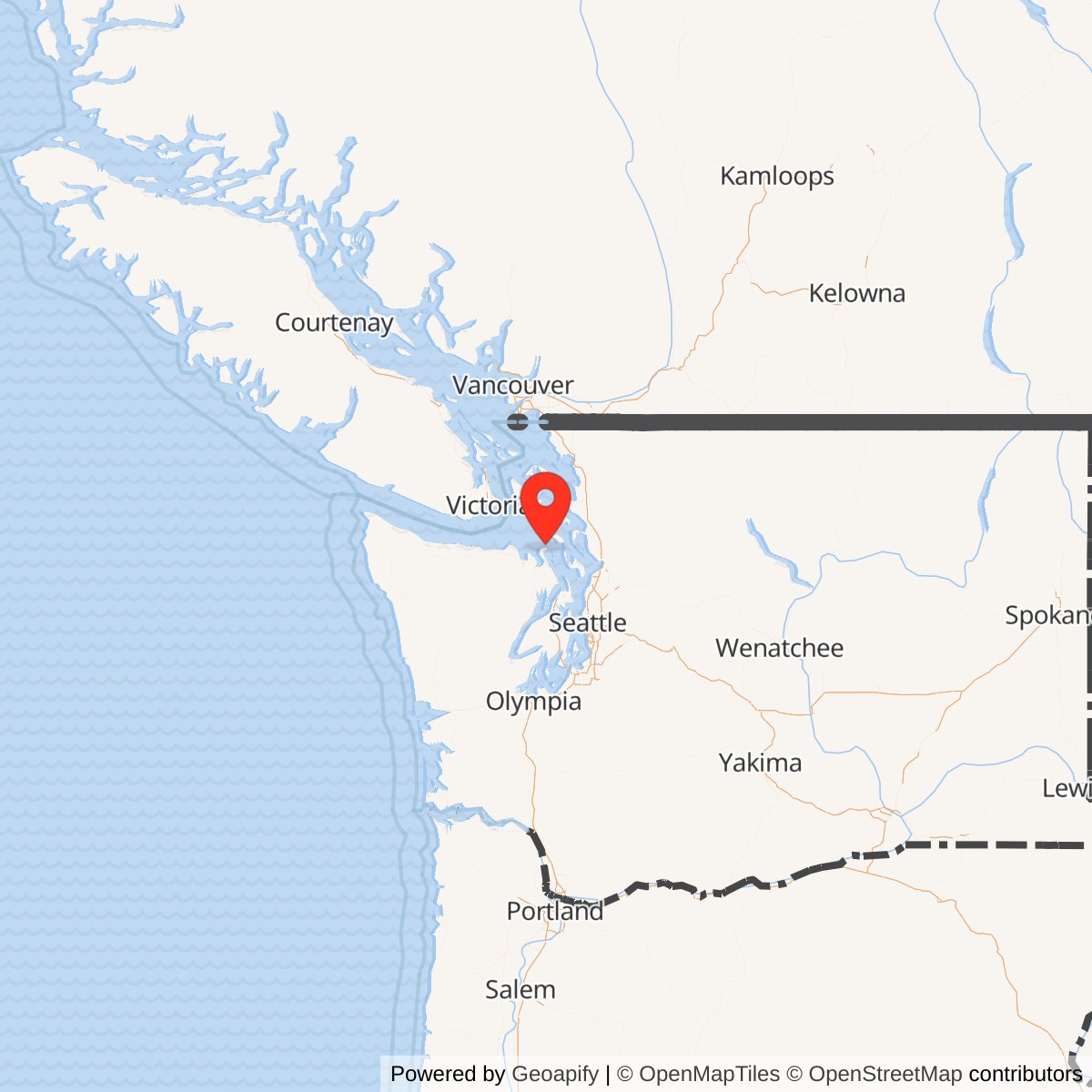
Longitude: -122.7659
Official Base Website: https://parks.wa.gov/find-parks/state-parks/fort-worden-historical-state-park
Current Role: Fort Worden Historical State Park, Coast Artillery Museum, historic batteries, lodging/conference/education facilities, arts and marine-science uses
Closed former U.S. Army Endicott-period coastal-defense post at Point Wilson, Port Townsend. Construction began at the Point Wilson Military Reservation in 1897; Fort Worden activated May 14, 1902 and became headquarters of the Harbor Defenses of Puget Sound in 1904. Part of the Admiralty Inlet 'Triangle of Fire' with Fort Casey and Fort Flagler; completed with 41 guns in 12 batteries. Used for World War I training, interwar Coast Artillery functions, World War II harbor-defense/radar/sonar coordination, and a short postwar engineering/administrative role before deactivation on June 30, 1953. Later became a state juvenile diagnostic center and Fort Worden Historical State Park.
Fort Worden stood at Point Wilson on the northeastern tip of the Quimper Peninsula at Port Townsend, where the Strait of Juan de Fuca meets Admiralty Inlet at the entrance to Puget Sound. The location was militarily decisive because any hostile naval force moving toward Seattle, Tacoma, Everett, and the Puget Sound Navy Yard at Bremerton had to pass through the Admiralty Inlet approaches. Fort Worden's batteries looked north and east across water that formed the gateway to the interior sound. In the Army's Endicott-era scheme, Fort Worden, Fort Casey, and Fort Flagler created overlapping fields of fire around Admiralty Inlet. This interlocking defense system became widely known as the "Triangle of Fire."
Fort Worden was an Endicott-period seacoast artillery post, not a frontier fort or troop-maneuver camp. Its essential purpose was to protect Puget Sound through heavy coastal artillery, fire-control systems, searchlights, communications cables, observation stations, and garrisoned Coast Artillery units trained to identify, track, and engage enemy ships. It also served as headquarters for the Harbor Defenses of Puget Sound, making it the command center of a regional defense system rather than merely one battery position.
The installation is no longer active. The Army permanently deactivated Fort Worden on June 30, 1953, after the coastal-artillery mission had become obsolete. The State of Washington later purchased many buildings for a juvenile diagnostic and treatment center, which operated from 1958 to 1971. Washington State Parks acquired major portions of the former reservation and dedicated Fort Worden State Park in 1973. Today the site is Fort Worden Historical State Park, a state park and historic district that preserves batteries, barracks, officers' quarters, the balloon hangar, parade-ground landscape, Coast Artillery Museum, conference and lodging facilities, arts and education uses, marine-science programs, and shoreline access. The military reservation itself has ended, but its built landscape remains one of the clearest surviving examples of the Endicott coastal-defense system.
Mission Evolution
Fort Worden originated in the 1890s modernization of American seacoast defenses. The Endicott Board had concluded that the United States needed modern reinforced-concrete batteries, breech-loading rifles, mortars, mines, searchlights, and fire-control systems to defend its major harbors. Puget Sound became especially important because the Navy Yard at Bremerton and the commercial cities of the interior sound were vulnerable to attack through Admiralty Inlet. Congress authorized the Secretary of War on June 6, 1896, to build three forts to protect that entrance. Construction at the Point Wilson Military Reservation began in July 1897.The Army Corps of Engineers first had to build the industrial infrastructure of fortification. At Point Wilson, workers built a construction dock, warehouses, a tramway, water systems, storage tanks, roads, and concrete batteries on the high ground above the water. HistoryLink's account emphasizes that it took about 200 men almost three years to complete the excavation and concrete work for the initial gun emplacements. By March 1900 the fortifications were ready for armament installation, and artillery pieces arrived by barge after traveling from the armory at Columbus, Ohio to Tacoma. The guns were mounted in 1901, and Fort Worden was officially activated in 1902.
The first mission was heavy harbor defense. The 126th Coast Artillery Company arrived in May 1902, and on September 4, 1904, headquarters of the Harbor Defense Command of Puget Sound moved from Fort Flagler to Fort Worden. By 1905 the system was considered fully operational, and by 1910 Fort Worden had twelve batteries with forty-one artillery pieces. The completed armament included 12-inch guns, 10-inch guns, 6-inch guns, 5-inch and 3-inch rapid-fire guns, and sixteen 12-inch mortars. This combination reflected the doctrine of the period: large guns and mortars would engage heavy warships; smaller rapid-fire guns would defend against fast craft; searchlights, communications, observation stations, and fire-control plotting rooms would allow the batteries to fire as a coordinated system.
World War I shifted the mission from static harbor defense toward training and redistribution of guns. Fort Worden expanded as soldiers arrived for training before deployment to Europe. The Army removed many coastal guns from Fort Worden and other Endicott forts for use in the war effort. Sources differ on the exact scale, some public summaries say about half the guns were removed in 1918, while HistoryLink states that thirty-six of the forty-one artillery pieces were dismantled and sent to European battlefields, but the direction is clear: the fixed coast-defense system was being cannibalized because modern war needed heavy artillery elsewhere.
After the war, Fort Worden remained active but its original technology was becoming obsolete. Advances in naval gunnery, longer-ranged battleship guns, submarines, aircraft, and aerial bombing made open concrete batteries vulnerable and strategically less decisive. The Army tried to adapt. On May 11, 1920, the 24th Balloon Company was established at Fort Worden to support coastal patrol and harbor defense by spotting hostile ships. A large balloon hangar was completed, but local weather made balloon operations unsatisfactory, and the company was disbanded soon after. The hangar survives as McCurdy Pavilion, a rare physical reminder of this short-lived attempt to adapt the fort to aerial observation.
During the interwar years Fort Worden remained the headquarters of the Harbor Defenses of Puget Sound. It hosted Regular Army Coast Artillery units and Washington National Guard training. In 1924 the 14th Coast Artillery Regiment became the Regular Army component associated with the harbor defenses, while the Washington National Guard's 248th Coast Artillery Regiment became a major National Guard component. Fort Worden therefore continued as a training, command, and care-taking installation even as the original guns became increasingly obsolete.
World War II gave Fort Worden one final major defense role. The post remained the headquarters of the Harbor Defense Command, now operating in coordination with the Navy. It hosted the 14th Coast Artillery Regiment, the 248th Coast Artillery Regiment of the Washington National Guard, the 2nd Amphibious Engineers, and Navy personnel. The Army operated radar and coordinated U.S. and Canadian defensive activity in the Strait of Juan de Fuca and Puget Sound, while the Navy monitored underwater sonar and sensing systems for ships moving in and out of the sound. Most of the old gun emplacements were modified or adapted for antiaircraft roles, and Fort Worden personnel also supported outlying positions such as Cape George.
After World War II the Coast Artillery mission ended. The guns were decommissioned in 1945 and removed in 1946. Fort Worden remained active as an administrative or military engineering post until June 30, 1953, when the Harbor Defense Command was deactivated and the fort officially closed. The postwar mission then shifted out of the Army entirely: juvenile treatment, state park management, historic preservation, conference use, arts and education, and public recreation replaced harbor defense.
Operational Role
Fort Worden's daily operational role in its prime was the operation of a complicated harbor-defense machine. The visible guns were only the most obvious part of the system. The fort required fire-control stations, plotting rooms, telephone and switchboard systems, electrical power, searchlight shelters, ammunition storage, tramways, water supply, barracks, officers' housing, shops, ordnance facilities, and trained Coast Artillery crews. Artillerymen had to calculate target position, speed, range, bearing, ballistic corrections, and battery assignments while communicating with neighboring forts. Fort Worden's guns did not defend Puget Sound alone; they were part of a synchronized command system that linked Fort Worden, Fort Casey, Fort Flagler, and later additional harbor-defense positions.The first years were dominated by construction and activation. Engineers cut into the bluff, poured concrete, installed magazines and gun platforms, and moved extremely heavy artillery up from the water. A heavy-duty tramway hauled guns from the dock area to the batteries. Once the guns were mounted, the 126th Coast Artillery Company and later Coast Artillery units drilled, tested the pieces, maintained equipment, and learned to operate the fort as part of the three-fort Admiralty Inlet defense. By the fall of 1905 the system was fully staffed with four Coast Artillery companies, and the overall harbor-defense system had cost approximately $7.5 million.
The batteries on Artillery Hill gave Fort Worden its combat character. Batteries Ash, Quarles, and Randol formed the early main gun line, with 10-inch and 12-inch guns positioned to fire toward the Strait of Juan de Fuca and Admiralty Inlet. Batteries Powell, Brannan, Vicars, Tolles, Stoddard, Benson, Putnam, Walker, and Kinzie expanded the fort's gun network between 1905 and 1910. Mortar batteries allowed high-angle fire against deck armor, while rapid-fire guns were intended to engage smaller, faster craft. The fort's operational logic was layered: large guns for heavy warships, mortars for plunging fire, smaller guns for close-in threats, searchlights for night engagement, and communications to coordinate everything.
Fort Worden never fired its guns against an enemy. That does not mean it was useless. The operational value of harbor defense was deterrence. Fort Worden existed to make an enemy naval attack on Puget Sound too costly or impractical. Its guns, mines, and associated forts forced any potential attacker to consider a defended approach rather than an open waterway. The post also supported training and technical proficiency for Coast Artillery soldiers, who had to master specialized equipment long before electronics made target tracking and fire direction more automatic.
World War I changed operations by turning Fort Worden into a training site and a source of guns for overseas use. Soldiers trained for service in Europe while the Army removed coastal artillery pieces for conversion or deployment elsewhere. This stripped part of the fort's original combat capability and foreshadowed the decline of fixed seacoast defenses. After the war, Fort Worden's balloon company experiment showed the Army trying to integrate aerial observation into harbor defense, but local conditions prevented the balloon mission from maturing.
During World War II, Fort Worden's operational role was less about its original big guns and more about command, coordination, radar, underwater detection, antiaircraft adaptation, and joint Army-Navy defense of a vital waterway. The post coordinated defense of Puget Sound and the Strait of Juan de Fuca in a period when Japanese submarine or carrier threats were taken seriously on the West Coast. The Army and Navy shared the harbor-defense mission: the Army managed coastal defenses, radar, and land-based installations, while the Navy monitored vessel movement and underwater detection systems. The presence of the 2nd Amphibious Engineers also tied the fort to wartime amphibious training and coastal operations beyond the original Endicott mission.
By 1945, the operational meaning of Fort Worden had largely ended. The last coastal guns were decommissioned and removed. What remained was administrative, engineering, and residual military use until 1953. The post's later operations as a juvenile diagnostic and treatment center, state park, conference center, museum, and education campus were substantial, but they were not Army missions. They are part of the site's afterlife rather than its military operational role.
Units, Organizations, and Systems
The 126th Coast Artillery Company was the first detachment assigned to Fort Worden, arriving in May 1902. It activated the post as a working coast-defense fort and began the early process of gunnery training, drill, test firing, and battery operation. By 1905 Fort Worden was staffed with four Coast Artillery companies and had become headquarters of the Harbor Defense Command of Puget Sound.The Harbor Defense Command of Puget Sound was the controlling system that gave Fort Worden regional importance. Its headquarters moved to Fort Worden in 1904. This command linked the firepower and observation systems of the Admiralty Inlet forts and coordinated their defense of the entrance to Puget Sound. Fort Worden's position as headquarters meant that the post was responsible for more than its own batteries; it was a command center for the network.
The 14th Coast Artillery Regiment became the Regular Army component of the Harbor Defenses of Puget Sound in the interwar period and World War II. The regiment was associated with Fort Worden as the Regular Army harbor-defense regiment from 1924 until the Coast Artillery reorganization of 1944. Its presence made the post a Regular Army coast-artillery headquarters and caretaker of specialized seacoast defense equipment.
The 248th Coast Artillery Regiment of the Washington National Guard was the major state National Guard component of the harbor defenses. The Washington Military Department notes that the 248th Coast Artillery was inducted into federal service in September 1940 and concentrated at Fort Worden, where it assumed harbor-defense duties. The regiment remained tied to the Puget Sound defenses until it was relieved and transferred to Camp Barkeley, Texas, in April 1944.
The 2nd Amphibious Engineers were present at Fort Worden during World War II, reflecting the broader wartime shift from static harbor defense to amphibious and coastal operations. Navy personnel were also present, because the World War II harbor-defense mission required joint monitoring of shipping, underwater detection systems, and coastal approaches.
After the Army closure, Washington State institutions and Washington State Parks became the governing organizations. The juvenile diagnostic and treatment center used the former barracks and quarters between 1958 and 1971. Washington State Parks later managed the site as Fort Worden State Park and then Fort Worden Historical State Park. The Puget Sound Coast Artillery Museum, Friends of Fort Worden, Port Townsend Marine Science Center, arts organizations, and educational partners now interpret or reuse the post's military landscape.
Facilities and Physical Layout
Fort Worden's layout divided naturally into two major zones: the administrative/garrison area and the fortified zone on Artillery Hill. The garrison area contained officers' quarters, barracks, administrative buildings, hospital, post exchange, shops, guardhouse, parade ground, and other living and support structures. The fortified zone contained batteries, plotting rooms, observation and fire-control stations, searchlight shelters, power plants, cable houses, ammunition magazines, and other hardened structures.The National Historic Landmark nomination describes Fort Worden as covering 503.14 acres within boundaries similar to those it had during construction between 1898 and about 1910. It also notes that the post retained many of its original permanent structures, most completed in 1904-1905. The military landscape is particularly valuable because it preserves both the domestic post and the fortification system. Visitors can see not only gun batteries but also the Army town that supported them.
Artillery Hill is the key military landscape. Batteries Ash, Quarles, and Randol formed a continuous early gun line divided tactically into separate batteries. These mounted 10-inch and 12-inch guns and represented the most powerful original armament. Later batteries added mortar, rapid-fire, and additional heavy-gun capabilities. Concrete magazines, traverse walls, earth cover, and recessed service areas were designed to protect ammunition and crews from direct fire while allowing the guns to command the water approaches.
The support architecture mattered as much as the gun platforms. Building 427, the Combined Primary Fire Control Station, switchboard rooms, plotting rooms, cable houses, searchlight power plants, and searchlight shelters show how technologically sophisticated Endicott-era forts became. Fort Worden was not simply a set of big guns on a hill. It was an integrated observation, communication, calculation, illumination, and firing system.
The balloon hangar, now McCurdy Pavilion, is one of the site's most distinctive post-Endicott structures. Built for the 24th Balloon Company, it represents the brief attempt to add aerial observation to coastal defense. The mission failed at Fort Worden because local weather did not support effective balloon operations, but the building survived and became a rare example of a military balloon hangar.
Postwar reuse preserved many structures while removing much temporary construction. The juvenile treatment center used barracks and officers' quarters for institutional purposes. The state park later adapted buildings for lodging, conferences, performance, museums, and educational uses. The parade ground, officers' row, barracks, batteries, and blufftop paths now form a combined military and recreational landscape.
System-Level Context
Fort Worden only makes full sense as part of the Harbor Defenses of Puget Sound. It was one point of the Admiralty Inlet "Triangle of Fire," along with Fort Casey on Whidbey Island and Fort Flagler on Marrowstone Island. These forts were sited to create overlapping gunfire against hostile ships entering Puget Sound. Their purpose was not local defense of Port Townsend alone, but the protection of the entire inner sound, including naval facilities, ports, industry, and population centers.Within the Endicott system, Fort Worden was especially significant because it was a large, intact example built on previously unfortified ground. Many Endicott batteries were added to older Third System masonry forts, but Fort Worden was designed as a modern reinforced-concrete seacoast installation from the start. The National Historic Landmark documentation identifies it as a rare extant example of an Endicott-period fort built on previously unfortified land and emphasizes that by 1910 it had twelve batteries and forty-one guns.
The fort also belonged to the Army's professionalization of the Coast Artillery Corps. Heavy seacoast artillery required specialized training, mathematics, communications, maintenance, and technical discipline. Fort Worden's role as headquarters made it part of that broader shift from simpler garrison artillery to a technically complex coast-defense branch. The post trained and housed men who operated systems rather than only individual weapons.
In World War II, Fort Worden's system role shifted from Endicott coastal artillery to joint coastal surveillance and defense. The original guns were largely obsolete, but Puget Sound still required defense against submarines, aircraft, sabotage, and naval approaches. Radar, underwater sensing, Army-Navy coordination, Canadian-U.S. coordination, and antiaircraft defenses all reflected the updated system. Fort Worden survived into the war because its location and command infrastructure remained valuable even after its original guns lost relevance.
The postwar closure fits a national pattern. By the late 1940s, fixed coastal artillery was obsolete. Airpower, missiles, submarines, radar, and naval mobility had overtaken large seacoast gun batteries. Fort Worden's closure in 1953 was not an isolated local decision; it was part of the end of the U.S. Army's seacoast artillery era. Its later survival as a state park is part of another national pattern: military reservations with obsolete defensive functions became historic landscapes, parks, education centers, and public open space.
Chronology
- 1896-06-06 Congress authorized the Secretary of War to build three forts to protect the entrance to Puget Sound at Admiralty Inlet.
- 1897-07 Construction began at the Point Wilson Military Reservation.
- 1898 Major battery construction began on the bluff above Point Wilson.
- 1900-03 The first sixteen artillery pieces arrived for the initial armament program.
- 1901 Guns were moved to their assigned positions and mounted in the batteries.
- 1902-05-03 The 126th Coast Artillery Company arrived from Seattle aboard the steamer SS Majestic and became the first detachment assigned to Fort Worden.
- 1902-05-14 Fort Worden was officially activated and named for Admiral John L. Worden.
- 1903 A communications system linking the Admiralty Inlet forts by cable was installed.
- 1904-03 Twenty-three buildings, including barracks and officers' quarters, had been completed.
- 1904-09-04 Headquarters of the Harbor Defense Command of Puget Sound moved from Fort Flagler to Fort Worden.
- 1905 Fort Worden was fully staffed with four Coast Artillery companies and the Puget Sound harbor-defense system was considered complete and operational.
- 1905-1910 Additional batteries were constructed, expanding Fort Worden to twelve batteries.
- 1910 Fort Worden's principal Endicott battery system was essentially complete, with forty-one artillery pieces.
- 1911 The last seacoast guns were installed at Fort Worden.
- 1917-1918 Fort Worden expanded for World War I training and wartime support.
- 1918 A large portion of the fort's guns was removed for the war effort in Europe.
- 1920-05-11 The 24th Balloon Company was established at Fort Worden for aerial observation and harbor-defense support.
- 1920s Balloon operations proved impractical, but the balloon hangar survived as a major post structure.
- 1924 The 14th Coast Artillery Regiment became the Regular Army component associated with the Harbor Defenses of Puget Sound.
- 1940-09 The 248th Coast Artillery Regiment of the Washington National Guard was inducted into federal service and concentrated at Fort Worden.
- 1941-1945 Fort Worden served as headquarters of the Harbor Defense Command during World War II, with Army, National Guard, engineer, and Navy activity.
- 1944-04-25 The 248th Coast Artillery Regiment left Fort Worden for Camp Barkeley, Texas.
- 1945 The last coastal guns were decommissioned.
- 1946 The remaining guns were removed.
- 1947 Fort Worden became a military engineering post.
- 1953-06-30 The Harbor Defense Command was deactivated and Fort Worden officially closed as an Army installation.
- 1957-07-01 The State of Washington purchased many former Fort Worden buildings for use as a juvenile diagnostic and treatment center.
- 1958-04-24 The juvenile diagnostic and treatment center began operations in former Army buildings.
- 1965-11-05 Washington State Parks purchased 209 acres of the former military reservation, including most battery sites, for park development.
- 1971-09-30 The juvenile treatment facility closed.
- 1973-02-12 Washington State Parks approved a management plan for Fort Worden State Park.
- 1973-08-18 Fort Worden State Park was dedicated.
- 1974-03-15 Fort Worden was listed in the National Register and designated a National Historic Landmark.
- 1989 About 100 acres adjoining the park on the west were acquired, protecting the Chinese Gardens area.
- 2012 Washington State Parks approved a plan to transform the upper campus into a lifelong learning center.
- 2014-05-01 A co-management arrangement with the Fort Worden Public Development Authority began.
- 2024 Washington State Parks terminated the PDA agreement and resumed direct operation of the upper campus.
- Present Fort Worden Historical State Park remains a preserved former Army coastal-defense post with batteries, historic buildings, museum interpretation, lodging, education, arts, shoreline recreation, and marine-science programming.