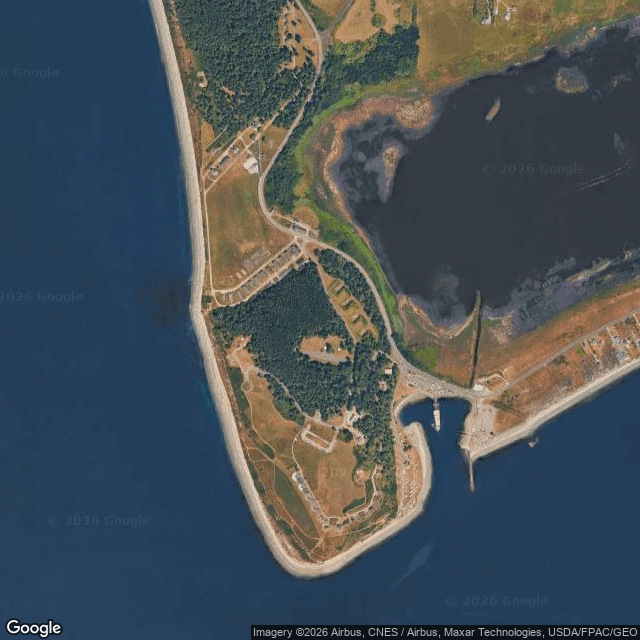
Fort Casey Army Base, Coupeville Washington
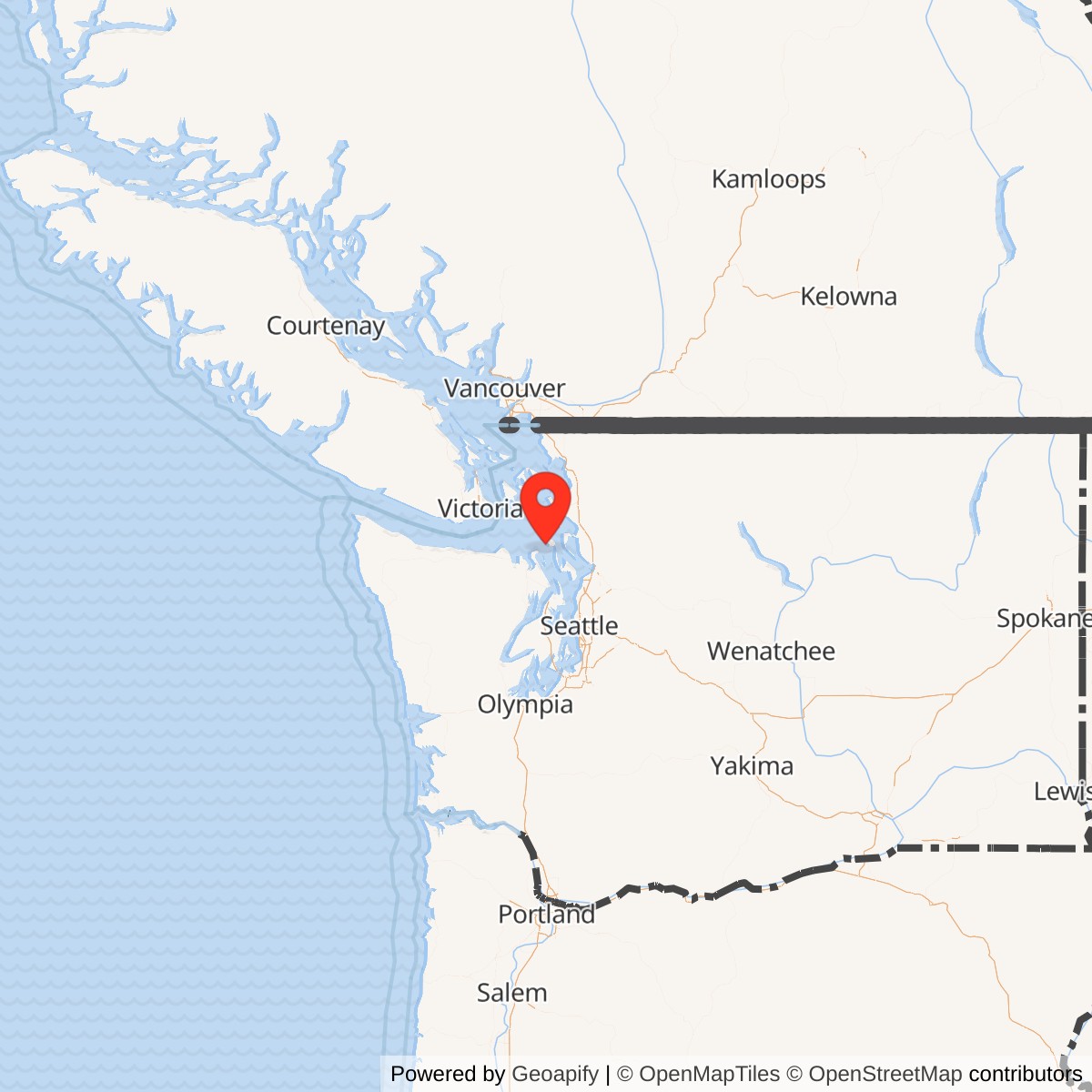
Longitude: -122.6776712
Official Base Website: https://parks.wa.gov/find-parks/state-parks/fort-casey-historical-state-park
Current Role: Fort Casey Historical State Park, Admiralty Head Lighthouse, preserved batteries, campground/day-use areas, and adjacent Camp Casey/Seattle Pacific University conference-use former garrison area
Closed Endicott-period U.S. Army Coast Artillery post on Admiralty Head, Whidbey Island. Construction began in July 1897; Fort Casey was fully operational on 1902-07-19 and permanently deactivated on 1953-06-30. It formed one side of Puget Sound's Triangle of Fire with Fort Worden and Fort Flagler, defending Admiralty Inlet, the Bremerton naval yard, and Puget Sound cities. Armed with 35 pieces including 10-inch and 6-inch disappearing guns, 5-inch and 3-inch guns, and 12-inch mortars; used for World War I training, interwar harbor-defense/caretaker duty, and World War II induction, training, local-defense, and antiaircraft-modification functions. Heavy 10-inch and 12-inch guns were scrapped in 1942. Washington State Parks acquired most battery areas in 1955; Seattle Pacific University acquired much of the former housing/garrison area in 1956. Modern site preserves batteries, Admiralty Head Lighthouse, and Fort Wint display guns.
Location: 1280 Engle Road, Coupeville, Whidbey Island, Island County, Washington. The fort occupies Admiralty Head on the west side of Whidbey Island, overlooking Admiralty Inlet and the entrance from the Strait of Juan de Fuca into Puget Sound. The present preserved battery landscape is Fort Casey Historical State Park, while much of the former garrison housing area became Seattle Pacific University's Camp Casey Conference Center.
Fort Casey was an Endicott-period U.S. Army Coast Artillery fort built to defend Admiralty Inlet, the maritime gateway into Puget Sound. It is no longer an active Army installation. Fort Casey began construction in July 1897, was fully operational on July 19, 1902, and was permanently deactivated on June 30, 1953. The main preserved fortification area is now Fort Casey Historical State Park, while the former military reservation has been divided among Washington State Parks, Seattle Pacific University, and other public or private uses.
The fort's geography explains its importance. Admiralty Head sits on a high bluff above the waterway where vessels pass between the Strait of Juan de Fuca and the inner waters of Puget Sound. Any hostile fleet intending to reach the Puget Sound Naval Yard at Bremerton or the cities of Seattle, Tacoma, and Everett had to pass through this maritime corridor. Fort Casey therefore was not an isolated island post; it was one component of a planned harbor-defense system controlling the entrance to one of the Pacific Northwest's most important naval and commercial regions.
Fort Casey was part of the famous Puget Sound "Triangle of Fire," the interlocking system formed by Fort Casey on Whidbey Island, Fort Worden at Port Townsend, and Fort Flagler on Marrowstone Island. Together the three forts were intended to place hostile ships under overlapping heavy-gun fire as they entered Admiralty Inlet. The design reflected the late nineteenth-century Endicott Board concept of seacoast defense: concrete batteries concealed from seaward view, heavy rifled breech-loading guns mounted on disappearing carriages, mortars capable of high-angle fire, searchlights, plotting rooms, communications systems, and trained Coast Artillery crews capable of hitting moving naval targets.
Fort Casey's identity has two major phases. The first was the active military reservation, where Coast Artillery troops lived, trained, and maintained heavy guns from the turn of the twentieth century through the World War II and early Cold War era. The second is the preserved historic landscape that emerged after the Army deactivated the post and the state acquired most of the battery area. The guns now displayed at Fort Casey are not the fort's original pieces; they are comparable weapons recovered from Fort Wint in the Philippines and installed to restore the appearance and interpretive power of the old batteries. The installation is therefore both a former harbor-defense post and one of the best public examples of the Endicott coast-artillery system on the West Coast.
Mission Evolution
Fort Casey's original mission was harbor defense. In 1896 Congress authorized the Secretary of War to build three forts guarding Admiralty Inlet. The Army then acquired land near the older Red Bluff/Admiralty Head lighthouse and began transforming the bluff into a modern coast-defense work. The old lighthouse had to be moved to clear room for gun batteries, and a new Admiralty Head Lighthouse was completed and activated in 1903. This physical rearrangement shows that the Army's priorities at the site were military: navigational aid continued, but the bluff's dominant purpose became artillery defense.The early mission was built around the heavy guns of the pre-dreadnought and dreadnought era. Fort Casey's completed armament included seven 10-inch disappearing guns, six 6-inch disappearing guns, two 5-inch balanced-pillar guns, four 3-inch pedestal guns, and sixteen 12-inch mortars. The disappearing guns could rise above their concrete parapets, fire, and recoil back into cover for reloading. The 12-inch mortars were intended to drop heavy shells onto the decks of ships, a vulnerable target compared with side armor. Searchlights, fire-control stations, plotting rooms, observation posts, and communications systems supported the guns.
The mission changed during World War I. Fort Casey remained part of the Harbor Defenses of Puget Sound, but the Army also used it as a training site for soldiers preparing for the trench warfare and artillery demands of Europe. Some coast-defense weapons around the United States were removed, redistributed, or converted for mobile or railway artillery use during the war, and Fort Casey's value increasingly lay in both its guns and its trained personnel. The fort's garrison was part of a larger Coast Artillery system that supplied skilled soldiers to wartime needs beyond fixed harbor defense.
After World War I, Fort Casey entered a period of declining tactical relevance. By the 1920s, battleships could fire farther and more accurately than older coast-defense batteries, and aircraft introduced a threat that open concrete emplacements were poorly suited to resist. Fort Casey did not close immediately because the Army still needed the reservation for training, caretaker, and harbor-defense functions, but the strategic balance had shifted. The fort remained useful, yet its original heavy-gun logic was increasingly outdated.
World War II produced another shift. Fort Casey was reactivated and used as an induction and training center. Its heavy 10-inch and 12-inch guns were dismounted and scrapped in 1942 during the wartime metal drive, and some battery positions were modified for newer antiaircraft or local-defense purposes. The fort also supported specialized training activity, including amphibious tank training in the later wartime and immediate postwar period. By then the main defensive emphasis in the Pacific Northwest had moved toward air defense, antisubmarine defense, radar, patrol craft, mines, and newer batteries closer to the outer approaches. Fort Casey still served, but not in the same role it had been built to perform.
The final military phase ended after World War II and the Korean War period. The fort was placed in caretaker status, was permanently deactivated on June 30, 1953, and was transferred to the General Services Administration. Washington State Parks purchased 105 acres of the reservation on December 1, 1955, including most of the former battery sites, and Seattle Pacific University purchased much of the former housing and garrison area in 1956. The park was dedicated in 1962, and the historic-gun display was strengthened in the 1960s when 10-inch disappearing guns and other pieces from Fort Wint were brought to Whidbey Island for interpretation.
Operational Role
Fort Casey's operational role was to make Admiralty Inlet a defended channel. In practical terms, that meant much more than placing guns on a bluff. The Army had to build emplacements, magazines, hoists, plotting rooms, fire-control stations, searchlight positions, power and communications systems, roads, quarters, barracks, administrative buildings, and support infrastructure. Coast-defense artillery was a system of instruments, calculations, communications, and trained crews. The guns were the visible feature, but the ability to find a moving target, calculate range and bearing, communicate corrections, and fire in coordination with other batteries made the fort militarily meaningful.The first artillery detachments arrived before the fort was fully complete. The garrison eventually grew to several hundred soldiers during the fort's peak years before World War I. These troops were trained specialists. They had to maintain guns and carriages, handle powder and projectiles, operate range-finding and plotting equipment, coordinate with searchlight crews, drill ammunition service from magazines to guns, maintain discipline in the batteries, and integrate their fire with the wider harbor-defense network. Fort Casey's daily military life therefore mixed barracks routine with technical artillery training.
The fort's guns were exercised but never fired against an enemy. That fact should not be mistaken for military irrelevance. Fort Casey's purpose was deterrence. The existence of the Triangle of Fire was meant to make a naval attack on Puget Sound too costly. In the early twentieth century, the Army and Navy considered the Bremerton Navy Yard, Seattle, Tacoma, Everett, and Puget Sound's shipping routes important enough to justify a major coast-defense investment. Fort Casey's operational success was therefore measured partly by the attack that never came.
Fort Casey also functioned as a coordinating point inside the Puget Sound harbor defenses. Its location across the water from Fort Worden and Fort Flagler gave it an especially important firing relationship with the other two forts. If a hostile vessel entered Admiralty Inlet, each fort could engage from a different angle, complicating enemy maneuver and reducing the possibility that a ship could simply stand off and silence one position. Fort Casey's western bluff position also allowed a commanding view toward the Strait of Juan de Fuca, the Olympic Peninsula, Admiralty Inlet, and the naval approaches beyond.
World War I gave Fort Casey an additional personnel-training role. Coast Artillery troops were valuable because they already understood heavy artillery, fire control, and disciplined gun operations. As the Army expanded for overseas war, forts like Casey helped train soldiers for the modern battlefield even though the fixed batteries themselves did not fire at enemy ships. Training for trench warfare and artillery support meant that Fort Casey's importance extended beyond the literal protection of Puget Sound.
During World War II, Fort Casey's operational meaning changed from fixed heavy-gun defense to training, induction, and support. The scrapping of the heaviest guns in 1942 was a decisive symbol of that transformation. The old 10-inch and 12-inch weapons were no longer the core of Puget Sound defense. The Army still used the post, but the wartime function was tied to personnel processing, training, local defense, and the reuse of old military infrastructure in a much broader mobilization. Fort Casey's open grounds, batteries, barracks, and support buildings made it useful even after its original guns had become obsolete.
World War I, World War II, and Postwar Military Activity
Fort Casey's World War I story was one of training and transition. The fort remained in the Harbor Defenses of Puget Sound, but the Army's wartime needs changed how fixed coast artillery posts contributed to national defense. Soldiers trained there for trench warfare and heavy-artillery service. The Coast Artillery Corps also supplied officers and enlisted specialists to mobile artillery, railway artillery, antiaircraft, and overseas organizations. Fort Casey's guns still protected Admiralty Inlet, but its trained people were increasingly part of a wider wartime artillery manpower system.The interwar years brought reduced military value but continued federal control. Like many Endicott-era batteries, Fort Casey was expensive to maintain and increasingly vulnerable to modern naval and air power. It entered caretaker or reduced-manning status after World War I, but the Army did not immediately abandon it. Puget Sound remained strategically important, and the reservation still had training and mobilization value.
When World War II began, Fort Casey returned to fuller use. The fort was reactivated in 1940 and was again fully manned by the beginning of the war. The older heavy batteries, however, were no longer the primary answer to modern threats. In 1942 the 10-inch and 12-inch guns were removed and scrapped. Some old positions were altered for antiaircraft use, and other Puget Sound sites such as Fort Ebey and the Strait of Juan de Fuca defenses carried newer wartime missions. Fort Casey's contribution was therefore a combination of induction, training, local defense, and support rather than a simple continuation of the 1902 heavy-gun mission.
The units associated with Fort Casey during this period connect it to the broader Coast Artillery mobilization. The Harbor Defenses of Puget Sound included Regular Army and National Guard coast-artillery organizations. The 14th Coast Artillery was a central Regular Army harbor-defense regiment, and elements of that regiment were assigned across Fort Worden, Fort Casey, and Fort Flagler. Coast Defense Study Group summaries describe batteries and battalion elements moving among the Puget Sound forts during the 1940-1941 mobilization. The Washington National Guard's 248th Coast Artillery also became part of the federalized Puget Sound harbor-defense structure before its later transfer to other training and service assignments. These units did not make Fort Casey famous in the way an infantry division might, but they were the soldiers who kept the harbor-defense network functioning.
After World War II, Fort Casey's active military purpose declined sharply. A state-park brochure notes that it was briefly used for training purposes by an amphibious tank unit until the Korean Conflict, but the fort was again placed in caretaker status in 1950 and never again used in an active military capacity. The permanent deactivation date of June 30, 1953, marked the end of Fort Casey as a U.S. Army post. Its military afterlife came through interpretation, not active defense.
Units, Organizations, and Systems
Fort Casey belonged to the Harbor Defenses of Puget Sound. That system included Fort Worden, Fort Flagler, Fort Casey, later supporting batteries, mine and fire-control functions, searchlights, communications links, and the administrative structure that coordinated the defenses of Admiralty Inlet and Puget Sound. Fort Casey's value cannot be separated from that system. Alone, it was a powerful artillery position; with Fort Worden and Fort Flagler, it became one side of a deliberate crossfire arrangement.The Coast Artillery Corps was the key Army branch at Fort Casey. Coast artillerymen were not ordinary infantrymen placed beside large weapons. They were technical specialists who learned gunnery, ammunition handling, range finding, plotting, signaling, power systems, searchlight coordination, and battery maintenance. Their work demanded mathematical calculation and mechanical discipline, as well as traditional military order.
The 14th Coast Artillery became one of the important Regular Army organizations in the Puget Sound defenses during the twentieth-century mobilization period. Batteries and battalion-level elements were distributed among the three forts, including Fort Casey, as the Army prepared the harbor defenses for possible wartime use. Fort Casey therefore functioned as a regimental and battalion-level Coast Artillery station, not only as a collection of concrete batteries.
The 248th Coast Artillery, a Washington National Guard regiment, was another important component of Puget Sound defense during World War II mobilization. Its federal service tied the local harbor defenses to the broader mobilization of the National Guard. Although Fort Worden was the principal concentration point for much of the regiment, the Harbor Defenses of Puget Sound formed one interrelated system, and Fort Casey was one of the posts whose defense mission the mobilized coast artillery supported.
During the later World War II period, Fort Casey's unit story became more training- and support-oriented. The fort's heavy-gun batteries had largely lost their original role, and activity shifted toward induction, training, antiaircraft or local-defense modifications, and the use of the reservation for specialized military purposes. The post did not have a major post-World War II overseas combat role. Its postwar contribution was readiness support and training, followed by deactivation and preservation.
Batteries, Physical Layout, and Facilities
Fort Casey's physical layout reflected Endicott-era principles. Instead of high masonry walls like earlier nineteenth-century forts, Fort Casey used low concrete batteries set into the bluff and backed by earth. From the sea, the batteries were meant to be hard to see and hard to hit. Guns sat behind concrete parapets, and disappearing carriages allowed the largest weapons to retract below the skyline after firing. Magazines, shell rooms, powder rooms, hoists, and service passages were built into the concrete and earthworks behind the firing positions.The principal armament was impressive. Fort Casey mounted seven 10-inch disappearing guns, six 6-inch disappearing guns, two 5-inch balanced-pillar guns, four 3-inch pedestal guns, and sixteen 12-inch mortars. The 10-inch guns were intended to engage major warships entering Admiralty Inlet. The 6-inch and 5-inch guns could engage smaller or faster vessels. The 3-inch guns were useful against mine sweepers and light craft. The mortars gave the fort high-angle fire against the decks of ships. This mixture made Fort Casey a layered defense rather than a single-battery site.
The batteries included positions such as Battery Worth, Battery Moore, Battery Parker, Battery Kingsbury, Battery Trevor, Battery Van Horne, and mortar batteries associated with the fort's 12-inch weapons. Modern visitors experience these as concrete emplacements, corridors, stairs, gun platforms, magazines, and open parade-like grounds, but during the active period they were part of a working weapons complex. Ammunition had to move safely from magazines to guns. Crews had to practice loading and firing. Officers had to receive target information and command fire. Searchlight and observation systems had to work with the guns.
The garrison side of the post lay apart from the batteries. Barracks, officers' quarters, NCO housing, administrative buildings, utility structures, parade grounds, and service facilities made Fort Casey a working Army post. Much of that former garrison area became Seattle Pacific University's Camp Casey Conference Center after the Army disposed of the property. This split ownership explains why Fort Casey's military landscape is divided today: Washington State Parks preserves most of the battery and lighthouse experience, while the former housing and support landscape survives under different use.
The lighthouse is integral to the site's physical identity. The first Admiralty Head Lighthouse predated the fortification project, but the Army's gun-emplacement needs forced a relocation and replacement. The 1903 Admiralty Head Lighthouse became both a navigational feature and part of the fort's visual landscape. Its light was deactivated in 1922, and its lantern was later removed, but the building survives as an interpretive center and landmark. The juxtaposition of lighthouse and artillery batteries is one of Fort Casey's defining features.
Current Status
Fort Casey is closed as an Army installation and active as a public historic site. Washington State Parks administers Fort Casey Historical State Park, a 999-acre park with 10,810 feet of shoreline, preserved batteries, historic guns, Admiralty Head Lighthouse, campground facilities, trails, beach access, and interpretive spaces. The official park entrance is at 1280 Engle Road in Coupeville.The preserved batteries make Fort Casey one of the most legible Endicott-period coast-defense sites in Washington. Visitors can walk through concrete gun emplacements, view reinstalled 10-inch guns, look across Admiralty Inlet toward Fort Worden and Fort Flagler, and understand how the three-fort system once controlled the maritime entrance to Puget Sound. The present-day guns help interpret the fort's original heavy armament even though the original weapons were removed and scrapped during World War II.
The former garrison area has a separate life. Seattle Pacific University's Camp Casey Conference Center occupies much of the old housing and support area. This means the former Army reservation did not become a single unified park. Instead, it became a layered historic landscape, with state preservation, university reuse, transportation corridors, and surrounding private or public land all occupying parts of the old military reservation.
The site also remains connected to modern military activity indirectly. Naval Air Station Whidbey Island aircraft may pass near or over the area, and Washington State Parks warns visitors of occasional Navy jet noise from nearby training missions. This does not make Fort Casey an active Army post, but it does place the former coast-defense landscape within a still-militarized region of Puget Sound.
Chronology
- 1859 The first Admiralty Head Lighthouse was established on the bluff before the Army's later coast-defense construction reshaped the site.
- 1896-06-06 Congress authorized the Secretary of War to build three forts to protect the entrance to Puget Sound at Admiralty Inlet.
- 1897-07 Fort Casey construction began on Admiralty Head.
- 1898-09-08 The first detachment of artillery troops arrived at Fort Casey.
- 1899 The fort was named for Brigadier General Thomas Lincoln Casey, former Chief of Engineers of the U.S. Army.
- 1902-07-19 Fort Casey was fully operational.
- 1903-06-25 The new Admiralty Head Lighthouse was activated.
- 1907 Major construction of the fortifications was substantially complete, though modifications continued afterward.
- 1907-1917 Fort Casey reached its peak prewar garrison period, with roughly 400 soldiers assigned at times.
- 1917-1918 During World War I, Fort Casey trained soldiers for trench warfare and wartime artillery-related service while remaining part of the Puget Sound harbor defenses.
- 1918 Modifications to the fort continued through the World War I period.
- 1919 Fort Casey was placed in caretaker or reduced status after World War I.
- 1922-06-30 Admiralty Head Lighthouse was deactivated as navigational needs shifted.
- 1927 The lighthouse lantern house was removed and later reused at New Dungeness Lighthouse.
- 1940 Fort Casey was reactivated as the United States expanded military readiness before entering World War II.
- 1941 Fort Casey was again fully manned as part of wartime mobilization.
- 1942 The 10-inch and 12-inch guns were dismounted and scrapped as part of the World War II metal drive.
- 1943 Some former heavy-gun battery positions were modified for antiaircraft or local-defense purposes.
- 1945 Washington State Parks' brochure states that soldiers were stationed at Fort Casey through 1945.
- 1950 Fort Casey was again placed in caretaker status.
- 1950-1953 The fort was briefly associated with training use by an amphibious tank unit during the Korean War period.
- 1953-06-30 Fort Casey was permanently deactivated as a military installation and transferred to the General Services Administration.
- 1955-12-01 Washington State Parks purchased 105 acres of the Fort Casey military reservation, including most former battery sites.
- 1956 Seattle Pacific University purchased most of the former housing area for use as the Camp Casey Conference Center.
- 1962-09-09 Fort Casey State Park was dedicated.
- 1963 Washington State Parks began receiving comparable historic guns from Fort Wint in the Philippines for display at Fort Casey.
- 1968 Additional Fort Wint weapons were installed for display, strengthening the interpretive battery landscape.
- Present Fort Casey remains closed as an Army installation and preserved as Fort Casey Historical State Park, with adjacent former garrison areas in university and other non-Army use.