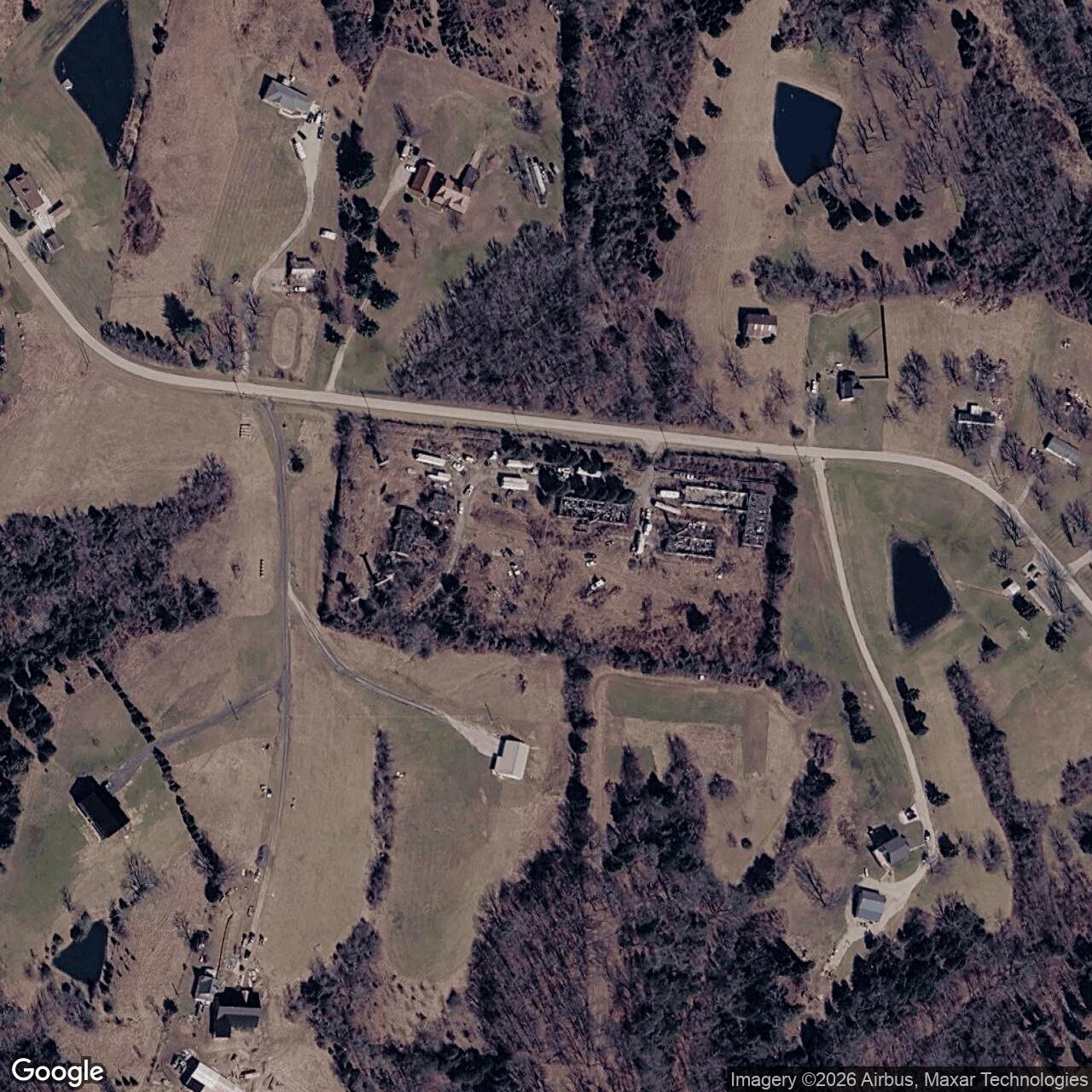
Nike Missile Site CD-63 IFC, Dillsboro Indiana
Longitude: -85.0100576681852
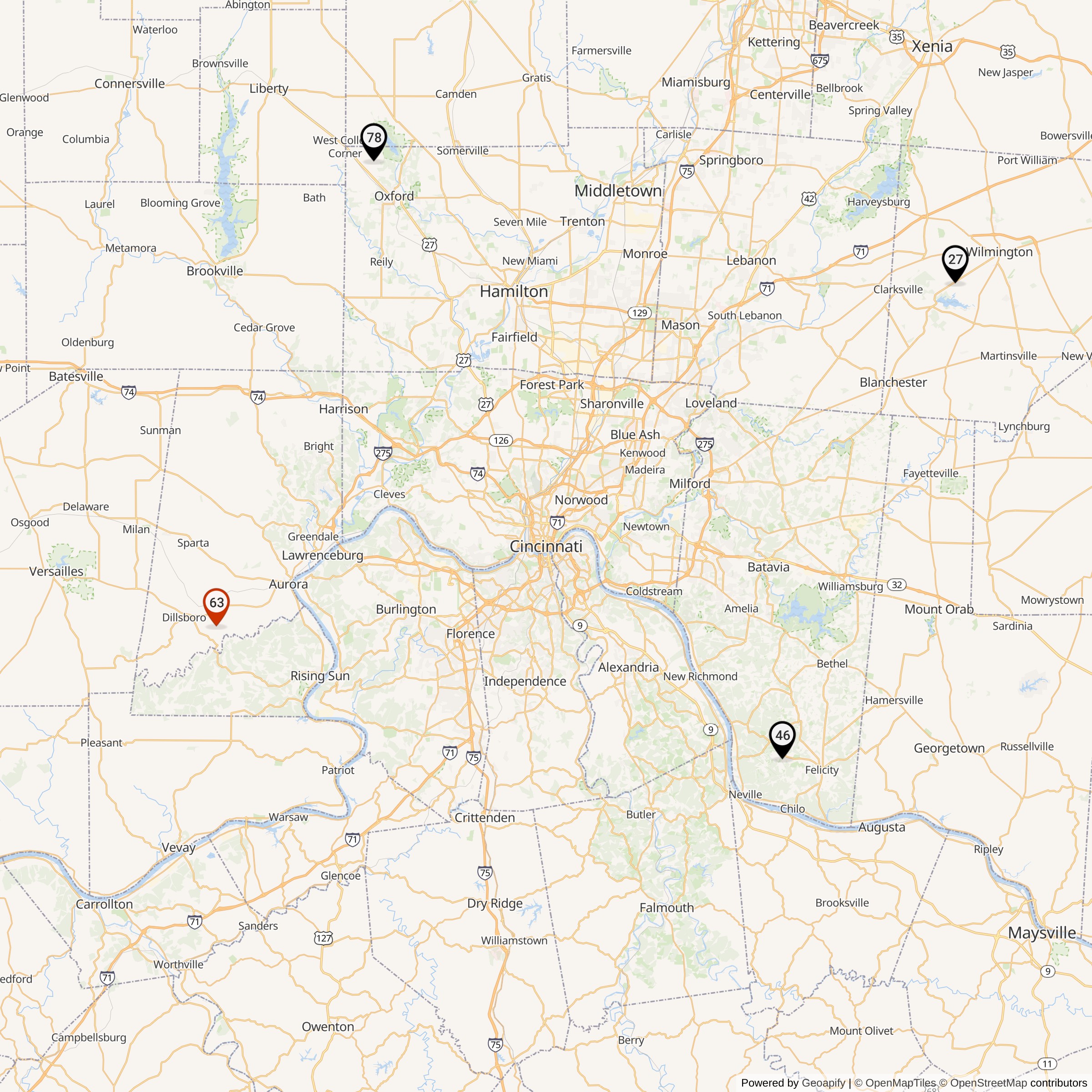
This location was part of the Cincinnati Defense Area
Site ID: CD-63
This site controlled the missiles at the Launch Area located here.
Site Role: IFC
A typical Nike air defense site consisted of two separate parcels of land. One area was known as the Integrated Fire Control (IFC) Area. This site contained the Nike system's ground-based radar and computer systems designed to detect and track hostile aircraft, and to guide the missiles to their targets.
The second parcel of land was known as the Launcher Area. At the launcher area, Nike missiles were stored horizontally within heavily constructed underground missile magazines. A large, missile elevator brought the Nikes to the surface of the site where they would be pushed across twin steel rails to one of four satellite launchers.
Elaboration on how Nike worked here.
Missile Type: Hercules
The Nike Ajax was the first in the Army's family of guided missiles, and the world's first operational, guided, surface-to-air missile system. Nike Ajax had a burnout speed of Mach 2.3, a range of 25-30 miles, and a ceiling of 65,000 feet.
Designed to carry either nuclear and/or high-explosive warheads, the Nike Hercules missile could attack supersonic aircraft operating at altitudes in excess of 150,000 feet and at a range of more than 87 miles.
Battery Type: single
Current site status: demolished
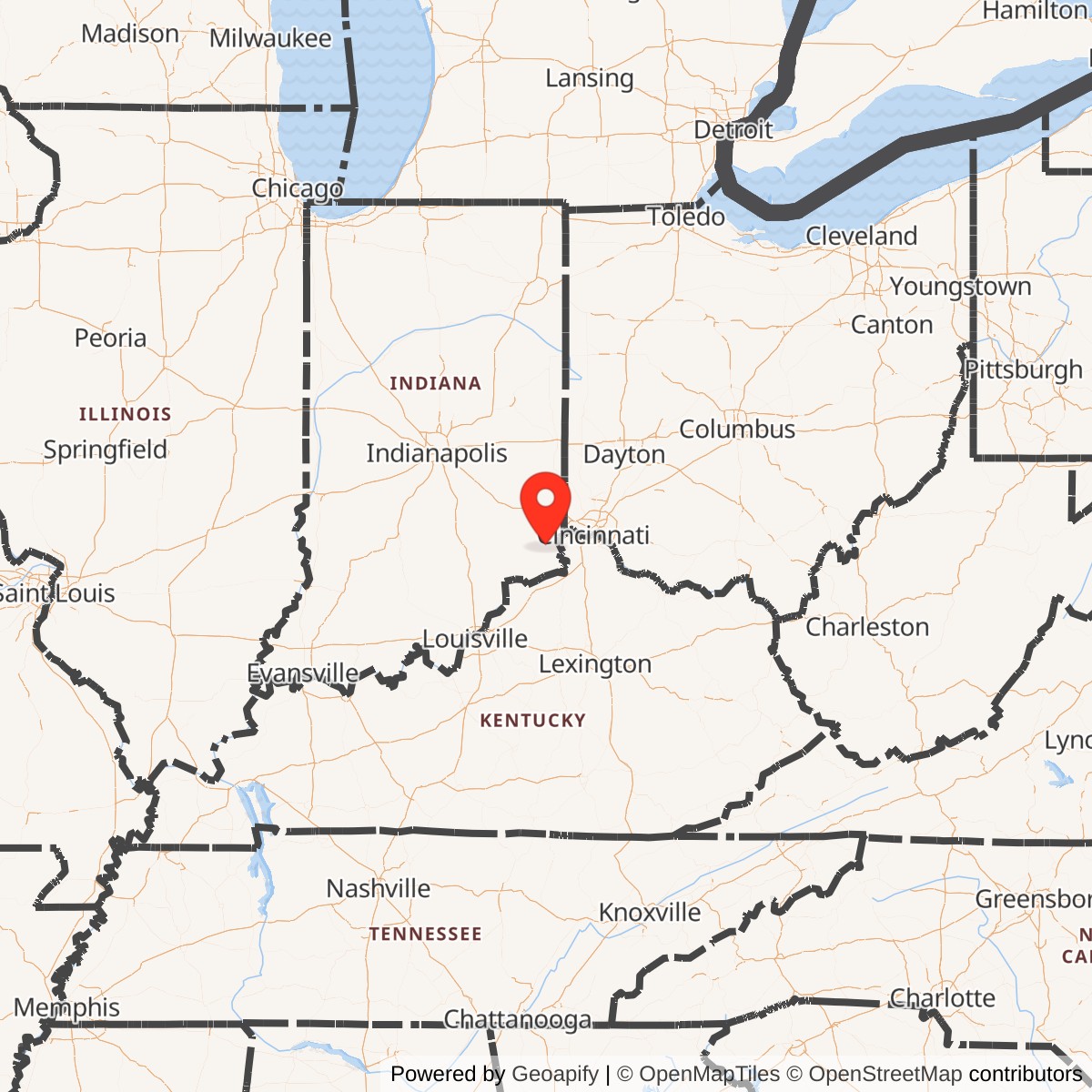
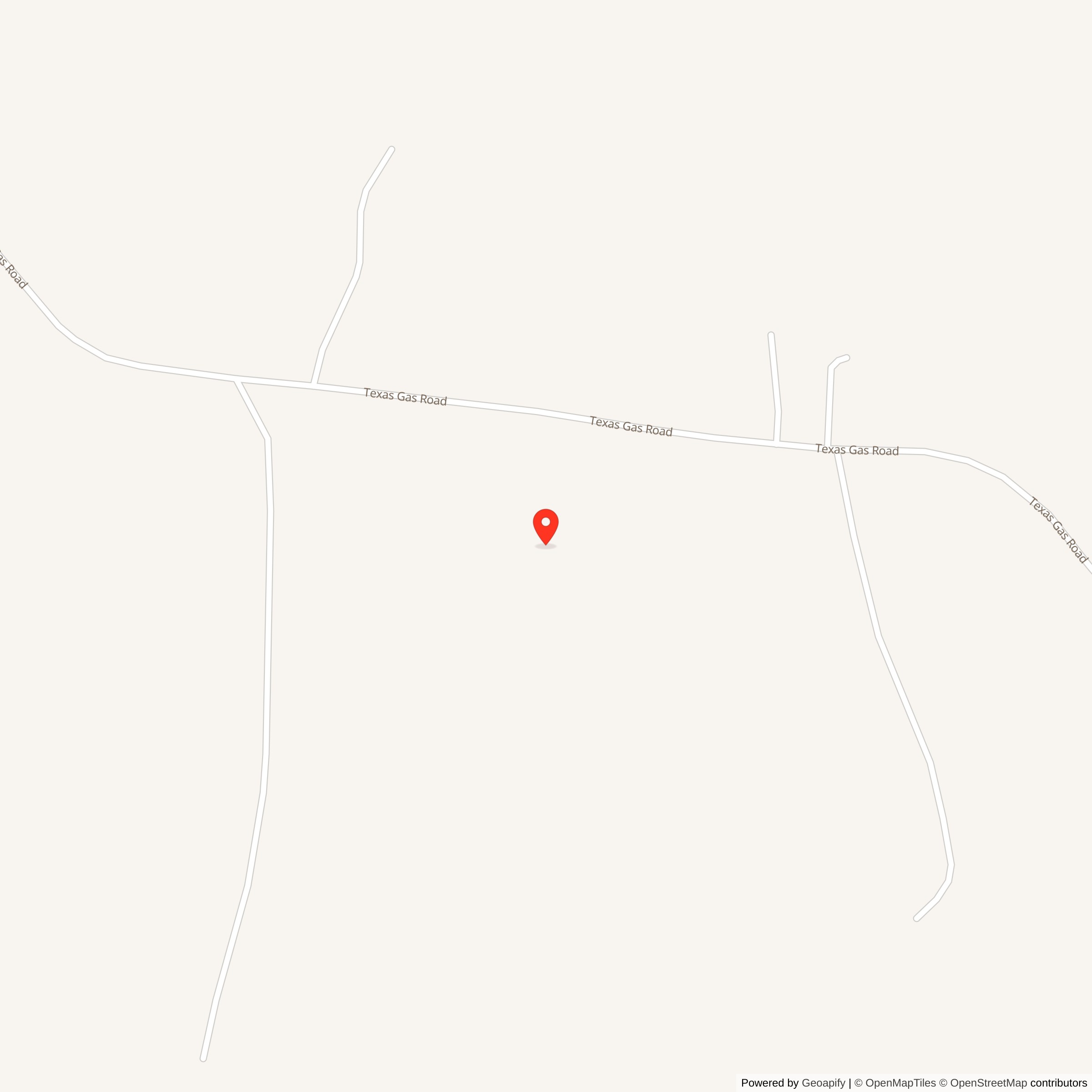
Nike Missile Site CD-63 was a U.S. Army Nike Hercules air-defense missile battery in the Cincinnati-Dayton Defense Area. Although the defense-area code begins with "CD" and the battery defended the Cincinnati-Dayton/upper Ohio River Valley region, CD-63 itself was not in Ohio. It was the Dillsboro, Indiana battery, located in southeastern Indiana near the Ohio state line. Its function was to help defend the Cincinnati-Dayton industrial and transportation region, including the upper Ohio River Valley, from Soviet bomber attack during the Cold War.
The strongest federal Nike inventory source lists it as active from March 1960 to March 1970. Some later local and preservation sources give slightly different closure years, including 1969 or 1971, but those appear to reflect local memory, ownership transition, or generalized post-closure dates.
CD-63 was a Nike Hercules site, not an Ajax-only Cleveland-style first-generation site. It is listed in federal Nike inventories as: Nike 3D/18H/12L-U
That code means the battery had three Type D missile magazines, 18 Nike Hercules missiles, and 12 universal launchers. Type D magazines were designed with increased access room and were associated with Hercules-capable storage and launching operations. The "12L-U" launcher notation indicates 12 universal launchers.
Because CD-63 was one of the later Cincinnati-Dayton sites that became operational in 1960, its operational history belongs to the Nike Hercules phase of the Army air-defense program. Nike Hercules was larger and more capable than Nike Ajax and could be fitted with either conventional or nuclear warheads. In practice, the Hercules sites around major urban and industrial regions represented the second generation of the fixed Nike air-defense network.
Historical Background
The Cincinnati-Dayton Defense Area was part of the national Nike missile network created after World War II, when the United States shifted from gun-based antiaircraft defense to guided missile defense. The Nike program was designed to protect key cities, industrial regions, military installations, and strategic infrastructure from enemy bomber attack. Nike batteries formed fixed "rings" or arcs around defended areas, with missile launchers placed far enough from the target area to intercept incoming aircraft before they could reach the city or installation being defended.The Cincinnati-Dayton system was unusual because it defended a two-city and regional industrial corridor rather than a single compact urban core. The defended region included Cincinnati, Dayton, industrial centers along the upper Ohio River Valley, military and aviation-related assets in southwestern Ohio, and transportation routes connecting the Midwest, Ohio River, and interior manufacturing belt. The system included CD-27 near Wilmington, Ohio; CD-46 near Felicity, Ohio; CD-63 near Dillsboro, Indiana; and CD-78 near Oxford, Ohio. CD-63 was the Indiana member of the Cincinnati-Dayton group, positioned west of Cincinnati and near the state line so that the defensive ring could cover approaches from the west and southwest.
The U.S. Army Corps of Engineers Huntington District had responsibility for construction of the Cincinnati-Dayton Nike Hercules sites. Federal historical summaries describe the Cincinnati-Dayton batteries as operational in 1960 and active until the 1970-1971 period. The site at CD-27 hosted the regional BIRDIE command-and-control function, while CD-63 served as a firing battery within that network.
Operational Role
CD-63's role was to detect, track, and engage hostile aircraft approaching the defended region. Like all Nike sites, it was divided into two principal operating areas: the Integrated Fire Control area and the launch area.The Integrated Fire Control area was the radar and command portion of the battery. It housed acquisition radar, target-tracking radar, missile-tracking radar, plotting and guidance equipment, communications equipment, and the personnel who identified and controlled engagements. Public preservation accounts place the CD-63 IFC area approximately 1.2 miles southeast of U.S. Route 50 on Texas Gas Road, east of Dillsboro. A late-1990s Nike Preservation Group field account described the IFC area as mostly intact, with original buildings, fencing, and four radar towers still standing. The same account suggested that the site appeared to have used ABAR-type acquisition radar equipment, though that is a field-observation note rather than an official equipment record.
The launch area was the missile storage, assembly, maintenance, and firing portion of the battery. It was located closer to Dillsboro along Indiana Route 262, also roughly 1.2 miles southeast of U.S. Route 50. The launch site contained three missile storage magazines, launch rails and launcher positions, support buildings, a ready building, a missile assembly building, a paint shed, fencing, and protective berms. The magazines stored Hercules missiles horizontally below ground. In a firing sequence, crews could raise missiles to the surface on elevators, move them along rails to launchers, and prepare them for firing under control of the IFC area.
Because CD-63 was a Hercules battery, the site had a nuclear-capable air-defense mission. That does not mean every missile present necessarily carried a nuclear warhead at all times, but the Nike Hercules system was designed so that batteries could employ nuclear-armed interceptors against massed bomber formations. This was the logic of Cold War air defense: if a Soviet bomber attack penetrated outer warning and fighter defenses, the Army's Nike batteries formed a last-line guided missile defense around major target regions.
Site Layout and Physical Features
CD-63 followed the standard split Nike pattern. The IFC/control area and launcher were separated by distance for safety and tactical reasons, but remained close enough to function as a single battery. The IFC needed line-of-sight radar visibility and open ground for radar operation. The launcher needed enough land for magazines, launch rails, explosive safety arcs, fencing, generator and support buildings, and controlled access.The launcher's three underground magazines were the most important permanent features. Later accounts from the private owner and real-estate descriptions identify three missile magazines or "silos," though Nike launch magazines were not vertical ICBM-style silos. They were underground horizontal storage structures with elevator systems used to bring missiles to the surface. One later owner preferred the simpler popular term "silo," and the term also appears in real-estate descriptions, but "magazine" is the more technically correct Nike term.
The launch property has been described as approximately 14.5 acres, with multiple surviving buildings, three underground magazine structures, and more than 5,000 linear feet of high security fencing topped with barbed wire. Real-estate and local-history accounts identify a set of above-ground military buildings built of concrete or heavy military construction. These features reflect the original purpose of the site: hardened, secure, controlled-access storage and launching of surface-to-air missiles.
Post-Closure History
After the March 1970 deactivation period, CD-63 passed out of active Army air-defense use. Unlike many Nike sites that were demolished, redeveloped, or heavily altered, CD-63 survived with an unusually high amount of visible Cold War fabric.The IFC/control area entered private ownership. A late-1990s Nike Preservation Group field report described it as mostly intact, with original buildings, fencing, and four radar towers still standing. It was reported as overgrown and minimally maintained, but still clearly readable as a former Nike control site from the road.
The launcher area also entered private ownership and became one of the better-known Nike reuse examples in Indiana. The Nike Preservation Group reported that the launcher owner purchased the property in 1979 and converted one of the underground missile magazines into a residence. The same account stated that the magazine elevator and sump pump still worked. Later regional reporting described the owner using part of the former missile elevator to lower classic cars into the former magazine space. This is one of the most distinctive known civilian reuses of a Nike launch magazine.
By the late 2010s, the launcher property was publicly marketed as a former Nike missile base with ten buildings, three missile magazines, extensive security fencing, and an underground residence built into the central magazine. Local real-estate coverage and listing summaries described the property as retaining original military features while also containing residential alterations such as living space, baths, spa or pool-related improvements, and vehicle or business storage. These alterations mean CD-63 is no longer an untouched military site, but they also helped preserve substantial portions of the launcher landscape that might otherwise have been demolished.
List of all Nike Installations in the Cincinnati Defense AreaList of all Nike Installations in Indiana