
Pedro Dome Radio Relay Station / White Alice Communications Site, Alaska
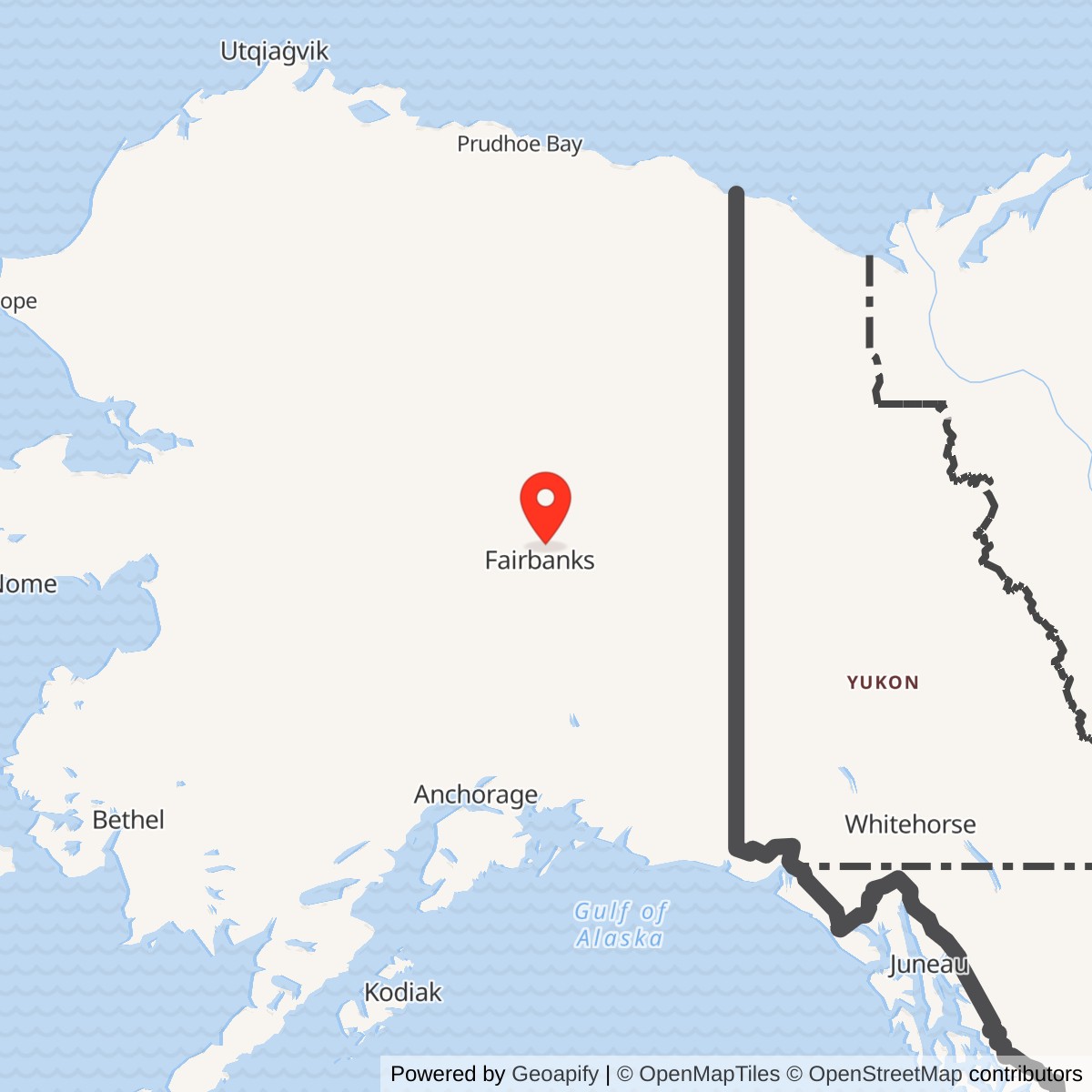
Longitude: -147.4992
Official Base Website: Pedro Dome communications site
Current Role: Alaska DEC describes postmilitary private communications operation and cleanup complete with institutional controls for the former federal PCB area. The exact present-day communications function and operator require confirmation.
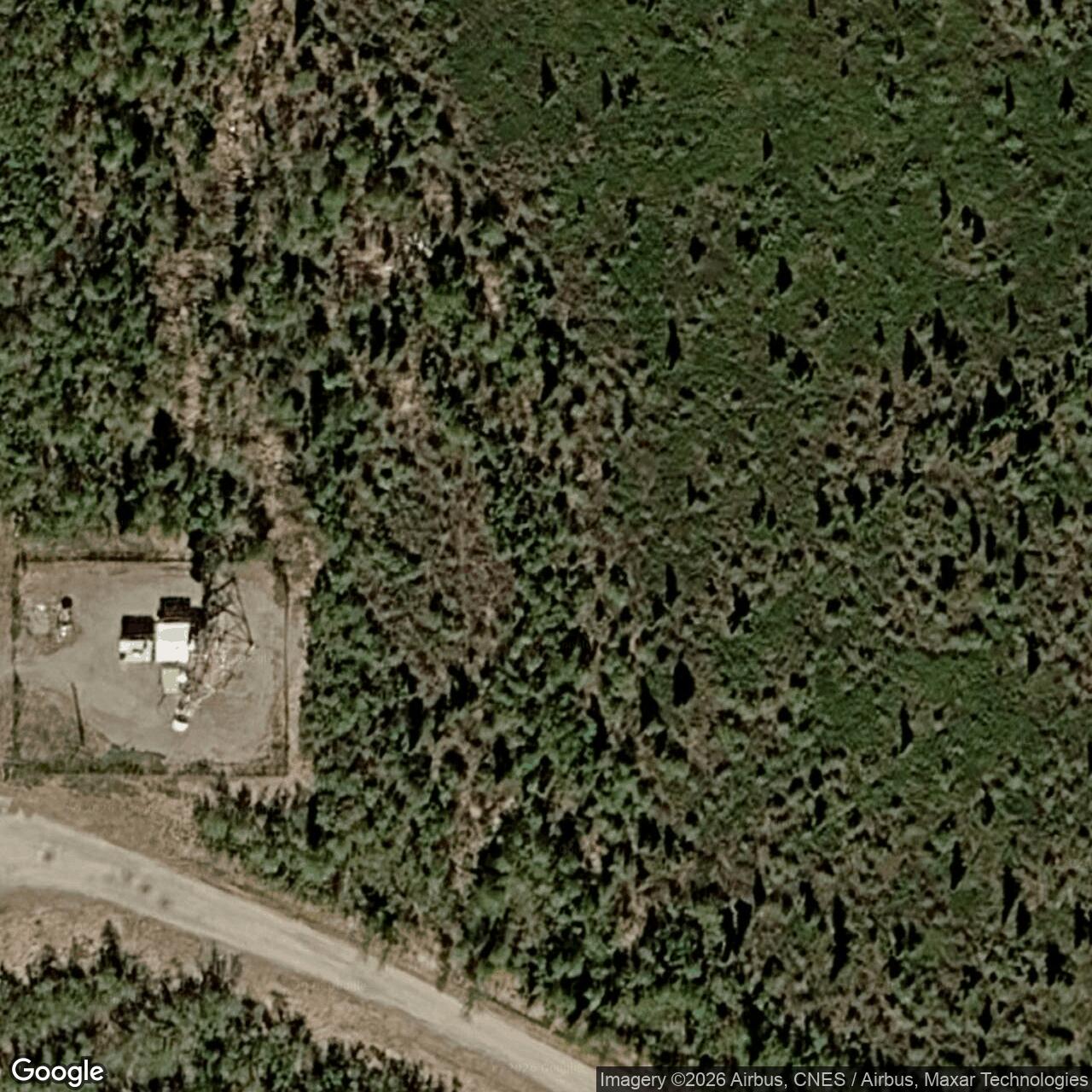
Coordinate note: 65.034150 N, 147.499200 W is an Alaska DEC environmental-record site point. Its datum is unstated; it is not a surveyed antenna position, historic property boundary, or access point.
- Role
- White Alice troposcatter and TD-2 microwave relay; later Alaska military telephone switching hub.
- Opened
- January 6, 1958, according to the Corps of Engineers.
- Direct radio links
- Fort Yukon and Bear Creek by 60-foot billboard-antenna pairs; Fairbanks ACS, Harding Lake, Murphy Dome, and Eielson by microwave.
- Later use
- RCA/Alascom property transfer completed in stages during 1983-1986. Later communications and nearby weather-radar uses are distinct from the original relay mission.
Identity and Location
Pedro Dome Radio Relay Station was a separate Air Force communications installation on a hill northeast of Fairbanks. It was one of the original Murphy Dome Air Force Station, across the Fairbanks area, was another installation with its own radar mission and White Alice component; the two domes were connected by microwave. An early network description used the locality name "Gilmore" for Pedro Dome. [1] [2] [3]
Alaska Department of Environmental Conservation (DEC) places the former military communications site at 1440 Pedro Dome Road, roughly 15 miles northeast of Fairbanks. Its environmental-record point, 65.034150 N, 147.499200 W, is a site reference rather than a surveyed antenna position or property boundary; the horizontal datum is unstated. The 2021 cleanup report describes the hilltop as about 2,600 feet above sea level and approximately 2.5 miles west of Steese Highway milepost 20.3. It describes a 30-acre postmilitary parcel, but the original Air Force acquisition acreage is not established. [3] [4]
Why a Mixed Relay Was Built
White Alice was constructed because Alaska's air-defense radar and interceptor system depended on reliable communications across vast distances with few ordinary telephone routes. A high-power troposcatter signal could reach past the horizon by scattering from the lower atmosphere. Line-of-sight microwave could handle shorter links between visible hilltops and terminals. Pedro Dome combined the methods near Fairbanks, allowing northern and western traffic to meet the Fairbanks military and civilian communications systems. Its mission was carrying communications for defense and other authorized users, not detecting aircraft itself. [1] [2]
The Corps of Engineers' historical inventory dates construction to 1957 and opening to January 6, 1958. An Air Force completion table also places the start of service in January 1958. The later environmental history says construction began in 1957 and the Air Force acquired the land from the Department of the Interior in 1958. The separate construction, service, and land-record dates describe different stages of the station's establishment. [1] [2] [4]
The Original Network Paths
Two 60-foot billboard antennas faced Harding Lake, Murphy Dome, and Eielson Air Force Base. The Corps inventory identifies these as station connections without dating each circuit to the original opening. [1]
An older Air Force account calls the western 130-mile path "Tanana," while the later Corps station profile identifies Bear Creek as its endpoint. The two accounts describe a western path of the same approximate length. Bear Creek is the station named in the detailed Corps inventory; the earlier wording remains an unresolved route-name variation. [1] [2]
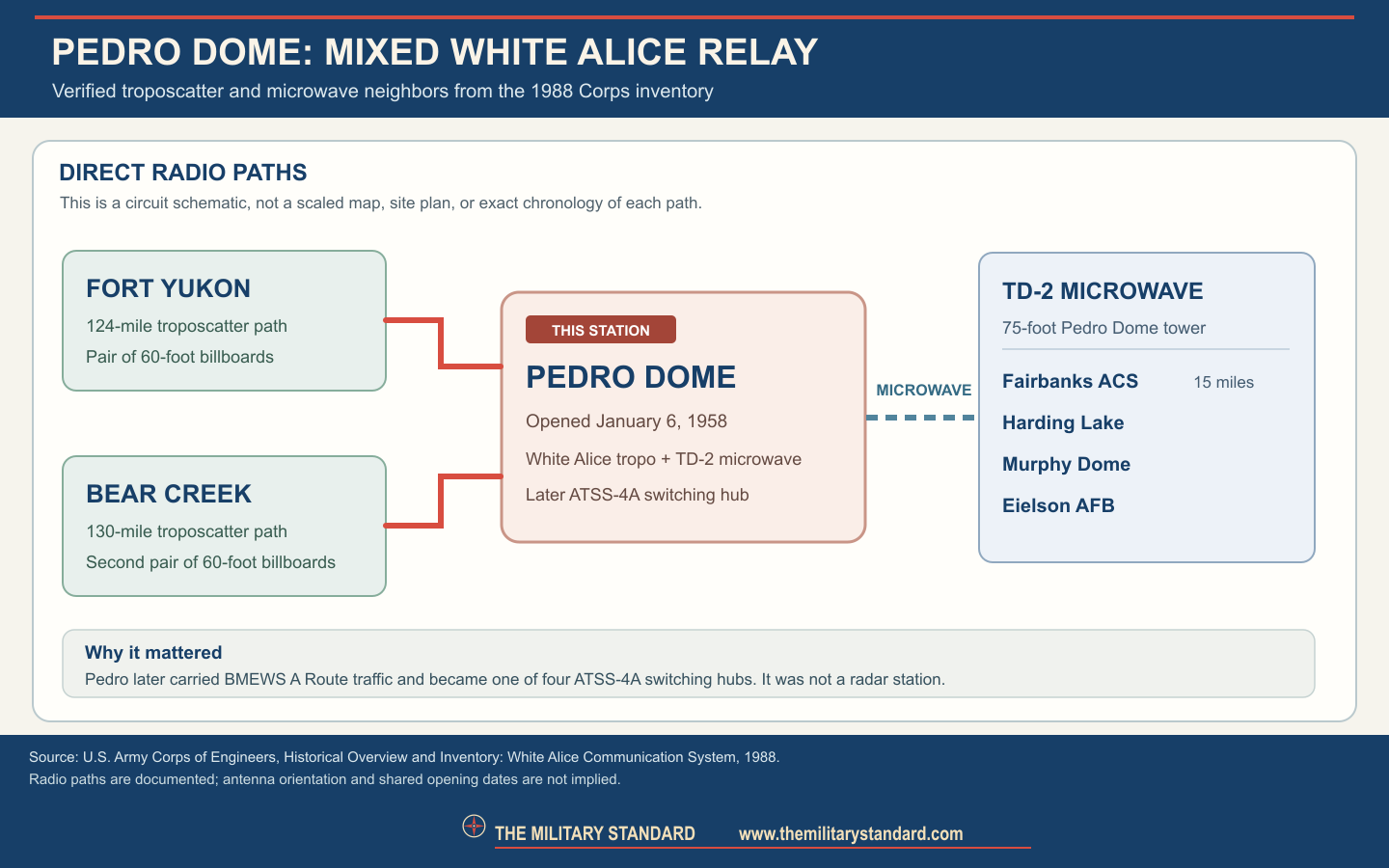
The microwave side tied Pedro Dome into the Fairbanks-area communications grid and later into a wider rearward route. The Corps includes Pedro Dome in the A Route built to carry Ballistic Missile Early Warning System traffic from Clear Air Force Station toward the lower 48 states; its 1994 cultural-resources plan dates Pedro Dome's addition to that route to 1965. The Corps inventory also identifies Pedro Dome as one of four major Alaska Telephone Switching Station 4A hubs added in Operation Bluegrass, with Big Mountain, Kalakaket Creek, and Neklasson Lake. Together, the hubs offered alternative routing if a station or path failed. [1] [8]
From Relay to Switching Hub
The importance of Pedro Dome became especially clear as White Alice was converted to satellite-era service. The Air Force's sale study says commercial North Slope communications in 1972 used Air Force-owned White Alice circuits from Barter Island through Fort Yukon to Pedro Dome. Thus a Cold War relay had a civilian economic role as well as a defense mission. The same study describes the military Alaska Telephone Switching Station as four Western Electric 4A switches at Pedro Dome, Neklasson Lake, Big Mountain, and Kalakaket Creek. These switches served the Alaska military communications network, including circuits associated with aircraft-control-and-warning installations; they were not equivalent to a full priority-precedence AUTOVON system. [2]
The four 4A crossbar switches were installed in 1962, according to the Air Force study, and Pedro Dome served the northern sector. The network primarily carried administrative telephone traffic, though tactical calls sometimes used it. Its users included the Air Force, Army, Navy, Federal Aviation Administration, Coast Guard, and General Services Administration. Switching gear at Pedro Dome operated automatically; human operators worked a 5D switchboard at Neklasson Lake. Pedro Dome's resident personnel maintained radio, power, and other station equipment. ITT Arctic Services maintained and operated ATSS by contract from 1969, while the 1931st Communications Group administered the Air Force side of the network. [2]
When satellite terminals displaced long troposcatter paths in the later 1970s, planners had to preserve service while moving traffic and equipment. A 1977 Air Force cutover plan proposed rerouting tributaries serving Campion, and Galena through combinations of satellite circuits, spare troposcatter capacity, and Pedro Dome switching. It also anticipated transferring switching functions from Kalakaket Creek and Big Mountain as those stations' older routes contracted. Pedro Dome thus became a receiving hub during the transition rather than closing when its first billboard link went off the air. [2]
The transition created a documented operational problem. Kalakaket Creek's 4A switch was deactivated July 19, 1977. The ensuing load overwhelmed Pedro Dome's switch and reduced call completions for northwestern aircraft-control-and-warning sites. On August 2, Alaskan Air Command restricted calls to and from Eielson, Murphy Dome, Indian Mountain, Cape Lisburne, Tin City, Kotzebue, Fort Yukon, Campion, and Galena to mission-essential traffic during weekday business hours. The restriction was lifted October 20 after the overload was relieved. Dependence on Pedro Dome's switching capacity could therefore affect communications across a broad air-defense network. [2]
Big Mountain's 4A switch was deactivated in September 1978, and rearrangements at the two surviving switches were completed in February 1979. Pedro Dome received additional senders and supporting equipment and underwent quality-assurance inspections in April and August 1979. On August 8, 1981, its 4A switch failed for almost eight hours. The Air Force study attributes the outage to a failed chopper motor in one decoder's home translator and dirty contacts in the redundant decoder, preventing route decoding and equipment marking. It called this ATSS's first major outage in eighteen years. [2]
In January-June 1982, new switches at Pedro Dome and Neklasson Lake allowed users with Class A lines to dial the continental AUTOVON network directly. The study dates changeover to June 11 and removal of the old 4A switches to August, while noting that some remote tributary equipment still faced delays. Pedro Dome thus passed through three distinct phases: original troposcatter and microwave relay, 4A switching hub, and later AUTOVON-interface and microwave-repeater use. [2]
The Original Plant and Daily Operation
Pedro Dome's buildings were large for a relay station because high-power radio and switching required power, maintenance, water, fuel, and people on a remote hill. The Corps' 1978 property description calls the main complex a T-shaped, 15,024-square-foot communications center, power plant, and attached dormitory wing. Its station summary separately describes a roughly 9,120-square-foot equipment-and-power building and a 5,200-square-foot dormitory designed for 16 people. The figures reflect different descriptions of the connected complex, not separate freestanding buildings to be added together. The T's long top held equipment and power rooms, approximately 40 by 256 feet; the projecting wing held dormitory, kitchen, and dining uses, approximately 35 by 134 feet. Warehouse and kitchen additions expanded the complex. [1]
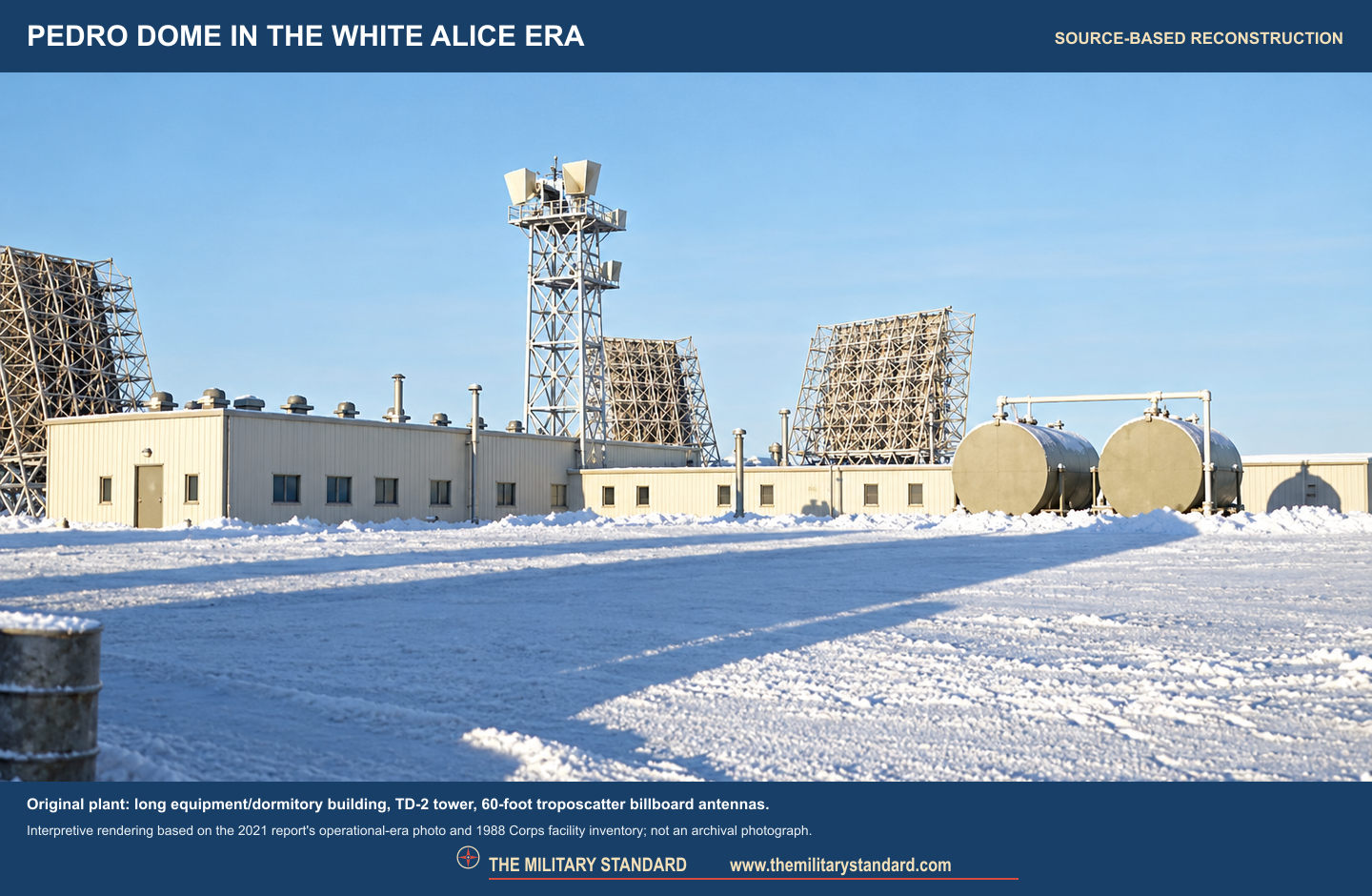
The dormitory had ten sleeping rooms and shared dining, kitchen, cold storage, laundry, bathing, and toilet areas. The 2021 report describes about ten resident staff during the White Alice years. Four Chicago Pneumatic six-cylinder diesel engines drove 150-kilowatt General Electric generators in the power room. The station also had a 41-by-51-foot auto maintenance shop, a 13-by-17-foot fire-pump house, an insulated 216,000-gallon water tank, a small Quonset warehouse, and a 12-by-12-foot pump house lower on Pedro Dome to bring water uphill. Two aboveground diesel tanks held a combined 470 barrels; a separate 1,000-gallon gasoline dispenser served vehicles. The 1978 inspection says the installation then lacked a perimeter fence. [1] [4]
The fuel, power, and water arrangements explain why a radio relay required a staffed hilltop facility. High-power equipment and switch racks could not rely on a local municipal supply. Diesel power, winterized buildings, an uphill water pump, fire protection, vehicle support, and a reliable gravel access road all underpinned the communications circuit. In 1978, the Corps found the main complex and shop generally well maintained, though the small Quonset warehouse and lower pump house were in poorer condition. [1]
Property Transfer and Communications Reuse
The original troposcatter mission ended in stages rather than with a single station shutdown. By 1979 the Air Force had begun negotiations to sell Pedro Dome, then used as a microwave repeater, to RCA/Alascom. The sale was consummated in 1984, while DEC says the property left Air Force records in 1986. The 2021 report dates demolition of most original Air Force buildings, including the equipment building and dormitory, to 1993. A 1994 Corps survey nevertheless found microwave facilities and part of the operations building still in use, indicating that the old plant was only partly removed at that time. [3] [4] [8]
One original radio path has a firm end date: the Fort Yukon-to-Pedro Dome troposcatter link was deactivated June 23, 1980, after replacement circuits were transferred. Pedro Dome was among six planned purchase sites where the 1965th Electronics Installation Group removed obsolete troposcatter and station equipment. Its Pedro Dome work finished by July 11; Eielson resource-management personnel removed the disconnected equipment in late September. Microwave and switching functions continued after the old billboard path closed. [2]
The sale had several legal and administrative stages. A 1980 contract amendment protected Air Force Technical Applications Center radio relay equipment that had occupied Pedro Dome since at least the early 1970s; a later reciprocal arrangement governed its continued use with Alascom. Alascom signed the broader White Alice contract in October 1980, and the acting Secretary of the Air Force signed the sales contract August 25, 1983. The 1984 consummation and 1986 removal from Air Force records marked later stages of the transfer. [2] [3] [4]
The 1994 Corps plan adds a preservation snapshot. By then, the large billboard antennas had been removed and reportedly buried at the site; the remaining operations building was rated in fair condition. The plan assigned Pedro Dome Alaska Heritage Resources Survey identifier UV-177 and judged the altered property a poor preservation candidate. It discussed the White Alice system's historic significance, but did not independently establish that Pedro Dome itself was listed in the National Register of Historic Places. [1] [8]
The 2021 cleanup report identifies later AT&T, GCI, Air Force, and Federal Aviation Administration communications uses on the postmilitary parcel. By then it described a microwave and cell-communications site visited intermittently by technicians rather than a resident crew. The exact operators and active circuits in 2026 have not been established from those records. [3] [4]
Pedro Dome also acquired a separate weather-radar function. A National Weather Service history dates installation of the Interior Alaska WSR-88D Doppler radar on the hill to summer 1993, and the Weather Service continues to identify the Fairbanks-area PAPD radar with Pedro Dome. The weather radar was not part of the original White Alice relay, and the records used here do not establish that it occupies the same legal parcel as the former communications plant. [6] [7]
Environmental Legacy
Pedro Dome's power plant and communications equipment left an environmental legacy after the military mission ended. An abandoned transformer-oil release was reported near the equipment building in 1981, and Alascom found PCB contamination near the former water tank in 1986. The Corps removed contaminated soil and equipment from the water-tank area in 1991, 1993, and 1999. DEC conditionally closed that approximately quarter-acre former federal area in October 2006, requiring notification and approval before affected soil is excavated or moved. DEC lists the federal case as cleanup complete with institutional controls. [3] [4]
A separate AT&T/Alascom case concerns contamination elsewhere on the postmilitary property, including petroleum near former fuel facilities and PCBs and lead around parts of the old station. Interim work occurred in 2007. Excavation in 2019-2020 removed 1,232.2 tons of PCB-impacted soil from three principal areas, according to the April 2021 completion report. That contractor recommended cleanup complete with institutional controls, but the report itself is not a final DEC closure decision for the separate private-site case. [3] [4]
Historic Landscape and Images
The 2021 report describes construction crews blasting and bulldozing a level surface into Pedro Dome's granitic hilltop. The original T-shaped building and billboard antennas have since been largely removed, while later communications facilities and the separate weather radar changed the appearance of the summit. The environmental-record coordinate identifies the general site, not the bounds of the original station or its individual structures. [3] [4] [6]
An operational-era color image reproduced in the 2021 report shows the original long building, microwave tower, and billboard reflectors. The Alaska State Library also catalogs Pedro Dome slides among White Alice construction photographs. These images document an appearance very different from the later low-occupancy communications site and the separate weather-radar installation on the hill. [4] [5]
Chronology
- 1955 - White Alice planning and technical testing included Pedro Dome as an original-network location.
- 1957 - The Corps dates construction of the combined troposcatter and TD-2 plant to this year.
- 1958-01-06 - The Corps dates Pedro Dome's opening to this day.
- 1958 - The 2021 report says the Air Force acquired the property from the Department of the Interior.
- 1962 - Western Electric 4A crossbar switches were installed at Pedro Dome and three other Alaska switching hubs.
- 1965 - The Corps' 1994 plan dates Pedro Dome's addition to the BMEWS A Route to this year.
- 1972 - Air Force records describe North Slope commercial circuits passing through Fort Yukon and Pedro Dome.
- 1977-07-19 - Kalakaket Creek's 4A switch was deactivated, increasing the load on Pedro Dome.
- 1977-08-02 - Alaskan Air Command restricted northwestern-sector telephone traffic to mission-essential calls during weekday business hours because Pedro Dome's switch was overloaded.
- 1977-10-20 - The command lifted the temporary call restriction after the overload was relieved.
- 1978 - A property inspection documented the staffed plant, 4A-era infrastructure, fuel, water, and maintenance facilities.
- 1978-09 - Big Mountain's 4A switch was deactivated; its remaining functions were reconfigured around Pedro Dome and Neklasson Lake.
- 1979-02 - Rearrangements of the two-switch ATSS were completed; additional senders and associated equipment were installed at Pedro Dome and Neklasson Lake.
- 1979 - The Air Force began sale negotiations for the microwave-repeater property.
- 1980-06-23 - The Fort Yukon-to-Pedro Dome troposcatter link was deactivated after replacement circuits were transferred.
- 1980-07-11 - The 1965th Electronics Installation Group had completed its Pedro Dome work to remove obsolete installed equipment.
- 1980-09 - Eielson resource-management personnel removed the disconnected equipment from Pedro Dome.
- 1981-08-08 - Pedro Dome's 4A switch failed for almost eight hours because both decoder paths could not perform route marking.
- 1982-06-11 - Changeover to new AUTOVON-capable switches at Pedro Dome and Neklasson Lake was completed.
- 1982-08 - Removal of the old 4A switches at both sites was completed.
- 1983-08-25 - The acting Secretary of the Air Force signed the broader White Alice sales contract covering retained system properties.
- 1984 - The 2021 report dates consummation of the sale to RCA/Alascom; DEC uses 1984 as the end of the former military communications period.
- 1986 - DEC says the property was removed from Air Force records; Alascom detected PCB contamination near the water tank.
- 1991 - Corps-directed excavation removed PCB-impacted soil from the former tank area.
- 1993 - The 2021 report dates demolition of most original Air Force buildings to this year.
- 1993 - The National Weather Service installed its WSR-88D weather radar on Pedro Dome, a separate later use of the hilltop.
- 1994 - The Corps described the billboard antennas as removed and buried, part of the operations building and microwave facilities as still used, and the former station as too altered for a preservation target.
- 2006-10-30 - DEC conditionally closed the former federal water-tank case with soil-disturbance controls and recognized a separate private-site case.
- 2019-2020 - Risk-based private-site excavation removed 1,232.2 tons of PCB-impacted soil in three principal areas.
- 2021-04 - The contractor documented private-site cleanup work and recommended closure with institutional controls.
Information sources (8)
- PDFU.S. Army Corps of Engineers, Historical Overview and Inventory: White Alice Communication System, 1988
Source for: original-network identity, January 6 opening, direct paths and antenna sizes, BMEWS and ATSS overbuilds, and the 1978 property description.
- PDFU.S. Air Force, A Special Study of the Sale of the White Alice Communications System, October 1983
Source for: early network alias, North Slope traffic, 4A switch and contractor chronology, the 1977 overload, 1980 link and equipment removal, 1981 outage, 1982 AUTOVON transition, AFTAC use, and staged property sale.
- WEBAlaska Department of Environmental Conservation, Pedro Dome Radio Relay Station DERP, hazard ID 292
Source for: qualified coordinate, former Air Force period, Alascom transfer, separate private case, federal PCB cleanup, and institutional-control status.
- PDFALTA Geosciences, Risk-Based Soil Remediation Construction Completion Report, Pedro Dome Repeater Site, April 2021
Source for: site and parcel description, operation and reuse, building demolition, 1981 and later environmental investigation, 2019-2020 soil removal, and the contractor's recommended outcome.
- WEBAlaska State Library, Post-World War II Military in Alaska Primary Source Collections
Source for: Pedro Dome construction-era photographs cataloged in White Alice collections.
- PDFNational Weather Service, Weather Bureau/National Weather Service History in Alaska
Source for: installation of the Interior Alaska WSR-88D Doppler weather radar on Pedro Dome in summer 1993.
- WEBNational Weather Service Fairbanks, Fairbanks Area Pedro Dome Weather Radar Back in Service
Source for: the modern PAPD WSR-88D identification and Pedro Dome locality.
- PDFU.S. Army Corps of Engineers, The Cold War in Alaska: A Management Plan for Cultural Resources, August 1994
Source for: Pedro Dome's 1965 BMEWS A Route date, period-specific building and antenna condition, preservation assessment, and Alaska Heritage Resources Survey identifier UV-177.