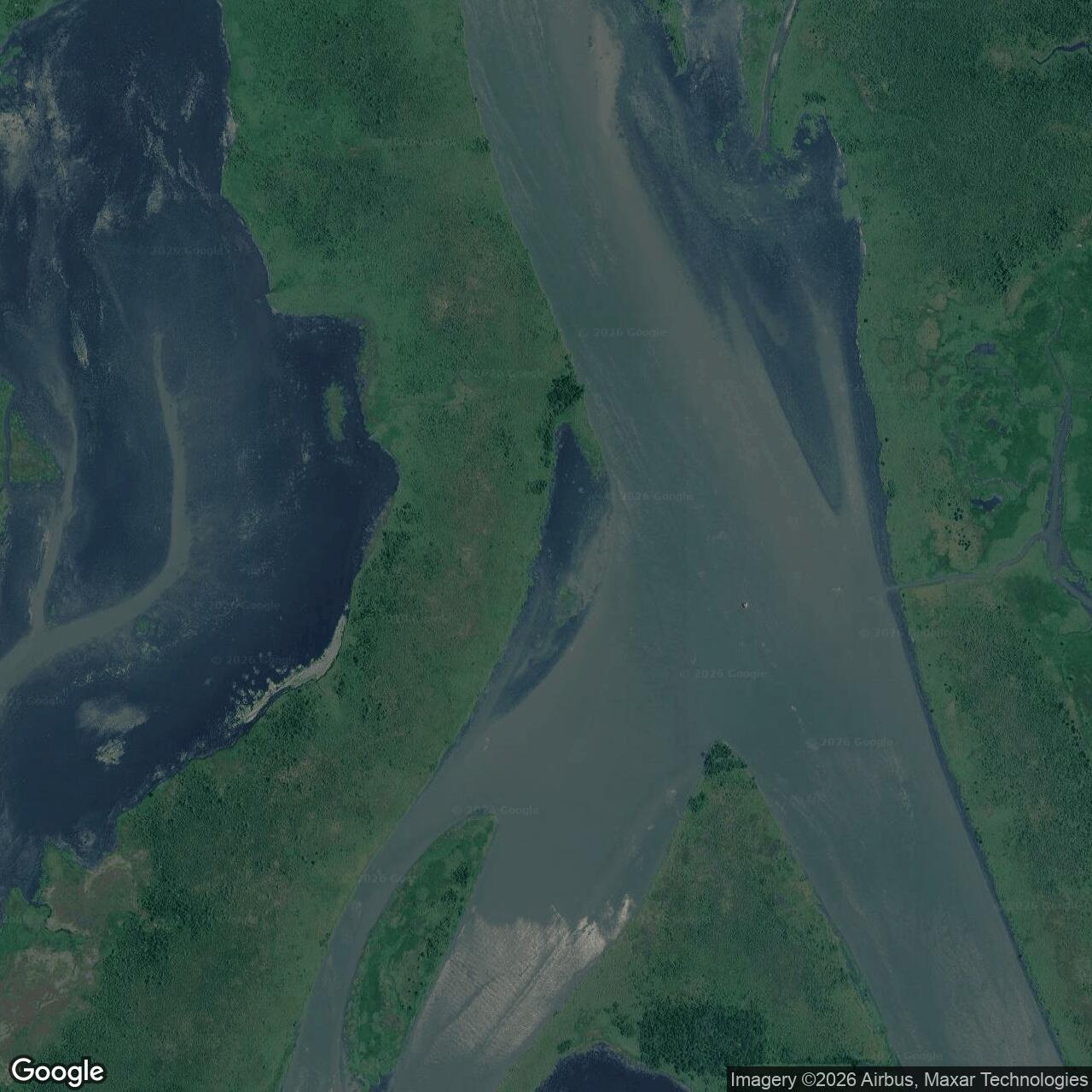
Forts Huger and Tracey / Apalachee Batteries, Spanish Fort Alabama
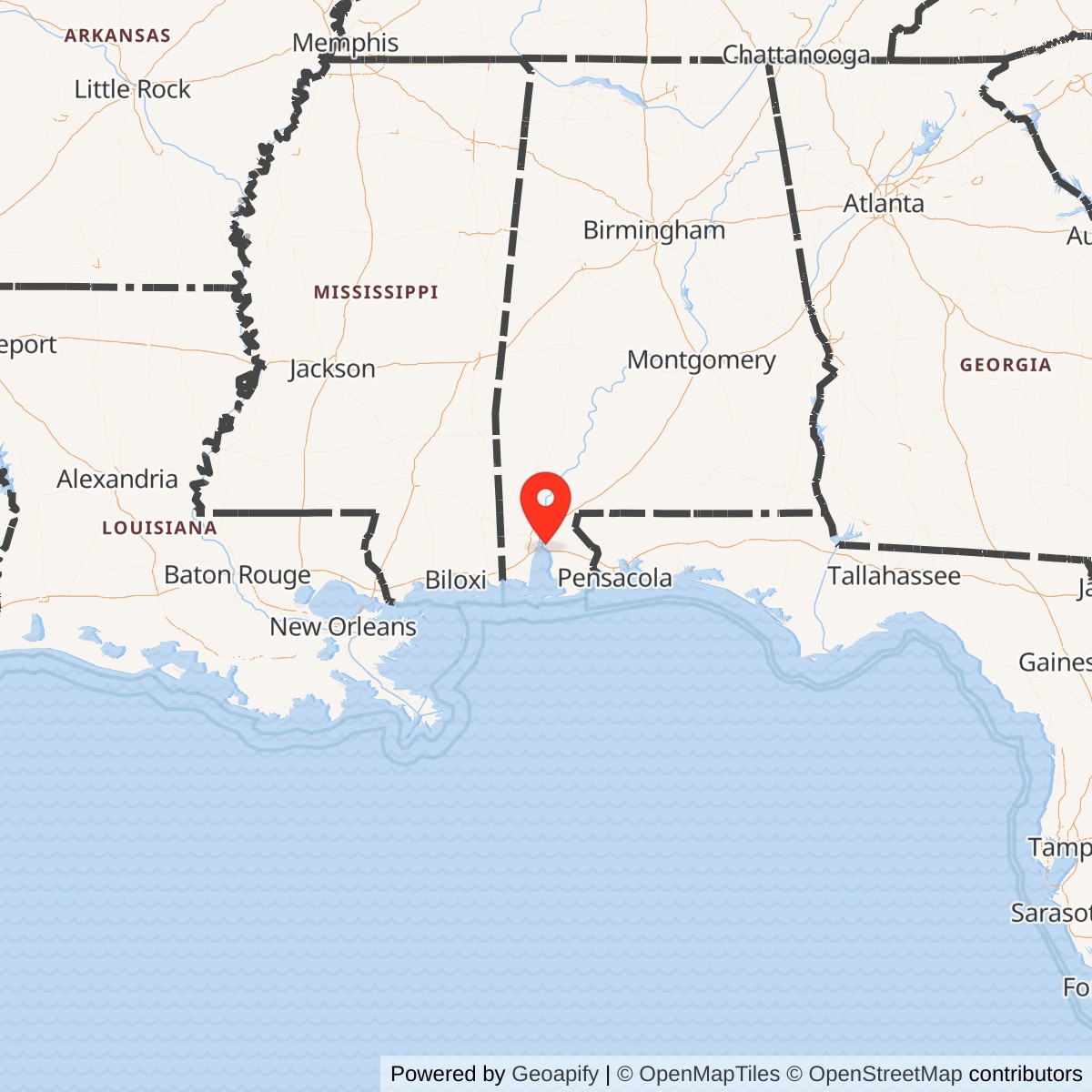
Longitude: -87.940278
Official Base Website: https://www.cityofspanishfort.com/history
Current Role: Fragmented Blakeley River / Apalachee River marsh and battlefield landscape; Fort Tracy remains reported historically as timber-piling debris visible at low tide, while Battery Huger is an archaeological/wetland site associated with the Spanish Fort and Mobile-Tensaw Delta battlefield landscape.
Forts Huger and Tracey were not parade-ground posts, stone coastal forts, or long-lived Army garrisons. They were mud, timber, piling, earthwork, artillery, and river geography turned into a last-ditch shield for Mobile. Their story belongs to the final spring of the Civil War, when the Confederacy still held Mobile after Farragut had closed Mobile Bay in 1864, and when Union forces under Major General Edward R. S. Canby advanced on the city from the east. Spanish Fort and Fort Blakeley usually carry the public memory of that campaign, but Huger and Tracey explain why those places mattered: the Confederates were not simply holding hilltop earthworks. They were trying to keep the Union Army and Navy from prying open the northern river approaches and turning Mobile from behind.
The paired batteries stood in the marsh-and-river world north of Spanish Fort. Battery Tracey, more commonly spelled Battery Tracy in many sources, began as Apalachee Battery and was renamed in May 1863 for Brigadier General Edward D. Tracy, an Alabama officer killed at Port Gibson, Mississippi. Battery Huger was associated with the Blakely Island / Gindrat Battery position. Together they covered the Blakeley, Apalachee, and Tensaw river approaches, where shallow water, swamp, piles, obstructions, and heavy guns could make a naval push upriver slow, dangerous, and costly. Their purpose was not to protect a town in isolation. Their purpose was to protect an operational route.
Union forces besieged and captured Spanish Fort from March 27 to April 8, 1865; assaulted and captured Fort Blakeley on April 9; then bombarded Forts Tracy and Huger on April 10. Confederate forces evacuated and destroyed the batteries on April 11, and Mobile surrendered the next day. Their military life was short, but their system role was important: they were the water-battery layer of the final eastern defenses of Mobile.
Mission Evolution
The mission of the Apalachee batteries grew out of Confederate concern that Mobile could be taken not only through the main bay entrance but through the maze of rivers, islands, and marshes north of Spanish Fort. After Union naval victories elsewhere and the capture of New Orleans, Mobile became one of the Confederacy's most important remaining Gulf ports. Confederate engineers responded by developing a layered defense that combined Fort Morgan, Fort Gaines, Fort Powell, batteries around Mobile, water obstructions, torpedoes, ironclads, floating batteries, and river works. In that system, the Apalachee and Blakely river batteries filled a precise niche: they watched the back channels.
The Alabama Historical Commission's Mobile River Shipwrecks Survey places Apalachee Battery / Battery Tracy and Blakely Island / Gindrat Battery / Battery Huger among the Confederate batteries renamed in 1863 as Mobile's defenses were expanded and maintained. That timing fits the broader logic of the war. By 1863 the Confederacy could no longer assume that distance, shallow water, or the lower bay forts alone would preserve Mobile. It had to harden the entire water network. Batteries Huger and Tracey were therefore not improvised in the final hours; they were part of a multi-year effort to turn Mobile's river approaches into a defended military environment.
By the time Canby began the 1865 campaign, the batteries had become part of Brigadier General St. John R. Liddell's eastern-shore defensive system. Army University Press describes Liddell's anchor as Old Spanish Fort, with Battery Tracy and Battery Huger built across from Spanish Fort and Bay Minette on piles driven into the marsh and covered with earthworks. Fort Blakeley stood farther north near the Apalachee-Tensaw junction. If Union gunboats could pass Spanish Fort and the two water batteries, they would still have to contend with Fort Blakeley before turning toward the Tensaw. This arrangement shows that Huger and Tracey were not isolated gun positions. They were connectors in a chain.
Their mission ended abruptly in April 1865. Once Spanish Fort fell on April 8 and Fort Blakeley fell on April 9, Huger and Tracey no longer had the same protective screen. Union forces began bombarding them on April 10. On April 11, Confederate troops abandoned and destroyed the positions rather than surrender them intact. Their final mission was therefore denial: if the batteries could no longer block the Union advance, they would at least be rendered unusable before Mobile itself was given up.
Operational Role
The operational job of Huger and Tracey was to make river movement dangerous. The Confederates understood that a Union move up the Blakeley River could threaten the rear and flank of Mobile's defenses. The water route was not a simple highway. It wound through shallow channels, islands, bayous, and marsh; but that was precisely why fixed artillery and obstructions could matter there. A gunboat forced into a known channel, slowed by piles or other underwater barriers, and exposed to heavy guns from nearby earthworks could be placed in a lethal position.
Battery Tracey's placement on the west bank of the Blakeley River gave it a direct role in blocking Union gunboats from moving upriver above Spanish Fort. Local and regional accounts describe its purpose in those terms. Battery Huger, about 1,000 yards away near the Blakeley-Apalachee junction, strengthened the same barrier and helped cover the bend and connected waterways. The two positions supported each other and formed part of the larger Spanish Fort defensive system rather than acting as independent forts with separate strategic missions.
Army University Press gives the most useful concise statement of their place in the 1865 order of battle. It notes that Battery Huger was close enough to the northern end of the Union lines to support Spanish Fort, while Battery Tracy protected the river bend from Spanish Fort north toward the Tensaw elbow. It also states that Spanish Fort's primary mission included protecting Batteries Huger and Tracy. That reverses the common casual assumption that the river batteries merely supported Spanish Fort. The relationship was mutual: Spanish Fort defended the batteries, and the batteries defended the water route that made Spanish Fort and Fort Blakeley operationally meaningful.
The artillery role was significant. Army University Press lists Battery Huger with an 8-inch Columbiad, two 6-inch Brooke rifles, two 7-inch rifles, a 10-inch rifle, two 12-pounder mortars, and two 12-pounder smoothbores. Battery Tracy is listed with five 7-inch guns. The same source identifies the 22nd Louisiana Heavy Artillery as supplying gunners for Spanish Fort and Batteries Tracy and Huger, with about 200 gunners at Battery Huger and about 120 at Battery Tracy. Those numbers indicate that the batteries were not token outposts. They were manned heavy-artillery positions integrated into the Confederate fire plan.
During the siege, the batteries helped preserve the Confederate exit and communications system. Spanish Fort's defenders maintained contact with Mobile and, as the campaign tightened, routes through the marsh and river environment became essential for movement, evacuation, and survival. After Spanish Fort was captured on April 8, many Confederate troops escaped toward Mobile or Fort Blakeley instead of being trapped in the earthworks. Huger and Tracey were part of that rear-area and riverine military landscape, even if they did not become the scene of a famous infantry assault.
The final operational episode came after Fort Blakeley fell on April 9. With the eastern defensive system broken, Union forces could turn attention to the remaining water batteries. Mobile Bay Magazine's timeline states that Union troops began bombarding Forts Tracy and Huger on April 10, 1865, calling them the last remaining forts of real consequence still garrisoned by Confederates at that point. On April 11, Confederate forces left Fort Tracy and blew it up on orders from Major General Dabney H. Maury. The abandonment of the batteries cleared the way for Mobile's surrender on April 12.
Site Design and Facilities
Forts Huger and Tracey were products of their environment. The marsh dictated the engineering. Army University Press states that Battery Tracy and Battery Huger were built on piles driven into the marsh and covered with earthworks. That construction method matters because it distinguishes the Apalachee batteries from masonry coastal forts such as Fort Morgan and Fort Gaines, and even from the better-known hilltop earthworks at Spanish Fort and Fort Blakeley. These were wetland fortifications built to turn unstable ground into artillery platforms.
Battery Tracey began as Apalachee Battery. It was positioned on the west bank of the Blakeley River, roughly three miles above Spanish Fort. A 1957 low-tide photograph discussed by Mobile Bay Magazine showed remnants interpreted as inner and outer semicircles of timber pilings on the riverbank. The survival of pilings rather than walls is exactly what should be expected from a fortification built in marsh conditions and later blown up. Its physical legacy is therefore archaeological and environmental rather than architectural.
Battery Huger appears in sources as a nearby companion work, associated with Blakely Island / Gindrat Battery and the Blakeley-Apalachee junction. Mobile Bay Magazine describes it as an earthwork fortification with four bastions facing downriver and open to the north. That description suggests a work built for a specific direction of fire rather than a closed all-around fort. It faced the water threat, and its open rear reflected both tactical assumptions and the difficulty of building large enclosed works in the swamp.
The paired batteries were not simply gun emplacements. They were part of a fortified water-obstruction system. The Alabama Historical Commission's Mobile River Shipwrecks Survey explains that Confederate defenses around Mobile included batteries, pile obstructions, sunken vessels, torpedoes, and channel barriers. Mobile's engineers used yellow pine pilings, chained rows of piles, capped or reinforced piles in some places, and other obstacles meant to slow or channel enemy vessels. Huger and Tracey sat within that same engineering culture. Their guns and the water obstacles were meant to work together: obstruction without artillery could be cleared; artillery without obstruction might be bypassed too quickly.
The batteries' likely support facilities were temporary and utilitarian: magazines, platforms, bombproofs or shelters, communications links, access routes, and causeways or treadways through the marsh. Accounts of Spanish Fort note the importance of communication and evacuation routes to Battery Tracy. In a landscape where ordinary roads were impossible, the physical plant of a fortification included bridges, footways, boats, landings, and controlled paths across wet ground. The batteries' engineering should therefore be understood as both vertical and horizontal: guns on pilings and earthworks above, movement routes and obstructions around them.
Units, Organizations, and Command Relationships
The Confederate defense of the eastern shore fell within Major General Dabney H. Maury's overall defense of Mobile and Brigadier General St. John R. Liddell's eastern-shore command. Liddell's system included Old Spanish Fort, the extensive Spanish Fort defensive lines, Batteries Huger and Tracey, and Fort Blakeley. Brigadier General Randall L. Gibson commanded the Spanish Fort garrison during the siege, and Army University Press treats the garrison strength as including the men at Batteries Tracy and Huger.
The key artillery organization was the 22nd Louisiana Heavy Artillery under Colonel Isaac W. Patton. Army University Press identifies that regiment as providing the artillery gunners for Spanish Fort and Batteries Tracy and Huger. The same source gives approximate numbers of 350 gunners at Spanish Fort, 200 at Battery Huger, and 120 at Battery Tracy. This creates a useful picture of scale. Huger had more gunners than Tracey and carried a mixed heavy armament; Tracey had five 7-inch guns and a more specialized role covering the river bend.
On the Union side, the relevant organization was Canby's Army of West Mississippi and the forces conducting the Mobile Campaign. NPS identifies Spanish Fort as battle AL005 in the Mobile Campaign, with Canby as the principal U.S. commander and Randall Gibson as the Confederate commander. Canby's XIII and XVI Corps moved along the eastern shore of Mobile Bay, forced Confederate troops into their defenses, and then concentrated on Spanish Fort and Fort Blakeley. Although Huger and Tracey were not the main infantry objective, their fields of fire and river-control mission made them part of the battlefield.
The U.S. Army relationship to the batteries was therefore not one of construction or long-term garrison. It was one of siege, bombardment, capture-by-collapse, and occupation of the defeated defensive system.
Role in the Wider Military Network
Huger and Tracey only make sense as part of a network. At the broadest level, they were components of Confederate Mobile's defense-in-depth. Fort Morgan and Fort Gaines guarded the main entrance to Mobile Bay. Fort Powell guarded Grant's Pass. Batteries, obstructions, torpedoes, and floating defenses guarded interior water routes. Spanish Fort and Fort Blakeley guarded the eastern land and river approaches. Huger and Tracey filled the gap between the hilltop earthworks and the navigable water network.
Within that system, the two batteries protected the rear of Spanish Fort and the approach toward the Tensaw. Army University Press states that if Union forces could make their way up the Blakeley River, they could turn the corner at the Tensaw and sail downriver toward Mobile. The batteries existed to make that operation risky. They were therefore not minor outworks but anti-mobility nodes. Their guns were meant to keep Union naval power from converting local success at Spanish Fort into immediate operational access to Mobile's rear.
They also illustrate the late-war interaction between land and naval warfare. The Mobile Campaign was not merely a siege by infantry or a naval operation by gunboats. It was an integrated campaign in which infantry, artillery, engineers, naval vessels, water obstacles, marsh roads, and signal communications all mattered. Huger and Tracey sat at that intersection. They were built for guns, placed for water control, protected by infantry lines, and neutralized only after the land defenses around them had collapsed.
Current Status
The batteries are closed as military sites and no longer exist as standing fortifications. Fort Tracy's location is identifiable through historical accounts placing it on the west bank of the Blakeley River. Mobile Bay Magazine describes remaining debris near the Apalachee River close to the Blakeley River and references a 1957 low-tide photograph showing semicircular timber pilings. That is the kind of survival one would expect from a marsh work built on piles and then destroyed.
Battery Huger's exact visible condition is less straightforward in public sources. It is generally described as near the intersection of the Blakeley and Apalachee rivers, about 1,000 yards from Fort Tracy, and as an earthwork fortification with four bastions facing downriver and open to the north. It should be treated as an archaeological and wetland landscape rather than a visitor-ready fort site. Some modern references place related remains or interpretive material within the broader Spanish Fort / Mobile-Tensaw Delta / Blakeley battlefield context, but the compact fort footprint is not preserved in the same way as Fort Morgan, Fort Gaines, or sections of Fort Blakeley.
Chronology
- 1862 Confederate engineers and authorities began expanding Mobile's water defenses after Union pressure on the Gulf Coast and the lower Mississippi made the city's vulnerability more apparent.
- 1863 Apalachee Battery was built by Army engineer Danville Leadbetter, according to Mobile Bay Magazine's summary of Fort Tracy history.
- 1863-05 Apalachee Battery was renamed Battery Tracy / Fort Tracy in honor of Brigadier General Edward D. Tracy, who had been killed at Port Gibson, Mississippi.
- 1863-1864 Confederate defenses around Mobile were expanded and maintained. The Alabama Historical Commission's Mobile River Shipwrecks Survey identifies Apalachee Battery / Battery Tracy and Blakely Island / Gindrat Battery / Battery Huger among the renamed defensive positions.
- 1864-08 Union naval forces under Rear Admiral David G. Farragut closed Mobile Bay to blockade-running traffic through the Battle of Mobile Bay, but the city of Mobile remained in Confederate hands.
- 1865-03 By the beginning of Canby's Mobile Campaign, Army University Press states that the defenses at Spanish Fort, Fort Blakeley, Battery Tracy, and Battery Huger were complete.
- 1865-03-27 Canby's forces rendezvoused at Danley's Ferry and began the siege of Spanish Fort.
- 1865-04-01 Union forces had enveloped Spanish Fort, according to the NPS battle summary.
- 1865-04-08 Spanish Fort was captured by Union forces; most of Randall Gibson's Confederate force escaped toward Mobile.
- 1865-04-09 Fort Blakeley fell to Union assault, breaking the last major eastern-shore Confederate position protecting Mobile from that direction.
- 1865-04-10 Union troops began bombarding Forts Tracy and Huger, then among the last significant Confederate batteries still garrisoned in the immediate eastern Mobile system.
- 1865-04-11 Confederate troops evacuated and destroyed Fort Tracy / Battery Tracy; the Huger/Tracey river-battery system ceased to function as a Confederate military position.
- 1865-04-12 Mobile surrendered to Union military forces without a fight.
- 1957 A low-tide photograph later discussed by Mobile Bay Magazine showed timber-piling remnants of Fort Tracy on the riverbank.
- 2009-2011 The NPS/CWSAC Alabama battlefield update identified Spanish Fort as a 3,742.16-acre study area and noted that the study/core areas had been expanded to include the fields of fire from Forts Tracy and Huger.
- Present The former battery sites are closed, fragmented, and primarily archaeological/wetland battlefield landscapes within the broader Spanish Fort, Blakeley River, Apalachee River, and Mobile-Tensaw Delta historical context.