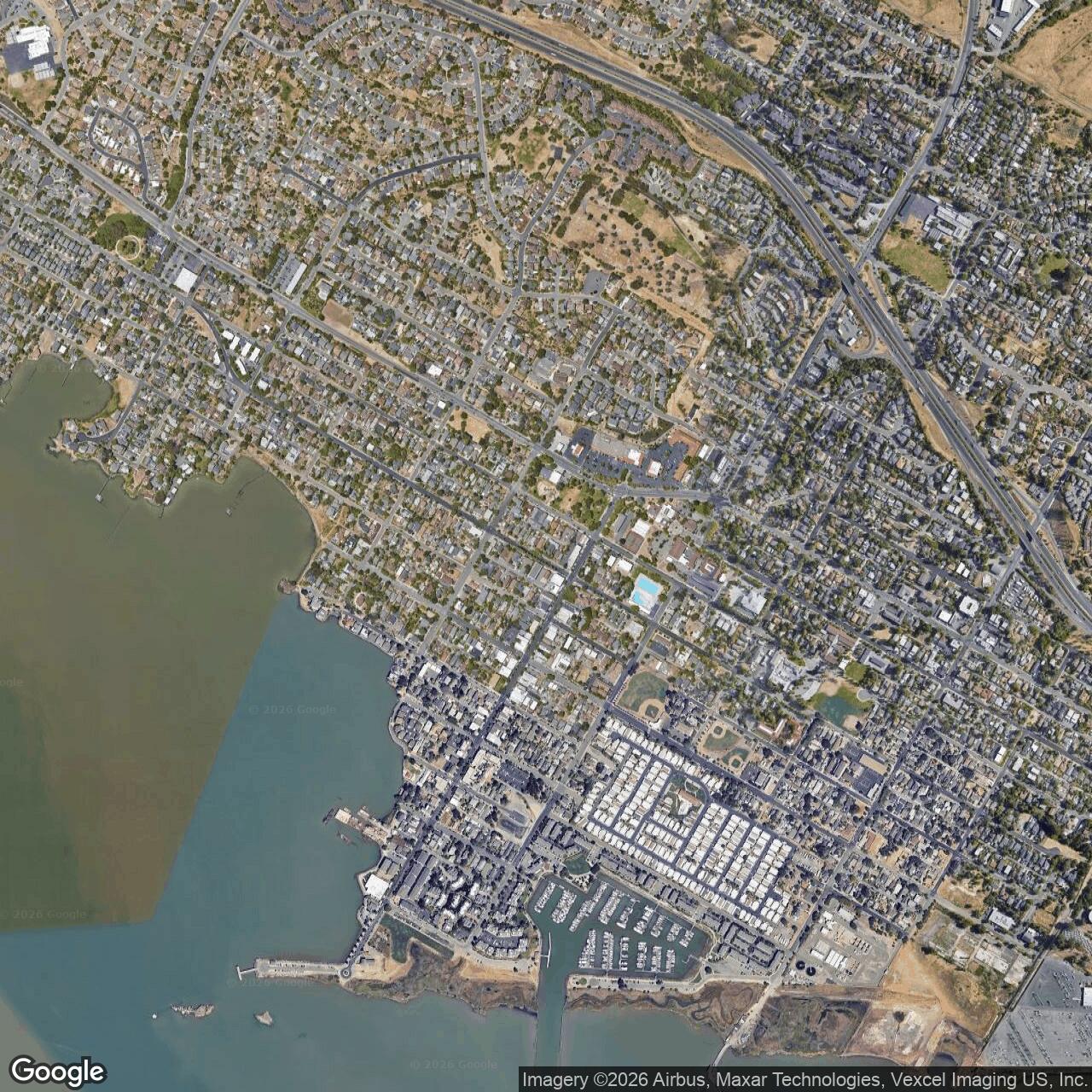
Benicia Arsenal Army Base, Benicia California
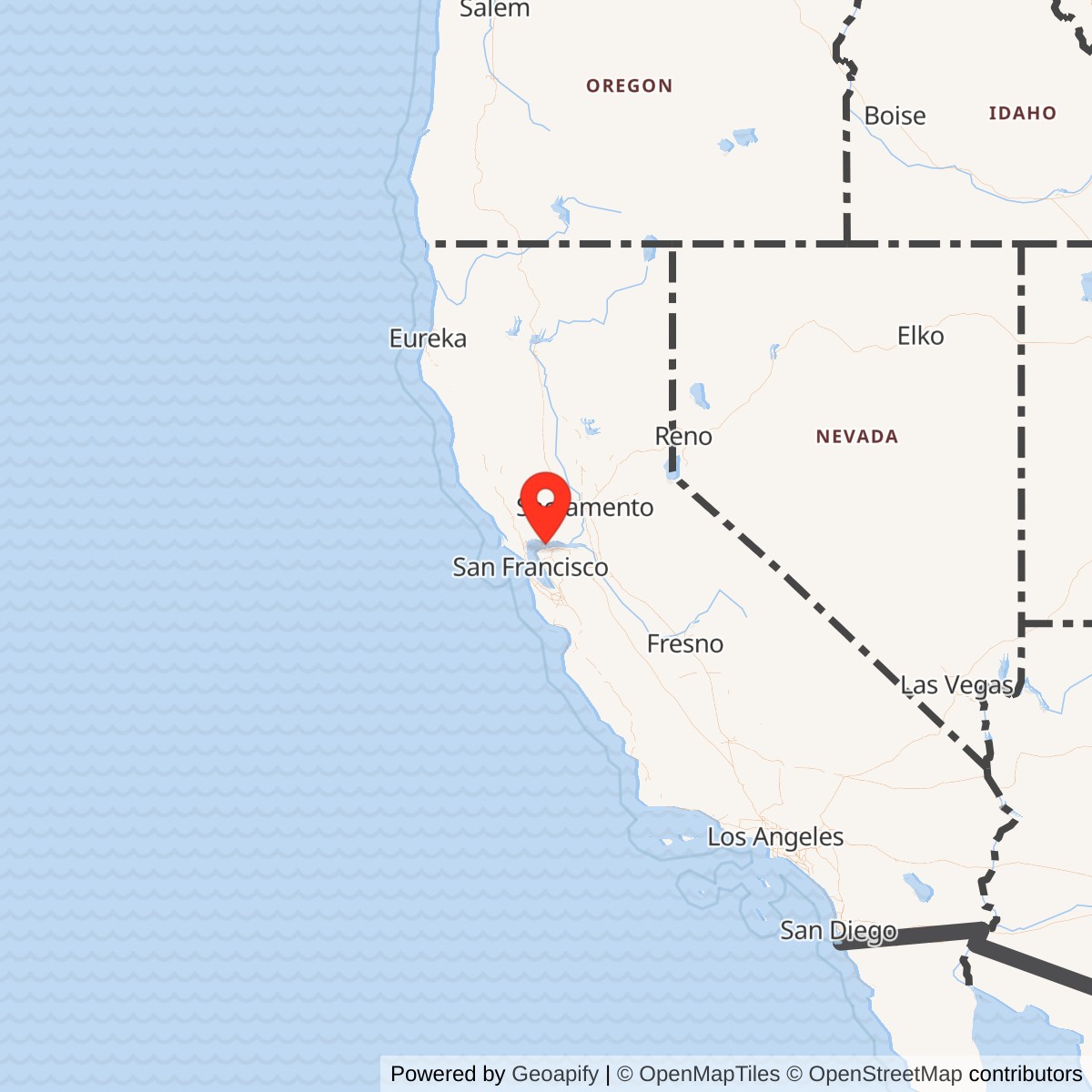
Longitude: -122.1575
Official Base Website: https://www.nps.gov/places/benicia-arsenal.htm
Current Role: Benicia Arsenal Historic District; Museum of History Benicia; city-owned historic buildings; studios, offices, commercial/light industrial reuse; Benicia Army Cemetery under VA stewardship
Benicia Arsenal was the U.S. Army's principal ordnance installation on the Pacific Coast for more than a century. It stood at Army Point in Benicia, where the Carquinez Strait joins the inland Sacramento-San Joaquin river system to San Francisco Bay. That location gave the Army something rare in early California: a sheltered waterfront site with deep-water access, enough land for barracks, magazines, workshops, storage, and later rail and wharf facilities, and a position close to San Francisco without being inside the crowded city itself. The site was part military post, part ordnance depot, part arsenal, part port facility, and part industrial repair plant.
The installation grew out of the Army's first permanent military presence at Benicia. Benicia Barracks was established in 1849, shortly after the United States took possession of California, and the ordnance function followed in 1851 when Captain Charles P. Stone and a small detachment established what was first known as the California Ordnance Depot. The installation was soon renamed Benicia Arsenal. The Army used the reservation as a western supply and repair point, a garrisoned post, a Civil War staging area, a frontier ordnance distribution center, a World War I and World War II supply node, a Korean War logistics and rebuild depot, and finally a declining ordnance installation whose remaining missions were transferred elsewhere before closure.
From the 1850s through the early Cold War, it served nearly every major Army era on the Pacific Coast. It supplied ordnance for frontier posts, supported Union forces during the Civil War, furnished Army installations across the western United States during World War I, rushed ammunition and equipment to West Coast ports after Pearl Harbor, supported Pacific operations in World War II, and expanded again during the Korean War. Its closure in the 1960s ended one of the oldest Army industrial landscapes in California, but the historic district, the Benicia Army Cemetery, the Museum of History Benicia, and surviving buildings such as the Camel Barns, powder magazines, officers' quarters, guardhouse, hospital, and Clocktower preserve much of the Army story on the ground.
Mission Evolution
The earliest mission was simply to anchor U.S. Army authority in northern California. In 1849 two infantry companies established Benicia Barracks on the reservation, and the post became headquarters for the Army's Pacific Division from 1849 to 1857. The barracks gave the Army a garrison presence; the ordnance depot gave it the material base needed to arm and supply far-flung posts. The site's initial reserve was associated with a 345-acre transfer east of the city of Benicia, adjacent to the Carquinez Strait. Within that landscape, the barracks occupied the northwest portion, while quartermaster, commissary, and ordnance functions developed closer to the water and the developing industrial area.
In 1851 the ordnance mission became explicit. Captain Charles P. Stone, with 21 enlisted men, established the Benicia ordnance depot in August 1851. The first building was a small wooden powder magazine erected in September 1851. The installation was first called the California Ordnance Depot, then Benicia Arsenal Depot, and finally Benicia Arsenal in 1852. Between 1853 and 1863 Congress authorized major spending for the post, and the Army built a group of stone and frame buildings that gave the arsenal its most enduring architectural character. These included magazines, shops, a hospital, a guardhouse, and the large storehouse later known as the Clocktower.
The Army's West Coast mission shaped Benicia from the beginning. California had no mature federal military infrastructure when the United States took control. Inland posts, coastal defense points, frontier garrisons, and expeditionary columns all needed weapons, ammunition, tools, saddles, harness, repair capacity, and distribution support. Benicia filled that role. It became a place where ordnance was stored, repaired, issued, and shipped outward. During peacetime the installation ran with a smaller staff; during crises it expanded rapidly. That rhythm of contraction and expansion remained the basic pattern of Benicia Arsenal for the rest of its life.
During the Civil War, Benicia Arsenal became a key Union staging and supply point in the Far West. The post supported troops from the West and shipped ordnance to Atlantic Coast arsenals. Ships bound for Atlantic ports came into the bay system and loaded ordnance and troops. Arsenal shops repaired guns and carriages, made ammunition boxes and chests, repaired saddles and bridles, made holsters, and packed ammunition. By the end of the war, Benicia had become the ordnance distribution center for the West Coast. Its role was not battlefield command; it was the ability to keep weapons, ammunition, and equipment moving through a continental war system from the Pacific edge.
After the Civil War, the arsenal remained important as an ordnance and repair installation while the garrison role gradually faded. The installation stayed garrisoned until 1898, when troops were assigned to duty in the Philippines during the Spanish-American War. This change reflected a broader transition. Benicia was no longer primarily a barracks post or headquarters site; it was increasingly an ordnance and industrial support installation. Its location, magazines, shops, rail connections, waterfront, and labor force mattered more than parade-ground troop strength.
World War I revived the arsenal's western logistics role. Benicia supported large Army installations across the western states and supplied ordnance material for American expeditionary forces in Siberia. This eastern Siberia connection is important because it shows the arsenal's Pacific orientation. Benicia was not just supplying California posts; it was part of a trans-Pacific military logistics system during a period when the Army's expeditionary reach extended across the Pacific and into Russia.
World War II produced the largest transformation in the installation's history. The arsenal became a principal supply point for campaign areas throughout the Pacific. Physical expansion in 1941 added 1,847 acres and more than 200 structures, including a deep-water concrete wharf capable of docking four Liberty-ship transports at one time, 109 buried concrete ammunition igloos, warehouses, a vehicle-rebuilding shop, a reservoir, and expanded rail facilities. The Army also leased additional land in 1944 for explosives holding, artillery testing, and ammunition demolition. Benicia's mission was no longer only storage and repair. It became a high-volume filler, staging, shipping, repair, and distribution plant tied directly to the ports of San Francisco, Los Angeles, and Seattle.
The Korean War produced one last major expansion. After World War II the workforce had contracted, but the Korean conflict caused civilian employment to rise to more than 6,700 workers in 1951. Benicia still held enormous quantities of World War II materiel, much of it stored in the open because warehouse space was insufficient, and the arsenal handled thousands of railroad cars of supplies annually. This late surge confirmed that the Army still needed the depot in a major mobilization. Yet the Korean War also marked the beginning of the end. After 1953, activity dwindled, guided missile and calibration work could not sustain the full installation, and the Army began transferring missions away.
In 1961 the Department of Defense announced plans to deactivate the arsenal and transfer or close out its mission, with Tooele Ordnance Depot in Utah receiving key functions. By April 1962, Benicia had lost its distribution-depot mission and had become a reserve depot to Tooele Army Depot. Guided missile materiel rebuild, fire-control and antiaircraft rebuild operations, and test-equipment overhaul and calibration were phased out or moved. The Benicia Arsenal was deactivated in 1963 and closed in 1964. In 1965 the Department of Defense transferred ownership of much of the former property to the City of Benicia, beginning the modern era of historic preservation, industrial reuse, art studios, museum use, and environmental cleanup.
Operational Role
Benicia Arsenal's operational role was practical and material. It turned military demand into stored, repaired, packed, issued, and transported ordnance. In the nineteenth century this meant weapons, ammunition, gun carriages, saddles, bridles, holsters, boxes, chests, and related equipment for western posts and campaigns. In the twentieth century it meant a much larger industrial workload: ammunition, small arms, artillery parts, fire-control instruments, vehicles, tank and weapon parts, tools, optics, watches, and the constant problem of moving supplies between rail, storage, shops, magazines, and ports.
During the Civil War, Benicia's shops and storage functions became especially important because the Pacific Coast was physically distant from the major eastern arsenals. The Army could not simply depend on quick overland shipments from the Atlantic seaboard. Benicia gave the Union a western ordnance base able to repair equipment, pack ammunition, and supply troops or ships from the Pacific side of the continent. Its role was one of connective tissue: it connected California, the Pacific Coast posts, vessels moving out through the bay, and the national ordnance system.
The installation's operational character was also shaped by architecture. The early stone buildings were not ornamental extras. Powder magazines, shops, storehouses, and the Clocktower reflected the need to store explosives safely, protect valuable materiel, and organize a durable Army industrial site in a region where federal infrastructure was still new. The surviving sandstone buildings are among the most visible evidence that Benicia was intended as a serious long-term ordnance installation, not a temporary camp.
The Army's Camel Corps episode gives Benicia a distinctive place in military experimentation. In the 1850s Secretary of War Jefferson Davis supported the idea of using camels as military pack animals in western desert terrain. The experiment was brief, and the Camel Corps was disbanded in 1863, but Benicia Arsenal became associated with stabling part of the camel force. The Camel Barns, built in 1855, survive and now form part of the Museum of History Benicia. The episode was not the arsenal's main mission, but it shows how Benicia served as a logistical and experimental outpost for the Army's effort to operate across the arid West.
World War II revealed the arsenal at peak tempo. Within 24 hours after the attack on Pearl Harbor, 125 truck convoys were loaded and dispatched from Benicia, exhausting its stocks of ammunition, small arms, and high explosives. Some early convoys went to McClellan Field near Sacramento; others went to forts, airfields, and antiaircraft emplacements. This immediate post-Pearl Harbor movement demonstrates the value of the arsenal's location and inventory. The West Coast suddenly appeared vulnerable, and Benicia could move ordnance quickly into the regional defense network.
The arsenal's wartime mission then turned into sustained Pacific supply. It supplied weapons ranging from small arms to mobile antiaircraft artillery and equipment from fire-control instruments to tank chassis. It held and stored all classes of ammunition and explosives for the Port of San Francisco, including bombs up to 500 pounds. In 1944 landing vehicles tracked, the amphibious vehicles so important to Pacific island campaigns, were added to the arsenal's supply and repair mission. The installation was also connected to one of the war's most famous operations: it supplied munitions for Lieutenant Colonel James H. Doolittle's April 18, 1942 raid on Tokyo, launched from USS Hornet.
The World War II workforce became a major operational system in itself. Before the war the arsenal had only a small civilian workforce. By October 1942 it employed more than 4,500 civilians, and women made up nearly half of the civilian employee force. In 1943, despite the rapid labor expansion, 500 boxcars of high explosives were backed up on the arsenal's tracks waiting to be unloaded. Troops from the Ordnance Maintenance Group at Camp Stoneman assisted while waiting for sailing orders. In 1944 the labor shortage led the arsenal to use 150 young men from the California Youth Authority, Italian service personnel, and German prisoners of war as temporary labor. That mixture of civilians, soldiers, women workers, youth authority labor, and POW labor makes Benicia a full home-front industrial site, not merely a military storage point.
After World War II, Benicia shifted from wartime throughput to rollback, reconditioning, salvage, and Korean War support. Massive quantities of equipment returned from overseas or remained from wartime stockpiles. The arsenal had to store, sort, rebuild, calibrate, dispose, or redistribute materiel. When the Korean War broke out, more than 146,000 tons of supplies from World War II were still stacked in the open because of lack of warehouse space. By 1952 roughly 3,200 boxcars of supplies were arriving each year. The Korean War did not create a new kind of arsenal; it reactivated the same logic that had defined Benicia for a century: crisis produced enormous demand for storage, repair, and distribution.
The final operational missions were narrower. During the closure period the arsenal handled calibration and maintenance of test equipment for barometers, pressure gauges, microwave equipment, and other measurement standards. It maintained the only primary reference standards laboratory of the Ordnance Corps west of the Mississippi River. The laboratory certified physical and electrical measurement standards for western ordnance depots, White Sands Proving Ground, the San Francisco and Los Angeles Ordnance Districts, and agencies in Alaska, Hawaii, Okinawa, and Korea. Benicia's last years therefore moved away from mass stockpiles and toward technical support, missile-era calibration, and reserve-depot functions before those missions were moved elsewhere.
Units, Organizations, and Systems
Benicia Arsenal was principally an Ordnance Department and later Ordnance Corps installation. Its story is therefore less about combat units permanently stationed there and more about the organizations and systems that depended on its storage, repair, and distribution capacity. The early California Ordnance Depot and later Benicia Arsenal served the Army of the Pacific, the Department and Division structures on the West Coast, western frontier posts, and, eventually, a national ordnance system that linked arsenals, depots, ports, railroads, and overseas theaters.
Benicia Barracks was the companion garrison identity. From 1849 to 1857 the barracks served as headquarters for the U.S. Army's Pacific Division. It housed infantry and artillery forces at different times, including the early garrison that occupied the post in 1849. Although the barracks and arsenal can be discussed separately, they were part of the same military reservation and landscape. The barracks supplied the troop and headquarters function; the arsenal supplied the ordnance function. Over time the ordnance function became dominant, but the barracks history explains why Benicia became one of the Army's foundational California posts.
The installation also belonged to the Army's larger Pacific logistics system. During the Civil War it supported Union troops from the West and supplied ordnance shipments eastward. During World War I it supported large Army installations throughout the western states and supplied the American expedition to Siberia. During World War II it supported Pacific theaters through the ports of San Francisco, Los Angeles, and Seattle. During the Korean War it resumed a high-volume storage and distribution role. Benicia's value was not that it commanded these theaters, but that it connected materiel, rail, waterfront, repair capacity, and port throughput.
World War II linked Benicia to several labor and military-support groups. Civilian employees formed the core workforce, and women became a major part of that force. Soldiers from Camp Stoneman's ordnance maintenance community assisted with unloading during the 1943 backlog. Italian service personnel and German prisoners of war were used as supplemental labor in 1944. The arsenal's cemetery and historical records also preserve evidence of foreign personnel connected to the World War II-era installation landscape. These groups illustrate how an ordnance arsenal could become a mixed labor system under wartime pressure.
The arsenal's late technical role tied it to the missile and precision-instrument era. By the late 1950s and early 1960s, Benicia supported guided missile materiel and calibration missions as older mass-distribution functions declined. Its primary standards laboratory served ordnance depots and missile-related agencies across the western defense network. This did not make Benicia a missile launch base or Nike battery, but it did make the arsenal part of the Army's missile-age support system before its work was transferred to Tooele and other installations.
Facilities and Physical Layout
Benicia Arsenal's layout reflected three overlapping needs: garrison life, ordnance storage, and industrial logistics. The initial reservation placed the barracks in the northwest portion, while quartermaster and commissary depots and the ordnance depot occupied areas closer to the Carquinez Strait. This arrangement used the waterfront for supply and movement while keeping barracks, shops, and magazines within a controlled military landscape.
The early architecture was unusually durable for a western Army post. By 1859 the arsenal had several sandstone structures built from native material quarried on-site: a hospital, powder magazines, a guardhouse, shops, and a three-story storehouse known as the Clocktower. The Clocktower stood near the southeastern waterfront and was designed with a crenellated roofline, battlements, howitzer apertures, loophole windows, and lookout towers. The surviving stone buildings help distinguish Benicia from temporary western posts that left little architectural evidence.
The Camel Barns are another major surviving feature. Built in 1855, they were associated with the Army's camel experiment and later became part of the Museum of History Benicia. Along with powder magazines, officers' quarters, the guardhouse, post hospital, cemetery, and Clocktower, the Camel Barns preserve the core of the nineteenth-century arsenal landscape. The Benicia Arsenal Historic District is listed in the National Register of Historic Places, and California's Office of Historic Preservation identifies it as California Historical Landmark No. 176.
World War II overlaid a much larger industrial plant on the older arsenal. The Army added 1,847 acres in 1941 and built more than 200 structures. The new work included 109 concrete igloos buried in the hills for ammunition storage, a deep-water wharf for Liberty ship transports, a large vehicle-rebuilding shop, warehouses, reservoir improvements, and extended rail facilities. The arsenal's geography helped make this possible. Its hills and open land could absorb ammunition storage, while its waterfront and rail connections supported movement to and from major ports.
The historic district that survives today is fragmented because postwar industrial development, freeway construction, demolished buildings, refinery infrastructure, and port use changed the setting. National Register documentation describes the significant resources as clusters and individual buildings rather than one perfectly intact military landscape. This fragmentation is part of the site's history. Benicia did not become a frozen museum after closure; it became a reused industrial, commercial, civic, and artistic landscape where significant Army buildings survive among later intrusions.
The cemetery is a distinct historic component. The Benicia Army Cemetery is the oldest cemetery in the Pacific states and served the Benicia Barracks. It contains 212 interments dating from 1849 to 1958, including U.S. military personnel, civilians, unknowns, foreign personnel including German and Italian POWs, and three military service dogs. The cemetery is part of the National Register-listed Benicia Arsenal-Benicia Barracks Historic District and remains one of the clearest surviving markers of the installation's long military life.
System-Level Context
Benicia Arsenal was a node in the Army's national arsenal and depot system. In the nineteenth century, official planning placed Benicia alongside major arsenals such as Watervliet, Allegheny, Washington, and St. Louis as installations that supported different regions of the country. Benicia was the Pacific-region counterpart. That system context matters because California's distance from eastern manufacturing centers made a West Coast ordnance base strategically necessary. Benicia reduced the Army's dependence on long, slow, vulnerable supply lines from the Atlantic side.
The arsenal also belonged to the system of western expansion and frontier military control. Posts in California, Oregon, Nevada, Arizona, and the wider Pacific region depended on supplies and ordnance. Indian Wars, frontier patrols, coastal defenses, and expeditionary columns all required a logistical base. Benicia's involvement in the Army's camel experiment fits this system. The camel program was an attempt to solve the logistical problem of movement across arid western terrain, and Benicia was one of the places where that experiment touched Army infrastructure.
During the Civil War, the arsenal's system role changed but did not disappear. It supplied western troops and shipped ordnance eastward, linking the Pacific Coast to the Union war effort. During World War I, it supported western installations and Siberian expeditionary needs. During World War II, it became part of the West Coast and Pacific Theater logistics system, tied to the ports of San Francisco, Los Angeles, and Seattle. The arsenal's mission was always larger than the city of Benicia; it served whatever military network the Army needed to sustain from the Pacific edge.
The postwar and Korean War periods placed Benicia inside the Cold War ordnance and depot system. Its workers handled returning materiel, stored massive quantities of supplies, rebuilt vehicles and equipment, and later supported guided missile and calibration missions. The ultimate transfer of its functions to Tooele reflected a changing national defense-industrial geography. As transportation, depot specialization, and the Army's missile-age needs evolved, Benicia's waterfront, age, urban encroachment, and fragmented layout made it less attractive as a long-term ordnance center.
Environmental and land-reuse history forms another system context. Because Benicia Arsenal was transferred from federal control before 1986, portions of the site became eligible for the Formerly Used Defense Sites program. U.S. Army Corps of Engineers and California environmental records document ordnance and explosives removal actions at the former arsenal, including a 2001 project in several sectors where ordnance and explosives would be cleared or destroyed as a risk-reduction measure. This is the long afterlife of an ordnance installation: even after closure, the site remained part of federal and state environmental-response systems.
Closure and Current Status
The decision to close Benicia Arsenal came after its Korean War surge ended and its remaining missions declined. On March 30, 1961, the Department of Defense announced plans to deactivate the arsenal and transfer or close out its mission to Tooele Ordnance Depot. Closure was set for March 30, 1964. By 1962, much of the phase-out plan had been completed, the distribution-depot mission had been lost, the guided missile and rebuild missions were being transferred, and the workforce had fallen sharply.
The arsenal was deactivated in 1963 and closed in 1964. The City of Benicia states that ownership was transferred from the Department of Defense to the city in 1965. Since then, the former arsenal has become a mixed historic, civic, commercial, industrial, port, museum, and arts landscape. The city retains several of the most historically important structures, including the Commanding Officer's Quarters, the Clocktower building, the Camel Barns, and an original powder magazine. The Museum of History Benicia occupies original arsenal buildings and interprets the military history of the site.
The current Benicia Arsenal is not an active Army installation. It is a historic district and reused former defense site. Older buildings stand alongside studios, offices, commercial spaces, light industrial activities, port facilities, road infrastructure, and refinery-related development. The Benicia Army Cemetery remains under federal cemetery stewardship. The former arsenal's post-closure story is therefore split among preservation, reuse, environmental response, and local economic development.
Chronology
- 1847 Land east of the city of Benicia was associated with the creation of a military reserve at Army Point.
- 1849-04-30 U.S. Army troops first occupied the post near Benicia; Benicia Barracks developed on the reservation.
- 1849-1857 Benicia Barracks served as headquarters for the U.S. Army's Pacific Division.
- 1851-08 Captain Charles P. Stone and 21 enlisted men established the California Ordnance Depot at Benicia.
- 1851-09 The first arsenal building, a small wooden powder magazine, was erected.
- 1852 The installation's designation changed from California Ordnance Depot to Benicia Arsenal.
- 1853-1863 Congress authorized major funding for the establishment, and the Army built stone and frame buildings that became the core of the arsenal landscape.
- 1855 The Camel Barns were built; they later became associated with the Army's Camel Corps experiment and now house Museum of History Benicia functions.
- 1859 The arsenal had a growing group of sandstone structures, including magazines, shops, hospital, guardhouse, and the Clocktower storehouse.
- 1861-1865 During the Civil War, Benicia Arsenal supplied western Union troops, shipped ordnance to Atlantic Coast arsenals, and repaired and packed Army equipment.
- 1862 President Abraham Lincoln set aside the arsenal lands for military purposes after land-title issues were resolved.
- 1863 The Army's Camel Corps experiment was disbanded.
- 1898 The installation's garrison role ended as troops were assigned to duty in the Philippines during the Spanish-American War.
- 1903 Powder Magazine No. 5 and related late arsenal magazine construction represented the post-Spanish-American War expansion of the arsenal's powder-storage landscape.
- 1917-1918 During World War I, Benicia Arsenal supported large Army installations across the western states and supplied ordnance material for U.S. expeditionary forces in Siberia.
- 1941 World War II expansion added 1,847 acres and more than 200 structures, including buried ammunition igloos, a deep-water wharf, warehouses, expanded rail facilities, and repair shops.
- 1941-12-08 to 1941-12-09 Within 24 hours after the attack on Pearl Harbor, 125 truck convoys were loaded and dispatched from Benicia Arsenal, exhausting its ammunition, small-arms, and high-explosive stocks.
- 1942-04-18 The Doolittle Raid launched from USS Hornet; Benicia Arsenal supplied munitions associated with the raid.
- 1942-10 The arsenal's civilian payroll had increased to more than 4,500 workers.
- 1943 At one point, 500 boxcars of high explosives were backed up on the arsenal's railroad tracks awaiting unloading.
- 1944 A final wartime land lease at the northern end of the arsenal supported explosives holding, artillery testing, and ammunition demolition; Italian service personnel, German POWs, and California Youth Authority labor supplemented the workforce.
- 1944 Landing vehicles tracked were added to the arsenal's supply and repair mission, linking Benicia directly to amphibious operations in the Pacific.
- 1950-1953 The Korean War produced a major workload surge; civilian employment reached more than 6,700 in 1951.
- 1952 Approximately 3,200 boxcars of supplies were arriving each year during the Korean War support surge.
- 1953 After the Korean War ended, arsenal activity began to decline rapidly.
- 1961-03-30 The Department of Defense announced plans to deactivate Benicia Arsenal and transfer or close out its mission, with Tooele Ordnance Depot receiving key functions.
- 1962 By April, Benicia had lost its distribution-depot mission and become a reserve depot to Tooele Army Depot; guided missile and rebuild functions were being phased out or transferred.
- 1963 Benicia Arsenal was deactivated.
- 1964 The arsenal closed as an Army installation.
- 1965 The Department of Defense transferred ownership of much of the former arsenal property to the City of Benicia.
- 1976-11-07 Benicia Arsenal was listed in the National Register of Historic Places.
- 2001 California environmental review documented U.S. Army Corps of Engineers ordnance and explosives removal actions at sectors of the former arsenal.
- Present The former Benicia Arsenal is a historic district and mixed-use landscape with museums, city-owned historic structures, studios, offices, commercial and light-industrial reuse, port and refinery-adjacent development, a VA-administered historic Army cemetery, and continuing historical and environmental stewardship.