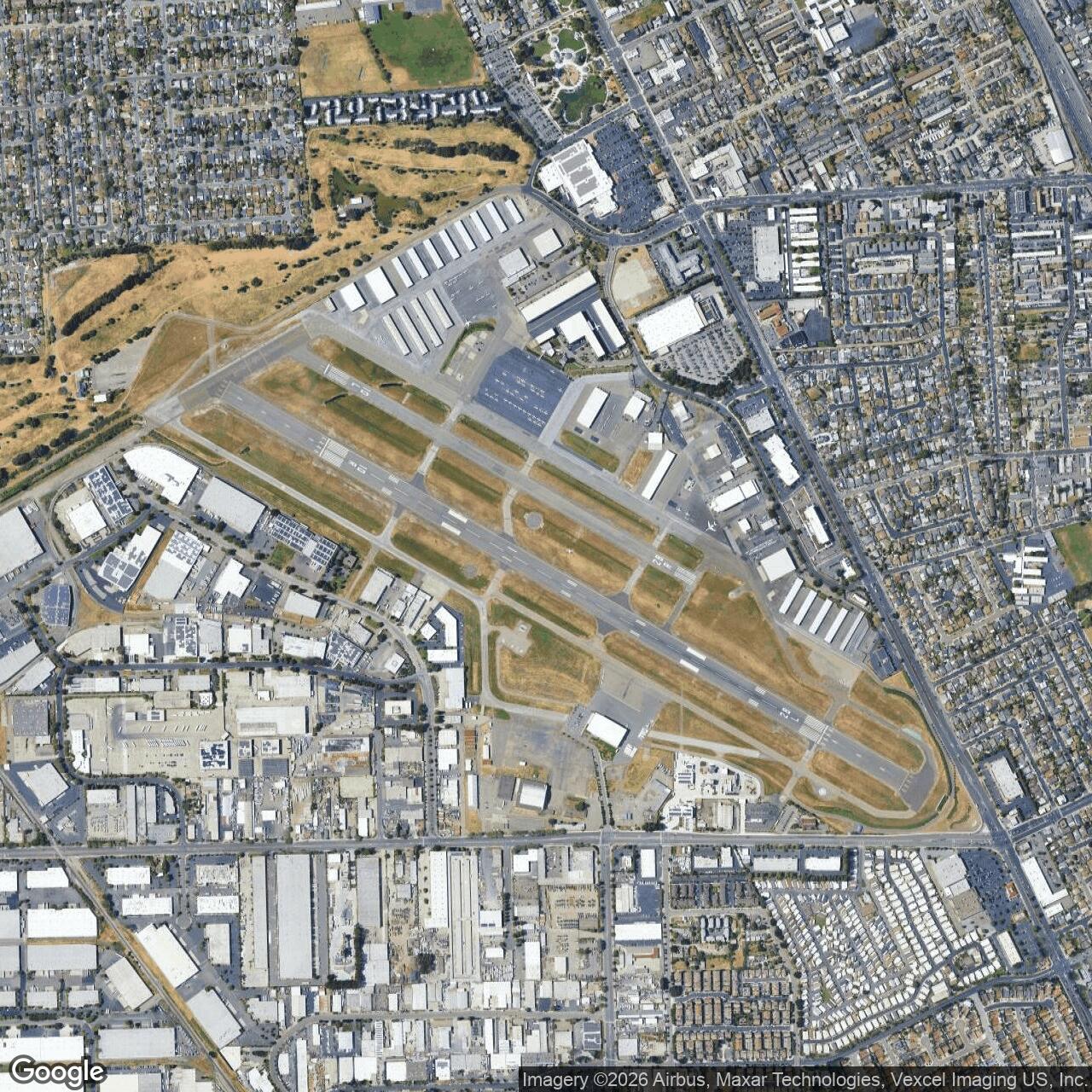
Hayward Army Air Field, Hayward California
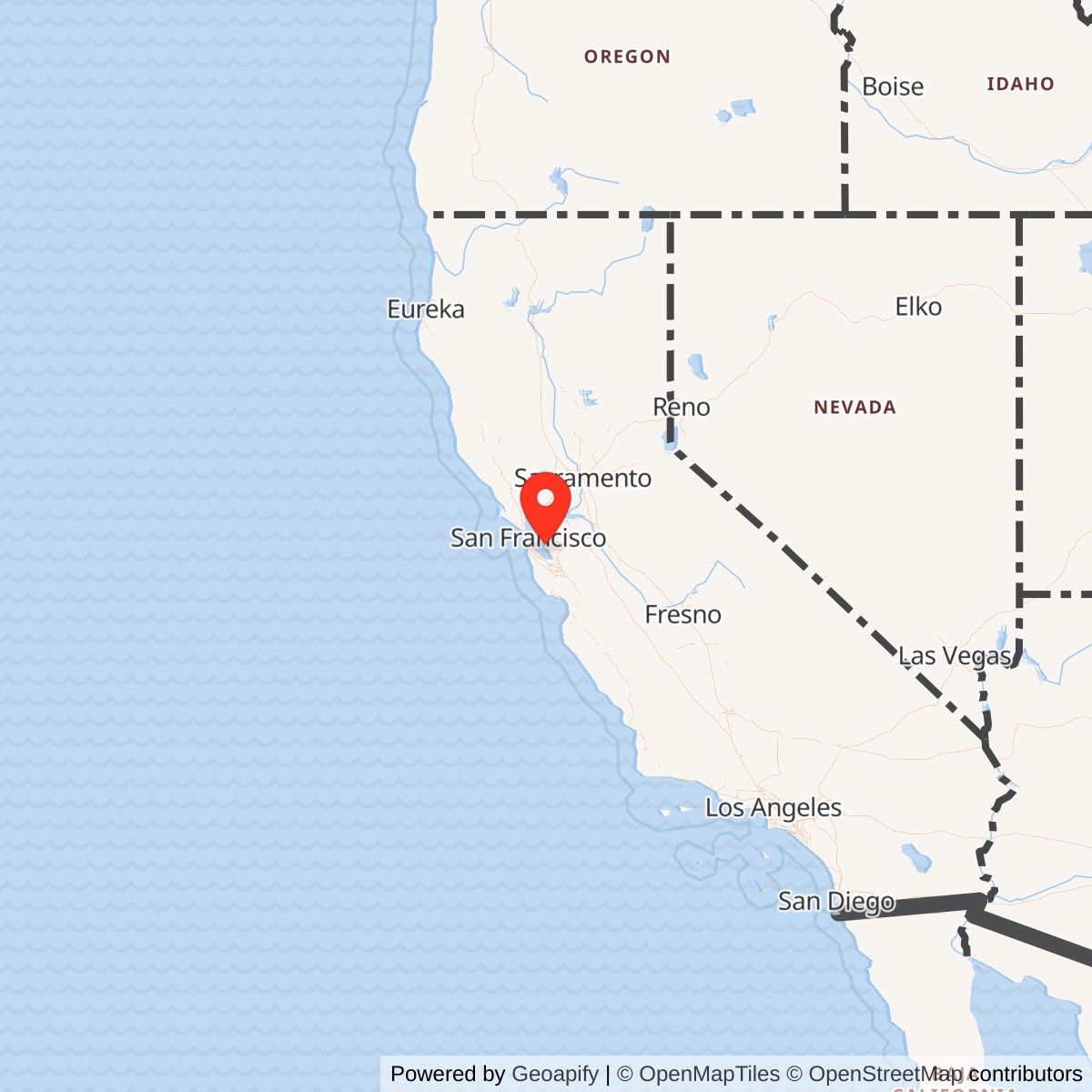
Longitude: -122.1217389
Airport ICAO ID: KHWD
Official Base Website: Hayward Executive Airport
Current Role: Hayward Executive Airport, a 527-acre City of Hayward public general aviation reliever airport; postwar California Air National Guard use at Hayward ended with the 129th mission's move to Moffett Field in 1984.
Hayward Army Air Field was a World War II U.S. Army Air Forces fighter field built on the east side of San Francisco Bay in 1942. It occupied land that the City of Hayward had acquired shortly before the war for a planned municipal airport near Hesperian Boulevard, Russell Road, and the former Russell City area. The war changed that plan. Instead of opening first as a civilian field, the property became a military airfield designed for fighter operations, Bay Area air defense, pilot and unit training, and support to the Army Air Forces' West Coast airfield network.
The site is now Hayward Executive Airport, a City of Hayward public-use general aviation reliever airport. The City describes the airport as 527 acres in size, while its own historical timeline states that the War Assets Administration quitclaimed the former Army field to Hayward in April 1947 with about 690 acres, related buildings, and equipment.
Site Selection and Construction
The Army chose Hayward because the location solved several wartime problems at once. It sat close to the San Francisco Bay Area's shipyards, aircraft plants, ports, rail lines, and major military installations, yet it had enough open land for a new airfield. It also lay far enough from the densest urban cores to support flight operations, barracks, shops, fuel, hangars, and runway development. Local historical accounts emphasize that wartime planners viewed the site as well placed for operations intended to protect the West Coast and the approaches to San Francisco Bay.
The field was constructed quickly. Local history states that Army engineers laid down two runways and built buildings, sheds, barracks, and support facilities. This was typical of wartime Army Air Forces construction in California. The Army did not need a permanent architectural showpiece. It needed a functional field that could receive fighters, house personnel, maintain aircraft, train pilots, and expand or contract according to wartime need. Hayward's wartime landscape therefore combined runways, taxiways, hardstands, support buildings, barracks, shops, utilities, roads, and administrative facilities.
The field's location near Russell City explains one of its alternate names. Later historical references sometimes describe it as Russell City Army Air Field, because the airfield was outside the older city center and adjacent to the unincorporated community of Russell City. The more common official and local name was Hayward Army Airfield or Hayward Army Air Field. The present airport names, Hayward Municipal Airport, Hayward Air Terminal, and Hayward Executive Airport, belong to the postwar civilian period.
World War II Mission
Hayward Army Air Field's wartime mission was fighter aviation. The City of Hayward states that the field was constructed and operated by the U.S. Army in 1942 and used as a World War II fighter base with aircraft including P-51 Mustangs and P-38 Lightnings. The Hayward Area Historical Society adds local detail, noting that Army Air Corps personnel began moving into the new field in August 1943 and that fighter activity included units such as the 355th, 344th, 362nd, and 394th Fighter Squadrons. The same local account describes P-38 operations and notes Bell P-39 Airacobra use by the 355th.
The field's role should be understood in two related ways. First, it was a training and staging point for fighter personnel and units. Fighter squadrons needed airfields where pilots could build proficiency, aircraft could be maintained, and units could prepare for reassignment. Second, Hayward was part of the Bay Area's defensive aviation geography. In the early war years, the West Coast feared Japanese air or carrier raids, especially after Pearl Harbor and submarine activity off the Pacific coast. Local memory connected Hayward's fighter mission with protection of the Golden Gate Bridge and the broader San Francisco Bay defense area. That does not mean Hayward fought an air battle over the Bay. It means the field existed because wartime planners wanted fighter aircraft distributed near key West Coast targets and available for training, readiness, and air-defense response.
Hayward's wartime identity was therefore different from the large heavy-bomber schools of the inland West and from the permanent prewar bases such as Hamilton Field. It was a smaller fighter field built for speed, proximity, and operational utility. It helped fill the dense network of Army Air Forces fields around the Bay Area, Central Valley, and Northern California that supported Fourth Air Force activity, replacement training, air defense, and movement of units through the wartime pipeline.
Units and Organizations
Documented or locally reported organizations associated with Hayward Army Air Field include the 355th Fighter Squadron, 344th Fighter Squadron, 362nd Fighter Squadron, and 394th Fighter Squadron. The 394th is especially useful for understanding the field's wider connection because the squadron was part of the 367th Fighter Group, trained in California before movement overseas, and later served in the European Theater. Local sources place the 394th at Hayward during the wartime fighter-training period.
The Civil Air Patrol also appears in local accounts as active at the field during the 1940s. That presence fits the broader pattern of wartime domestic aviation. Civil Air Patrol activity supplemented the country's emergency aviation network, supported civil-defense aviation culture, and connected local pilots and cadets to national wartime aviation needs.
The postwar California Air National Guard layer began almost immediately after the Army period. Hayward's historical timeline states that the California Air National Guard moved to Hayward in 1946 with aircraft such as U-10s, SA-16s, C-119s, and C-130s. NASA's Moffett Field historic-properties documentation traces the 129th Rescue Wing's lineage to the activation of the 129th Air Resupply Group at Hayward Airport in April 1955. That Air Guard successor mission later evolved through air resupply, air commando, troop carrier, and rescue roles before moving to Moffett Field in 1984.
Postwar Transfer and Air National Guard Use
The Army did not keep Hayward as a permanent post after World War II. In 1946 the federal government declared the airport surplus. Before formal disposal, the field operated as a public-use facility under a local citizens' group. In April 1947 the War Assets Administration quitclaimed the former Army field to the City of Hayward. The transfer included about 690 acres, buildings, and equipment, and the field became Hayward Municipal Airport. This transfer is the decisive end point of the Army installation.
The California Air National Guard's use gave the former Army airfield a second military life. The field housed Guard aircraft and personnel during the early Cold War and became closely associated with the 129th lineage. The 129th Air Resupply Group activated at Hayward in April 1955 and later evolved into the rescue organization now known as the 129th Rescue Wing. Its later missions, including major rescue operations after the move to Moffett Field, belong primarily to the Moffett-era history, but they began institutionally at Hayward. This makes Hayward important not only as an Army Air Forces field but also as an origin point in a California Air National Guard rescue lineage.
Role in the Wider Military Network
Hayward Army Air Field was one piece of a wider Northern California and Bay Area military aviation network. It related geographically to Hamilton Field, Oakland, Alameda, Moffett, San Francisco Bay port and shipbuilding facilities, and the broader Fourth Air Force system. It also sat within the larger West Coast defense pattern that emerged after 1941, when fighter dispersion, pilot training, anti-aircraft defenses, radar, coastal fortifications, naval air stations, and port-security installations all formed overlapping layers of defense around the Bay Area.
The field's likely relationship to Chico Army Air Field and other Northern California fighter-training and auxiliary fields also matters. Several secondary airfield references describe Hayward as an auxiliary or support field in the Chico Army Air Field training network. Even if the details of command control shifted, the broader point is clear: Hayward functioned as part of an Army Air Forces airfield system rather than as an isolated local landing strip.
Postwar, Hayward's system role shifted from federal wartime airfield to municipal reliever airport and Air Guard base. That shift was a common pattern among World War II Army fields, but Hayward's location in the Bay Area made the reuse especially valuable. Civilian aviation, industrial land use, regional airspace management, and Guard readiness all competed for the same airfield footprint. The result was a long-lived aviation site whose military-built runways and infrastructure helped shape postwar general aviation in the East Bay.
Current Status
Hayward Executive Airport remains active as a City of Hayward public-use airport with FAA identifier HWD and ICAO identifier KHWD. AirNav lists the field at two miles west of Hayward, open to the public, with an airport activation date of May 1947. The City of Hayward describes the airport as a 527-acre general aviation field and reliever airport intended to reduce pressure on larger commercial airports such as San Francisco, Oakland, and San Jose.
The current airfield has two paved runways. AirNav lists Runway 10R/28L at 5,694 by 150 feet and Runway 10L/28R at 3,108 by 75 feet. These are modern dimensions for the current airport, not necessarily exact wartime Army dimensions, but they demonstrate the continuity of the airfield as an aviation landscape. The airport supports general aviation, business aviation, flight training, air ambulance flights, law-enforcement flights, local media flights, aircraft services, and small aviation businesses.
The former Army identity is not as visually obvious as at some preserved wartime airfields. The site is an active municipal airport rather than a museum landscape. However, its origin remains central to the airport's official history. The City identifies the wartime Army construction and 1947 transfer as the beginning of the present airport's public life.
Chronology
- 1939 The City of Hayward acquired tomato-field property near Hesperian and Russell Road for a planned municipal airport.
- 1942 The U.S. Army acquired or took control of the property and constructed Hayward Army Airfield as a fighter base during World War II.
- 1943-08 Local history states that Army Air Corps personnel began moving into the new airfield to prepare for fighter operations.
- 1943-1944 Fighter units associated with the field included the 355th, 344th, 362nd, and 394th Fighter Squadrons in local accounts.
- 1946 The federal government declared the airport surplus property. Before final disposal it was operated as a public-use facility by a local citizens' group.
- 1946 The California Air National Guard moved to Hayward, beginning the field's postwar Guard layer.
- 1947-04 The War Assets Administration quitclaimed the former Army field, about 690 acres with related buildings and equipment, to the City of Hayward. The airfield became Hayward Municipal Airport.
- 1954-09 The Civil Aeronautics Administration released the city from a quitclaim-deed restriction prohibiting use of airport property for manufacturing and industrial purposes.
- 1955-04 The 129th Air Resupply Group activated at Hayward Airport, beginning the local lineage that later became the 129th Rescue Wing.
- 1956 The city acquired 20 additional acres, bringing total airport property to 710 acres according to the airport timeline.
- 1959-01 The FAA air traffic control tower was commissioned in a temporary structure.
- 1959-07 Construction began on a permanent administration building and air traffic control tower.
- 1962-09 The city adopted its first airport layout and land-use plan.
- 1963-11 The airport's name changed to Hayward Air Terminal after an agreement with airport investors and developers.
- 1965-07 The Federal Aviation Agency released remaining airport property, including aircraft operating areas, from the National Emergency Provision of the quitclaim deed.
- 1966-05 The FAA released five parcels, about 369 acres, from quitclaim restrictions, permitting sale or long-term lease for non-aviation uses.
- 1984 The 129th mission moved from Hayward to Moffett Field.
- 1999-01 The airport was renamed Hayward Executive Airport.
- Present Hayward Executive Airport remains an active public-use City of Hayward airport and general aviation reliever field, with ICAO identifier KHWD.