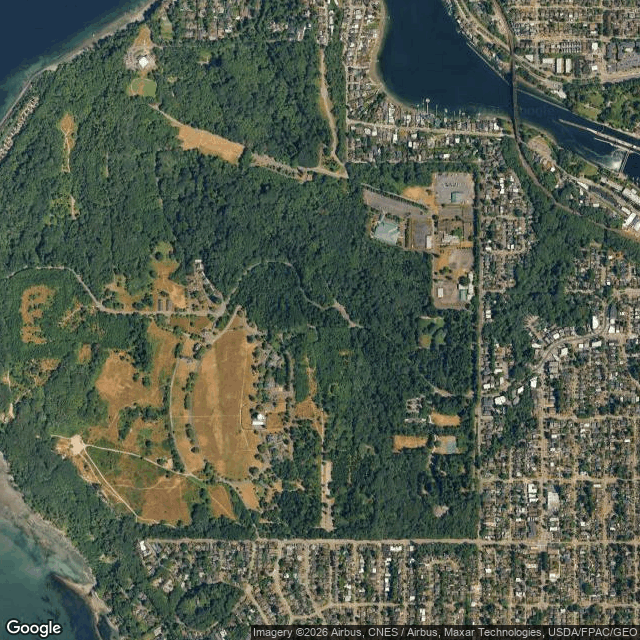
Fort Lawton Army Base, Seattle Washington
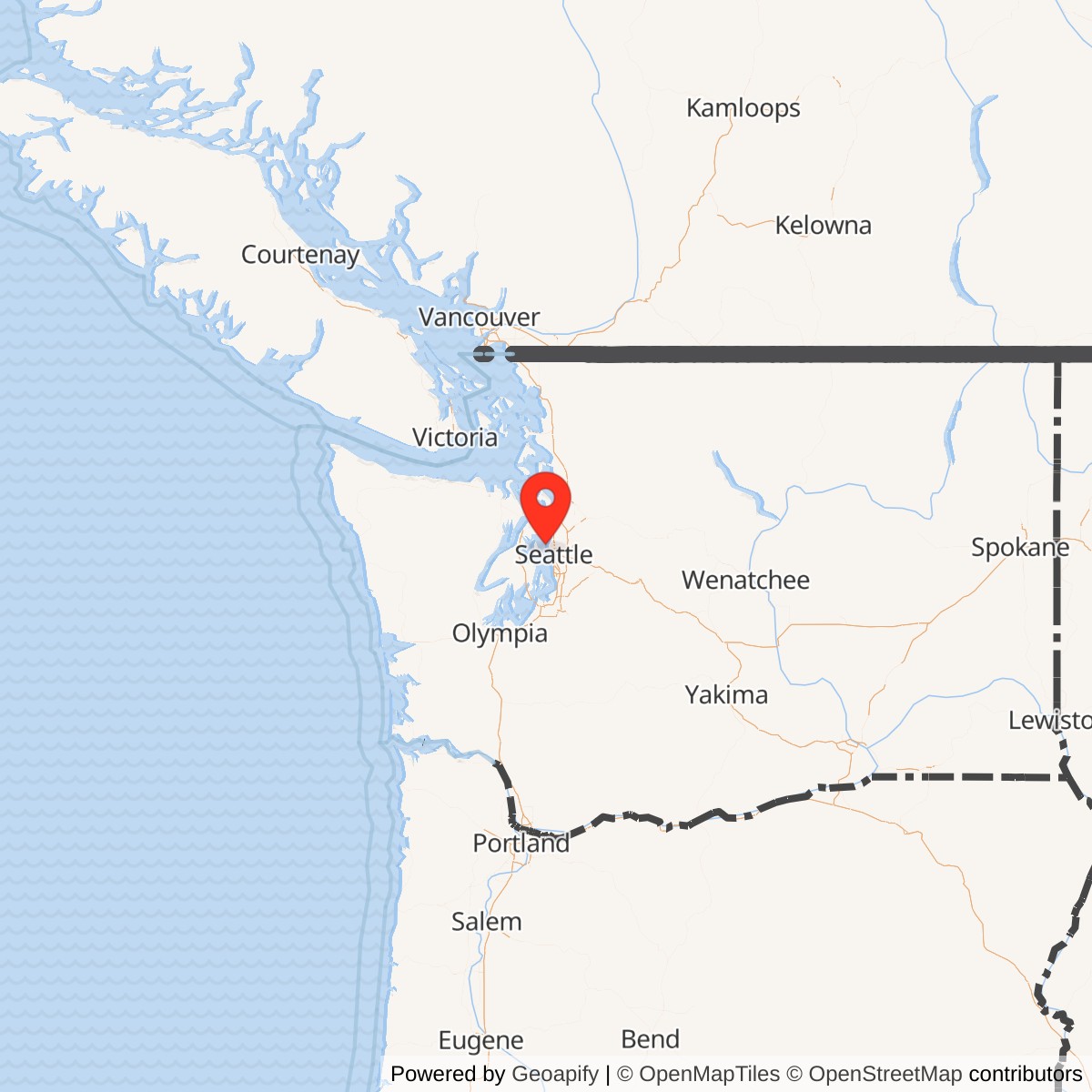
Longitude: -122.4105
Official Base Website: https://www.seattle.gov/parks/parks/discovery-park
Current Role: Discovery Park, Daybreak Star Indian Cultural Center, Fort Lawton Historic District, private former military housing, cemetery, and civic redevelopment parcels
Closed former U.S. Army post on Seattle's Magnolia Bluff. Selected in 1896, constructed beginning in 1898, and designated Fort Lawton in 1900. Originally planned for coastal defense but converted to infantry use in 1902; later used for World War II and Korean War embarkation/debarkation, POW/Italian Service Unit functions, Seattle Nike air-defense command/radar functions, and Army Reserve headquarters activity. Most land transferred to Seattle for Discovery Park beginning in 1972; final Army Reserve unit left in September 2011 and official closure ceremony was held February 25, 2012.
Fort Lawton occupied Magnolia Bluff on the northwest side of Seattle, overlooking Puget Sound, Elliott Bay, Salmon Bay, and the approaches to the city's waterfront. The site's military value came from elevation, visibility, coastal access, and proximity to the growing port city of Seattle. It was not a remote frontier post. It was an urban-edge Army reservation built at a moment when Seattle leaders wanted a permanent federal military installation to strengthen the city's economy and status. The ground was part of the traditional homeland of Coast Salish peoples, including Duwamish and Suquamish communities, before treaty-era dispossession and later military acquisition transformed the bluff into an Army reservation.
The federal military story began when the Secretary of War selected the Magnolia Bluff site in 1896 for an artillery battery intended to defend Seattle and the south Puget Sound from naval attack. Local citizens and governments then donated about 703 acres to the United States Army. Construction began in 1898, the first soldiers arrived in December 1899, and the Army designated the installation Fort Lawton in February 1900. The post was named for Major General Henry Ware Lawton, a Civil War, Indian Wars, Spanish-American War, and Philippine War officer who was killed in the Philippines in 1899. The Army initially imagined the post as part of a coastal defense system, but the heavy harbor-defense forts built farther north at Admiralty Inlet soon made Fort Lawton a less important artillery site than Seattle boosters had expected. By 1902 it had been converted to infantry use.
Fort Lawton is no longer active. Its military functions were gradually stripped away across the second half of the twentieth century. The largest transfer came in 1972, when 391 acres went to the City of Seattle and became the nucleus of Discovery Park. Additional Fort Lawton land and buildings were later absorbed into the park, while some housing and reserve-use parcels remained in federal or military use longer. The final Army Reserve activity ended under the 2005 Base Realignment and Closure process. The 364th Expeditionary Sustainment Command, the final Army Reserve tenant, left in September 2011, and the Army held the official Fort Lawton closure ceremony on February 25, 2012. Today the former post survives as Discovery Park, the Daybreak Star Indian Cultural Center, preserved Fort Lawton historic district buildings and parade-ground landscape, private former military housing, Fort Lawton Cemetery, and remaining civic or redevelopment parcels. Its identity is therefore best stated as a closed Army post whose landscape remains visible inside a major public park.
Mission Evolution
Fort Lawton's first mission was coastal defense, but that role was short-lived and never developed into the large artillery installation Seattle leaders had anticipated. The Army temporarily installed guns in the early years, but the forts at the entrance to Puget Sound, especially Fort Worden, Fort Casey, and Fort Flagler, became the real first and second lines of defense. Fort Lawton therefore became a third-line position and was soon reorganized as an infantry post. From 1902 through 1927 the Army formally treated it as an infantry installation capable on paper of holding a full regiment, roughly 3,500 men, yet it usually hosted far fewer troops. This underuse became one of the defining features of the post's early decades. The Army had an impressive site in a major city, but it did not build the large regimental center or harbor-defense citadel local boosters had wanted.
The infantry era still mattered. Fort Lawton gave Seattle a permanent Regular Army presence and became an embarkation, staging, and ceremonial military site. Around the turn of the century it supported troop movements connected to overseas operations, including the period of the Boxer Rebellion. It also became socially important in 1909 when the 25th Infantry Regiment, one of the Army's African American "Buffalo Soldier" regiments, arrived from the Philippines. About 900 soldiers transferred to Fort Lawton, and their families followed. For several years the soldiers and families associated with the regiment made up a large share of Seattle's Black population. That chapter made Fort Lawton important not merely as a military reservation but as a place where the segregated Army shaped the civic and demographic history of Seattle.
After World War I, the post declined again. Civic leaders periodically sought to reclaim the site as parkland, and by the late 1920s Fort Lawton had shifted into a quieter Army Corps of Engineers and support role. In 1938 the Army even offered the post to Seattle for one dollar, but the city declined because it feared the cost of maintaining the property. That decision took on new meaning almost immediately because World War II transformed Fort Lawton from a sleepy underused post into one of the busiest military transportation sites in the Pacific war.
The wartime mission was embarkation, debarkation, temporary housing, processing, and prisoner-of-war management. Fort Lawton became part of the Seattle Port of Embarkation system in May 1941. The Army built hundreds of temporary buildings and used the post to stage soldiers moving to the Pacific and Alaska and to process troops returning from overseas. Seattle Parks' historical timeline states that as many as 20,000 troops were staged there at one time and that about 1.1 million troops passed through the installation during and after the war. HistoryLink gives a more granular count of about 793,000 embarkations and 618,000 debarkations. The post also held approximately 1,150 German prisoners of war and processed 5,000 Italian prisoners of war or detainees, some of whom were sent to Hawaii.
After World War II the mission contracted, then revived briefly during the Korean War. Fort Lawton again served as an embarkation and debarkation station, and Seattle's timeline records that during the early 1950s as many as 10,000 replacement troops a day were readied for transport to Korea. After the Korean War, troop-processing requirements declined and many wartime temporary structures were removed. The Cold War then gave the post a new air-defense mission rather than an infantry or transport one. Fort Lawton became tied to the Nike air-defense network around Seattle, including Nike Ajax and Nike Hercules functions, a Missile Master / BIRDIE command-and-control role, and a radar complex shared with Air Force and FAA systems. The post was no longer a conventional garrison; it had become a command, reserve, and air-defense support enclave inside a city that increasingly wanted the land for public open space.
The final mission was Army Reserve administration and training. By the 1960s, the Department of Defense had declared most of the reservation surplus, and civic, environmental, Indigenous, and federal negotiations determined the future of the land. Most of the former post became Discovery Park. Remaining Army Reserve facilities persisted into the twenty-first century, including use by the 364th Expeditionary Sustainment Command. That last active Army Reserve chapter ended with the 2005 BRAC decision, the departure of the 364th ESC in 2011, and the closure ceremony in 2012.
Operational Role
Fort Lawton's operational role changed more dramatically than its physical setting. In its early years, the post was a promise as much as a working military force. Seattle businessmen and civic leaders had campaigned for a major Army post in order to stimulate the local economy, enhance Seattle's status, and anchor federal investment on the city's northwestern waterfront. The Army cleared timber, built roads, constructed a pier and utilities, established barracks and quarters, and arranged the permanent core around an oval parade ground. That work created Seattle's only Army post, but the garrison remained modest for many years. The post's daily operations were those of a small infantry station: drill, guard duty, barracks life, administration, ceremonial events, and occasional staging of troops moving through Seattle.
The arrival of the 25th Infantry in 1909 gave the post a more distinct military and social identity. The 25th Infantry was one of the Army's four Black regular regiments. Its stationing at Fort Lawton brought approximately 900 African American soldiers to Seattle, many with families. The regiment's band and baseball team became well known, and the soldiers' presence shaped Seattle's Black community in a segregated era. This was not a combat deployment, but it was operationally and socially consequential. The Army's normal stationing decisions changed the racial and cultural landscape of the city around the fort.
World War II made Fort Lawton an industrial-scale movement center. The post's mission was not to train one division for one campaign; it was to keep thousands of troops moving through the port pipeline. Soldiers arrived, were housed in temporary barracks, processed, briefed, equipped, medically checked, and moved onward toward ships or rail connections. Returning troops passed through in the opposite direction. The post's temporary buildings, warehouses, roads, prisoner compounds, messes, recreation spaces, and administrative offices formed a staging machine. Fort Lawton's location near Seattle's port facilities and rail system made it a logical point of embarkation for the Pacific and Alaska. Its wartime importance was measured in throughput: hundreds of thousands of men moving out and back through a wartime port system.
The post also became a prisoner-of-war and Italian Service Unit site, which produced the most notorious event in Fort Lawton's history. In August 1944, Black soldiers of segregated Transportation Corps port companies were quartered near an Italian Service Unit compound. The Italian personnel had a different status from German POWs and enjoyed privileges that caused resentment among some soldiers and civilians. On the night of August 14, 1944, a violent disturbance broke out. The next morning, Italian prisoner Guglielmo Olivotto was found hanged. The Army then conducted the largest court-martial of World War II, trying 43 African American soldiers and convicting 28. Decades later, declassified records and historical research showed that the investigation and prosecution had been deeply flawed. In 2007 the Army's Board for Correction of Military Records began overturning convictions, and in 2008 the "Fort Lawton 28" were publicly exonerated and awarded honorable discharges and back pay for their families. This episode is central to the installation's history because it shows Fort Lawton as a wartime staging post operating inside the segregated Army, under pressure, with a justice system capable of catastrophic failure.
During the Korean War, Fort Lawton resumed its port-processing role, but the next enduring operational layer was air defense. Seattle and Puget Sound were ringed by Nike missile sites in the 1950s. Fort Lawton supported this system by hosting command-and-control functions rather than serving primarily as a launch site. Historical summaries identify a Missile Master facility and later BIRDIE center at Fort Lawton for the Seattle Defense Area. The post also held radar and control facilities associated with the Fort Lawton Air Force Station period and the Fort Lawton FAA Radar Site. The Cold War Fort Lawton landscape therefore included air-defense operations buildings, radar domes, and communications functions layered onto the older parade-ground and barracks landscape.
In the Army Reserve era, Fort Lawton became a command and training node for reserve leaders in the Pacific Northwest. DVIDS reporting from the post's final years records that the 124th Army Reserve Command established its headquarters there in 1968 and that future Army Reserve leaders of the northwestern United States were trained and developed at Fort Lawton. The 364th Expeditionary Sustainment Command eventually became the last major Army Reserve tenant. That unit's move to Marysville in 2011 closed the functional military role that had survived after most of the land had become parkland decades earlier.
Units, Organizations, and Systems
Fort Lawton never had the unit continuity of a large maneuver installation, but several organizations define its military history. The earliest Coast Artillery presence reflected the original coastal-defense concept. Guns were installed only temporarily, and the heavy Admiralty Inlet forts assumed the primary harbor-defense role. The post's conversion to infantry use in 1902 shifted the unit pattern toward small Regular Army infantry garrisons.
The 25th Infantry Regiment is the most important early named Army unit associated with the post. Its arrival from the Philippines on October 5, 1909, brought Buffalo Soldiers to Seattle and tied Fort Lawton to the national history of segregated Black regulars. The regiment remained associated with Fort Lawton until its transfer to Hawaii in 1913. Its band, athletic teams, and family community made the unit one of the most visible Army presences in Seattle before World War II.
During World War II, Fort Lawton's organizations were transportation, port, processing, military police, hospital, prisoner-of-war, and service-support units rather than combat regiments permanently based for field operations. The 650th and 651st Port Companies of the Transportation Corps, composed of African American soldiers trained to unload cargo in combat areas, are central to the 1944 Fort Lawton riot and court-martial history. The 28th Italian Service Unit Quartermaster Company was the Italian compound unit involved in the same context. German POW compounds and prisoner-support detachments added another wartime layer.
Cold War organizations associated with Fort Lawton included air-defense command elements tied to the Seattle Nike system, Air Force radar activity, and later FAA radar functions. Historical summaries identify an Army Air Defense Command Post designated S-90DC, Missile Master / BIRDIE equipment, and Air Force radar station activity at Fort Lawton in the early 1960s. These systems connected the former infantry post to a network of Nike launch sites, radar tracking, target assignment, and regional aerospace defense.
Army Reserve organizations defined the last military period. The 124th U.S. Army Reserve Command used Fort Lawton as a headquarters beginning in 1968. The 364th Expeditionary Sustainment Command, now based at Marysville, Washington, was the final Army Reserve tenant. Its sustainment mission, command and control of logistics units and support to operational requirements, was very different from the early infantry and artillery missions, but it continued Fort Lawton's long function as a regional Army node.
Facilities and Physical Layout
Fort Lawton's built environment is one of the clearest ways to understand its history. The original site was carved out of dense conifer forest on Magnolia Bluff. HABS documentation describes a 97-acre clearing cut in the summer of 1898, construction materials hauled from a makeshift dock on Salmon Bay, and the first seven permanent buildings completed by 1900. By 1910 the permanent core included roughly twenty-five frame buildings arranged around an oval parade ground. The architecture followed standardized Quartermaster plans influenced by turn-of-the-century military styles, including shingle, Georgian Revival, and classical details. Officers' quarters, enlisted barracks, administration buildings, post exchange, gymnasium, hospital, guardhouse, and support structures made the fort an identifiable Army community despite its modest garrison.
The parade ground and historic district remain the symbolic center of Fort Lawton. The Fort Lawton Historic District was listed in the National Register in 1978 and became a Seattle landmark district in 1988. The district preserves the relationship among officers' row, barracks, administrative buildings, and open parade ground that gave the post its Army character. The oval layout also shows how the Army adapted standardized post-planning ideas to a dramatic bluff site with views of Puget Sound and the Olympic Mountains.
World War II overran the original plan with temporary construction. More than 450 temporary buildings were erected to house troops moving through the port system. These structures were designed for speed and utility rather than permanence. They expanded Fort Lawton from a quiet post into a densely populated transit installation with barracks, mess halls, warehouses, prisoner compounds, recreation buildings, roads, and utilities. Most of this wartime fabric was removed after the war or later demolished as the land moved toward park use.
Cold War air-defense facilities added another nonconforming layer. Radar structures, air-defense operations buildings, and the distinctive radar dome changed parts of the landscape from early-twentieth-century parade-ground fort to mid-twentieth-century air-defense post. Some Cold War buildings were later removed, while the radar site and dome became one of the visual reminders of the post's Nike and air-surveillance phase.
The postwar transfer to Discovery Park intentionally changed the physical logic of the landscape. Seattle planners and park advocates sought quiet, open space, beaches, forest, meadows, bluffs, and natural interpretation rather than intensive development. The Daybreak Star Indian Cultural Center created a separate cultural and political layer within the former reservation. The result is not a preserved military base in the manner of a museum post, but a park landscape in which the Army core survives as one historic layer among ecological restoration, Indigenous presence, recreation, private former military housing, cemetery preservation, and civic debate over housing and reuse.
Chronology
- 1896 The Secretary of War selected the Magnolia Bluff site for an artillery battery intended to defend Seattle and the south Puget Sound.
- 1897 Local citizens and governments donated approximately 703 acres to the United States Army for the installation.
- 1898 Construction began; loggers cleared part of the dense forest and crews built roads, utilities, and early facilities.
- 1899-12 The first soldiers arrived at the developing post.
- 1900-02 The U.S. Army designated the installation Fort Lawton.
- 1901 A Coast Artillery unit arrived, and guns were installed temporarily.
- 1902 Fort Lawton was converted from the original artillery concept to infantry use.
- 1902-1927 Fort Lawton functioned as an infantry post planned for a regiment but usually occupied by smaller forces.
- 1909-10-05 Approximately 900 soldiers of the 25th Infantry Regiment, the Buffalo Soldiers, arrived from the Philippines.
- 1910 John C. Olmsted prepared a master plan for housing officers and enlisted men at the post.
- 1913 The 25th Infantry Regiment was transferred to Hawaii.
- 1917 Seattle civic voices again called for the fort's return as parkland.
- 1927-1941 Fort Lawton served in a reduced Army Corps of Engineers / support role and saw limited use.
- 1938 The Army offered Fort Lawton to Seattle for one dollar; the city declined because of maintenance concerns.
- 1941-05-22 Fort Lawton became part of the wartime Port of Embarkation system.
- 1941-1945 More than 450 temporary buildings were constructed to support troop staging, processing, embarkation, debarkation, and prisoner functions.
- 1940s As many as 20,000 troops were staged at Fort Lawton at one time; approximately 1.1 million troops passed through the installation during and after World War II.
- 1944-08-14 A violent disturbance occurred between Black soldiers and Italian personnel at Fort Lawton.
- 1944-08-15 Italian prisoner Guglielmo Olivotto was found hanged at the post.
- 1944-11/12 Forty-three African American soldiers were tried by court-martial; twenty-eight were convicted.
- 1950s Fort Lawton again served as an embarkation and debarkation station during the Korean War.
- 1953 Nike Ajax air-defense activity began in the Seattle defense system; Fort Lawton later supported Nike command-and-control functions.
- 1959 Nike Hercules missiles were introduced into the Seattle air-defense system.
- 1960-1963 Fort Lawton Air Force Station operated as part of the air-defense radar network.
- 1964 The Secretary of Defense announced that most of Fort Lawton would be declared surplus.
- 1968 The Army abandoned plans for an anti-ballistic missile base at Fort Lawton; the 124th Army Reserve Command established a headquarters presence there.
- 1970 United Indians of All Tribes asserted treaty-rights claims to surplus Fort Lawton land through the Fort Lawton takeover movement.
- 1971 The City of Seattle and United Indians of All Tribes Foundation reached agreement for an Indian Cultural Center site.
- 1972-09-01 The City of Seattle acquired 391 acres of former Fort Lawton property from the federal government.
- 1973 Discovery Park was dedicated on the former Fort Lawton landscape.
- 1977 Daybreak Star Indian Cultural Center opened.
- 1978 The Fort Lawton Historic District was listed in the National Register of Historic Places.
- 1988 The best-preserved portion of the Fort Lawton historic core became a Seattle landmark district.
- 2005 Fort Lawton's remaining Army Reserve property was included in the Base Realignment and Closure process.
- 2007-2008 Convictions in the 1944 Fort Lawton court-martial were overturned, and the Fort Lawton 28 were publicly exonerated.
- 2011-09-14 The 364th Expeditionary Sustainment Command left Fort Lawton for Marysville, Washington.
- 2012-02-25 The Army held the official closure ceremony for Fort Lawton.
- Present The former installation is primarily Discovery Park, with the Daybreak Star Indian Cultural Center, surviving historic district buildings, former military housing, Fort Lawton Cemetery, and remaining civic redevelopment areas preserving or reusing parts of the Army landscape.