
Minuteman Launch Facility Q-04 (Quebec-04 LF), Chugwater Wyoming
Longitude: -104.808904
Site Type: Missile Launch Facility - Silo
A LF consists of a launcher and an associated launch facility support building (LFSB). All facilities are enclosed within a security fence. The sites average about 1.6 acres in size and holds one missile.
Missile Type: LGM-30B Minuteman I; LGM-30G Minuteman III; LGM-118A Peacekeeper
Parent Base: F.E. Warren AFB
Missile Wing: 90th Missile Wing; 90th Strategic Missile Wing during SAC era
Missile Squadron: 400th Missile Squadron / 400th Strategic Missile Squadron (Peacekeeper-converted field)
Current Site Use: Former Minuteman / Peacekeeper launch facility; documented HEST I hardness-test site; Peacekeeper mission ended in 2005; former Peacekeeper LF selected for New START elimination by earth/gravel fill; present parcel use not verified.
Site Ownership: Former U.S. Air Force missile field property; post-elimination disposition may have proceeded through adjacent landowner/government offering or auction; current ownership not verified.
Accessible: No public access confirmed; view only from public roads where legal; do not enter former launch facility property without current owner permission.
At most Minuteman silos, "hardening" was a design claim hidden in engineering drawings. At Q-04, the Air Force turned that claim into a real-world experiment: the launch facility was isolated from its squadron, fitted with a ground-test missile, and subjected to a simulated nuclear-blast overpressure test. That single episode makes Q-04 more than an ordinary Quebec Flight silo. It links a rural Wyoming launch facility to one of the central Cold War questions behind every Minuteman and Peacekeeper site: could the weapon survive long enough to deter an attack?
Launch Facility Q-04 was an unmanned missile silo / Launch Facility in Quebec Flight, controlled from Q-01, the Quebec 01 Missile Alert Facility / Launch Control Facility. The site belonged to the F.E. Warren Air Force Base missile field, the 90th Strategic Missile Wing during the Strategic Air Command era, and the 400th Strategic Missile Squadron / later 400th Missile Squadron during the Minuteman and Peacekeeper years. It was originally built for LGM-30B Minuteman I, later served in the Minuteman III force, and was then converted for the LGM-118A Peacekeeper.
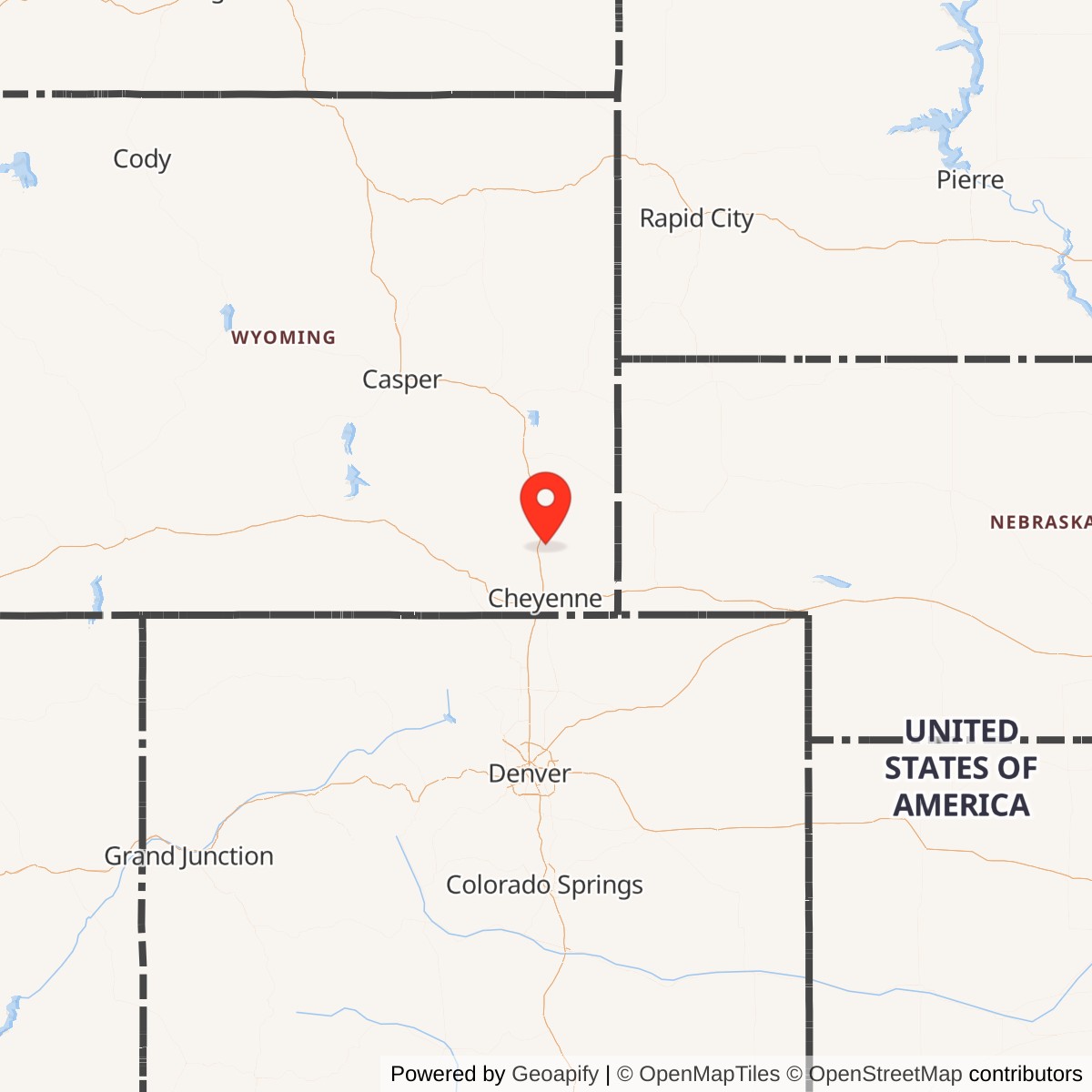
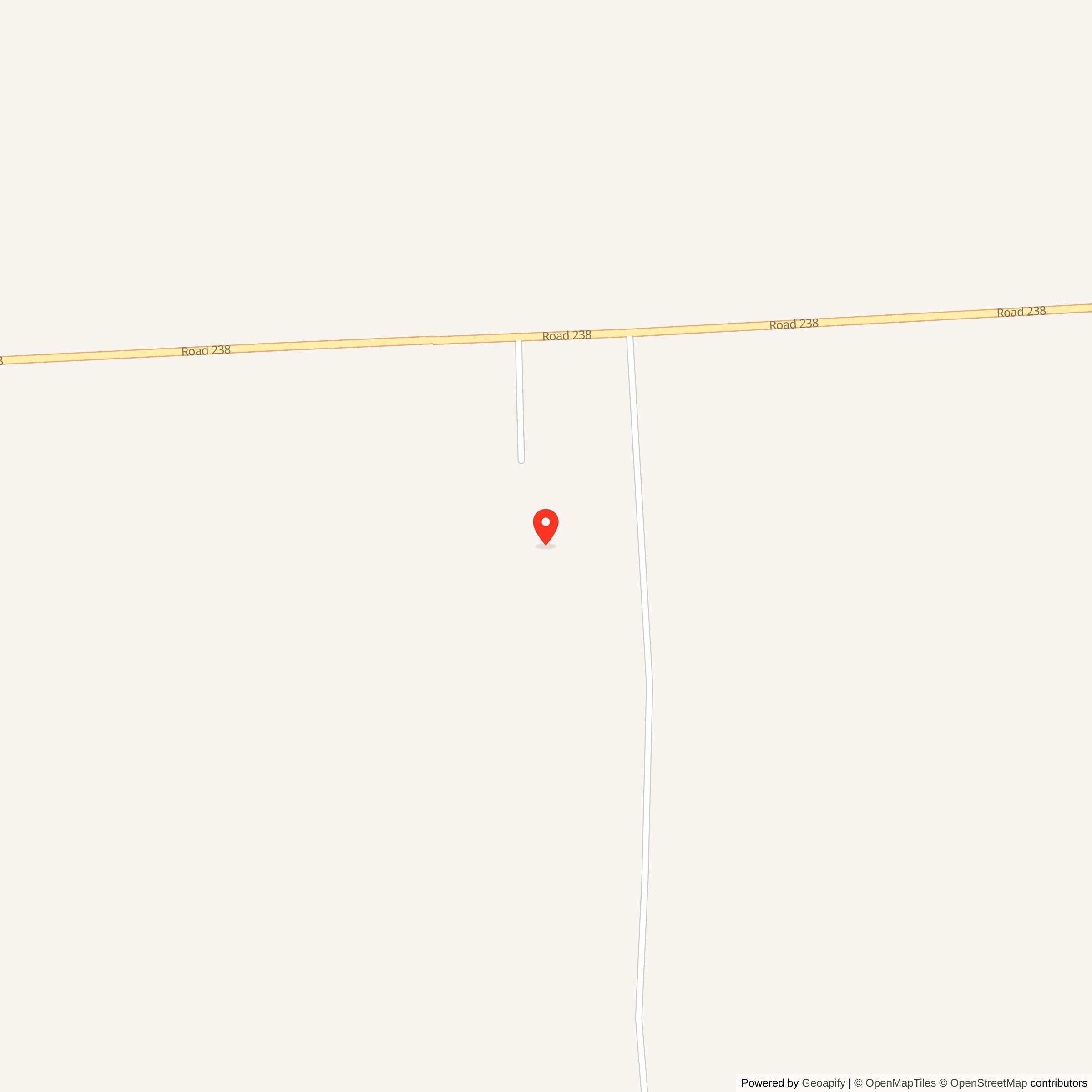
The former launch facility is in the Chugwater vicinity of Laramie County, Wyoming. Public Peacekeeper site-photo documentation identifies the same site as Francis E. Warren AF Missile Site Q-04, Permanent Installation Number 8692, Installation Location Code GHYM, at 41-32-46, 104-48-32. The coordinate identifies the former launch-facility area, not the Q-01 control site. Q-04 is inactive and decommissioned; it was part of the former Peacekeeper launch-facility group selected for post-retirement elimination and disposition.
Q-04 lay east of Q-01 in the rolling high-plains country north of Cheyenne and south of Chugwater. This was the kind of landscape Minuteman was built for: open, rural, and dispersed, with missile sites separated by miles of ranchland, section roads, draws, and low ridges. The point was not secrecy in the absolute sense; the point was survivability. A missile field spread across thousands of square miles made the force harder to destroy in a single strike.
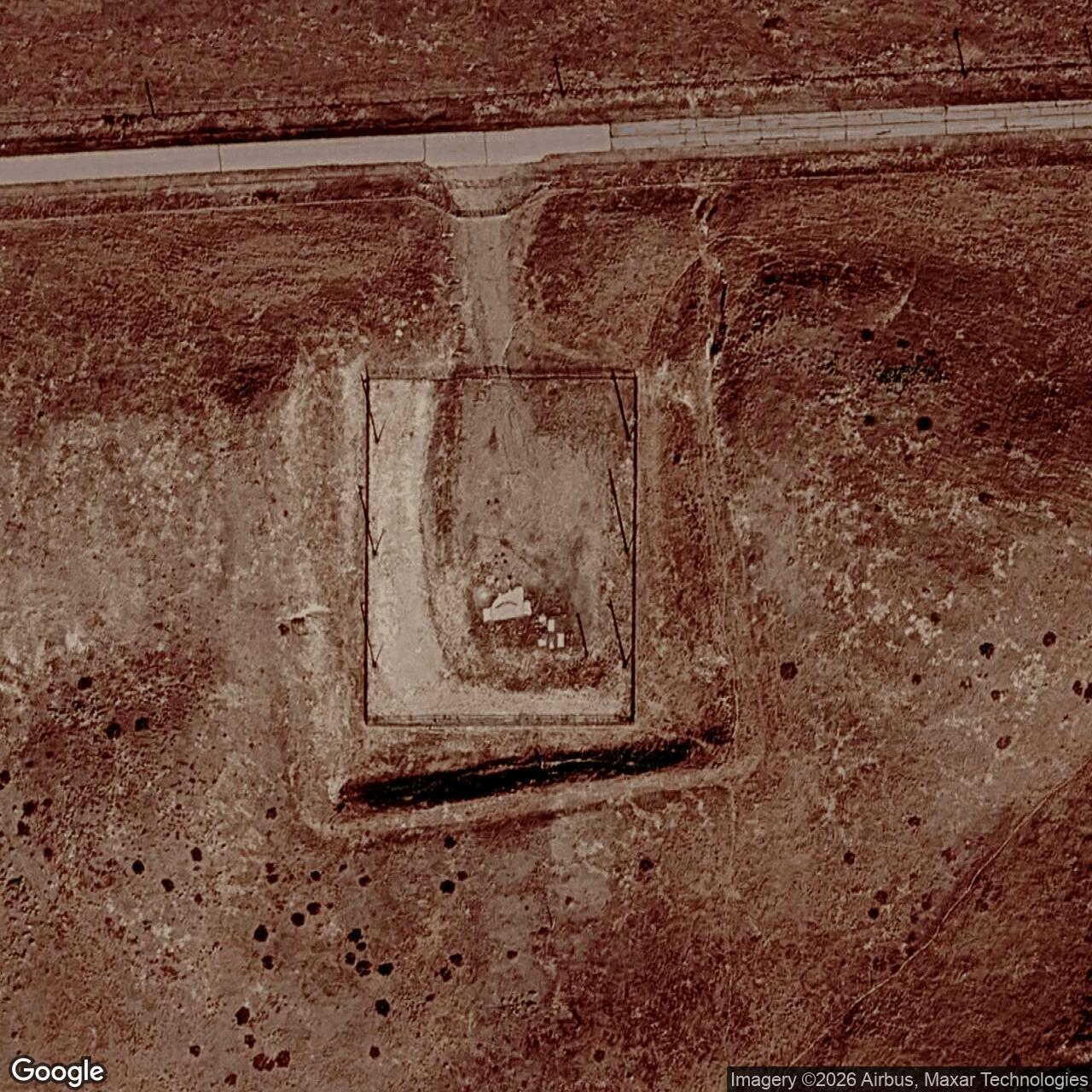
As a Launch Facility, Q-04 was normally unmanned. Missile combat crews worked in the underground Launch Control Center at Q-01, while security forces, maintenance teams, communications technicians, and other support personnel visited the launch facility when required. The site's surface presence was intentionally plain: a fenced compound, access road or driveway, launch closure area, launcher-related covers and hatches, power and lighting poles, and other support features tied to the underground launcher.
Public exterior photographs from July 2013 show Q-04 before the final New START elimination process was completed. The images document a fenced former Peacekeeper launch facility with the gate, perimeter fencing, lighting poles, launcher-area concrete, remaining surface hardware, and disturbed or bermed high-plains terrain around the compound. Those photographs are valuable because many former Peacekeeper LFs later lost much of their interpretive surface clarity after silo elimination and property disposition.
For most of its service life, Q-04 was one node in the Quebec Flight alert network. The site was normally unattended, monitored and controlled from Q-01, and visited by security, maintenance, communications, and support teams when required. Its ordinary duty was quiet by design: to keep a missile protected, monitored, and ready under the procedures of Strategic Air Command and later post-SAC missile commands.
The site's most important documented event came almost immediately after the 400th Strategic Missile Squadron became operational. On August 2, 1965, the Air Force authorized Boeing, working as a subcontractor to the Air Force Weapons Laboratory, to proceed with planning the first HEST hardness evaluation of a Minuteman launch facility. The test was codename Gas Bag Hardness Test / Quick HEST / QH-1 and later became known as HEST I.
Q-04 was selected for the test and electronically isolated from the remainder of the squadron. A ground-test missile was emplaced, and preparations began for the high-explosive simulation. On December 1, 1965, the test generated an estimated 300 psi over the 91,000-square-foot test structure. According to David K. Stumpf's account in the Journal of the Air & Space Forces Historical Foundation, the test caused no serious damage to the launch facility or the ground-test missile. The refurbished site was returned to Strategic Air Command on November 10, 1966.
The Q-04 HEST I test mattered beyond Quebec Flight. A Space and Missile Systems Organization hardness review panel had identified problem areas in Minuteman Wings I through V, and the HEST program gave the Air Force a way to evaluate those vulnerabilities without nuclear testing. Q-04 showed that the technique could be used at an operational Minuteman launch facility. Later HEST testing moved to other sites and increased the overpressure goals, but Q-04 was the site where the Air Force first applied the Minuteman launch-facility hardness test in the operational field.
During the 1970s, Q-04 remained part of the Warren missile field as the 400th converted from Minuteman I to Minuteman III. During the 1980s, it became part of the Peacekeeper force. F.E. Warren's official Peacekeeper fact sheet states that Peacekeeper became operational in 1986 with ten missiles at F.E. Warren and that the Air Force had 50 in service there by 1988. The Air Force's official account of the 2005 deactivation ceremony states that the 400th Missile Squadron brought its full complement of Peacekeepers online in 1988 and that the Peacekeeper mission lasted 19 years.
The Peacekeeper mission ended at F.E. Warren on September 19, 2005. Air Force reporting described the ceremony as the end of the Peacekeeper ICBM mission and noted that the final confirmation came when a missile combat crew officer at Papa One Launch Control Center verified that no Peacekeeper ICBMs remained on strategic alert in the 400th Missile Squadron. That date marks the close of Q-04's operational missile role.
The former Peacekeeper launch facilities then entered the arms-control and disposal phase.
Q-04 is inactive and decommissioned. Public photographs from 2013 show a recognizable former launch facility with fence, gate, launcher-area surfaces, and remaining support features, but those images predate the announced final elimination of the former Peacekeeper launch facilities. Current visible conditions may therefore differ from the 2013 photo record.
For the full Quebec Flight narrative, see Q-01 Missile Alert Facility / Launch Control Center
Chronology
- 1963-01 Construction of the Quebec Flight facilities began.
- 1964-07 Quebec Flight facilities were completed.
- 1965-06 The 400th Strategic Missile Squadron, including Quebec Flight, became operational with Minuteman IB missiles.
- 1965-08-02 The Air Force authorized Boeing, as a subcontractor to the Air Force Weapons Laboratory, to plan the first HEST hardness evaluation of a Minuteman launch facility.
- 1965-12-01 QH-1 / HEST I was conducted at Launch Facility Q-04, generating an estimated 300 psi over a 91,000-square-foot test structure with no serious damage to the launch facility or ground-test missile.
- 1966-11-10 The refurbished Q-04 site was returned to Strategic Air Command.
- 1973-11 The 400th Strategic Missile Squadron became the first all-Minuteman III squadron at F.E. Warren.
- 1986 Peacekeeper became operational at F.E. Warren with the first ten missiles.
- 1988 The 400th Missile Squadron brought its full complement of Peacekeeper missiles online; 50 Peacekeepers were in service at F.E. Warren.
- 2002-10 Peacekeeper deactivation began.
- 2005-09-19 The Peacekeeper missile mission ended at F.E. Warren, with no Peacekeepers remaining on strategic alert in the 400th Missile Squadron.
- 2011-02-05 New START entered into force.
- 2013-08-23 F.E. Warren announced permanent elimination of 50 previously deactivated Peacekeeper launch facilities.
- 2014-12 The Air Force's public plan called for elimination of F.E. Warren Peacekeeper launch facilities by December 2014.
Read about the Peacekeeper Missile at F.E. Warren AFB
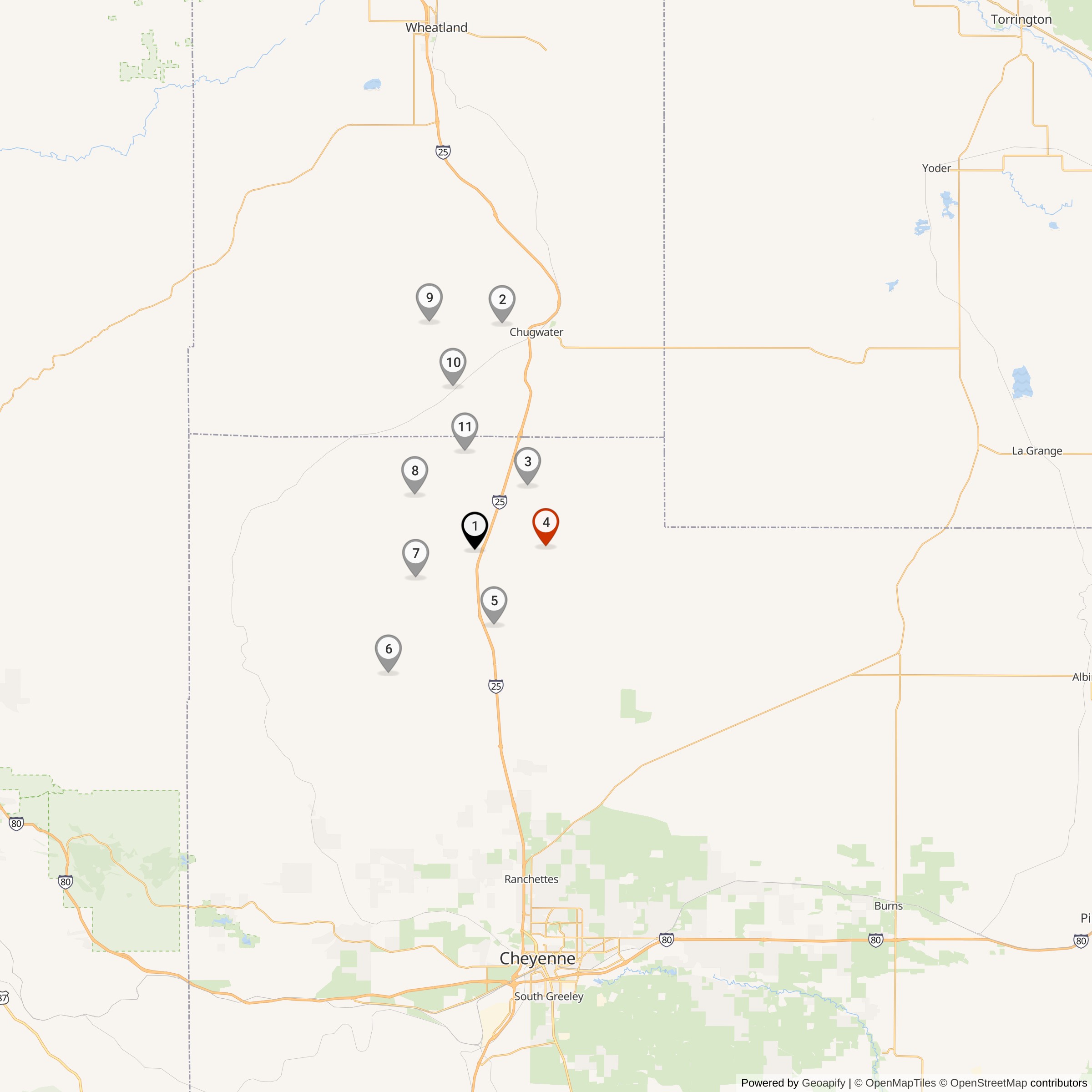
All Peacekeeper Missile Silo Locations
All Minuteman/Peacekeeper Missile Silo Locations