
Minuteman Missile Alert Facility Q-01 / Quebec 01 Launch Control Facility (Quebec-01 MAF), Chugwater Wyoming
Longitude: -104.902730
Site Type: Missile Alert Facility (MAF) - Launch Control Center (LCC)
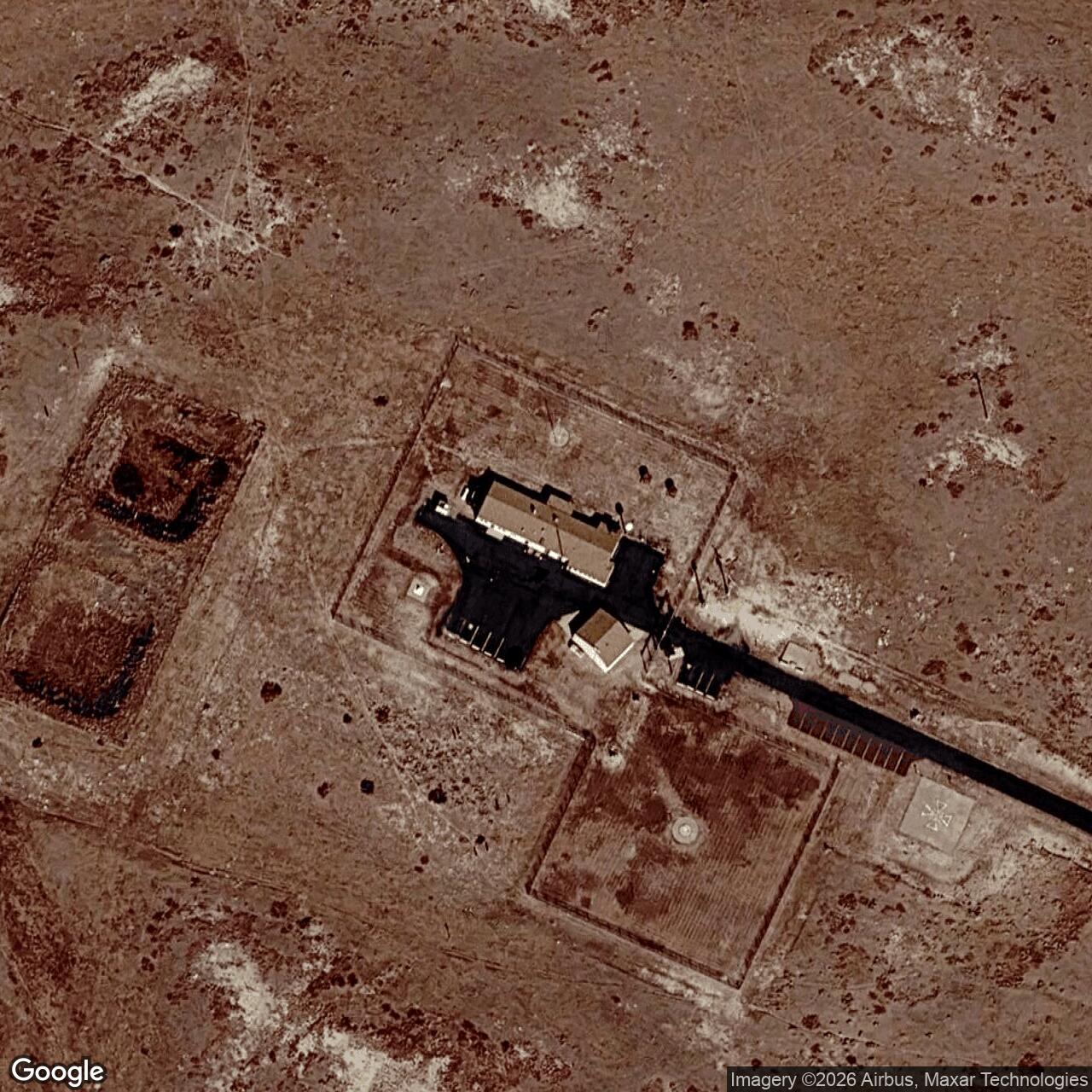
A MAF is located within a fenced area averaging about 5.5 acres. All facilities are enclosed by a security fence, except for a helicopter pad and a buried antenna consisting of two intersecting rings (each about four feet in diameter) buried four feet below surface. The sewage lagoon is enclosed by a separate fence. Top-side structures include a launch control support building (LCSB) and a detached garage. Subsurface structures include a launch control center (LCC) and a launch control equipment building (LCEB). Each MAF Controlled 10 Launch Facilities and their missile.
Missile Type: LGM-30B Minuteman I; LGM-30G Minuteman III; LGM-118A Peacekeeper
Parent Base: F.E. Warren AFB
Missile Wing: 90th Missile Wing; 90th Strategic Missile Wing during SAC era
Missile Squadron: 400th Missile Squadron / 400th Strategic Missile Squadron (former Peacekeeper-converted field; inactive after Peacekeeper retirement)
Current Site Use: Quebec 01 Missile Alert Facility State Historic Site and National Historic Landmark; publicly interpreted former Minuteman / Peacekeeper Missile Alert Facility with restored topside and underground LCC exhibits.
Site Ownership: State of Wyoming / Wyoming State Parks, Historic Sites and Trails
Accessible: Public access through Wyoming State Parks; guided underground capsule tours subject to site hours, seasonal operations, and tour rules; do not access associated LFs or surrounding lands without permission.
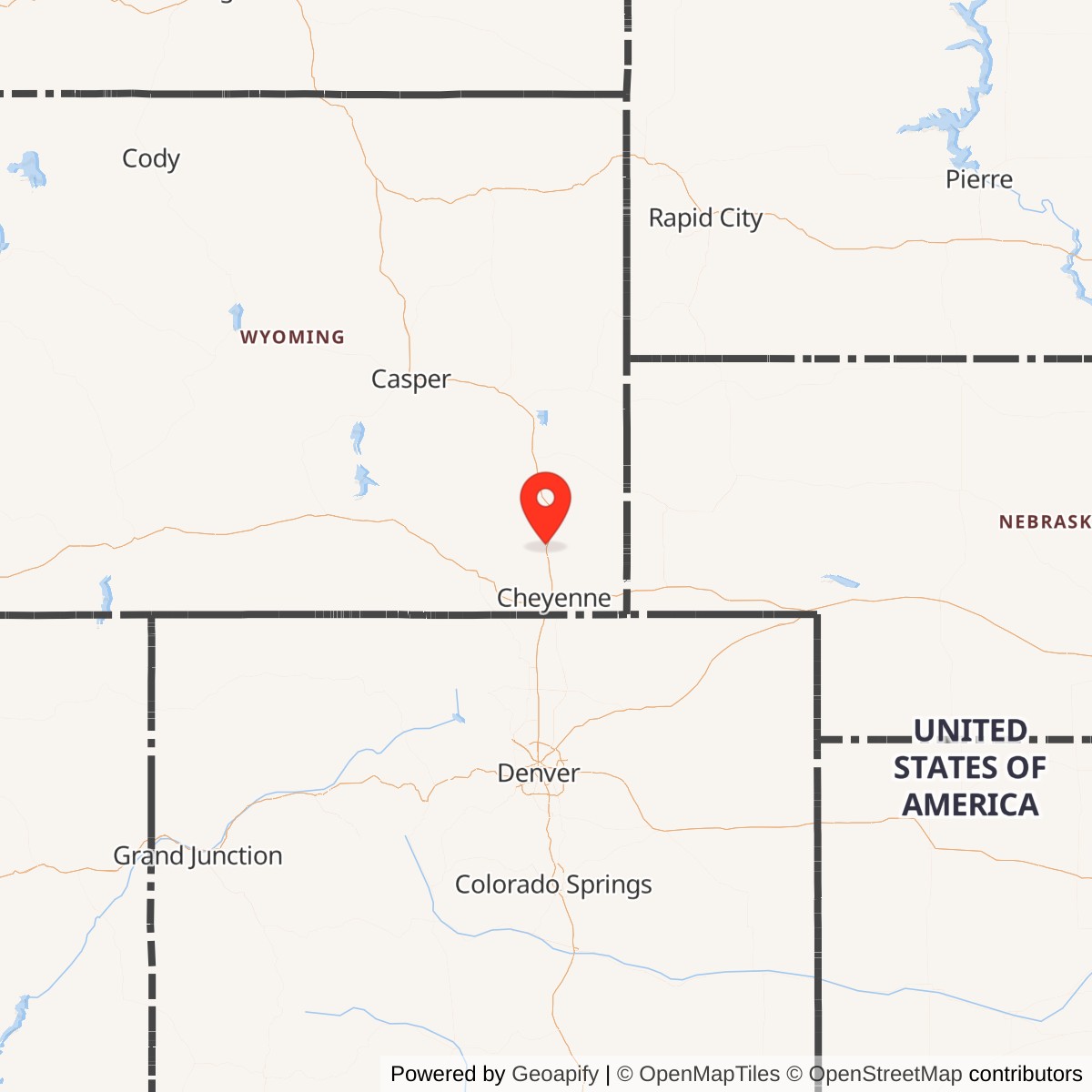
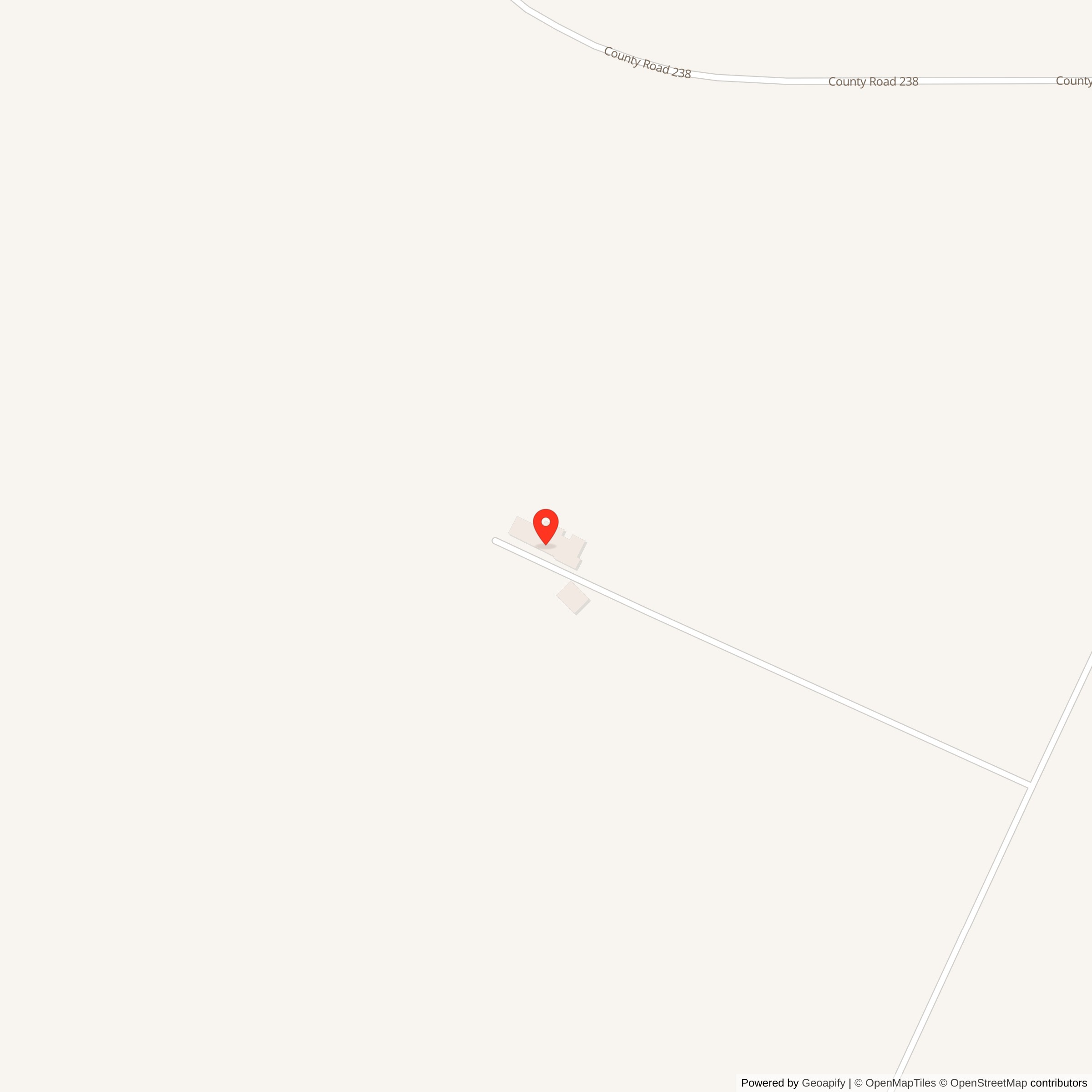
From Interstate 25, Quebec 01 can look like a modest fenced service compound on the Wyoming plains: a low support building, a garage, antennas, a gate, and a lot of sky. The reason it matters is below that ordinary surface. Quebec 01 was a Cold War command site that connected three eras of American land-based nuclear deterrence: Minuteman IB, Minuteman III, and the LGM-118A Peacekeeper. Today it survives not as an abandoned ruin or a sealed former military parcel, but as the Quebec 01 Missile Alert Facility State Historic Site and a National Historic Landmark.
Quebec 01, historically identified in National Park Service documentation as the Quebec 01 Launch Control Facility and also known as the Quebec 01 Missile Alert Facility, stood in the F.E. Warren Air Force Base missile field near Chugwater, Laramie County, Wyoming. It was part of the 90th Strategic Missile Wing during the Strategic Air Command era and was associated with the 400th Strategic Missile Squadron / later 400th Missile Squadron. As a Minuteman and Peacekeeper control site, Q-01 did not contain a missile of its own. Its underground Launch Control Center and associated Missile Alert Facility supported Quebec Flight, a group of ten unmanned launch facilities designated Q-02 through Q-11.
The site is inactive as an operational missile facility. The Peacekeeper mission at F.E. Warren ended on 2005-09-19, and the 400th Missile Squadron was later deactivated after the Peacekeeper retirement process. Unlike most former Peacekeeper Missile Alert Facilities, Q-01 was preserved and transferred for public interpretation. The National Park Service and Wyoming State Historic Preservation Office identify Quebec 01 as a nationally significant surviving Cold War resource; the Secretary of the Interior designated it a National Historic Landmark on 2023-12-11.
Location, Landscape, and Flight Layout
Quebec 01 is located at 2025 Road 238, southwest of Exit 39 on Interstate 25, in the Chugwater vicinity of Laramie County, Wyoming.The landscape around Q-01 is open high-plains ranch country roughly twenty-five miles north of Cheyenne and about fifteen miles south of Chugwater. This setting was not incidental. Minuteman and Peacekeeper sites were dispersed across rural country so that no single attack could destroy an entire missile force. The crewed control site was placed at a distance from its assigned launch facilities, while the launch facilities were also spaced apart from one another. The surface facilities at Q-01 were intentionally plain: a support building, vehicle storage building, security fencing, antennas, sewage lagoons, a helipad, and related utility and recreational features. The hardened launch-control capsule and launch-control equipment were underground.
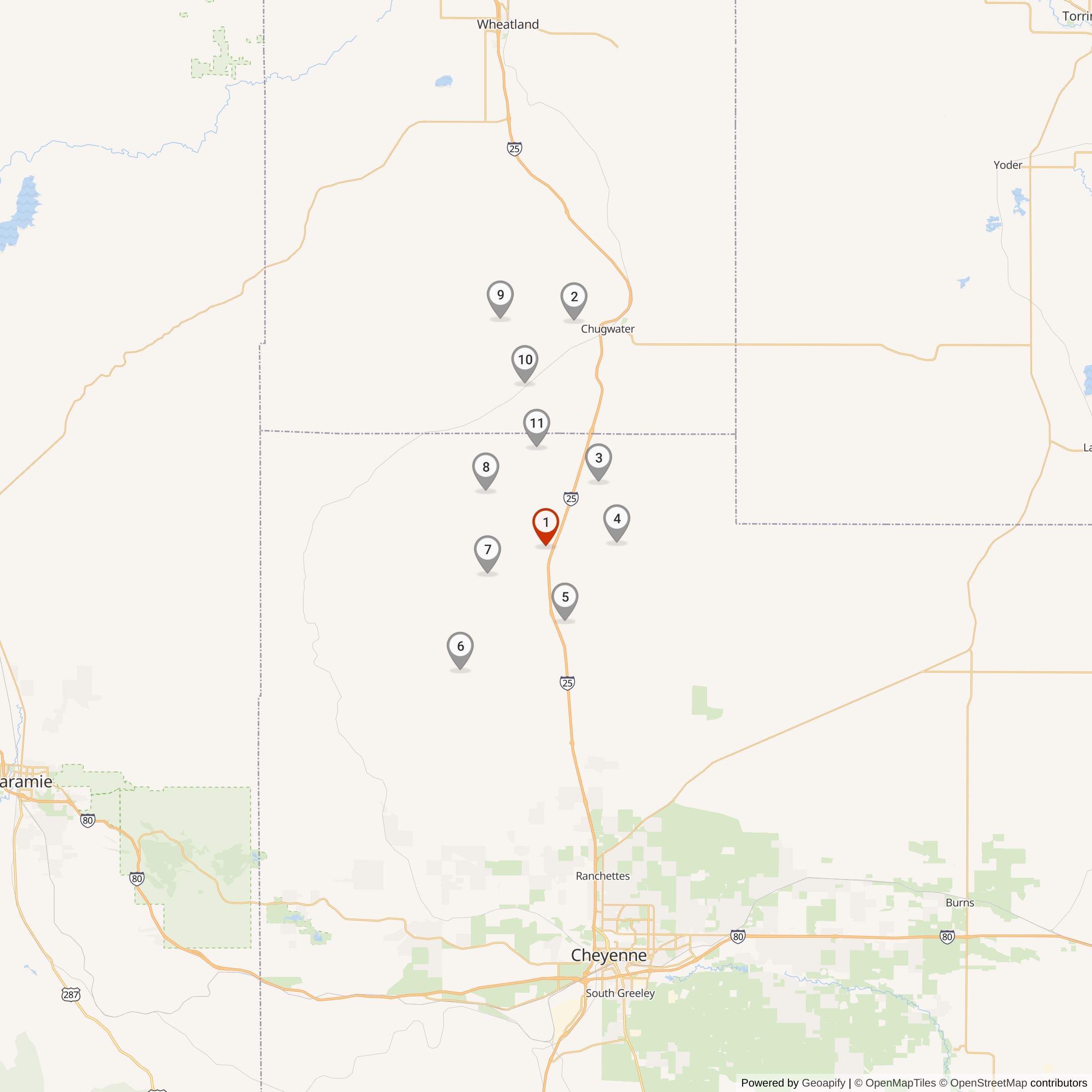
Quebec Flight consisted of Q-01 and ten associated launch facilities. Public coordinates from the U.S. ICBM Sites KMZ identify the flight as follows:
Q-01 Missile Alert Facility / Launch Control Center
Q-02 Launch Facility
Q-03 Launch Facility
Q-04 Launch Facility
Q-05 Launch Facility
Q-06 Launch Facility
Q-07 Launch Facility
Q-08 Launch Facility
Q-09 Launch Facility
Q-10 Launch Facility
Q-11 Launch Facility
Strategic and Cold War Context
Quebec 01 existed because the United States wanted a nuclear force that was survivable, dispersed, constantly ready, and difficult for an enemy to destroy in a first strike. The first generation of American ICBMs, including Atlas and Titan, had proven that intercontinental missiles could be fielded, but they were larger, more complicated, and more dependent on liquid-fuel operations than the solid-fueled Minuteman system that followed. Minuteman changed the geography of deterrence by spreading hundreds of missiles across the northern plains in hardened unmanned launch facilities controlled by underground crews.The F.E. Warren Minuteman field was one of the largest of these deployments. Warren already had deep missile history as an Atlas base, but the Minuteman system created a different kind of missile landscape: numerous unmanned launch facilities, crewed launch-control sites, hardened buried electronics and communications, and long miles of roads, cable, farms, ranchland, and alert facilities.
Quebec Flight later became part of a second major Cold War story: the Peacekeeper, also known during development as MX. The Peacekeeper was intended as a highly accurate, survivable, multiple-warhead ICBM for the later Cold War. Its basing became politically controversial, and several proposed basing modes were debated before the Air Force deployed the missile in modified Minuteman launch facilities at F.E. Warren. The Peacekeeper ultimately used fifty former Minuteman silos in the Warren missile field. Those fifty sites were assigned to the 400th Missile Squadron in Papa, Quebec, Romeo, Sierra, and Tango Flights. Q-01 therefore became one of the control points for the only operational Peacekeeper ICBM field in the United States.
Construction and Activation
The Ralph M. Parsons Company of Los Angeles and J.T. Banner & Associates of Laramie designed the F.E. Warren launch-control and launch-facility system. Morrison-Knudsen Company of Boise, Idaho, and its subcontractors received the major construction contract on 1962-10-15 for Warren's Minuteman facilities: twenty launch-control facilities and two hundred launch facilities. Contract modifications eventually raised the total cost of the Warren work to about $90.1 million, and construction extended from October 1962 to July 1964.The land history at Q-01 is unusually well documented because of the National Historic Landmark nomination. The initial 4.49 acres for Quebec 01 were purchased from Hoyt L. and Leona Duvall in 1962. Construction of Quebec Flight began in January 1963 and was completed in July 1964 as part of the 400th Strategic Missile Squadron. The 400th had been activated in July 1962 and became operational in June 1965. Quebec 01 and its assigned LFs were therefore among the later Warren Minuteman facilities to enter full operational service.
Several later additions shaped the Q-01 compound. A vehicle storage building was added in 1966. In 1969 the Air Force acquired additional land for the helipad and sewage-lagoon area, bringing the nominated historic property to 5.9 acres. Helicopter operations at F.E. Warren had begun in 1965 to support the dispersed missile field, allowing personnel and supplies to reach remote launch-control and launch-facility sites more efficiently in a landscape where distance and weather were constant operating factors.
Missile System and Technical Role
Q-01's first missile-era role was as a Minuteman IB launch-control facility. Minuteman was a three-stage, solid-fueled ICBM designed for long-term alert in hardened underground launch facilities. Unlike Atlas or Titan, it did not require the same liquid-fuel handling at the launch site, and it could remain ready for long periods with a small crew at the associated launch-control center rather than at each silo.F.E. Warren skipped the Minuteman II conversion that affected some other Minuteman fields. When Minuteman III became available, Warren's Minuteman force moved from Minuteman I directly to Minuteman III. Quebec 01 and the rest of the 400th Strategic Missile Squadron became the first unit operational with Minuteman III, completing the conversion in November 1973. Warren's full 200-missile Minuteman III conversion continued until January 1975.
Minuteman III added major capability changes, including improved guidance and multiple independently targetable reentry vehicle capability in its original configuration. Public National Park Service context describes Minuteman III as the next generation after Minuteman I and II, part of the evolution from massive-retaliation thinking to more flexible nuclear planning.
The Peacekeeper conversion changed Q-01's technical role again. The LGM-118A Peacekeeper was a four-stage, solid-fueled ICBM using a cold-launch system. Public Air Force sources describe it as capable of carrying up to ten independently targeted reentry vehicles and as the most advanced U.S. ICBM of its era. At F.E. Warren, existing 1960s Minuteman launch-control facilities and launch facilities were modified rather than replaced outright. For Q-01, that meant upgraded electronics and command equipment in the LCC; for the launch facilities, it meant modifications to receive and support the much larger Peacekeeper missile.
Launch Control, Alert Duty, and Daily Operations
The public image of an ICBM site often centers on the silo, but the lived daily rhythm of Quebec Flight was anchored at Q-01. The launch facilities were unmanned. The crewed work happened at the MAF and underground Launch Control Center. At Q-01, missile combat crew officers served in the underground capsule on alert tours, while topside personnel supported security, communications, food service, maintenance coordination, and facility operation.The Q-01 support building contained the kinds of spaces needed for a remote, round-the-clock alert facility: offices, kitchen and dining functions, sleeping quarters, restrooms, recreation/day-room space, and security-control functions. The underground Launch Control Center was a hardened capsule suspended inside a larger protective structure. This design was intended to isolate the crew capsule from blast shock and to allow two officers to monitor and, if ordered through the national command system, execute their launch-control duties.
The site's ordinary surface appearance was part of its Cold War character. Quebec 01 was not built to look dramatic. It was built to keep functioning. Security fencing, antennas, utility systems, a vehicle storage building, and the helipad all served the broader purpose of keeping a remote control site staffed, supplied, defended, and connected to its assigned launch facilities.
Assigned Launch Facilities
Quebec 01 controlled ten launch facilities: Q-02, Q-03, Q-04, Q-05, Q-06, Q-07, Q-08, Q-09, Q-10, and Q-11. During the Minuteman era, these were unmanned launch facilities assigned to Q-01's launch-control network. During the Peacekeeper era, the same Quebec Flight structure was retained, but the sites were modified for the LGM-118A.National Historic Landmark documentation describes Quebec Flight as lying on the west and northwest portion of the F.E. Warren missile field. Five of the launch facilities lay north of Q-01, three south, and two east of the old U.S. 87 / later Interstate 25 corridor. This pattern illustrates the basic logic of Minuteman and Peacekeeper basing: a crewed control node surrounded by a dispersed group of hardened missile sites, each separated by miles of rural Wyoming terrain.
Operational History
Q-01 became operational with the 400th Strategic Missile Squadron in June 1965. For its first years, the facility controlled Minuteman IB launch facilities in Quebec Flight. Warren's Minuteman force then moved directly to Minuteman III, with the 400th completing the conversion in November 1973. That made the squadron, including Quebec 01, central to the earliest operational Minuteman III story.The next major transformation came in the 1980s. The Peacekeeper program emerged from the MX missile debate, a long and politically charged argument over how to deploy a missile with multiple warheads without making the land-based force more vulnerable or destabilizing. After several basing proposals, the Air Force placed Peacekeeper in modified Minuteman silos at F.E. Warren. Public records consistently identify Warren as the only operational Peacekeeper deployment location. The 400th Missile Squadron operated the fifty Peacekeeper missiles in Papa, Quebec, Romeo, Sierra, and Tango Flights.
Work to convert the first LCC from Minuteman III to Peacekeeper began in April 1986. Quebec Flight was central to that initial deployment: Q-02 became the first launch facility to receive a Peacekeeper launch canister, and the full Quebec Flight became operational by December 1986. Strategic Air Command's missile chronology records that Peacekeeper deployment in existing Minuteman silos achieved initial operational capability on 1986-12-22 when the tenth missile at F.E. Warren was placed on alert. SAC chronology also records that the final Minuteman III in the 400th's conversion path was removed from alert on 1988-04-04 and that the 400th Strategic Missile Squadron completed its Minuteman III phaseout on 1988-04-11 in preparation for Peacekeeper deployment. All fifty Peacekeepers were operational by December 1988.
Q-01 was also one of the more publicly visible control facilities in the Warren field. National Historic Landmark documentation notes that because Q-01 was accessible from the highway, it was often used for distinguished-visitor tours and became known informally as a "showsite." That public-facing role later helped make it a strong preservation candidate.
Public Wyoming historical accounts describe a Peacekeeper missile collapse or drop within Launch Facility Q-10 on 1988-06-15, associated with a missile-away indication in the control room and later concerns about maintenance and safety procedures. GAO reporting from 1989 confirms that the Peacekeeper force reached full operational capability only after evaluation of a 1988 weapon-system failure, though some technical details remained classified. This was a Quebec Flight event rather than an incident at the Q-01 MAF compound itself, but it belongs in the Q-01 / Quebec Flight master history because Q-10 was one of Q-01's assigned launch facilities.
The National Historic Landmark nomination notes opposition in the late 1980s, including a rally at Q-05 and activists monitoring conversion activities at Q-02. These events were part of the wider public debate over MX/Peacekeeper basing and show how the national missile controversy reached specific Wyoming sites within Quebec Flight.
Deactivation, Disposal, Preservation, and Arms-Control
Peacekeeper deactivation began after the end of the Cold War and after the missile's strategic rationale changed. Public Air Force accounts state that Peacekeeper deactivation began in October 2002 and that the mission ended during a ceremony at F.E. Warren on 2005-09-19, when a missile combat crew officer at Papa One Launch Control Center confirmed that no Peacekeeper ICBMs remained on strategic alert in the 400th Missile Squadron. The 400th Missile Squadron was later deactivated, ending the unit's Peacekeeper mission.For most former Peacekeeper facilities, the post-deactivation story was disposal rather than preservation. Public Air Force and AFCEC New START materials describe the permanent elimination of F.E. Warren's fifty former Peacekeeper launch facilities under arms-control implementation. The launch facilities were to be filled and made visible for verification, with later grading and real-property disposition steps. Former Peacekeeper MAFs were also addressed in environmental and disposal planning, although New START required elimination of launch facilities rather than preservation of a MAF.
Q-01 followed a different path. In 2013, a programmatic agreement among the Air Force, Wyoming SHPO, and preservation partners allowed Quebec 01 to be preserved and transferred for use as a museum and interpretive facility. After Peacekeeper deactivation, equipment had been removed from the former MAF, but the Air Force later restored the facility with historic photographs, original drawings, salvaged components, and assistance from former missileers. Electronics and launch-related systems were restored for interpretation, not for operation.
The site soft-opened to the public in August 2019 and was formally dedicated in October 2019. It is now operated by Wyoming State Parks, Historic Sites and Trails. The NHL designation on 2023-12-11 gave the site the highest form of federal historic recognition for a historic property outside the National Park System.
Current Status and Site Use
Q-01 is preserved as the Quebec 01 Missile Alert Facility State Historic Site and National Historic Landmark. The site lies near Exit 39 on Interstate 25 in Laramie County, Wyoming. The state site interprets the Minuteman, Peacekeeper, Cold War, missileer, topside support, technology, and deactivation stories. Public access is managed by Wyoming State Parks and is subject to posted hours, tour rules, and seasonal operations.The preserved property includes the surface support building, vehicle storage building, antennas and related features, helipad area, sewage lagoons, and underground launch-control spaces. The public should treat all surrounding lands and any former launch facilities as restricted or private unless clearly opened by the lawful owner. Q-01 is an interpreted historic site; the other Quebec Flight launch facilities require separate site-by-site access and ownership verification and should not be entered without permission.
Chronology
- 1962 The initial 4.49 acres for Quebec 01 were purchased from Hoyt L. and Leona Duvall.
- 1962-10-15 Morrison-Knudsen Company received the major construction contract for the F.E. Warren Minuteman facilities.
- 1963-01 Construction of the Quebec Flight facilities began.
- 1964-06 The first Minuteman missiles for the F.E. Warren missile field arrived by rail from Hill Air Force Base.
- 1964-07 Quebec Flight facilities were completed.
- 1965-06 The 400th Strategic Missile Squadron, including Quebec 01 and Quebec Flight, became operational.
- 1966 A vehicle storage building was added at Q-01.
- 1969 Additional land was acquired for the helipad and south sewage-lagoon area.
- 1972-11 Minuteman III conversion at F.E. Warren began.
- 1973-11 Quebec 01 and the rest of the 400th Strategic Missile Squadron became operational with Minuteman III.
- 1975-01 F.E. Warren's full Minuteman III conversion was completed.
- 1985-10-30 SAC selected the first Peacekeeper combat missile crews.
- 1986-04 Work began to convert the first LCC from Minuteman III to Peacekeeper.
- 1986-12 Quebec Flight became operational with Peacekeeper.
- 1986-12-22 Peacekeeper deployment in modified Minuteman silos at F.E. Warren achieved initial operational capability.
- 1988-04-04 F.E. Warren maintenance technicians removed the fiftieth and last Minuteman III from alert before Peacekeeper conversion.
- 1988-04-11 The 400th Strategic Missile Squadron completed the Minuteman III phaseout begun in preparation for Peacekeeper deployment.
- 1988-06-15 A documented Peacekeeper weapon-system failure occurred at Q-10, one of Q-01's assigned launch facilities.
- 1988-12 All fifty F.E. Warren Peacekeepers achieved operational capability.
- 1990-04 A Soviet inspection team visited Quebec 01 as part of the START arms-control process.
- 1991 The National Historic Landmark period of significance ends with the close of the Cold War era.
- 2002-10 Peacekeeper deactivation began.
- 2005-09-19 The Peacekeeper ICBM mission ended at F.E. Warren; no Peacekeepers remained on strategic alert in the 400th Missile Squadron.
- 2006-04-20 A "last man out" marker at Q-01 recorded the site's deactivation after the Peacekeeper mission.
- 2006-07 The 400th Missile Squadron was deactivated after the Peacekeeper retirement process.
- 2011-02-05 New START entered into force, shaping subsequent elimination of former Peacekeeper launch facilities.
- 2013 A programmatic agreement provided a path for Q-01's preservation and transfer for museum use.
- 2017-12-12 Federal land-conveyance action supported transfer of Q-01 for preservation.
- 2019-08 Quebec 01 opened to the public in a soft opening.
- 2019-10 Quebec 01 was formally dedicated as a state historic site.
- 2023-12-11 Quebec 01 Launch Control Facility was designated a National Historic Landmark.
Read about the Peacekeeper Missile at F.E. Warren AFB
All Peacekeeper Missile Silo Locations
All Minuteman/Peacekeeper Missile Silo Locations