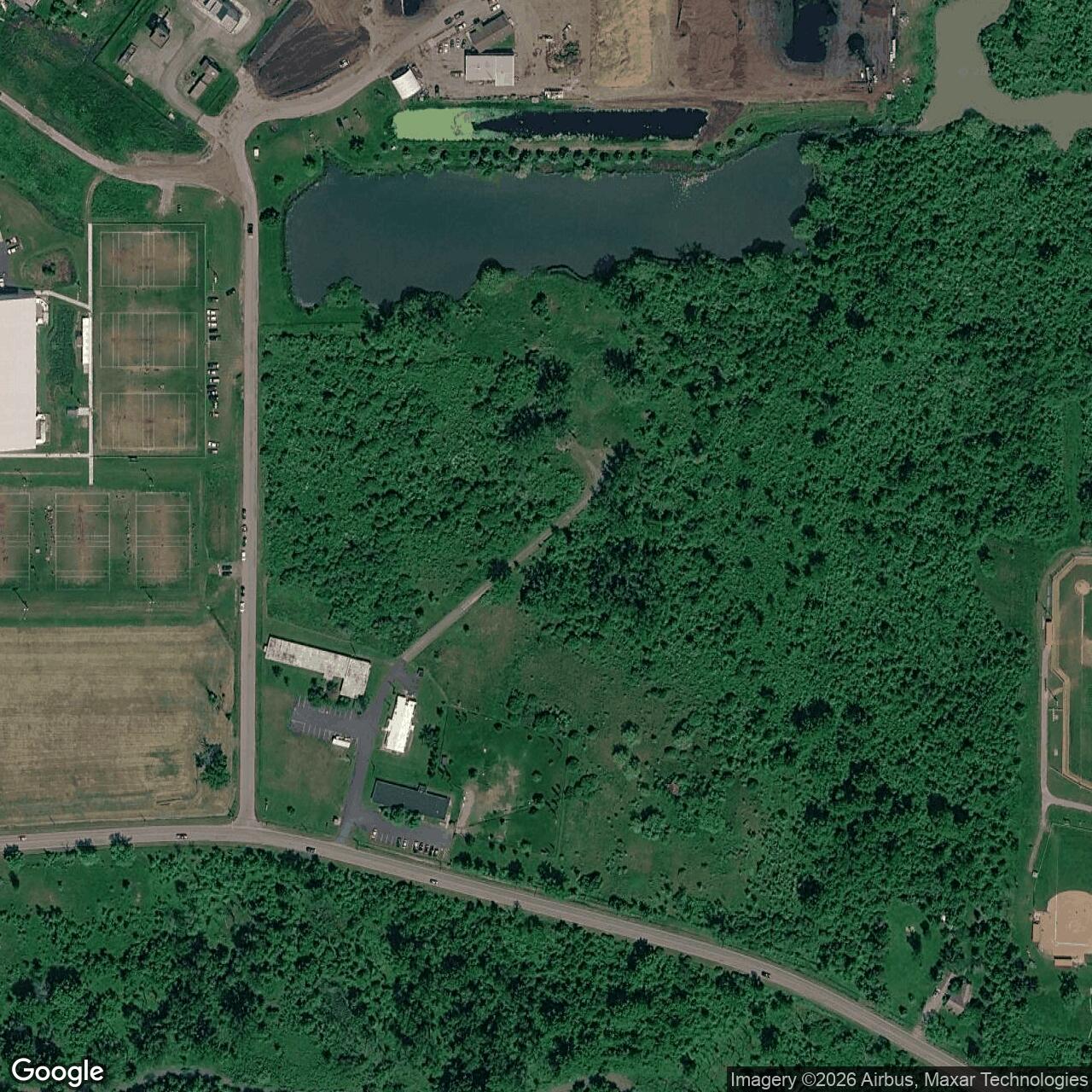
Nike Missile Site BU-09 IFC, Ransom Creek / Millersport New York
Longitude: -78.7191480026433
This location was part of the Niagara Falls-Buffalo Defense Area
Site ID: BU-09
Missile / battery configuration: Nike 1B,2C/30A/12L-A
This site controlled the missiles at the Launch Area located here.
Site Role: IFC
A typical Nike air defense site consisted of two separate parcels of land. One area was known as the Integrated Fire Control (IFC) Area. This site contained the Nike system's ground-based radar and computer systems designed to detect and track hostile aircraft, and to guide the missiles to their targets.
The second parcel of land was known as the Launcher Area. At the launcher area, Nike missiles were stored horizontally within heavily constructed underground missile magazines. A large, missile elevator brought the Nikes to the surface of the site where they would be pushed across twin steel rails to one of four satellite launchers.
Elaboration on how Nike worked here.
Missile Type: Ajax
The Nike Ajax was the first in the Army's family of guided missiles, and the world's first operational, guided, surface-to-air missile system. Nike Ajax had a burnout speed of Mach 2.3, a range of 25-30 miles, and a ceiling of 65,000 feet.
Designed to carry either nuclear and/or high-explosive warheads, the Nike Hercules missile could attack supersonic aircraft operating at altitudes in excess of 150,000 feet and at a range of more than 87 miles.
BU-09 was the kind of Cold War place designed to vanish into the local landscape. To a passing driver, the Ransom Creek and Millersport areas could look like ordinary Western New York countryside and suburban edge. To the Army, however, this was part of a hard-edged defensive arc around Buffalo, a city whose population, lakefront industries, transportation routes, and steel and iron works made it a serious Cold War target. BU-09 was not a later, nuclear-armed Hercules battery. It was an Ajax-era site, built for the first generation of operational Nike missiles and closed as the regional air-defense map was being consolidated in the early 1960s.
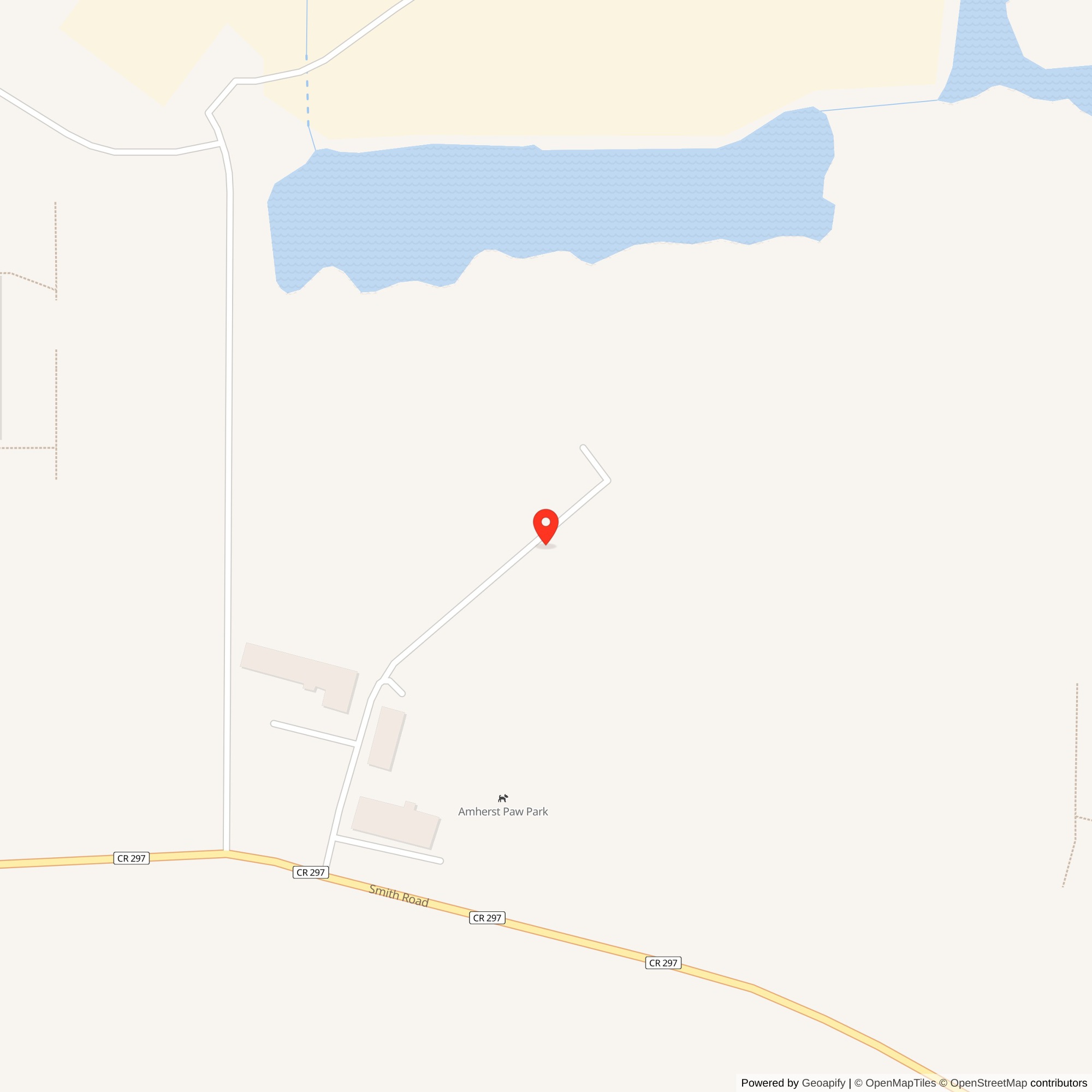
The site was split between two functional areas. The Integrated Fire Control, or IFC, area was associated with Ransom Creek. The launch area was associated with Millersport. That separation was not accidental. Nike batteries needed distance between the radar-guidance complex and the missile magazines so the tracking radars, guidance computer, and launch crews could work as one coordinated system while keeping the explosive launch area away from the administrative and radar compound.
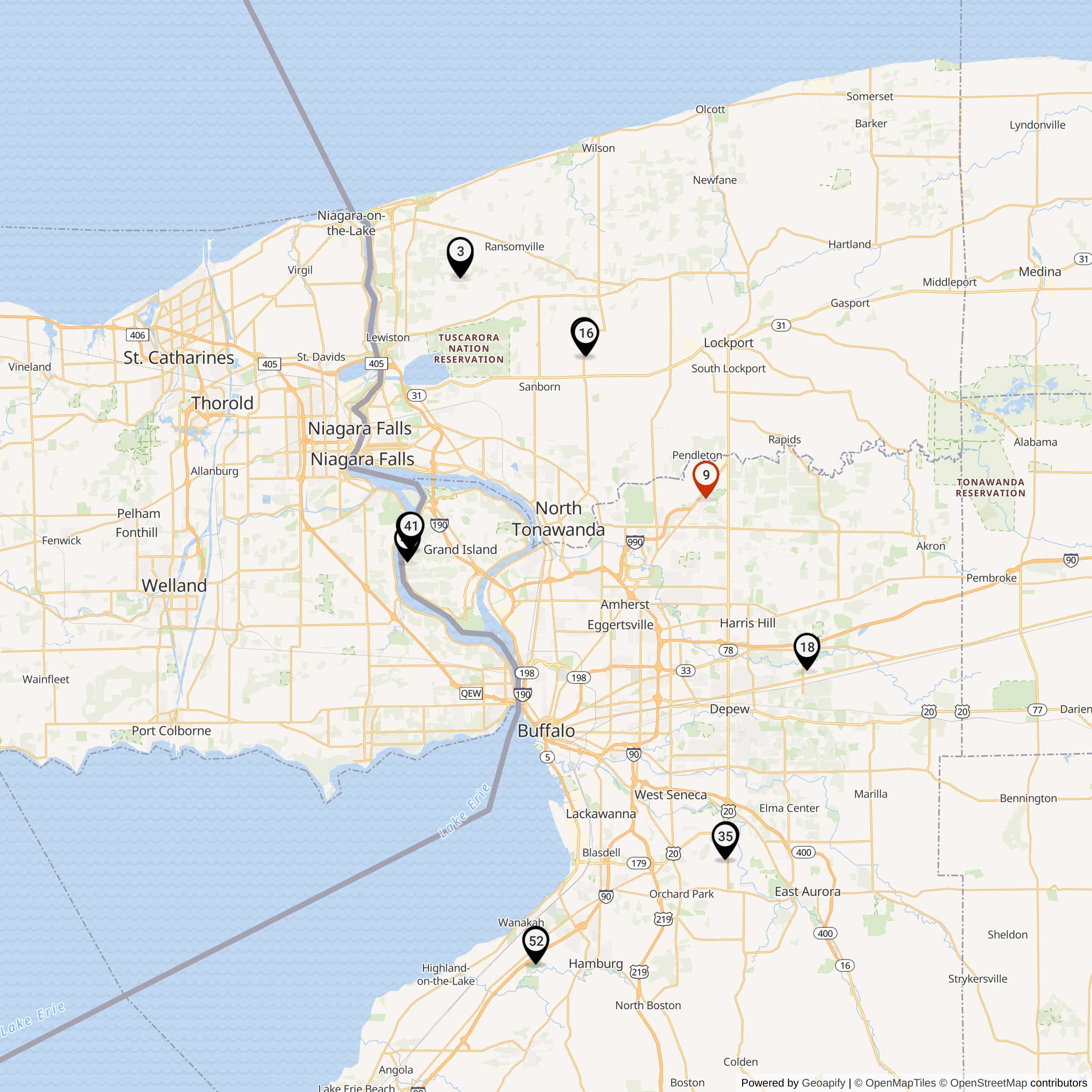
In regional terms, BU-09 covered the northeastern approach to Buffalo. It belonged to the Buffalo side of the old Niagara Frontier Nike layout, alongside BU-18 at Lancaster/Milgrove, BU-34/35 at Orchard Park, and BU-52 at Hamburg. Together, those Buffalo batteries helped create a defensive zone around the city and its industrial base. North of them, a second Niagara Falls group protected the power and industrial corridor around the falls. The two zones were merged in December 1961, the same month BU-09 left active service.
Why BU-09 Mattered
BU-09 mattered because it represented the first layer of guided-missile defense that replaced gun-based antiaircraft protection around major American target areas. Buffalo was not simply a city on a map. It was a Great Lakes industrial and transportation center. In a Cold War air attack scenario, its steel and iron mills, rail and road connections, and population made it part of the strategic geography of the Northeast.
The site also helps show the short life cycle of many Ajax-only batteries. The Nike Ajax system was revolutionary when it arrived in the 1950s, but it was quickly overtaken by the longer-range Nike Hercules and by larger changes in the air-defense mission. When Niagara Falls and Buffalo were consolidated into one defense area in December 1961, the Army retained only selected batteries for the Hercules era. BU-18, NF-16, and NF-41 were converted to Nike Hercules. BU-09 was not. Its closure marks the moment when the defense network was being thinned, modernized, and rebalanced around fewer, more capable launch sites.
Site Configuration and Decoded Meaning
The configuration for BU-09 is Nike 1B,2C/30A/12L-A.
Decoded in plain English, this means the launch area had one B-type missile magazine and two C-type missile magazines. The listed missile load was 30 Nike Ajax missiles. The site had 12 Ajax launchers. The final A indicates an Ajax-only launch configuration. In practical terms, BU-09 was a single Ajax battery rather than one of the larger double sites that could host 24 launchers.
The B and C magazine letters are important because they describe the underground storage and elevator arrangement, not just a count of buildings. Nike missiles were stored horizontally in underground magazines, then raised to the surface by elevators and moved into firing position on launch rails. At BU-09, the presence of two C magazines and the Ajax-only launcher designation tie the site firmly to the first-generation Ajax period.
How the Battery Worked
The IFC area was the eyes and brain of BU-09. From there, soldiers used acquisition and tracking radars to search for aircraft, identify a hostile target, follow its movement, and guide the missile after launch. A typical Nike Ajax battery used a Low-Power Acquisition Radar to detect aircraft, a Target Tracking Radar to follow the hostile aircraft, and a Missile Tracking Radar to follow the outgoing missile. The ground-based computer compared the paths of the target and missile and sent steering commands to bring the missile to an intercept point.
The launch area was the muscle. Crews maintained the Ajax missiles, handled the launchers, and brought missiles up from the underground magazines when the battery was ordered to fire. The two areas had to function as a single machine. The IFC could not defend Buffalo without the launch area, and the launch area could not fire effectively without the radar and computer guidance from the IFC.
Operations and Personnel Context
BU-09 operated during the years when the Army and the Army National Guard were building a new Cold War air-defense routine across the country. Nike sites were not remote battlefield camps. They were semi-hidden military installations embedded near communities, roads, farms, and town facilities. Soldiers trained for alerts, maintenance, radar tracking, launcher drills, communications checks, and the rapid transition from ordinary watch duty to combat readiness.
The human side of BU-09 is easy to miss because the remaining public references are often technical or environmental. But the battery's daily life would have been defined by crews working in two separated areas, keeping radars calibrated, keeping missiles and launchers ready, maintaining communications with higher headquarters, and living with the knowledge that the mission only mattered in the worst imaginable moment.
Role in the Wider Military Network
BU-09 was part of the Nike air-defense network around western New York. Before consolidation, the Buffalo and Niagara Falls areas operated as related but separate defensive zones. The Niagara Falls side was connected with Fort Niagara and later command-and-control arrangements at Lockport Air Force Station, where Nike command functions tied into the broader radar and air-defense picture. BU-09's local role was narrower but essential. It helped close the Buffalo sector's coverage by watching and defending one approach to the city.
The site's Ajax-only status also gives it a specific place in the timeline. It belongs to the first wave of Nike deployment, when many cities received multiple Ajax batteries in a ring around the target. It did not survive into the long Hercules period. That makes BU-09 a useful example of the short-lived early network, before fewer nuclear-capable Hercules batteries and changing Soviet bomber and missile threats reshaped American air defense.
Closure and Afterlife
BU-09 closed in December 1961. Its closure coincided with the merger of the Buffalo and Niagara Falls Defense Areas and the broader movement away from maintaining every Ajax battery. Later references identify the former site areas as Formerly Used Defense Sites, meaning the property moved out of active Department of Defense use and into non-military ownership or use.
The two halves of the site followed different post-closure paths. Public site inventories describe the former control area as partly reused, with some old military buildings used as offices while much of the original IFC fabric was removed or obscured. The launch area retained a stronger physical relationship to the missile mission. Inventories describe buildings in good condition and the former magazine area being used for vehicle storage by a local police department. That afterlife is typical of many Nike properties: radar towers disappear, launch doors are sealed or repurposed, and the most durable concrete and utility features survive because they remain useful.
Chronology
- 1956 BU-09 entered the Buffalo-sector Nike inventory as an Ajax battery divided between the Ransom Creek IFC area and the Millersport launch area.
- 1957-01 Battery A of the 465th Antiaircraft Artillery Missile Battalion moved to take over the nearly completed Amherst-area Nike site between Millersport and Swormville.
- 1958-09-01 The operating organization was redesignated under the Combat Arms Regimental System as part of the 2nd Missile Battalion, 62nd Artillery.
- 1958-1961 BU-09 remained an Ajax-only single battery with one B-type and two C-type magazines, thirty missiles, and twelve launchers.
- 1961-12 BU-09 closed as the Buffalo and Niagara Falls Defense Areas were merged and the regional network was reduced around selected Hercules batteries.
- After 1961 The former IFC and launch properties passed out of active Army use and entered municipal or other non-military reuse.
- Later condition Public inventories described partial office reuse at the former IFC property and vehicle-storage use at the former launch and magazine property.
List of all Nike Installations in the Niagara Falls-Buffalo Defense Area
List of all Nike Installations in New York