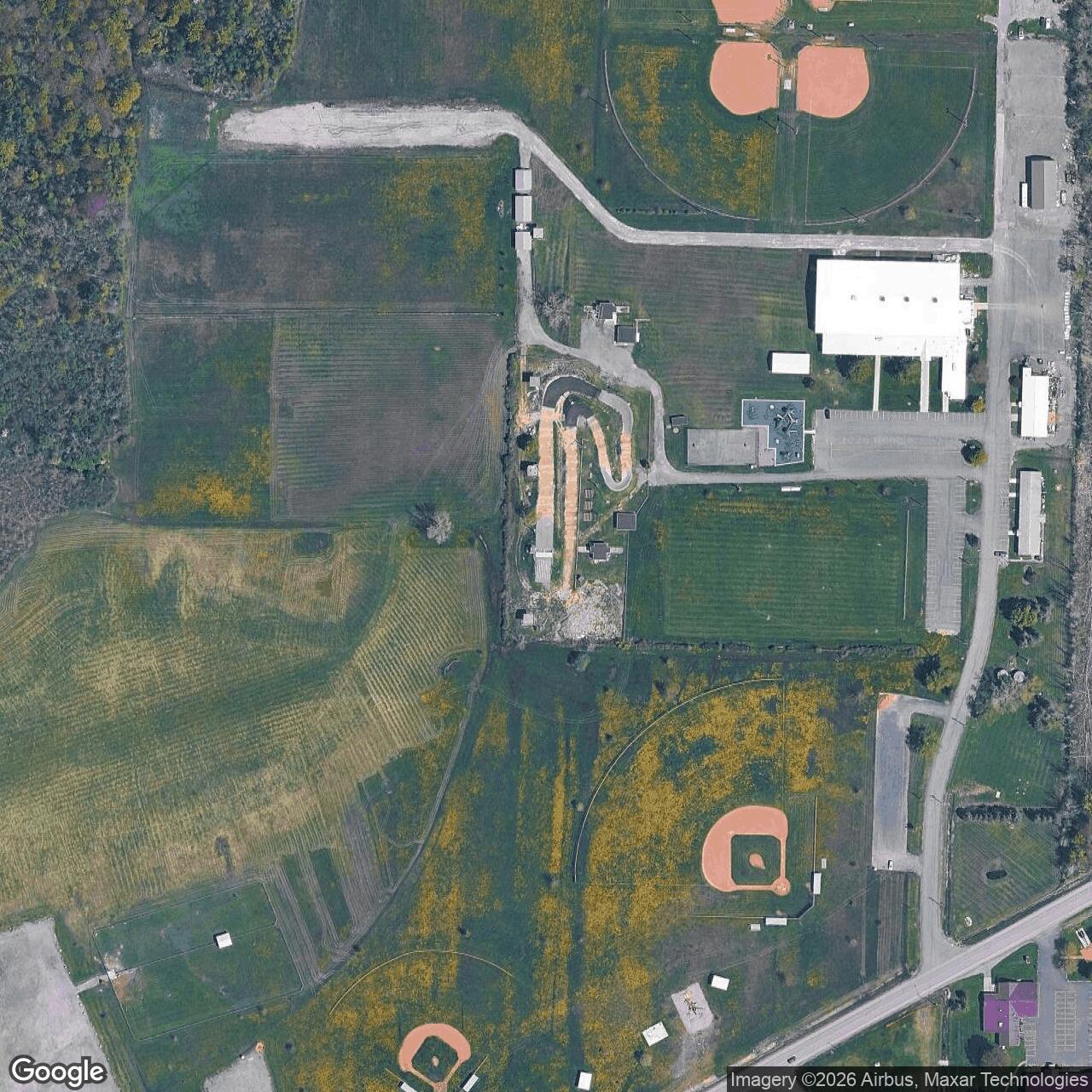
Nike Missile Site BU-52 IFC #2, Hamburg / Lake View New York
Longitude: -78.8886650331454
This location was part of the Niagara Falls-Buffalo Defense Area
Site ID: BU-52
Missile / battery configuration: Nike 2B,4C/60A/24L-AA
This site controlled the missiles at the Launch Area located here.
Site Role: IFC #2
A typical Nike air defense site consisted of two separate parcels of land. One area was known as the Integrated Fire Control (IFC) Area. This site contained the Nike system's ground-based radar and computer systems designed to detect and track hostile aircraft, and to guide the missiles to their targets.
The second parcel of land was known as the Launcher Area. At the launcher area, Nike missiles were stored horizontally within heavily constructed underground missile magazines. A large, missile elevator brought the Nikes to the surface of the site where they would be pushed across twin steel rails to one of four satellite launchers.
Elaboration on how Nike worked here.
Missile Type: Ajax
The Nike Ajax was the first in the Army's family of guided missiles, and the world's first operational, guided, surface-to-air missile system. Nike Ajax had a burnout speed of Mach 2.3, a range of 25-30 miles, and a ceiling of 65,000 feet.
Designed to carry either nuclear and/or high-explosive warheads, the Nike Hercules missile could attack supersonic aircraft operating at altitudes in excess of 150,000 feet and at a range of more than 87 miles.
BU-52 guarded Buffalo from a place that now looks more like ordinary municipal ground than a former front line of the Cold War. South of the city, along the Lakeview Road corridor in the Town of Hamburg, Army soldiers operated one of western New York's largest Nike Ajax installations. The site held sixty missiles, six underground magazines, twenty-four launchers, and two fire-control sections capable of engaging two targets at the same time.
The scale mattered. Hamburg was not a routine single Nike battery. It was a double site positioned on the southwestern side of the Buffalo defense ring, where its missiles could help protect the city's population, steel and iron industries, rail and highway approaches, and the larger industrial corridor near Lake Erie. Battery D of the 465th Antiaircraft Artillery Missile Battalion opened the position in 1956. The unit became part of the 2nd Missile Battalion, 62nd Artillery in 1958 and remained at Hamburg until the site closed in December 1961.
BU-52 never received Nike Hercules. Its military life ended just as the Buffalo and Niagara Falls defense areas were merged and the regional shield was being concentrated at fewer, longer-range Hercules sites. That short operational career left a long municipal afterlife. The former control compound became part of the Town of Hamburg Recreation Center and municipal office area, where four radar towers remain visible. The former launch property became a highway-maintenance, materials-storage, and police-training complex. The missile magazines were eventually demolished at the surface and filled below ground.
Operational records and local histories call the battery BU-52. Later federal environmental documents commonly identify the same property as BU-51/52. This history retains BU-52 as the principal site code because that is the code used in the national deployment inventory and local operational history, while preserving BU-51/52 as the later federal property designation.
Location and Physical Arrangement
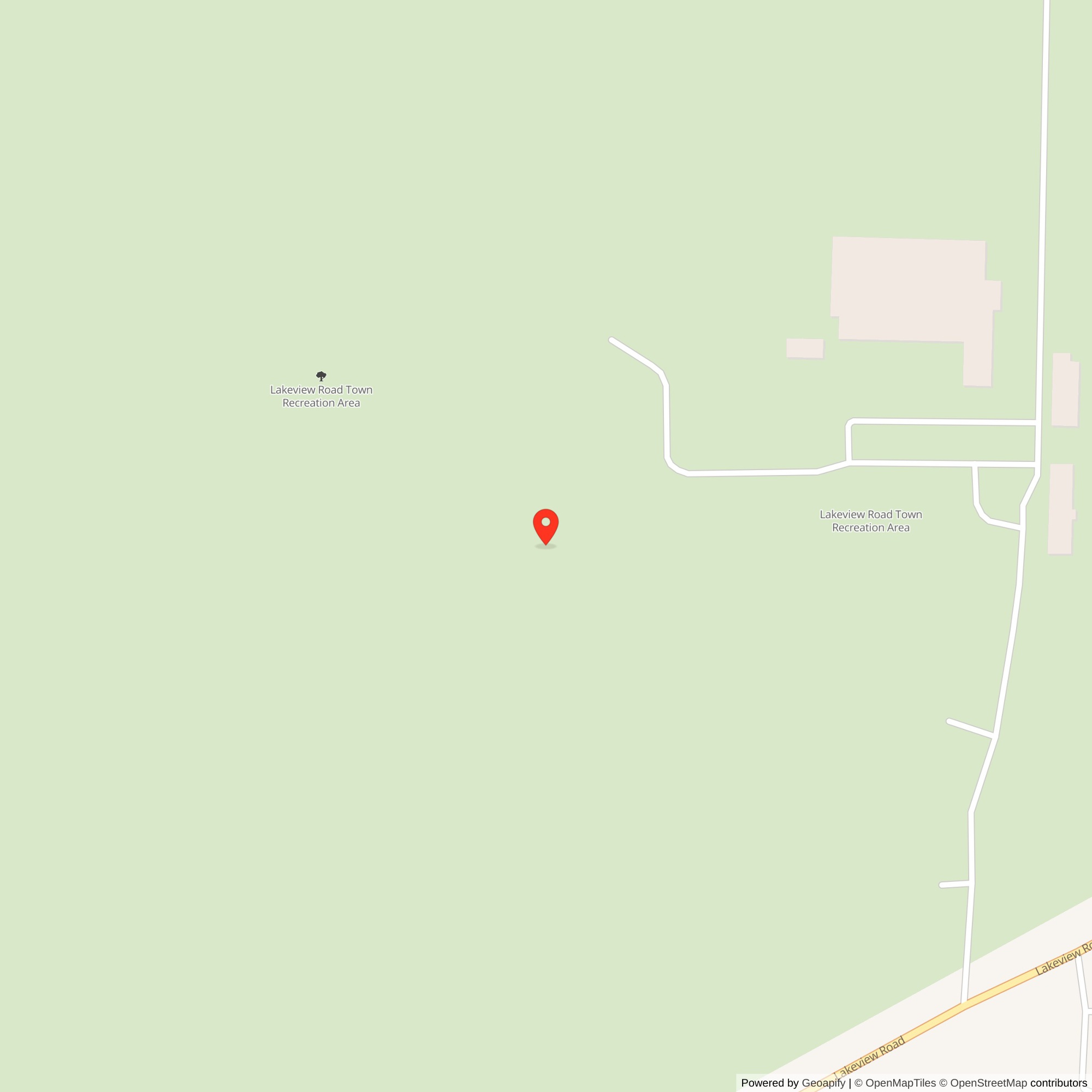
BU-52 occupied two principal Army properties along the Lakeview Road corridor in the Town of Hamburg, south of Buffalo and inland from Lake Erie. The Integrated Fire Control and administration area stood northeast of the launch complex, in the area now associated with the Town of Hamburg Recreation Center. The launch area lay farther along Lakeview Road, near East Heltz Road, on land now used by the Town Highway Department and other municipal functions.
An easement connected the two areas. The separation was essential to the Nike system. Radar operators needed an unobstructed view of the airspace and enough distance from the launchers to track both the target and the outbound missile accurately. At the same time, the launch crews needed space for underground magazines, missile assembly, hazardous propellant handling, generators, barracks, security fencing, and the surface launch positions.
Federal property records state that the Department of Defense acquired approximately fifty-seven acres through deeds and condemnation proceedings, along with roughly ninety-five acres of easements, between December 1955 and May 1956. The broader acreage included the launch, control, and connecting easement areas. The launch-area environmental project later focused only on the portion where missiles were assembled, maintained, fueled, stored, and launched.
The operational landscape was therefore much larger than the surviving municipal fragments suggest. Soldiers moved between two distinct compounds that functioned as one weapon system, while communications lines and access rights tied the fire-control radars to the launch crews.
Why Hamburg Was Chosen
Cold War planners did not place BU-52 at Hamburg by accident. Buffalo was one of the nation's major industrial and transportation centers. Its steel and iron mills, manufacturing plants, rail facilities, highways, port connections, and population made it a plausible target for Soviet long-range bombers. The Niagara frontier also contained hydroelectric power facilities and military installations whose importance extended beyond western New York.
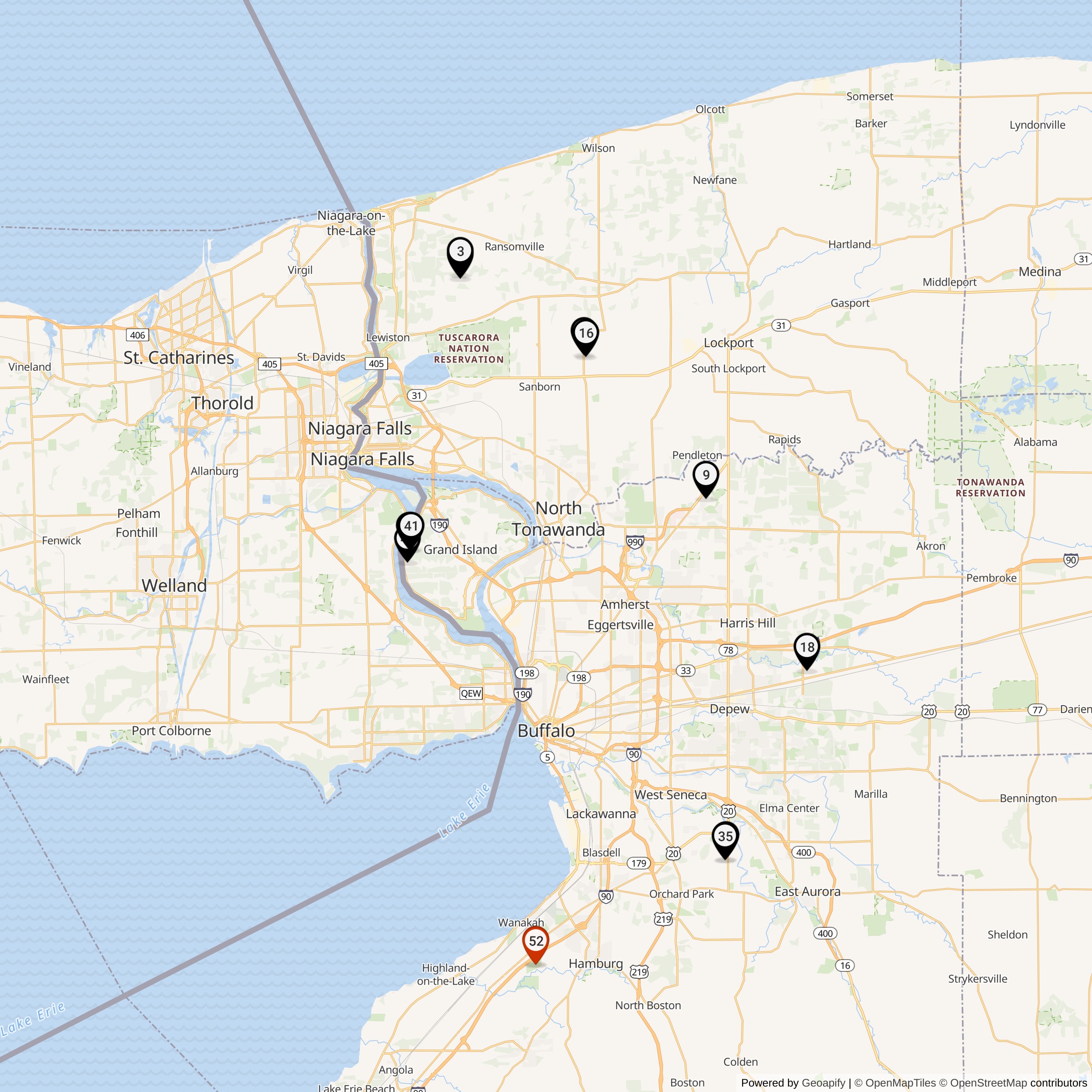
The Buffalo Defense Area used four principal Nike locations to form an overlapping ring around the city. Millersport and Ransom Creek covered the northeastern sector. Lancaster and Milgrove covered the eastern approaches. Orchard Park and Aurora stood southeast of the city. Hamburg covered the southern and southwestern approaches near Lake Erie.
BU-52's double-site capacity strengthened this sector. A single Ajax battery could guide one missile engagement at a time. Hamburg's two fire-control sections could conduct two simultaneous engagements, while the expanded launch area provided twice the magazine and launcher capacity of a standard battery.
The site also sat within a broader regional defense system. North of Buffalo, separate Nike batteries protected Niagara Falls and its power-generating facilities. The Buffalo and Niagara Falls defense areas remained distinct until their merger in December 1961. Hamburg closed in the same month, making BU-52 one of the last Ajax-only positions of the original Buffalo ring.
Construction and Activation
Construction proceeded during the rapid national expansion of the Nike network. Local history places BU-52's operational opening in June 1956. That date fits the activation of the 465th Antiaircraft Artillery Missile Battalion at Fort Niagara on 1956-06-01 and the battalion's assignment to the newly completed Buffalo-area sites.
Battery D of the 465th manned Hamburg. The battalion's other firing batteries operated the Millersport, Lancaster, and Orchard Park positions. Together, they replaced an earlier air-defense structure based largely on radar-directed antiaircraft guns.
A regional history table lists Battery D at Hamburg beginning in January 1956, but that date conflicts with the battalion's documented June activation and the local account that BU-52 became operational in June. The most reasonable interpretation is that January reflects an approximate planning, construction, or preliminary-assignment date. June 1956 is the better-supported operational opening.
The Army's arrival brought a substantial military presence to the Town of Hamburg. A double Ajax installation required more soldiers, more equipment, and more maintenance than a standard battery. The site included two fire-control sections and a launch complex with six magazines. Its workforce had to sustain continuous security, radar operation, missile maintenance, communications, power generation, and readiness.
Site Configuration and Decoded Meaning
The recorded configuration for BU-52 is Nike 2B,4C/60A/24L-AA.
Decoded in plain English, BU-52 contained two B-type underground missile magazines and four C-type underground magazines. Those six magazines supported a nominal inventory of sixty Nike Ajax missiles. The launch area had twenty-four surface launchers. The final AA identifies a dual Ajax arrangement with two Ajax firing sections.
A standard Ajax battery generally had three underground magazines, thirty missiles, and twelve launchers. Hamburg doubled each of those principal figures. It was therefore not merely a site with extra storage. Its two engagement channels and expanded launcher complex made it a true double battery.
The B and C letters describe magazine designs. Both types served the Ajax mission at Hamburg. The C magazine was an original Ajax-only design. The B magazine could be adapted at some installations for the larger Nike Hercules, but BU-52 was never converted.
The underground structures are often called silos in later environmental records. In Nike operating terminology, magazine is more precise. Ajax missiles were stored horizontally below ground. An elevator raised a missile to the surface, where rail equipment moved it toward a launcher. The missile did not stand vertically in a ballistic-missile silo.
The Hamburg Historical Society records six underground magazines and four launchers for each magazine, producing the total of twenty-four launchers. It also describes a readiness schedule in which launchers were assigned to different alert intervals, allowing the battery to maintain an immediate response while rotating equipment and crews through maintenance and lower readiness states.
The Integrated Fire Control Area
The control area was the electronic center of BU-52. Local records identify acquisition, target-tracking, and missile-tracking radar functions linked to ground-based guidance computers.
The acquisition radar searched the assigned airspace and displayed potential targets. Once higher command identified an aircraft as hostile and assigned it to Hamburg, a target-tracking radar locked onto the bomber. A missile-tracking radar followed the Nike Ajax after launch. The computer compared the positions of the target and missile, calculated steering commands, and transmitted corrections to the missile throughout its flight.
At the calculated intercept point, the ground system issued the burst command. Ajax used three conventional high-explosive warheads distributed along the missile body. The purpose was not to strike a bomber directly but to place a lethal fragmentation pattern across its flight path.
Because the system relied on command guidance, the IFC area was inseparable from the launch area. The missiles could not guide themselves. A radar outage, computer failure, communications break, or loss of power could prevent the battery from completing an engagement even if every launcher was mechanically ready.
BU-52's double-site designation meant that its control area could manage two engagements simultaneously. The exact arrangement of individual radar and computer components changed as the Army refined Nike operations, but the operational principle remained the same. Two firing sections gave Hamburg a greater ability to meet a concentrated bomber raid than an ordinary single battery.
The four radar towers that remain at the former control property are among the most visible surviving Cold War structures at BU-52. They show where radar antennas once stood above the surrounding terrain. Their survival gives Hamburg a physical landmark that many Nike IFC properties have lost completely.
The Launch Area
The launch area was the more industrial and hazardous half of the installation. It contained the underground magazines, elevators, launcher rails, missile-assembly facilities, generators, propellant-handling areas, storage structures, barracks, and mess facilities.
Nike Ajax used a solid-fueled booster but a liquid-fueled sustainer. The missile required careful handling of fuel and nitric-acid oxidizer. Federal site records identify facilities for missile assembly, nitric-acid storage and handling, onsite power generation, and drum storage. The presence of these facilities explains why later environmental work concentrated on the launch property rather than the control area.
The soldiers who worked there did not simply wait beside loaded launchers. They inspected airframes, tested electrical and hydraulic components, maintained elevators and rail equipment, serviced guidance components, handled hazardous propellants, operated generators, guarded the compound, and practiced rapid responses to alert orders.
The site's six magazines were the defining feature. When a missile was needed, an elevator raised it from protected storage to the surface. Crews transferred it along rails to one of the launchers and erected it for firing. The double site could distribute its sixty-missile inventory across twenty-four launchers while keeping other missiles underground for protection and maintenance.
The launch compound also included the ordinary infrastructure of a remote Army post. Barracks and a mess hall supported personnel. A sewage-treatment system stood across Lakeview Road. Access roads, fencing, guard facilities, fuel storage, and utilities made the installation a small self-contained military community.
Regular Army Operations
Battery D, 465th Antiaircraft Artillery Missile Battalion operated BU-52 during its first two years. The battalion belonged to the Regular Army and served under the regional air-defense command headquartered at Fort Niagara.
Daily operations combined routine and urgency. Most days were spent maintaining equipment, calibrating radars, drilling crews, testing communications, and meeting inspection standards. Yet the battery had to be ready to shift immediately from maintenance to combat alert if the national warning network detected an attack.
The Army periodically tested these units through exercises, readiness inspections, and live-fire programs at missile ranges. Site crews had to demonstrate that they could acquire a target, operate the engagement sequence, and maintain missiles safely under strict time standards.
BU-52 also participated in the public-facing side of continental defense. The regional command sponsored Armed Forces Week open houses under the "Power for Peace" theme. Events of this kind allowed local residents to see equipment and meet soldiers while reinforcing the message that the Nike batteries were a visible deterrent against bomber attack.
On 1958-09-01, the Army reorganized its combat-arms units under the Combat Arms Regimental System. The 465th was redesignated as the 2nd Missile Battalion, 62nd Artillery. Battery D remained at Hamburg, but its battalion identity changed.
The redesignation did not alter the basic BU-52 mission. The site continued as a Regular Army Nike Ajax position. Unlike Orchard Park and Model City, Hamburg was not transferred to a New York Army National Guard firing battery.
National Guard Training at Hamburg
Although the National Guard did not take operational control of BU-52, the site played a role in preparing local Guardsmen for the Nike mission.
A 1959 regional report stated that personnel of the New York Army National Guard's missile organization would undertake intensive training at Model City, Orchard Park, and Hamburg. The training was designed to prepare Guard soldiers to man selected Niagara frontier Nike sites, just as Guard units had previously operated antiaircraft-gun positions.
Hamburg therefore served as a training ground during the transition from Regular Army dominance toward a mixed Regular Army and National Guard defense. Guard soldiers learned the specialized routines of radar-guided missile operation at an active double Ajax site.
The operational transfer went elsewhere. National Guard batteries eventually assumed Model City and Orchard Park, while Hamburg remained with the 2nd Missile Battalion, 62nd Artillery until closure. This distinction helps explain BU-52's short life. The Army did not invest in a Guard takeover or a Hercules conversion there.
Why Hamburg Did Not Receive Nike Hercules
Nike Hercules was larger, faster, longer-ranged, and capable of carrying either a conventional or nuclear warhead. By the late 1950s, the Army began converting selected Ajax positions to the newer system.
Hamburg had two B-type magazines that could theoretically be modified, but four of its six magazines were C-type Ajax structures. A complete conversion would have required major changes to launch equipment, handling procedures, radar systems, communications, security, and training.
The regional defense plan instead concentrated Hercules at Lancaster, Cambria, and Grand Island. Those sites could cover larger sectors with fewer batteries. Millersport and Hamburg remained Ajax-only and were phased out in 1961.
BU-52's large Ajax capacity therefore became a liability as strategy changed. The site had twice the storage and launcher infrastructure of a standard battery, but its missiles still had the shorter range and conventional warheads of the first-generation system. The Army chose to retire the entire installation rather than modernize its six-magazine complex.
Role in the Wider Military Network
BU-52 was the southern component of a layered regional defense.
At the battery level, the IFC and launch compounds worked as a single weapon system.
At the Buffalo level, Hamburg overlapped with Millersport, Lancaster, and Orchard Park to create a defensive ring around the city and its industries.
At the Niagara frontier level, the Buffalo sites complemented batteries protecting Niagara Falls, Grand Island, Cambria, and Model City.
At the command level, the regional Army Air Defense Command Post received warning and target information, assigned hostile aircraft to batteries, and prevented multiple sites from wasting missiles on the same target.
The batteries also depended on maintenance and logistics organizations. Regional history notes that Niagara-Buffalo Nike sites received support from the Combined Field Maintenance Shop at the U.S. Army Support Center in Niagara Falls. Specialized technicians and supply channels kept radar, missile, computer, generator, and launcher systems functioning beyond the capabilities of individual firing batteries.
During BU-52's final months, the regional command structure was changing. The Army Air Defense Command Post moved from Fort Niagara to Lockport Air Force Station in 1961, where Army command equipment could be integrated more closely with Air Force radar and interceptor-control systems.
Hamburg closed as this consolidated network took shape. Its retirement was not an isolated local decision. It was part of the shift from numerous first-generation Ajax sites toward a smaller number of Hercules batteries linked to a more centralized command system.
Closure in December 1961
BU-52 closed in December 1961 after about five and one-half years of operational service. Battery D, 2nd Missile Battalion, 62nd Artillery ended the Hamburg mission.
The date is especially significant because the Buffalo and Niagara Falls defense areas merged in the same month. The merger formalized a regional system already linked by geography and command relationships. The surviving Hercules batteries at Lancaster, Cambria, and Grand Island could cover larger portions of the combined area.
Hamburg's closing also coincided with the retirement of Millersport, the other remaining Buffalo-sector Ajax position. The Army had already begun removing other Ajax-only sites or transferring selected positions to the National Guard.
For the Town of Hamburg, the shutdown ended a concentrated but brief military era. The installation had arrived rapidly in 1956, operated through the peak years of public concern over Soviet bomber attack, and disappeared from the active defense network before the Cuban Missile Crisis.
Federal Disposal and Town Ownership
The property did not pass immediately into local hands. On 1965-06-01, the Department of Defense transferred the former BU-52 property to the General Services Administration. In 1968, the federal government conveyed it to the Town of Hamburg.
That transfer shaped the site's survival. Rather than being sold as a single private parcel, the control and launch properties became municipal assets. The town adapted the land and buildings to recreation, offices, highway operations, storage, waste management, and police training.
The reuse preserved some features while destroying others. The IFC towers survived because the control property became a recreation and municipal area. The launch property was heavily altered because it became a working highway and storage complex.
The Town of Hamburg also operated a landfill immediately north of the former launch area from 1970 until 1984. Federal environmental documents distinguish that landfill from the military site because it was created after BU-52 closed and was not a Department of Defense activity.
Post-Military Use of the Control Area
The former IFC and easement areas became part of the Town of Hamburg's Lakeview recreational complex. Current or recent uses identified in official records include a playground, sledding hill, ball fields, a BMX bicycle track, municipal offices, and associated recreation facilities.
The four remaining radar towers are the control site's most important visible artifacts. They are concrete reminders of the acquisition and tracking functions once performed there. Their broad platforms once supported antennas rather than observation decks.
Later environmental work documented petroleum underground storage tanks associated with both the former military use and later municipal reuse. In 1999, an underground tank was removed from the former control property along with petroleum-affected soil. Four additional tanks were removed in 2003, and the related state spill case was closed.
The control area was excluded from the principal federal FUDS remedial project because investigators determined that its military activities did not include the same potential hazardous-material release sources as the launch area. That exclusion does not mean the property was untouched. It reflects the environmental program's focus on the missile assembly, oxidizer, fuel, and magazine areas.
Post-Military Use of the Launch Area
The former launch property became a heavily used municipal service complex. Official records identify Town Highway Department offices, truck garages, road-salt and gravel storage, construction-material storage, household hazardous-waste accumulation, electronic-waste storage, and scrap-metal handling.
The Hamburg Police Department also uses part of the former launch property for special-weapons training and a firearms range with an earthen backstop. The area once associated with military security and missile readiness therefore continues to support public-safety training, though in a very different form.
The six magazines survived below ground for decades. Local observers could once see the large steel elevator doors, magazine stairway entrances, and exhaust shafts. After 2015, the town filled the below-ground portions with asphalt road millings. The aboveground components were demolished, and portions of the concrete pads remain visible amid the working yard.
Federal documents note that the ground around some former magazines has settled or collapsed. The former launcher area is now mostly gravel, asphalt, buildings, municipal materials, and maintained lawn. It is not a restored or publicly interpreted missile site.
Environmental Investigations
The launch area's military use involved nitric-acid oxidizer, petroleum products, missile servicing, power generation, drums, underground tanks, sewage systems, and water that accumulated in the magazines. Those features led to decades of environmental study.
Investigations began in 1989 with groundwater, soil, magazine water, and tank-oil sampling. A 1991 inventory recommended further work on underground tanks, groundwater metals, and potential public-health risks. Additional municipal and federal studies followed during the late 1990s and early 2000s.
In 1999, the town removed a smaller underground tank from the launch area and a larger tank from the control area. Petroleum-affected soil was taken off site, and the state spill case was closed. Investigators also examined former acid-handling areas, storage tanks, septic systems, launch magazines, groundwater, nearby residential wells, surface water, and sediments.
The U.S. Army Corps of Engineers conducted a comprehensive remedial investigation from 2020 through 2022. Sampling evaluated soil and groundwater for chemicals potentially associated with former Department of Defense operations. Human-health and ecological risk assessments followed.
The state initially disagreed with the proposed federal no-action decision because it wanted additional evaluation of soil vapor and other issues. New York later collected soil-gas data, and the Department of Health concluded that the results did not indicate a potential public-exposure concern. The state then concurred with the final decision as it related to former Department of Defense activities.
The 2023 Record of Decision
In November 2023, the U.S. Army Corps of Engineers issued a final Record of Decision for the former BU-51/52 launch area.
The decision was No Action for hazardous and toxic waste associated with past Department of Defense activities. The Corps concluded that the investigated military-related constituents did not present an unacceptable risk to human health or the environment under current and anticipated site use. The New York State Department of Environmental Conservation and Department of Health concurred with that final decision for Department of Defense impacts.
The finding is limited in an important way. The Formerly Used Defense Sites program addresses contamination attributable to military operations. It does not transfer federal responsibility to later municipal activities, the adjacent town landfill, or other non-military sources.
Current Condition and Access
The former IFC area is part of a municipal recreation and office complex. Four radar towers remain visible and provide the clearest surviving evidence of BU-52's Cold War mission. Other original buildings may have been altered, replaced, or absorbed into later municipal development.
The former launch area is owned and operated by the Town of Hamburg. It functions as a highway-maintenance, storage, waste-handling, police-training, and firearms-training property. The underground magazines are no longer open structures, and the site is not a public museum.
Visitors should not treat the municipal work areas, police-training grounds, or former magazine locations as unrestricted historic attractions. The radar towers can be appreciated from the public recreation context without entering secured or operational areas.
Chronology
- 1955-12 to 1956-05 The federal government acquired the launch, control, and easement properties for the Hamburg battery.
- 1956-06 BU-52 entered operation as a dual Nike Ajax site under Battery D, 465th Antiaircraft Artillery Missile Battalion.
- 1958-09-01 The operating organization became part of the 2nd Missile Battalion, 62nd Artillery.
- 1958-11 Hamburg personnel departed for a Short Notice Annual Proficiency exercise at Red Canyon, New Mexico.
- 1959 New York Army National Guard personnel trained at Hamburg while preparing to assume selected regional Nike missions.
- 1961-12 BU-52 closed without receiving Nike Hercules, during the same month the Buffalo and Niagara Falls Defense Areas merged.
- 1965-06-01 The Department of Defense transferred the former property to the General Services Administration.
- 1968 The federal government conveyed the former battery property to the Town of Hamburg.
- 1970-1984 The Town operated a landfill immediately north of the former launch area; this was a post-military municipal activity rather than part of the Army mission.
- 1989-2003 Federal, state, and municipal investigations examined groundwater, soils, magazine water, and underground storage tanks.
- After 2015 The surface magazine structures were demolished and the below-ground portions were filled with asphalt millings.
- 2020-2022 The Army Corps of Engineers completed a comprehensive remedial investigation.
- 2023-11 The final Record of Decision selected No Action for the investigated Department of Defense-related contamination.
List of all Nike Installations in the Niagara Falls-Buffalo Defense Area
List of all Nike Installations in New York