Nike Missile Site NF-16 IFC #1, Sanborn / Cambria New York
Longitude: -78.838568055078
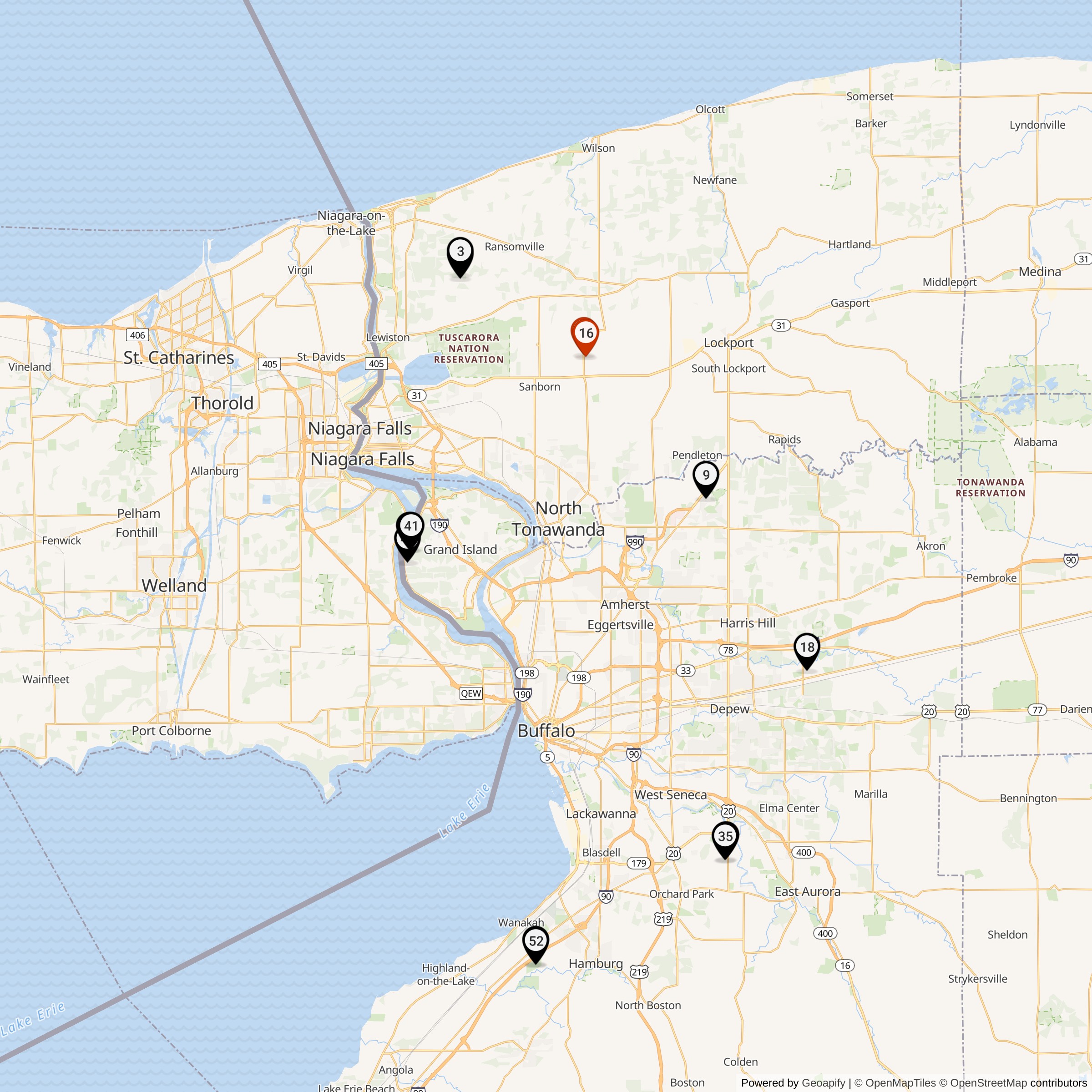
This location was part of the Niagara Falls-Buffalo Defense Area
Site ID: NF-16
Missile / battery configuration: Nike 2B,4C/18H,30A/24L-UA, (11L-H)
This site controlled the missiles at the Launch Area located here.
Site Role: IFC #1
A typical Nike air defense site consisted of two separate parcels of land. One area was known as the Integrated Fire Control (IFC) Area. This site contained the Nike system's ground-based radar and computer systems designed to detect and track hostile aircraft, and to guide the missiles to their targets.
The second parcel of land was known as the Launcher Area. At the launcher area, Nike missiles were stored horizontally within heavily constructed underground missile magazines. A large, missile elevator brought the Nikes to the surface of the site where they would be pushed across twin steel rails to one of four satellite launchers.
Elaboration on how Nike worked here.
Missile Type: Ajax/Hercules
The Nike Ajax was the first in the Army's family of guided missiles, and the world's first operational, guided, surface-to-air missile system. Nike Ajax had a burnout speed of Mach 2.3, a range of 25-30 miles, and a ceiling of 65,000 feet.
Designed to carry either nuclear and/or high-explosive warheads, the Nike Hercules missile could attack supersonic aircraft operating at altitudes in excess of 150,000 feet and at a range of more than 87 miles.
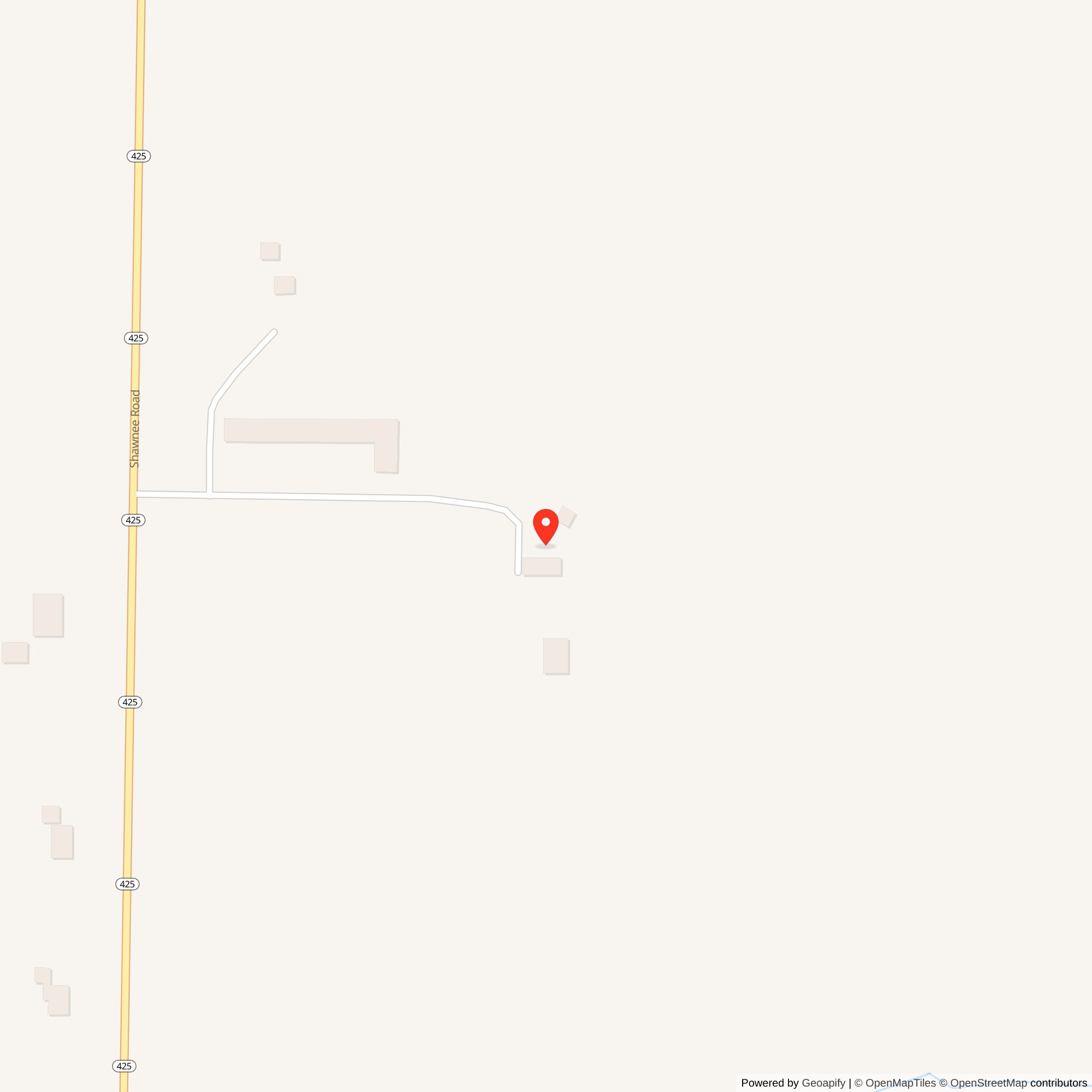
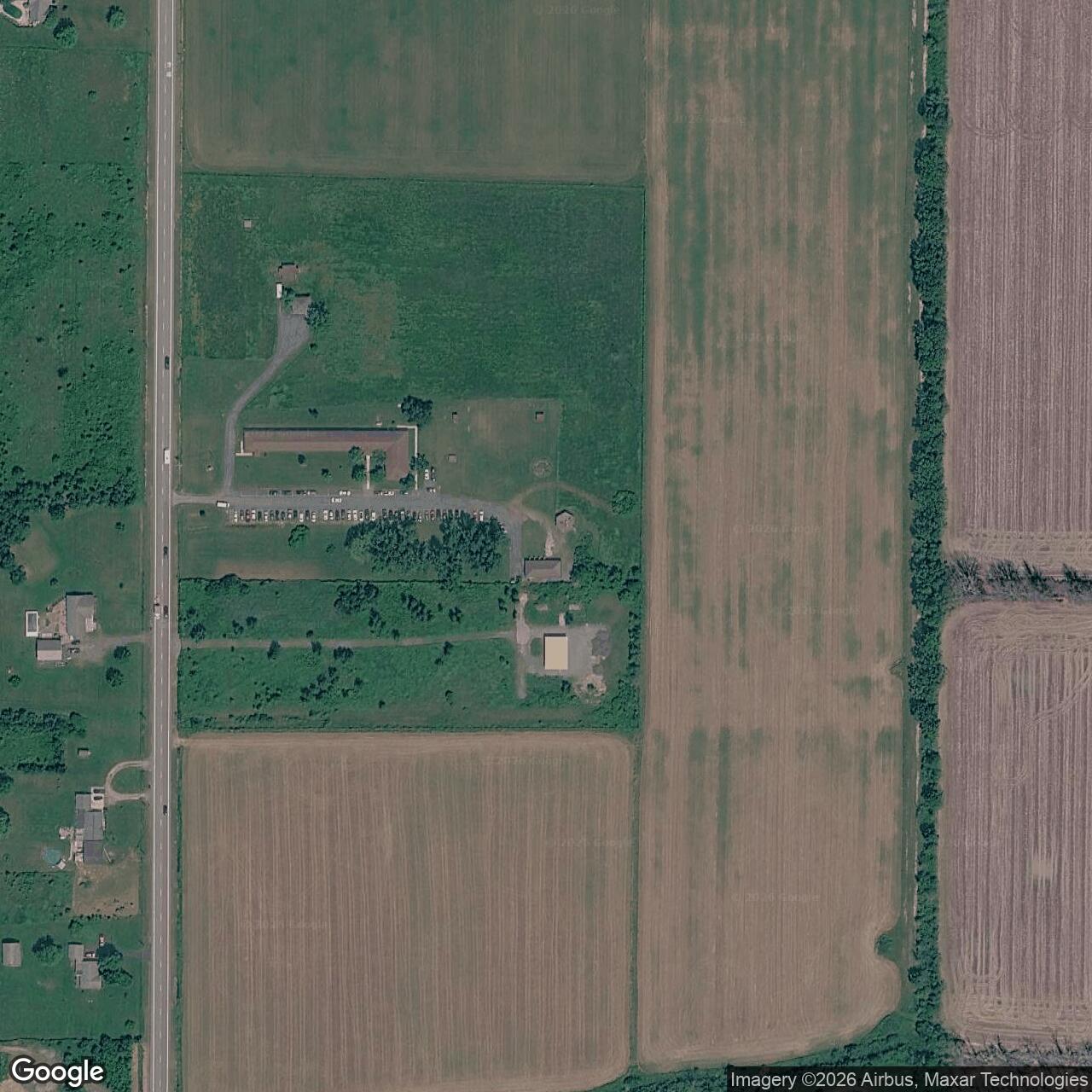
NF-16 began as one of the largest Nike Ajax batteries on the Niagara frontier and became the first site in the region to cross into the nuclear-capable Hercules era. Its radar crews worked from a compact fire-control compound near Shawnee Road in the Sanborn area. Its missile crews operated an expanded six-magazine launch complex near Upper Mountain and Cambria Roads. Between those two properties, the Army maintained a weapon system capable of defending the Niagara power and industrial district from Soviet bombers.
The site's history contains a transformation that cannot be reduced to a simple Ajax-to-Hercules label. NF-16 opened as a dual Ajax battery with two firing sections, sixty Ajax missiles, and twenty-four launchers. In May 1959, one half of that large installation was converted to Nike Hercules while the other half retained Ajax capability. The mixed phase carried eighteen Hercules missiles and thirty Ajax missiles. After the remaining Ajax half was retired, Cambria continued as a single Hercules battery with eleven Hercules-capable launchers.
Battery B of the 44th Antiaircraft Artillery Missile Battalion opened the site in 1955. The battery won an Army Air Defense Command service-practice award in 1957, became Battery B of the 1st Missile Battalion, 4th Artillery in 1958, and stayed at Cambria through the site's entire operational life. Unlike Grand Island and Lancaster, which passed to the New York Army National Guard in 1963, NF-16 remained a Regular Army position. That continuity made Cambria the surviving Regular Army firing battery and an institutional anchor of the Niagara-Buffalo defense.
The site's post-military history is equally visible. The Town of Cambria built its town hall, highway facility, community building, and recreation uses on the former launch property. Former barracks were reported converted to housing for older residents. The fire-control property entered commercial use, and its concrete radar towers remained prominent reminders of the Cold War mission. The missile magazines and launcher field, however, were largely erased or absorbed into municipal development.
Location and Split Installation
NF-16 occupied two separate properties in the rural Sanborn and Cambria landscape east of Niagara Falls.
The Integrated Fire Control, or IFC, area stood east of Shawnee Road and south of Upper Mountain Road. The launch area stood farther east near the intersection of Upper Mountain Road and Cambria Road. The two parcels were close enough to function as one battery but far enough apart to give the tracking radars an effective baseline for following both target aircraft and outbound missiles.
The control area was the electronic half of the installation. It contained the acquisition and tracking radars, fire-control operations facilities, communications equipment, generators, and support buildings. A veteran-drawn layout describes an approximately three-acre fenced compound with an access road, guard point, operating and control structures, radar positions, and utility equipment.
The launch area was the larger and more heavily secured half. It contained six underground magazines, missile-handling and assembly facilities, launchers, generators, barracks, a mess and administration area, and the specialized infrastructure needed first for liquid-fueled Ajax and later for nuclear-capable Hercules.
The separation shaped everyday work. Radar and computer crews at Sanborn could not complete an engagement without the launch crews at Cambria. The launcher crews could not guide a missile independently. Telephone, radio, data links, and carefully rehearsed procedures tied the two compounds together.
Why Cambria Mattered
Niagara Falls was one of the most strategically important industrial and power-producing districts in the northeastern United States. Its hydroelectric plants supplied energy far beyond the immediate city. The area also contained chemical and manufacturing plants, transportation routes, military facilities, and the international border.
A Soviet bomber force approaching from northern routes could cross Canada and the Great Lakes before reaching western New York. The Niagara frontier therefore required a defensive ring that could engage bombers before they reached the power and industrial targets.
NF-16 covered the eastern and northeastern approaches to Niagara Falls. Model City protected the northwestern sector. Grand Island guarded the southern approach between Niagara Falls and Buffalo. These sites initially formed the Niagara Falls Defense Area, commanded from Fort Niagara.
Cambria's dual Ajax capacity gave it extra weight within that ring. Two firing sections could handle separate targets, and the launch property held twice the normal Ajax missile and launcher capacity. When the Army later reduced the number of sites and concentrated the regional mission at Hercules batteries, Cambria's location and adaptable infrastructure made it the first choice for conversion.
Construction and Opening
Construction began in 1955 after the Army selected the rural Cambria area for a double Nike Ajax installation.
The men who would operate the site came from the 44th Antiaircraft Artillery Battalion. The unit had arrived in the Niagara region as a gun battalion, operating 90-millimeter antiaircraft positions before the guided-missile network was ready.
A cadre completed the thirty-two-week Nike Ajax course at the Army Air Defense School at Fort Bliss, Texas. The battalion was reorganized and redesignated as the 44th Antiaircraft Artillery Missile Battalion on 1955-03-22.
On 1955-06-14, the newly formed missile battalion assembled at Fort Niagara before leaving for its completed or nearly completed Nike sites. The following day, the local press reported that the soldiers were moving to Model City, Grand Island, and slightly later to Cambria.
Battery B became the operational unit at NF-16. Detailed assignment tables place it at Cambria beginning in June 1955. By September 1956, local reporting identified the Cambria Center battery as operational.
The opening period was therefore a phased process. Construction, equipment installation, training, movement from Fort Niagara, and full alert status did not all occur on a single day. I'm using 1955-06 as the best-supported opening date.
Site Configuration and Plain-English Decoding
The recorded configuration is Nike 2B,4C/18H,30A/24L-UA, (11L-H).
This code describes the site's transition from a dual Ajax battery to a mixed Ajax-Hercules site and finally to a single Hercules battery.
The launch area contained two B-type and four C-type underground missile magazines, six magazines in total.
In its original Ajax form, the double site supported approximately sixty Nike Ajax missiles and twenty-four Ajax launchers. Two fire-control sections could conduct separate engagements.
During the mixed conversion period, the site carried eighteen Nike Hercules missiles and thirty Nike Ajax missiles. The twenty-four launcher positions represented a combination of universal Hercules-capable launchers and Ajax-only launchers. The letters UA identify that mixed universal and Ajax arrangement.
The later notation, 11L-H, records the final single Hercules configuration. Once the remaining Ajax half was retired, NF-16 operated with eighteen Hercules missiles and eleven Hercules-capable launchers.
The conversion did not mean that all six original magazines served Hercules in the same way. Official construction records show that only one half of the dual site was converted during the Hercules work. Magazine structures, elevators, storage racks, launcher rails, and handling equipment had to be modified for the larger missile.
The underground structures are sometimes called silos. That term is misleading. Nike missiles were stored horizontally in underground magazines. Elevators raised them to the surface, and crews moved them along rails to launchers. They were not vertical ballistic-missile silos.
The Original Dual Ajax Battery
The first NF-16 was a high-capacity Ajax site.
Nike Ajax used a solid-fueled booster and a liquid-fueled sustainer. Missile crews handled fuel and nitric-acid oxidizer, assembled the missile and booster, installed batteries and guidance components, and connected three conventional fragmentation warheads.
The dual launch area required six magazines instead of the three found at a standard battery. It also required twenty-four launchers, expanded maintenance facilities, more generators, more missile-handling equipment, and a larger crew.
Two firing sections at the control property could prosecute separate targets. Each relied on acquisition radar, target tracking, missile tracking, a ground-based computer, and radio command links.
Ajax did not home on a bomber independently. The ground system tracked the bomber and missile at the same time. The computer calculated steering corrections and transmitted them to the missile. At the predicted intercept point, it sent the burst command.
The site's size gave Cambria a greater capacity to respond to a formation or multiple raid tracks. It also created a large daily maintenance burden. Every radar, launcher, elevator, missile, generator, and communications circuit had to remain ready for immediate use.
Battery B and the 1957 Service-Practice Award
Battery B quickly developed a strong operational reputation.
In November 1957, the Cambria and Model City batteries received the U.S. Army Air Defense Command Outstanding Service Practice Award after scoring three kills. Lieutenant Colonel Tom D. Collison commanded the 44th Missile Battalion. Lieutenant Rodney L. Waterstrat was identified as the Cambria Battery B commander when the award was announced.
The award was significant because a service practice evaluated an entire firing organization. A battery had to acquire and track targets, prepare missiles, operate its command system, follow exact procedures, and complete successful intercepts.
A site could hit its targets and still receive a poor evaluation if its crews violated procedures or allowed equipment outside prescribed tolerances. Cambria's recognition therefore reflected disciplined work across the IFC and launch compounds.
Battery B also participated in the ordinary community life of Fort Niagara's missile command. Its soldiers appeared in local competitions and public events, while the site itself remained a restricted military installation.
Training the Buffalo-Sector Missile Battalion
NF-16 served another local purpose during 1956.
The newly activated 465th Antiaircraft Artillery Missile Battalion was preparing to operate the Buffalo-area batteries at Millersport, Lancaster, Orchard Park, and Hamburg. Before those sites opened, members of the 465th received on-the-job instruction from experienced 44th Missile Battalion crews at Model City and Cambria.
This made NF-16 a training site for the expansion of the entire Niagara-Buffalo network. The Cambria soldiers were not only learning their own weapon system. They were helping produce the crews who would man the southern half of the regional defense.
The arrangement also shows how scarce Nike expertise was during the first deployment years. The Army could not rely only on schoolhouse instruction. New units needed practical experience at operational batteries where they could work with live equipment and established crews.
Redesignation Under the Combat Arms Regimental System
On 1958-09-01, the Army reorganized its missile units under the Combat Arms Regimental System.
The 44th Antiaircraft Artillery Missile Battalion was consolidated into the historic 4th Artillery lineage and became the 1st Missile Battalion, 4th Artillery. Battery B remained at Cambria.
The new designation linked the modern missile battalion to an artillery lineage that reached back to the eighteenth century. Its distinctive insignia carried the motto Audacia, meaning boldness or audacity.
For the crews at NF-16, the change was administrative and symbolic rather than a new mission. The same installation, soldiers, radars, missiles, and alert duties continued. The more important transformation was already underway at the launch and control compounds.
The First Niagara-Buffalo Hercules Conversion
The Army began converting selected Niagara-Buffalo batteries from Ajax to Hercules in 1958.
Cambria was the first.
A November 1959 regional report stated that NF-16 had completed its conversion in May. The same source identified Grand Island as the second Hercules site and Lancaster as the third.
The later unit history uses the reference NF-16R for the reconfigured battery. The suffix helped distinguish the Hercules-era organization from the original dual Ajax arrangement.
The conversion required more than substituting one missile for another.
Nike Hercules was forty-one feet long and much heavier than Ajax. Its solid-fuel sustainer simplified handling but required larger storage and launcher equipment. The magazines, elevators, racks, and surface rails assigned to the Hercules half needed modification.
The control area needed equipment capable of exploiting the missile's longer range, greater altitude, and higher speed. Fire-control and identification systems were upgraded, and later Improved Nike Hercules modernization added higher-power acquisition radar and enhanced electronic performance.
The launch area also became a nuclear-capable exclusion zone. Hercules could carry a conventional warhead, but its defining operational advantage was the ability to carry a W-31 nuclear warhead intended to destroy a bomber formation. Security fencing, armed guards, controlled access, and strict warhead procedures became part of daily operations.
A Mixed Ajax-Hercules Installation
For a period after the May 1959 conversion, NF-16 was neither the original all-Ajax double battery nor the later single Hercules site.
One half of the former dual installation operated Hercules. The other retained Ajax capability. This explains the unusually complex configuration code.
The mixed site held eighteen Hercules missiles and thirty Ajax missiles. Its twenty-four launch positions included both universal launchers capable of handling Hercules and older Ajax positions.
This transitional arrangement preserved greater launcher capacity while the regional defense network shifted toward Hercules. It also required crews to support two missile systems with different dimensions, fuels, warheads, handling procedures, and support equipment.
Ajax still required liquid-fuel servicing and oxidizer handling. Hercules used solid propellant and introduced nuclear security and warhead-control procedures. The launch property therefore carried physical traces of both generations at the same time.
The mixed phase did not last indefinitely. As the Army closed the remaining Ajax batteries and reduced the number of firing units, Cambria's Ajax half was retired. NF-16 then continued as a single Hercules battery with eleven active Hercules-capable launchers.
The IFC Area and Veteran-Documented Layout
The NF-16 fire-control compound is unusually well documented by a veteran-drawn site plan.
The plan depicts a fenced parcel of about three acres reached from Shawnee Road. A guard point controlled the entrance. Internal roads connected the operating buildings and radar positions.
The layout included target-tracking and missile-tracking radar positions, operations and control facilities, generator and utility structures, and vehicle or trailer locations. The arrangement reflects the mobile origins of much Nike equipment. Critical electronics were often housed in vans or structures derived from transportable systems even at permanent batteries.
The target-tracking radar followed the assigned aircraft. The missile-tracking radar followed the outbound Hercules and its coded beacon. The computer compared the two tracks and issued steering commands.
Each battery used a distinct missile beacon code so that one site's radar would not accidentally take control of another site's missile. This was especially important in the Niagara-Buffalo ring, where several Hercules batteries could engage targets in overlapping airspace.
The control compound later received equipment associated with Improved Nike Hercules. High-Power Acquisition Radar increased detection range and high-altitude coverage, allowing crews more time to react against faster aircraft or limited ballistic-missile threats.
Regular Army Continuity
NF-16 differed from Grand Island and Lancaster after April 1963.
The New York Army National Guard's 2nd Missile Battalion, 209th Artillery assumed the Grand Island and Lancaster Hercules batteries. Cambria stayed with the Regular Army.
The staff of the 1st Missile Battalion, 4th Artillery became the Niagara-Buffalo defense staff, while Battery B continued to man NF-16. The arrangement made Cambria the surviving Regular Army firing battery in the defense.
This continuity gave NF-16 an institutional role beyond its missiles. The battalion staff remained tied to the regional command post, maintenance system, and firing operations. Cambria provided the Regular Army presence within a defense increasingly dependent on Guard batteries.
In March 1966, the regional command was redesignated as the 101st Artillery Group, Air Defense. Battery B retained its identity as the 1st Battalion, Hercules, 4th Artillery and was attached to the group.
In November 1968, the organization became the 18th Artillery Group, Air Defense. The command title changed again, but the Cambria mission continued.
Role in the Wider Military Network
NF-16 operated inside a layered command system.
Fort Niagara initially housed the Army Air Defense Command Post and the headquarters that directed the Niagara Falls and Buffalo batteries.
In 1961, the command post moved to Lockport Air Force Station near Shawnee and Sanborn. The Army's Missile Master equipment was colocated with Air Force radar and interceptor-control systems.
Missile Master received radar tracks, identified potential targets, assigned them to individual Nike batteries, and helped prevent several sites from firing unnecessarily at the same aircraft.
In September 1963, the more compact BIRDIE command system replaced Missile Master at Lockport. The Niagara-Buffalo batteries remained linked to the wider Air Force SAGE and NORAD warning network.
Cambria also depended on the Combined Field Maintenance Shop and the U.S. Army Support Center on Porter Road in Niagara Falls. Specialized technicians repaired and supported radar, missile, computer, launcher, and generator equipment beyond the capabilities of the firing battery.
The battery's distinct beacon code prevented interference with neighboring sites. Its coverage overlapped Grand Island and Lancaster, giving the regional commander options for assigning targets across the Niagara-Buffalo ring.
SNAP at McGregor Range
A photograph of Cambria soldiers at McGregor Range in November 1964 preserves one of the site's most important training requirements.
The crew was participating in a Short Notice Annual Practice, or SNAP.
A SNAP began with an unexpected notification. The battery had only a few days to send two operating crews to the firing range near Fort Bliss. The group included IFC, launcher, maintenance, and missile assembly personnel.
At the range, the crews received missiles that had to be assembled, inspected, and prepared. They also had to set up and verify the fire-control equipment.
Each crew then carried out a firing mission against a simulated or radio-controlled target. Evaluators watched every procedure, tolerance, setting, and command.
Successful intercepts alone did not guarantee a passing score. A battery could hit its targets and still fail if it used an incorrect procedure or allowed equipment outside limits.
The November 1964 Cambria photograph (on page 29 of this pdf) gives a human face to that readiness system. It shows that NF-16's long operational life depended on repeated demonstration, not simply on equipment remaining inside fenced compounds.
Improved Nike Hercules
The Hercules system continued to evolve after NF-16's 1959 conversion.
Improved Nike Hercules introduced better radar performance, resistance to electronic countermeasures, and a limited capability against some ballistic missile targets. High-Power Acquisition Radar, or HIPAR, extended detection range and high-altitude coverage.
The regional history states that before the Niagara-Buffalo mission ended, the surviving sites received Improved Nike Hercules. It also notes that Grand Island became the third Improved Hercules battery in the defense during late 1963, which places Cambria among the earlier modernized positions.
At NF-16, Improved Hercules made the compact Sanborn control compound more capable than it had been in the Ajax years. The battery could search farther, manage higher-speed targets, and operate within a more automated regional command network.
The upgrade did not solve the larger strategic problem. Soviet long-range bombers were no longer the only or primary threat. Intercontinental and submarine-launched ballistic missiles could bypass the Nike bomber-defense ring. Improved Hercules had a limited anti-ballistic capability, but it could not provide a national shield against a large ICBM attack.
Public Open Houses and Community Presence
Although the nuclear-capable launch area was highly secure, the Army periodically opened portions of the missile system to the public.
In May 1969, the 18th Artillery Group announced Armed Forces Day open houses at Cambria, Grand Island, Lancaster, and the Lockport headquarters.
These events allowed local residents to see the soldiers, support buildings, and selected equipment associated with a mission that normally operated behind fences and controlled gates.
The open houses also served a public-relations purpose. By the late 1960s, the regional Nike force was competing for funds and attention during the Vietnam War and the growth of strategic missile programs. The Army wanted communities to understand both the military role and local economic presence of the batteries.
Cambria employed soldiers, civilian workers, contractors, and support personnel. Its payroll and purchasing connected the site to the Niagara County economy.
Deactivation
On 1969-12-19, local newspapers reported that the Cambria, Grand Island, and Lancaster Hercules batteries would close within 105 days.
These were the last three Nike sites in the Niagara-Buffalo Defense Area.
The announcement stated that approximately 265 people connected with the headquarters and Cambria site would be affected. The Erie County closures affected hundreds more. Local reporting estimated that the combined payroll impact exceeded one million dollars.
The Pentagon attributed the closures to Department of Defense funding reductions. The changing strategic threat, Vietnam-era budget pressure, and nationwide reduction of fixed Nike batteries all contributed.
The scheduled closing date was 1970-03-31.
Battery crews did not simply walk away. They packaged missiles, launchers, fire-control components, and other movable equipment for shipment to Army depots. Some equipment was inspected and refurbished for transfer to allied nations that continued to operate Nike Hercules.
Buildings, radar towers, roads, underground magazines, utilities, and other fixed structures remained. Those physical remnants shaped the site's municipal and commercial reuse.
Post-Military Reuse of the Launch Area
The former launch property passed into Town of Cambria use.
The town developed its principal municipal campus along Upper Mountain Road. The current town hall is at 4160 Upper Mountain Road, and the highway department is at 4164 Upper Mountain Road.
The site also supported a community building and playground. State military-history records report that former barracks were converted into elderly apartments.
This reuse changed the appearance of the launch complex. Municipal buildings, parking, highway vehicles, maintenance materials, recreation areas, and landscaping replaced the tightly controlled missile compound.
Very little of the launcher field remains obvious. Later inventories describe the area as heavily altered, with only faint traces of a magazine or launch feature visible. Other portions became overgrown or were incorporated into maintenance and storage areas.
The site's conversion into a town center is historically appropriate in an unexpected way. A place built for emergency national defense became the everyday administrative center of the local community.
Post-Military Reuse of the IFC Area
The former IFC property entered private commercial use.
For many years, site histories identified Franklin Traffic Services, a transportation and logistics firm, at 5251 Shawnee Road. The concrete radar towers were reported still standing.
Public property records show that the approximately twelve-acre office property sold on 2022-06-30. A 2026 New York State Department of Environmental Conservation notice lists 3d Niagara Development LLC as the permittee while retaining Franklin Traffic Services as the facility name.
These records show that the property has changed ownership or operating arrangements since the older site surveys. The complete present-day ownership and use of every building should therefore be described cautiously.
The radar towers remain the site's most historically important reported structures. Their survival has made the IFC property more recognizable than the former launch area. They show where the tracking and acquisition systems once rose above the rural landscape.
The property is private and active commercial or industrial land. It is not a public historic site, and access should not be assumed.
Current Condition and Access
The former launch area is now a working municipal complex. The Town of Cambria confirms that its town hall and highway department remain on Upper Mountain Road.
The missile magazines and launcher positions have largely disappeared beneath later development, fill, vegetation, pavement, and municipal operations. Former barracks and support structures may survive only through altered reuse or replacement.
The former IFC area remains private. Older surveys and photographs document concrete radar towers and reused buildings. The 2022 property sale and 2026 state permit record show continuing commercial activity, but a new comprehensive structural survey was not available.
Neither property should be treated as an abandoned exploration site. The launch area contains active town operations. The IFC area is privately controlled.
The best public interpretation comes from veteran photographs, the IFC site plan, unit histories, aerial imagery, and the visible municipal and radar-tower remnants.
Chronology
- 1955-03-22 The 44th Antiaircraft Artillery Battalion was redesignated as the 44th Antiaircraft Artillery Missile Battalion.
- 1955-06 Battery B moved from Fort Niagara into the Cambria and Sanborn Nike position.
- 1956 Cambria crews helped provide practical training to personnel preparing to man the Buffalo-sector Nike batteries.
- 1957 Battery B received the U.S. Army Air Defense Command Outstanding Service Practice Award after a successful service practice.
- 1958-09-01 The unit became Battery B, 1st Missile Battalion, 4th Artillery.
- 1959-05 NF-16 completed the first Nike Hercules conversion in the Niagara-Buffalo Defense.
- 1959-early 1960s The site passed through a mixed Ajax-Hercules phase before the remaining Ajax half was retired.
- 1961 The regional Army Air Defense Command Post moved from Fort Niagara to Lockport Air Force Station.
- 1963 Grand Island and Lancaster transferred to the New York Army National Guard, while Cambria remained the surviving Regular Army firing battery.
- 1964-11 NF-16 personnel completed a Short Notice Annual Practice at McGregor Range; the surviving crew photograph was taken during this exercise.
- 1966-03 The regional organization became the 101st Artillery Group, Air Defense.
- 1968-11 The command became the 18th Artillery Group, Air Defense.
- 1969-05 Cambria participated in an Armed Forces Day open house.
- 1969-12-19 The Army announced that Cambria, Grand Island, and Lancaster would close within 105 days.
- 1970-03-31 NF-16 ended active service.
- After 1970 The launch property became the Town of Cambria municipal campus, while the IFC property entered private commercial use.
- 2022-06-30 Public property records documented sale of the former IFC commercial property.
- 2026-02-11 A New York State environmental notice listed 3d Niagara Development LLC as permittee under the Franklin Traffic Services facility name.
List of all Nike Installations in the Niagara Falls-Buffalo Defense Area
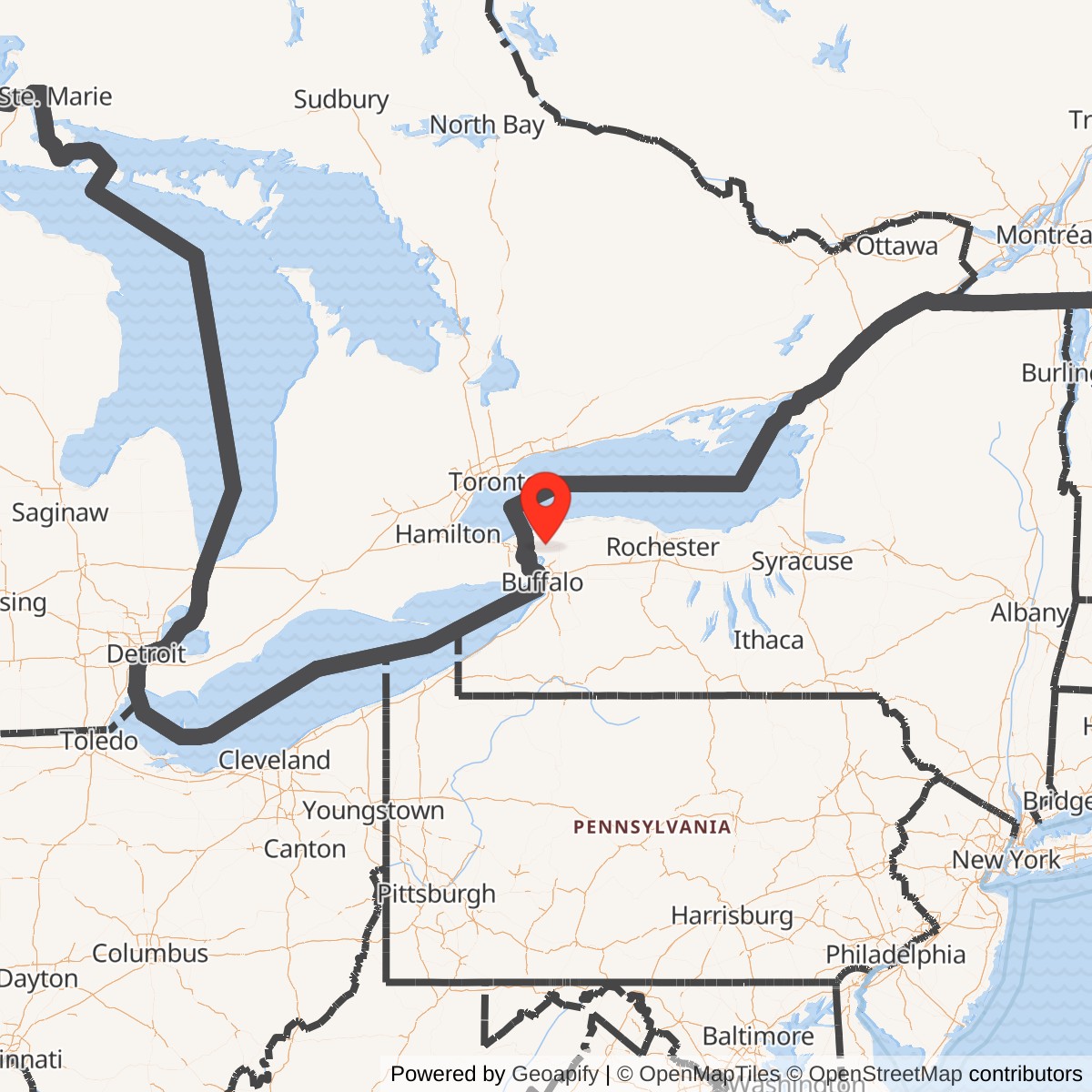
List of all Nike Installations in New York