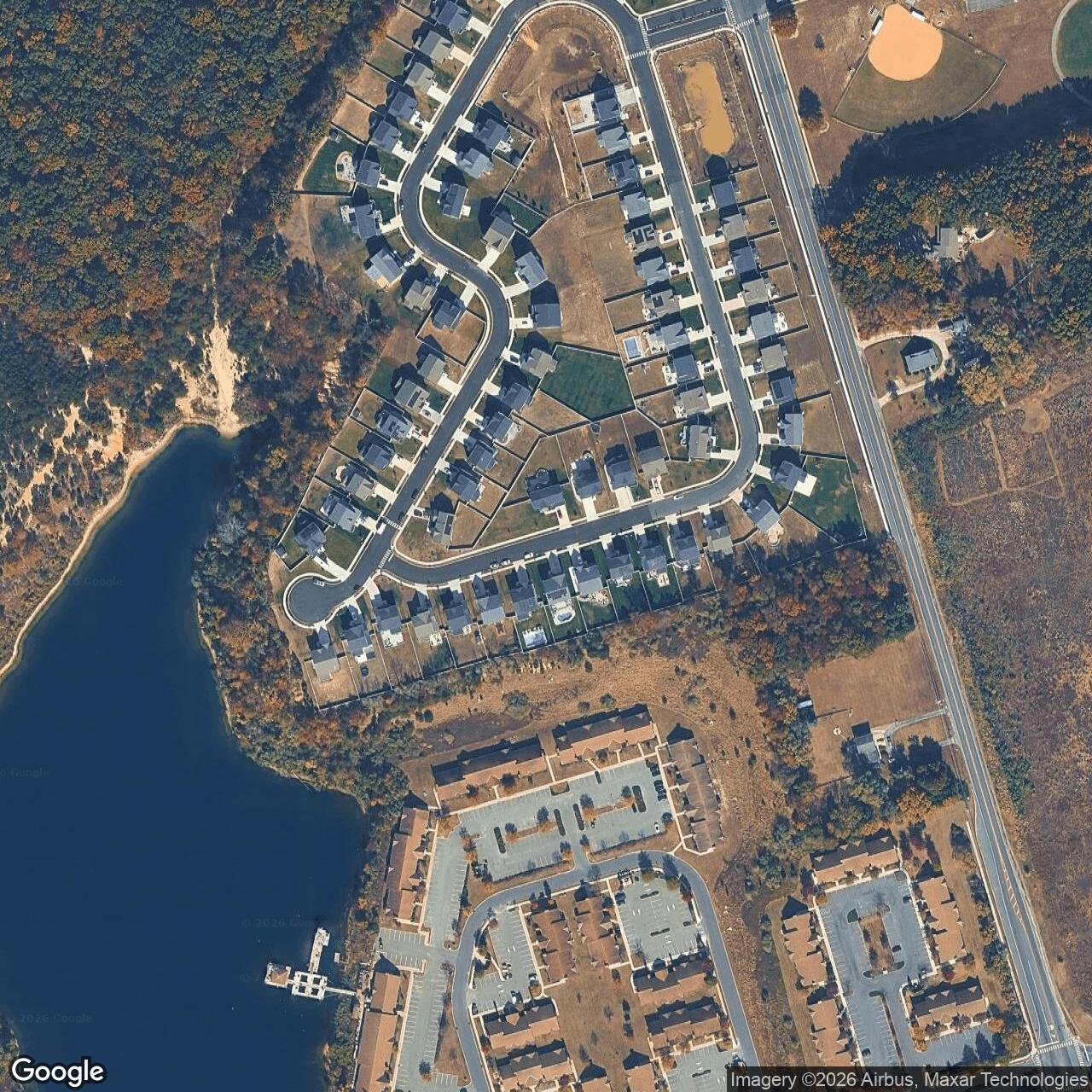
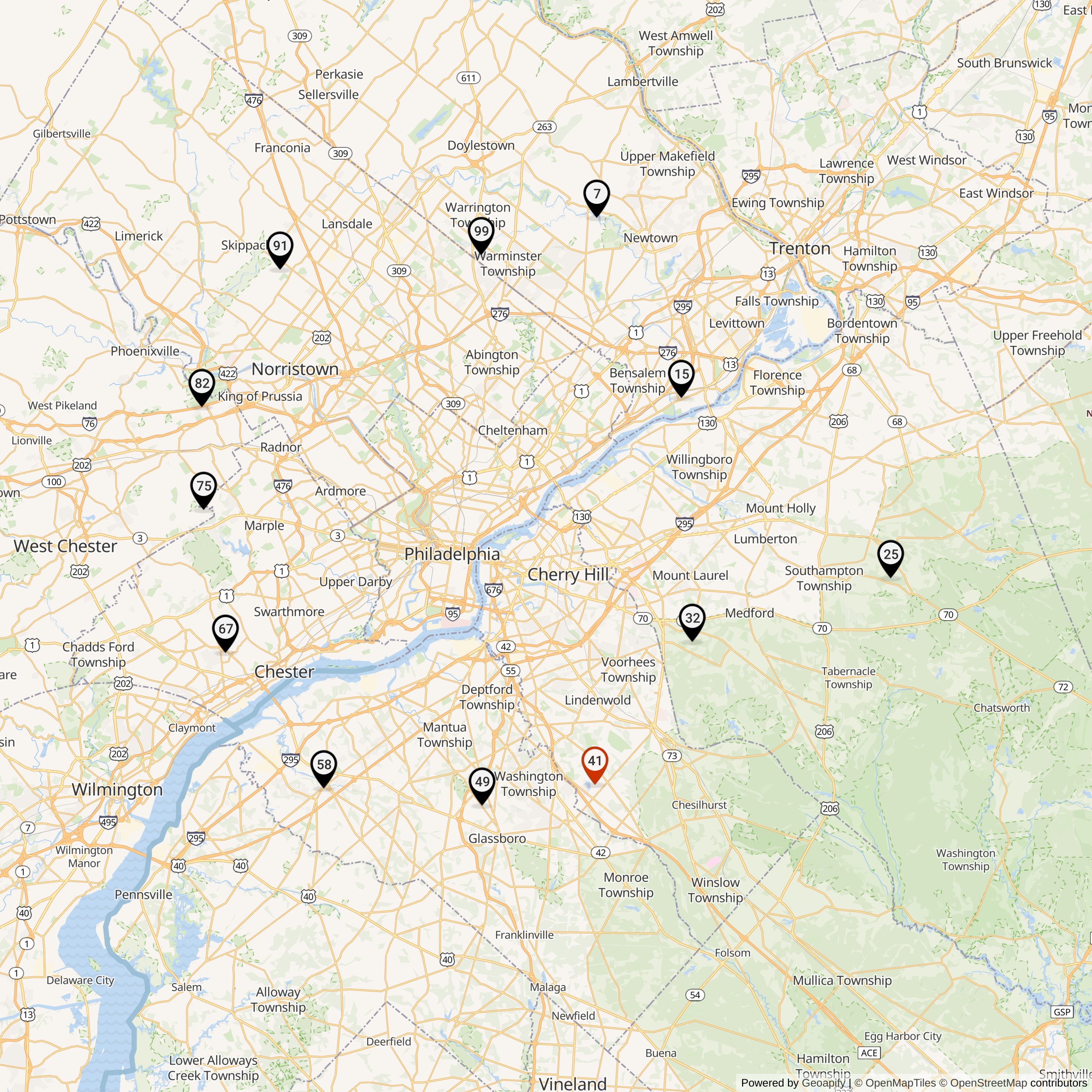
Nike Missile Site PH-41 IFC, Berlin New Jersey
Longitude: -74.9998
This location was part of the Philadelphia Defense Area
Site ID: PH-41
This site controlled the missiles at the Launch Area located here.
Site Role: IFC
A typical Nike air defense site consisted of two separate parcels of land. One area was known as the Integrated Fire Control (IFC) Area. This site contained the Nike system's ground-based radar and computer systems designed to detect and track hostile aircraft, and to guide the missiles to their targets.
The second parcel of land was known as the Launcher Area. At the launcher area, Nike missiles were stored horizontally within heavily constructed underground missile magazines. A large, missile elevator brought the Nikes to the surface of the site where they would be pushed across twin steel rails to one of four satellite launchers.
Elaboration on how Nike worked here.
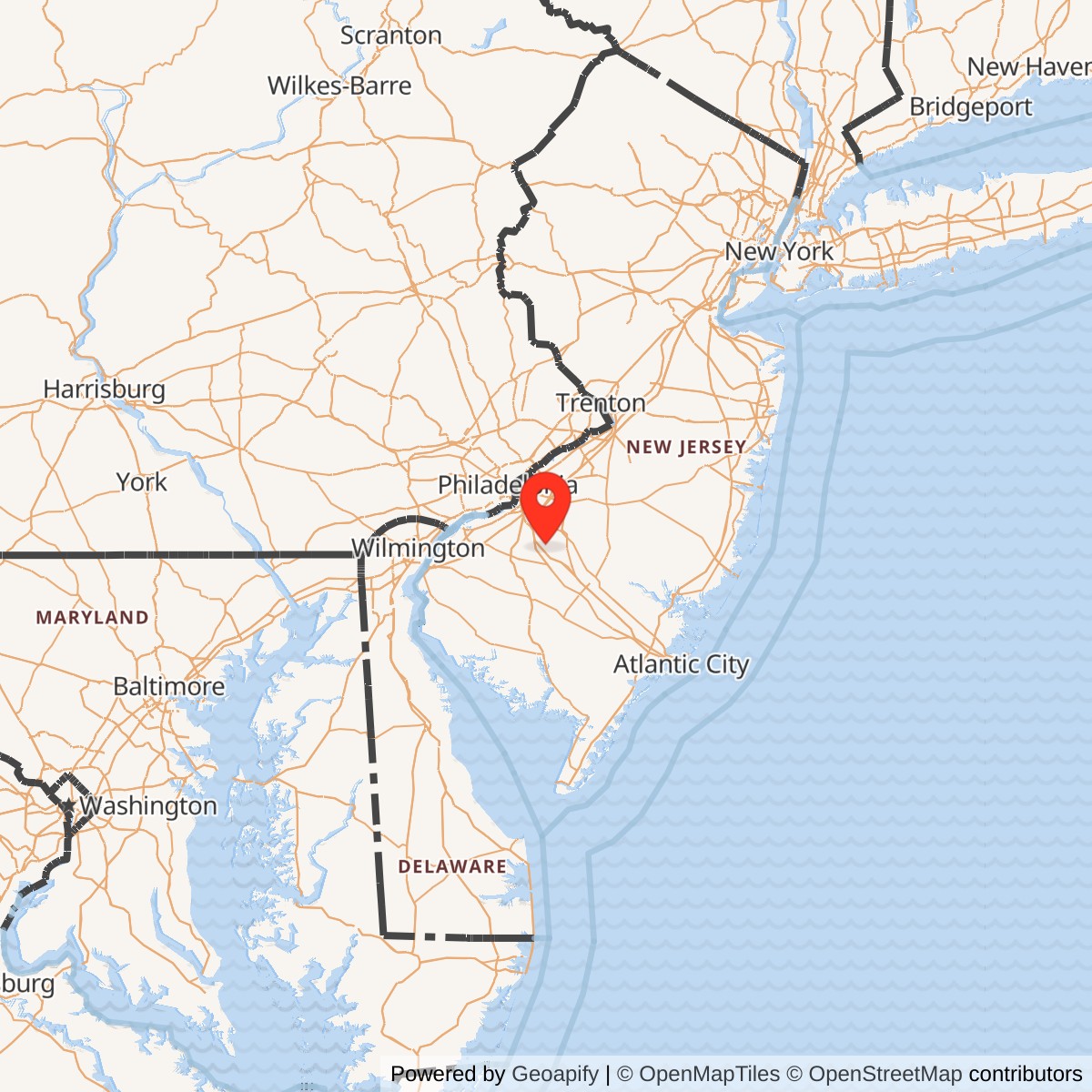
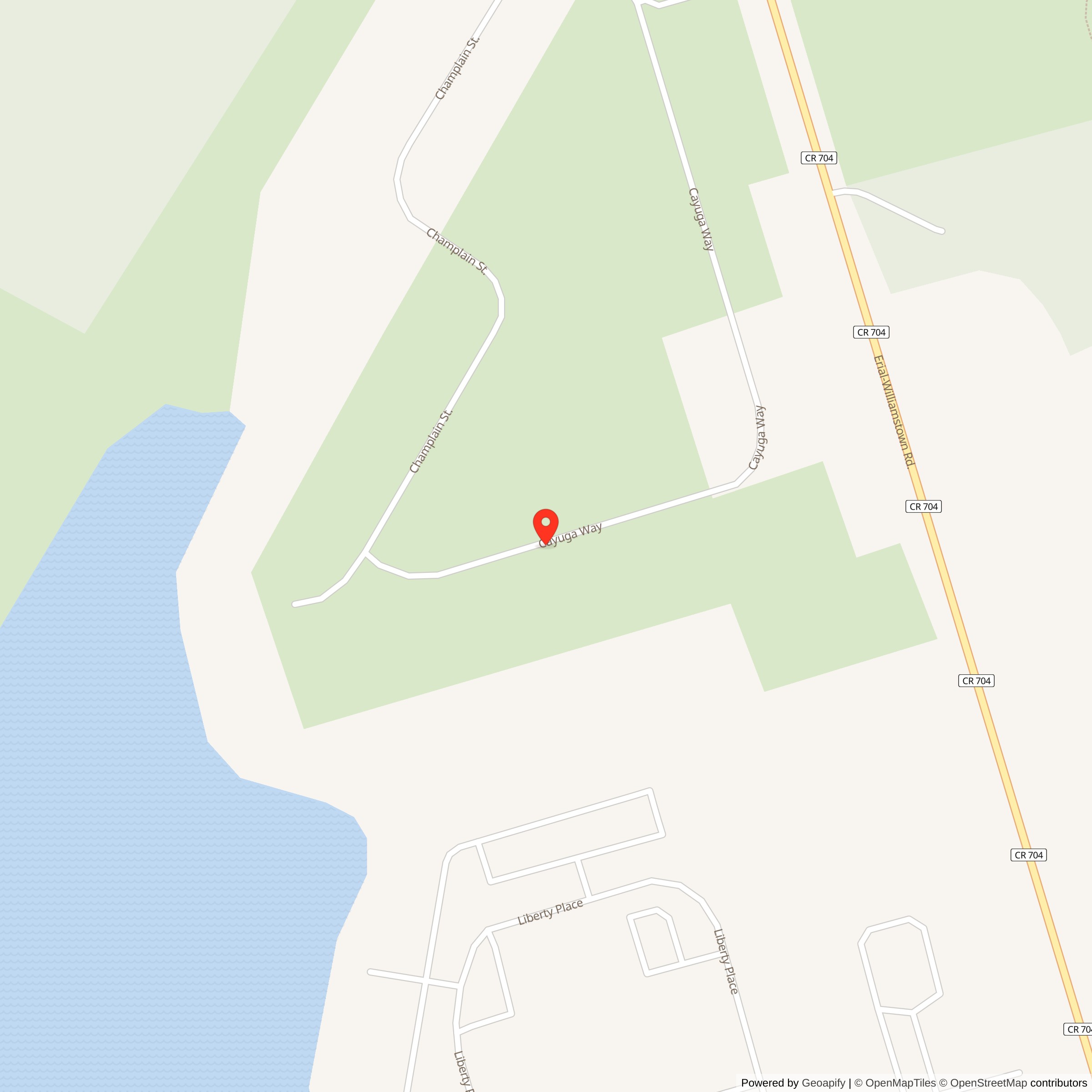
Nike Missile Site PH-41 was one half of the U.S. Army's PH-41/43 double Nike missile battery in the Philadelphia Defense Area. The site is generally identified in federal and Nike historical inventories as PH-41, Berlin / Clementon, New Jersey, and in some later summaries as PH-41/43, Erial, New Jersey. The installation served the New Jersey side of the Philadelphia Defense Area, protecting Philadelphia, Camden, the Delaware River corridor, and the surrounding industrial and military region from possible Soviet bomber attack during the Cold War.
The combined PH-41/43 site became operational in 1956, was converted from Nike Ajax to Nike Hercules during the late 1950s and early 1960s, and remained active until April 1974. It was one of the New Jersey-side Philadelphia Nike sites retained after the Ajax-only batteries were closed because it was upgraded to the more capable Nike Hercules system.
Double-Site Clarification
PH-41 should be treated as part of the combined PH-41/43 Nike installation. Like PH-23/25 at Lumberton, PH-41/43 was a double site: a larger-than-standard Nike complex with a shared double launcher area and two associated Integrated Fire Control sections. Ed Thelen's coordinate listing separates the site into PH-41 IFC #1, PH-43 IFC #2, and a shared PH-41/43 launch area. The Bender PH-41/43 history likewise identifies the installation as a double site and describes its launcher area at Clementon and its control area at Berlin.PH-41 is treated as the PH-41 half of the double battery. Where the physical installation cannot be divided cleanly, the full PH-41/43 complex is discussed because both halves shared the larger launch-area infrastructure and operated as part of the same Philadelphia Defense Area Nike defense system.
History
PH-41 was built as part of the Philadelphia Defense Area, the ring of U.S. Army Nike missile batteries constructed during the 1950s to protect Philadelphia and Camden. The Philadelphia region was a major population center, port, transportation hub, industrial area, and defense-related manufacturing and logistics region. During the early Cold War, U.S. air-defense planners assumed that Soviet long-range bombers could attack American cities and industrial areas. Nike batteries formed the close-in, fixed, ground-based missile layer of that defense system.The New Jersey side of the Philadelphia Defense Area was especially important because it covered eastern and southeastern approaches to Philadelphia. The Military Standard summary of the Philadelphia Nike sites identifies the New Jersey batteries defending the eastern approaches to Philadelphia as Lumberton, Marlton, Berlin / Clementon, Pitman, and Swedesboro, with headquarters facilities at Fort Dix and Fort Mott. It also notes that PH-25, PH-41, and PH-58 were upgraded to Nike Hercules and remained active until 1974.
The location of PH-41/43 in the Berlin / Clementon / Erial area gave the Army a large semi-rural tract with enough space for a double battery. The site was far enough from the dense urban core to support missile storage, radar separation, and safety requirements, but close enough to cover the defended area. Like other Nike installations, it was not a large Army post in the traditional sense. It was a specialized air-defense battery composed of launcher, radar, command, security, power, and support facilities.
The Philadelphia-area Nike network included sites in both Pennsylvania and New Jersey. On the Pennsylvania side were batteries such as Richboro, Bristol / Newportville / Croydon, Chester / Media, Edgemont, Paoli / Valley Forge, Worcester / Center Square, and Warrington / Eureka. On the New Jersey side were Lumberton, Marlton, Berlin / Clementon, Pitman / Mantua, Woolwich / Swedesboro, and the Gibbsboro command-and-control site. PH-41/43 was among the most important of the New Jersey sites because it was a double battery and because it was retained after the Hercules upgrade.
Units and Manning
The PH-41/43 site was manned first by Regular Army units. The Bender PH-41/43 site history identifies Army unit service as A Battery, 738th AAA Guided Missile Battalion from 1956 to 1958, followed by A Battery, 3rd Missile Battalion, 43rd Artillery from 1958 to 1974. This sequence corresponds with the site's transition from Nike Ajax into the Nike Hercules period.The 738th Antiaircraft Artillery Guided Missile Battalion was one of the early Regular Army Nike units that manned the Philadelphia-area defenses in the Ajax period. During the reorganization of Army air defense and artillery designations, Nike units were redesignated under missile battalion and artillery structures. The later A/3/43rd designation reflects the Hercules-era Army Air Defense Command system. Unlike some Nike sites that shifted heavily into National Guard operation, the Bender PH-41/43 source specifically describes PH-41/43 as a Regular Army site that survived the downsizing of the Army's air-defense program and remained active until the final Nike closure in 1974.
Mission and Operation
PH-41's mission was to detect, track, and, if ordered, engage hostile aircraft approaching the Philadelphia-Camden region. In the early Cold War this meant defense against long-range bomber attack. The Nike battery was intended to function as part of an integrated air-defense network, not as an isolated local weapon. Air Force radar inputs, regional command-and-control systems, Army fire-control radars, and local launcher crews all formed part of the engagement chain.Nike missiles used command guidance. The missile did not independently search for the target. Instead, radar and computer equipment in the Integrated Fire Control area tracked the target and also tracked the missile after launch. The ground equipment calculated an intercept course and sent steering commands to the missile. When the missile reached the calculated intercept point, detonation was commanded from the ground.
During the Nike Ajax period, PH-41/43 used the first-generation Nike Ajax system. Ajax was a liquid-fueled, radar-guided surface-to-air missile with conventional warheads. It was designed to attack individual bomber targets. At a double site such as PH-41/43, the number of missiles, launchers, and radar-control elements was larger than at a standard single battery, giving the site greater defensive capacity within the Philadelphia ring.
During the Nike Hercules period, the site became part of the smaller but more powerful group of Philadelphia-area Hercules batteries. Hercules had greater range and altitude capability than Ajax and could carry either conventional or nuclear warheads. The nuclear-capable Hercules system was designed to destroy formations of enemy bombers rather than rely on one conventional missile per aircraft. The Bender PH-41/43 source states that the site operated both Nike Ajax and Nike Hercules missiles during its eighteen years of active service.
Site Layout
The PH-41/43 installation consisted of a shared double launcher area and two nearby Integrated Fire Control sections. The shared launcher area was located in the Clementon / Erial area. The PH-41 IFC was located at approximately 39.7503019265807, -74.99983982549732. The companion PH-43 IFC was located almost adjacent at approximately 39.75024811923818, -75.0006998370292.The launcher area was the missile-storage and launch portion of the installation. It contained the underground magazines, elevator platforms, launch rails, missile-handling pavement, launch-control functions, safety zones, access roads, security fencing, and support structures. The Bender PH-41/43 history describes the site as having six missile magazines in the double-site launch area: two Type B magazines and four Type C magazines. The Redstone / federal inventory lists PH-41 as Nike 2B,4C/18H,60A/23L-UA, identifying a combined Ajax-to-Hercules-capable configuration with listed Ajax and Hercules missile capacities and universal / Ajax launchers.
The Integrated Fire Control area was the radar and guidance side of the battery. The Bender PH-41/43 history identifies the control area at Berlin and lists the radar types as HIPAR, with two systems; Dual Control Launch; and SMFU and RRIS. HIPAR, or High-Power Acquisition Radar, was associated with improved Hercules-era operation and gave the battery greater target-acquisition capability. The dual-control arrangement reflects the double-site character of PH-41/43.
The physical separation between the launch and control parcels reflected standard Nike design. Radars needed suitable line-of-sight, spacing, and stable operating conditions. Launch areas needed secure land for magazines, launchers, missile handling, and safety requirements. Communications tied the two areas together so radar crews and launcher crews could function as one battery.
Nike Ajax Period
PH-41/43 became operational in 1956 as part of the Philadelphia Defense Area's initial Nike deployment. In its early configuration, the site operated Nike Ajax missiles. Bender's PH-41/43 history lists a missile load of 60 Nike Ajax missiles and 18 Nike Hercules missiles in the later mixed historical description, reflecting the site's large double-battery capacity and its later Hercules conversion.The Ajax period required constant technical readiness. Soldiers maintained liquid-fuel missile equipment, radar systems, communications, generator systems, launch elevators, and secure magazines. In a drill or alert condition, missiles would be raised from underground magazines to the surface and moved into launch position. Crews in the IFC area tracked assigned targets and missiles while launcher crews prepared the missiles under tight command procedures.
For the local community, the Ajax site would have been visible mainly as a fenced military installation with radar towers, access roads, guard posts, Army vehicles, and restricted areas. The public usually knew that the site was part of air defense, but much of the actual operating doctrine, readiness status, and later nuclear capability was not public knowledge.
Conversion to Nike Hercules
PH-41 was one of the Philadelphia-area batteries converted from Nike Ajax to Nike Hercules. Appendix D of the Nike Hercules Weapon System history lists PH-41 among converted defense sites. It appears in the converted-site table with a 2B and 1C configuration for one phase of work, a construction period beginning in June 1958 and running to June 1959, and a Hercules operational date of November 19, 1959. A later line in Appendix D lists PH-41 again with a 2C configuration, a January 1961 to July 1961 construction period, and an October 1961 operational date, which likely reflects additional conversion work associated with the double-site arrangement.The dual listing is important. PH-41/43 was a double site, and its Hercules conversion appears to have been phased rather than a simple one-battery upgrade. For project purposes, PH-41 should be described as a Hercules-converted site, operational with Hercules by November 1959 for the first listed conversion phase, with additional listed conversion work completed in 1961.
The Hercules conversion changed the site's strategic role. Nike Hercules was larger, solid-fueled, and more capable than Ajax. It could reach targets at longer range and higher altitude, and its nuclear capability allowed it to engage formations of bombers. Because of this increased capability, the Army could retain fewer sites. PH-41/43 remained active while many Ajax-only batteries in the Philadelphia Defense Area were closed in the early 1960s.
Hercules-era operation also changed the security character of the site. Nuclear-capable Nike Hercules batteries required stricter warhead-control procedures, more intense physical security, more rigorous inspection requirements, and specialized training. Even where open sources do not identify exact live warhead configurations at a given time, PH-41/43 belonged to the nuclear-capable Hercules system and therefore had a substantially different operational significance than an Ajax-only site.
Command and Control
PH-41/43 was part of the Philadelphia regional air-defense command system. The Philadelphia Defense Area eventually used a Missile Master command-and-control facility at Gibbsboro / Pedricktown, New Jersey. That facility coordinated target information and engagement assignments for the regional Nike batteries. Later, New York and Philadelphia air-defense command relationships were integrated more closely, and regional Nike sites eventually came under broader command structures before the final 1974 closure.For PH-41, this meant the battery was part of a networked air-defense architecture. Local radar operators could acquire and track targets, but identification, engagement authority, and target assignments were coordinated within a regional defense framework. PH-41 was therefore not simply a local missile storage site. It was a node in a larger Cold War system that linked Army missile batteries, Air Force radar data, command centers, and North American air-defense planning.
Post-Closure Use and Current Condition
PH-41/43 was deactivated in April 1974, along with the last generation of Nike Hercules sites in the Philadelphia / New York regional air-defense system. The Redstone / federal inventory lists the site as active from 1956 to April 1974 and identifies both the control and launch sites as U.S. Government property and abandoned at the time of that inventory snapshot. Bender's PH-41/43 history similarly states that the abandoned site remained partially intact and was owned by the General Services Administration.Later reuse and ownership became more complicated. Public Nike site summaries identify PH-41/43 as Erial and state that after the Army closed the site in 1974, the housing portion was transferred in 1976 to the Air Force for use by Gibbsboro Air Force Station and designated the Gibbsboro Family Housing Annex. It was later transferred back to the Army, assigned to Fort Dix, and closed by about 1990. Later summaries identify the area as purchased by Gloucester Township and designated as a redevelopment site.
Modern summaries describe the IFC / control side as a vacant lot with woods and old roads, and the launcher side as having had its magazines removed or filled. Because different parcels of the former double site followed different reuse paths, any current condition assessment should distinguish carefully between the launch area, the two fire-control areas, and the former housing / support areas.
Recent local reporting indicates that the former Nike base property in Gloucester Township has been subject to redevelopment planning. A 2019 Patch article reported that Gloucester Township approved sale and redevelopment activity for the former Nike missile base, including a former radar site on Williamstown Road and a separate former missile site on Berlin-Cross Keys Road. A 2025 Patch article reported that a plan for housing units was being considered for the redevelopment site along 1000 Williamstown-Erial Road after a previous warehouse plan was abandoned.
List of all Nike Installations in the Philadelphia Defense AreaList of all Nike Installations in New Jersey