Nike Missile Site PH-49 IFC, Pitman New Jersey
Longitude: -75.1285
This location was part of the Philadelphia Defense Area
Site ID: PH-49
This site controlled the missiles at the Launch Area located here.
Site Role: IFC
A typical Nike air defense site consisted of two separate parcels of land. One area was known as the Integrated Fire Control (IFC) Area. This site contained the Nike system's ground-based radar and computer systems designed to detect and track hostile aircraft, and to guide the missiles to their targets.
The second parcel of land was known as the Launcher Area. At the launcher area, Nike missiles were stored horizontally within heavily constructed underground missile magazines. A large, missile elevator brought the Nikes to the surface of the site where they would be pushed across twin steel rails to one of four satellite launchers.
Elaboration on how Nike worked here.
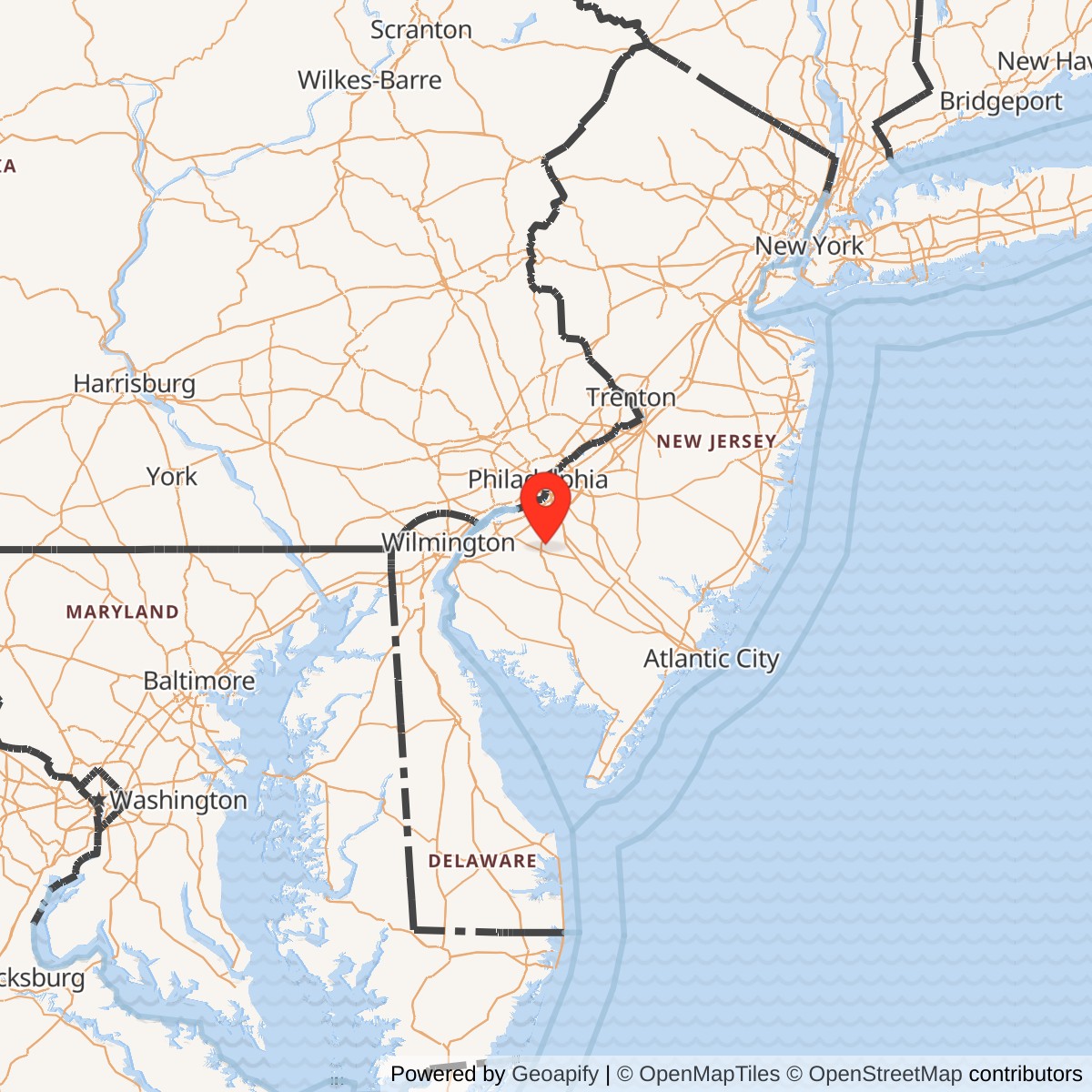
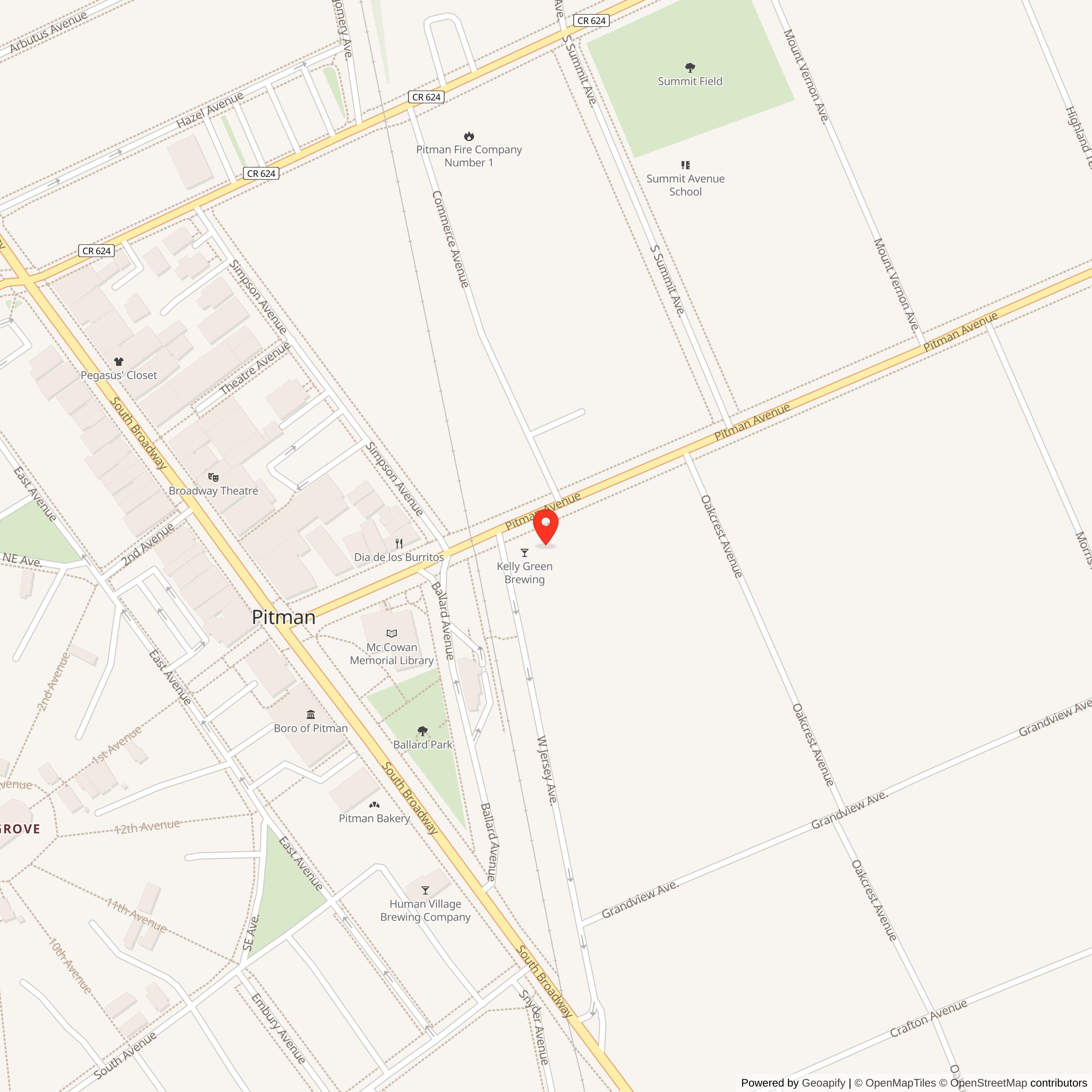
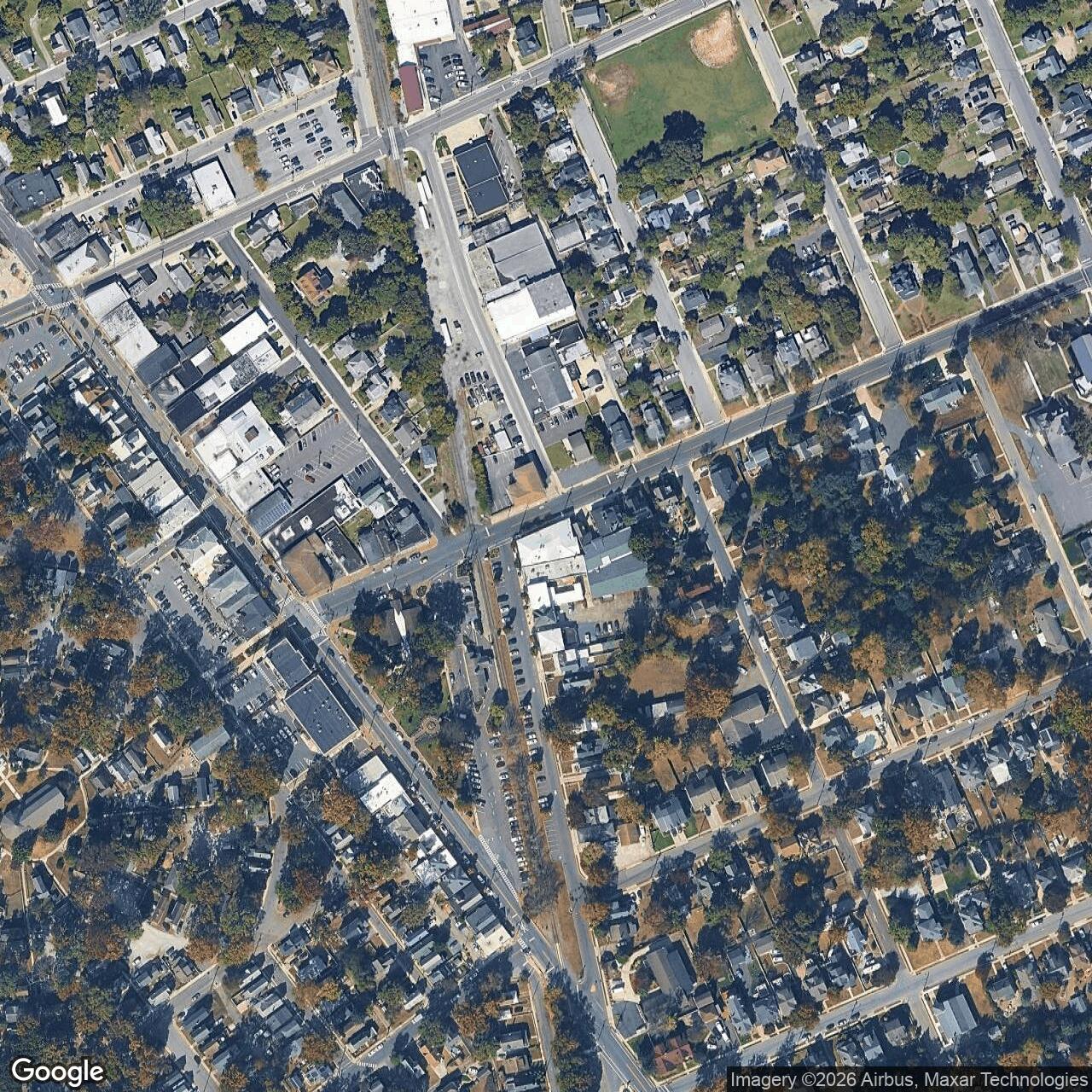
Nike Missile Site PH-49 was a U.S. Army Nike Ajax air-defense missile battery in the Philadelphia Defense Area. The site is usually identified in federal Nike inventories as PH-49, Pitman, New Jersey. More precise modern location descriptions place the installation in the Pitman / Mantua Township area of Gloucester County, New Jersey, with the control area west-northwest of Pitman near Richwood Road and the launcher area near Pitman-Jefferson Road.
It was an Ajax-only Nike battery, active from 1956 to 1963. It was not converted to Nike Hercules. Its active military mission ended during the early-1960s reduction of first-generation Nike Ajax sites in the Philadelphia Defense Area. Later, the former control area was reused by Bethel Church / Gloucester County Christian School, while the launcher area entered private commercial ownership and was associated with Kraemer Construction Company and related storage / business uses.
Site Identity and Location Notes
PH-49 requires a small amount of location clarification because sources identify it in slightly different ways. Federal and Nike-reference inventories list the site as Pitman. Some broader lists also use Mantua Township as the more exact current municipal geography. The control area is approximately one mile west-northwest of Pitman on Richwood Road, later associated with Gloucester County Christian School, and the launch area on Pitman-Jefferson Road, later associated with Kraemer Construction Company.Those descriptions are compatible rather than contradictory. The site served the Philadelphia Defense Area and used the Pitman name as its local identifier, but the parcels lay in the surrounding Gloucester County suburban / semi-rural landscape rather than in a dense urban setting. The control and launch areas were separated, as required by Nike site design, but functioned as a single battery.
History
PH-49 was part of the Cold War air-defense ring built around Philadelphia and Camden. In the early 1950s, U.S. air-defense planning assumed that Soviet long-range bombers might attack major American cities, ports, shipyards, industrial corridors, transportation centers, and military facilities. Philadelphia was a major population center and a strategically important industrial and transportation hub. The Delaware River corridor, Camden industrial area, shipbuilding and port facilities, and surrounding regional infrastructure made the area a logical priority for Nike missile defense.The Nike system was the Army's ground-based missile component of that defense. It did not replace the Air Force's fighter-interceptor and radar systems. Instead, it formed the final local layer of defense around high-value regions. The Air Force radar network and continental air-defense command system were expected to detect and identify approaching aircraft; fighter interceptors were expected to engage farther out; and Nike batteries protected the defended area if hostile aircraft penetrated those outer layers.
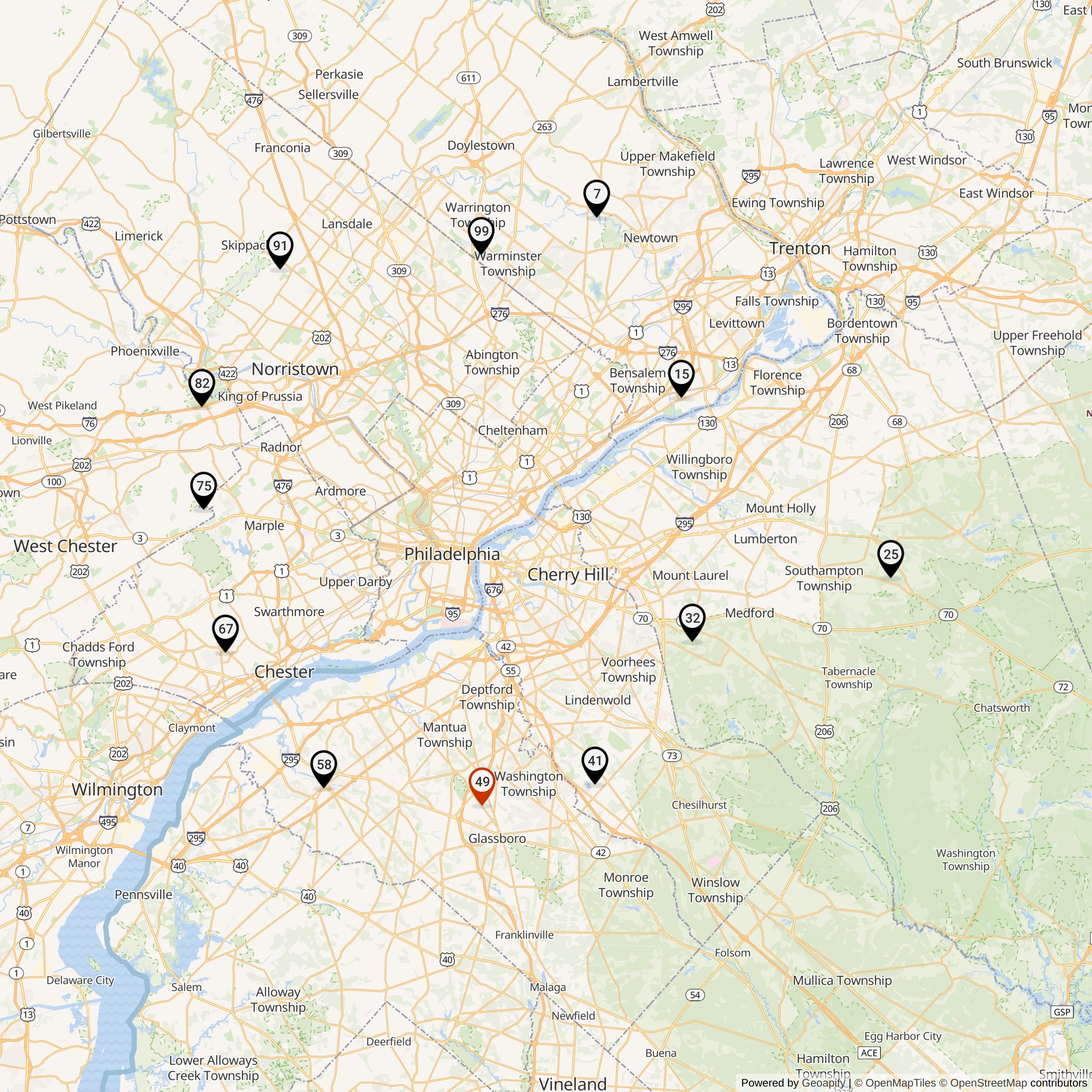
The Philadelphia Defense Area included Nike sites in both Pennsylvania and New Jersey. On the Pennsylvania side, sites included Richboro, Newportville / Croydon, Chester / Media, Edgemont, Paoli / Valley Forge, Worcester / Center Square, and Warrington / Eureka. On the New Jersey side, the ring included Lumberton, Marlton, Berlin / Clementon, Pitman, Swedesboro, and the Pedricktown command-and-control site. PH-49 occupied the southern New Jersey portion of that ring, helping cover approaches to Philadelphia from the south and southeast.
PH-49's southern New Jersey location reflected both tactical and practical considerations. The area offered enough open land for a launch installation, enough separation from dense city development to support missile storage and handling, and sufficient position relative to the protected Philadelphia-Camden region. The region was still partly rural or semi-rural when the Army built the site, making it easier to fit a missile battery into the landscape than it would have been in a dense urban area.
Mission and Operation
PH-49's mission was to detect, track, and, if ordered, engage hostile aircraft approaching the Philadelphia-Camden region. As a Nike Ajax battery, it was designed primarily for defense against bomber attack. The site's role was defensive, but it existed within the larger logic of Cold War deterrence. The presence of a ring of missile batteries around major cities was intended to make a successful bomber attack more difficult and to show that the United States had invested in continental defense.The Nike Ajax system used command guidance. The missile did not independently search for the target. Instead, radar and computer equipment in the Integrated Fire Control area tracked both the target aircraft and the missile. The ground-based fire-control system calculated an intercept point and transmitted steering commands to the missile during flight. At the calculated intercept point, detonation was commanded so the missile's warheads could destroy or disable the target.
This made a Nike Ajax site a combined radar, computer, communications, missile-storage, and launch facility. It was not simply a row of launch pads. The control area and launch area had to work together continuously. Radar crews, launcher crews, communications personnel, generator operators, maintenance personnel, and security troops all contributed to the battery's readiness.
Because PH-49 was not converted to Hercules, it did not receive the larger nuclear-capable Nike Hercules missile. That distinction is central to its history. Nearby New Jersey Philadelphia Defense Area sites such as Lumberton PH-25, Berlin / Clementon PH-41/43, and Swedesboro PH-58 were converted to Hercules and remained active much longer. PH-49 remained an Ajax site and was closed during the early-1960s Ajax drawdown.
Site Layout
PH-49 followed the standard Nike site layout: a separated Integrated Fire Control area and launcher area.The IFC / control area was located west-northwest of Pitman near Richwood Road. This was the radar and guidance side of the battery. It housed the acquisition and tracking radars, fire-control and computer equipment, communications links, generator and support functions, operating buildings, and the working spaces where crews identified and tracked aircraft. Later site notes identify this parcel with Bethel Church and Gloucester County Christian School.
The launcher area was located on or near Pitman-Jefferson Road. This was the missile-storage and launch side of the battery. It contained underground magazines, elevator platforms, launch rails, missile-handling pavement, launch-control equipment, fencing, security features, and support buildings. Later site notes identify this property with Kraemer Construction Company and private ownership.
The federal inventory lists PH-49 as Nike 1B,2C/30A/12L-A. This means the site had one Type B magazine and two Type C magazines, a listed complement of 30 Nike Ajax missiles, and 12 Ajax launchers. The site was a typical three-magazine Nike installation, with one Type B and two Type C magazines, Nike Ajax missile load of 30, and no Nike Hercules missiles.
In typical Ajax operation, missiles were stored horizontally underground. In an alert or drill condition, an elevator raised a missile to the surface. Crews then moved the missile along rails to a launcher. Ajax required careful handling because it was a liquid-fueled missile; the battery also required ongoing maintenance of magazines, elevators, rails, electrical systems, generators, fueling-related support equipment, and radar-guidance equipment.
Nike Ajax Period
PH-49 became operational in 1956. This placed it within the first permanent guided-missile defense buildout around Philadelphia. Before the Nike system, continental air defense depended on radar, fighter interceptors, and antiaircraft artillery. Nike Ajax added a guided surface-to-air missile layer designed to engage high-altitude bombers before they could reach a defended city or industrial target.The site's first years coincided with the rapid expansion of Nike Ajax across the United States. By the late 1950s, hundreds of Nike batteries existed around major urban and military targets. They were highly technical sites, but they also became part of the suburban and rural landscapes around American cities. PH-49 is a good example: it placed Cold War military infrastructure in the Gloucester County communities near Pitman, close enough to defend Philadelphia but physically embedded in South Jersey's local roads, farms, schools, churches, and later commercial properties.
The Ajax mission required constant training even though no missile was ever fired in combat from the site. Crews drilled in target acquisition, engagement procedures, missile preparation, launcher operations, communications, and security response. Readiness depended on precision and repetition. A Nike crew had to be able to move from routine duty to alert procedures quickly, but the actual launch of a missile would have required higher command authority and strict identification procedures.
PH-49's Ajax-only status also meant that its operational life was comparatively short. The site did not receive the larger Nike Hercules missile, which could cover a wider area and engage targets at greater range and altitude. When the Army shifted the Philadelphia Defense Area to a smaller set of Hercules batteries, PH-49 was no longer needed as part of the active ring.
Relationship to the Philadelphia Defense Area
PH-49 was one of the twelve Nike Ajax sites built around Philadelphia and Camden during the 1950s. The broader Philadelphia Defense Area was later reorganized as selected sites were converted to Hercules. Sites such as PH-25 at Lumberton, PH-41/43 at Berlin / Clementon, PH-58 at Swedesboro, PH-75 at Edgemont / Delaware County, and PH-99 at Warrington / Eureka were modernized and retained for longer service. Ajax-only sites such as PH-32 Marlton and PH-49 Pitman were closed in the early 1960s.The regional command-and-control structure was centered on the Pedricktown / Gibbsboro Army Air Defense Command Post, PH-64DC. That command site supported Nike missile control for the Philadelphia Defense Area and was integrated with the Air Force / NORAD air-defense environment. Even for Ajax-only batteries such as PH-49, the site's operational role was tied to this larger network. The battery was local in geography, but regional and national in command purpose.
Deactivation
PH-49 was deactivated in 1963. Its closure followed the same pattern as other Ajax-only batteries that were not selected for Hercules conversion. The Army had no reason to maintain all of the original Ajax sites once Hercules batteries could cover larger sectors with greater range and firepower. In addition, by the early 1960s, U.S. strategic defense priorities were already shifting as ballistic missiles became a more serious threat than bomber attack alone.The deactivation of PH-49 did not mean that Philadelphia's Nike defense ended. Instead, the defense area continued with a smaller number of Nike Hercules batteries. PH-49's closure marked the end of the site's role in the first-generation guided-missile defense ring.
Post-Closure Use and Current Condition
After closure, PH-49's two parcels followed separate reuse paths.The control area was reported intact and associated with Bethel Church / Gloucester County Christian School. Ed Thelen's site notes describe the control area as one mile west-northwest of Pitman on Richwood Road, with later use by Gloucester County Christian School. The federal inventory likewise identifies the control site as intact and associated with Bethel Church. The presence of school and church reuse is typical of Nike IFC areas, whose buildings, roads, utilities, and open land could often be adapted to institutional use more easily than the underground launch magazines.
The launcher area entered private ownership and was associated with Kraemer Construction Company. The federal inventory describes the launch site as privately owned. Later site summaries indicate that buildings were used by private businesses, that the magazine area remained visible and used as a storage yard, and that at least some of the underground magazine space survived in altered condition. One widely circulated site summary states that two of the magazines were flooded, while the larger primary magazine remained accessible by stairwell and retained original equipment such as missile racks and elevator controls. Because that level of physical-condition detail is not from a formal engineering survey, it should be treated as a site-observer condition report rather than as a current verified status.
A Congressional Record / federal property disposal reference from 1970 listed Nike Battery PH-49, Pitman, as involving approximately 40 acres of easements. That figure is useful as a scale indicator, though the exact acreage of fee-owned and easement interests may have differed by parcel and disposal category.
Today, PH-49 survives primarily as a reused and partly altered Cold War landscape. The site is not preserved as a museum, and it does not appear to have a formal public interpretation program comparable to restored Nike sites such as Sandy Hook NY-56. Its significance lies in its documented role in the Philadelphia Nike ring, its Ajax-only configuration, and the post-military reuse of its parcels.
List of all Nike Installations in the Philadelphia Defense AreaList of all Nike Installations in New Jersey